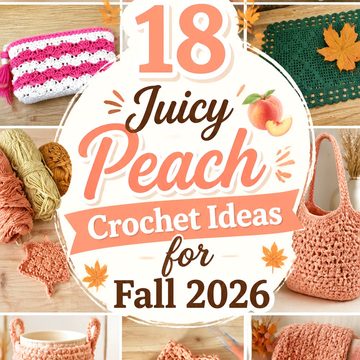
Olive green has genuine momentum for Fall 2026. ELLE recently highlighted it as a runway-approved seasonal color appearing across clothing, outerwear, bags, and shoes, so the earthy shade is moving well beyond its usual utility-jacket role. Crochet gives that palette another dimension because ribbing, openwork, granny motifs, raised texture, and plush fabric can each make the same color look surprisingly different.
These 18 ideas translate the broader olive trend into practical crochet projects rather than pretending every original tutorial was designed in green. Some source projects use other colors; olive is the adaptation. The collection ranges from substantial layering pieces to small accessories, bags, storage, home accents, and autumn décor, with useful checkpoints for fit, drape, structure, finishing, and yarn substitution.
Quick List
- Crochet Olive Fall Cardigan
- Crochet Olive Cozy Pullover Sweater
- Crochet Olive Granny-Square Layering Vest
- Crochet Olive Two-Point Poncho
- Crochet Olive Knit-Look Ribbed Beanie
- Crochet Olive Braided Tunisian Ear Warmer
- Crochet Olive Ribbed Fingerless Gloves
- Crochet Olive Textured Shawl Wrap
- Crochet Olive Mesh Market Tote
- Crochet Olive Panel-Construction Handbag
- Crochet Olive Structured Storage Basket
- Crochet Olive Daisy-Texture Baby Blanket
- Crochet Olive Granny-Texture Pillow Cover
- Crochet Olive Harvest Pumpkin
- Crochet Olive Leaf Chain Garland
- Crochet Olive Woodland Pinecone Accent
- Crochet Olive Lounge Slippers
- Crochet Olive Hooded Cowl
Why Olive Green Changes With Crochet Texture
Olive is not one fixed-looking color. Yellow-leaning olive can feel warm and autumnal, brown-toned olive moves closer to an earthy neutral, and gray-green versions can look cooler and quieter. Before committing to a large cardigan or blanket, view the yarn in daylight beside clothing or furnishings you actually plan to pair with it.
Texture matters just as much. Deep ribbing produces stronger highlights and shadows, so an olive beanie can look more tonal than a flat fabric in the same yarn. Open mesh lets the background show through and visually lightens a tote. Dense granny motifs create a more substantial block of color, while dimensional pumpkins and pinecones emphasize shadow. Choosing the texture first can therefore be more useful than choosing an olive shade from the skein alone.
Match Yarn Behavior to the Finished Project
A color match is not enough when the projects serve very different jobs. Cardigans, shawls, and ponchos usually benefit from fabric that moves comfortably rather than becoming rigid under its own weight. Bags and baskets need more attention to stretch, handles, wall stability, and openings. Plush décor needs sufficiently controlled fabric so stuffing does not dominate the surface.
Substituting olive yarn into a tutorial should therefore start with the creator’s stated yarn weight, gauge information, and construction—not simply the closest-looking green skein. A different fiber or dramatically different yarn thickness can alter dimensions, stretch, texture visibility, and drape. For fitted wearables, swatch before relying on measurements. For structured pieces, test whether the fabric keeps its intended shape. That small check is particularly worthwhile when adapting a tutorial whose original sample uses a different material.
1. Crochet Olive Fall Cardigan
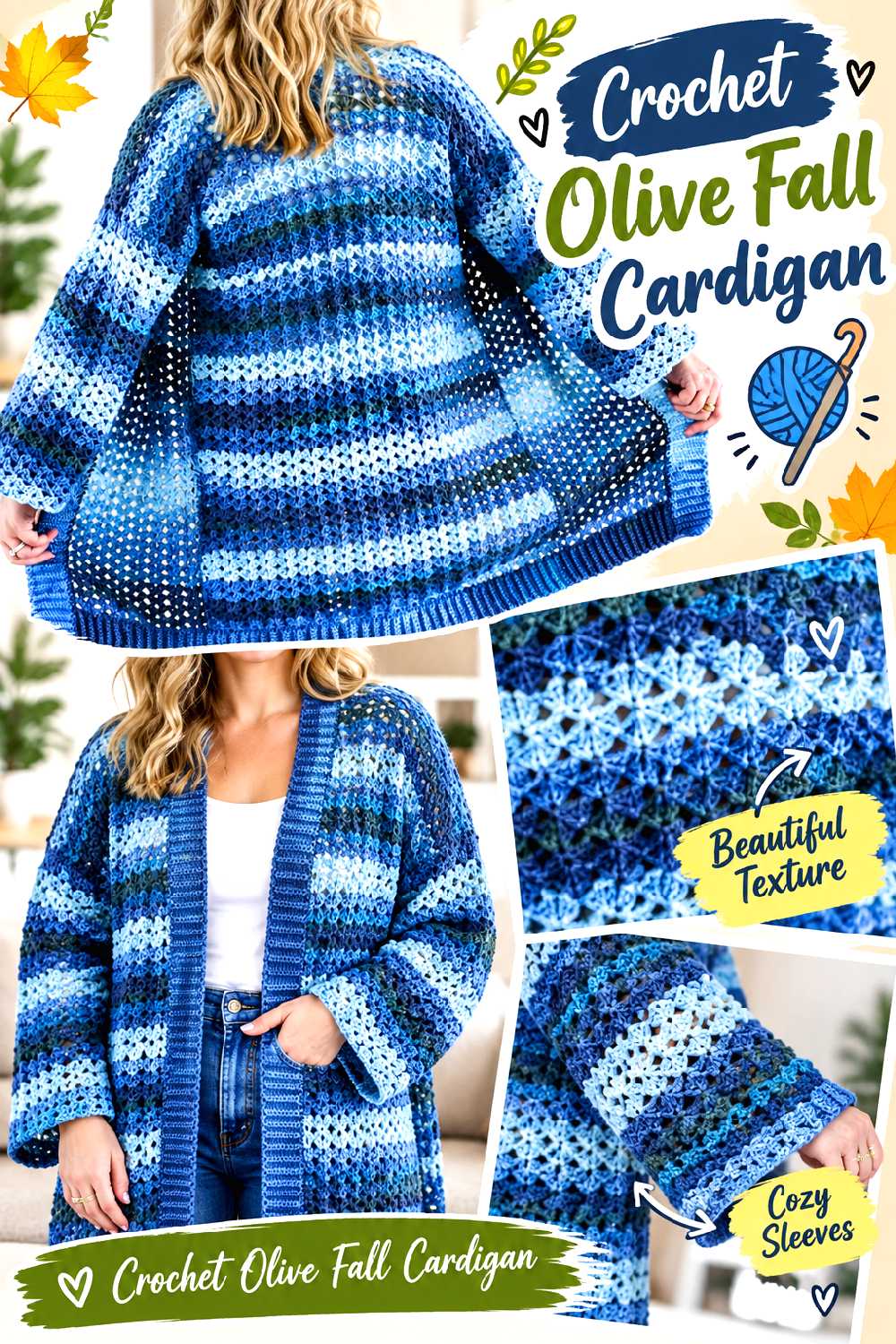
An open cardigan is one of the clearest ways to carry olive through an everyday fall wardrobe because the color forms a substantial layer without requiring a matching outfit underneath. Bella Coco’s August 2026 cardigan tutorial is especially relevant to the season and shows a classic paneled construction rather than a novelty silhouette.
In olive, this shape can sit between a neutral and a statement garment. The important decisions are less about chasing the exact sample color and more about getting the cardigan’s width, opening, sleeve behavior, and finished weight right before investing in a large amount of yarn.
Check Chest Ease Before You Commit to the Panels
A cardigan can technically fit around the body yet still feel wrong if the intended ease changes. Measure a cardigan you already like, compare that width with your body measurement, and use the tutorial’s sizing information rather than assuming your usual store-bought size transfers directly. Bella Coco specifically includes gauge and fit discussion, making this a project where swatching has a practical purpose rather than being an optional formality.
Olive Ribbing Makes the Edges More Noticeable
A solid olive shade puts plenty of visual attention on cuffs, hem treatment, and the front opening because there is no multicolor yarn to distract from those lines. If your ribbing pulls tighter than the body fabric, the difference will be particularly easy to see. Lay each finished section flat before assembly and check whether the edges are drawing in more than intended.
Weight at the Front Opening Can Change the Hang
Long crochet fronts can shift after the garment is worn because gravity affects a completed cardigan differently from a small swatch. If substituting a significantly heavier fiber, consider how much fabric will hang from the shoulders and front edges. Blocking a representative swatch and letting it hang briefly can reveal more about the final drape than evaluating it flat on a table.
Original Tutorial and Creator Credit
Creator: Bella Coco
2. Crochet Olive Cozy Pullover Sweater
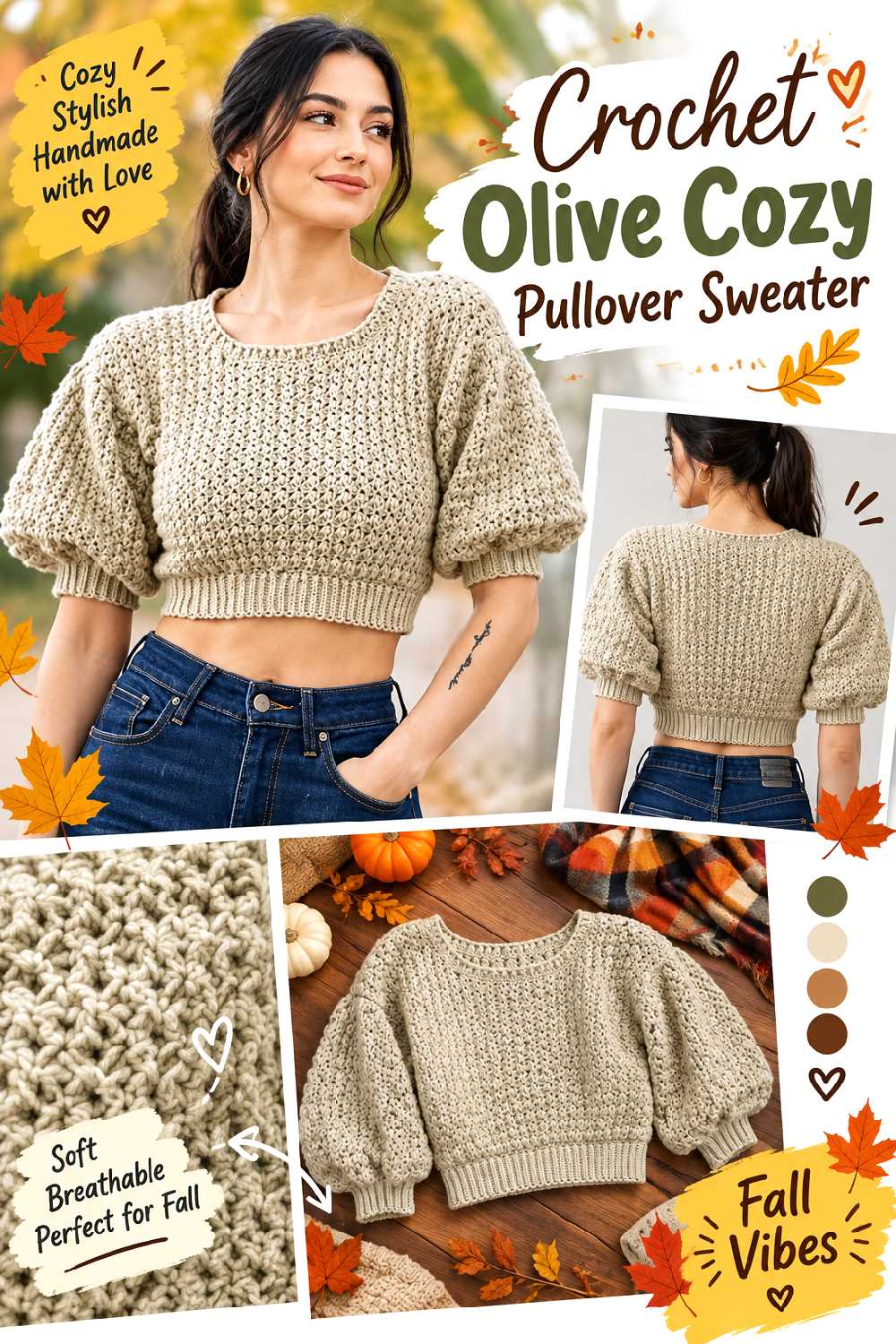
For more uninterrupted color than an open cardigan provides, an olive pullover creates a simple fall layer with the crochet texture taking center stage. TCDDIY’s cozy sweater is a panel-based pullover with separate garment components, giving readers a noticeably different route from the cardigan above.
A muted olive could work particularly well when you want the stitch surface to remain visible without using stripes. Before changing yarn, pay attention to how the original sweater balances the body, sleeves, cuffs, and neckline. Those proportions matter because a heavier replacement can make a generously sized pullover grow vertically or feel more substantial than the source garment.
The Pullover Shape Needs Room at the Neck and Shoulders
Unlike an open cardigan, a pullover must pass comfortably over the head and settle correctly around the upper body. When evaluating size, do not look only at bust width. Compare shoulder placement, neckline opening, and the amount of room you want over any base layer. If you alter one area, make sure it still works with the sweater’s overall construction.
A Softer Olive Yarn Keeps the Textured Fabric Wearable
Strong stitch definition can make olive look rich and dimensional, but a sweater still has to move with the body. A yarn that produces an exceptionally firm swatch may display texture beautifully while making the finished garment less fluid. Compare the substituted swatch with the tutorial’s fabric and prioritize similar behavior instead of matching the olive shade at the expense of drape.
Compare Sleeve Weight Before Lengthening the Body
Adding length seems simple, but more crochet means more total garment weight. Sleeves can also pull at the shoulder when made from a heavier substitute. If you want a longer olive sweater, first evaluate how your blocked fabric hangs and whether the shoulder area remains comfortable. This is especially important when moving away from the yarn category or fiber behavior used by the designer.
Original Tutorial and Creator Credit
Creator: TCDDIY
3. Crochet Olive Granny Square Layering Vest
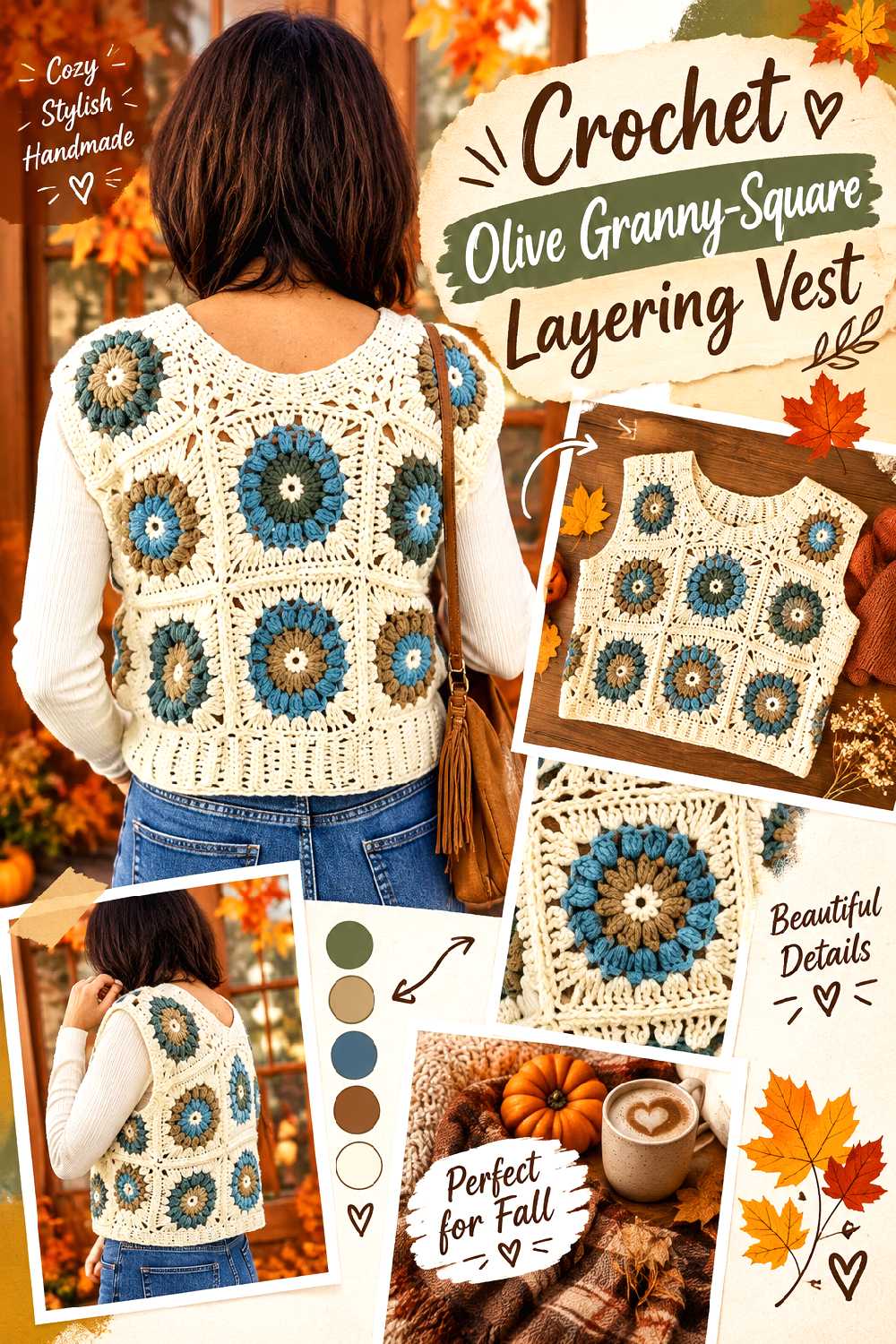
An olive granny vest gives the color a more graphic treatment. Instead of reading as one uninterrupted surface, the shade is divided by motif edges and joins. Sirin’s Crochet demonstrates a vest built with granny elements, which makes this a useful option for readers who prefer modular crochet over large garment panels.
You could keep the piece monochromatic and let texture provide the variation, or combine olive with cream, mushroom, tan, rust, or another deliberately chosen accent. What matters most is that every motif intended for the same area finishes at a compatible size before joining.
Block the Granny Units Before Judging the Vest Width
A pile of freshly crocheted squares does not always predict the final panel accurately because individual motifs may relax or square up during blocking. Measure several blocked pieces, not just your neatest one, before estimating panel width. Small differences become more obvious when several units sit in a row and can distort seams or armhole edges after joining.
Olive Motifs Can Read Dense Without a Lighter Join
A full olive motif layout creates more visual mass than scattered green accents. If you want clearer separation between squares, a contrasting joining or border color can define the grid. If you prefer a quieter garment, staying tonal allows the motif construction to appear mainly through shadows. Decide which effect you want before making dozens of units.
Keep Armhole Edges Flexible for Layering
A vest intended for fall may be worn over shirts, fitted knits, or dresses, so the armhole should be assessed with an actual layer underneath. An edging that looks tidy when the vest is flat can feel restrictive if worked too tightly. Try the assembled body on before final finishing whenever the source construction allows it, and correct tension issues before adding more edging.
Original Tutorial and Creator Credit
Creator: Sirin’s Crochet
4. Crochet Olive Two Point Poncho
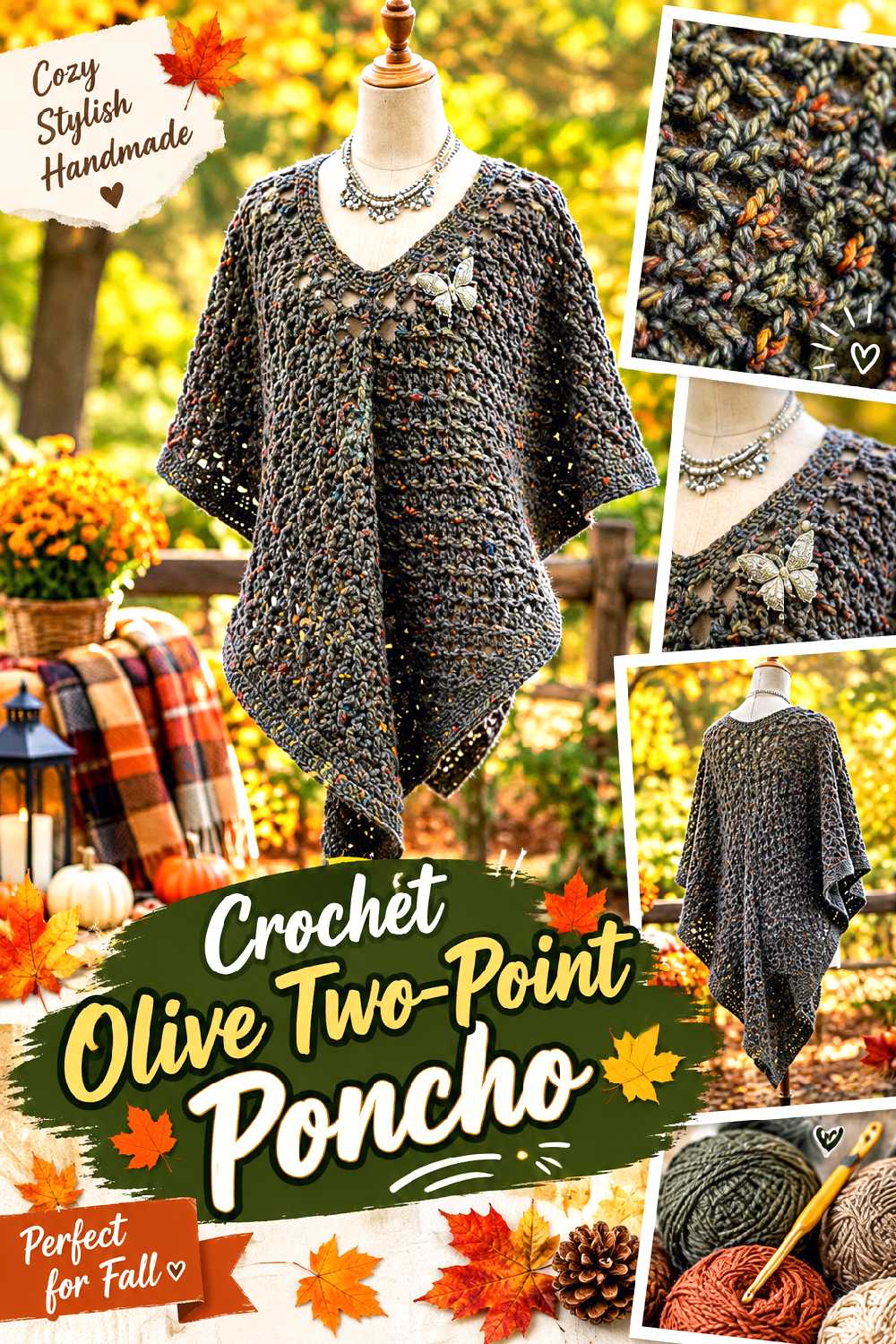
A poncho offers a broad field of olive without the fitted sleeve and armhole decisions of a conventional sweater. The Bag-O-Day Crochet tutorial produces a distinctive pointed silhouette, so this project adds a draped outer layer rather than another cardigan variation.
The shape works especially well when the color itself is intended to carry the look: deep olive across a large crochet surface can pair easily with denim, cream, black, or brown layers underneath. The trade-off is that broad fabric makes yarn weight and drape very noticeable, so a substitution should preserve the behavior of the source fabric rather than merely matching color.
The Two-Point Shape Adds Coverage Without Sleeve Fit
A poncho removes several fit variables, but it does not eliminate fit altogether. Neck opening, shoulder coverage, overall span, and point length still affect how comfortably it sits. If you plan to wear yours over a sweater rather than a thin top, assess the neckline and upper-body room with that extra layer in place.
Bulky Olive Yarn Can Make the Silhouette Visually Heavy
Because the fabric spreads across the torso, moving to a much thicker yarn can change both scale and visual weight quickly. A deep olive already absorbs more light than a pale neutral, so dense fabric may appear even more substantial. Swatch the intended yarn and compare its flexibility with the tutorial sample before assuming a thicker yarn will simply make a warmer version.
Test Neckline Comfort Over the Clothes You Will Wear
Ponchos often stay in place through the neckline rather than through fitted shoulders and sleeves. An opening that feels fine over a T-shirt can behave differently over a collared shirt or thick knit. Before final finishing, check whether it slips excessively, feels restrictive, or bunches the garment underneath.
Original Tutorial and Creator Credit
Creator: Bag-O-Day Crochet
5. Crochet Olive Knit Look Ribbed Beanie
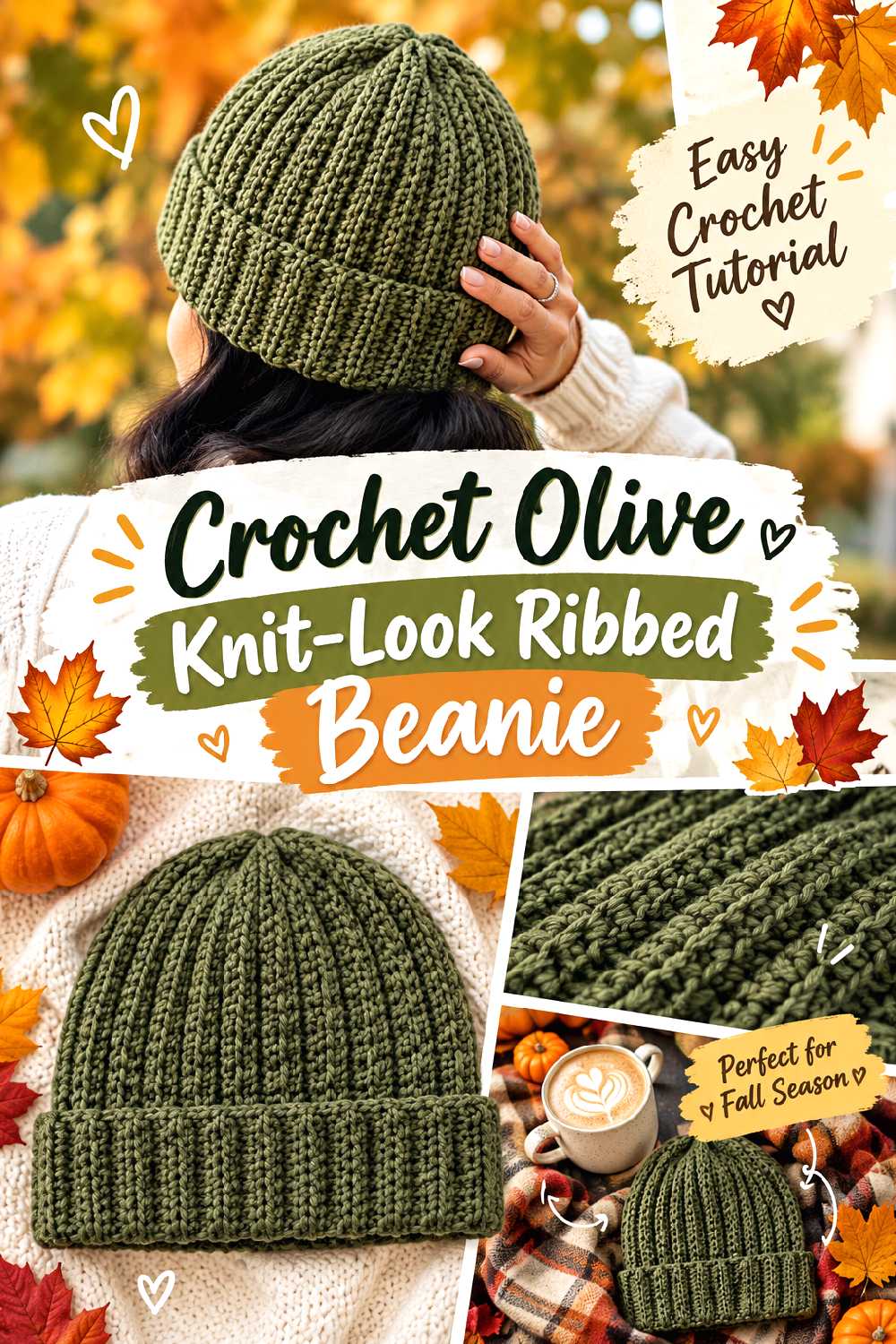
A ribbed beanie concentrates the olive trend into a smaller project while still giving the color plenty of depth. VivCrochets uses a knit-look crochet texture, creating vertical-looking ridges that produce alternating highlights and shadows across a solid yarn.
This is a practical choice if you like olive but do not want an entire garment in the shade. The clean shape also makes the yarn itself highly visible, so uneven tension or a substitution with very different stretch can influence both appearance and fit.
Ribbing Turns Olive Into a More Tonal Color
Deep grooves can make one solid skein look like several closely related olive shades as light crosses the surface. If that effect matters to you, choose a yarn with enough stitch definition for the ribbing to remain distinct. Very fuzzy yarn may soften the ridges and produce a more blended surface instead.
Fit Depends on Stretch, Not Just Flat Width
Two beanies with the same flat measurement can fit differently when one fabric stretches substantially more. Before joining or finishing, gently test how your ribbed swatch expands and recovers. If you change fiber from the tutorial, use the creator’s fitting guidance together with the behavior of your own fabric rather than relying on a flat measurement alone.
Watch the Crown Finish for Extra Bulk
Ribbed hat fabric can become thick where the top is gathered or cinched. A particularly bulky olive yarn may exaggerate that concentration of fabric. Before committing to a heavier substitute, pinch several layers of your swatch together to get a rough sense of how much thickness will collect at the crown.
Original Tutorial and Creator Credit
Creator: VivCrochets
6. Crochet Olive Braided Tunisian Ear Warmer
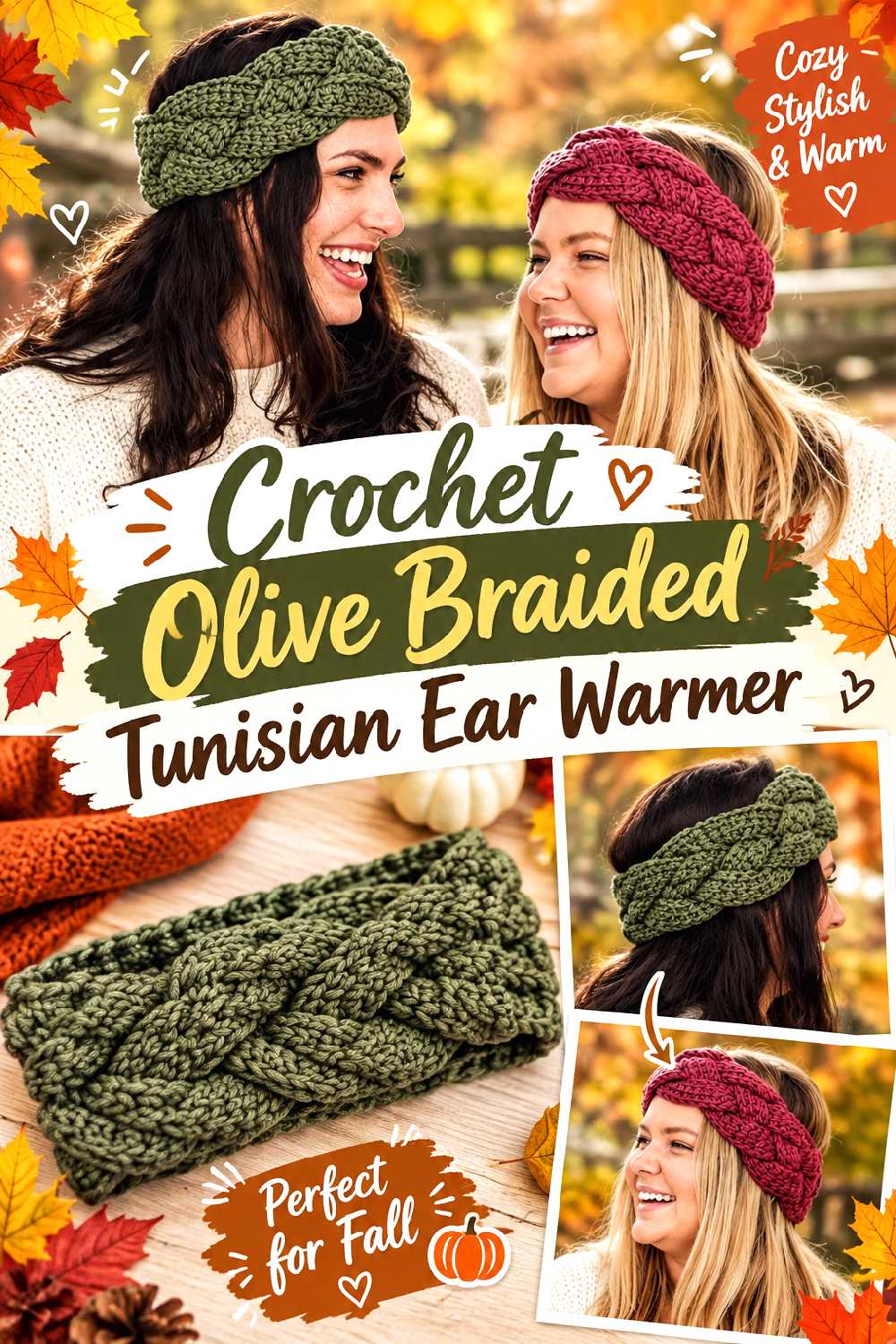
A braided ear warmer uses olive in a much more sculptural way than a standard flat band. TL Yarn Crafts’ design combines Tunisian crochet strips into a prominent braid, so the shadow between sections becomes part of the finished look.
That dimensional construction makes this a good project for a clear, medium-to-deep olive yarn where the braid remains readable. It is also a smaller commitment than a hat if you want a fall accessory without covering the entire head.
The Braid Needs Enough Definition to Stay Visible
A yarn with strong halo or very irregular texture can blur the boundaries between braided sections. Make a short sample first if you are considering a fuzzy olive yarn. If the individual strips disappear visually, a smoother yarn may display the construction more clearly even when both choices are technically workable.
Measure Where the Band Will Actually Sit
Head measurements change depending on where a band is worn. Measure around the intended position across the forehead and behind the head rather than using a generic hat measurement. TL Yarn Crafts also identifies a try-on point in the construction, which is useful because fabric stretch can vary between yarn substitutions.
Keep the Join Flat Behind the Head
A decorative braid is supposed to create volume at the front; the back join does not need to compete with it. When finishing, check that seam allowances and yarn tails are not creating a hard lump where the band rests against the head. A flatter back improves comfort and lets the braided section remain the focal point.
Original Tutorial and Creator Credit
Creator: TL Yarn Crafts
7. Crochet Olive Ribbed Fingerless Gloves
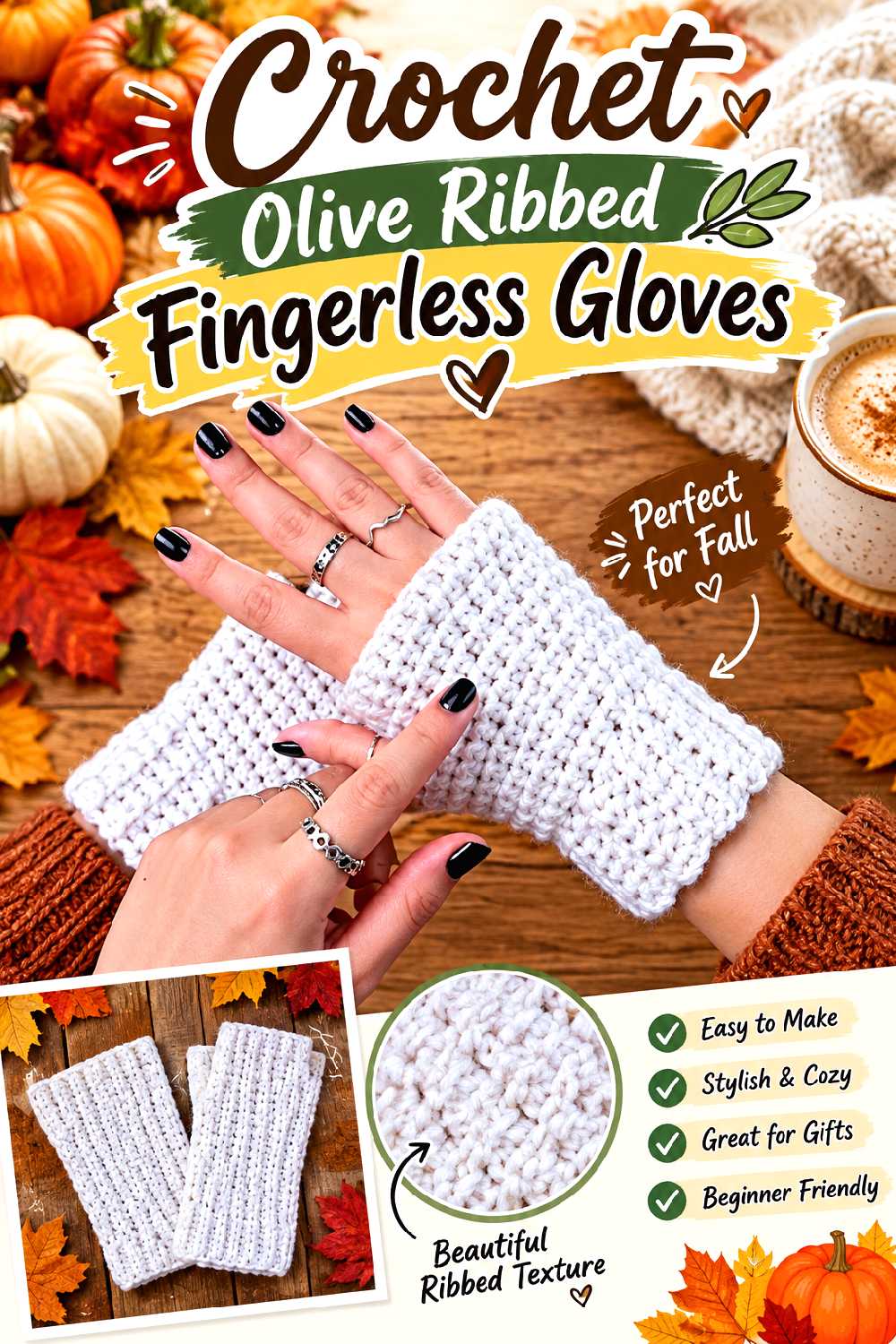
Fingerless gloves bring olive close to the hands without hiding fingers, making them useful for cool fall days when full mittens would be more coverage than you want. Cherilyn Q’s tutorial includes the major structural areas that matter for this style: starting width, thumb opening, shaping, and ribbed finishing.
Because gloves are worn as a pair, consistency becomes a bigger concern than it is with a single hat or scarf. Record any adjustments you make to the first glove so the second does not slowly become a different size.
Thumb Placement Matters More Than Glove Length
A glove can have the right overall length and still feel awkward if the thumb opening falls too high, low, forward, or backward for your hand. Try the first glove on as soon as the construction makes that practical. If you are adapting the fit, prioritize natural thumb position before deciding how much wrist or hand coverage you want.
Match Both Gloves Before Final Finishing
Tension can shift over a project, particularly if the second glove is made days later. Compare the pair flat and on the hands before weaving every end permanently. Look at cuff width, thumb position, and top edge rather than simply counting on identical written instructions to produce identical fabric.
Ribbed Cuffs Should Stretch Without Cutting In
The cuff needs enough recovery to stay near the wrist but should not create uncomfortable pressure. When substituting an olive yarn with different elasticity, test the cuff on the intended wearer before adding unnecessary length elsewhere. A small difference in stretch is more noticeable on the wrist than on a loose scarf.
Original Tutorial and Creator Credit
Creator: Cherilyn Q
8. Crochet Olive Textured Shawl Wrap
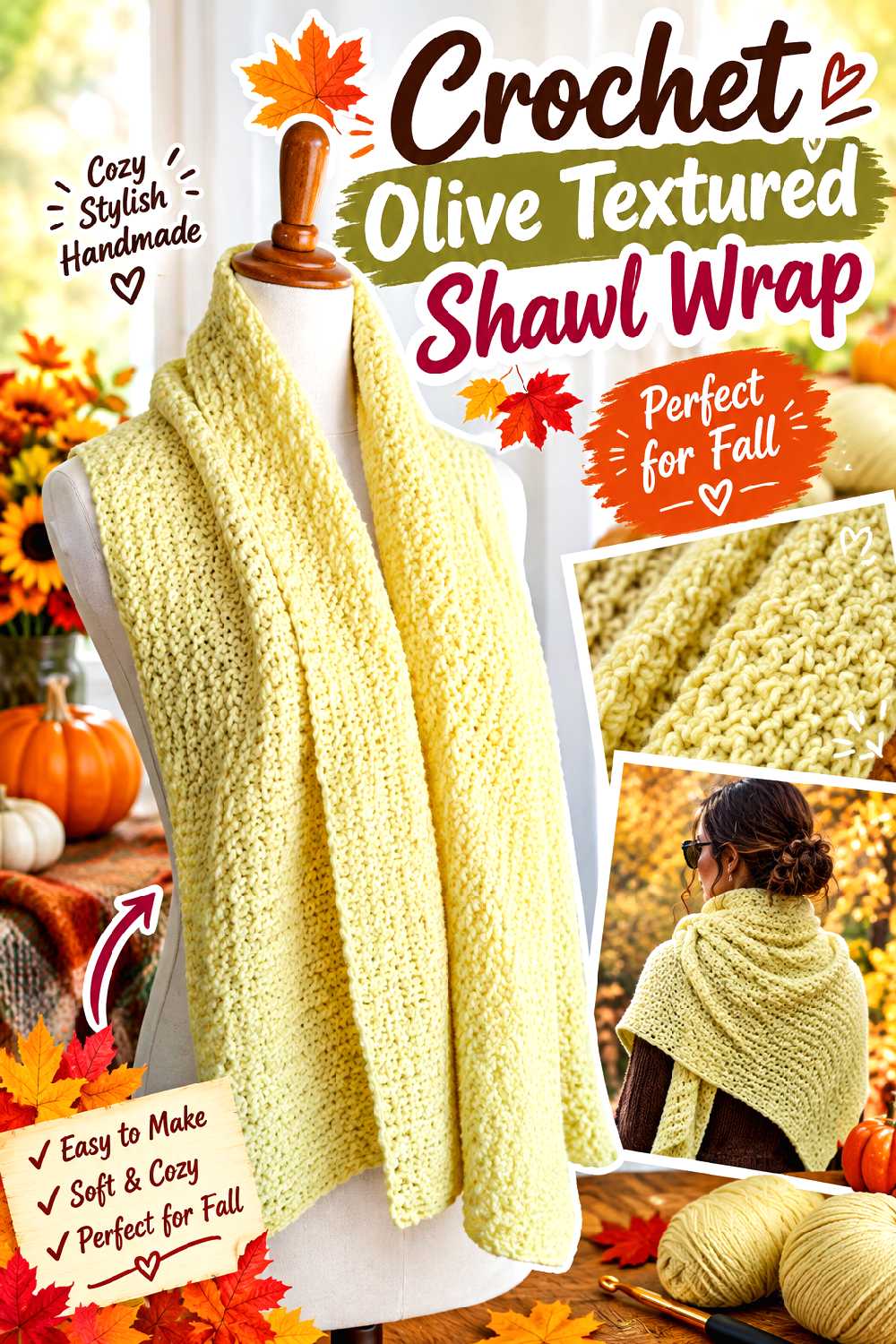
A rectangular olive shawl introduces the trend through drape rather than fitted garment construction. Fiber Flux’s Lemon Chiffon Shawl uses a simple repeating texture across a wearable wrap, so the underlying format adapts naturally to a solid olive palette even though the source sample uses another color.
This approach suits readers who want something that can sit over a shirt, dress, or light sweater without calculating armholes or sleeve length. Because a shawl is essentially a large expanse of fabric, yarn hand and weight become especially important.
Drape Decides Whether Olive Looks Soft or Stiff
The same shade can read completely differently in a supple shawl and a rigid one. Work enough of a swatch to let it hang over an edge rather than judging only by how it feels flat. If it forms hard folds instead of falling naturally, reconsider the yarn or hook choice before committing to the full wrap.
A Solid Color Makes Small Texture Changes Easier to See
Fiber Flux’s design relies on a repeating textured surface, and olive can showcase that without the interruptions of strong color changes. Under natural light, the stitches produce quiet tonal variation. If the yarn is highly variegated or fuzzy, that subtle surface pattern may become less obvious.
Check Shoulder Grip Before Making the Wrap Longer
Extra length adds styling options, but it also adds weight that can pull a smooth shawl off the shoulders. Drape a partially completed piece or a comparable fabric around yourself before deciding to extend it. If it already slides easily, more length may increase that behavior rather than improving wearability.
Original Tutorial and Creator Credit
Creator: Fiber Flux
9. Crochet Olive Mesh Market Tote
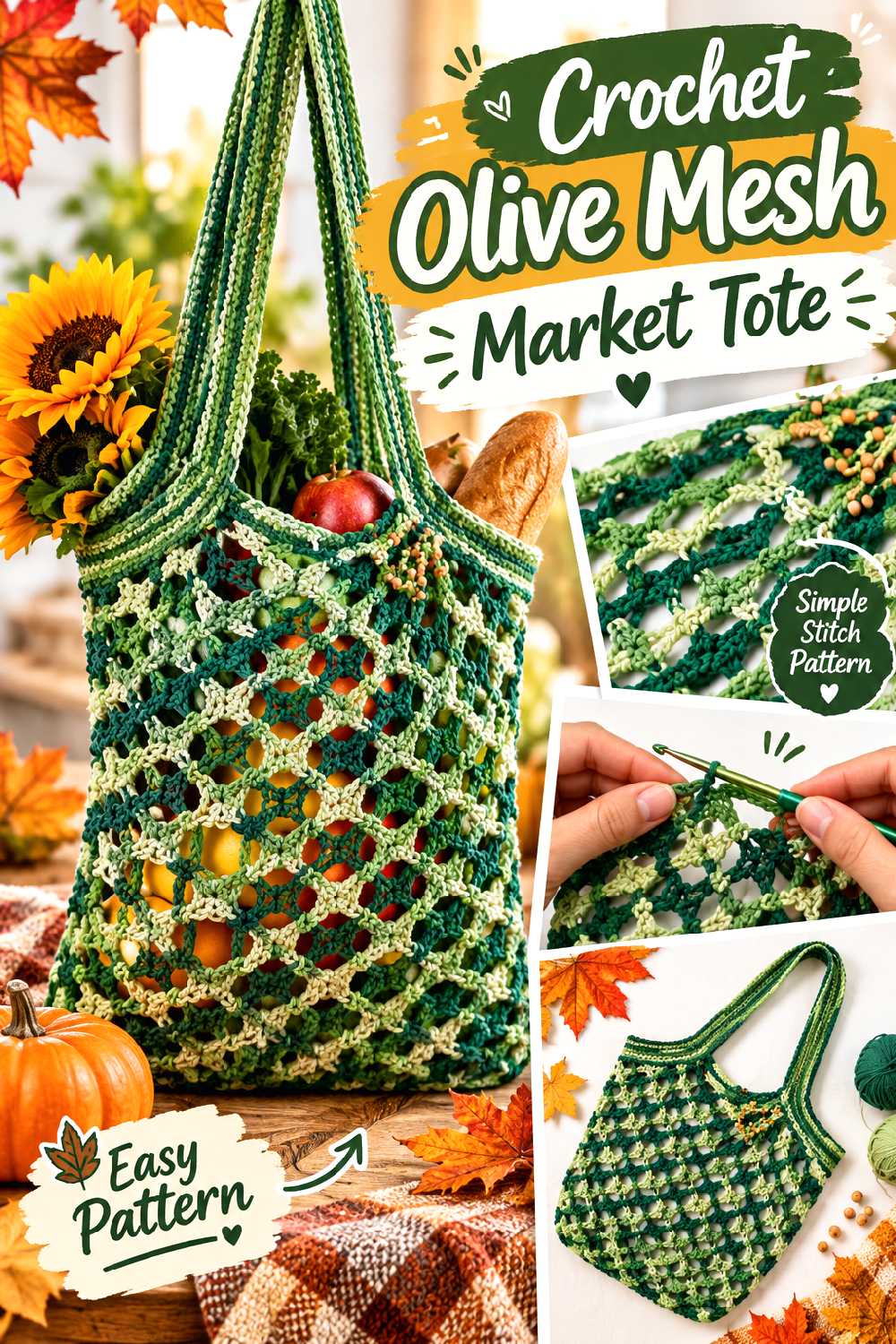
Olive mesh gives a market bag an earthy, utilitarian look while the openwork keeps the large surface from feeling visually heavy. Home Handwork Diy’s 2026 tutorial shows an openwork shopping bag with handles that are reinforced during the project.
This tote differs from a solid handbag because the fabric is expected to open and expand around what it carries. That makes stretch, hole size, and handle behavior more important than creating perfectly rigid walls.
Open Mesh Expands More Than It Looks Flat
An empty mesh tote can appear narrow and compact on a table, then change shape substantially when filled. Before deciding that your olive version needs extra width or length, stretch a sample gently or place light objects in a partially completed bag. What looks undersized when flat may already have plenty of usable expansion.
Reinforced Handles Matter More Than Decorative Color Changes
The tutorial specifically includes handle reinforcement, a useful detail because handles concentrate carrying force into a relatively small area. If you introduce accent colors, do not let the decorative plan distract from consistent handle tension and attachment. A beautifully striped tote is still frustrating if the handles stretch unevenly.
Keep Small Items in Mind Before Choosing Openwork
Mesh is practical for many larger objects, but small or pointed items can work through generous openings. Consider what you actually intend to carry. If your everyday use involves keys, pens, or other small pieces, a removable pouch or lining concept may make more sense than altering the mesh until it no longer behaves like the original design.
Original Tutorial and Creator Credit
Creator: Home Handwork Diy
10. Crochet Olive Panel Construction Handbag
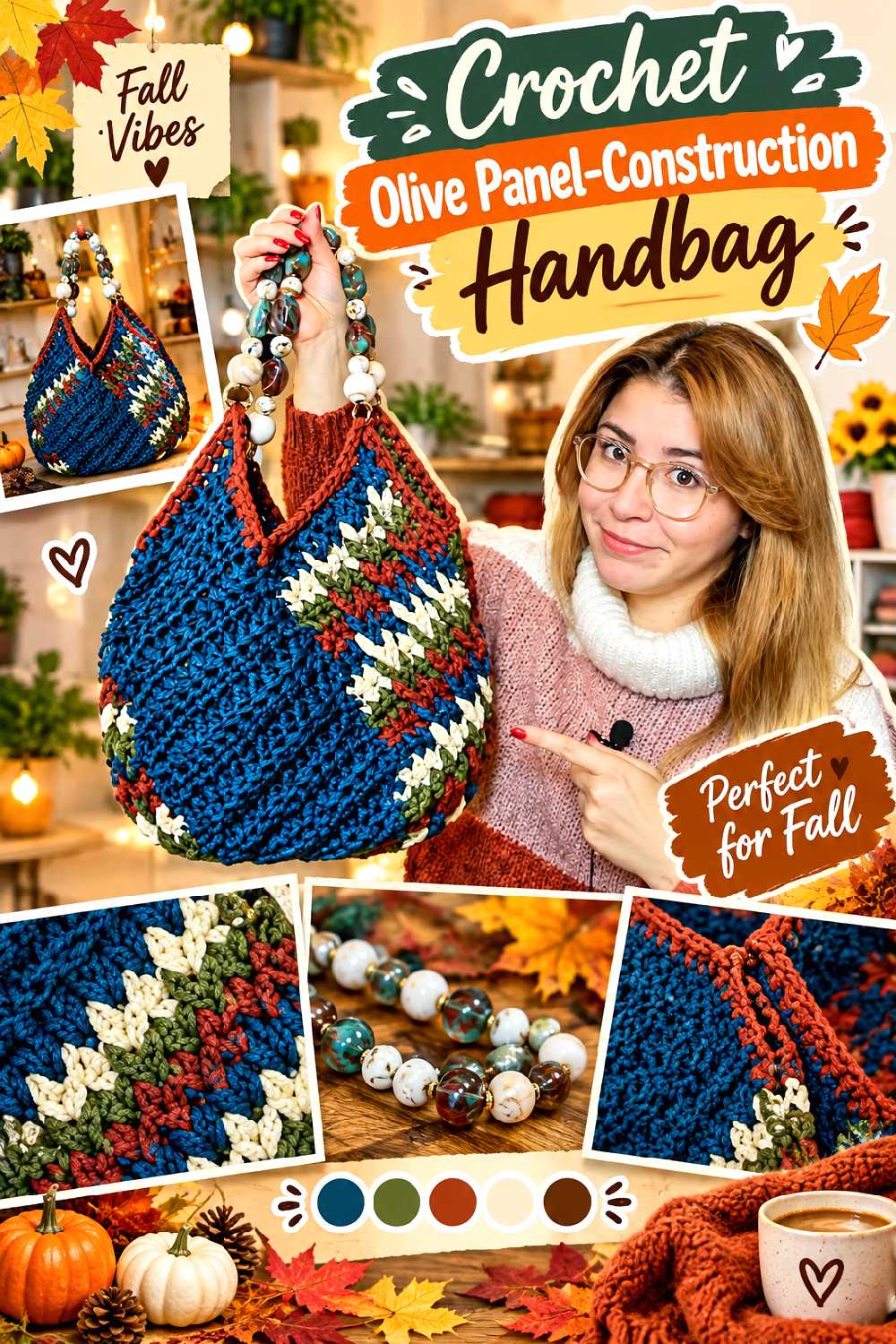
A solid handbag puts olive into a more structured accessory than the previous mesh tote. Brunaticality’s bag tutorial uses separately made crochet panels to form the body, creating defined edges and a compact shape instead of an expanding net.
This is a useful direction if you want olive to read more polished than rustic. A tonal lining, metal or wooden hardware, or a contrasting handle can change the style dramatically without altering the crocheted shell. The main planning task is keeping the component pieces compatible before assembly.
Panel Alignment Controls the Final Bag Shape
If two panels intended to meet along an edge finish at noticeably different dimensions, forcing them together can create puckering or twisting. Compare completed sections before assembly and correct tension differences while changes are still manageable. Blocking may help compatible pieces settle, but it cannot always disguise substantial size discrepancies.
Hardware Changes Where the Bag Carries Its Weight
A purchased handle or other hardware concentrates stress around attachment points differently from a fully crocheted handle. Before finishing your olive bag, inspect how the source design connects those components and make sure your chosen hardware is compatible with the panel thickness. Decorative hardware should not force the fabric into an awkward angle.
A Lining Can Protect the Shape of a Soft Crochet Shell
A lining is an optional adaptation rather than an automatic requirement. It becomes more useful when the crochet fabric stretches, when you carry objects that might poke through stitches, or when you want the interior to feel more finished. If adding one, plan it around the finished crochet dimensions rather than guessing before the panels are assembled.
Original Tutorial and Creator Credit
Creator: Brunaticality
11. Crochet Olive Structured Storage Basket
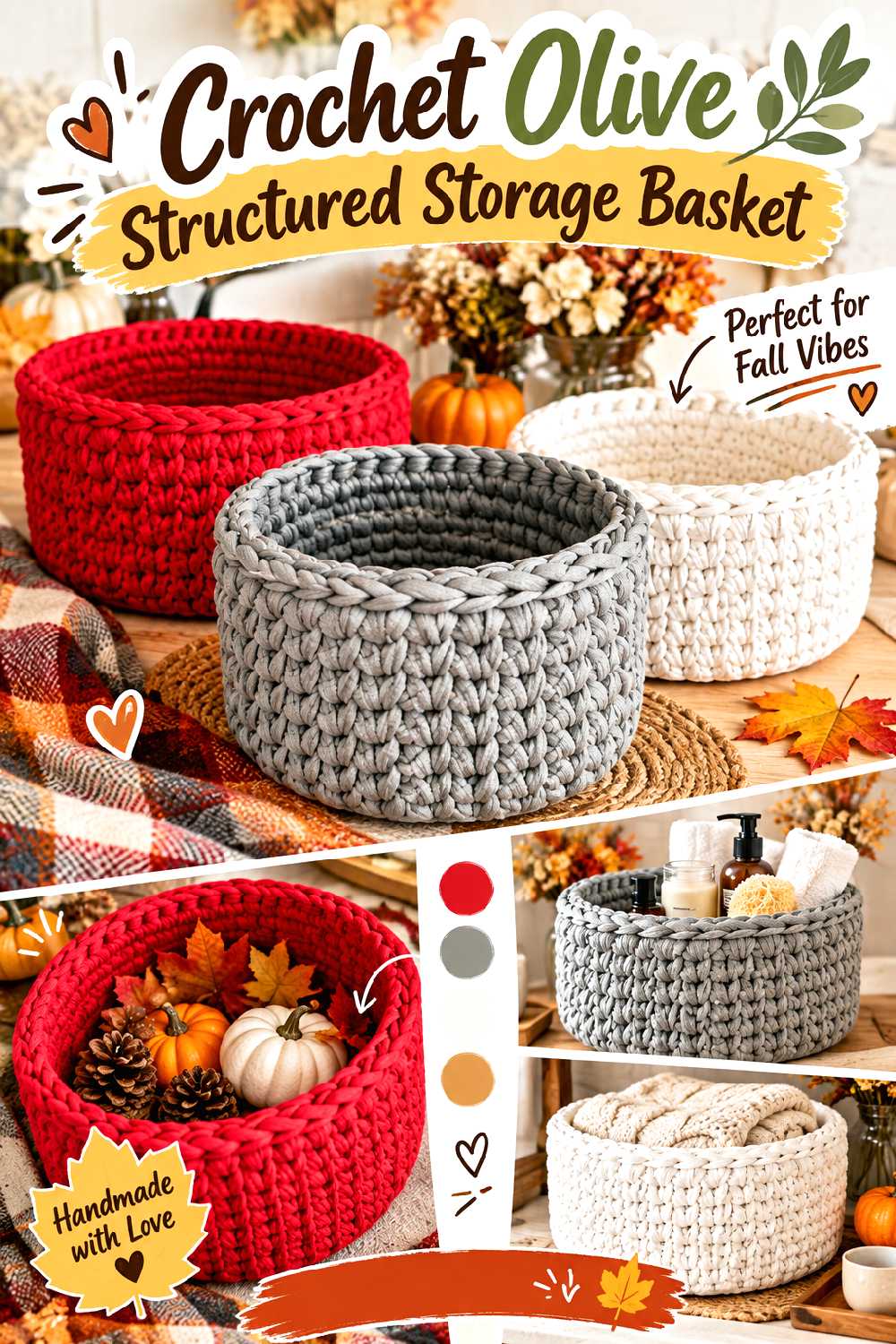
An olive basket moves the color from wardrobe styling into practical home storage. Lallaulab’s tutorial uses ribbon yarn for a customizable basket, a material choice that matters because the broad yarn contributes strongly to the finished structure.
Olive is particularly adaptable here: it can blend with wood, cream, black, warm white, and natural fibers without looking overtly seasonal. Use it for visible storage only after considering what the basket needs to hold and how much wall stability that use requires.
Ribbon Yarn Gives Olive a Cleaner Architectural Look
Broad ribbon-style yarn creates larger, more graphic stitches than ordinary smooth yarn. In olive, that can make the basket look almost woven from a distance. If you substitute conventional yarn, expect the walls and stitch scale to change even if you match the color closely. Comparing a small sample against the tutorial fabric is the safest way to judge the difference.
Match Basket Height to What You Plan to Store
Very tall sides are not automatically more useful. A basket for rolled cloths, yarn, or larger objects needs different proportions from a catchall for small accessories. Before extending the walls, place representative items beside the unfinished piece and consider whether you need visibility, easy access, or more containment.
Soft Yarn Needs More Help to Hold Vertical Walls
A beautiful olive yarn may still be a poor structural substitute if its fabric collapses easily. That does not make it unusable, but it changes the result. You may need to accept a softer storage basket or investigate an appropriate insert, lining, or reinforcement concept rather than expecting the same silhouette produced by ribbon yarn.
Original Tutorial and Creator Credit
Creator: Lallaulab
12. Crochet Olive Daisy Texture Baby Blanket
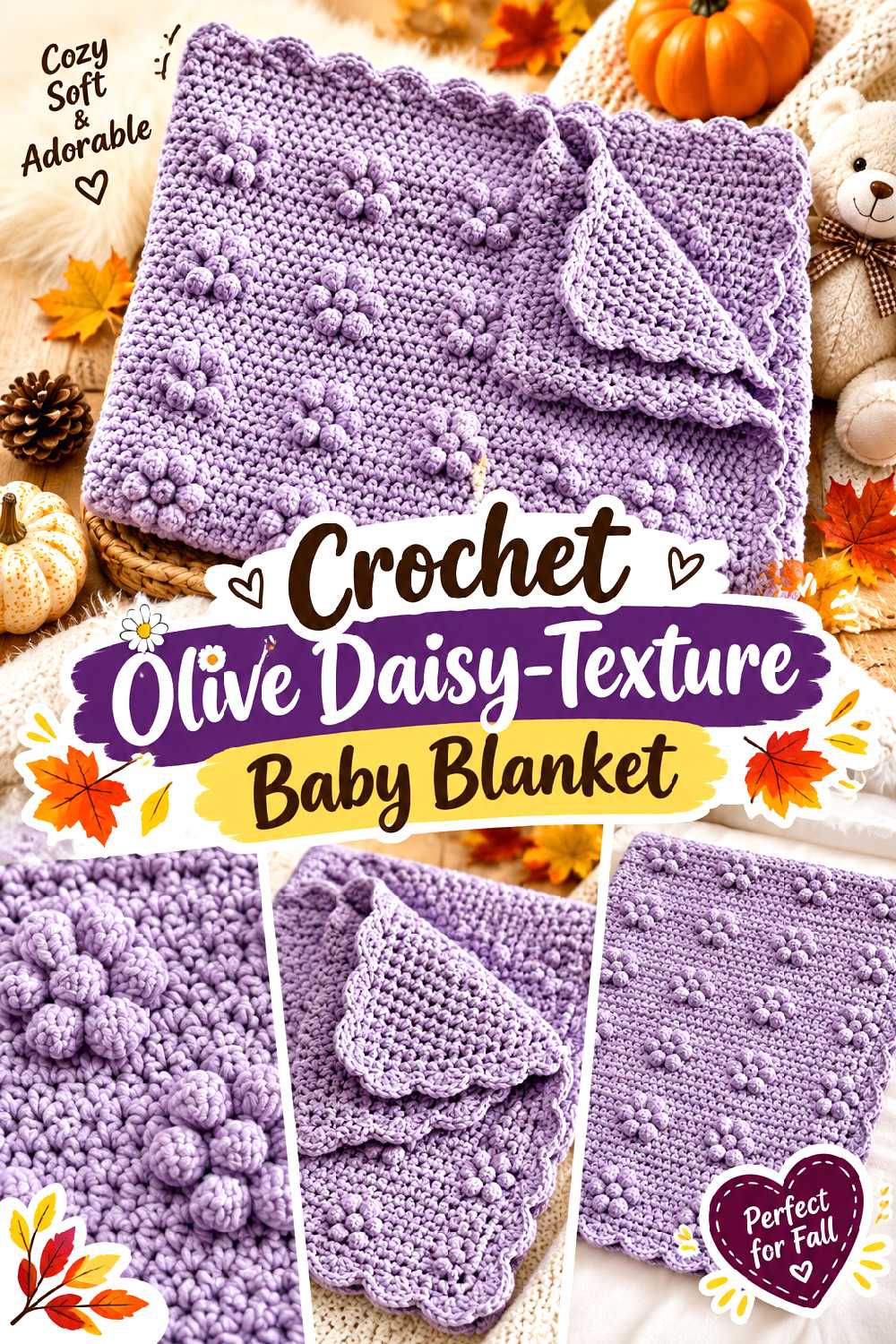
Olive can work surprisingly well in a floral baby blanket when the color is softened with cream, oatmeal, pale beige, or another gentle contrast. Daisy Farm Crafts’ Daisy Rows Baby Blanket uses raised floral texture across a full blanket, making the surface much more dimensional than a plain solid throw.
The original design uses a specific yarn and texture combination, so an olive adaptation should preserve the visibility of the flower rows rather than simply changing every material. This is also a project where care information deserves attention if the blanket will be gifted.
Let the Daisy Texture Show Without Overloading the Palette
Raised motifs already provide substantial visual activity. If you want a calm olive blanket, consider keeping the surrounding palette restrained rather than adding many competing shades. Alternatively, use olive as the background and a lighter flower color for stronger definition. Make a small motif sample first so you can see whether the floral texture remains readable.
Confirm Fiber Care Before Making a Gift Blanket
Do not assume that a yarn is easy-care because it feels soft in the skein. Read the manufacturer’s current washing and drying instructions for the exact yarn you buy, especially if the blanket will go to another household. A practical care routine can matter more to the recipient than matching a particular olive undertone.
Sample a Small Section Before Scaling the Blanket
Daisy Farm Crafts specifically recommends experimenting with a small swatch when judging hook choice and texture. That is especially useful with an olive substitution because raised stitches need enough definition to appear clearly. A sample also lets you evaluate softness and drape before committing to a blanket-sized quantity of yarn.
Original Tutorial and Creator Credit
Creator: Daisy Farm Crafts
13. Crochet Olive Granny Texture Pillow Cover
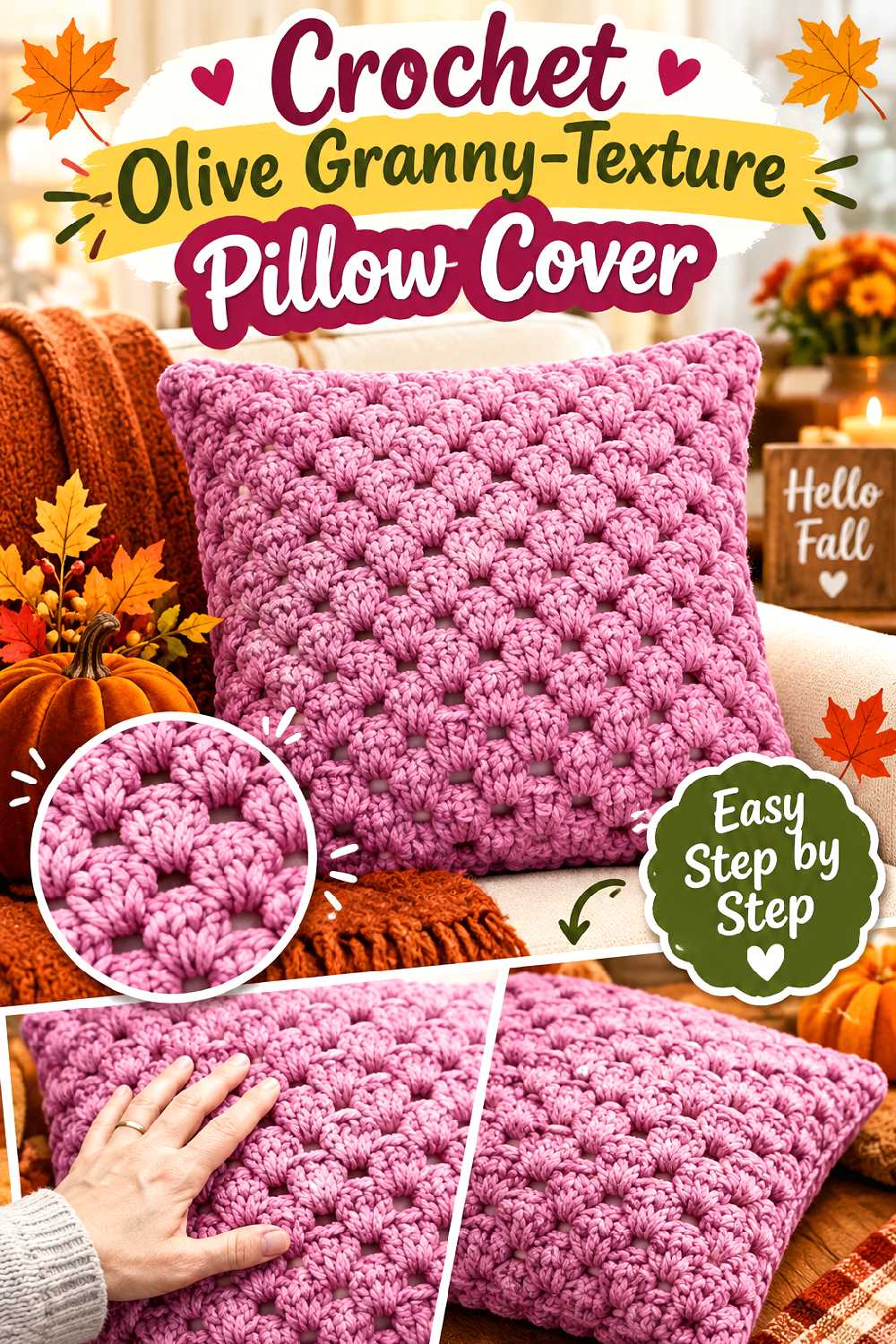
A crochet pillow is a manageable way to bring olive into a room without changing an entire color scheme. Rosa Angélica’s tutorial uses granny-style texture in a cushion cover with a flap rather than a zipper, giving this project both visible stitch rhythm and a practical removable-cover format.
Deep olive can ground a cream sofa, warm wood chair, or neutral bedding, while a lighter moss olive gives the same texture a softer look. The key is matching the cover to the insert you actually have instead of copying source dimensions automatically.
Match the Cover to the Actual Pillow Insert
Pillow inserts vary, and crochet fabric can stretch differently depending on yarn and tension. Measure your insert and compare it with your completed fabric as you work. A cover that is too loose loses definition, while one that is excessively tight can distort the stitches and place unnecessary strain on seams.
Envelope-Style Closures Need Enough Overlap
The source pillow uses a flap-style closure rather than a zipper. If adapting dimensions, remember that the back pieces need sufficient overlap to keep the insert from showing through during use. Test the cover with the insert inside before treating the back edge as finished.
Olive Works Best Here When Stitch Definition Stays Crisp
A granny texture is part of the visual appeal, so consider how clearly the yarn shows clusters and openings. A very fluffy dark olive may hide that structure, while a smoother yarn makes each change in surface easier to see. Examine a sample from both close range and across the room, since home décor is usually viewed from farther away than a glove or hat.
Original Tutorial and Creator Credit
Creator: Rosa Angélica
14. Crochet Olive Harvest Pumpkin
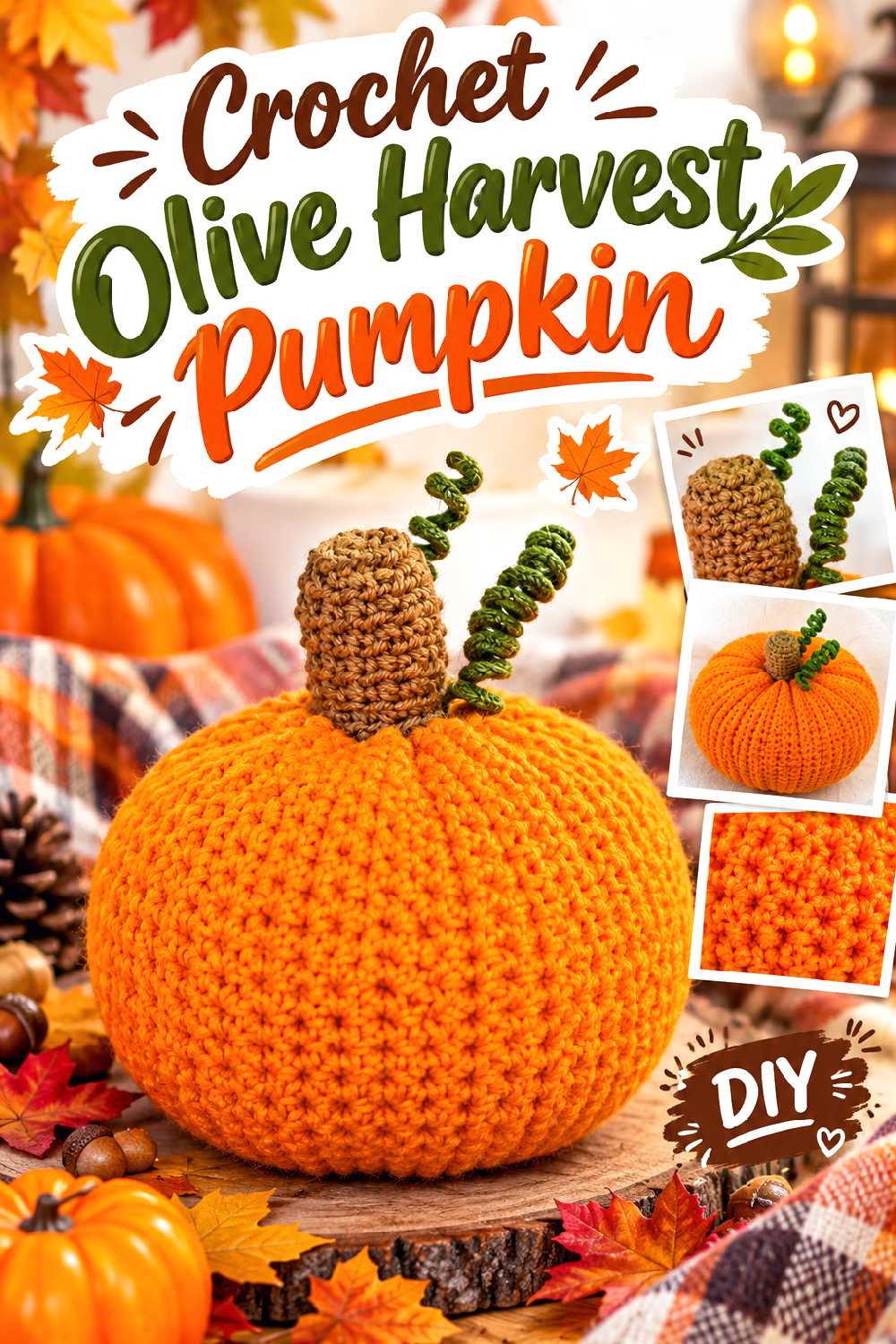
An olive pumpkin offers a quieter alternative to bright orange seasonal décor. The Michaels Stores tutorial demonstrates a stuffed crochet pumpkin with a separate stem and finishing that creates the recognizable segmented form.
Deep moss, loden, or brown-olive yarn can make the project feel more botanical than Halloween-specific, allowing it to stay out from early fall through Thanksgiving-style decorating. Pairing it with cream or rust pumpkins can add contrast without turning every piece into the same color variation.
Shape Depends on Even Stuffing, Not Just Ribbing
The crochet shell creates the foundation, but stuffing distribution strongly affects the final silhouette. Add and redistribute filling gradually so one side does not become visibly firmer than the other. Before closing completely, set the pumpkin on a flat surface and check that its base and top sit where you expect.
Use Stem Contrast to Keep an Olive Pumpkin Readable
An olive body beside a similarly dark green-brown stem can lose some visual separation. A warmer brown, tan, or deliberately different green gives the top clearer definition. You do not need high contrast; even a small shift in value or texture can stop the stem from disappearing into the body.
Group Different Scales Instead of Making Exact Duplicates
If you want several pumpkins for a shelf or table, variation usually creates a more natural arrangement than cloning the same piece repeatedly. Use the source tutorial for its construction, then check what resizing options the creator supports before changing proportions. You can also create variety through yarn shade and display height without altering the pattern itself.
Original Tutorial and Creator Credit
Creator: Michaels Stores
15. Crochet Olive Leaf Chain Garland
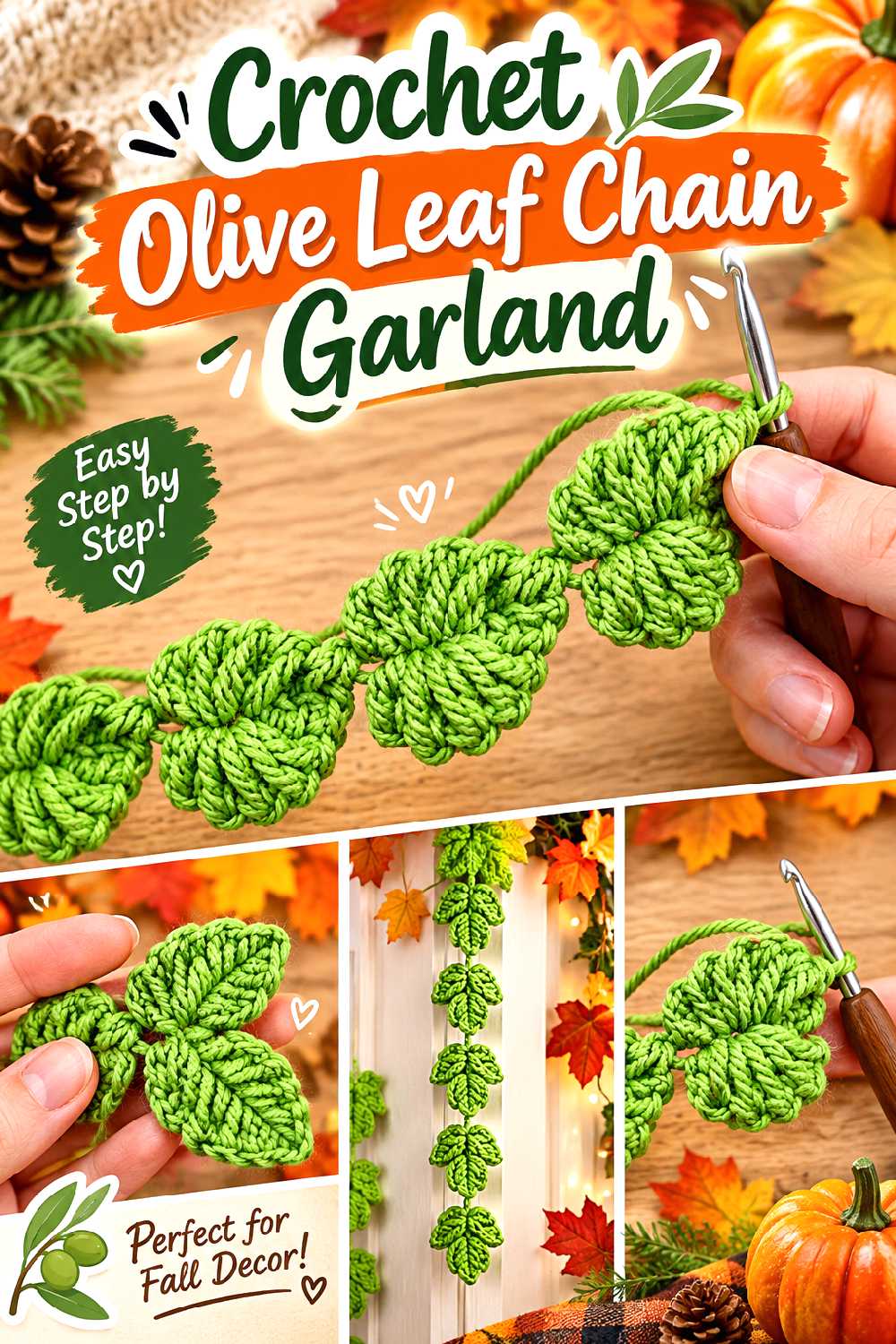
Instead of another bulky décor item, a leaf chain introduces olive as a narrow linear accent. HappyBerry Crochet’s tutorial teaches continuous crochet leaf chains that the creator suggests for several uses, including edging, bookmarks, bracelets, and straps.
For fall décor, that same chain concept can be extended into a decorative strand for a shelf, mantel, mirror, or table arrangement. This is an adaptation rather than a source-specific garland pattern, so decide the display location first and build only as much length as you actually need.
Treat the Tutorial as a Motif Chain, Then Plan Display Length
Measure the space where the strand will hang before producing a long chain. A mantel arrangement may need gentle drape, while a shelf accent might only need a short curve. Leave enough flexibility for positioning rather than aiming for an arbitrary length based on another room.
Multiple Olive Undertones Create More Natural Depth
If a single solid olive feels too uniform, use closely related greens instead of jumping straight to a rainbow palette. Brown-olive, moss, sage-olive, and deep forest-olive can create subtle leaf variation while keeping the strand cohesive. First make sure the yarns have compatible thickness so individual leaves do not suddenly change scale.
Hanging Weight Can Twist a Long Decorative Strand
A short chain behaves differently from a very long one. As length increases, its own weight can pull leaves downward or rotate the strand. Hang a partial section in the intended orientation before continuing. That checkpoint will tell you whether you like the drape or need a different display method.
Original Tutorial and Creator Credit
Creator: HappyBerry Crochet
16. Crochet Olive Woodland Pinecone Accent
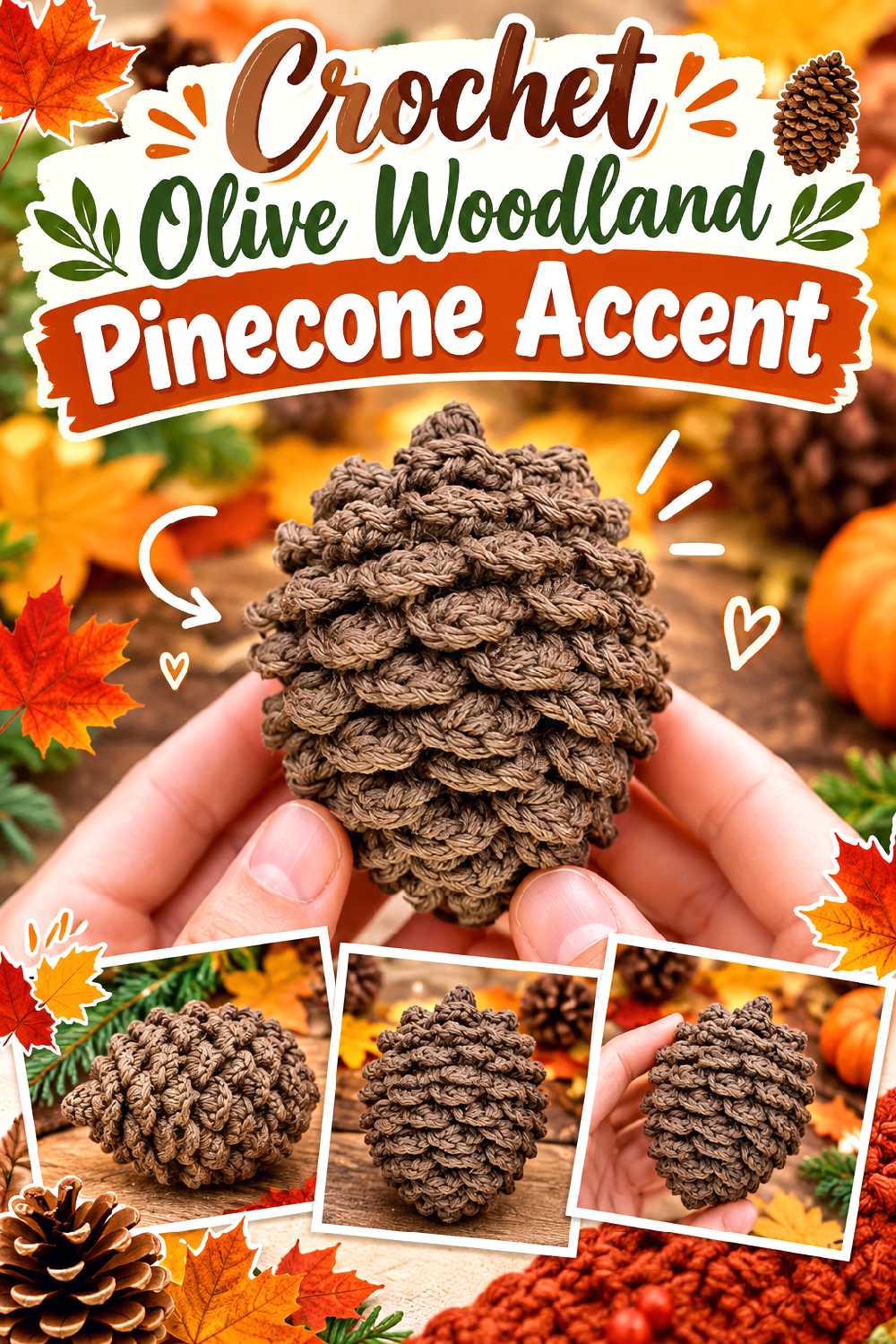
Club Crochet’s pinecone amigurumi offers the most sculptural woodland idea in this collection. The finished form uses dimensional scale-like texture and can stand as a small shelf accent rather than functioning as a flat motif.
Natural pinecones are typically brown, so an olive version is intentionally stylized. That can work well in a fall arrangement with bark brown, oatmeal, cream, or muted rust, particularly if you want green in the display without making another leaf or pumpkin.
Scale Texture Needs Strong Light-and-Shadow Contrast
The pinecone’s surface is the feature worth preserving. Very fuzzy yarn may blur the individual raised sections, while a clear worsted-style fabric makes the dimensional structure easier to read. In a dark olive, check the piece under the lighting where it will actually be displayed; low light can flatten the texture visually.
Choose Shelf Décor Over Toy Use When Small Parts Are Present
The tutorial’s material list includes small eyes. If you reproduce those features, treat the finished piece as decorative unless you have independently selected and secured components appropriate for the intended recipient. For a simpler woodland ornament, omitting a face can also shift the design away from a character and toward botanical décor.
Pair Deep Olive With Bark and Oatmeal Neutrals
Pinecone texture already creates plenty of surface interest, so the surrounding display does not need many strong colors. Deep olive against wood, oatmeal fabric, or cream pottery lets the silhouette stay visible. If placing several crocheted pieces together, vary height and form rather than making every object equally dark and equally textured.
Original Tutorial and Creator Credit
Creator: Club Crochet
17. Crochet Olive Lounge Slippers
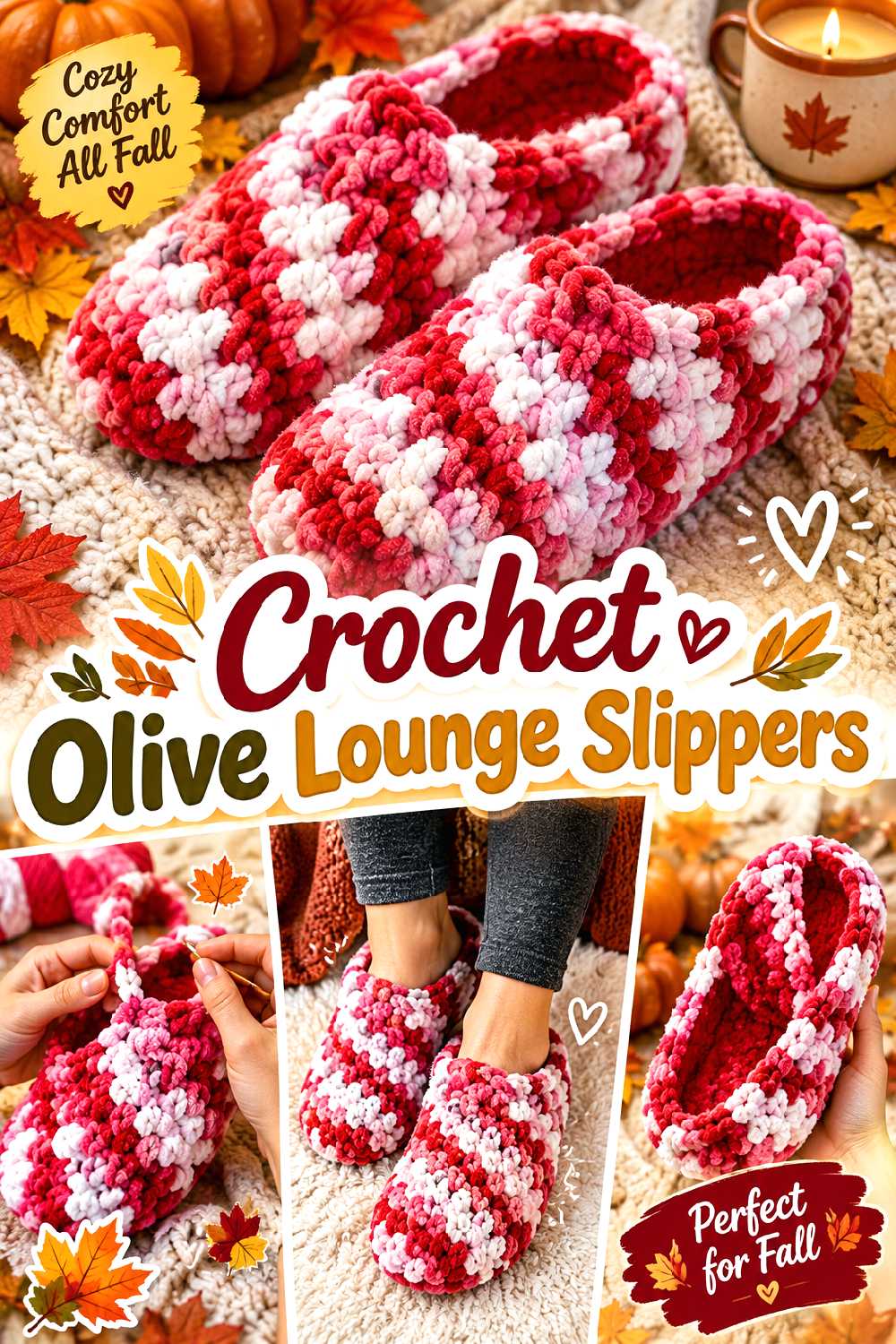
Olive slippers carry the fall palette into a practical indoor project. DIY FROM HOME CROCHET’s tutorial shows a soft, snuggly slipper from start to finish, making this project different from wearable accessories that are mainly decorative or layered outdoors.
The source uses a plush style of fabric, so changing to a thinner olive yarn would not simply change the color—it could change cushioning, fit, and structure. Compare material behavior carefully before substituting.
Foot Length Is Only One Part of Slipper Fit
A slipper must also accommodate foot width, instep volume, and how much the crocheted fabric relaxes during wear. Try on the first piece at the checkpoints available in the tutorial rather than assuming a length measurement settles the fit. If making a pair for someone else, obtaining an actual foot measurement is more useful than relying only on shoe size.
Check Hard-Floor Slip Risk Before Wearing Them
Crochet yarn soles can be slippery on smooth flooring. Consider the surface where the slippers will be used and, where appropriate, investigate a purpose-made nonslip sole treatment or suitable attached sole. Do not assume a yarn fiber alone provides dependable traction, especially on polished tile or wood.
Plush Yarn Can Hide the Shape More Than the Color
A very fluffy olive yarn produces a softer visual surface but can obscure stitch boundaries and make fit errors harder to spot while working. Frequently compare the two slippers by overall dimensions and silhouette rather than relying only on visible stitch definition. Marking important locations can also help when the fabric itself makes stitches difficult to distinguish.
Original Tutorial and Creator Credit
Creator: DIY FROM HOME CROCHET
18. Crochet Olive Hooded Cowl
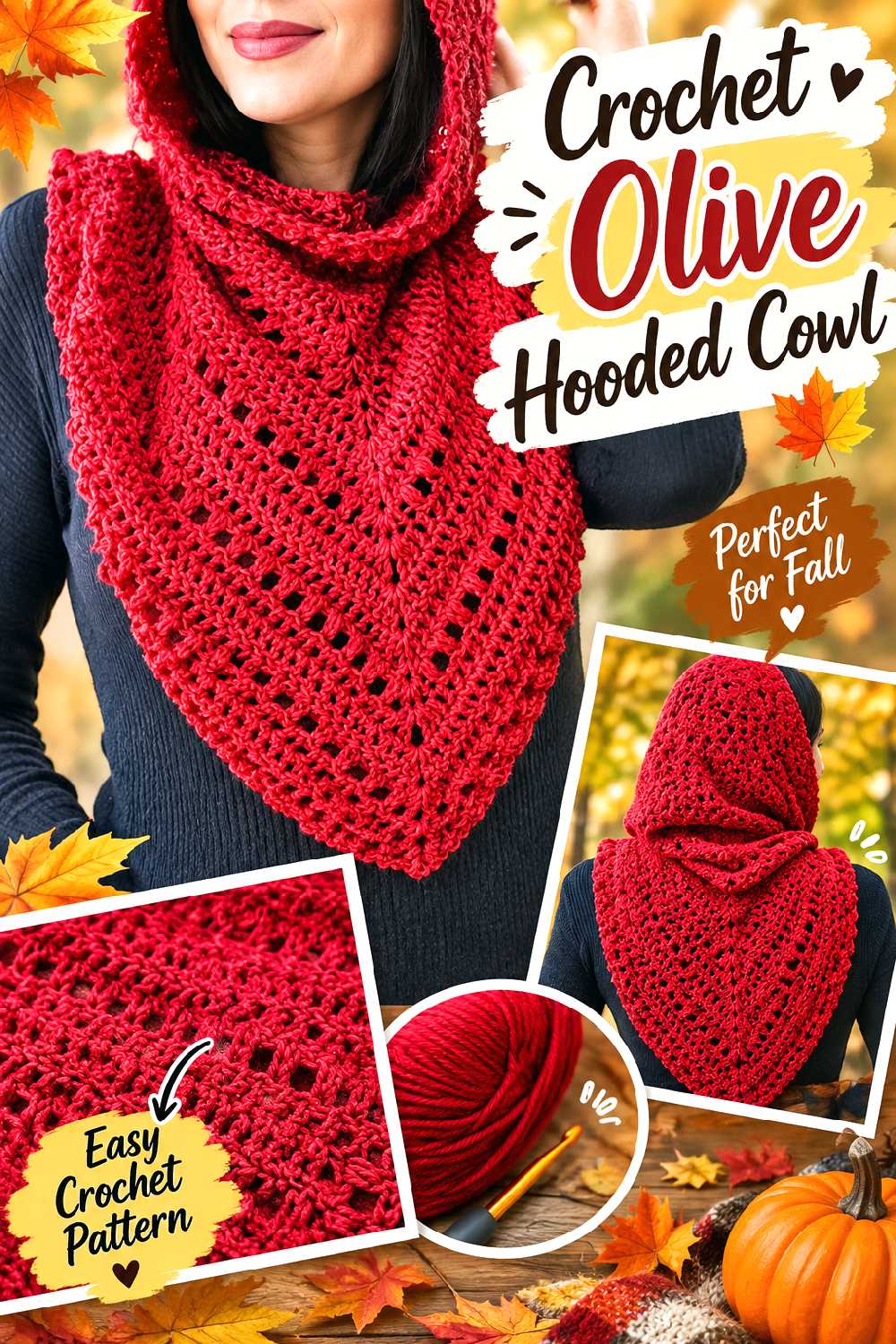
A hooded cowl finishes the collection with a hybrid accessory: more coverage than a standard cowl, but much less garment construction than a sweater or cardigan. The Knotty Lace tutorial combines a hood with neck and shoulder coverage and is designed to allow fit adjustments.
In olive, the shape can work as a strong fall accent over denim jackets, simple coats, or neutral sweaters. Because the hood frames the face, yarn feel and edge behavior matter more here than they would in a basket or pumpkin.
Hood Depth Changes the Look More Than Extra Decoration
A close hood and an oversized hood create very different silhouettes even when the stitch pattern is unchanged. Decide whether you want the hood to sit near the head or drape farther back before adding decorative details. The source specifically discusses adjustable hood proportions, so use those creator-supported checkpoints instead of guessing from a single finished photo.
Face-Framing Edges Should Feel Comfortable Against Skin
The yarn may touch the forehead, cheeks, neck, and chin, making texture sensitivity more important than it is for a handbag. Rub a swatch against those areas before committing to a large olive skein purchase. A yarn that feels perfectly acceptable in the hand can feel very different against the face for an extended period.
Balance Shoulder Coverage With the Jacket Underneath
A wide cowl section can look polished over a thin top but bunch over bulky outerwear. Try the developing piece with the coat or sweater you expect to wear most often. That practical check helps you judge whether the shoulder area needs the amount of coverage shown in the source or whether a supported adjustment would suit your wardrobe better.
Original Tutorial and Creator Credit
Creator: theknottylace.com
How to Choose Between These Olive Green Crochet Ideas
| What you want to make | Projects to compare | Main decision to check first |
|---|---|---|
| A substantial fall layer | Cardigan, sweater, granny vest, poncho | Gauge, intended ease, drape, and finished garment weight |
| A smaller wearable accent | Beanie, ear warmer, gloves, hooded cowl | Stretch, skin comfort, and where the accessory needs to fit |
| A relaxed wrap | Textured shawl | Drape, shoulder grip, and how much weight extra length adds |
| Something to carry | Mesh tote, panel handbag | Openwork versus solid fabric, handle stress, and lining needs |
| Functional home storage | Basket | Wall structure, yarn stiffness, and intended contents |
| Soft home texture | Baby blanket, pillow | Care, dimensional texture, and finished fabric behavior |
| Fall display décor | Pumpkin, leaf garland, pinecone | Stuffing or hanging behavior, display scale, and color contrast |
| An indoor wearable | Slippers | Actual foot fit, fabric stretch, and floor traction |
Conclusion
Olive green works across far more crochet categories than a single trendy cardigan. The projects with broad, solid surfaces—cardigans, sweaters, ponchos, and pillows—make the color prominent, while ribbed accessories and dimensional décor let shadows create much of the interest. Bags and baskets need structure to lead the yarn decision; shawls and wearables need drape and fit to lead it.
Choose the project by how you want to use the finished piece first, then find an olive yarn whose weight and behavior suit that construction. When adapting color, use each original tutorial for its exact construction, materials, sizing, and finishing details rather than treating a visually similar yarn as an automatic substitute.
Frequently Asked Questions
Does the YouTube tutorial have to use olive green for the project to work?
No. Color can usually be changed without altering the underlying concept, but yarn substitution is more complicated than color substitution. Start with the yarn weight, gauge, fiber behavior, and fabric characteristics specified by the creator. If you find an olive option with comparable behavior, swatch it before committing. The article deliberately distinguishes color adaptations from tutorials that were originally presented as fall projects.
Should I use the same olive yarn for a cardigan, tote, and basket?
Not necessarily. Those projects ask the fabric to do different things. A cardigan benefits from comfortable movement and appropriate drape, while a tote has to manage stretch and handle stress. A basket needs enough stability to maintain useful walls. Matching the exact olive shade across all three is less important than choosing materials that behave properly for each construction.
How can I keep a dark olive crochet wearable from looking visually heavy?
Consider the relationship between color, texture, and silhouette. Open fronts, openwork, narrower accessories, or lighter-looking stitch textures break up large dark surfaces. A yarn with good drape can also keep a large garment from appearing rigid. You can introduce cream, oatmeal, tan, denim blue, or another controlled contrast when the construction allows it, but color blocking is not required.
What should I check before resizing an olive crochet wearable?
Check the creator’s gauge information, construction method, body measurements used for sizing, intended ease, and which dimensions can safely be altered. Measure your own body and a similar garment you already like. Then swatch the actual olive yarn you plan to use. Changing several dimensions independently can affect shoulders, armholes, necklines, and overall weight, so avoid assuming that every section can simply be lengthened proportionally.
How do I choose between yellow-olive, brown-olive, and gray-olive yarn?
View the yarn beside the colors it will live with. Yellow-olive tends to look warmer, brown-olive sits comfortably with earthy neutrals, and gray-olive can appear quieter or cooler. Lighting can change all three substantially, so compare skeins in daylight as well as indoor light. For a large project, photograph the swatch beside your planned outfit or room materials before buying the full quantity.
Can olive green work in fall home décor without making everything look themed?
Yes. Treat olive as a neutral foundation rather than repeating leaves and pumpkins everywhere. One textured olive pillow or storage basket can stay out well beyond fall, while a pumpkin, pinecone, or leaf strand supplies the seasonal element. Mixing crochet forms—soft pillow, structured basket, small dimensional accent—also creates more variety than repeating several pieces with the same shape and stitch texture.