A crochet scarf neck sweater can mean several surprisingly different garments. Some begin with the idea of a long scarf and add sleeves, giving you a piece that can cross over the chest, wrap around the shoulders, or hang more loosely. Others are true pullovers with a draped cowl, foldover turtleneck, polo neck, or scarf-like wrap front.
That distinction matters when choosing a project. A sleeve scarf depends heavily on overall length and drape, while a high-neck pullover has more conventional concerns such as bust fit, shoulder placement, neck comfort, and sleeve length. The 14 ideas below cover both sides of the style, with different textures, constructions, neck shapes, and layering options so you can compare the finished effect before committing to a tutorial.
Quick List
- Crochet Convertible Ribbed Sleeve Scarf Sweater
- Crochet Airy Lace Sweater Scarf
- Crochet Zigzag Cross-Wrap Sleeve Scarf
- Crochet Reversible Crossed Sleeve Scarf Sweater
- Crochet Wheat-Texture Sweater Scarf
- Crochet Soft-Texture Wrap Sweater Scarf
- Crochet Long-Front Wrap Sweater
- Crochet Relaxed Cowl-Neck Pullover
- Crochet Trinity-Stitch Draped Cowl Sweater
- Crochet Oversized Foldover Turtleneck Sweater
- Crochet Two-Tone Classic Turtleneck Pullover
- Crochet Bobble-Yoke Turtleneck Sweater
- Crochet Ribbed Longline Turtleneck Sweater
- Crochet Clean Polo-Neck Sweater
Decide Whether You Want a Scarf That Becomes a Sweater or a Sweater With a Scarf-Like Neck
The first five ideas behave more like convertible accessories. Their long center sections can wrap, cross, or drape while the sleeve ends keep the garment anchored to the arms. That makes them useful when you want more styling freedom than a conventional pullover provides.
The later projects place the scarf effect at the neckline instead. A cowl hangs away from the neck, while a taller turtleneck or polo neck generally creates more coverage and structure. These are better choices when you want the garment to remain in one predictable position rather than rearranging it each time you wear it. Before choosing, picture the piece under a coat as well as worn alone: a dramatic wrap or bulky collar can require more space than a standard sweater neckline.
Plan Neck Comfort, Drape, and Garment Weight Together
Yarn choice affects these designs more than color alone suggests. A long sleeve scarf needs enough flexibility to travel around the torso without standing stiffly away from the body. An open or lacy structure can reduce visual and physical bulk, while a dense fabric creates more coverage but may become heavier as the scarf section grows.
High collars introduce another decision: how the fiber feels directly against the neck. Before investing in enough yarn for a full sweater, make a swatch and hold it against the skin for a few minutes. Also consider whether the fabric rebounds after stretching. A collar that relaxes considerably during wear may behave differently from the same stitch in a flat body panel. Follow the tutorial’s stated yarn and gauge information when fit depends on them rather than assuming that two yarns with the same weight label will produce identical fabric.
Check These Fit Points Before Finishing a Wrap or High Neckline
For sweater scarves, check the distance from one sleeve through the center wrap to the other before completing all finishing. The piece needs enough span for its intended crossing method without forcing the cuffs or pulling tightly across the shoulders. Sleeve circumference matters too; a beautiful wrap loses much of its usefulness if the arms feel restrictive over the layers you plan to wear underneath.
For cowl and turtleneck pullovers, evaluate the neckline before treating it as a purely decorative detail. Confirm that the opening passes comfortably over the head and that the finished collar can sit or fold as intended. Bust ease, shoulder position, and armhole depth still matter even when the neckline is the visual focus. When a creator supplies several sizes, compare your measurements with that tutorial’s sizing information rather than selecting only by your usual store-bought label.
1. Crochet Convertible Ribbed Sleeve Scarf Sweater
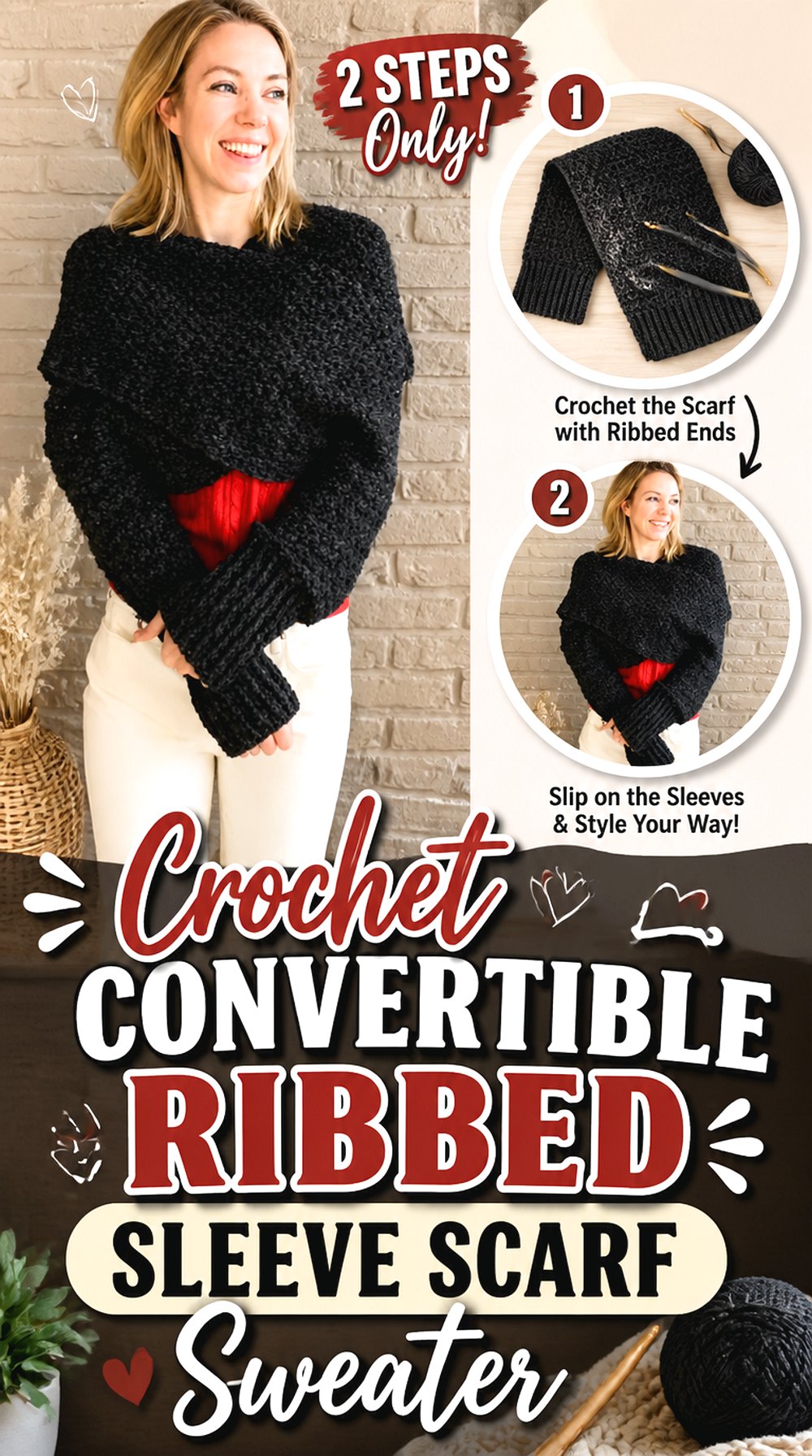
This design sits firmly in the true sweater-scarf category. Wilma Westenberg’s source project is an elongated scarf with sleeves added at the ends, allowing the center to function as a neck wrap while the arm sections turn it into a wearable layer. The tutorial describes the piece as worked in one piece, with the scarf made first and the sleeves completed afterward.
Choose this direction if versatility matters more than the fixed silhouette of a pullover. It can create considerable coverage when wrapped, yet the scarf identity remains visible instead of disappearing into a conventional bodice.
Ribbed Sleeve Ends Give the Long Shape an Anchor
The source design changes texture at the sleeves, using post-stitch ribbing rather than simply continuing the scarf fabric unchanged. Visually, that helps separate the arm sections from the long center panel.
When adapting the look, pay particular attention to cuff comfort. A close-fitting sleeve may work over a thin top but feel very different over a sweatshirt or jacket. Decide how you expect to layer the finished scarf sweater before finalizing the sleeve fit.
Extra Length Creates More Styling Choices—and More Weight
A long center panel can circle the neck, cross the body, or hang more freely, but every additional section of fabric also adds weight. That weight is transferred partly through the shoulders and sleeves when the piece is worn as a sweater.
If substituting yarn, compare your swatch with the tutorial fabric for both drape and density. A heavier fabric may change how comfortably the long sections stay positioned even if the gauge looks acceptable.
Creator: Wilma Westenberg
2. Crochet Airy Lace Sweater Scarf
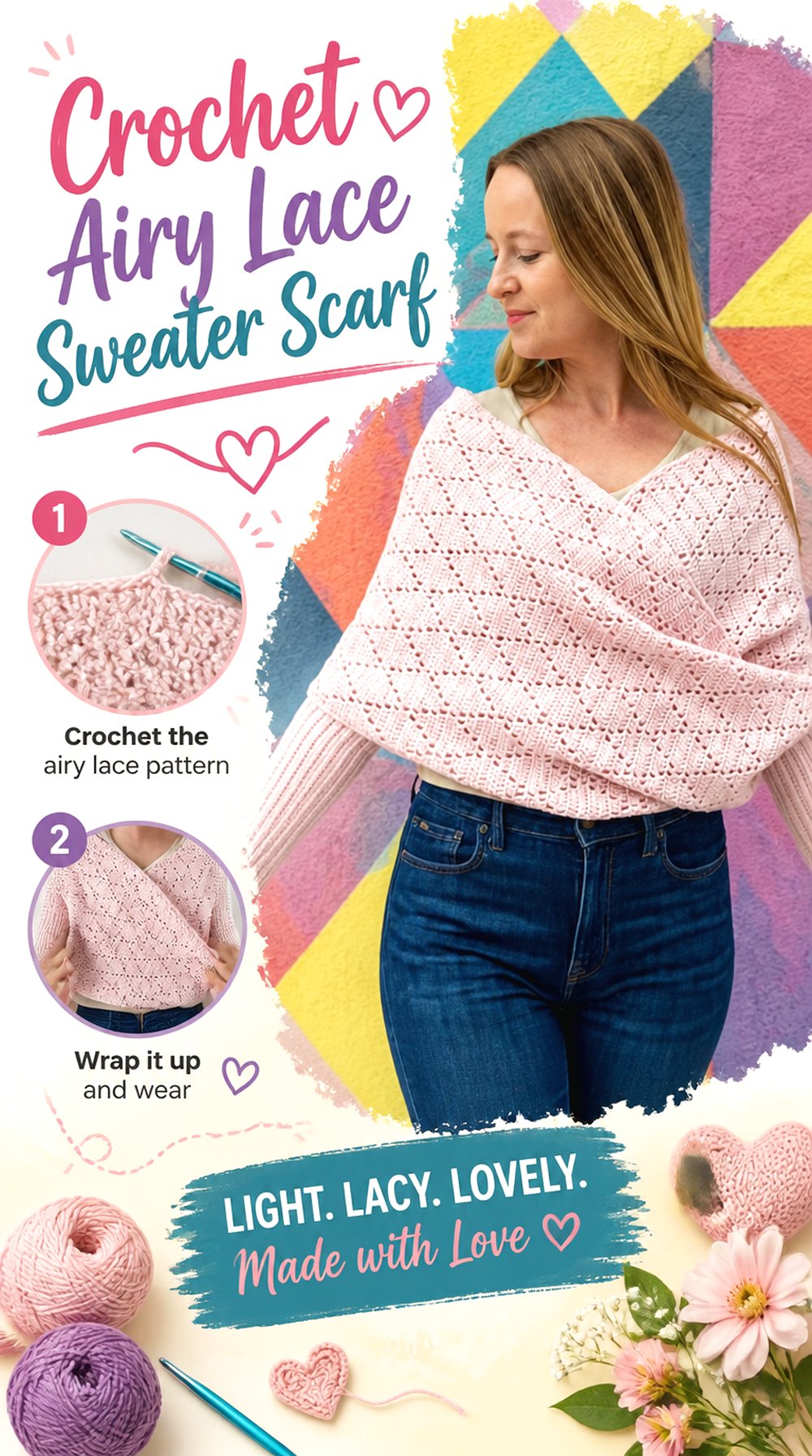
If the first idea feels too substantial, this version moves toward a lighter, lace-focused interpretation. Tinderbox’s Kya Sweater Scarf is described as airy and lacy and can be styled as a scarf, shawl, shrug, or sweater. The pattern source uses DK-weight yarn and provides three bust-based size groupings.
The open appearance gives the long form less visual density, which makes this a useful direction for transitional layering or occasions where a solid sweater would dominate the outfit. It still has real sleeves, but the overall impression is closer to a delicate wrap than a winter pullover.
Open Fabric Makes the Center Section Feel Less Massive
A long wrap can quickly become visually heavy when worked in a dense stitch. Lace interrupts that solid surface and lets whatever you wear underneath remain part of the outfit.
Open fabric also makes finishing quality noticeable. Uneven edges or inconsistent tension may be more obvious when the stitch pattern contains significant negative space. Blocking a representative swatch before committing to the full garment can show whether your fabric opens attractively without becoming too loose.
Treat Bust-Based Sizing as More Than a Sleeve Decision
The source offers hybrid sizes based on bust ranges rather than presenting the sweater scarf as completely one-size. That is a useful reminder that a wrap still interacts with torso width.
If you are between size groups, study how much overlap you want at the front and how you intend to wear the piece most often. A scarf-only styling and a fully wrapped sweater styling do not place identical demands on the center length.
Creator: Tinderbox – Modern Crochet Design & Education
3. Crochet Zigzag Cross Wrap Sleeve Scarf
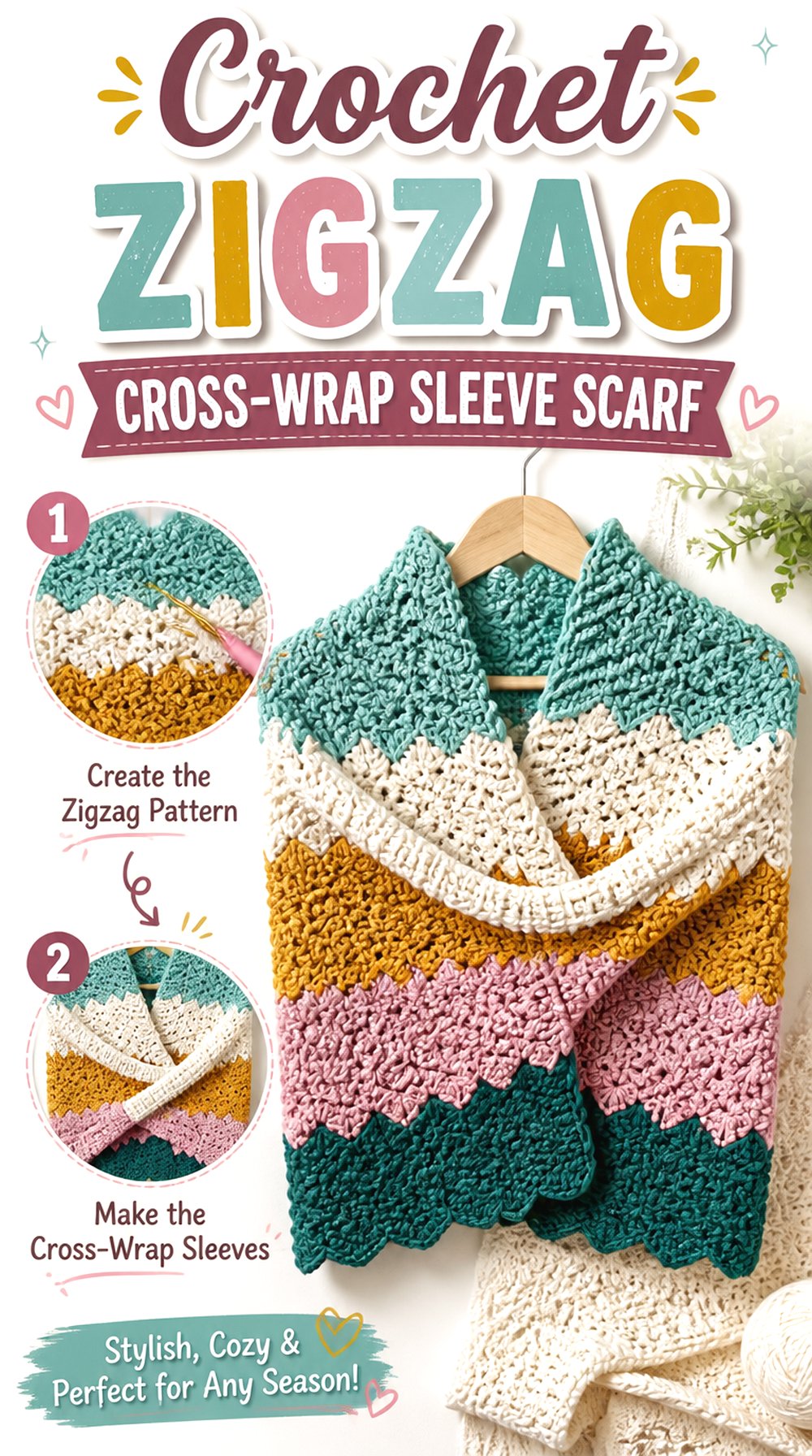
Here the standout feature is surface movement. DiMar DiMax Crochet’s tutorial combines a scarf-with-sleeves format with a zigzag stitch, color changes, and cuffs incorporated into the long construction. The finished garment can be worn as crossed sleeves or as a sweater scarf.
That makes this a strong choice when you want the elongated shape to look intentional even when it is not wrapped tightly around the body. The zigzag rhythm supplies visual direction across the full span, so the center scarf is doing decorative work as well as providing coverage.
Zigzag Texture Needs a Deliberate Color Plan
A directional stitch already creates movement. Adding several high-contrast colors can amplify that movement, while closely related shades let the texture stay more subtle.
Before buying yarn, decide whether you want the zigzag itself or the color changes to be the first detail someone notices. A small swatch containing at least one complete visual repeat is more informative than comparing loose skeins because it shows how the colors interact once the stitch pattern starts bending across the fabric.
Crossed Styling Changes Where the Fabric Pulls
The source garment is shown as a scarf with sleeves that can cross around the wearer. Crossing creates tension in different places than simply hanging the scarf from the neck.
Try on the work before irreversible finishing whenever the construction allows. Look for pulling at the underarm, wrist, or upper back. A wrap that looks generous when laid flat may feel noticeably shorter after part of its length is consumed by crossing around the torso.
Creator: DiMar DiMax Crochet
4. Crochet Reversible Crossed Sleeve Scarf Sweater
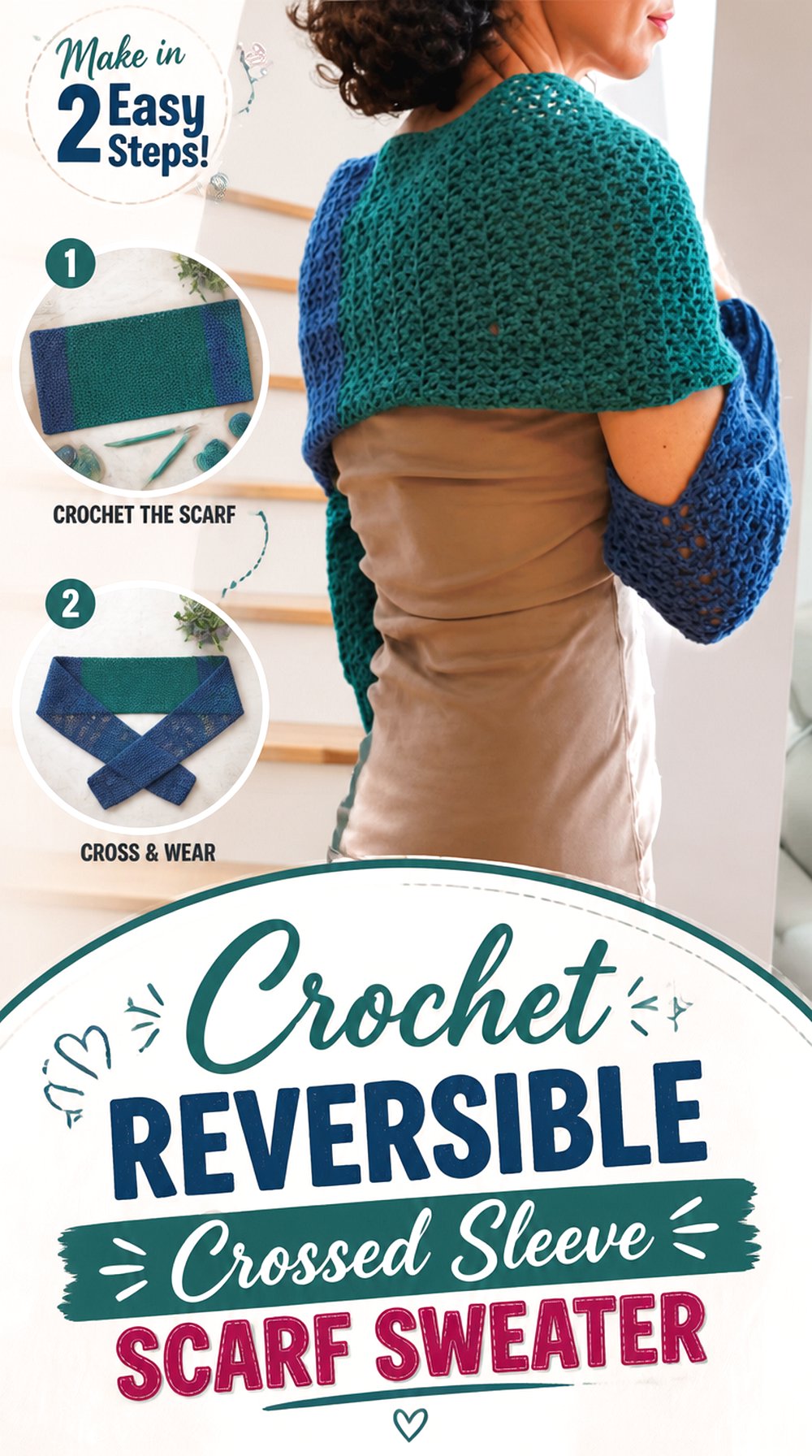
This option focuses less on a bold stitch motif and more on how the garment can be positioned. Häkelwelt’s tutorial shows a scarf with sleeves that can be crossed at either the front or the back. That small styling change can make the same basic form look noticeably different.
A front cross emphasizes the wrapped-scarf effect, while a back cross can leave the front visually cleaner. This idea therefore suits someone who wants one piece to shift between a more dramatic wrap and a simpler shoulder-covering layer without adding buttons, zippers, or a separate closure.
Front Versus Back Crossing Changes the Visual Center
When the overlap sits in front, the scarf becomes the focal point and can create more volume around the chest. Moving the crossing behind the body changes the emphasis to the shoulders and back instead.
That difference is worth considering before choosing an especially thick or textured yarn. A fabric you enjoy as a broad back wrap might feel bulky when doubled across the front. Test the intended wearing positions with a long scarf you already own to judge your preferred amount of overlap.
Sleeve Fit Should Match the Layers Underneath
Because the sleeves are what prevent the wrap from behaving like an ordinary loose scarf, they need to feel secure without becoming restrictive.
Measure over the type of clothing you expect to wear beneath the finished piece. If this is meant for a fitted long-sleeve top, the desired arm room may be quite different from a sweater scarf intended to sit over another knit garment. Confirm the tutorial’s construction before making any fit change that would affect joining.
Creator: Häkelwelt
5. Crochet Wheat Texture Sweater Scarf
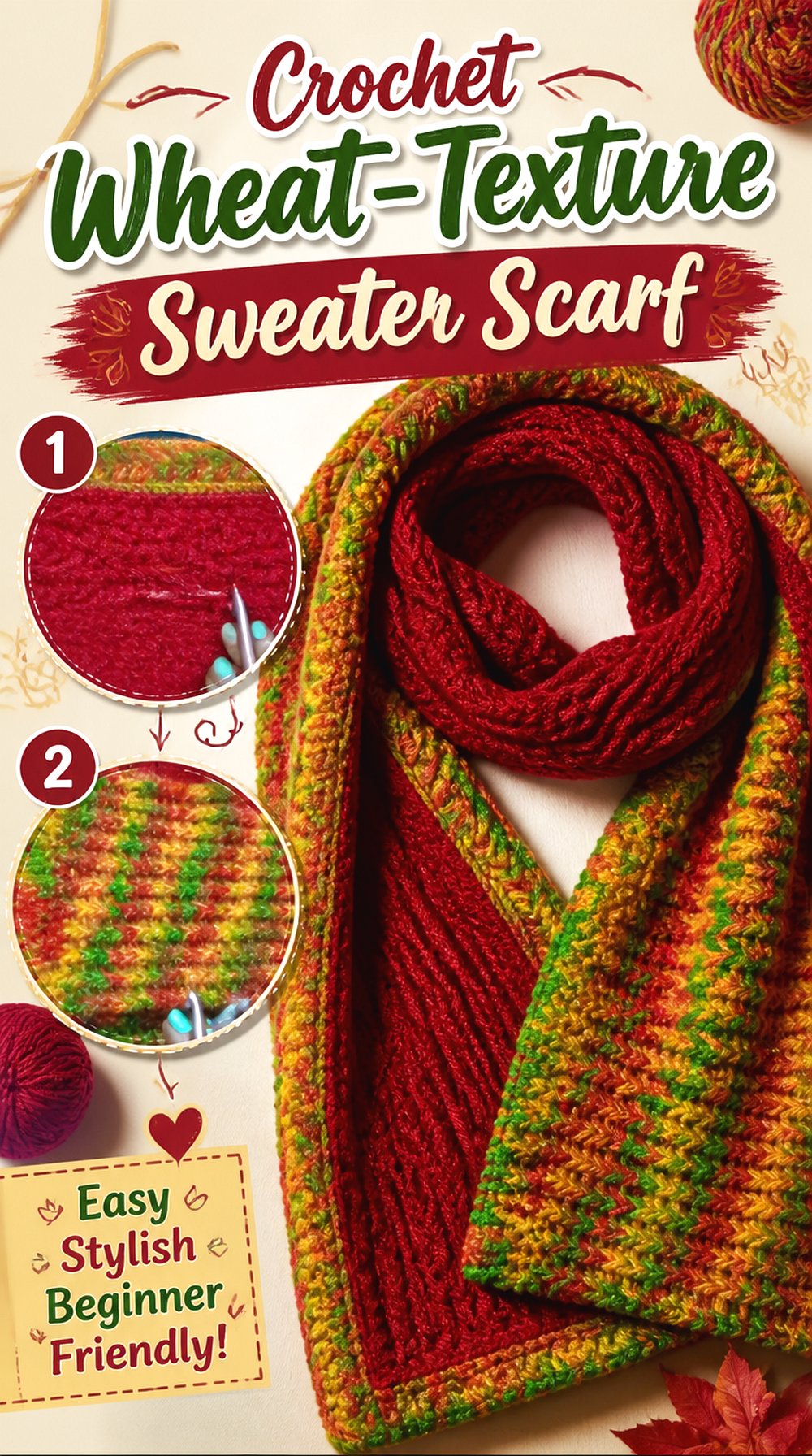
Pooja G Creatives 2.0 presents another sweater scarf with sleeves, this time centered on a wheat-style stitch texture. The tutorial identifies the project specifically as a sweater scarf and shows a finished sleeve-and-wrap form rather than a conventional pullover.
The main appeal here is texture across a large uninterrupted span. Unlike a motif garment, there are no separate decorative squares competing for attention; the repeated surface pattern becomes the design. This works particularly well if you enjoy a consistent stitch rhythm but still want the finished project to look more detailed than a plain rectangle.
Raised Texture Can Increase the Fabric’s Presence
Textured crochet may consume more yarn and create more physical or visual substance than a smoother fabric, depending on the stitch and fiber. That matters when the project extends from wrist to wrist with a long scarf section between.
Make a substantial swatch and let it hang vertically rather than judging it only on a table. Hanging shows whether the texture keeps its definition, collapses into softer folds, or creates more weight than you want around the shoulders.
Keep Both Sleeve Ends Looking Intentional
Long side-to-side constructions make differences between the two ends easy to notice. Changes in tension over the course of a large project can cause one cuff area to appear firmer or wider than the other.
Periodically compare the developing fabric with measurements from the first sleeve section. The goal is not to invent a new stitch count but to catch changes in your own tension before the second arm becomes visibly different from the first.
Creator: Pooja G Creatives 2.0
6. Crochet Soft Texture Wrap Sweater Scarf
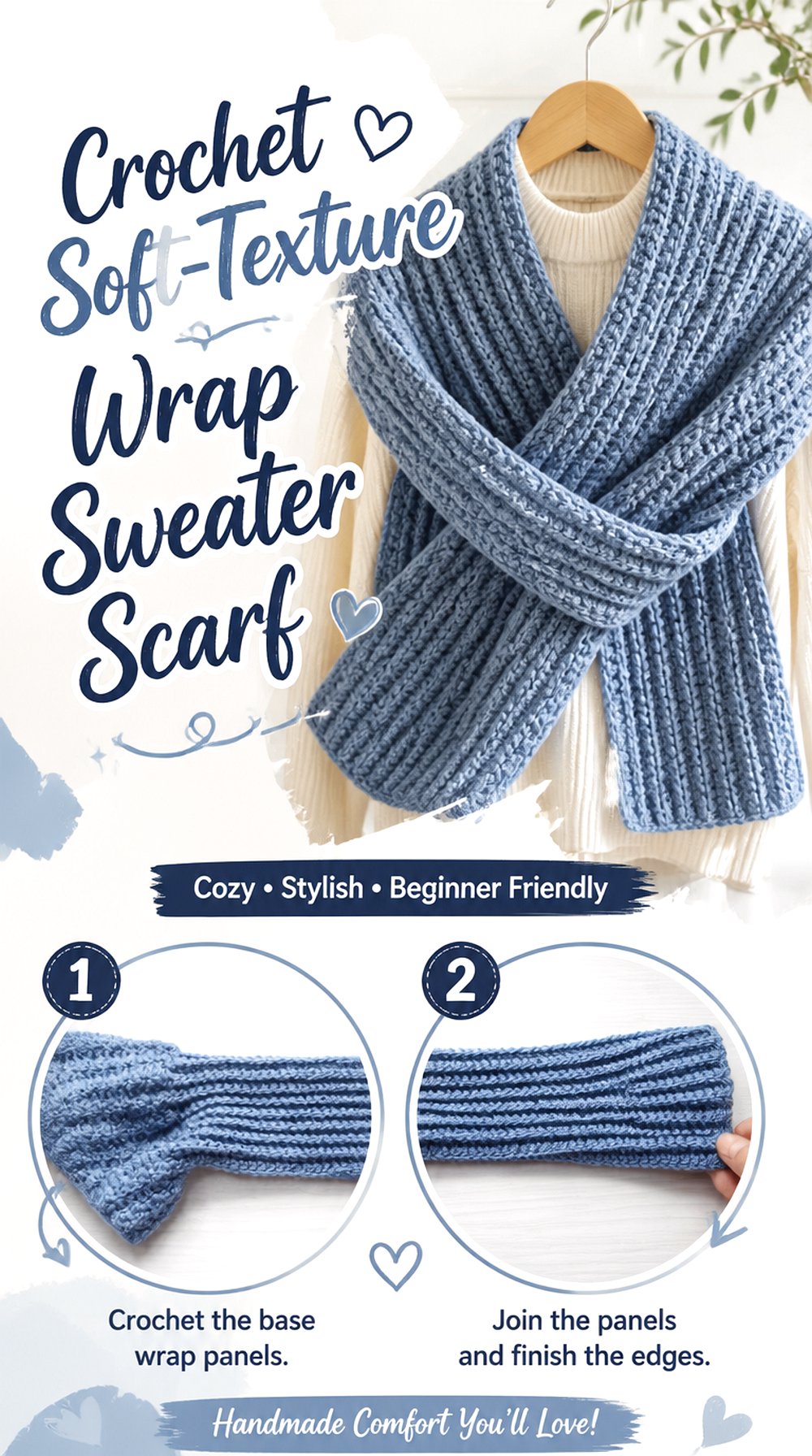
Hey Carrie’s source tutorial covers a crochet wrap sweater that the creator also calls a sleeve scarf. The related project uses ribbed sleeve cuffs and a lightly textured main body, keeping the long center section visually softer than a heavily patterned wrap.
This is a practical middle ground between solid basic fabric and pronounced lace or zigzag texture. The scarf section still reads clearly when worn around the body, yet the understated surface can be easier to pair with patterned dresses, denim, or other layered clothing.
Subtle Texture Leaves More Freedom for Styling
When a wrap already twists, overlaps, and folds around the body, very elaborate stitchwork is not always necessary. A quieter texture lets the changing direction of the fabric create much of the visual interest.
This can also make color selection easier. Solid shades emphasize stitch shadows, while lightly heathered or tonal yarn can add depth without obscuring the overall construction. Compare swatches in folded form because a wrap spends much of its time doubled over rather than displayed perfectly flat.
Cuffs and Center Fabric Have Different Jobs
The tutorial distinguishes ribbed cuffs from the textured main body. That division is functional as well as decorative: the arm area benefits from a more controlled fit, while the body needs enough freedom to drape and wrap.
When substituting yarn, check how both sections behave. A yarn that makes beautiful flowing center fabric may produce cuffs that relax more than expected, so gauge and the creator’s sizing guidance remain important.
Creator: Hey Carrie
7. Crochet Long Front Wrap Sweater
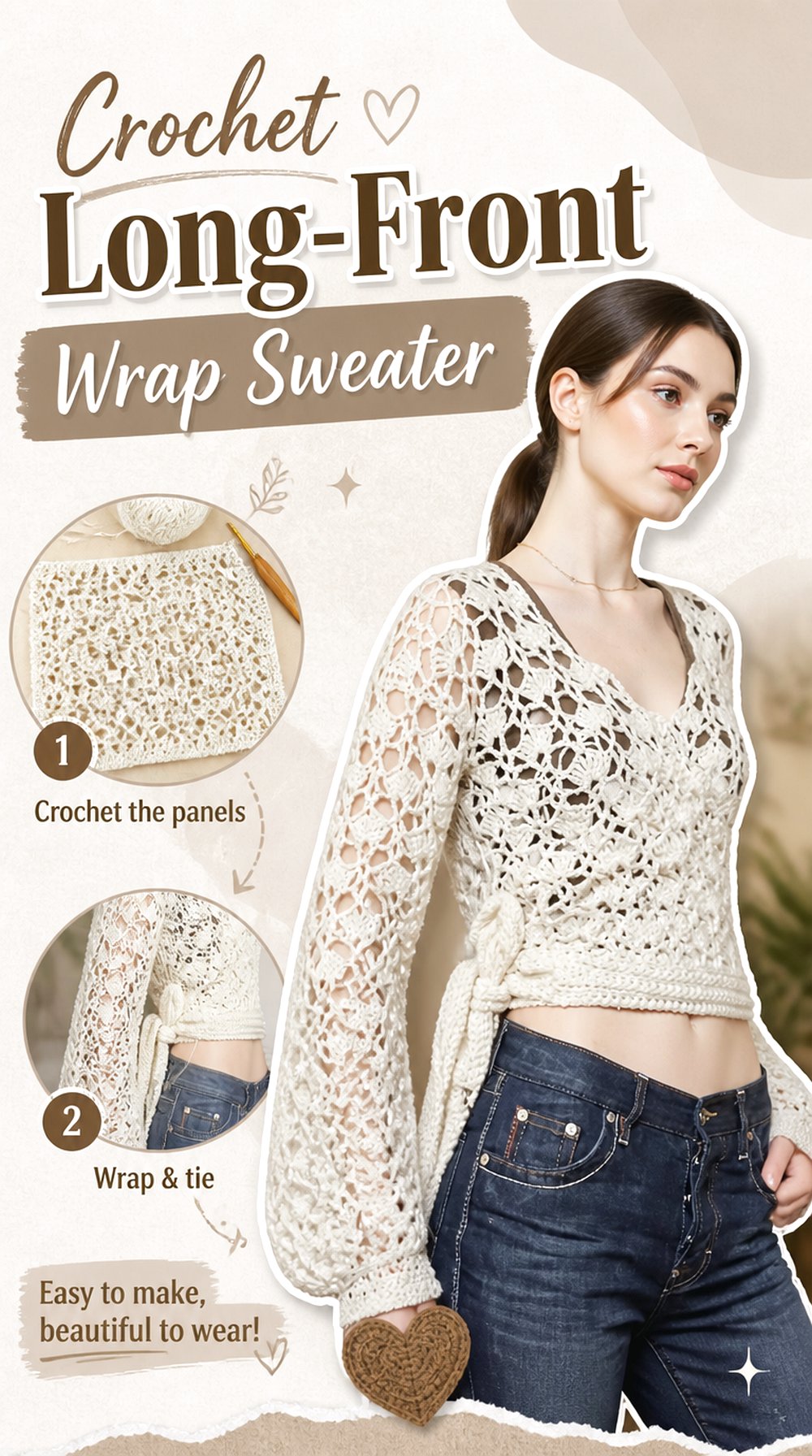
Twilescrochet’s wrap sweater moves away from the scarf-with-sleeves rectangle and toward a recognizable sweater body. The tutorial includes front panels, a back panel, neckline work, sleeves, cuffs, and a border section. The extended wrap fronts create the scarf-like character here.
Choose this style if you like the draped, overlapping effect of a sweater scarf but want more defined torso coverage. Because it includes conventional garment sections, it is less free-form to style than a sleeve scarf, yet the wrap front gives more adjustment and movement than a standard closed pullover.
Overlapping Fronts Need Enough Drape to Settle
A wrap sweater depends on the front sections lying across one another rather than projecting stiffly away from the body. Fabric behavior therefore matters around the waist and neckline as much as it does at the shoulders.
If you change yarn, compare your swatch with the source fabric before assuming a denser substitute will create the same silhouette. Extra stiffness can change the angle of the overlap and make the scarf-like fronts feel more structural than fluid.
A Defined Back Keeps the Wrap From Feeling Like a Shawl
Unlike the earlier sleeve scarves, this construction includes a separate back and recognizable bodice. That gives the garment a more stable relationship with the shoulders.
Check shoulder alignment before completing extensive finishing. If the back sits too wide or narrow for the wearer, adjusting the wrap fronts alone may not correct the overall balance. The sweater portion still needs to fit before the decorative overlap can work properly.
Creator: Twilescrochet
8. Crochet Relaxed Cowl Neck Pullover
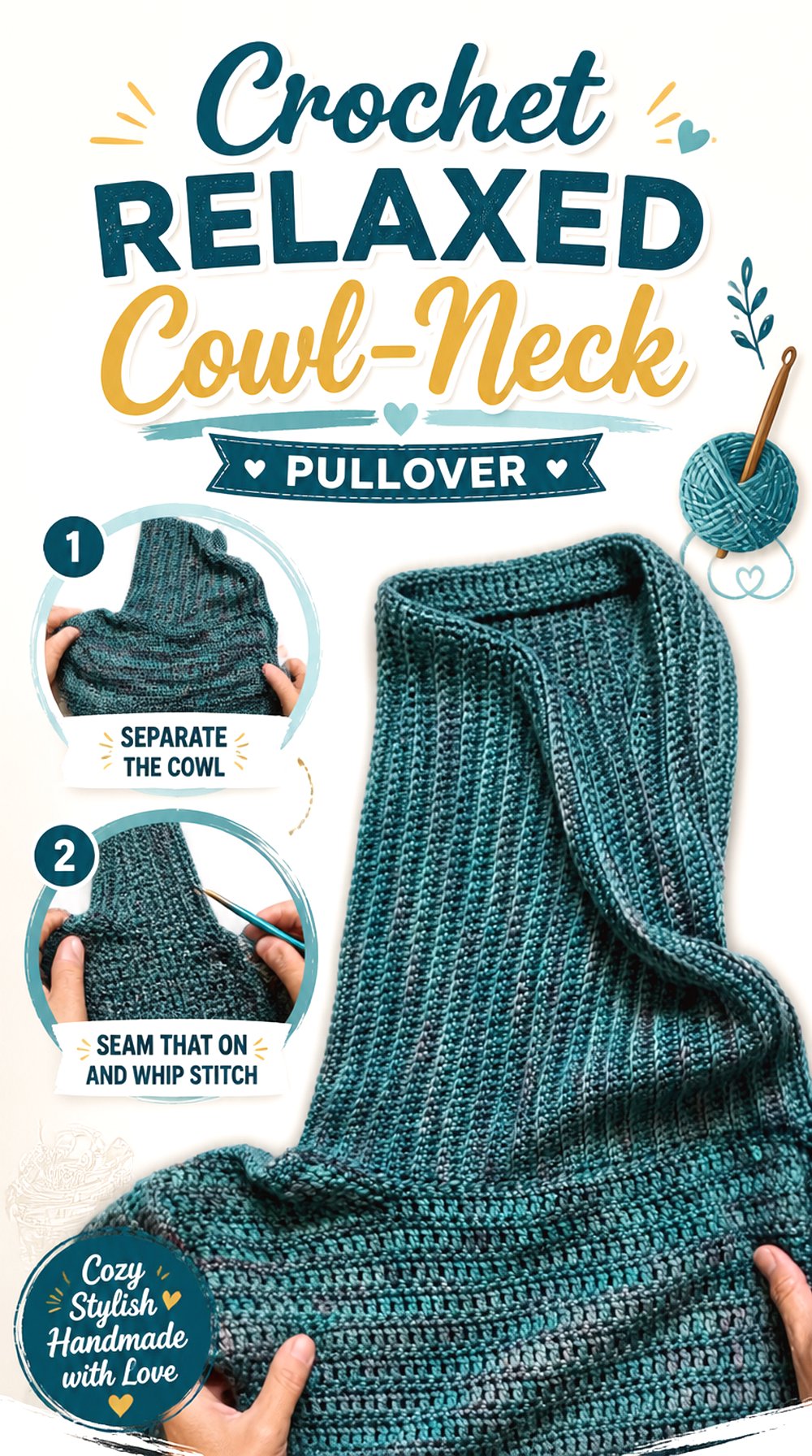
This project shifts the scarf effect entirely to the neckline. Off the Beaten Hook’s sweater uses a soft cowl that can read like a relaxed turtleneck while maintaining a distinct full-sweater silhouette. The accompanying pattern is offered in sizes XS through 5XL.
A cowl is useful when you want visible neck volume without having to wrap or cross long ends around your torso. It creates a contained focal point and can be easier to wear under open coats than a sweater scarf, although the amount of collar fabric still affects layering.
The Cowl Should Drape Rather Than Simply Stand
The visual difference between a cowl and a tall rigid collar comes from how the fabric folds. If your yarn substitution produces a much firmer swatch, the finished neckline may stand higher and behave more like a funnel neck.
Before committing, fold the swatch against itself to imitate the collar. This quick check reveals more about cowl behavior than looking only at stitch gauge. Match both size and fabric character when the drape is central to the design.
Check the Head Opening Before Final Finishing
A comfortable cowl can still be frustrating if the underlying neckline is difficult to pull over the head. This is especially important when the stitch pattern or finishing edge has limited stretch.
Follow the creator’s measurements and construction rather than tightening the neck simply because the collar appears loose while flat. The cowl needs room to move, and its relaxed appearance is part of what distinguishes this design from the closer turtlenecks later in the list.
Creator: Off the Beaten Hook
9. Crochet Trinity Stitch Draped Cowl Sweater
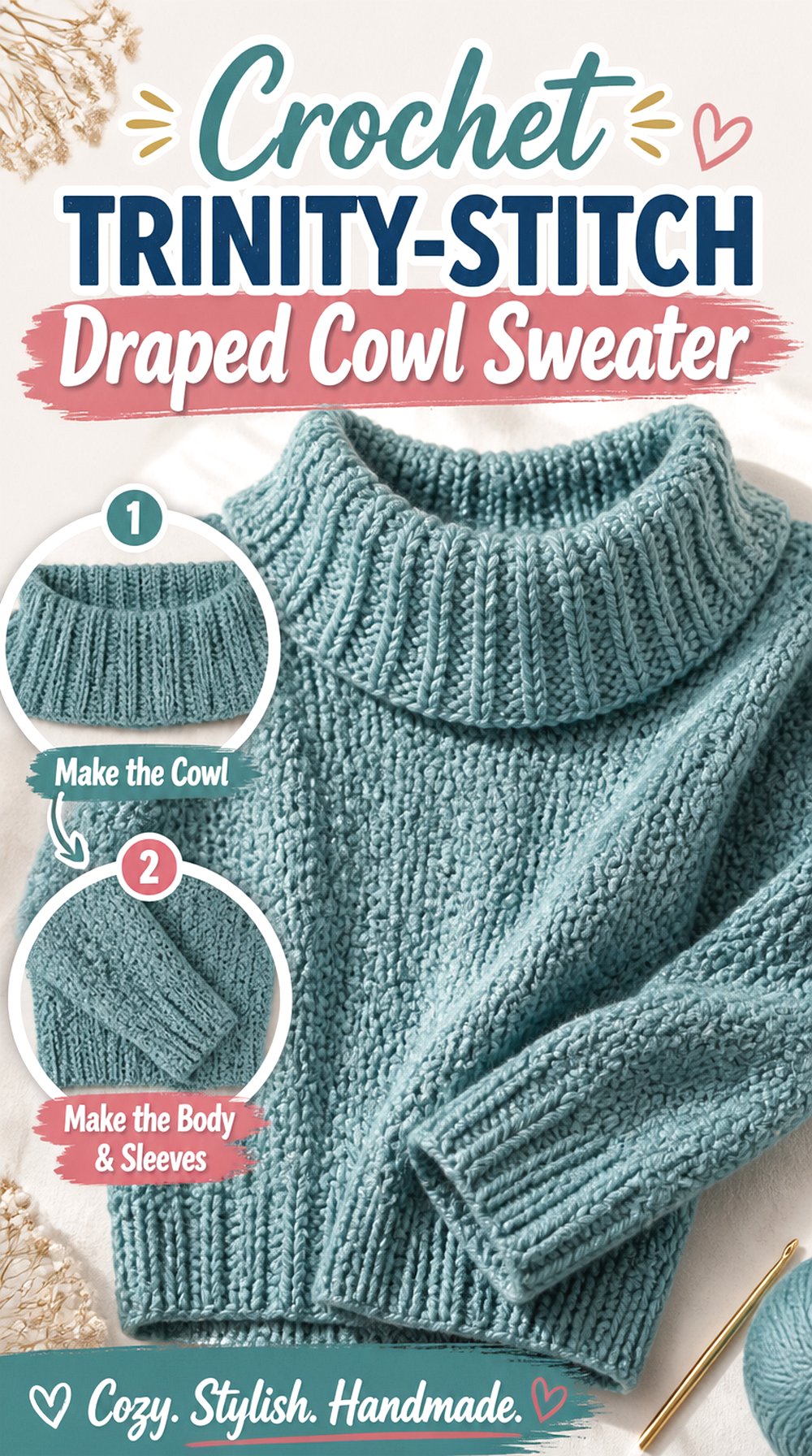
TCDDIY’s cowl-neck sweater stands apart through its trinity-stitch texture and three-quarter sleeves. The creator describes the design as made to measure and demonstrates the neckline, sleeves, cuffs, body finishing, and collar in the tutorial.
The shorter sleeves keep the textured upper body and neck visually prominent, making this a different choice from the long-sleeved winter pullovers. It can work well when you want the scarf-like collar to be the main statement rather than one warm feature among several equally substantial elements.
Trinity Texture Puts More Focus Near the Face
A dimensional stitch catches light differently from a flat surface, so the cowl and upper body have more visible texture even in a single color.
If you want that texture to stay distinct, swatch in the actual yarn rather than choosing solely from the label. Very fuzzy fibers can soften the stitch definition, while smoother yarns tend to reveal the small structural details more clearly. Neither is automatically better; the choice determines whether the sweater looks crisp or softly blended.
Three-Quarter Sleeves Change Layering Options
The source sweater uses three-quarter sleeves. That makes the garment visually lighter than a full long-sleeve turtleneck but also changes what looks natural underneath it.
If you expect to layer another top below, consider whether you want the under-sleeve to show. For an uncluttered look, you may prefer a fitted layer in a related shade. For a deliberately layered outfit, contrasting sleeves can make the shorter crochet sleeve length feel intentional.
Creator: TCDDIY
10. Crochet Oversized Foldover Turtleneck Sweater
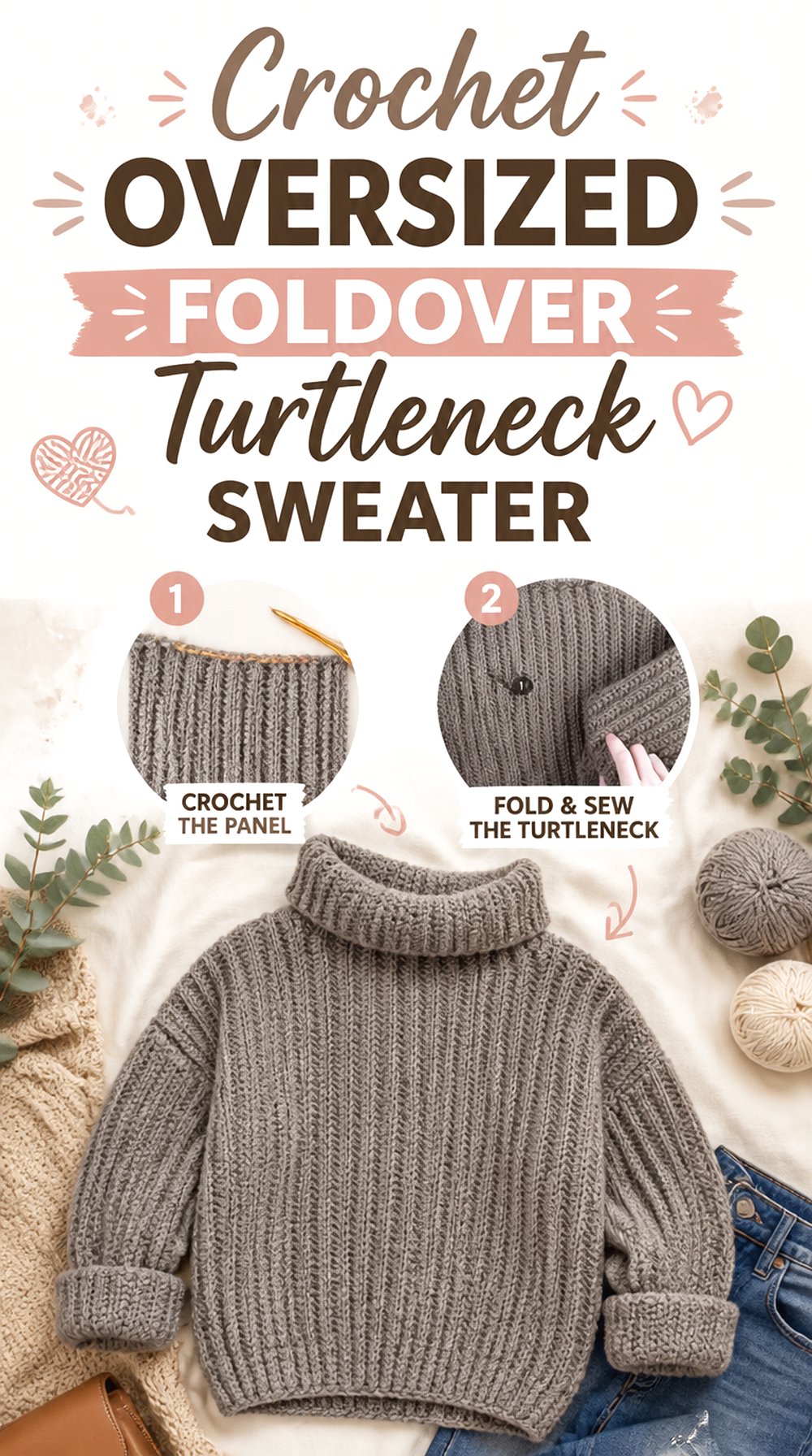
A large foldover neck creates a much stronger winter-sweater impression than the relaxed cowl above. Yarn Cakes, LLC demonstrates an oversized turtleneck sweater with a roomy body, separate sweater sections, and a tall collar. The video demonstrates a small, while additional sizing information is associated with the written pattern.
This idea works when you want the neckline to feel almost like a built-in chunky scarf. Because the body is oversized too, the collar does not look disproportionately heavy; both elements share the same relaxed scale.
Oversized Should Not Mean Unchecked Everywhere
A roomy body still needs deliberate shoulder, sleeve, and neckline proportions. Simply making every section larger can result in sleeves that drop farther than intended or a collar that no longer supports itself.
Compare the tutorial’s finished look with a sweater you already own and enjoy. Note where the shoulder line sits and how much extra body width you actually like. That gives you a more useful reference than choosing an oversized size label without considering the silhouette.
A Tall Collar Magnifies Yarn Feel
The turtleneck sits directly against the neck and may fold into multiple layers, so a fiber that feels acceptable on the forearm can become irritating in this location.
Test the yarn against the side of your neck before committing to the entire garment. Also wash or block the swatch according to the yarn’s care instructions. The finished hand after washing is more relevant than how the skein feels in the store.
Creator: Yarn Cakes, LLC
11. Crochet Two Tone Classic Turtleneck Pullover
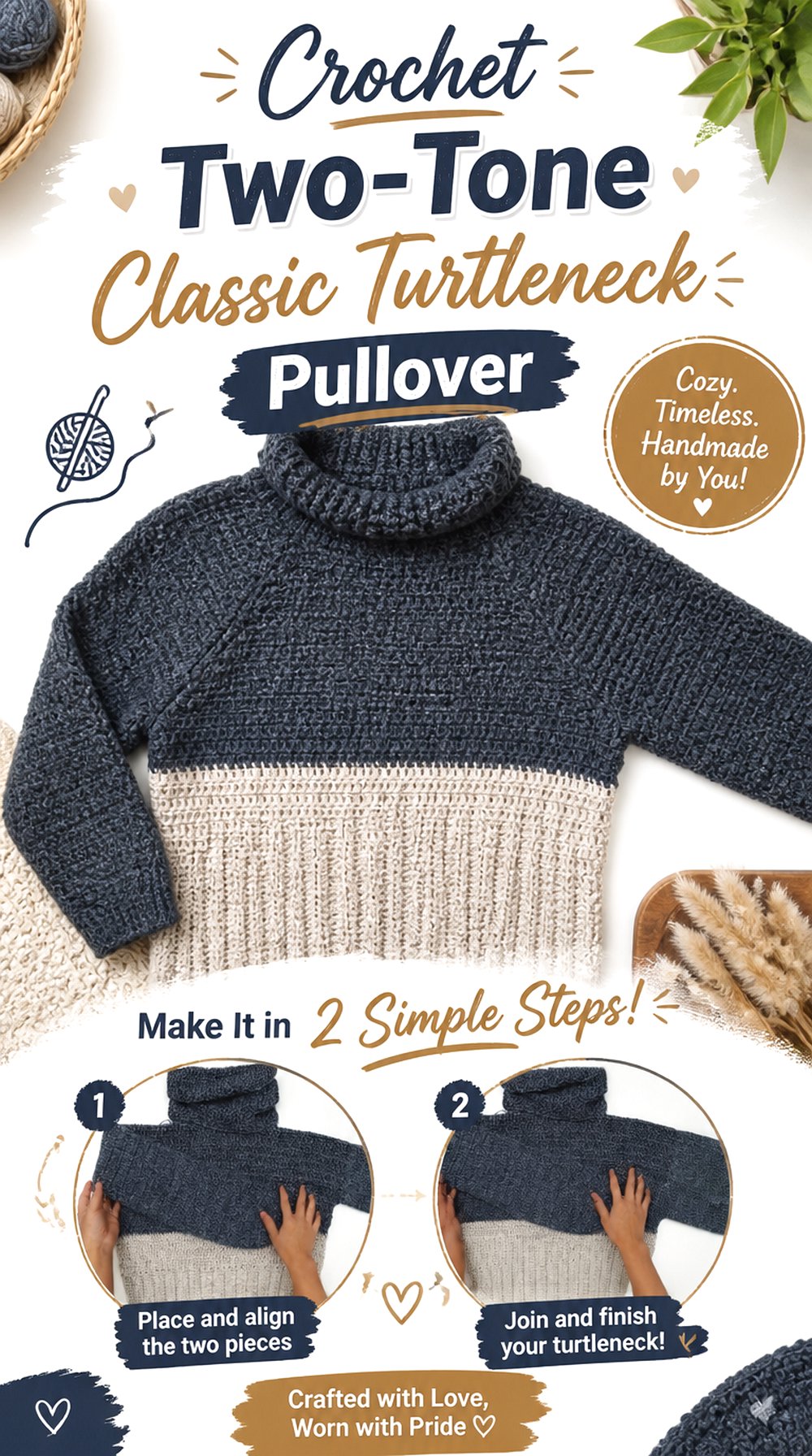
KnitcroAddict’s tutorial offers a more traditional pullover silhouette with a tall neck and a clear opportunity for color blocking. The source sweater is made in separate pieces, worked from the bottom upward, with the collar added afterward.
Compared with the convertible scarf sweaters, this design has a fixed shape and less styling ambiguity. That makes it appealing if you want the scarf-neck theme to read as a classic winter sweater. A second color can emphasize the upper body, sleeves, or neck without changing the underlying garment construction.
Color Placement Can Change the Apparent Proportions
A contrasting section across the upper sweater draws attention toward the shoulders and neckline. A darker or quieter lower body, meanwhile, can make that upper contrast feel even stronger.
Before deciding where to change colors, sketch the sweater as large blocks rather than individual stitches. This makes it easier to judge whether the eye will move horizontally across the shoulders, vertically through the torso, or directly toward the tall collar.
Seamed Pieces Give You Alignment Checkpoints
The source construction uses four separate pieces before the collar is added. Seaming therefore becomes part of the final fit rather than a minor finishing detail.
Before closing everything permanently, match corresponding edges and confirm that front and back lengths agree where intended. A small inconsistency that seems harmless on a flat panel can become more obvious once the shoulder and sleeve seams establish the sweater’s symmetry.
Creator: KnitcroAddict
12. Crochet Bobble Yoke Turtleneck Sweater
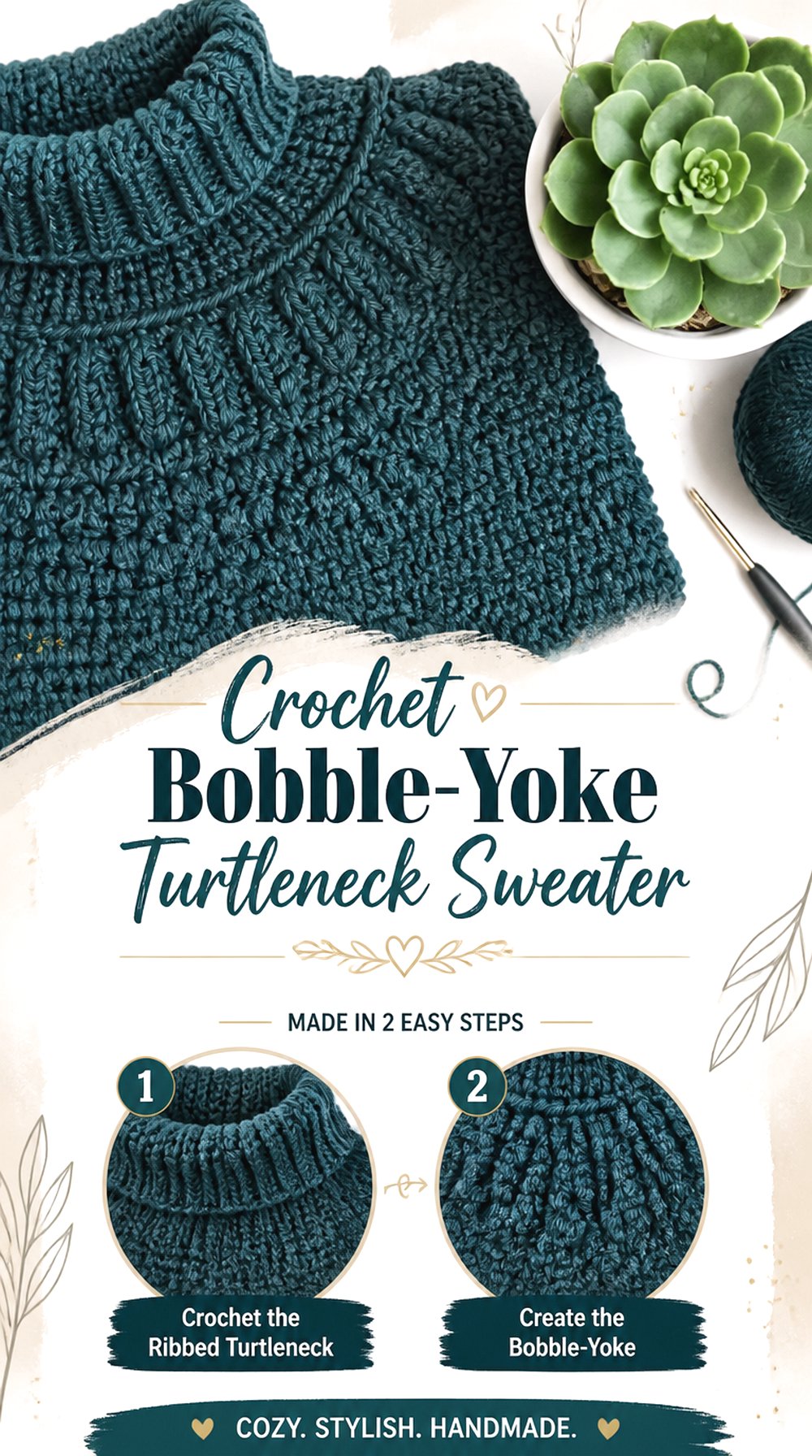
The Cranberry Biscotti design from MJ’s Off The Hook Designs combines a turtleneck with a textured bobble yoke. It is worked from the top down with a circular yoke, and the creator’s written pattern extends across a broad size range while the video demonstrates the construction.
This is the most decorative high-neck option in the collection. Instead of placing all the interest in the collar itself, the texture spreads outward across the shoulders, visually connecting the turtleneck to the rest of the garment.
Bobbles Add Weight Where the Garment Is Already Supported
A textured yoke concentrates decorative fabric around the shoulders rather than the lower hem. That placement can create a strong framed-neck effect, but it also means tension consistency is easy to see.
Work a swatch that includes the dimensional texture if you are considering a yarn substitution. A gauge swatch made only in the plain background stitch may not reveal how large, firm, or prominent the bobbles become in the alternative yarn.
Top-Down Construction Makes Early Fit Checks Valuable
The source design begins at the turtleneck and proceeds through a circular yoke. That means the upper fit is established before most of the body is completed.
Use the points recommended by the creator to assess the developing garment rather than waiting until the hem is finished. Shoulder and upper-chest behavior determine whether the textured yoke falls attractively, and correcting those areas late would involve much more work.
Creator: MJ’s Off The Hook Designs
13. Crochet Ribbed Longline Turtleneck Sweater
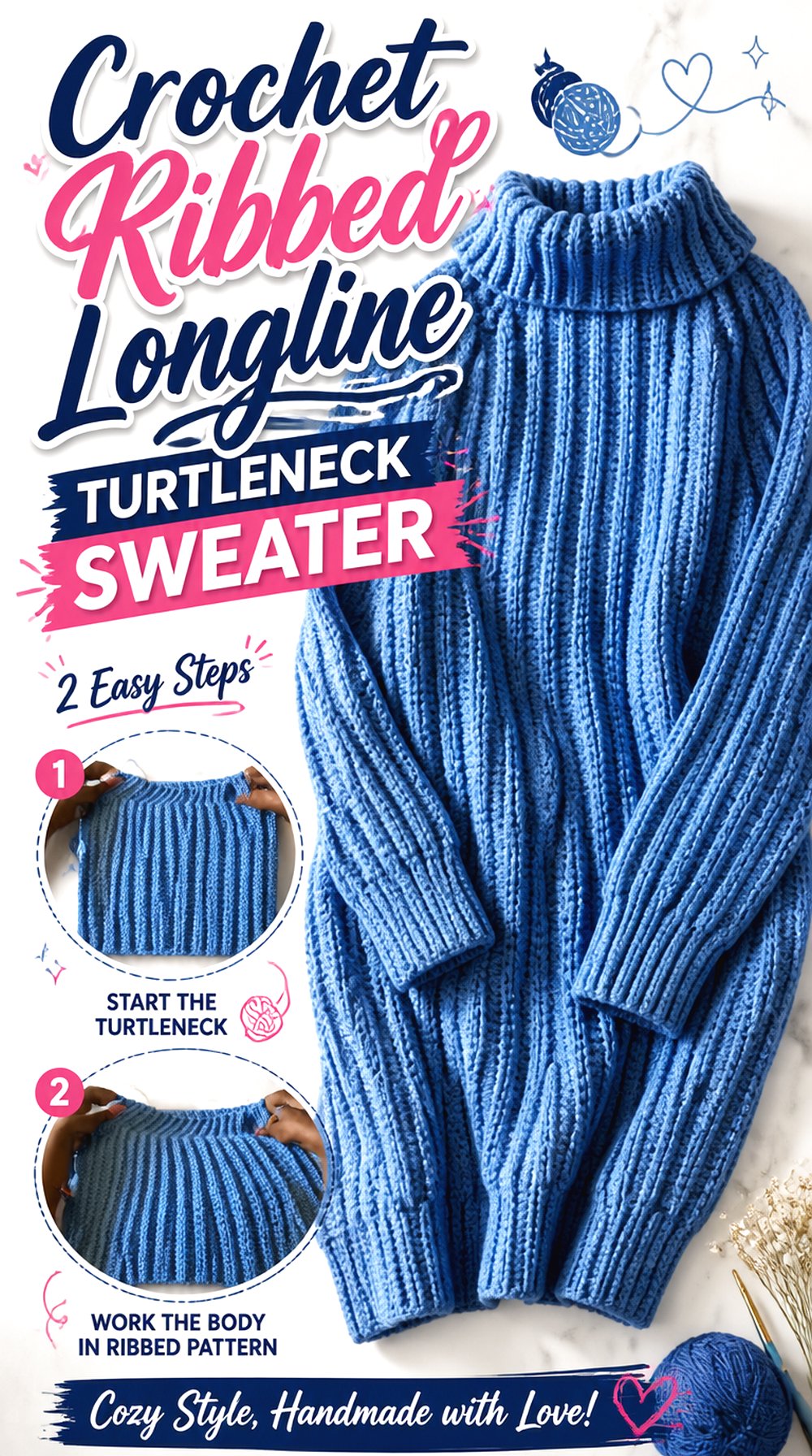
AC Crochets takes the high neckline in a different direction with a ribbed sweater that can also be extended toward sweater-dress length. The tutorial is measurement based and uses a strongly ribbed surface throughout the garment.
This makes the idea useful if you prefer vertical texture rather than a decorative yoke or color block. The longer silhouette also changes the balance of the scarf-like turtleneck: instead of dominating a cropped or short body, the collar becomes one endpoint of a continuous vertical design.
Vertical Ribbing Makes Width and Stretch Important
Ribbed crochet can visually lengthen a garment, but its stretch also affects fit. Measure the fabric in the same relaxed state the tutorial expects rather than pulling it outward to reach a desired width.
A swatch should also be allowed to rest after stretching. If it rebounds strongly, the fitted appearance may remain stable; if it stays expanded, the sweater can relax with wear. This is particularly relevant when the tutorial relies on body measurements.
Longer Length Changes the Weight Distribution
The source tutorial notes that the design can be adjusted shorter or longer, even toward a sweater dress. Extra length is not merely a style change because it adds fabric below the waist.
If you plan a significantly longer version, consider the weight of your swatch and how much vertical stretch it develops after blocking. Check the tutorial’s adjustment logic rather than assuming the original collar and body proportions remain ideal at every possible length.
Creator: AC Crochets
14. Crochet Clean Polo Neck Sweater
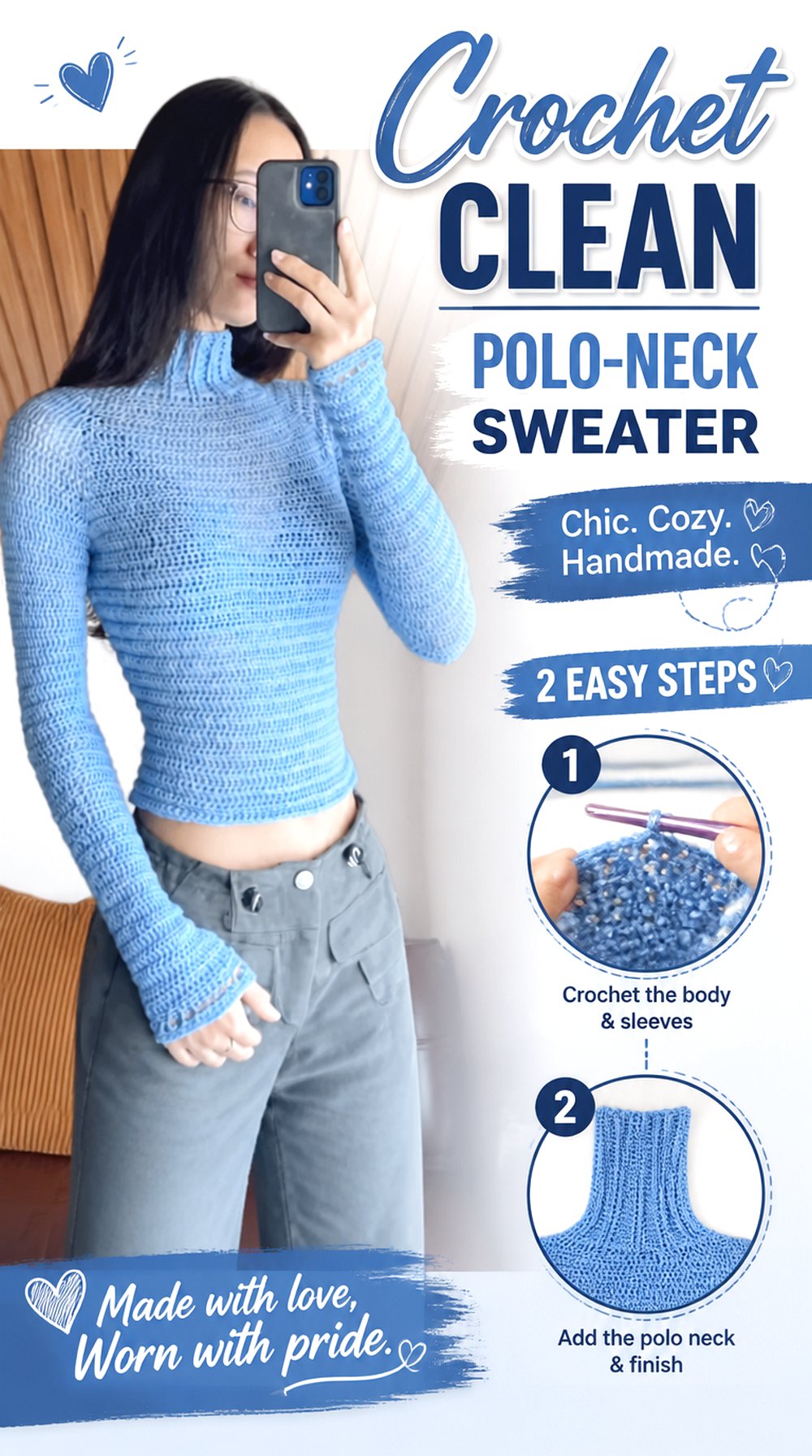
ABoC Studio’s polo-neck sweater offers a cleaner high-neck silhouette for readers who want substantial coverage without the exaggerated volume of an oversized foldover collar. The tutorial provides instructions across sizes XS to XXL and specifically addresses flexibility at the neck foundation.
This makes a useful final option because it focuses attention on a neat collar-to-body transition rather than dramatic texture or long wrap sections. The finished effect is closer to a streamlined cold-weather pullover, while the elevated neck still supplies the scarf-like coverage that ties it to the rest of this collection.
Neckline Flexibility Deserves an Early Check
The creator specifically discusses keeping the starting neck area flexible. That is important because a polished-looking high neck is not useful if it cannot pass comfortably over the head.
Before continuing far into the sweater, check the neckline in the manner shown by the tutorial. Do not compensate for a tight opening simply by assuming later blocking will solve it unless the creator’s instructions support that expectation.
A Clean Collar Lets Fit Become the Main Detail
Without large bobbles, strong color blocks, or long wrap tails, proportion becomes more noticeable. Shoulder placement, body width, sleeve length, and collar height collectively determine whether the sweater looks intentionally streamlined.
This is a good project to compare against an existing pullover whose fit you already like. Record the relevant garment measurements and then use the tutorial’s sizing information to decide which provided size is the closest match rather than relying only on the letter label.
Creator: ABoC Studio
Comparing the 14 Crochet Scarf Neck Sweater Styles
| Project | Main Design Family | Neck or Wrap Behavior | Most Important Check |
|---|---|---|---|
| Convertible Ribbed Sleeve Scarf Sweater | Sleeve scarf | Long scarf can wrap at neck and torso | Overall span and sleeve comfort |
| Airy Lace Sweater Scarf | Lacy sleeve scarf | Light, open wrap | Drape after blocking |
| Zigzag Cross-Wrap Sleeve Scarf | Textured sleeve scarf | Crosses around torso | Color balance and wrap length |
| Reversible Crossed Sleeve Scarf Sweater | Convertible wrap | Crosses front or back | Bulk at overlap |
| Wheat-Texture Sweater Scarf | Textured sleeve scarf | Long continuous wrap | Fabric weight |
| Soft-Texture Wrap Sweater Scarf | Subtle sleeve scarf | Soft center with ribbed arms | Cuff fit versus body drape |
| Long-Front Wrap Sweater | Full wrap sweater | Extended fronts overlap | Front-panel drape |
| Relaxed Cowl-Neck Pullover | Full pullover | Loose cowl | Collar softness and head opening |
| Trinity-Stitch Draped Cowl Sweater | Textured pullover | Dimensional cowl | Stitch definition |
| Oversized Foldover Turtleneck Sweater | Oversized pullover | Large folded neck | Yarn feel and overall ease |
| Two-Tone Classic Turtleneck Pullover | Paneled pullover | Tall separate collar | Seaming and color placement |
| Bobble-Yoke Turtleneck Sweater | Top-down pullover | High neck with textured yoke | Upper-body fit |
| Ribbed Longline Turtleneck Sweater | Longline pullover | Tall ribbed neck | Stretch and finished length |
| Clean Polo-Neck Sweater | Streamlined pullover | Close, structured high neck | Neckline flexibility |
Conclusion
The most important choice is not simply which scarf neck looks nicest in a photo; it is how much movement you want the garment to have. The first six ideas suit readers who enjoy wrapping, crossing, and restyling one long piece. The wrap sweater gives that effect with a more stable bodice, while the cowls and turtlenecks behave like conventional pullovers and keep their shape throughout the day.
For lighter visual weight, start with the lace or relaxed-cowl options. For stronger winter coverage, compare the oversized, ribbed, bobble-yoke, and polo-neck sweaters. Once you choose the silhouette, use the original tutorials for exact construction, sizing, gauge, and finishing details.
Frequently Asked Questions
What is the difference between a crochet sweater scarf and a cowl-neck sweater?
A sweater scarf usually begins with a long scarf-like body and adds sleeves or cuffs, so the fabric can be crossed or wrapped around the wearer in several ways. A cowl-neck sweater has a conventional sweater body with extra draped fabric confined to the neckline. Choose a sweater scarf for styling flexibility and a cowl if you prefer a garment that stays in one consistent position.
How do I know whether a sweater scarf will be long enough to cross comfortably?
Do not judge from a flat photograph alone. Check the creator’s stated sizing or measurements and consider the route the fabric must travel from one arm, around your torso, and to the other arm in your preferred styling. Your body dimensions and intended overlap both matter. If the tutorial supplies multiple sizes, use its guidance rather than adding arbitrary length that could alter the intended proportions.
Should a crochet scarf neck use a softer yarn than the rest of a sweater?
Softness is particularly important because the collar touches sensitive skin around the neck and face, but softness is not the only concern. The fabric also needs the drape or structure required by the design. A relaxed cowl generally benefits from fabric that folds easily, while some taller collars need enough body to hold their shape. Swatch and test the fabric against your neck before committing.
Can I replace the yarn in a sweater-scarf tutorial with a heavier yarn?
Possibly, but the result can change substantially. A heavier yarn may increase the width, stiffness, and total weight of a long scarf section, which can alter both fit and the way the wrap stays on the shoulders. For fitted pullovers, changing yarn without matching gauge can also change bust and sleeve measurements. Treat the creator’s yarn and gauge information as the starting point for any substitution.
How can I stop a tall crochet turtleneck from feeling too tight?
First determine whether the problem is the collar itself or the opening underneath it. Follow the tutorial’s gauge and neckline construction carefully, and test the opening before finishing the entire sweater when possible. Avoid deliberately tightening edges around the neck for a neater appearance. If you want a less enclosed feeling, a relaxed cowl-neck project may suit you better than modifying a structured turtleneck beyond its intended design.
Which crochet scarf neck sweater style is easiest to layer under a coat?
A streamlined polo neck or moderately sized turtleneck generally occupies less space than long crossed scarf sections or a very large cowl. Sleeve scarves can still work well with outerwear when worn primarily as a scarf, but wrapping their center fabric around the torso beneath a fitted coat may create extra bulk. Compare the collar and wrap volume with the coats you already own before choosing your project.