Crochet Fair Isle cardigans can take several forms. Some use carried or stranded colors to create small repeating motifs, while others achieve a similar graphic effect through tapestry crochet, mosaic work, plaid, houndstooth, or modular colorwork. That distinction matters because each method changes the fabric’s thickness, stretch, yarn management, and finishing.
These 13 ideas cover subtle border motifs, all-over geometric fabric, oversized statement graphics, Nordic-inspired repeats, snowflake squares, and smaller-scale children’s cardigans. The tutorials also use different garment constructions, so you can compare more than color alone. Before choosing one, consider where the colorwork sits, how much of the cardigan it covers, and whether you prefer managing carried yarn, individual color sections, modular pieces, or one-color-at-a-time mosaic techniques.
Quick List
- Crochet Tartan Colorwork Cardigan
- Crochet Graphic Tapestry Cardigan
- Crochet Geometric Mosaic Cardigan
- Crochet Blue-and-White Mosaic Cardigan
- Crochet Hexagon Mosaic Cardigan
- Crochet Star-Border Colorwork Cardigan
- Crochet Plaid Colorwork Cardigan
- Crochet Chunky Kids’ Fair Isle Cardigan
- Crochet Nordic Colorwork Cardigan
- Crochet Daisy Graph Cardigan
- Crochet Snowflake Square Cardigan
- Crochet Houndstooth Cardigan
- Crochet Checkerboard Cardigan
What “Fair Isle” Means When You Crochet a Cardigan
Traditional Fair Isle is associated with stranded knitting, so crochet versions do not all use one standardized method. The closest crochet equivalents usually create repeated multicolor motifs by carrying, floating, or enclosing an inactive yarn while another color is worked. Tapestry crochet can produce crisp graphic shapes, while mosaic crochet often creates complex-looking patterns with fewer simultaneous color changes.
That is why this collection also includes Fair Isle-inspired plaid, houndstooth, graph, and modular designs. They satisfy a similar reader goal—making a patterned multicolor cardigan—but the construction experience can be very different. If you specifically want the look of small Nordic repeats, prioritize the traditional-style and Nordic options. If you mainly want bold colorwork without managing several active strands at once, mosaic or modular designs may be more appealing.
Plan Fit and Colorwork Together
Colorwork can change the feel of a cardigan even when the underlying garment dimensions stay the same. Carried yarn can make a section denser, and tight floats can reduce horizontal stretch. Large tapestry graphics may also behave differently from surrounding plain fabric because frequent color changes concentrate more yarn in one area.
For a wearable, swatch the actual colorwork rather than relying only on a plain single-color swatch. Check both width and flexibility after treating the swatch the way you intend to treat the finished cardigan. Where motifs cross fronts, backs, or sleeves, think about placement before committing to the full garment. A design that looks balanced on a flat chart can shift visually once front bands, seams, armholes, or sleeve shaping interrupt it.
Choose Yarn for Drape as Well as Color Definition
High-contrast colors make small geometric motifs easier to read, but fiber and yarn construction matter just as much. A very fuzzy yarn can soften tiny details, while a smoother yarn generally makes edges between colors more distinct. At the same time, extremely firm colorwork can make a cardigan feel more jacket-like than drapey.
If you substitute yarn, compare more than the label’s weight category. Make a colorwork swatch and notice its thickness, stretch, weight, and how comfortably the inactive strand sits inside or behind the fabric. For all-over colorwork, those differences affect the entire garment. For a cardigan with colorwork limited to the hem or cuffs, you have more plain fabric available to provide movement and drape.
1. Crochet Tartan Colorwork Cardigan
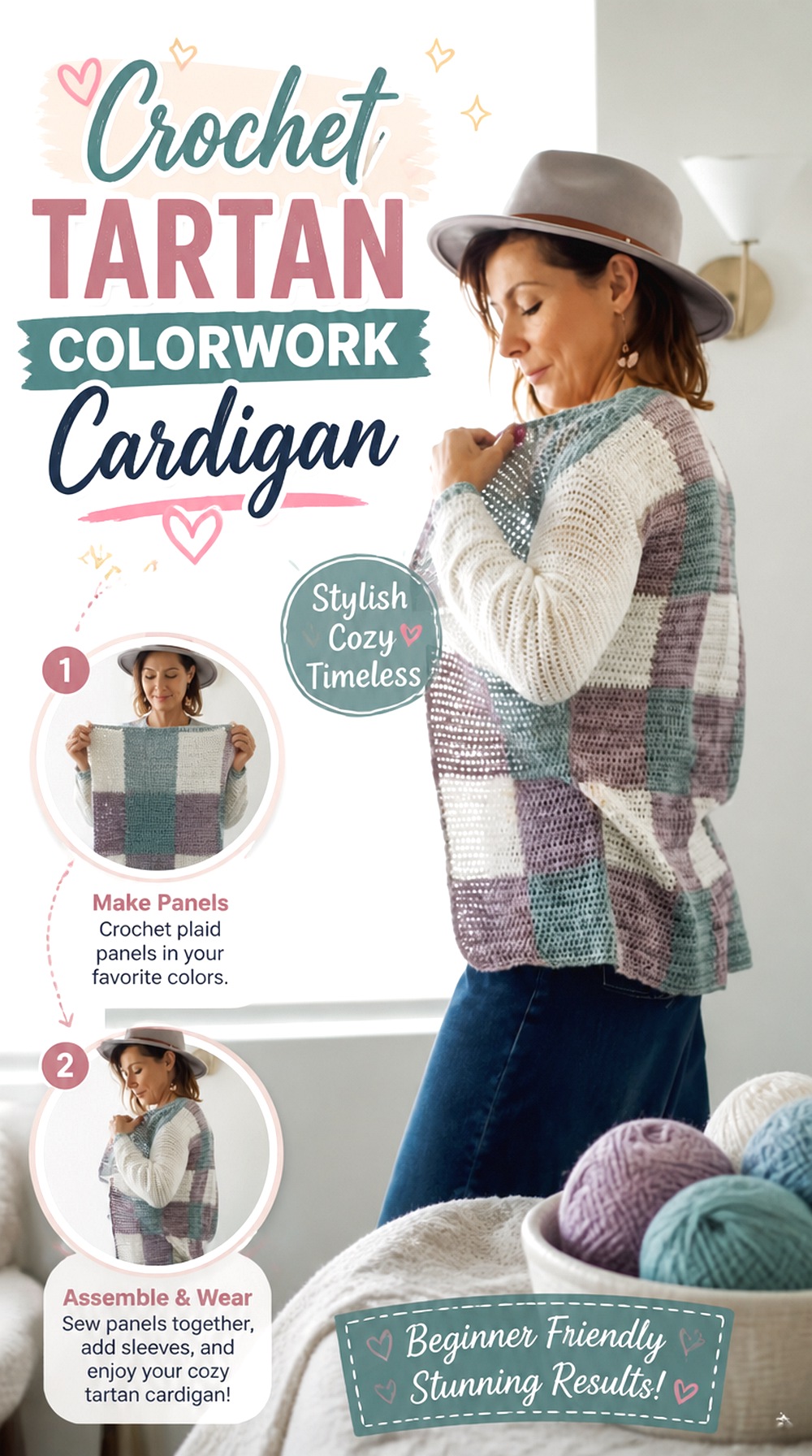
A tartan-style cardigan is an interesting alternative to tiny Nordic repeats because its colorwork is built around larger intersecting lines. The finished garment has a strong woven-plaid impression while still being crocheted, making it a useful choice when you want Fair Isle-inspired color complexity without a field of small snowflakes or diamonds.
This version is particularly adaptable because the checked effect can become either quiet or graphic depending on contrast. Softer neighboring shades make the lines blend into the garment, while sharply different colors emphasize every intersection. Before choosing your palette, decide whether you want the tartan structure itself to dominate or simply provide texture and movement.
Large Color Blocks Change the Visual Scale
A tartan layout reads differently from a tiny repeated Fair Isle motif. The eye follows long horizontal and vertical relationships rather than focusing on individual icons. That makes color placement especially important near the front opening. Before starting the full cardigan, sketch or swatch enough of the repeat to see whether a strong line will land awkwardly beside the front band or at a seam.
Carried Yarn Can Add Substance to the Fabric
Tapestry crochet places additional yarn within or behind the active stitches, which can make the colorwork section feel more substantial than a comparable one-color fabric. Check your swatch for flexibility instead of concentrating only on matching dimensions. If the sample feels noticeably rigid, yarn choice and colorwork tension deserve attention before you commit to an entire wearable.
Short and Long Sleeves Create Different Proportions
The tutorial shows both short- and long-sleeve versions, which makes this idea useful for considering how much patterned fabric you actually want in the finished garment. A shorter sleeve keeps more visual attention on the body, while a long sleeve creates a more enveloping colorwork layer. Choose the silhouette before settling on the overall color balance.
Original Tutorial and Creator Credit
Creator: ExpressionFiberArts
2. Crochet Graphic Tapestry Cardigan
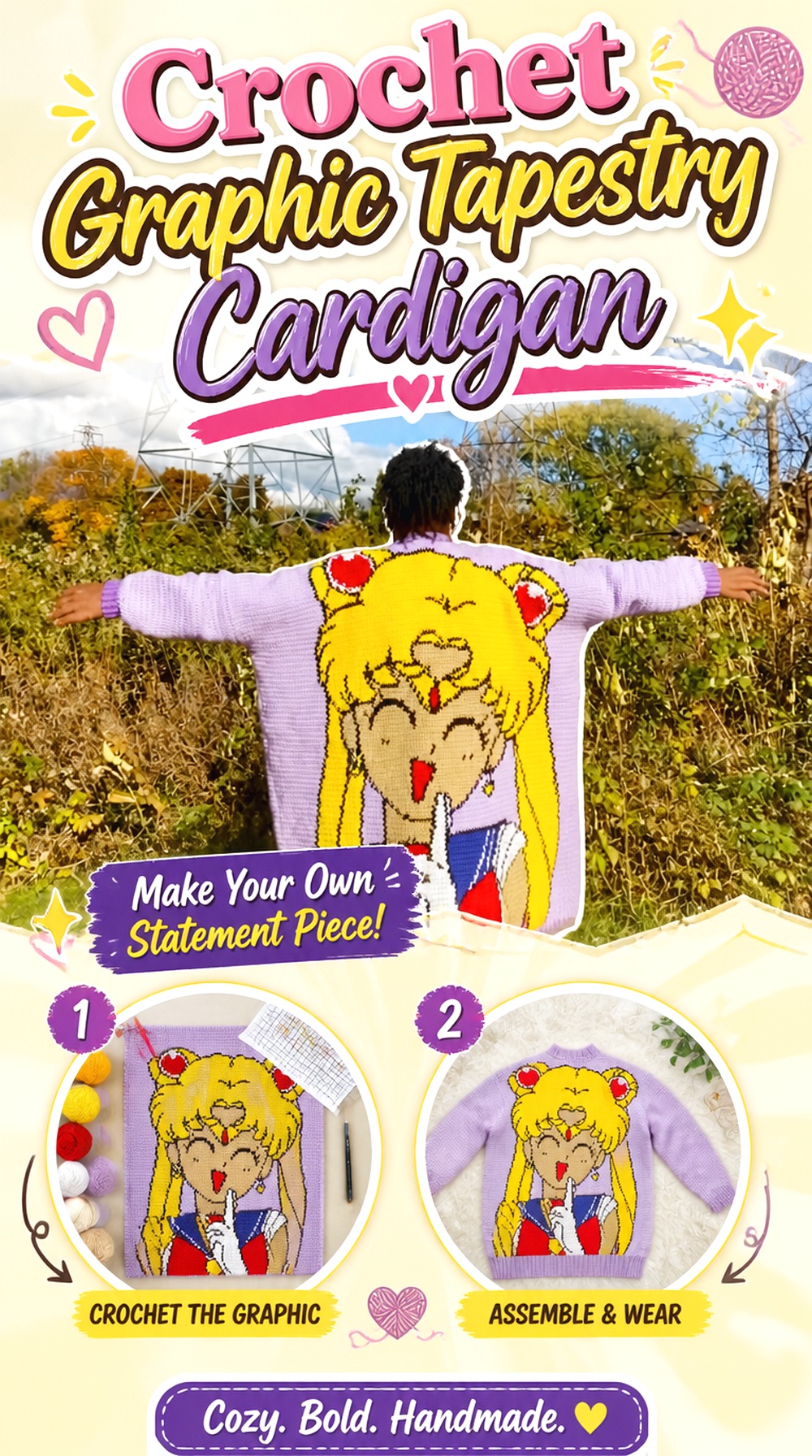
This approach takes colorwork in a much bolder direction. Instead of repeating small motifs evenly across the cardigan, it uses large graph-based images as statement panels. The result feels closer to wearable illustration than traditional Fair Isle, but it is a valuable idea for anyone interested in transferring charted multicolor imagery into cardigan construction.
Large graphics demand more planning because their placement becomes part of the garment design. A motif can look impressive on a back panel yet feel crowded on a narrow front. This option makes the most sense when the picture itself is the focal point and the remaining cardigan construction is kept visually quieter.
Treat the Back Panel Like a Canvas
A large tapestry motif needs enough uninterrupted area to remain readable. Back panels are often useful because they offer a broad surface without a center opening, but you still need to consider shoulder seams and the lower hem. Preview the graph at the intended scale before beginning so important details do not land where shaping or finishing will interrupt them.
Front Graphics Need Left-to-Right Planning
Two cardigan fronts create a very different design problem from a single pullover front. A graphic may need to be divided, mirrored, repositioned, or replaced with smaller supporting motifs. Rather than assuming one large chart will transfer cleanly, compare the motif width with the usable front-panel area after accounting for the front edge and desired opening.
Multiple Colors Increase Yarn Management
Large tapestry images can involve more active color sections than a simple two-color Nordic repeat. Organize yarn so strands do not constantly cross or twist, and inspect the wrong side periodically. The goal is not simply a neat hidden surface; consistent yarn handling also helps prevent isolated areas of the picture from pulling the surrounding cardigan fabric inward.
Original Tutorial and Creator Credit
Creator: CrochetCrys
3. Crochet Geometric Mosaic Cardigan
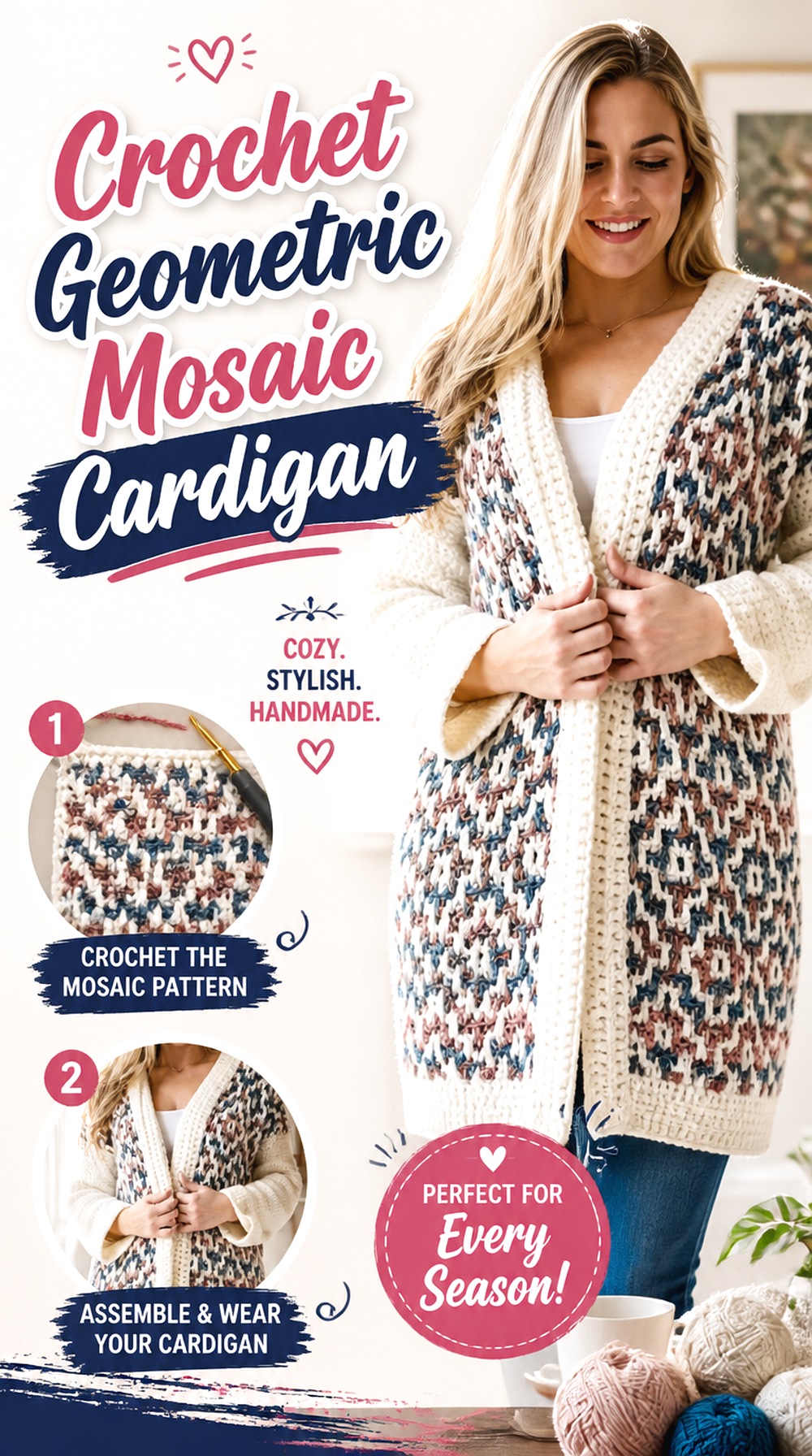
An all-over mosaic cardigan delivers dense geometric patterning without relying on the same stranded-colorwork process used in classic Fair Isle knitting. Visually, however, it offers much of the same appeal: repeated contrast, strong rhythm, and a fabric that looks carefully charted from a distance.
This is a stronger choice for readers who want the pattern to cover most of the garment rather than appear as a small accent. Because the design is visually continuous, changes in alignment are easier to notice. Pay particular attention to how the pattern meets at edges and how the cardigan’s overall weight feels once a large amount of mosaic fabric is completed.
Repetition Makes Alignment More Noticeable
With an all-over geometric design, one displaced repeat can stand out more than it would in a plain cardigan. Check the developing fabric regularly against the pattern reference rather than waiting until a full panel is finished. This is especially useful near edges where a motif may end partway through its visual cycle.
Dense Patterning Can Feel More Structured
Mosaic crochet often produces a substantial surface because of its stitch placement and layered visual effect. That can be an advantage if you want a cardigan with presence, but it may not suit someone seeking a fluid, lightweight layer. Your swatch should tell you not only whether the gauge works, but whether the finished fabric bends comfortably around the body.
Let Two Colors Do Most of the Work
A complex-looking mosaic does not automatically require a large palette. Two carefully contrasted colors can create very strong pattern definition while keeping yarn organization manageable. If you want the cardigan to remain versatile, a restrained palette can prevent the geometry from competing with the rest of an outfit.
Original Tutorial and Creator Credit
Creator: Annoo and The Unruly Stitch
4. Crochet Blue and White Mosaic Cardigan
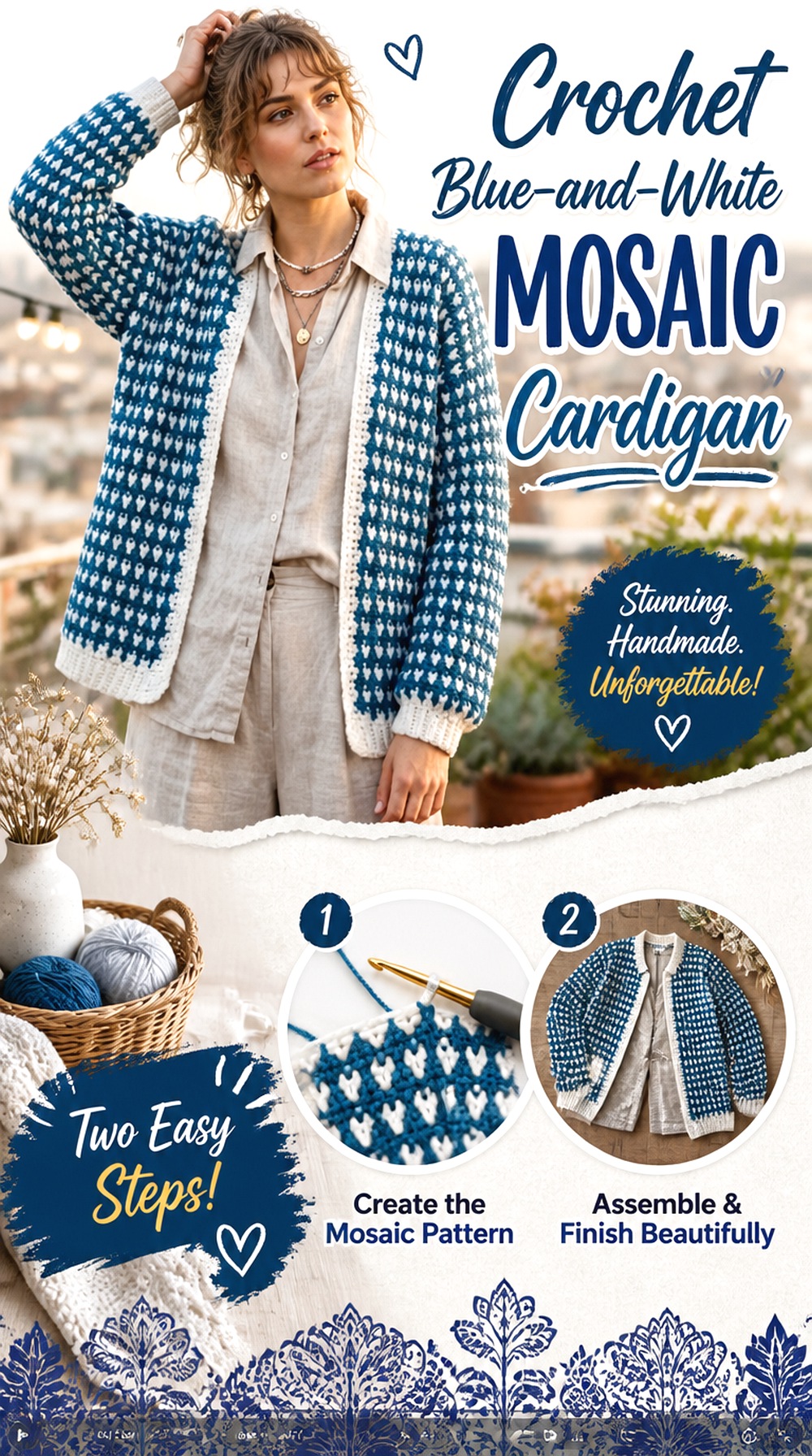
A crisp two-color mosaic cardigan gives Fair Isle-inspired geometry a cleaner, more modern appearance. Rather than mixing many small shades, this version relies on one strong contrast pairing so the repeated design remains easy to see across the body.
This approach can be useful if you like patterned cardigans but find multicolor palettes difficult to coordinate. With only two dominant colors, the main decisions become contrast, proportion, and how strongly you want the motifs to stand out. A dark-and-light pairing creates a graphic result, while two colors closer in value can make the same general style look softer and less busy.
Contrast Determines How Clearly the Pattern Reads
Before committing to full panels, photograph the two yarns together or inspect them from several feet away. Colors that look obviously different as skeins may have similar light-dark values once crocheted. For a sharply defined mosaic, sufficient value contrast generally matters more than simply choosing different hue names.
Neckline and Sleeve Shaping Need Visual Continuity
Geometric fabric looks most intentional when garment shaping does not appear to disrupt it randomly. Watch how the tutorial manages the transition from patterned body fabric into neckline, edge, and sleeve areas, then decide whether you want your own color placement to continue strongly into those sections or become quieter near the finishing.
Original Tutorial and Creator Credit
Creator: Hobilaryum
5. Crochet Hexagon Mosaic Cardigan
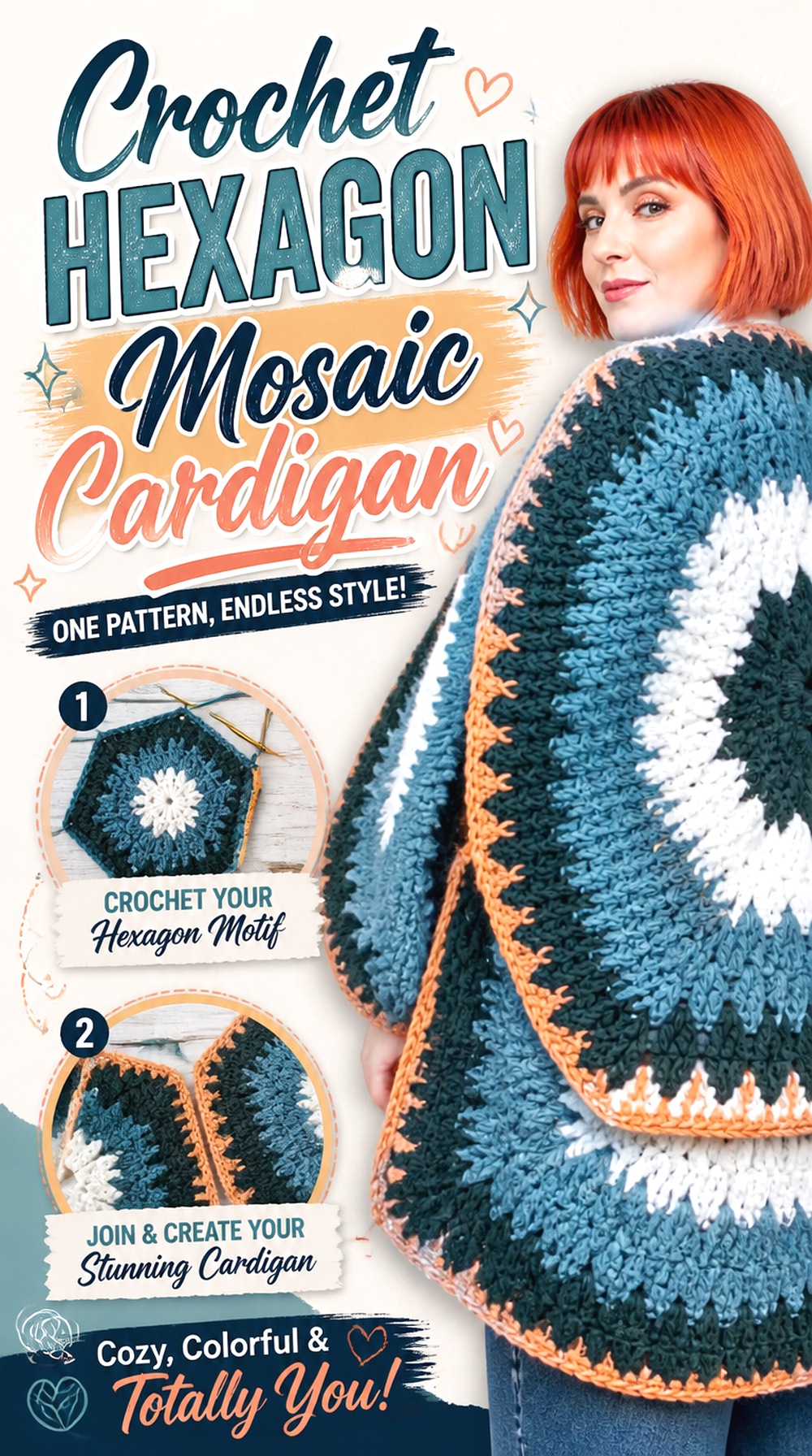
This cardigan combines two visually strong ideas: mosaic colorwork and hexagon-based garment construction. Instead of building conventional rectangular front and back panels first, the shaping begins from the familiar folded-hexagon cardigan concept, while geometric color changes create a much more intricate surface.
It is a useful option when construction variety matters as much as motif design. The diagonal and folded geometry of a hexagon changes how repeated lines travel around the body, so the finished colorwork does not behave like a pattern placed on a flat rectangle. That can produce striking movement, but it also makes advance color planning more important.
Hexagon Folds Redirect the Motif
A repeat that looks horizontal while the piece is lying open can change direction once the hexagon is folded into a sleeve and body section. Periodically fold the work as it grows so you can evaluate the pattern as a garment rather than only as a flat crochet shape.
Sleeve and Body Patterning Grow Together
Hexagon construction links sleeve depth and body width more closely than many panel cardigans. That relationship matters when elaborate colorwork is involved because extending one part of the garment may also affect where motifs land elsewhere. Check the developing fit before assuming another full colorwork repeat is the right adjustment.
Use Color Changes to Emphasize the Construction
You can treat the hexagon shape as something to disguise or highlight. Concentrating contrast around certain geometric bands emphasizes the folding architecture, while a more evenly distributed palette can make the shape recede and let the overall mosaic pattern become the main feature.
Original Tutorial and Creator Credit
Creator: Doacrochet
6. Crochet Star Border Colorwork Cardigan
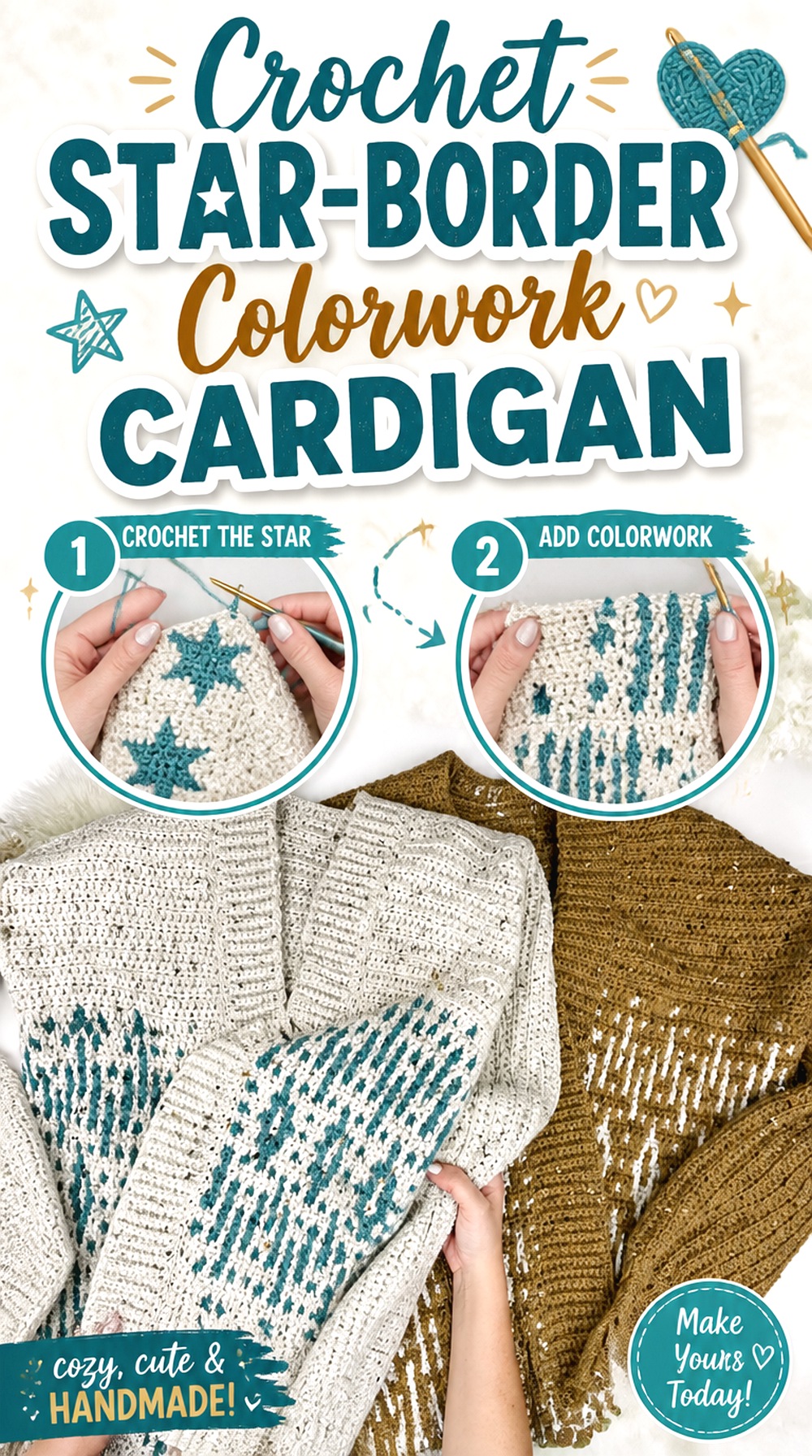
A cardigan with mosaic colorwork concentrated near the lower edge offers a calmer alternative to all-over pattern. Most of the garment can remain relatively simple while a star-like geometric border provides the Fair Isle-inspired focal point.
This layout has a practical advantage for anyone uncertain about wearing dense pattern from shoulder to hem. The eye is drawn downward, and the upper body remains visually quieter for layering. It also gives you an obvious place to experiment with contrast without having to manage decorative colorwork through every area of garment shaping. The main consideration is making sure the patterned lower section and plain upper fabric still feel like one cohesive cardigan.
A Low Border Keeps the Upper Body Quiet
Placement changes the impression of the same amount of colorwork. A strong motif around the lower hem adds interest without surrounding the face or shoulders with pattern. If you plan to wear the cardigan over printed shirts or dresses, this more limited placement may be easier to coordinate than full-coverage geometry.
Compare Plain and Mosaic Gauge
Do not assume the plain body and decorative border will automatically have identical stretch or row behavior. A useful swatch includes both fabrics next to each other so you can see whether the colorwork pulls inward, flares, or changes drape. That transition matters because it spans a large horizontal area of the garment.
Finishing Can Frame the Motif
Ribbing and edge treatments can visually separate a detailed border from the rest of the cardigan. Decide whether the finishing yarn should match the main body for a quieter frame or echo a contrast color from the motif. Either choice changes how strongly the lower design appears connected to the entire garment.
Original Tutorial and Creator Credit
Creator: Briana K
7. Crochet Plaid Colorwork Cardigan
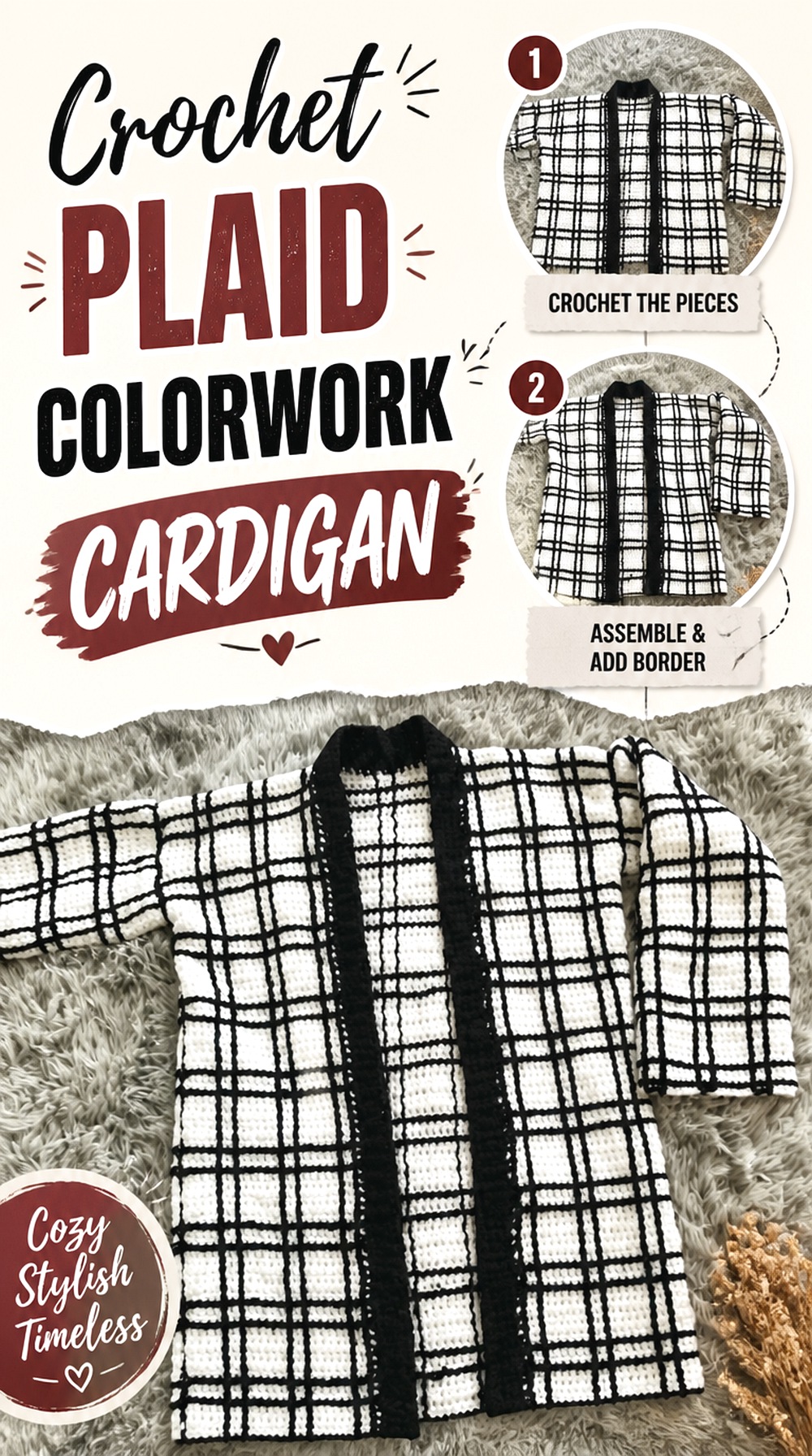
Plaid creates a larger, blockier interpretation of multicolor cardigan patterning. This tutorial uses a made-to-measure approach, making it particularly relevant for crocheters who would rather work from their own body measurements than rely entirely on a fixed size label.
The finished effect is bold but orderly. Because plaid depends on regular intersections, the cardigan benefits from careful attention to proportion: overly narrow blocks can look busy across a large garment, while very large blocks create a stronger statement. This idea works especially well for anyone drawn to classic checks but who wants a crocheted fabric rather than a knitted or woven plaid.
Use the Same Measurement Logic Across Panels
Made-to-measure construction gives flexibility, but consistency becomes your responsibility. Record the target width and length for each corresponding section rather than measuring casually as you go. Two front panels that differ slightly can become much more noticeable once repeated plaid lines are placed beside each other.
Plaid Needs Alignment at Major Seams
Perfect pattern matching is not always necessary, but deliberate alignment gives the cardigan a more cohesive appearance. Before joining pieces permanently, lay them in their final orientation and inspect the strongest horizontal color lines. Small placement adjustments at this stage can matter more visually than obsessing over every minor intersection.
Decide How Busy the Sleeves Should Be
Repeating the full plaid across sleeves creates a complete statement garment. A quieter sleeve, on the other hand, can reduce visual density and make the body pattern more prominent. If adapting the concept, choose that balance before you begin so the color distribution feels intentional rather than determined by leftover yarn.
Original Tutorial and Creator Credit
Creator: AC Crochets
8. Crochet Chunky Kids’ Fair Isle Cardigan
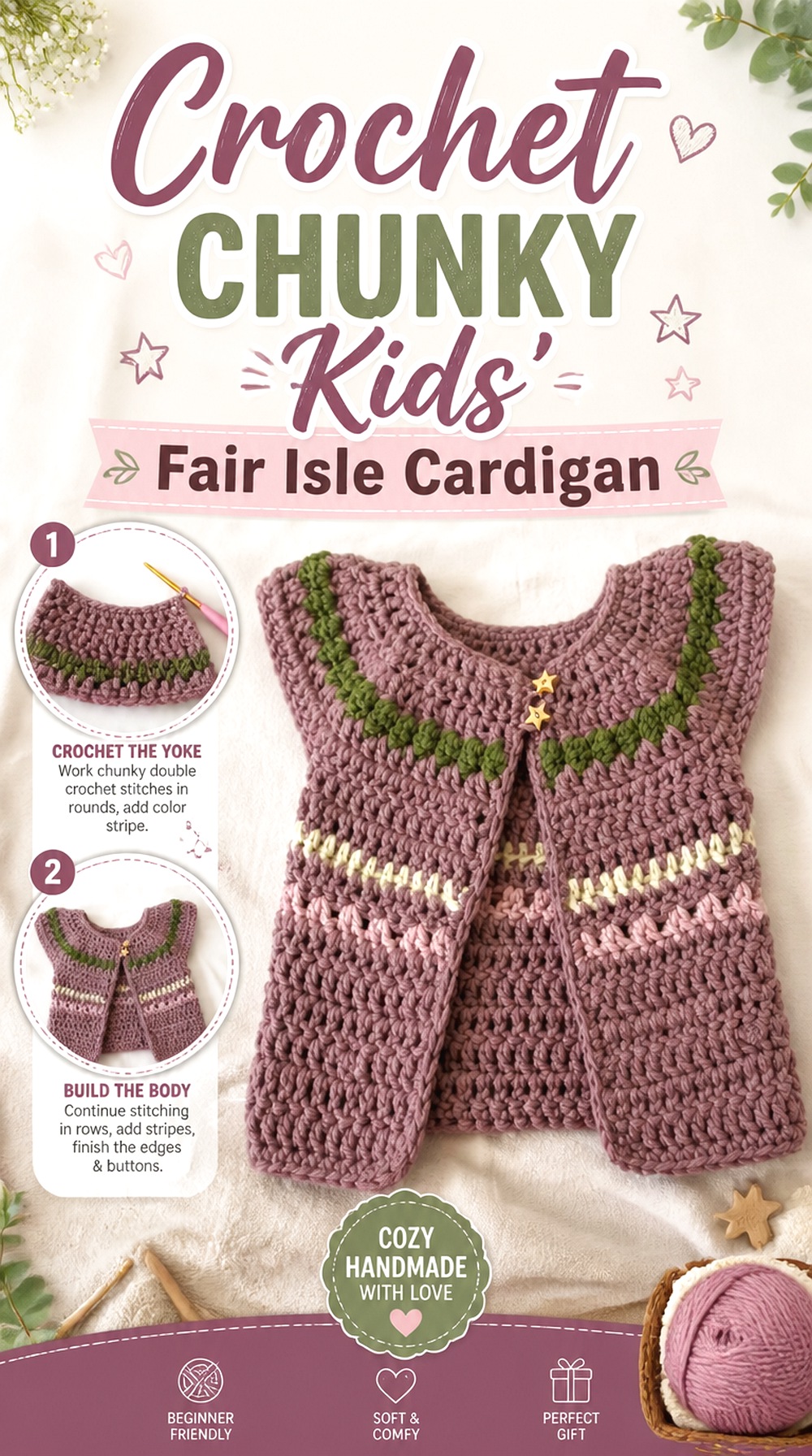
This children’s cardigan is one of the closest matches in the collection to the familiar Fair Isle sweater idea. It uses contrasting motifs on a warm-looking cardigan silhouette and is specifically presented for babies and young girls rather than adults.
That age range is important: this is not a tutorial to treat as an adult cardigan simply by substituting a larger hook. Children’s garment proportions change in more than one direction, and a responsible adaptation would need actual adult garment measurements and fresh gauge planning. As inspiration, however, it shows how classic Fair Isle-style patterning can be translated directly into crochet at a smaller scale.
Treat It as a Children’s Garment Tutorial
Follow the creator’s stated sizing context rather than assuming the same construction scales indefinitely. If you want an adult version with a similar appearance, use this tutorial primarily for colorwork inspiration and choose an adult cardigan framework that already addresses adult shoulder, armhole, sleeve, and body proportions.
Chunkier Yarn Enlarges Every Motif
When a patterned repeat is worked in a thicker yarn, individual stitches occupy more visual space. That makes the motifs bold and easy to see but can also produce a heavier-looking cardigan. If you prefer a finer Nordic appearance, simply changing yarn weight would require a complete gauge and sizing reassessment rather than a direct substitution.
Keep Small Wearers Comfortable
For a child’s cardigan, inspect the inside as carefully as the outside. Long loose strands, bulky joins, or poorly secured finishing can be irritating and impractical. Follow the tutorial’s intended construction and check that colorwork and fastening details remain appropriate for the specific child and how the garment will be worn.
Original Tutorial and Creator Credit
Creator: WoolyWondersCrochet
9. Crochet Nordic Colorwork Cardigan
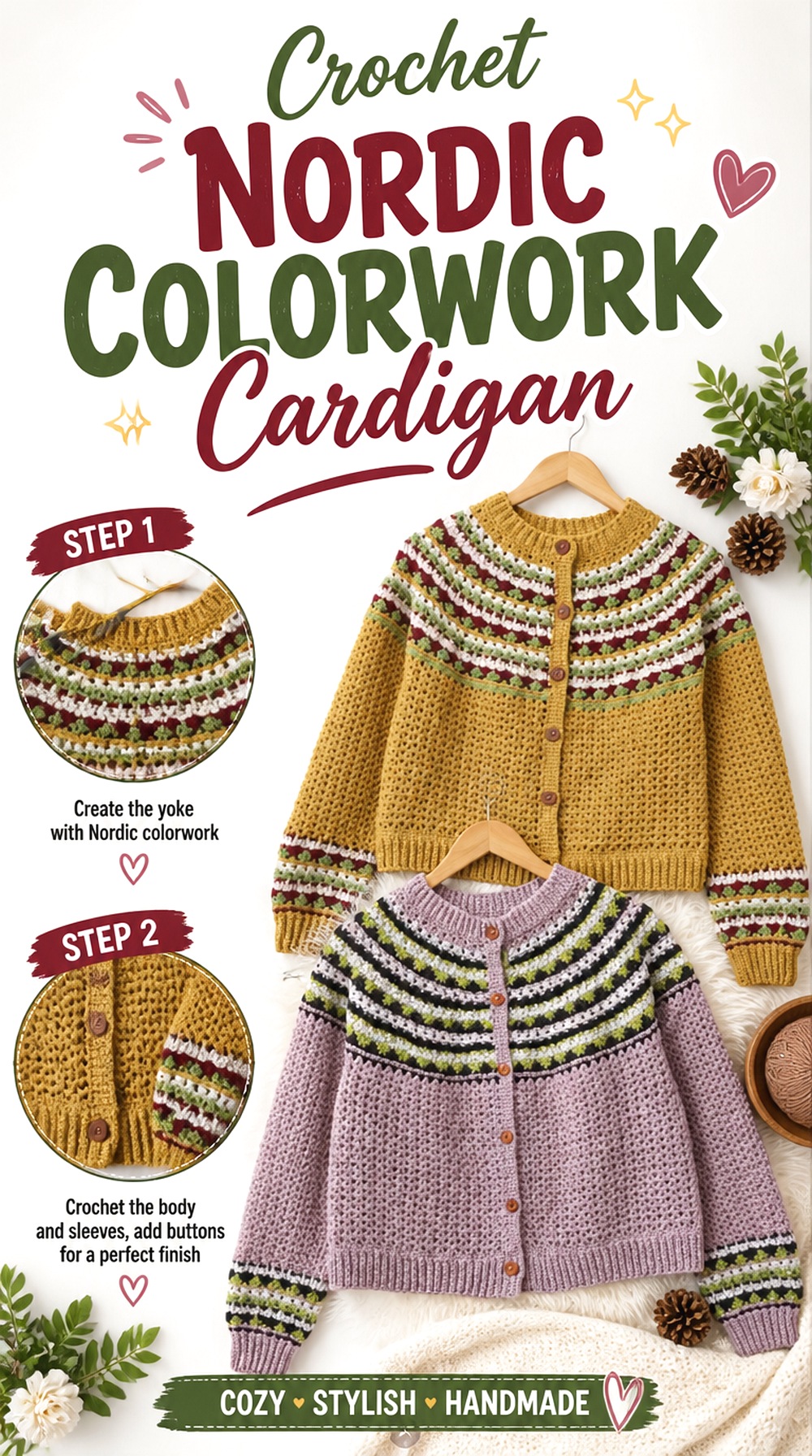
A Nordic cardigan is the natural direction for readers who want the article’s Fair Isle theme to remain visually traditional. This tutorial presents a buttoned cardigan with repeated geometric colorwork rather than a single oversized graphic, giving the finished garment a balanced winter-sweater character.
The patterning is distributed strongly enough to define the cardigan but still works within a recognizable everyday silhouette. That makes this idea useful if you want the motifs to feel integrated rather than added as an isolated decorative panel. Before choosing colors, decide whether you prefer heritage-style contrast or a more contemporary palette with muted, neighboring shades.
Repeated Motifs Need Consistent Tension
Small geometric repeats reveal tension changes quickly because each motif provides a visual reference for the next. Stop periodically and compare several repeats side by side. If one section starts narrowing, correct the yarn-handling problem early rather than expecting blocking to compensate for consistently tight carried strands.
Buttons Add Another Visual Rhythm
A buttoned front introduces a vertical sequence through the center of a heavily patterned garment. Button size and contrast therefore affect more than function. A quieter button treatment lets the Nordic pattern dominate, while high-contrast buttons create an additional design line. Consider them alongside the yarn palette rather than as an afterthought.
Watch Motif Placement Near the Neck
The upper chest and neckline are highly visible when the cardigan is worn. If you adapt colors or sizing, make sure significant motifs remain balanced as the fabric approaches the neck opening. Cropping an obvious geometric element midway can look accidental unless the original layout deliberately handles that transition.
Check the Cardigan After Blocking, Not Only Flat
Colorwork can relax differently after blocking, especially where multiple strands create extra density. Recheck front-edge length, sleeve behavior, and whether the button bands still lie comfortably once the fabric has settled. This final garment-level check is more useful than judging each motif only while it is fresh off the hook.
Original Tutorial and Creator Credit
Creator: Moony Crochet(무늬 코바늘)
10. Crochet Daisy Graph Cardigan
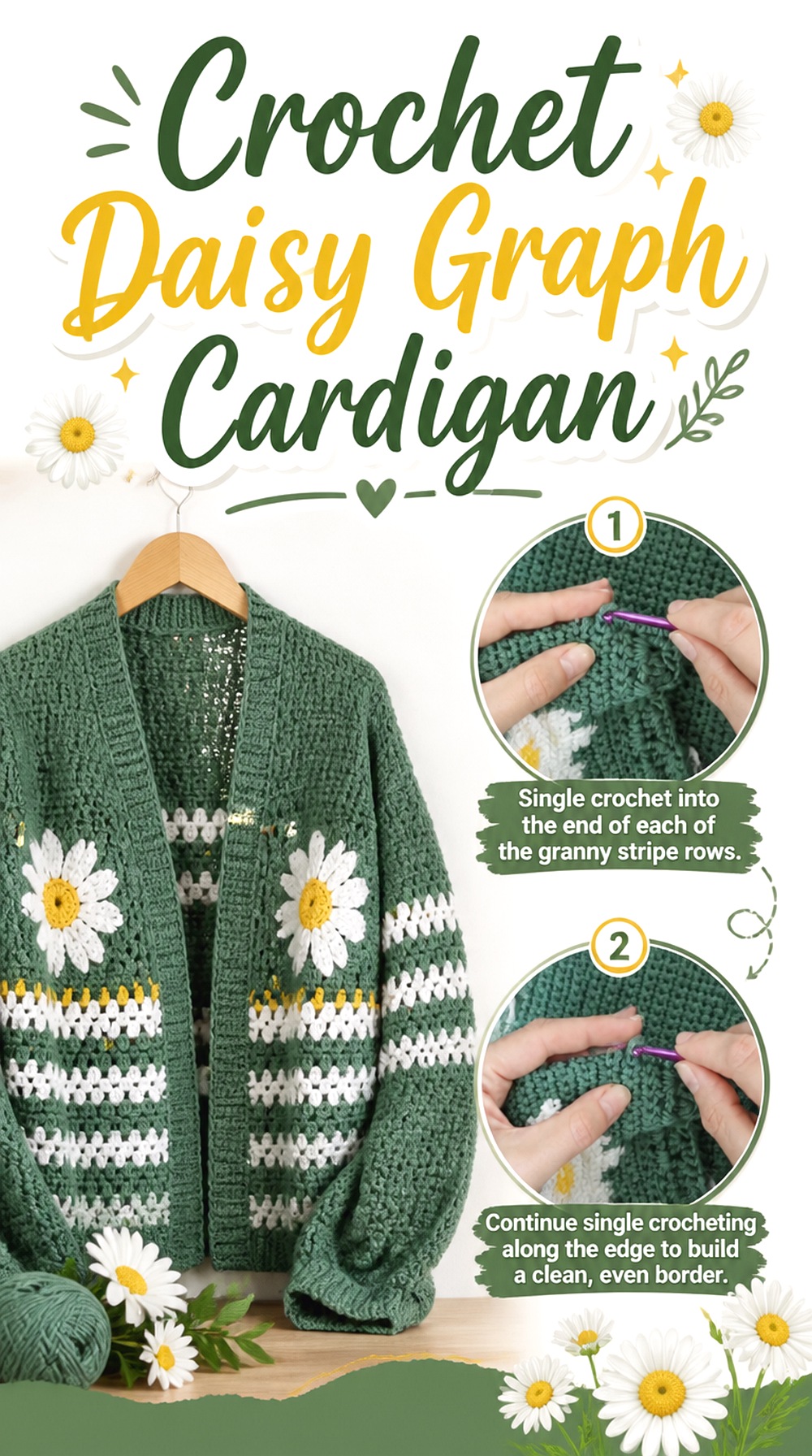
Floral graph colorwork offers a playful alternative to snowflakes and diamonds. The Daisy Day design uses large daisy motifs on the cardigan rather than small all-over repeats, making it a good example of how Fair Isle-inspired chart thinking can be adapted into a more graphic seasonal garment.
Because the flowers occupy noticeable areas, color choice has a direct impact on how bold the cardigan feels. A bright center and high-contrast petals make each daisy read immediately; a tonal palette would soften the effect. This idea suits readers who like charted colorwork but want recognizable imagery rather than abstract geometry.
Motif Placement Controls the Balance
Large flowers need visual breathing room. Before changing the original placement, consider how the front opening divides the garment and how the back is viewed as one uninterrupted surface. An arrangement that works beautifully across the back may feel crowded if duplicated too closely on the narrower fronts.
Smooth Yarn Makes Graph Edges Easier to Read
Graphic motifs depend on clean transitions between colors. A very fuzzy yarn can blur petal outlines, while a smoother surface can make the charted shapes more apparent. If substituting yarn, work a small section containing actual color changes and evaluate the motif from normal viewing distance, not only close to the hook.
Keep the Supporting Fabric Quiet
With several large flowers already providing the focal point, extra decorative borders or additional unrelated motifs can make the garment feel crowded. When adapting the idea, consider letting cuffs, bands, and background fabric repeat colors already present in the daisies rather than introducing another independent visual theme.
Original Tutorial and Creator Credit
Creator: Evelyn And Peter Crochet
11. Crochet Snowflake Square Cardigan
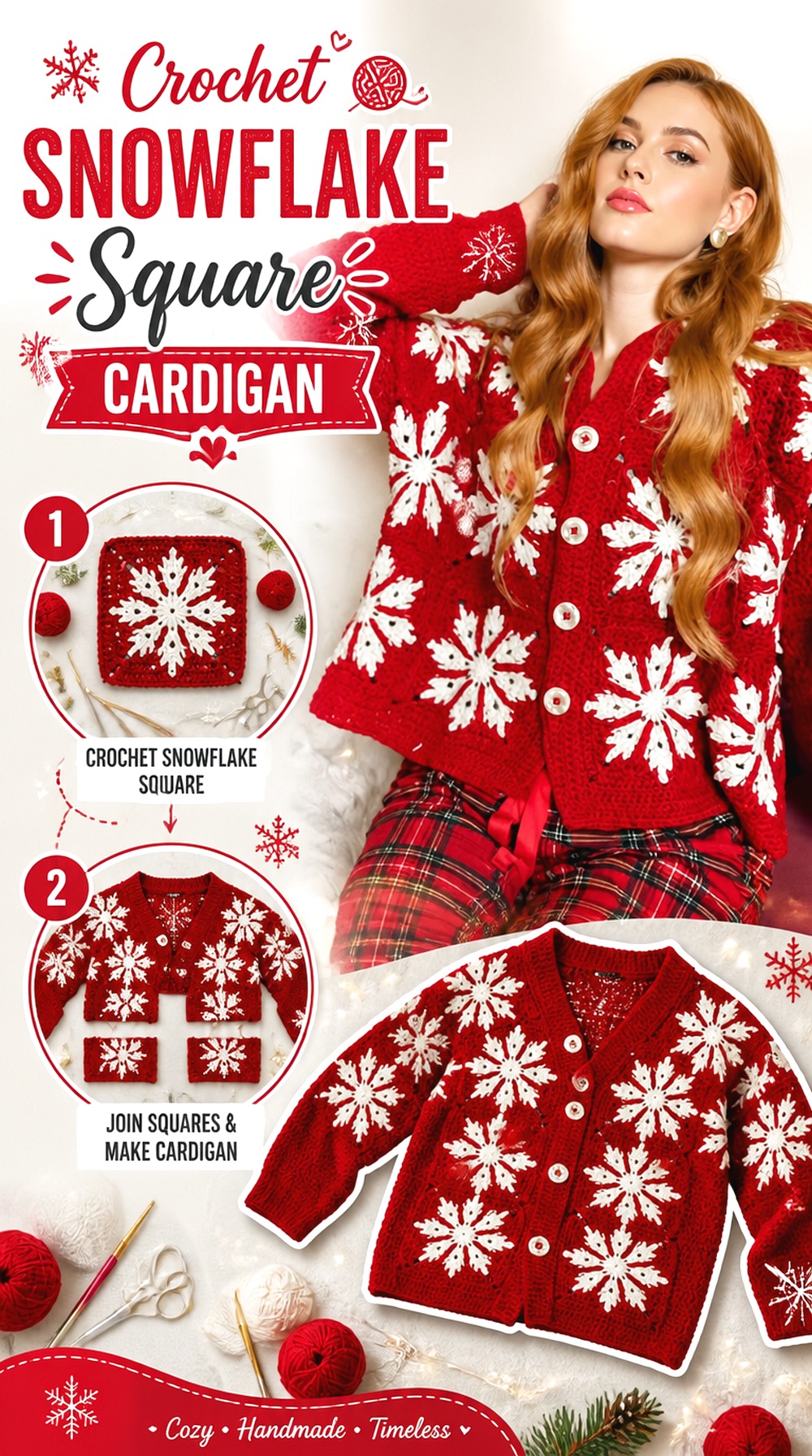
Snowflakes deliver the Nordic winter mood associated with Fair Isle, but this cardigan reaches that look through modular squares. Individual snowflake motifs are joined into the garment rather than worked as continuous stranded patterning across a full panel.
That construction changes the planning process substantially. Instead of managing repeating colors across long rows, you can concentrate on making consistent motifs and then arrange them before assembly. It is a practical route if you enjoy portable square projects or want to experiment with placement before committing to the final layout. The most important checkpoint is keeping every blocked square compatible in size so the assembled cardigan does not distort.
Block the Squares Before Final Layout
Individual motifs can look almost identical while still varying enough to create trouble during joining. Bring completed squares to consistent blocked dimensions before making final placement decisions. This is especially helpful for snowflake motifs because areas of contrasting stitch density can cause some squares to relax differently from simpler companion pieces.
Plan the Snowflake Direction Deliberately
Snowflakes are visually symmetrical enough to be forgiving, but the square itself may still have an obvious orientation from joins, edges, or surrounding details. Lay out the entire front and back arrangement before assembly so repeated motifs do not accidentally rotate in a way that looks inconsistent.
Modular Construction Makes Color Testing Easier
One advantage of squares is that you can make several palette experiments without committing to a whole panel. Compare combinations in daylight and place sample motifs beside the intended joining or background color. Once assembled, that joining color can strongly influence whether the snowflakes appear crisp, soft, vintage, or highly graphic.
Original Tutorial and Creator Credit
Creator: WONDER NETTING
12. Crochet Houndstooth Cardigan
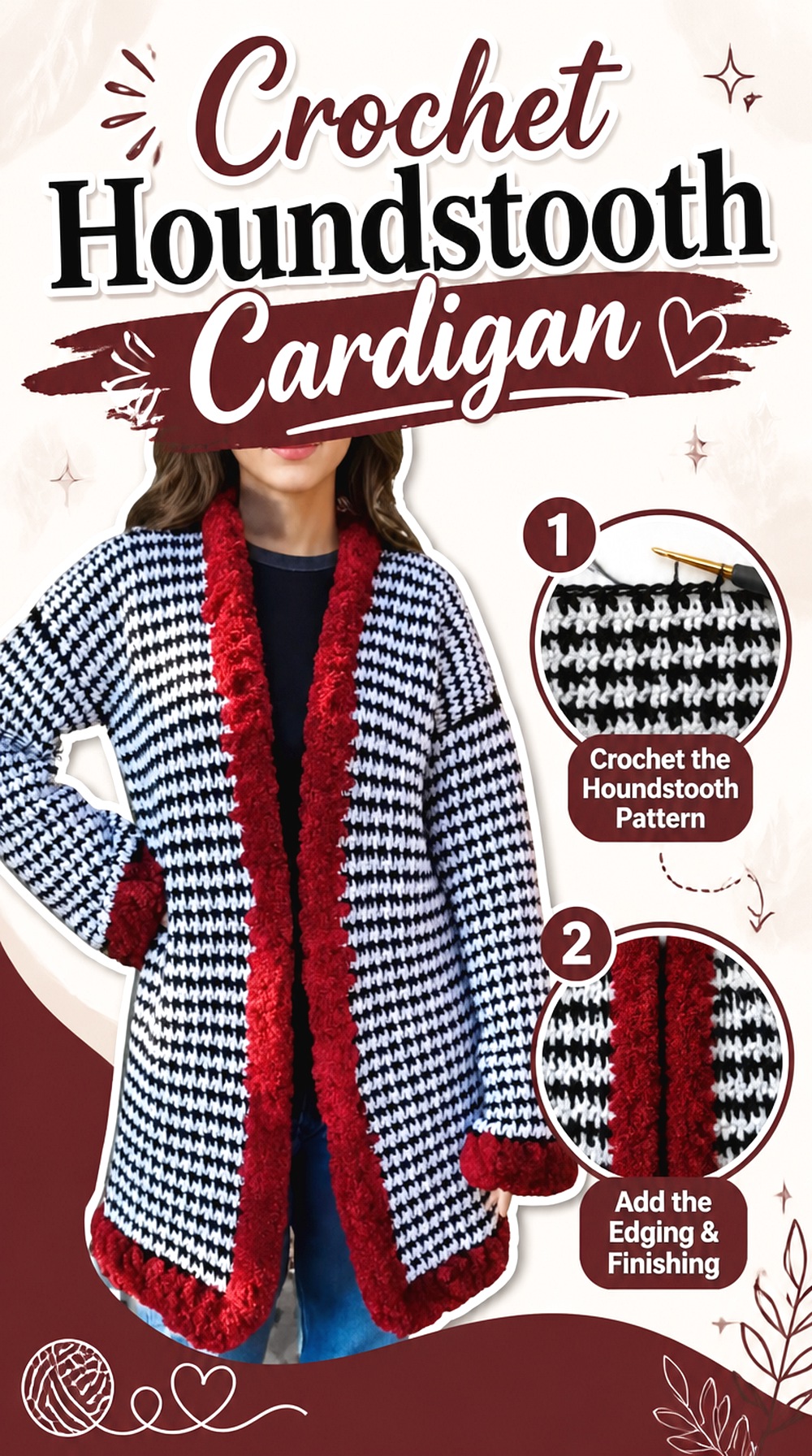
Houndstooth produces one of the strongest two-color effects in this collection. Instead of discrete Nordic motifs, alternating stitches create a continuous broken-check pattern that reads clearly across large cardigan panels. The result feels tailored and graphic, especially in a high-contrast palette.
This oversized version also introduces a different silhouette from the more traditional Nordic cardigan. Pattern and proportion work together: a long, roomy shape turns houndstooth into a statement surface rather than a small decorative repeat. If you prefer a quieter garment, changing the color contrast can soften the pattern without changing the basic construction concept.
Oversized Fabric Increases the Pattern’s Impact
Houndstooth already has strong visual movement, and using it across broad oversized panels amplifies that effect. Consider the finished length and width alongside your palette. A black-and-white version will read much more dramatically than two neighboring neutrals across the same amount of fabric.
Front Pockets Need Pattern Awareness
Patch pockets interrupt the surface of a patterned cardigan. If you add them, decide whether you want them to disappear through close pattern alignment or stand out as deliberate blocks. Either can work, but placing them without considering the surrounding houndstooth can make an otherwise orderly repeat look unexpectedly broken.
Optional Trim Can Shift the Style Completely
The tutorial shows a decorative fur-style finishing option that can be omitted. That choice significantly changes the cardigan’s character: without it, the houndstooth remains the central graphic element; with a contrasting plush trim, the cardigan becomes more dramatic and seasonal. Decide on finishing before calculating your overall color balance.
Original Tutorial and Creator Credit
Creator: Bag-O-Day Crochet
13. Crochet Checkerboard Cardigan
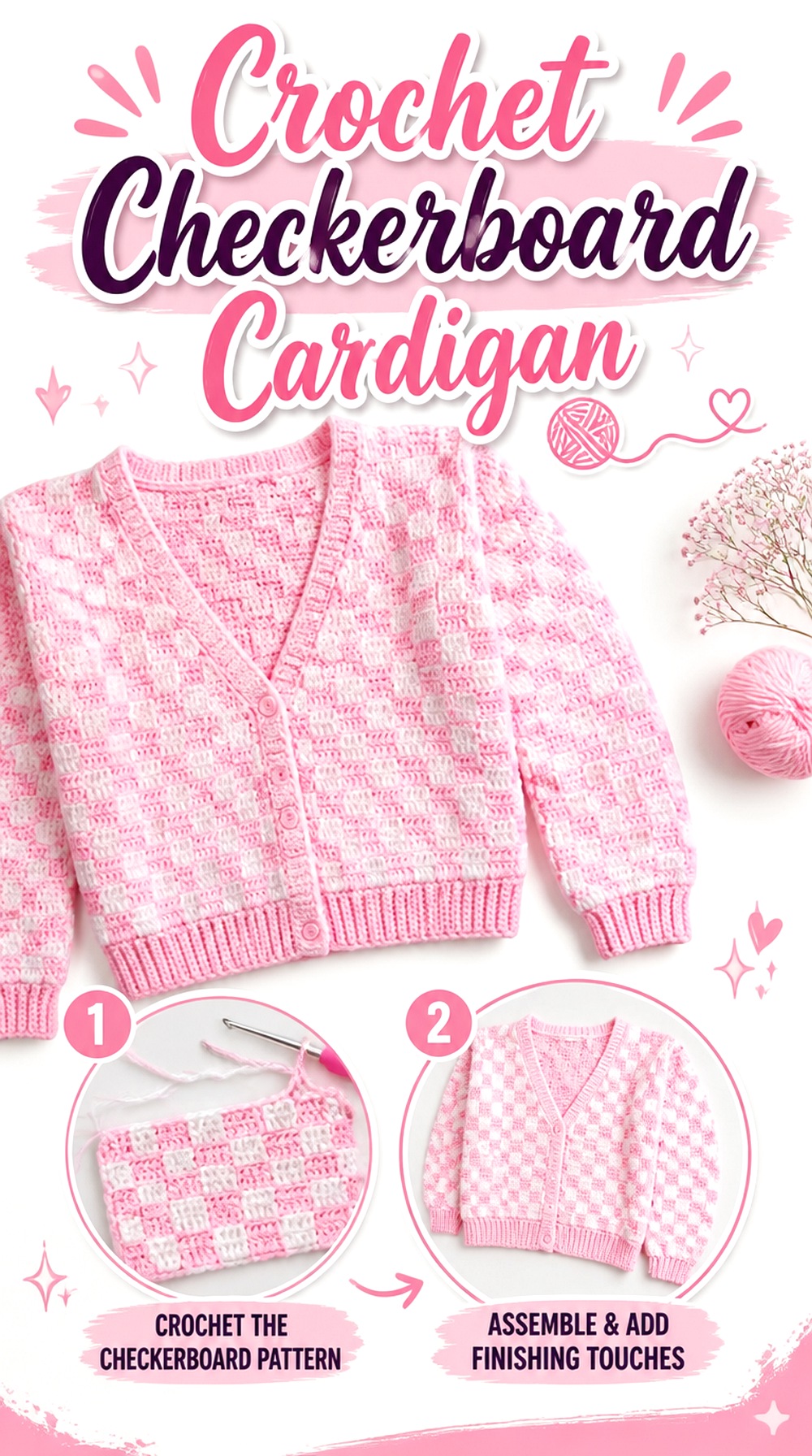
Checkerboard colorwork is a straightforward way to make a cardigan feel graphic without using tiny motifs. The repeated blocks create a strong rhythm that can be adapted with only two colors or expanded into a larger palette. While it is not traditional Fair Isle, it provides the same opportunity to turn cardigan construction into a deliberate color-placement project.
This tutorial also uses an existing favorite cardigan as a sizing reference, which can be useful for visualizing proportions. That method works best when the reference garment already has the fit you want; using a fitted cardigan to plan an oversized crochet version would give misleading targets.
Choose the Reference Garment Carefully
If you size from an existing cardigan, lay it flat without stretching and choose one whose shoulder width, body width, sleeve length, and overall ease already feel right. Crochet fabric will not necessarily behave exactly like the reference textile, so treat those dimensions as planning targets rather than proof of identical finished fit.
Block Size Changes the Entire Mood
Small checks create a busier, more energetic surface, while larger checks feel bolder and more architectural. Before covering a complete panel, make enough of the pattern to judge the scale against your torso. What looks attractive in a small swatch can feel very different when multiplied across a full cardigan.
Original Tutorial and Creator Credit
Creator: The Crochet Channel
How These Crochet Colorwork Cardigans Compare
| Idea | Main Colorwork Approach | Construction Character | Consider It If You Want |
|---|---|---|---|
| Tartan Cardigan | Tapestry plaid | Traditional cardigan | Large intersecting color lines |
| Graphic Tapestry Cardigan | Graph-based tapestry | Separate garment sections | Oversized pictures or custom graphics |
| Geometric Mosaic Cardigan | All-over mosaic | Panel-style garment | Dense repeating geometry |
| Blue-and-White Mosaic Cardigan | Two-color mosaic | Shaped cardigan | Strong pattern with a limited palette |
| Hexagon Mosaic Cardigan | Mosaic crochet | Folded hexagons | Colorwork plus unusual construction |
| Star-Border Cardigan | Mosaic accent | Mostly plain body | Pattern concentrated near the hem |
| Plaid Cardigan | Crochet plaid | Measurement based | Custom sizing and large checks |
| Kids’ Fair Isle Cardigan | Fair Isle-style colorwork | Children’s cardigan | A more traditional winter motif look |
| Nordic Cardigan | Repeated Nordic colorwork | Buttoned cardigan | The closest classic Nordic direction |
| Daisy Graph Cardigan | Charted floral colorwork | Graphic motif cardigan | Recognizable motifs instead of geometry |
| Snowflake Square Cardigan | Modular motifs | Joined squares | Portable motifs and winter imagery |
| Houndstooth Cardigan | Two-color houndstooth | Oversized panels | Strong continuous black-and-white style |
| Checkerboard Cardigan | Block colorwork | Measurement-led panels | Simple graphic repetition |
Conclusion
For the most traditional Fair Isle direction, start with the chunky children’s cardigan or the Nordic buttoned design. The tartan, plaid, and houndstooth options move toward larger repeated patterns, while tapestry crochet suits anyone who wants distinct pictures rather than small geometric repeats. Mosaic cardigans offer another route to complex-looking colorwork, especially if you prefer not to manage several active strands in every row.
Construction matters too. Choose joined snowflake squares for modular work, a hexagon cardigan for unconventional shaping, or a border-focused design when you want less overall pattern density. Once you have selected the silhouette and colorwork method, use the original tutorials for the exact construction details.
Frequently Asked Questions
Is Fair Isle crochet the same as knitted Fair Isle?
Not exactly. Traditional Fair Isle is a stranded knitting tradition, while crocheters use several methods to create related multicolor effects. Stranded or carried-yarn crochet may come closest conceptually, but tapestry, mosaic, graph-based colorwork, and repeated two-color stitches can all create a Fair Isle-inspired appearance. Check the tutorial’s actual method rather than assuming every patterned cardigan handles unused yarn in the same way.
Which crochet technique gives the closest Fair Isle cardigan look?
For the familiar look of small repeated Nordic motifs, choose a tutorial that uses carried or stranded-style color changes across repeated geometric sections. Tapestry crochet can also create crisp motifs but often produces a denser fabric. Mosaic crochet looks intricate while handling colors differently, so it is a useful alternative when the visual effect matters more to you than reproducing a traditional stranded technique.
Should I make a colorwork swatch before crocheting the cardigan?
Yes, especially if you are substituting yarn or changing colors. A plain swatch cannot show how carried strands, frequent color changes, or mosaic stitches affect thickness and horizontal flexibility. Work enough of the actual decorative section to judge motif clarity, fabric stretch, and whether your colorwork tension causes the sample to narrow compared with the plain cardigan fabric.
How can I stop carried yarn from making a crochet cardigan too stiff?
Avoid pulling the inactive strand tightly across the fabric, and periodically spread the recently completed stitches along the working area before continuing. Yarn choice also matters because some yarns create a thicker combined fabric than others. If your colorwork swatch already feels rigid, solve that issue at the swatch stage rather than expecting the weight of a completed cardigan to correct it.
Can I add Fair Isle motifs to a plain crochet cardigan pattern?
Potentially, but the motif repeat, gauge, stitch structure, and garment shaping have to be compatible. Adding colorwork can alter stretch and density, so substituting a chart is not merely a decorative change. Test the proposed motif in the cardigan’s main stitch pattern and compare its blocked dimensions with the plain fabric before planning large front, back, or sleeve sections.
What is the easiest way to reduce visual heaviness in a Fair Isle-inspired cardigan?
Use colorwork selectively rather than covering every surface. A patterned hem, cuffs, yoke area, or limited series of motifs can provide the Nordic effect while leaving larger areas quiet. You can also reduce contrast between yarn colors. A dark-light combination emphasizes every motif, whereas colors closer in value usually produce a softer, less dominant pattern.