A crochet pet portrait ornament can be much more personal than a generic animal decoration. The details that make a piece recognizable may be as simple as one dark ear, an uneven facial patch, a white chest, a distinctive muzzle, or the way a pet’s ears naturally sit.
That does not mean you need to reproduce every hair or marking. Small Christmas ornaments have limited space, so successful portrait adaptations usually concentrate on the features that are most recognizable from a distance.
The ideas below use several approaches. Some source tutorials are already designed as Christmas ornaments or hanging decorations, while others are small keychains, appliqués, or amigurumi pets that provide useful portrait-ready forms. When adapting a non-ornament project, confirm the finished scale and weight before replacing a keychain fitting with a lightweight hanging loop.
Quick List
- Crochet Paw-Print Pet Keepsake Ornament
- Crochet Flat Cat-Face Portrait Ornament
- Crochet Christmas Cat Portrait Ornament
- Crochet Dachshund Portrait Christmas Ornament
- Crochet Custom-Coat Cat Portrait Ornament
- Crochet French Bulldog Portrait Ornament
- Crochet Beagle Color-Block Portrait Ornament
- Crochet Pet Fish Portrait Ornament
- Crochet Turtle Portrait Ornament
- Crochet Bunny Portrait Ornament
- Crochet Parrot Portrait Ornament
- Crochet Mouse Portrait Ornament
- Crochet Bull Terrier Portrait Ornament
What Makes a Crochet Ornament Look Like a Specific Pet?
Start with shape before color. Ear length, muzzle width, head proportions, tail shape, and overall body silhouette often make a pet recognizable before detailed markings do.
Next, identify only the most important coat features from a clear reference photo. A black patch over one eye may matter more than reproducing several smaller spots. A tuxedo cat may need the relationship between its dark head and white muzzle more than tiny individual markings.
Color also needs to be judged comparatively rather than literally. You may not find yarn that perfectly matches a particular coat, but a light, medium, and dark combination can still suggest the correct pattern.
Finally, decide how much detail will remain readable at Christmas-tree distance. Tiny facial embroidery may look impressive in your hand but disappear once the ornament is surrounded by branches and lights.
How to Adapt Keychains and Small Amigurumi Into Christmas Ornaments
Many small animal keychains already have useful ornament proportions. The main question is whether the piece hangs naturally once the metal hardware is removed or replaced.
Before attaching a final loop, suspend the finished animal temporarily with scrap yarn. Check whether the face points outward, the body tilts unexpectedly, or a heavy head makes the ornament rotate. Moving the hanger slightly can make a substantial difference.
Full-size plush tutorials require more caution. Changing yarn and hook size can affect proportions, fabric density, and how individual features behave, so do not assume that simply using thinner yarn will automatically produce a successful miniature.
Keep weight in mind as well. A compact stuffed head may work comfortably on a branch, while a larger fully stuffed body may be better used as tabletop Christmas decor.
Plan Small Parts With Pets and Children in Mind
Pet-themed ornaments are not necessarily ornaments for pets to play with. Safety eyes, beads, bells, glued noses, keychain fittings, and other small components can detach.
If the Christmas tree is accessible to children or animals, embroidered facial features may be worth considering for lower branches. Fragile or heavily embellished portraits can also be placed higher on the tree.
Long hanging cords deserve similar attention around curious pets. Keep loops appropriately sized for the display and avoid treating decorative crochet ornaments as toys unless the construction and materials were specifically chosen for that purpose.
1. Crochet Paw-Print Pet Keepsake Ornament
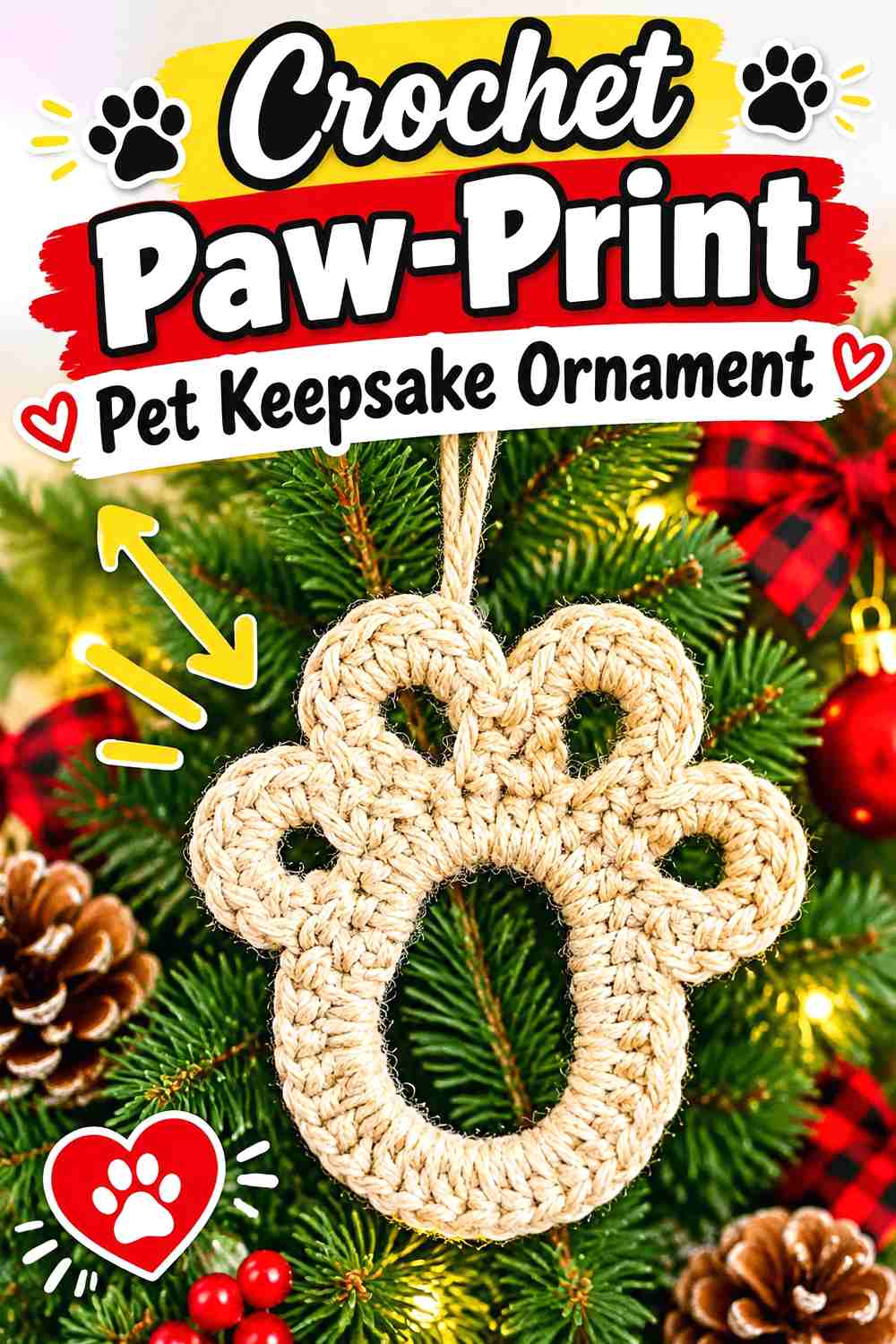
A paw print is the least literal portrait in this collection, but it can be one of the most personal. Instead of reproducing a face, the ornament represents the animal through a familiar symbol. The source project is specifically designed as a crochet paw-print Christmas ornament and can also function as an appliqué.
This approach is useful when facial markings are difficult to translate into a tiny crochet piece or when you want several pets represented using the same overall ornament style.
Let Color Carry the Personal Connection
A paw print does not have breed-specific facial features, so color becomes more important. You might use shades connected to the pet’s coat or colors associated with its collar, bed, or other familiar belongings.
For multiple pets, repeating the same paw construction while changing the color arrangement can create a coordinated family set.
A Flat Shape Is Easy to Mix With Dimensional Portraits
Flat paw ornaments take up little branch depth. That makes them useful between stuffed dog, cat, bird, or hamster portraits, especially if the tree already contains many dimensional pieces.
They can also work as package toppers or garland accents when you want the pet theme to extend beyond the tree.
Creator Credit: Crochet with Simply Hooked by Janet
2. Crochet Flat Cat-Face Portrait Ornament
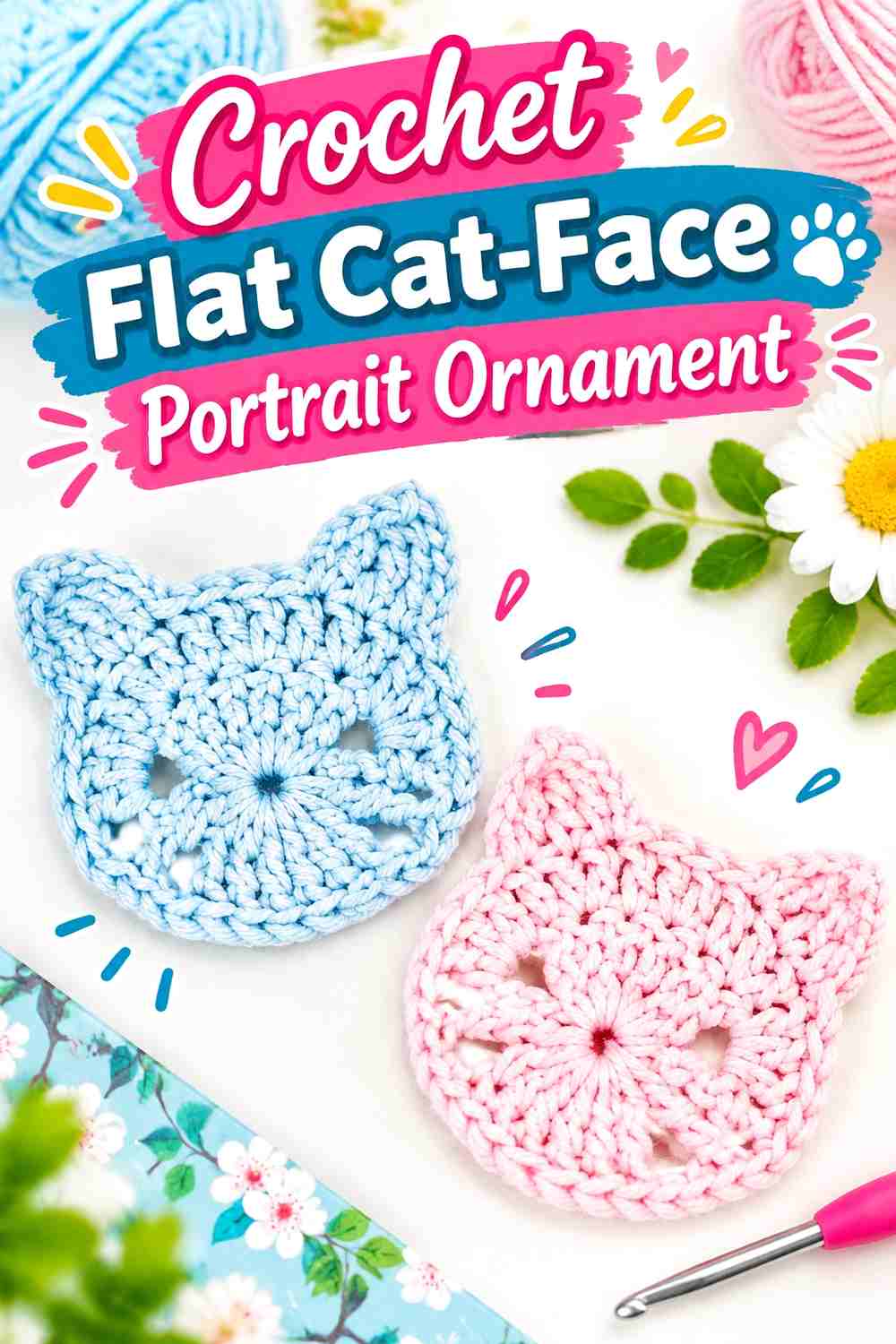
A flat cat face puts the emphasis on the features readers usually notice first: ears, head outline, eyes, nose, and face markings. HappyBerry Crochet’s tutorial demonstrates a compact cat-face appliqué rather than a Christmas ornament, making this an adaptation route for someone who prefers a flatter portrait.
The format is particularly useful when a cat has distinctive forehead stripes, a facial blaze, or sharply contrasting cheeks.
Flat Portraits Leave More Room for Surface Markings
A dimensional animal requires you to think about markings wrapping around a curved surface. A flat face simplifies that problem.
Before adding details, look at the pet’s photograph and identify the largest shapes first. Establishing a recognizable forehead patch or muzzle area usually matters more than trying to imitate every individual stripe.
Check Ear Shape Before Changing the Outline
Cats can look surprisingly different through their ears alone. Upright triangular ears create a different impression from smaller rounded tips or a wider ear set.
Avoid overcomplicating the base construction just to reproduce tiny anatomical differences. Instead, use proportion, color placement, and embroidery to suggest the pet while keeping the underlying appliqué stable.
Creator Credit: HappyBerry Crochet
3. Crochet Christmas Cat Portrait Ornament
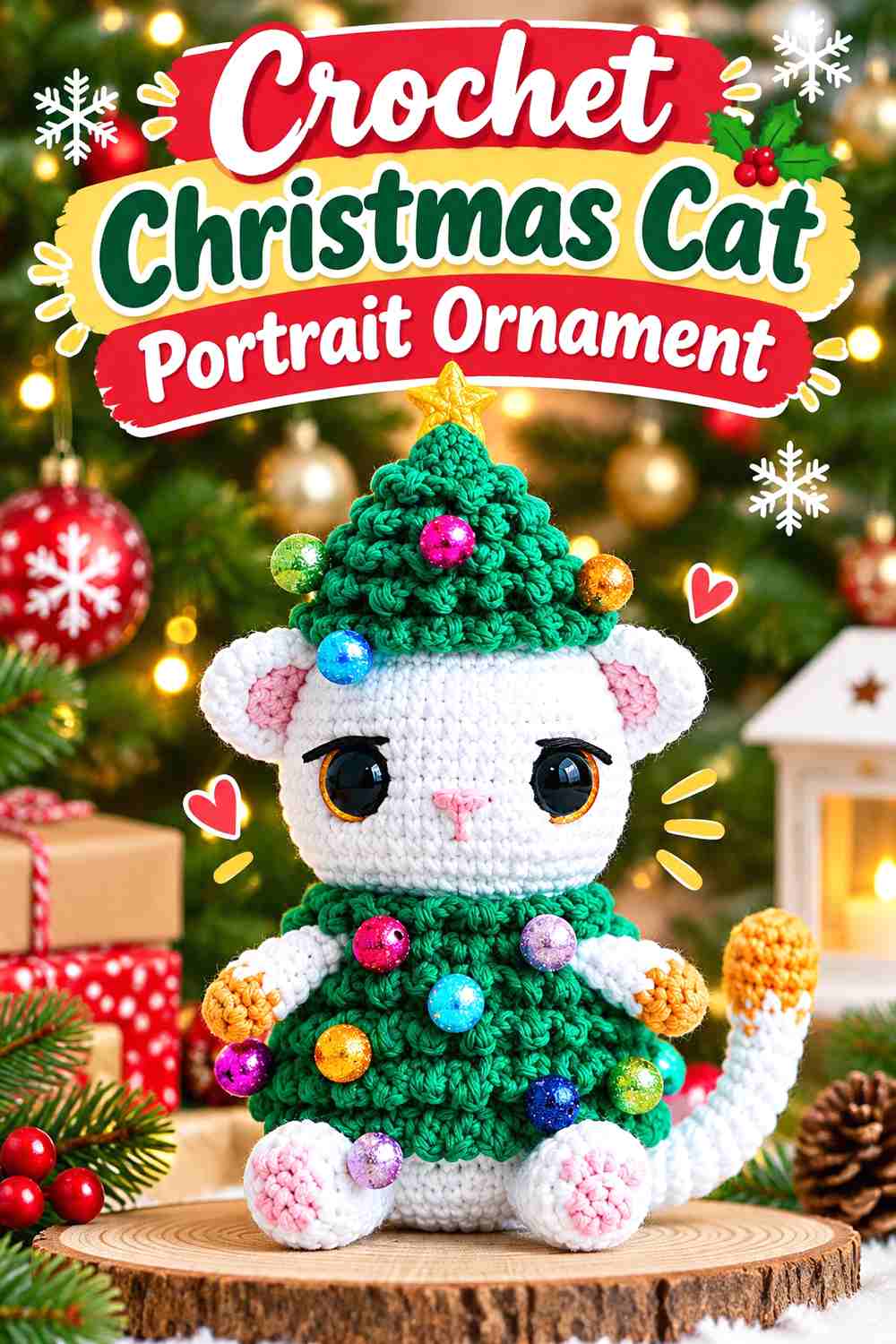
For a fuller tree decoration, a small stuffed cat creates noticeably more dimension than an appliqué. The Crocheniacs tutorial specifically presents its crochet cat as a Christmas-tree decoration, so it provides a direct seasonal starting point rather than requiring a keychain conversion.
A dimensional body can be useful when posture and overall coat color are important parts of how you recognize the pet.
Decide Which Markings Need to Continue Around the Body
A real cat may have a white belly, dark tail, saddle marking, or different coloring on its legs. Decide which of those features remain visible when the ornament faces forward.
There is little value in adding intricate markings to an area that will permanently face the tree trunk. Concentrate the strongest portrait details where they can actually be seen.
A Stuffed Cat Needs a Balanced Hanging Point
Do not attach the hanging loop based only on the center of the head. The body and tail can shift the ornament’s center of gravity.
Temporarily suspend the finished piece before securing the hanger and check which side naturally faces outward.
Creator Credit: Crocheniacs | Amigurumi Teacher
4. Crochet Dachshund Portrait Christmas Ornament

The dachshund is a useful example of a portrait built around silhouette rather than facial detail. A long body, short legs, extended muzzle, and hanging ears already communicate much of the breed’s identity. LoloLand Crochet provides a dedicated Christmas dachshund ornament tutorial with a clearly seasonal finished form.
That distinctive profile also creates a welcome horizontal shape among mostly round Christmas ornaments.
Body Proportion Matters More Than Tiny Facial Details
When adapting this concept to a particular dachshund, preserve the relationship between head, body, and ears before worrying about very small markings.
A recognizable black-and-tan, red, dapple-inspired, or piebald-like color arrangement can then add individual character without changing the underlying construction.
Long Ornaments Need More Side Clearance
A dachshund can occupy more horizontal branch space than a compact cat or pug. Avoid wedging it tightly between large baubles where the body shape becomes hidden.
A slightly more open area of the tree lets the long silhouette do the visual work.
Creator Credit: LoloLand Crochet
5. Crochet Custom-Coat Cat Portrait Ornament
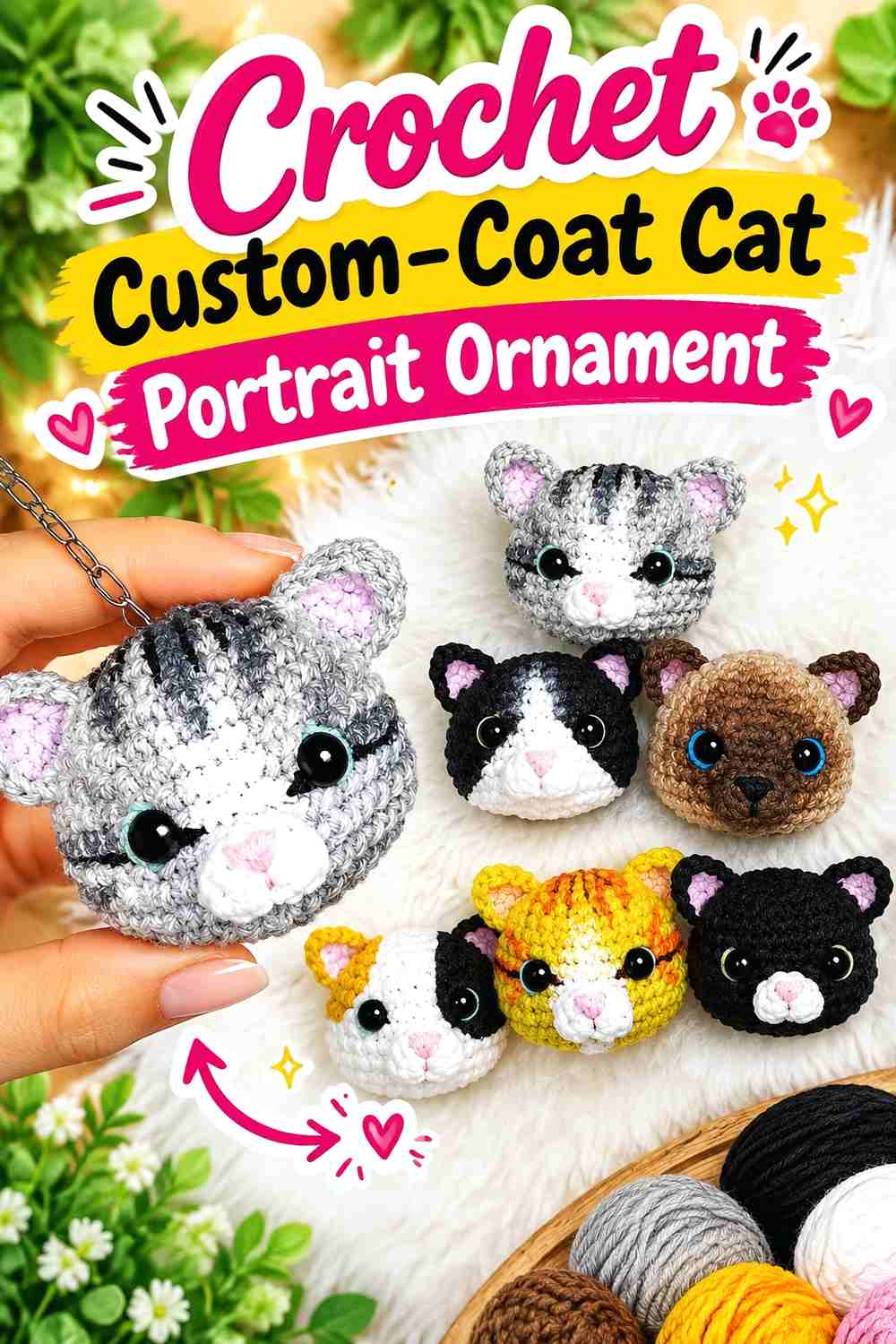
Some pets are recognizable less by breed than by highly individual coloring. Luaji Crochet’s compact cat keychain is especially relevant to that problem because the tutorial demonstrates several cat looks and uses surface customization to create different coat appearances.
As an ornament concept, the small three-dimensional form gives you a base for representing tuxedo, tabby-like, color-point, solid, or patchy cats.
Start With the Largest Coat Areas
If the pet has multiple colors, separate the reference photo into major visual zones. Think in terms of dark head, pale muzzle, white chest, colored back, or contrasting tail rather than individual hairs.
From tree-viewing distance, those large relationships are what make the portrait readable.
Test Decorative Media on Scrap Material First
If you add paint, blush, embroidery, or another surface treatment, test it on the actual yarn first. Fiber content and surface fuzz can affect how a detail looks.
A portrait ornament is small enough that an unexpectedly heavy mark can dominate the entire face.
Creator Credit: Luaji Crochet
6. Crochet French Bulldog Portrait Ornament
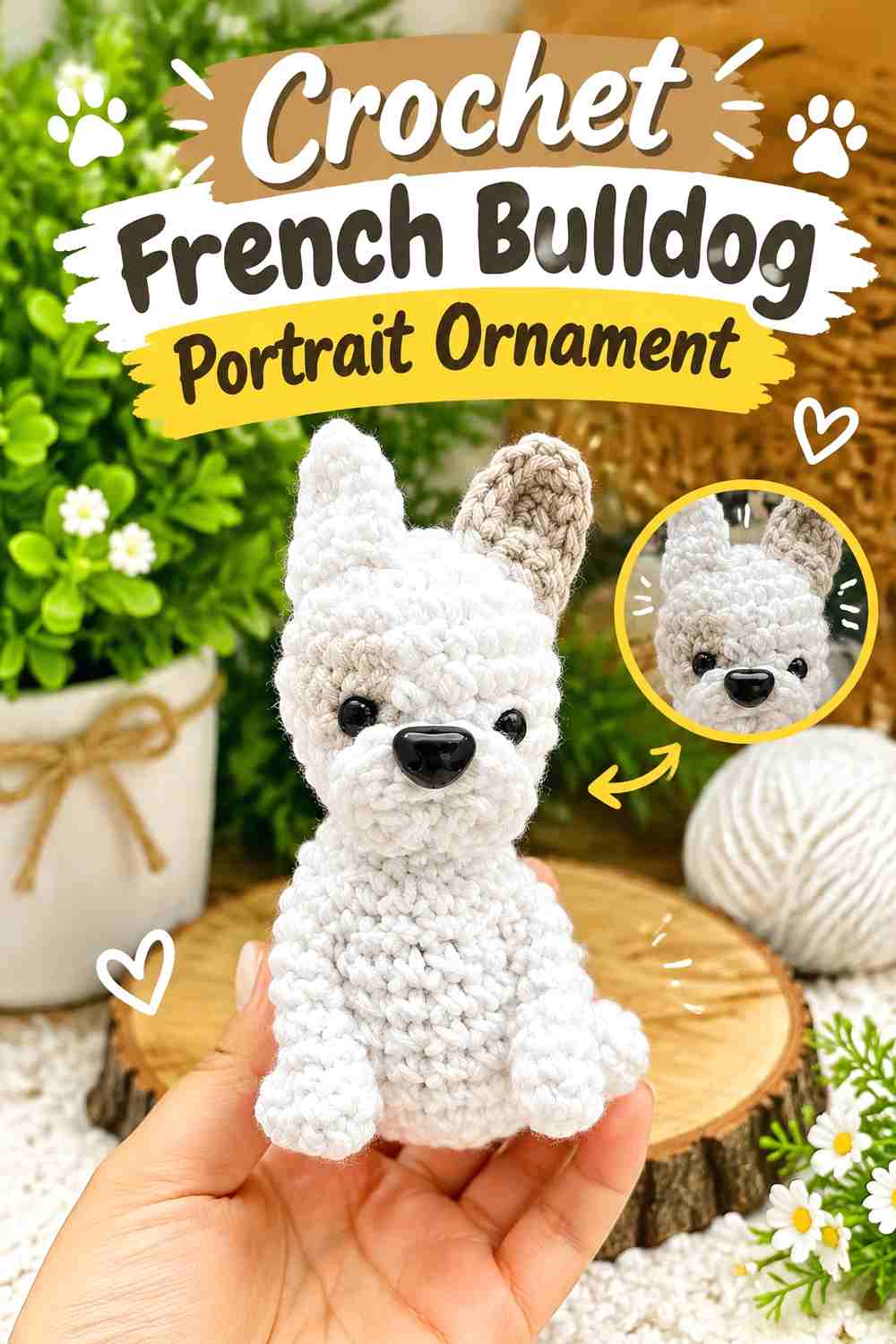
A French bulldog portrait offers a completely different silhouette from the dachshund. The broad head and prominent upright ears can make the breed recognizable even before coat markings are added. The tonally crochet tutorial uses a compact French bulldog keychain format that can serve as a small ornament base.
This design direction is useful when ear shape is one of the pet’s strongest identifying characteristics.
Keep the Ears Visually Separate From the Head
Against dark Christmas-tree branches, dark ears can disappear into the background. Contrast between the portrait and the greenery therefore matters.
If the actual dog has a very dark coat, a lighter hanging ribbon or nearby ornament can help preserve the outer silhouette without changing the pet’s coloring.
Facial Contrast Can Suggest an Individual Dog
French bulldogs can have dramatically different masks, blazes, muzzles, and ear coloring. Pick the one or two features that distinguish the specific dog you are representing.
Avoid adding so many tiny markings that the broad face becomes visually fragmented.
Creator Credit: tonally crochet
7. Crochet Beagle Color-Block Portrait Ornament
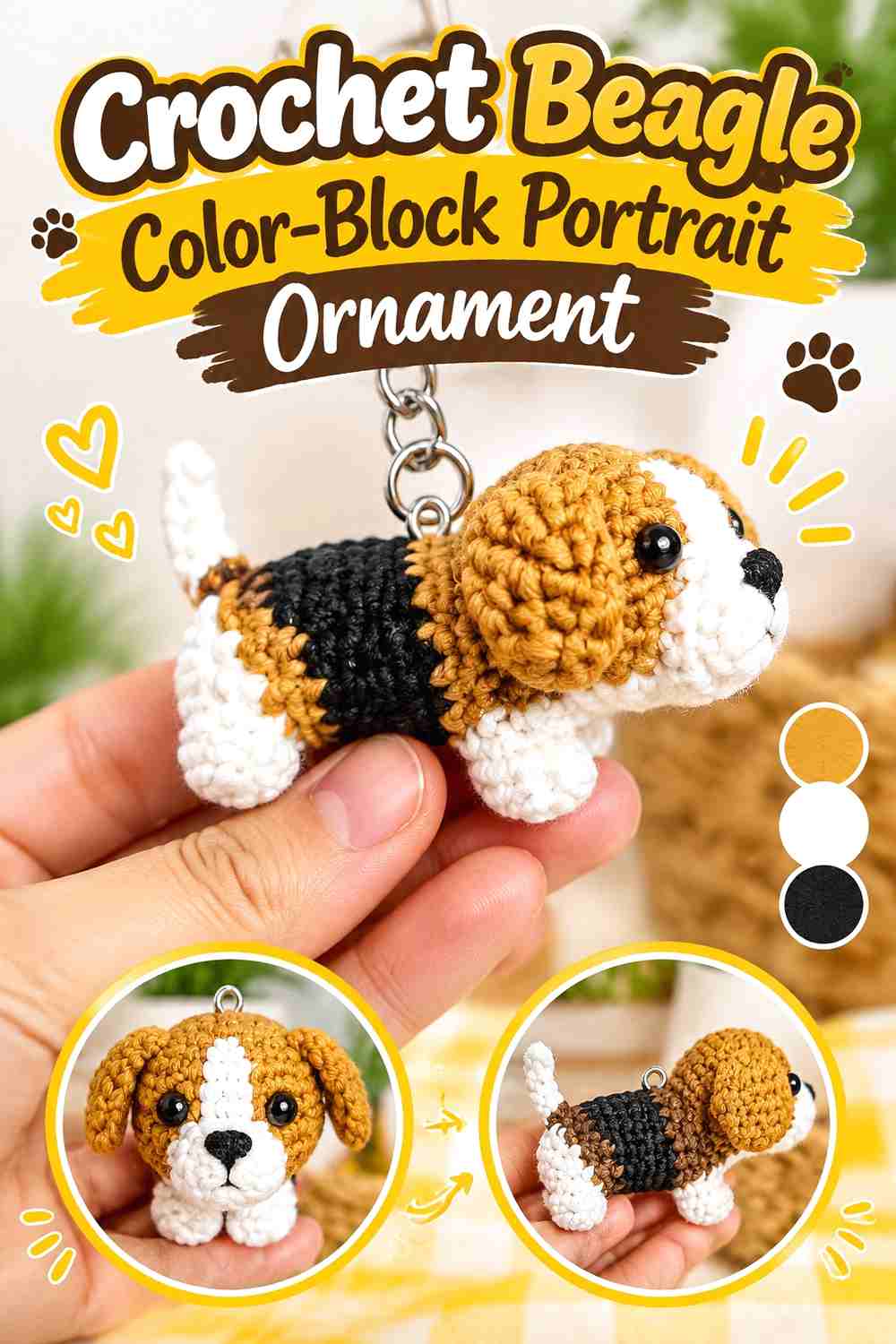
Beagles offer a useful portrait challenge because their identity can come from both silhouette and color placement. Artesã Natielle’s compact beagle keychain uses recognizable contrasting sections within a small amigurumi form.
For a Christmas ornament, this makes the project particularly suitable for a pet whose face, ears, back, and underside have clearly different tones.
Map the Coat Before Starting the Decorative Details
Study several photographs of the pet rather than relying on a generic idea of what a beagle looks like. Real individual markings can differ substantially.
Front-facing details should receive priority, but a strong patch along the back may still matter if the ornament is viewed partly from the side.
Drooping Ears Change How the Ornament Reads
Unlike the upright French bulldog, the beagle’s hanging ears visually frame the face.
Keep surrounding decorations from pressing those ears against the head. Even a small amount of clear space can make the breed silhouette more legible.
Creator Credit: Artesã Natielle
8. Crochet Pet Fish Portrait Ornament
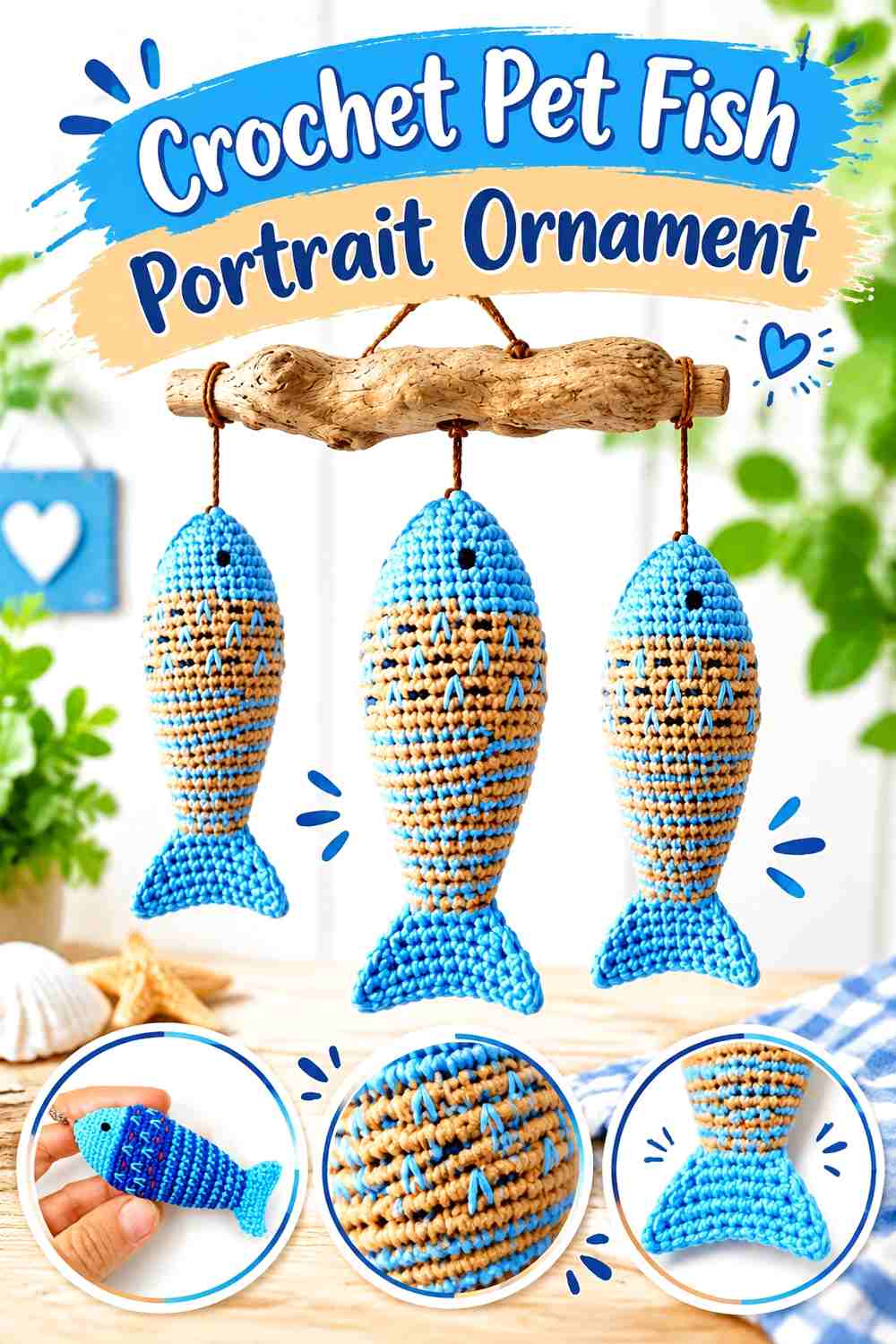
Pet portraits are not limited to furry animals. A fish ornament can use body color, stripe placement, fins, and decorative embroidery to represent an aquarium pet. Francesca Uncinettando Crochet&Love demonstrates a fish that can be made as a hanging decoration or keychain, making the source particularly compatible with ornament use.
The sideways silhouette also adds variety to a collection dominated by front-facing mammal portraits.
Think in Color Zones Instead of Individual Scales
Small crochet does not need to reproduce every scale pattern. A bold tail color, central stripe, contrasting belly, or spotted section may communicate the pet more successfully.
Look for the largest features that remain identifiable in a simplified side profile.
Fins Can Affect Both Shape and Storage
Projecting fins help distinguish the fish but can also fold or catch during storage.
When Christmas decorations are packed away, avoid compressing thin appendages beneath heavier stuffed ornaments.
Creator Credit: Francesca Uncinettando Crochet&Love
9. Crochet Turtle Portrait Ornament
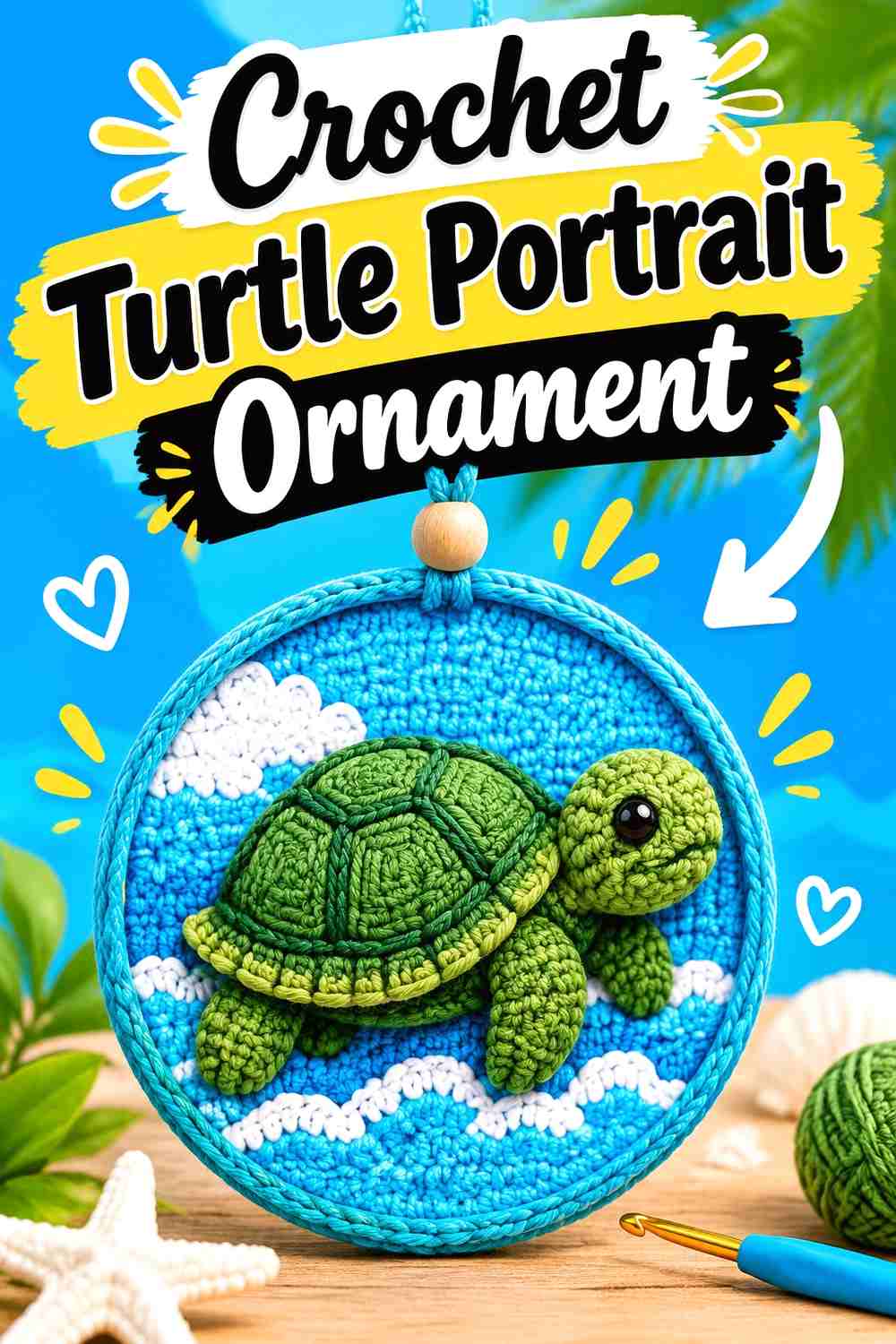
A turtle gives the collection another strongly recognizable shape: rounded shell, small head, and projecting limbs. Patrigurumis provides an amigurumi turtle keychain tutorial, which makes a practical compact base for ornament adaptation.
This concept is especially useful for a pet turtle whose shell pattern or shell color is more visually distinctive than its face.
Let the Shell Become the Portrait Surface
Instead of concentrating all personalization on the head, use the shell as the dominant identifying area.
Broad color sections can suggest the pet’s appearance without requiring a highly detailed reconstruction of natural markings.
Decide Which Side Should Face the Room
A turtle ornament may look different from above, below, and from the side. Test the hanging point so the most descriptive view remains visible.
If the shell is the main portrait feature, a slightly angled orientation may display it better than a perfectly vertical hang.
Creator Credit: Patrigurumis
10. Crochet Bunny Portrait Ornament
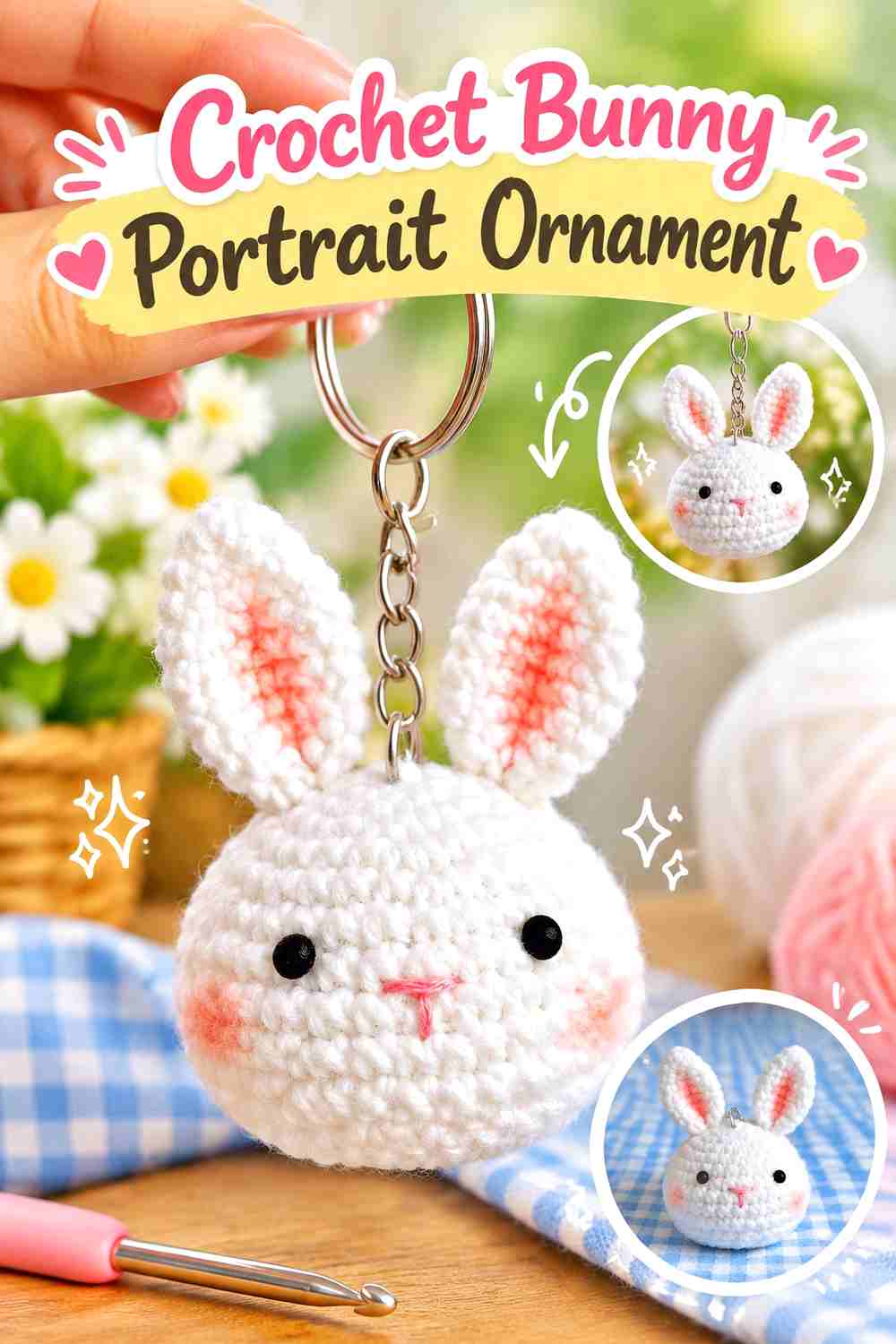
Long ears give a bunny ornament a strong vertical silhouette that immediately separates it from round animal portraits. Crochet with Ritu’s bunny keychain provides a small stuffed form that can be considered for ornament adaptation.
For a particular rabbit, ear coloring, nose area, eye patches, and body shade may all be useful portrait cues.
Ear Markings Can Carry More Identity Than the Face
If a rabbit has contrasting ear interiors, dark tips, or one ear that differs from the other, those features may remain visible more clearly than tiny facial markings.
Prioritize whatever characteristic you recognize immediately when looking at the real pet.
Long Ears Affect Ornament Spacing
A bunny may need more vertical clearance than a compact mouse or pug.
Check that the ears are not pushed sideways by branches or neighboring baubles, especially if preserving their shape is important to the portrait.
Creator Credit: Crochet with Ritu
11. Crochet Parrot Portrait Ornament
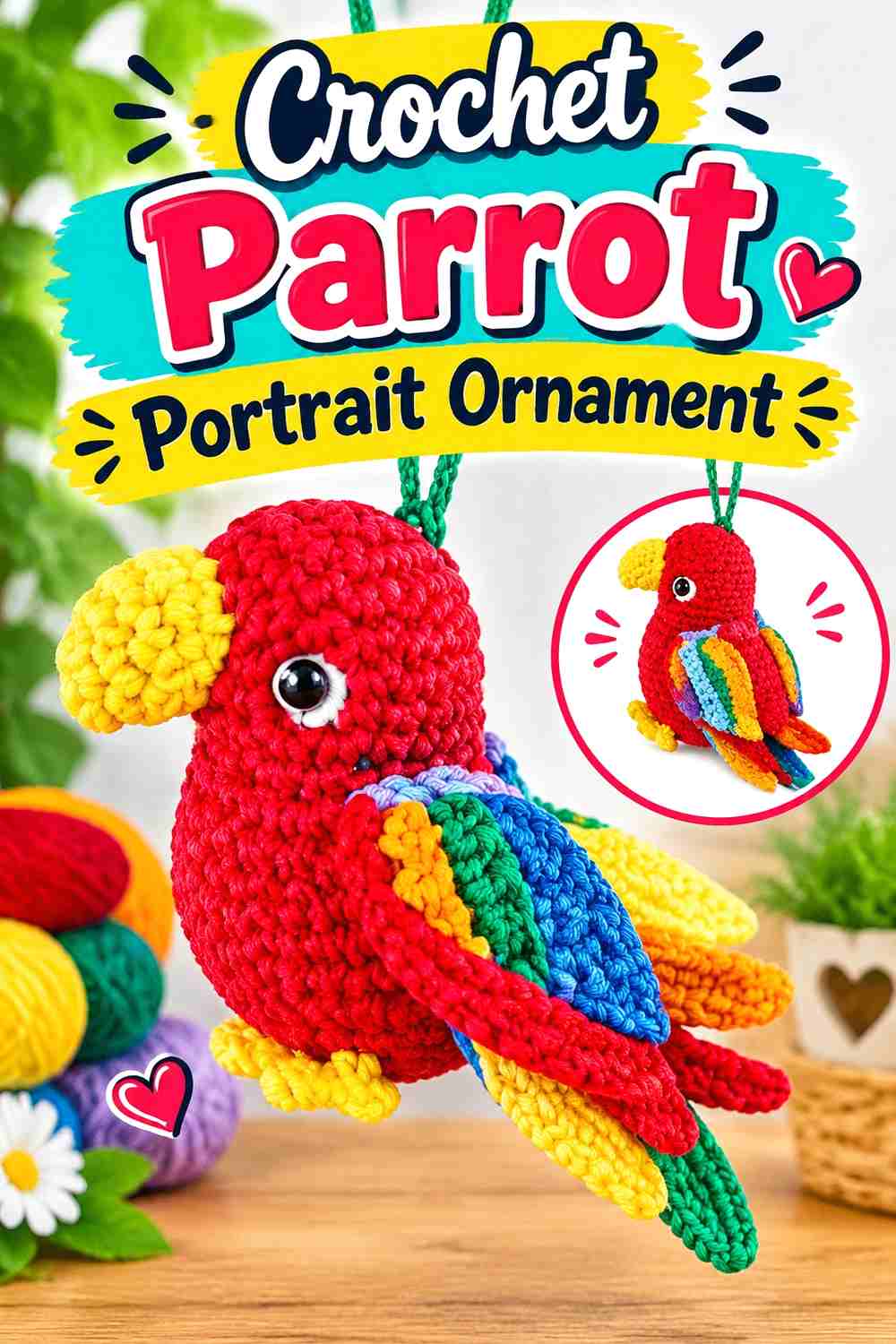
A parrot opens up much stronger color possibilities than most mammal portraits. Amigurumi_Joys demonstrates a colorful crochet parrot that can work as a small decorative piece or keychain-style project.
The portrait can focus on broad color placement around the face, wings, chest, and tail rather than trying to reproduce individual feathers.
Color Order Is Critical for Recognizable Birds
With many parrots, simply choosing the correct colors is not enough. Their placement matters.
Compare where the dominant color begins and ends across the head, chest, wing, and tail. Two parrots using the same palette can still look very different when those zones are rearranged.
A Tail Changes the Balance of the Hanger
An elongated bird may hang differently from a compact round pet.
Test the loop position with the finished tail attached so that the bird does not tilt backward or face into the branches.
Creator Credit: Amigurumi_Joys
12. Crochet Mouse Portrait Ornament
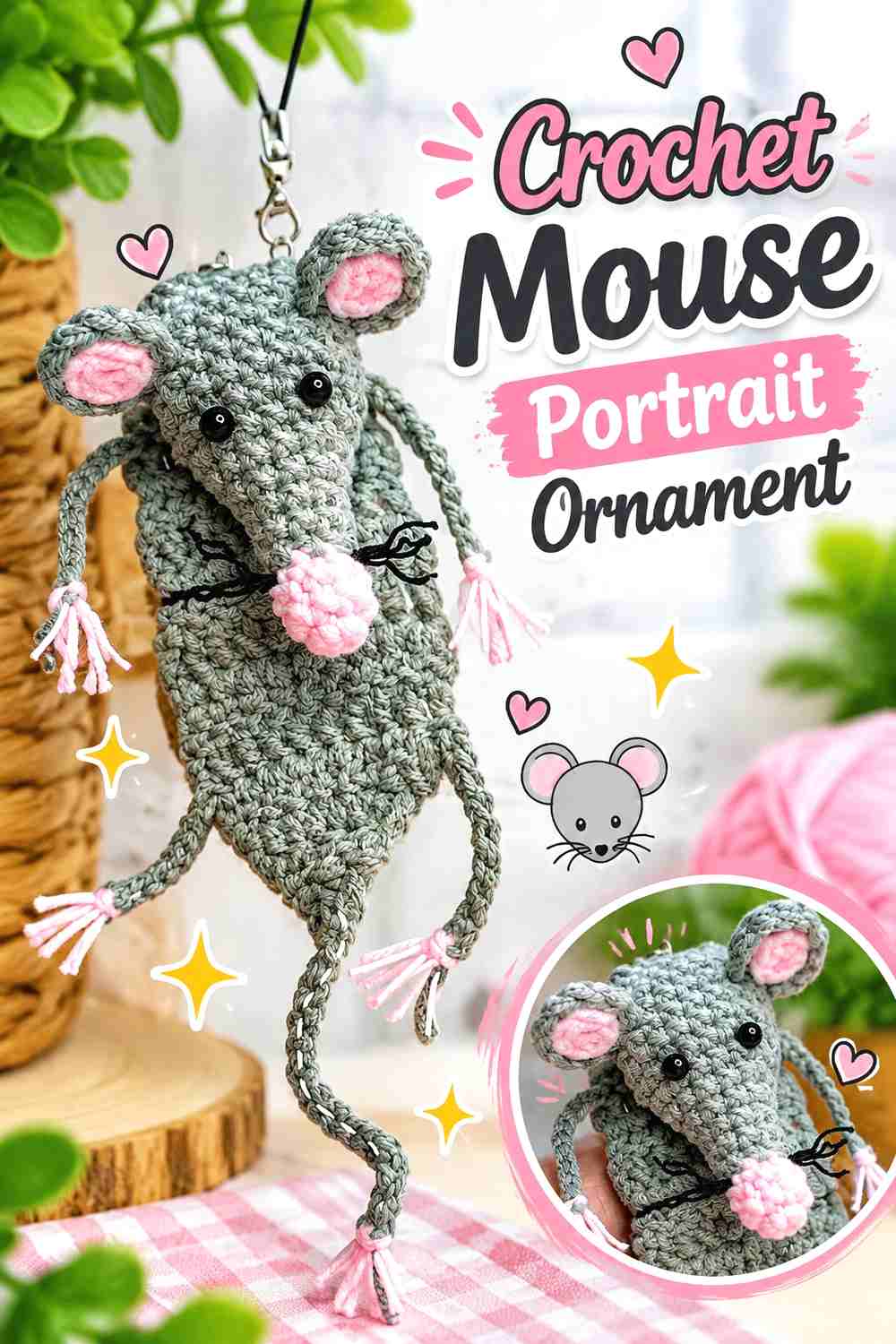
A mouse ornament offers a compact body combined with disproportionately prominent ears, giving it an instantly different silhouette. Myna Crochet’s small mouse keychain format is well suited to the scale needed for a hanging decoration.
For pet mice, simple changes in ear shade, body color, facial blaze, or patches can make several portraits from the same general form look noticeably different.
Large Ears Give You a Strong Recognition Point
When a design has one exaggerated anatomical feature, preserve it. The ears may be more important to the finished mouse impression than extra facial embroidery.
Position them consistently before committing to additional details.
Tiny Bodies Benefit From Selective Markings
There is very little visual space on a compact mouse. One strong patch or contrasting face can read better than multiple miniature changes.
Stand back from the ornament periodically while customizing it. If a marking cannot be identified at normal viewing distance, it may not need to be included.
Creator Credit: Myna Crochet
13. Crochet Bull Terrier Portrait Ornament
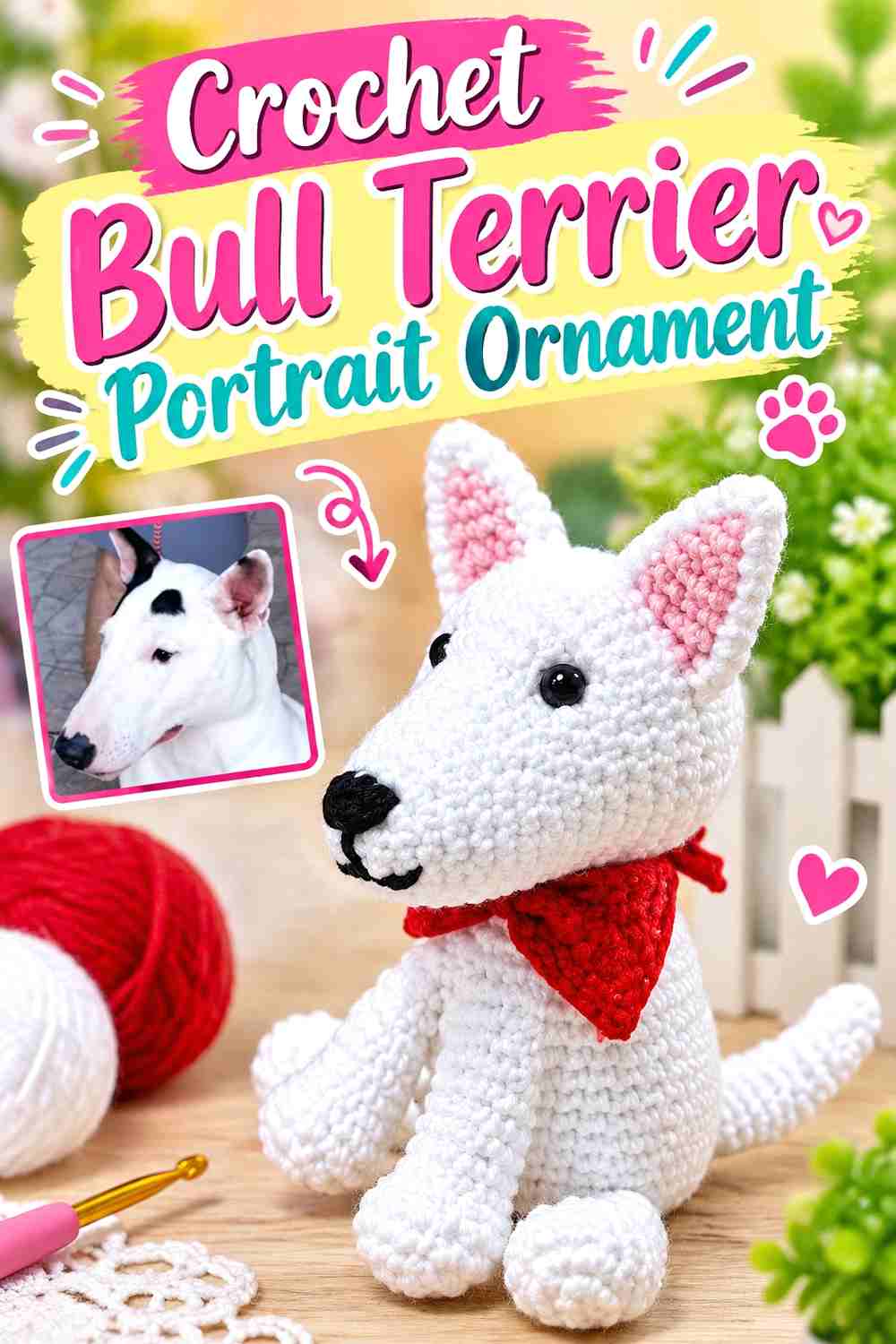
The Bull Terrier is an excellent example of a breed identified strongly by head shape. The amigurumi by mayumi hatanaka tutorial uses a compact Bull Terrier keychain, giving you a small form that can be converted conceptually into a Christmas-tree portrait.
This is a useful alternative to relying on generic round dog heads for every breed.
Preserve the Head Profile Before Adding Coat Details
If the distinctive muzzle becomes too short or the head too round, additional markings may not restore the breed impression.
Follow the source construction for the underlying shape and keep personalization primarily to color and surface details rather than redesigning the entire structure.
Eye Patches Can Become a Strong Focal Feature
Bull Terriers with prominent face markings can translate well into small portrait pieces because one large contrast area remains visible at ornament scale.
Compare the placement carefully with a photograph before securing decorative details.
Creator Credit: amigurumi by mayumi hatanaka
Which Pet Portrait Ornament Style Should You Choose?
| Portrait Approach | Good Choice When | Main Detail to Prioritize |
|---|---|---|
| Paw print | You want a symbolic or coordinated pet keepsake | Color and presentation |
| Flat face | Facial markings are the main identifier | Ear outline and surface pattern |
| Stuffed cat or dog | Overall body shape matters | Balance between silhouette and markings |
| Long-bodied breed | The animal has a distinctive profile | Proportion |
| Keychain adaptation | You want a compact tree ornament | Weight and hanging point |
| Fish or turtle | Body/shell coloring is more distinctive than the face | Large color zones |
| Bird | Plumage placement matters | Head, wing, chest, and tail color relationships |
| Small mammal | Rounded shape and patches are recognizable | Major coat boundaries |
For the closest likeness, choose the construction that already resembles the pet’s natural silhouette. A flat cat face may be better for a highly patterned cat, while a long stuffed form makes much more sense for a dachshund. A cockatiel needs its crest, while a turtle portrait may depend more heavily on shell coloring.
Conclusion
The strongest crochet pet portrait Christmas ornaments do not try to reproduce every detail. They identify what makes one animal look different from another and preserve those features at a scale that still reads clearly on a tree.
For the simplest approach, the paw print and flat cat face minimize bulk. Small keychain-based designs such as the mouse, pug, bunny, turtle, bird, and French bulldog are practical starting points when you want compact dimensional ornaments. The dachshund, Bull Terrier, cockatiel, parrot, fish, and other strongly shaped pets work especially well when silhouette is a major part of the resemblance.
Before making several copies, finish one portrait completely, hang it where it will actually be displayed, and view it from normal room distance. That simple check will tell you whether the important markings, orientation, scale, and hanging balance are working.
Use each original creator tutorial for the exact crochet construction, then keep your portrait adaptation focused on recognizable color placement and finishing details rather than rebuilding the underlying pattern.
Frequently Asked Questions
How do I make a crochet animal ornament resemble my actual pet?
Choose a clear reference photograph and identify the two or three features you notice first. These might be ear shape, muzzle color, a forehead blaze, chest patch, tail color, or an unusual eye-area marking.
Preserve those important features and simplify minor ones. Small ornaments rarely need every marking to create a recognizable impression.
Can I turn a crochet keychain into a Christmas ornament?
Often, a small keychain provides a useful ornament-scale form, but check the finished piece rather than assuming the conversion will work automatically.
Test its weight and balance with scrap yarn before permanently adding a hanging loop. The best attachment point may not be exactly where the keychain hardware was positioned.
Should I use a full-body pet or just the head for a portrait ornament?
Choose whichever contains the pet’s most recognizable characteristics. A cat with unusual facial coloring may work well as a flat head portrait, while a dachshund’s long body is an important part of its identity.
Full-body pieces also take up more tree space, so a face-only design can be useful when making a large group of ornaments.
How can I represent complicated fur markings without making the ornament messy?
Reduce the coat to large color areas first. Think of the pet as a collection of shapes: dark ear, white muzzle, tan forehead, black back, pale chest.
Once those areas look convincing, add only a few smaller details if they remain visible from normal viewing distance.
Can I make portraits of different pets look like a coordinated set?
Yes. Keep one design element consistent even if the animals are completely different. You might use the same hanging ribbon, repeat one border color, choose similar yarn texture, or add matching small tags.
This lets a fish, cat, dog, rabbit, and bird look intentionally grouped without forcing their portraits into the same construction.
Are safety eyes suitable for pet portrait Christmas ornaments?
They can be decorative components, but they are still small parts. If young children or pets can reach the ornaments, consider placement carefully and inspect attachments regularly.
Embroidered eyes and noses can reduce the number of separate small pieces when that is important for the intended setting.
What should I do if my pet’s exact breed is not represented by a tutorial?
Choose the source with the closest underlying silhouette rather than the closest color. Ear shape, muzzle length, head proportions, and body form are harder to fake convincingly than coat color.
Then use color placement and restrained surface details to move the finished piece closer to the individual pet.