A ruffled tablecloth can make a Christmas table feel softer and more decorative without relying on elaborate centerpieces. The main decision is not simply which holiday colors to use. The shape of the tablecloth body, the amount of openwork, the placement of seasonal motifs, and the fullness of the outer ruffle all affect how practical the finished piece will be for holiday meals.
The ideas below cover several approaches, including Christmas-specific tablecloths, poinsettia and Santa details, rectangular lace, round filet work, pineapple motifs, joined squares, and ruffled border treatments. Some source tutorials teach the complete tablecloth construction, while two focus specifically on ruffle edging that can be considered for a compatible crochet tablecloth base. When adapting one technique to another project, check the finished dimensions, edge structure, and stitch compatibility in the original tutorial rather than assuming every border will fit every cloth.
Quick List
- Classic Red-and-White Crochet Christmas Ruffle Tablecloth
- Four-Color Crochet Christmas Ruffle Tablecloth
- Poinsettia-Edge Crochet Christmas Ruffle Tablecloth
- Santa-Trim Crochet Christmas Ruffle Tablecloth
- Full-Coverage Crochet Christmas Ruffle Tablecloth
- High-Contrast Crochet Christmas Ruffle Tablecloth
- Botanical-Panel Crochet Christmas Ruffle Tablecloth
- Joined-Lace-Motif Crochet Christmas Ruffle Tablecloth
- Rectangular Fan-Lace Crochet Christmas Ruffle Tablecloth
- Pineapple-Lace Crochet Christmas Ruffle Tablecloth
- Snowy Filet Crochet Christmas Ruffle Tablecloth
- Radial Round Crochet Christmas Ruffle Tablecloth
- Deep-Flounce Crochet Christmas Ruffle Tablecloth
- V-Stitch Crochet Christmas Ruffle Tablecloth
- Modular Motif Crochet Christmas Ruffle Tablecloth
Plan the Tablecloth Body Before You Add the Ruffle
A ruffle changes more than the decorative edge. It adds extra visual weight and can increase the overall drop, so establish the main tablecloth proportions before deciding how dramatic the border should become.
Measure the tabletop you actually plan to use and decide how far you want the cloth to extend past each edge. A dining table usually needs different handling from a console or buffet table because chairs and seated guests interact with the hanging fabric.
It is also useful to assess the tablecloth body after the crochet has relaxed or been blocked according to the fiber’s care requirements. An edge that looks short while the body is still compact may sit very differently once the lace opens.
Rectangular cloths need additional attention at the corners. A ruffle must have enough room to turn without pulling the base inward, but excessive fullness can bunch into large clusters at all four corners.
Choose Ruffle Fullness for the Way the Table Will Be Used
The most dramatic ruffle is not automatically the most useful one. A deep, highly gathered flounce can be attractive on a display table, sideboard, or dessert station, while a shallower border may interfere less with chairs around a dinner table.
Look at what already occupies the tablecloth design. Poinsettias, Santa motifs, pineapple lace, and dense color changes create their own visual interest. Adding an equally dominant border can make the perimeter compete with the center rather than frame it.
For a restrained result, repeat one color or stitch texture from the body in the edging. For a stronger statement, let the ruffle become the main decoration and keep the central cloth simpler.
Pick Yarn and Finishing With Holiday Hosting in Mind
A Christmas tablecloth is likely to encounter crumbs, spills, repeated folding, and storage between seasons. Check the yarn manufacturer’s care information before committing to a large project, especially if convenient cleaning matters to you.
Color behavior matters as well. Strong reds and greens placed beside white or cream create high contrast, so follow appropriate washing and care guidance for the yarns you choose rather than assuming every combination can be cleaned in the same way.
Crochet fabric should not be treated as a substitute for a heat-resistant pad. The appearance or fiber content alone does not establish that a tablecloth is suitable beneath hot serving dishes. Use appropriate trivets or heat-safe table protection when serving hot cookware.
1. Classic Red-and-White Crochet Christmas Ruffle Tablecloth
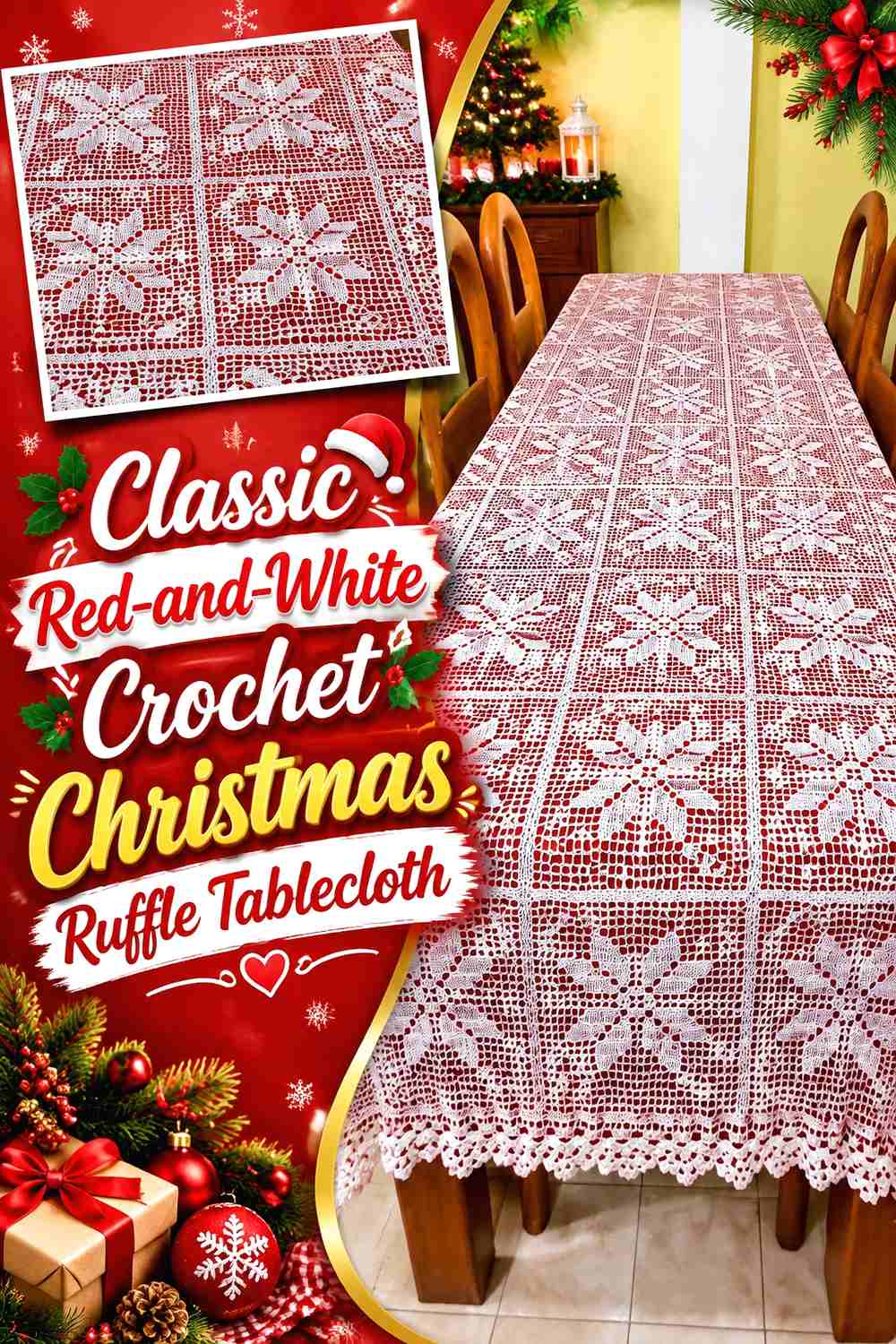
Red and white give this tablecloth direction without requiring a large number of competing decorative elements. The combination is especially useful if the table will already hold greenery, candles, patterned dishes, or other Christmas decorations.
For a ruffled interpretation, the strongest approach is to let the main crochet construction establish the holiday character and then treat the ruffle as a frame. This keeps the edge noticeable without turning every part of the table into a separate focal point.
Keep the Ruffle Secondary to the Holiday Center
If the central cloth already contains strong Christmas contrast, repeating both colors heavily in a full border may make the perimeter feel busy. A ruffle dominated by one of the existing colors can create a clearer hierarchy.
Before choosing the edging, place a sample of the color combination beside the dishes or runner you expect to use. This simple check can reveal whether the border should become quieter or more decorative.
Check the Finished Drop Before Extending the Border
Do not decide the ruffle depth from the tabletop alone. First consider how far the finished body hangs down the side of the table.
If the body already reaches the drop you want, the ruffle may work better as a relatively contained finishing layer. If the body is intentionally shorter, the decorative edge can contribute more of the visible drop. Confirm the actual dimensions produced by the tutorial before adapting the border.
Creator Credit: laboresangelika
2. Four-Color Crochet Christmas Ruffle Tablecloth
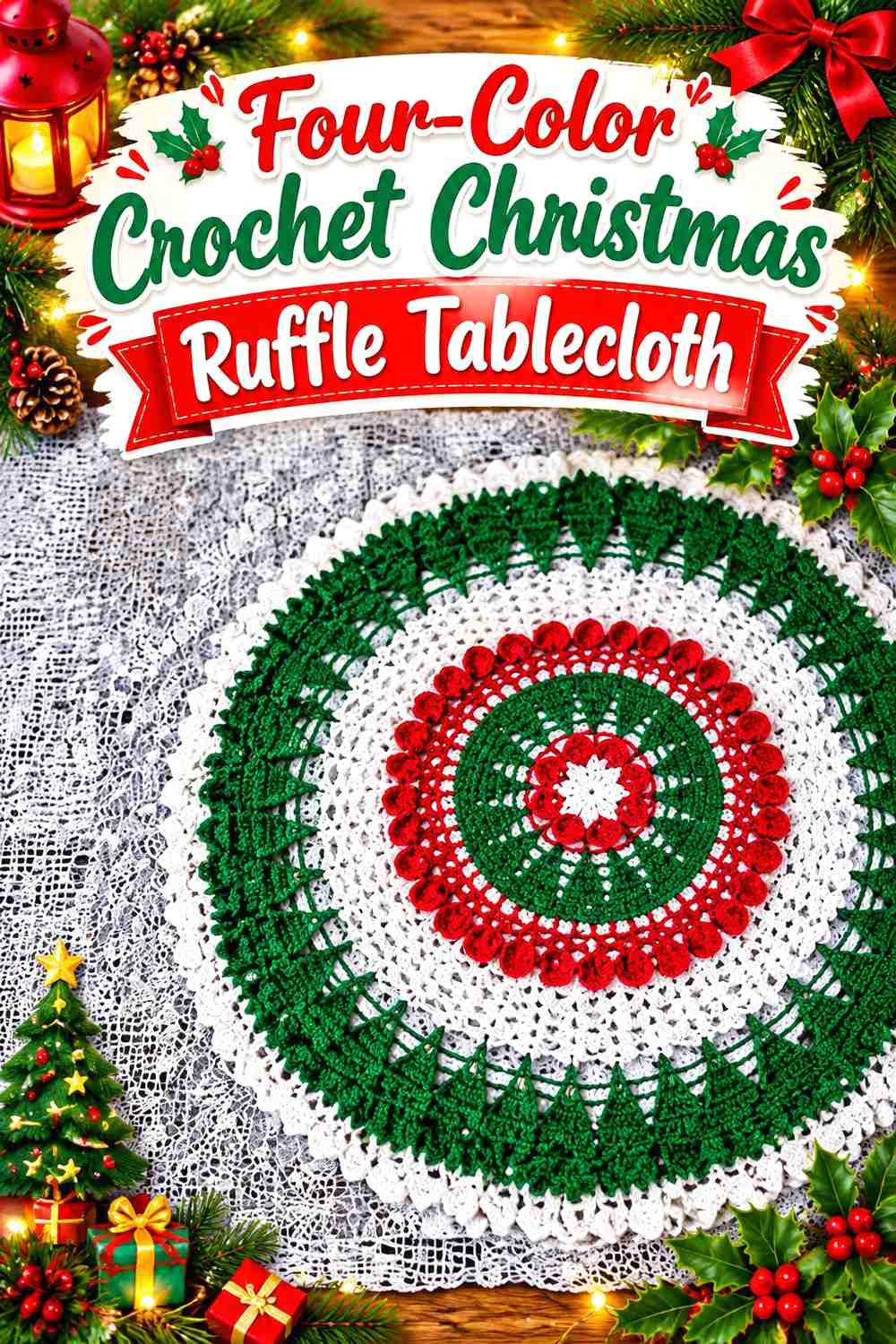
A Christmas palette using several recognizable holiday colors creates a more animated table than a restrained two-color scheme. It can suit a family dining table, craft-room holiday display, or other setting where the tablecloth itself is meant to supply much of the seasonal decoration.
Because the body already carries several colors, the ruffle needs a deliberate color role rather than another unrelated combination.
Assign Each Accent Color a Clear Job
Before adding an outer border, decide which color is visually dominant and which colors are accents. This is particularly helpful when white, red, green, and a warmer accent appear together.
Carrying every body color into every section of the ruffle can weaken the overall pattern. Repeating one dominant shade at the edge, or using an accent only in a narrow transition, can make the finished tablecloth easier to read from across the room.
A Simpler Ruffle Can Balance a Busier Palette
Color variation already provides movement, so the border does not necessarily need maximum texture as well. Compare a highly gathered edge with a cleaner, more moderate ruffle before committing to the full perimeter.
A small sample is useful here because ruffle fullness can appear very different once several feet of edging surround a tablecloth.
Creator Credit: Ana Alves Crochet
3. Poinsettia-Edge Crochet Christmas Ruffle Tablecloth
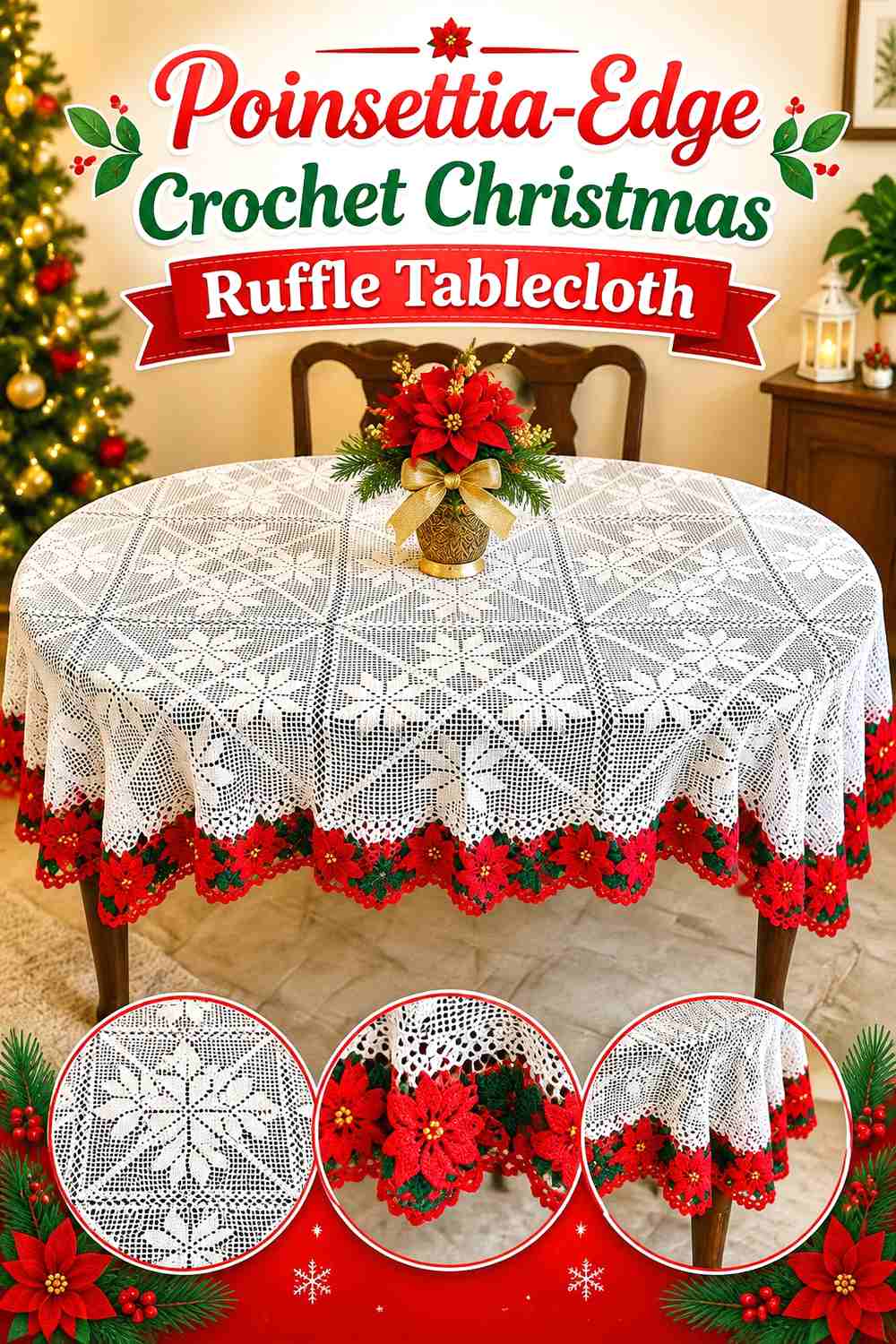
Poinsettias give a Christmas tablecloth a recognizable botanical theme without depending entirely on stripes or conventional color blocking. They are particularly effective near the perimeter, where individual flowers can remain visible rather than being covered by plates and serving pieces.
A ruffle can extend that framing effect, but it should support the floral elements rather than conceal them.
Keep Raised Floral Details Away From Plate Zones
Dimensional or visually dense flowers can be attractive, yet the center of a dining table usually benefits from a relatively stable surface. When adapting a floral tablecloth layout, study where the poinsettia elements fall in relation to place settings and serving dishes.
Moving the strongest decoration toward the outer field can preserve the floral effect while keeping the most frequently used areas less visually crowded.
Repeat Poinsettia Color at the Ruffle for a Connected Edge
The border does not need additional flower motifs to look coordinated. Repeating one prominent flower color in part of the ruffle can connect the outer edge to the botanical design.
If you want a softer result, use the background color for most of the ruffle and reserve the poinsettia shade for a smaller accent. Check the tutorial’s finished motif arrangement before deciding where an added border could begin cleanly.
Creator Credit: Que Bonito es Tejer
4. Santa-Trim Crochet Christmas Ruffle Tablecloth
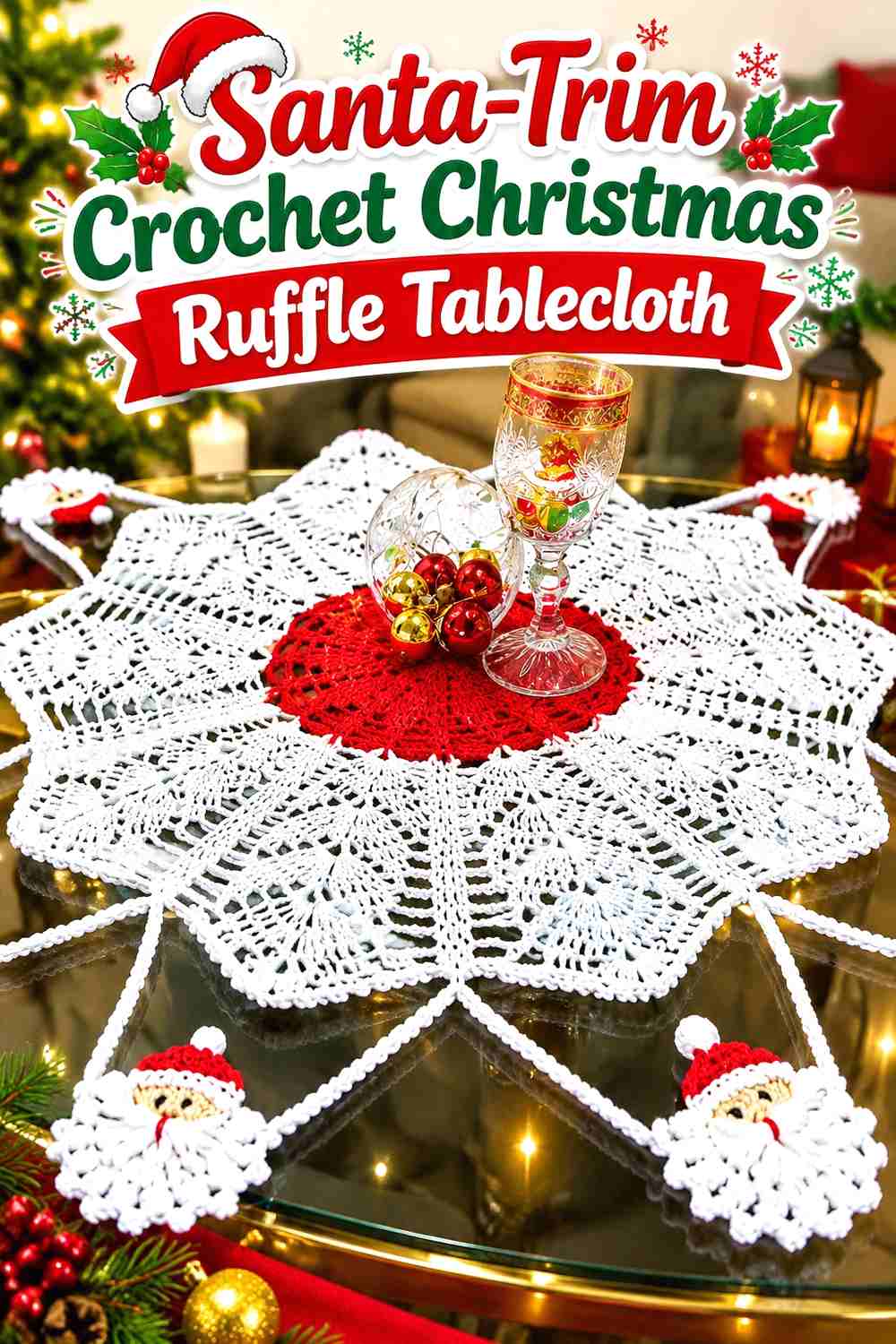
A Santa-themed crochet cloth has a more playful character than traditional lace or botanical table linens. It can be a good direction for a family-centered Christmas table, a children’s holiday setup, or a dessert station where the decorative edge will remain visible.
For this idea, the ruffle works best as part of the outer presentation rather than an additional busy layer behind the character details.
Treat Character Details as the Outer Decoration
When a tablecloth already uses recognizable figures, keep enough visual space around them for the shapes to remain clear. A densely textured ruffle placed immediately behind detailed motifs can make their outlines harder to distinguish.
One option is to create a calmer transition area between the character section and the final ruffled edge. The transition gives each type of decoration its own space without requiring more motifs.
Make Sure the Hanging Trim Clears Chairs and Knees
A decorative character border naturally attracts attention to the sides of the table. That means the hanging length deserves extra consideration on a table where guests will be seated.
Check both the base cloth drop and any added ruffle before finalizing the dimensions. A setup intended primarily for display can tolerate more dramatic hanging detail than one used for a crowded holiday dinner.
Creator Credit: YomeKo Review
5. Full-Coverage Crochet Christmas Ruffle Tablecloth
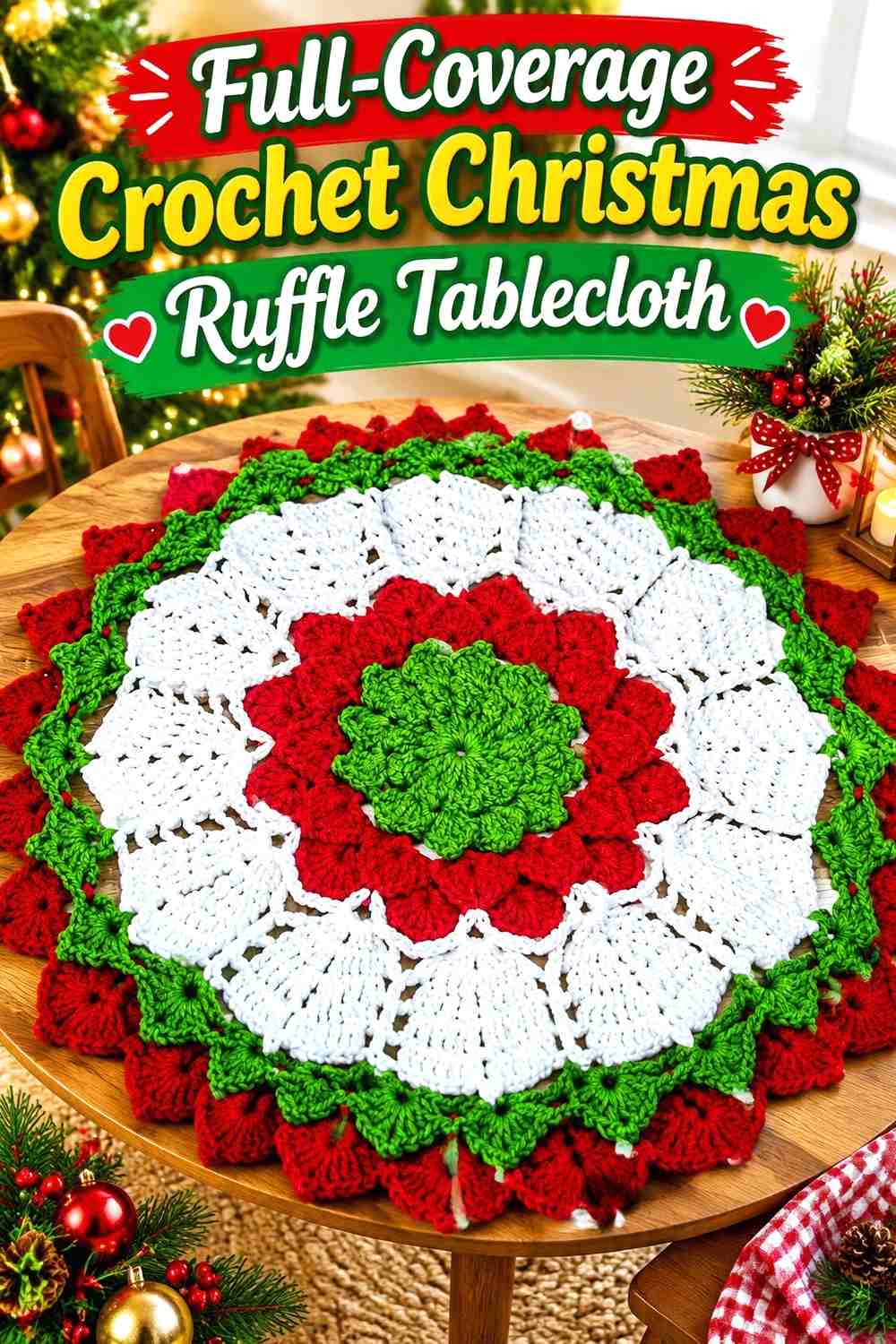
This direction treats crochet as the main table covering rather than a small topper placed over another cloth. A larger field of crochet can make the table itself the centerpiece, which is useful when you prefer fewer separate layers of holiday linens.
The important choice is how much texture to carry all the way to the edge.
Dense Crochet Changes How the Cloth Hangs
A substantial crochet body can behave differently from very open lace. Before adding a full ruffle, look at how the finished fabric drapes over the side of the table rather than judging it only while it is lying flat.
If the body already has noticeable weight and texture, a huge border may pull the eye downward. A more controlled edge can preserve the coverage while still creating the ruffled silhouette.
Let the Ruffle Start After the Body Is Fully Settled
A large tablecloth requires more commitment than a small runner, so an edging mistake is correspondingly harder to undo. Complete the body, check its final shape, and make sure the perimeter lies as expected before deciding the ruffle proportions.
This is also the point to compare the finished cloth against the real table and confirm whether additional length is actually desirable.
Creator Credit: Irma Veronica Flores Flores
6. High-Contrast Crochet Christmas Ruffle Tablecloth
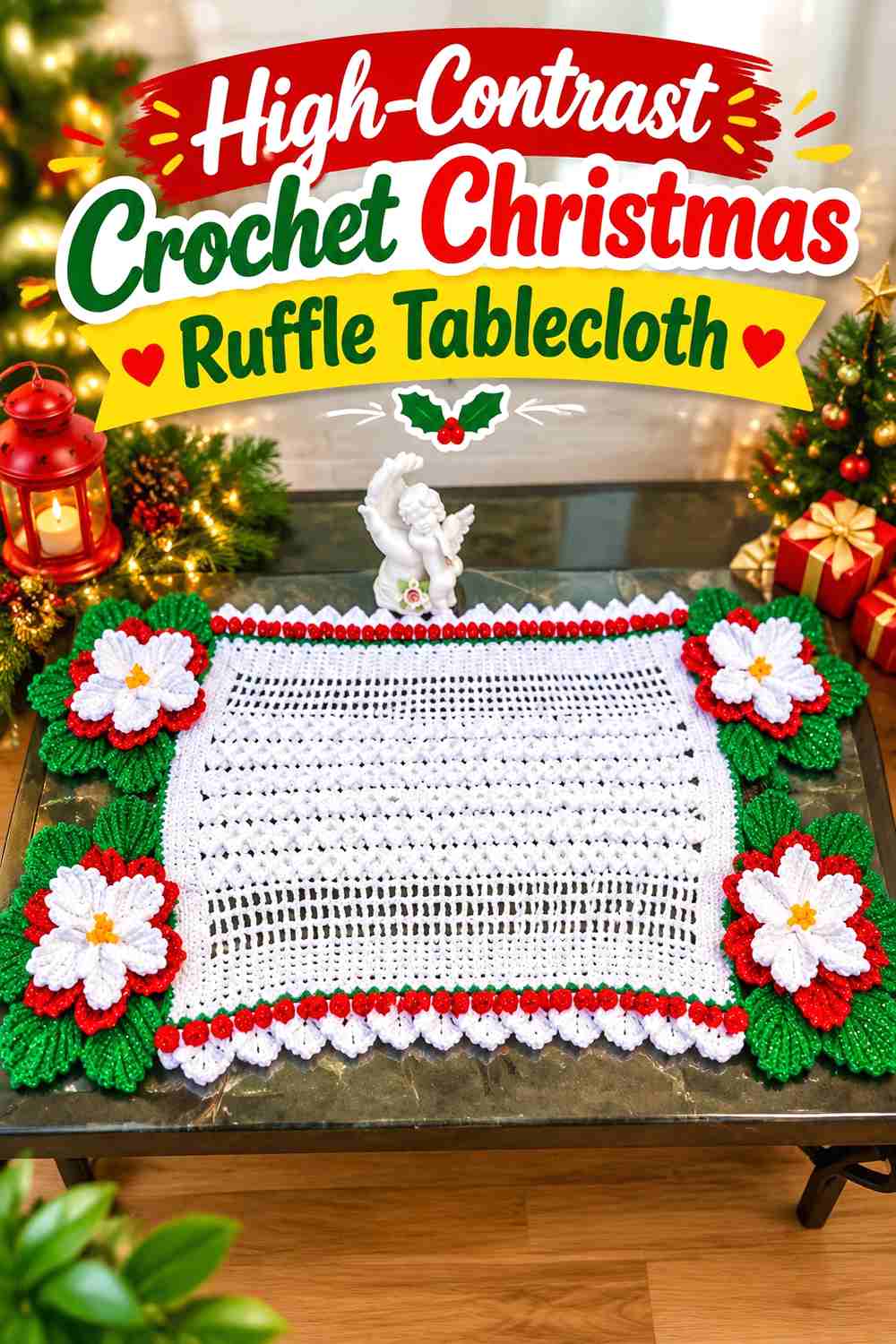
Strong red, green, white, and warm accent colors can turn a tablecloth into a highly visible Christmas decoration even before centerpieces are added. This makes the style useful for a table where you want the crochet to provide most of the seasonal color.
The challenge is preventing the outer edge from becoming one more competing band.
Separate Strong Color Blocks With a Neutral Transition
If several saturated colors reach the edge of the body, consider creating visual breathing room before the ruffle begins. A neutral transition can help separate the central pattern from the movement of the flounce.
That transition does not need to be large. Its purpose is simply to make the change in texture intentional rather than abrupt.
Watch Corner Fullness on a Rectangular Holiday Table
Color changes make corner bunching especially visible because several bands can converge in the same small area. Before continuing a ruffle around the complete tablecloth, examine how the edge behaves through one corner.
The goal is an edge that turns without pulling the cloth upward or accumulating so much fullness that the color pattern becomes difficult to read.
Creator Credit: Crochet Cuties Creations by Esther
7. Botanical-Panel Crochet Christmas Ruffle Tablecloth
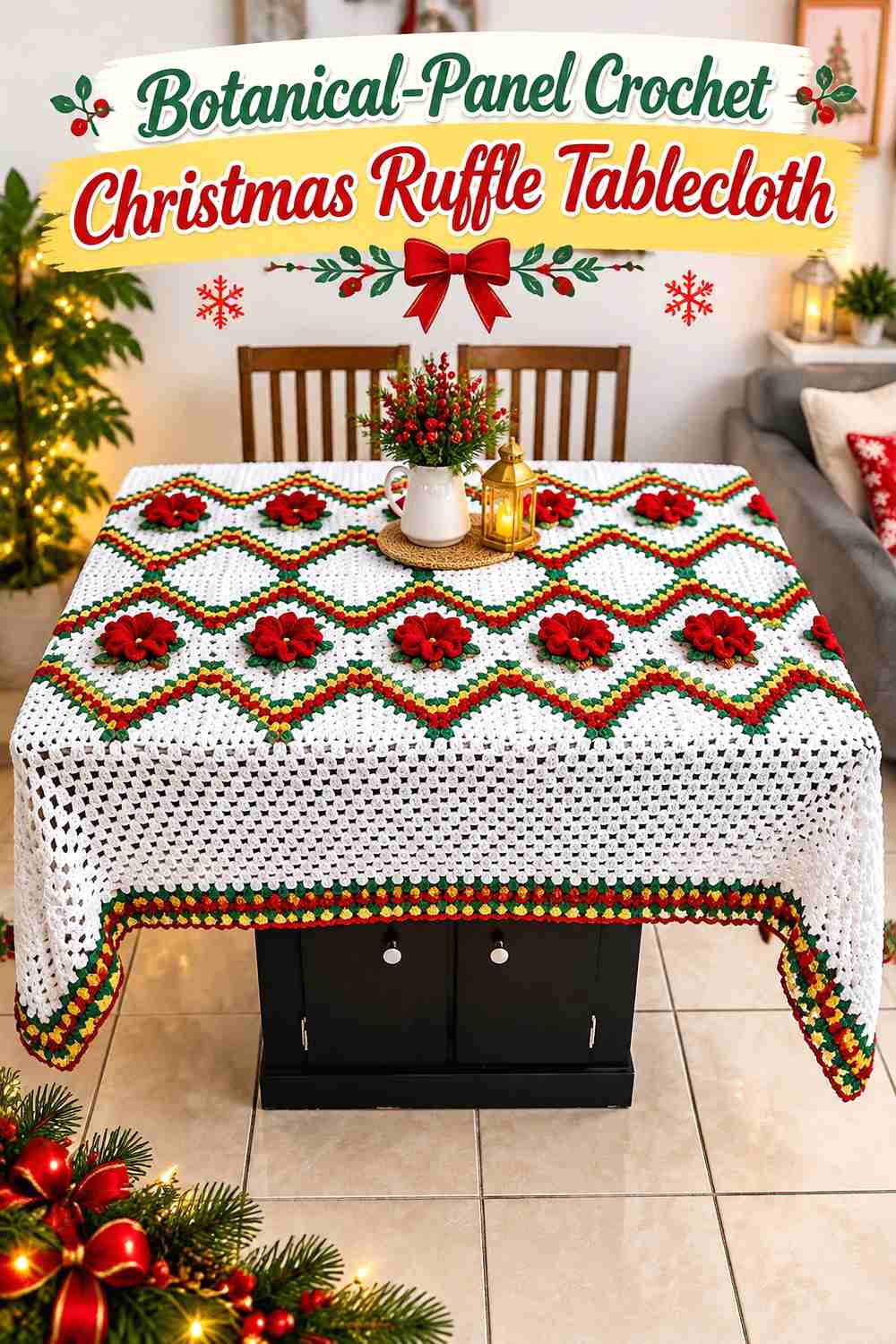
A botanical-panel approach spreads holiday flowers or foliage across a more substantial portion of the tablecloth rather than limiting the seasonal motif to a narrow outer strip. This gives the finished piece a stronger all-over Christmas identity.
Because the decorated field already carries the theme, the ruffle can concentrate on finishing the silhouette.
Give the Floral Field a Clear Boundary Before the Ruffle
A border is easier to read when the floral section ends deliberately. If motifs, background stitches, and ruffles blend together without a transition, the outer edge can lose definition.
Look for a natural boundary in the tablecloth construction before deciding how an added flounce would connect. If there is no stable outer edge, verify whether an extra finishing round or border is appropriate for the construction you are following.
Scale the Panel Layout to the Table, Not the Tutorial Image
A motif arrangement that looks balanced on one finished tablecloth may not land in the same places on a different table. Check the actual dimensions of your table and the finished motif units before planning placement.
For dining use, pay particular attention to whether large decorative elements will fall beneath plates or serving pieces. A display table gives you much more freedom to emphasize the center.
Creator Credit: Todo en crochet
8. Joined-Lace-Motif Crochet Christmas Ruffle Tablecloth
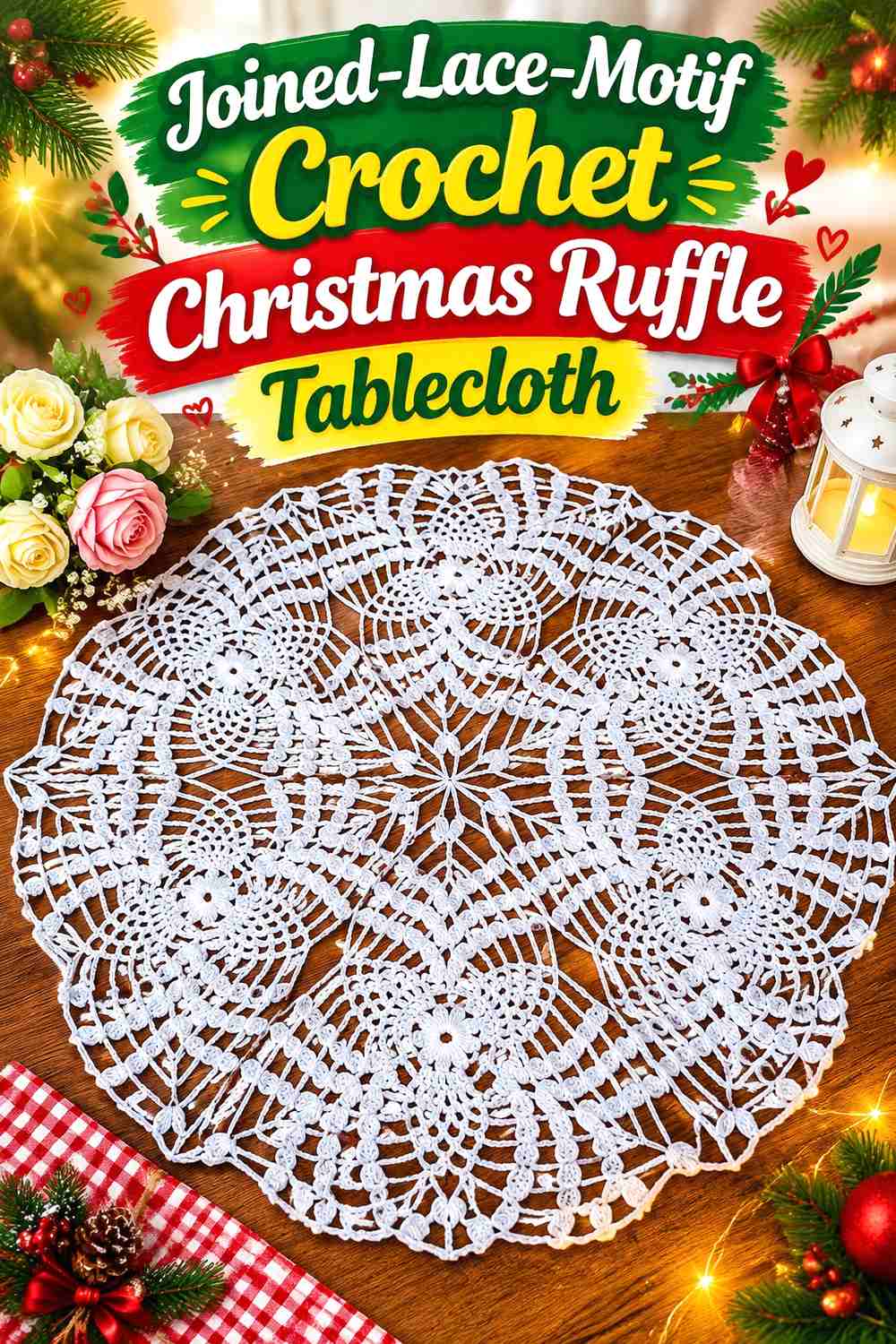
A tablecloth assembled from lace motifs offers a different visual rhythm from one worked as a single continuous field. Repeated openwork units create a tiled appearance that can look especially crisp over a contrasting table surface or solid undercloth.
The modular construction also gives the ruffle a clear job: finishing the outer perimeter as one unified piece.
Match Blocked Motif Size Before Joining
Small variations between motifs can multiply across a large tablecloth. Compare their relaxed or blocked dimensions before permanent joining rather than assuming pieces made from the same instructions will automatically line up.
This becomes particularly important near the edge, where an uneven grid can make a later ruffle wave or pull unexpectedly.
Use the Ruffle to Frame, Not Fight, the Modular Edge
Joined motifs already create a strong repeating geometry. A border with a different rhythm can work well, but it should not obscure the last row of motifs.
Consider whether you want a narrow transition between the grid and the ruffle. That extra visual separation can help the square or geometric structure remain clear while the outer edge becomes softer.
Creator Credit: Crochet Swan
9. Rectangular Fan-Lace Crochet Christmas Ruffle Tablecloth
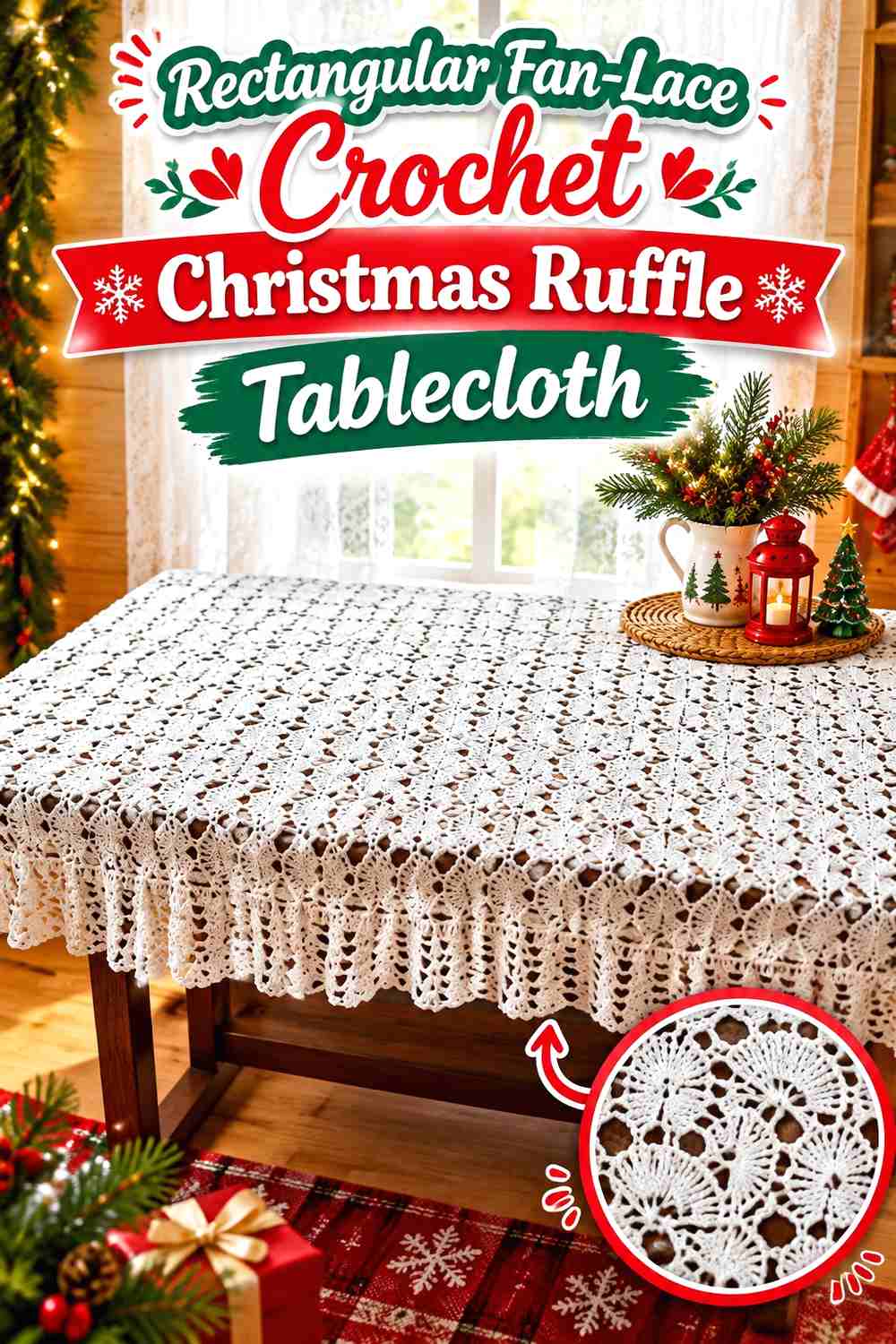
A rectangular tablecloth is often the most direct choice for holiday dining tables, but its long sides and four corners make border planning different from a round cloth. Fan-like lace brings movement to those straight edges before a ruffle is even added.
This makes the design useful for anyone who wants a formal lace effect without relying on separate motif panels.
The Long Sides Need Visual Rhythm
On a rectangular table, any inconsistency in border spacing becomes easier to notice along the long straight runs. Before adapting a ruffle, check how the existing lace repeats reach the perimeter.
If the repeat finishes neatly at the ends, the ruffle can follow that structure. If it does not, plan the transition carefully rather than forcing a decorative repeat to fit a space it was not designed for.
Corners Are the Main Ruffle Checkpoint
Straight ruffling and corner ruffling do not always behave identically. A border that lies well on a long edge may tighten as it rounds a corner or become too full there.
Test one corner before completing the full perimeter. What matters is that the tablecloth remains flat across the tabletop while the ruffle hangs freely beyond it.
Creator Credit: Creaciones Gabriela
10. Pineapple-Lace Crochet Christmas Ruffle Tablecloth
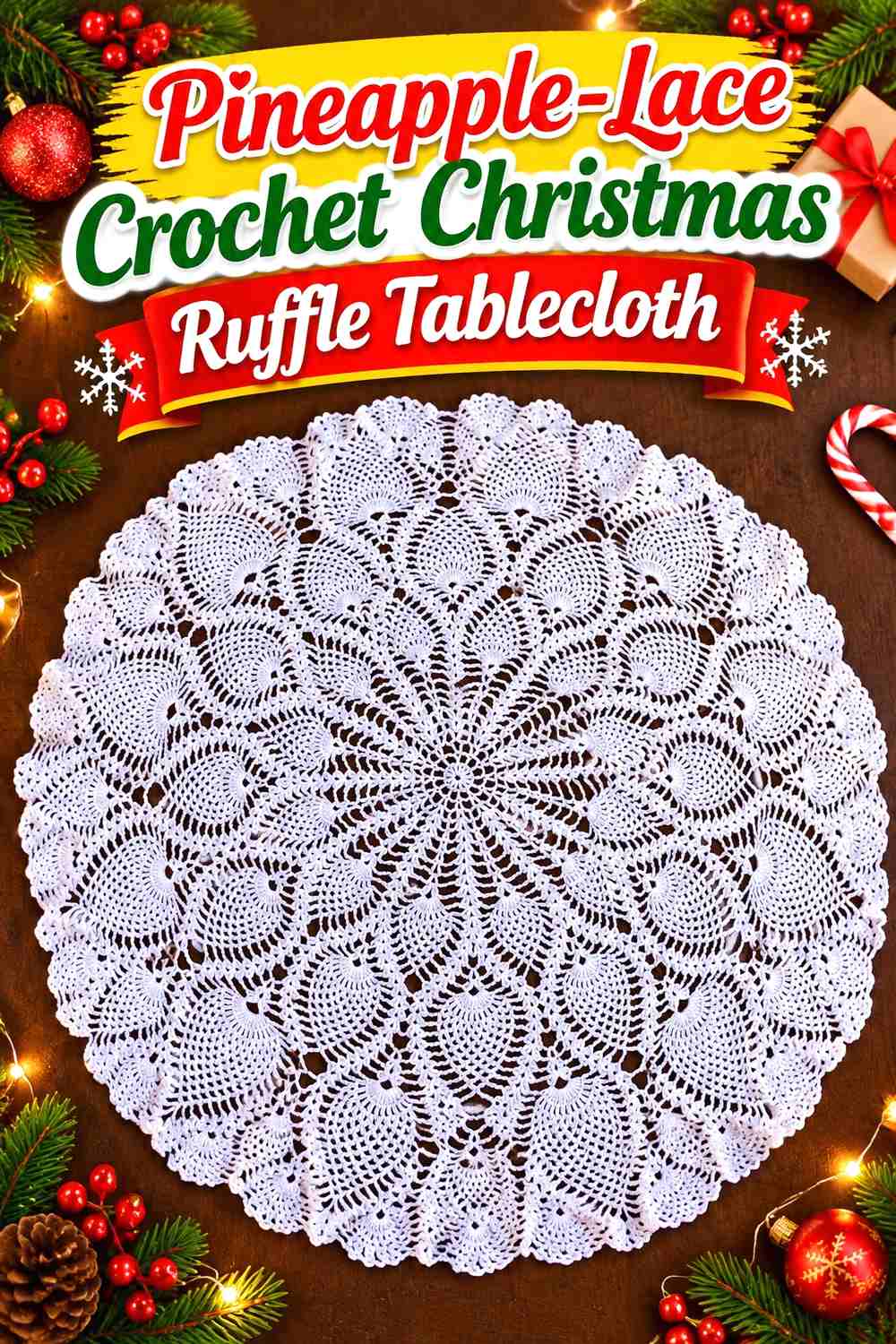
Pineapple lace brings a traditional ornamental look to a holiday table without needing Christmas character motifs. Its elongated shapes and open spaces can make a tablecloth feel decorative even in a single color.
For a Christmas version, seasonal color can come from the cloth itself, the ruffle, the underlayer, or surrounding table decor rather than being built into every stitch section.
Pineapple Lace Already Creates Strong Movement
The expanding shapes in pineapple crochet naturally draw the eye toward the outer portions of the cloth. A very elaborate ruffle may therefore be unnecessary.
Before adding one, look at the last visible lace section from several feet away. If the body already has a dramatic scalloped or openwork effect, a restrained flounce may frame it more clearly than another complex motif layer.
Give Open Lace Enough Structure at the Outer Edge
A ruffle needs an attachment edge that can carry its additional fabric without distorting the lace beneath it. Check whether the final section of your chosen tablecloth construction provides a stable transition.
If the edge appears very open, do not improvise a heavy border without sampling first. The goal is to preserve the pineapple shapes instead of pulling them out of alignment.
Creator Credit: Crochet Kalakar
11. Snowy Filet Crochet Christmas Ruffle Tablecloth
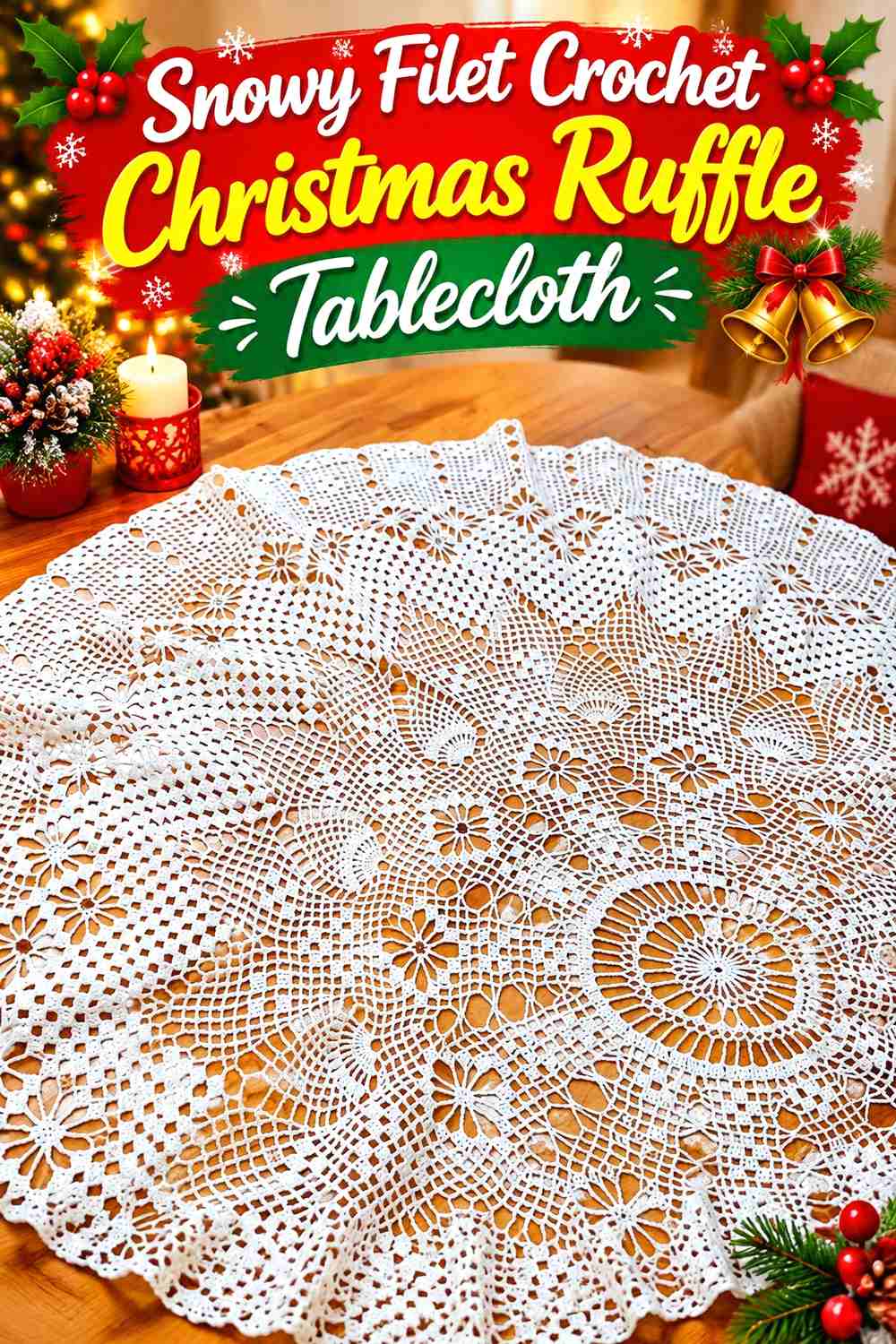
Filet crochet offers a lighter, more graphic alternative to dimensional Christmas motifs. Worked in white, cream, or another pale shade, it can suggest a snowy holiday table while leaving color to dishes, greenery, napkins, or a contrasting cloth underneath.
Because filet depends on the relationship between open and filled spaces, the surrounding surface affects how visible the design appears.
Filet Reads Best When the Surface Underneath Supports the Design
Before planning the entire tablescape, test the crochet against the actual tabletop or undercloth. A detailed filet design can become harder to see when the background has a similar value or its own strong pattern.
A simpler surface underneath often gives the crochet more visual definition, allowing the ruffle to remain decorative rather than having to provide all the contrast.
Keep the Holiday Ruffle Airy Rather Than Bulky
A very dense edge can look disconnected from an open filet body. Consider a ruffle whose visual weight is compatible with the lace rather than simply maximizing fullness.
Also check how the existing outer filet section behaves after blocking. The ruffle should extend the finished design without drawing the perimeter inward.
Creator Credit: Amantes del Crochet
12. Radial Round Crochet Christmas Ruffle Tablecloth
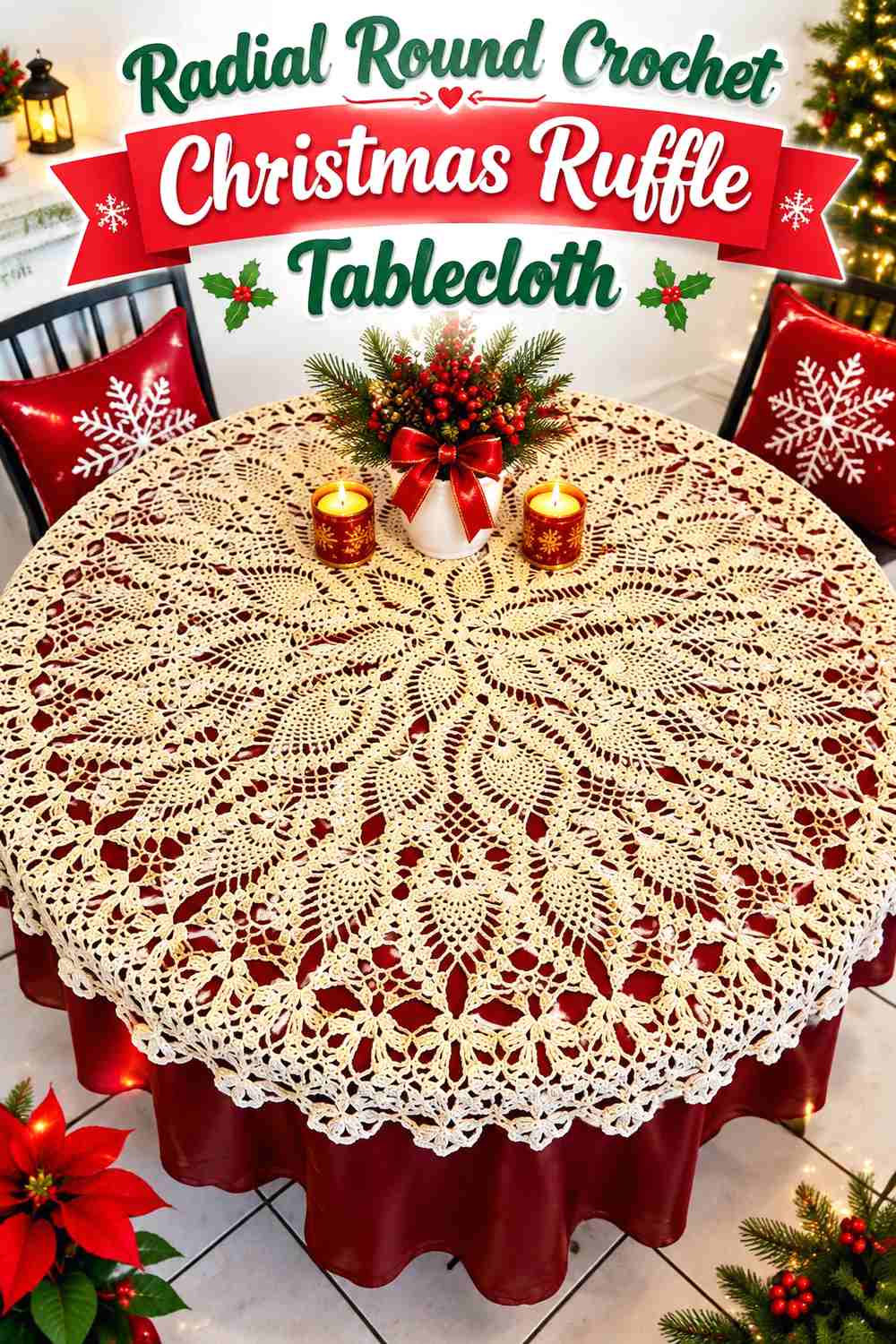
A round tablecloth shifts the visual focus toward the center and removes the corner problem found on rectangular cloths. That makes it particularly suitable for a circular holiday dining table, small foyer table, or round display table.
Its main border challenge is consistency. Any uneven increase or fullness can travel around the entire circumference.
The Ruffle Must Expand Evenly Around the Circumference
A round flounce should look balanced from every side. Before working a large decorative edge, inspect the completed tablecloth to make sure the outer round lies evenly.
If one area is already tighter or looser, adding more fullness will not necessarily correct it. Resolve the base shape first and then sample the border technique you intend to use.
Check the Centering Before Committing to a Long Drop
Round cloths make off-center placement easy to notice. Put the completed or nearly completed body on the intended table and examine how evenly it hangs before deciding how much additional ruffle to add.
A dramatic flounce can be attractive on a round display table, but it also increases the importance of consistent hanging length all the way around.
Creator Credit: Norma Flores
13. Deep-Flounce Crochet Christmas Ruffle Tablecloth
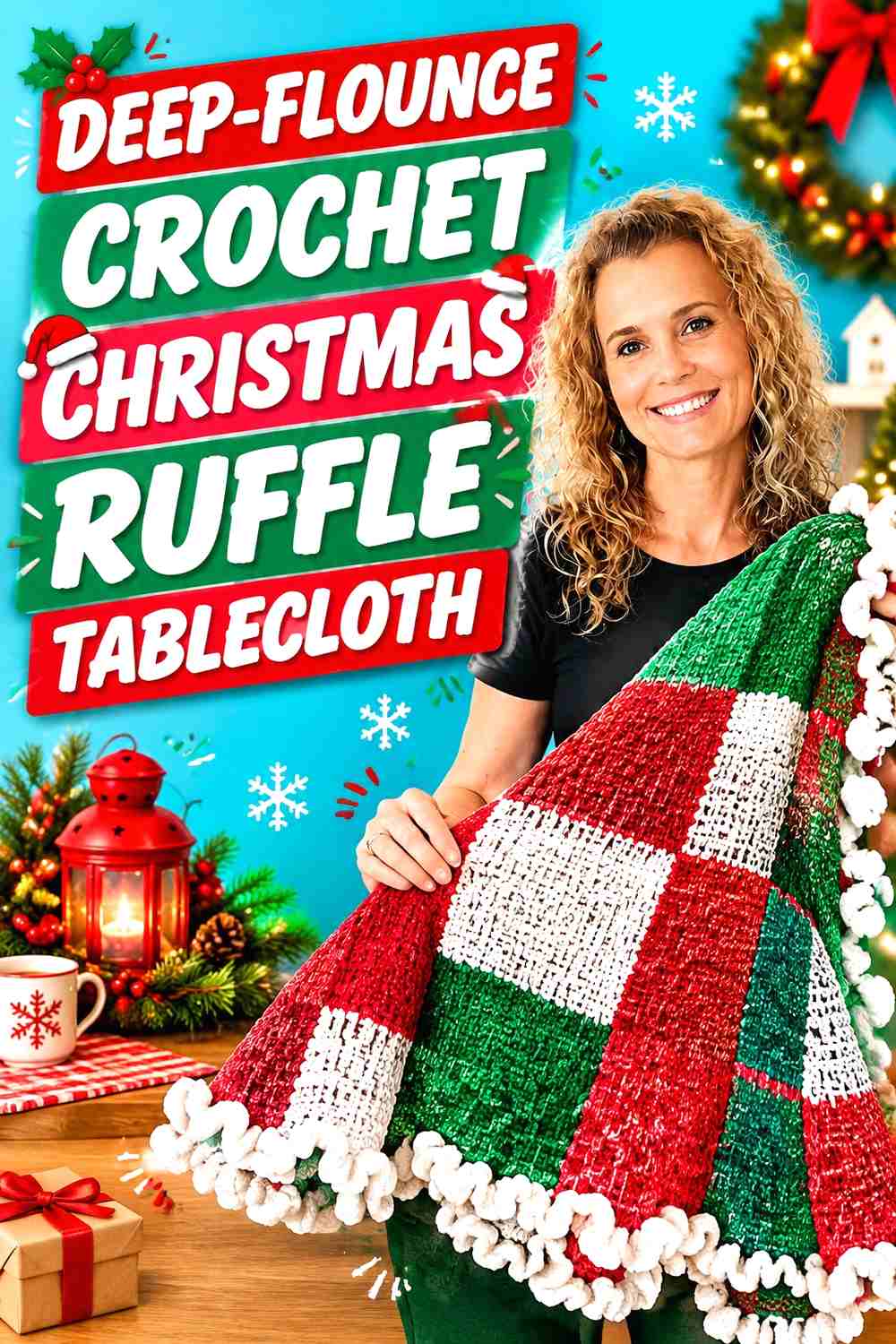
Here the ruffle becomes the defining feature rather than a small finishing detail. A relatively simple Christmas tablecloth body can be paired with a fuller outer flounce so that the texture is most visible along the sides of the table.
The source for this idea demonstrates a crochet ruffle border rather than a complete Christmas tablecloth. Treat it as an edging reference and confirm that the border structure is compatible with your chosen tablecloth base before adapting it.
Use the Ruffle Tutorial as an Edging Reference, Not a Tablecloth Pattern
A border demonstrated on another type of crochet item does not automatically provide the dimensions, shaping, or base construction needed for a tablecloth.
Complete or select the tablecloth independently, then examine its perimeter and compare it with the attachment method shown in the edging tutorial. Sampling a short section is much safer than assuming the techniques can be combined unchanged.
A Deep Flounce Belongs on Lower-Traffic Table Edges
A large ruffle is most practical where it has room to hang. On a buffet, console, dessert table, or display surface, there may be less interaction with seated guests.
For a dining table, compare the planned depth with chair positions before committing to a dramatic flounce. The visual effect should not require guests to manage large amounts of hanging crochet at their knees.
Creator Credit: I Can Crochet That
14. V-Stitch Crochet Christmas Ruffle Tablecloth
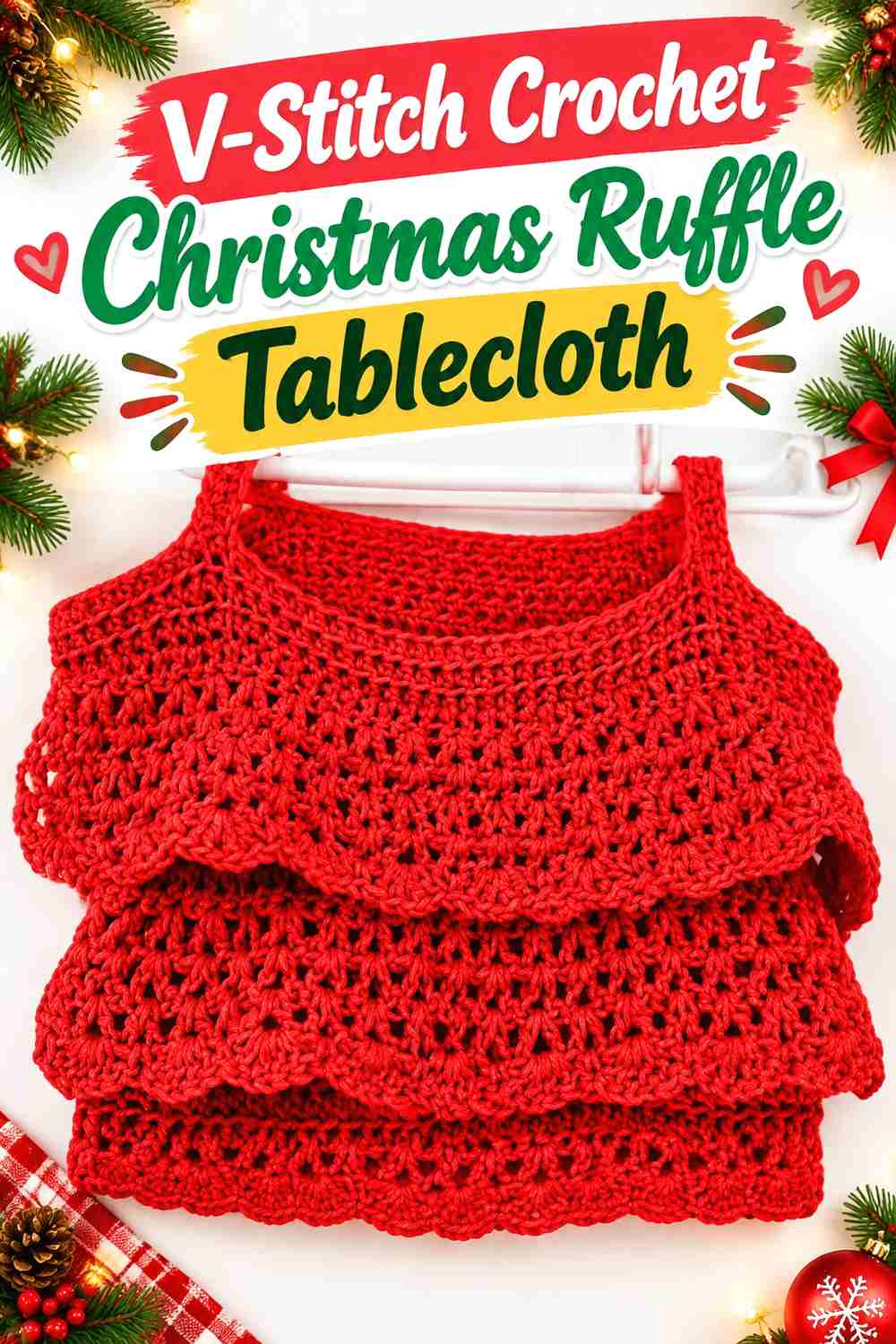
A V-stitch-based ruffle creates a more visibly structured edge than an extremely fine, delicate flounce. That can pair well with a simpler tablecloth body when you want the border texture to be obvious from across the room.
As with the previous idea, the source tutorial focuses on the ruffle itself rather than supplying a complete Christmas tablecloth pattern. Use it to evaluate the edging concept, not as a substitute for the tablecloth construction.
V-Stitch Texture Gives the Ruffle More Visible Structure
A textured ruffle can carry a strong accent color effectively because the stitch arrangement creates its own shadows and movement. This makes it possible to keep the main cloth quieter and concentrate seasonal contrast around the perimeter.
If the body is already heavily patterned, compare the two textures before combining them. Two equally strong stitch patterns may compete instead of complementing one another.
Test a Small Edge Section Before Working the Entire Perimeter
This is especially important when adapting an edging from a different project category. The attachment spacing and the behavior of the base edge determine whether the ruffle lies freely or causes the tablecloth to pull.
Work only enough to evaluate the effect, allow the sample to relax, and examine it on a flat surface before applying the concept around a large tablecloth.
Creator Credit: Aliche Creations
15. Modular Motif Crochet Christmas Ruffle Tablecloth
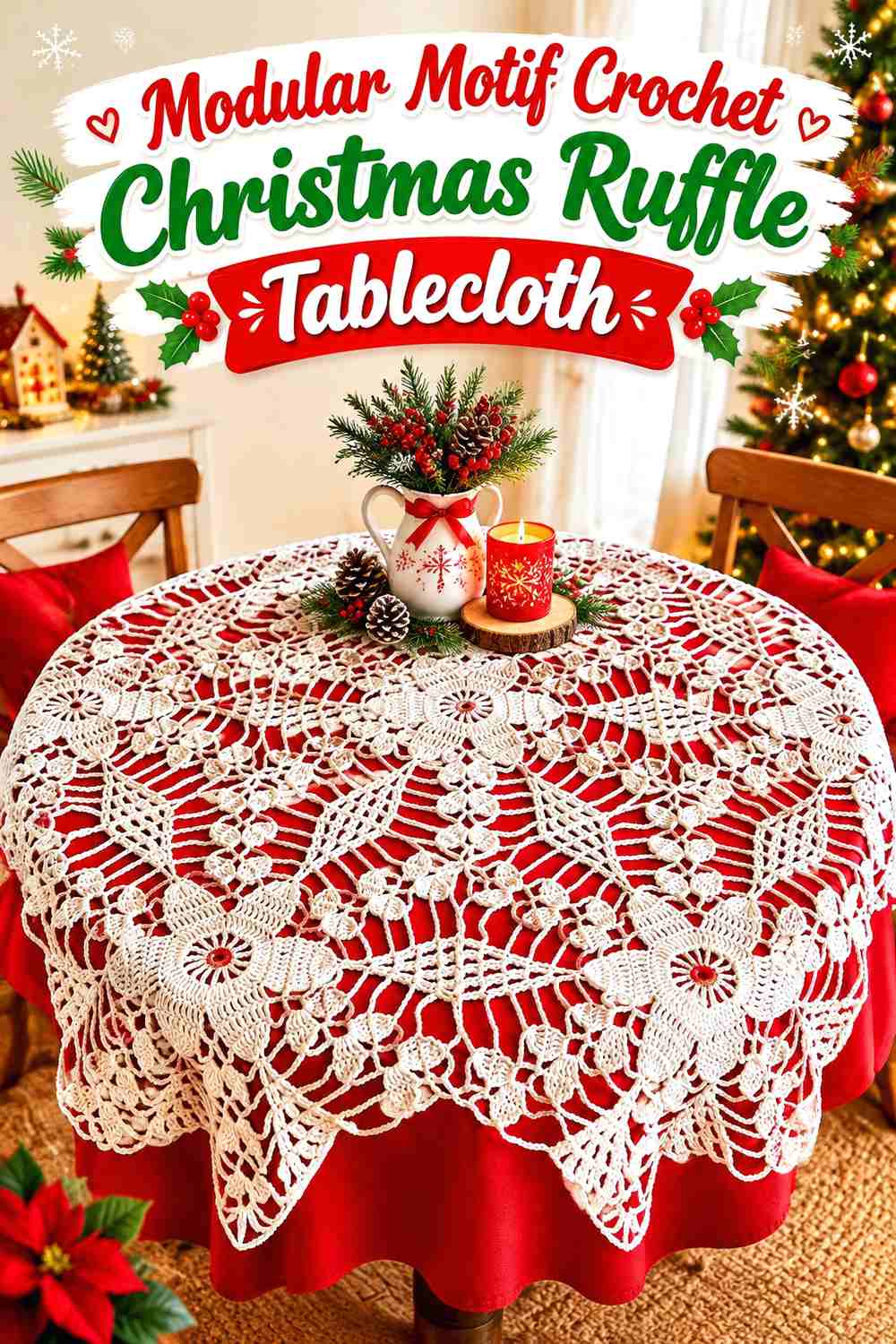
A modular tablecloth is useful when you like working smaller components rather than managing the entire cloth at once. The finished grid also makes size planning visually straightforward because the outer boundary is established by complete motif units.
For Christmas styling, the holiday effect can come from selected motif colors, a contrasting undercloth, or the final ruffle rather than requiring every motif to contain a seasonal image.
Joined Motifs Make Size Planning More Flexible
Before deciding how many motifs belong in the final cloth, measure completed and properly prepared samples rather than calculating from an unblocked piece.
The important dimensions are those of the motifs you actually produce. Even small differences can become noticeable when several units are placed across the length or width of a table.
Finish the Outer Grid Before Deciding How Much Ruffle to Add
This approach differs from adding decorative edging to a continuous cloth because the joins themselves influence the final perimeter. Complete the motif field and inspect the edge for consistent spacing before choosing the ruffle.
A narrow frame can visually unify the individual modules before the flounce begins. It can also give you a cleaner surface from which to evaluate whether the final border should be subtle or generous.
Creator Credit: NotikaLand crochet and knitting
Comparing the 15 Crochet Ruffle Christmas Tablecloth Styles
For a strongly traditional Christmas look, the red-and-white, poinsettia, Santa, and botanical-panel ideas put recognizable holiday color or imagery directly into the cloth. They require less help from separate table decorations to establish the theme.
For a formal dinner table, the rectangular fan-lace and restrained full-coverage approaches make it easier to prioritize table shape and usable surface area. Their ruffles can remain relatively controlled while still softening the perimeter.
Pineapple lace, filet crochet, and radial round construction suit a more heirloom-inspired presentation. These styles can also remain useful beyond a single Christmas if the holiday character comes primarily from the surrounding tablescape or removable accent colors.
The deep-flounce and V-stitch options are the most border-focused choices. They make sense when you already have a compatible tablecloth body and want the ruffle itself to become the main adaptation.
Joined-lace and modular-motif tablecloths are useful when construction in separate units appeals to you. In both cases, finishing the complete motif field before planning the outer flounce helps prevent the border from fighting the grid.
Conclusion
The right crochet ruffle Christmas tablecloth depends as much on the table and hosting setup as it does on the holiday motif.
Choose the poinsettia, Santa, botanical, or high-contrast ideas when unmistakable Christmas decoration is the priority. Look at rectangular fan lace when you need a cloth that visually follows a conventional dining table, and consider pineapple, filet, or radial designs for a more traditional lace presentation.
If the ruffle itself is the feature you care about most, start with a simpler compatible tablecloth body and evaluate the deep-flounce or V-stitch edging approaches. For a project that can grow in sections, joined motifs provide another route.
Whichever direction you choose, establish the tablecloth dimensions and finished body first, then decide how much border the setting can comfortably support. Refer to the original tutorials for their exact construction details rather than trying to combine techniques based on appearance alone.
Frequently Asked Questions
Can I add a crochet ruffle to an existing Christmas tablecloth?
Potentially, provided the existing outer edge gives you a suitable place to attach the new border. The key question is whether the added fullness can be distributed without causing the tablecloth body to pull, cup, or distort.
Test a short section first. This is particularly important when the ruffle tutorial was originally demonstrated on a blanket or another type of crochet project rather than on a tablecloth.
How do I keep a ruffle from overwhelming Christmas place settings?
Consider where the ruffle will actually be visible. On a dining table, most of the border hangs below the tabletop, so a moderate edge can still have a strong decorative presence without crowding the surface.
If the body contains large motifs or several colors, keeping the ruffle to one dominant color or a simpler texture can also reduce visual competition.
Should I block the tablecloth before deciding on the ruffle?
It is useful to evaluate the tablecloth in its intended finished state before finalizing the border. Crochet lace can change noticeably after appropriate finishing, and that can affect both the overall dimensions and how the outer edge lies.
Follow the care requirements of the actual fiber you are using rather than applying one blocking method to every yarn.
What yarn qualities matter for a Christmas tablecloth used during meals?
Think about care requirements, surface texture, color behavior, and how the fabric drapes. A dining tablecloth is more likely to encounter food and spills than purely decorative crochet, so cleaning instructions deserve attention before you begin a large project.
Do not assume that a yarn is easy to wash, colorfast, or suitable for a particular treatment unless the manufacturer’s information supports it.
Can a rectangular crochet tablecloth have a ruffle without bunching at the corners?
Yes, but the corners need deliberate attention. A border that behaves correctly along the straight sides can become too tight or too full where it turns.
Testing one complete corner before working the entire perimeter gives you a much better indication of how the chosen ruffle and tablecloth edge interact.
Should the ruffle match the main Christmas colors exactly?
Not necessarily. Repeating one color from the body can be enough to connect the border visually. A neutral or background-colored ruffle can also give poinsettias, Santa motifs, or multicolor panels more room to stand out.
The more colors and textures already present in the body, the more useful a restrained border can become.
Is a crochet Christmas tablecloth safe underneath hot serving dishes?
Do not rely on the crochet fabric itself as heat protection unless the material and intended use are specifically documented for that purpose. Fiber appearance alone does not establish safe heat resistance.
Use suitable trivets, heat-safe pads, or other table protection beneath hot cookware and serving dishes, and follow the care guidance for the yarn used in the tablecloth.