Butter yellow is carrying its soft, creamy look into Fall 2026 rather than disappearing with summer. Fashion coverage for the season continues to include the shade among the important color directions, while nearby tones such as vanilla yellow and richer mustard are also appearing. That makes crochet especially useful: texture can give a pale yellow enough visual depth to sit naturally beside denim, chocolate brown, camel, olive, burgundy, and other autumn staples.
The 21 ideas below range from oversized layers and fitted pieces to bags, cold-weather accessories, and home accents. The linked creators are teaching the construction of each underlying project; butter yellow is the styling adaptation explored here unless the source itself happens to use a similar shade. Along the way, you’ll also find practical checkpoints for fit, stretch, structure, finishing, and yarn substitutions.
Quick List
- Butter Yellow Crochet Pocket Cardigan
- Butter Yellow Crochet Granny-Square Vest
- Butter Yellow Crochet Striped Pullover
- Butter Yellow Crochet Ribbed Scarf
- Butter Yellow Crochet Ribbed Beanie
- Butter Yellow Crochet Balaclava Hood
- Butter Yellow Crochet Fingerless Gloves
- Butter Yellow Crochet Ribbed Leg Warmers
- Butter Yellow Crochet Crossbody Bag
- Butter Yellow Crochet Bucket Hat
- Butter Yellow Crochet Chunky Cowl
- Butter Yellow Crochet Triangle Shawl
- Butter Yellow Crochet Shell-Stitch Poncho
- Butter Yellow Crochet Fitted Skirt
- Butter Yellow Crochet House Slippers
- Butter Yellow Crochet Market Tote
- Butter Yellow Crochet Woven Tassel Pillow
- Butter Yellow Crochet Ribbed Pumpkin
- Butter Yellow Crochet Ripple Throw Blanket
- Butter Yellow Crochet Velvet Scrunchie
- Butter Yellow Crochet Boot Cuffs
Why Butter Yellow Works for Fall 2026
Butter yellow works differently in fall than it does in high summer. Instead of relying on an airy, sunlit palette, treat the shade as a soft neutral that can brighten heavier textures and darker seasonal colors. Current Fall 2026 coverage has included butter yellow among the season’s color directions, and some fashion editors are extending the idea into creamier vanilla or deeper mustard territory.
For crochet, that flexibility is useful. A pale yellow cardigan can sit over brown or indigo layers, while the same color used for a pumpkin or pillow creates a quieter alternative to traditional orange. If your yarn looks almost cream indoors, check it again in daylight before committing to a large project. Fiber sheen, surrounding colors, and lighting can all shift whether a yellow reads buttery, lemony, beige, or golden.
Match the Yarn to Drape, Structure, and Use
Color is only one part of the choice. A cardigan, shawl, or poncho usually benefits from fabric that can move with the body, while a market tote or crossbody bag may need a firmer fabric so the shape does not collapse under ordinary use. Ribbing adds shadow and dimension to pale yarn, which is particularly helpful when a solid butter yellow might otherwise look visually flat.
Before substituting yarn in any linked tutorial, compare more than the label color. Check the creator’s yarn category, gauge information, recommended hook, and finished measurements where supplied. A substantially heavier, lighter, stretchier, or more rigid replacement can change fit and proportion even when the stitch pattern remains unchanged. For wearables, make a swatch large enough to judge both fabric feel and color. For bags and decor, pay particular attention to stability and how the fabric behaves when filled, stuffed, or handled.
Give One Yellow Shade More Than One Look
Twenty-one butter yellow projects do not need to feel like one matching set. Let construction determine how prominently the color appears. A cardigan or fitted skirt can make it the main statement, while a striped pullover can break it with cream, brown, charcoal, or muted blue. Granny squares give you another route: place yellow at the center, around the edges, or only in selected motifs.
Texture changes the effect as much as color placement. Deep ribbing produces darker valleys and brighter ridges; lace and shell stitches let the background show through; velvet softens highlights; woven or ripple surfaces produce more visual movement. For a quieter fall palette, combine butter yellow with oatmeal and tan. For stronger contrast, try it beside chocolate brown, denim blue, deep olive, or burgundy. The goal is not to force the trend onto every stitch, but to decide where the yellow has the most impact.
1. Butter Yellow Crochet Pocket Cardigan
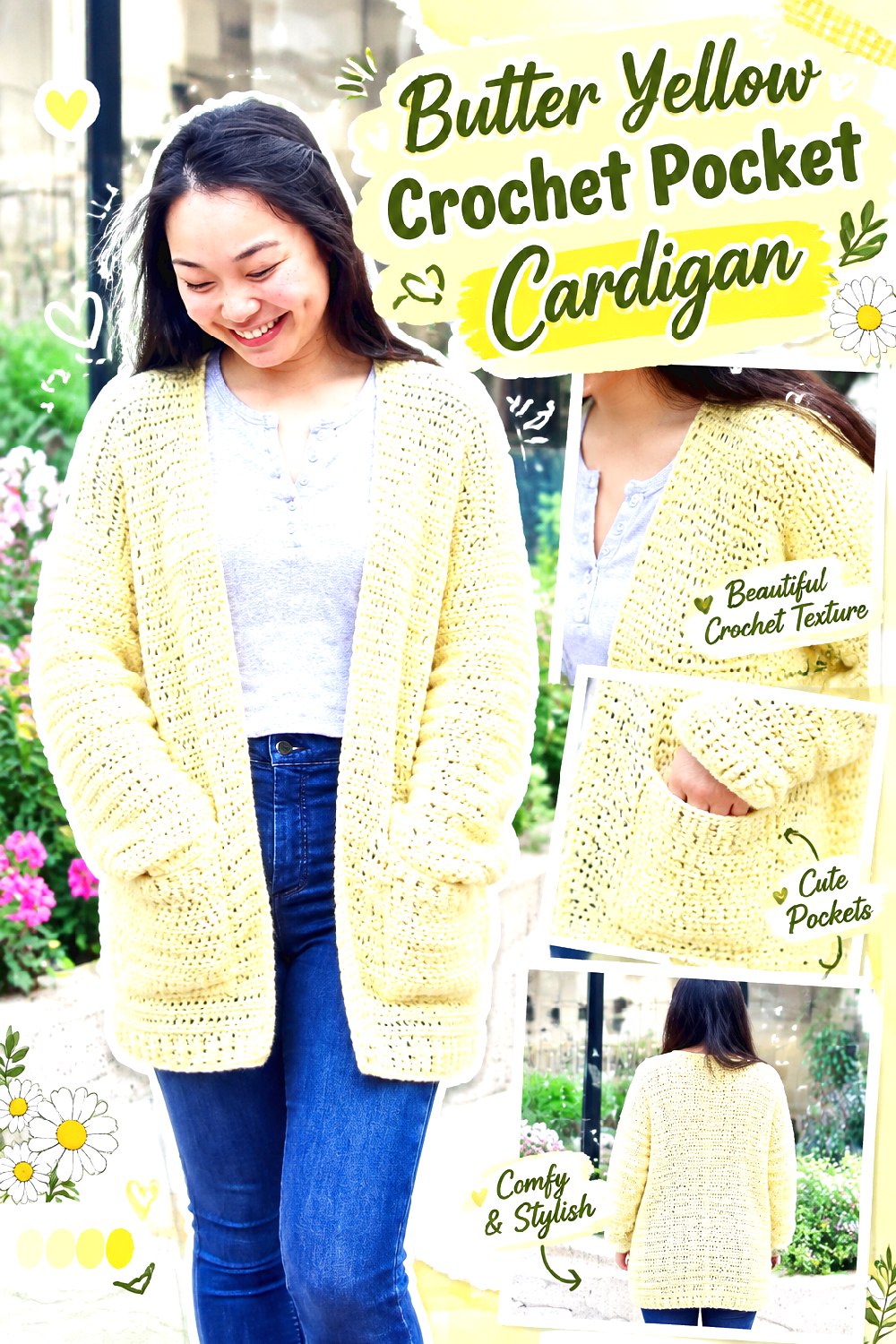
A long pocket cardigan is one of the clearest ways to turn butter yellow into a substantial fall wardrobe color rather than a small accent. The For The Frills design has a relaxed, oversized profile, slouchy sleeves, ribbed finishing, and optional pockets, so the silhouette already lends itself to layering over simpler pieces. Its body is constructed as one main piece with separate sleeves rather than heavily shaped garment sections.
In butter yellow, the generous surface area becomes the focus. Pair it with darker denim, brown trousers, or a charcoal base layer if you want the pale shade to feel grounded. Because an oversized cardigan depends on intentional ease, compare the source measurements with a cardigan you already like before selecting a size.
Check the Layering Ease
An oversized label does not tell you exactly where the garment will land on your body. Look at the tutorial’s finished measurements and compare width, length, and sleeve proportions with your own layering preferences. If you plan to wear the cardigan over long sleeves or a light sweater, allow enough room through the upper body and arm area without automatically sizing up beyond the designer’s intended fit.
Changing yarn can also alter how that ease behaves. A softer fabric may hang closer to the body, while a firmer substitute can make the same dimensions appear more boxy.
Keep a Large Pale Surface Interesting
A solid butter yellow cardigan has fewer color changes to distract the eye, so the ribbing, pocket edges, sleeve shape, and overall drape become more visible. That can be an advantage. Before adding stripes simply for variety, consider whether one consistent shade lets the construction details do enough work.
If you do want contrast, small changes at cuffs, edging, or pockets can be easier to coordinate with the rest of a fall wardrobe than broad multicolor bands. Keep those additions subordinate if the pale-yellow body is meant to remain the statement.
Watch What the Pockets Carry
Pockets are useful, but they also add weight to a hanging garment. Heavy objects can pull on soft crochet fabric or make one side hang differently from the other. Treat the pockets primarily according to the construction demonstrated by the designer, then consider the behavior of your chosen yarn before relying on them for substantial contents.
After attaching or completing the pockets, check the cardigan while it is hanging rather than only flat on a table. That reveals whether their position and weight affect the line of the front panels.
Original Tutorial and Creator Credit
Creator/Site: For The Frills
2. Butter Yellow Crochet Granny Square Vest
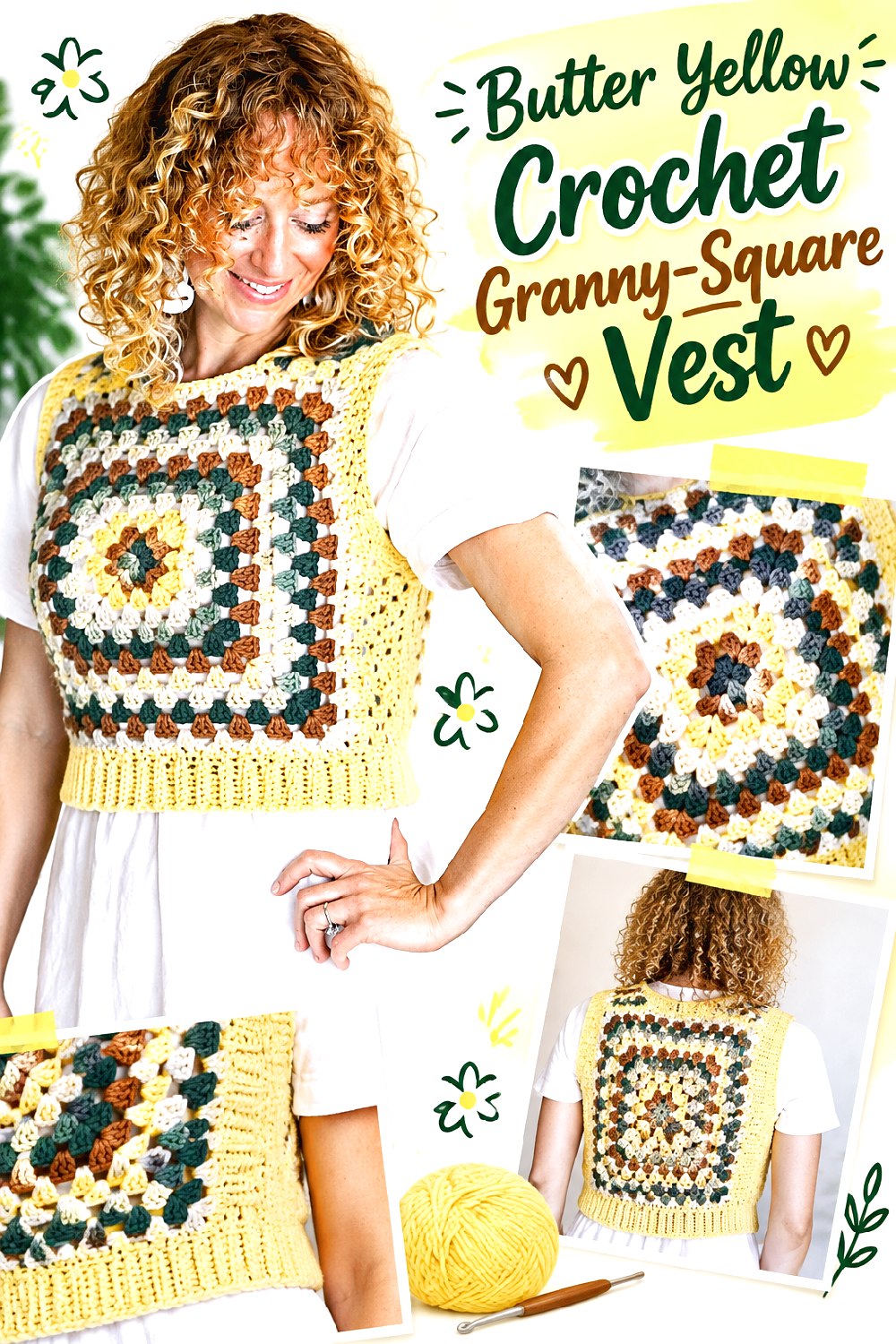
A granny-square vest gives butter yellow a completely different role: instead of one uninterrupted field of color, you can distribute it through motifs. Make & Do Crew’s vest is based on two large granny squares and avoids complex shaping, creating a graphic layering piece whose proportions come largely from the motif scale and assembly.
For Fall 2026, consider a buttery center surrounded by cream and brown, or reverse that arrangement so yellow acts as a border that frames darker tones. Worn over a white shirt, denim dress, or close-fitting long-sleeve top, the vest adds color without covering the entire outfit. Because large motifs determine much of the fit, consistent gauge matters more here than it might in a small decorative granny-square project.
Plan the Granny-Square Scale First
When a garment is built around large motifs, a seemingly small gauge difference can become significant across the completed square. Check the designer’s measurements and make sure your motif is progressing toward the intended dimensions rather than relying only on how many rounds you have completed.
If you substitute yarn, evaluate the fabric while the square is still manageable. A very rigid motif can create a board-like vest, while an unusually loose fabric may lengthen or widen once worn. The goal is to preserve the source construction while achieving a fabric you actually want to layer.
Use Contrast Without Losing the Butter Yellow
Granny squares invite multiple colors, but more colors do not automatically produce a stronger design. If butter yellow is the seasonal focus, give it a clear job. It can form the center, define repeated outer rounds, or alternate with a restrained neutral rather than competing with several equally dominant brights.
Lay the motifs against clothes you are likely to wear underneath the vest before final assembly. A palette that looks balanced on a white table can behave differently over denim, chocolate brown, or black.
Check the Armhole and Side Fit
A vest has fewer fit points than a sleeved sweater, but the armhole still determines whether layering feels comfortable. Before finishing the sides exactly as planned, check how the opening sits over the garments you expect to wear beneath it. Too little room can make even an otherwise generous body feel restrictive.
Also examine where the lower edge lands. Increasing motif size to gain width may affect length at the same time, so use the designer’s adjustment guidance instead of assuming one dimension can always change independently.
Original Tutorial and Creator Credit
Creator/Site: Make & Do Crew
3. Butter Yellow Crochet Striped Pullover
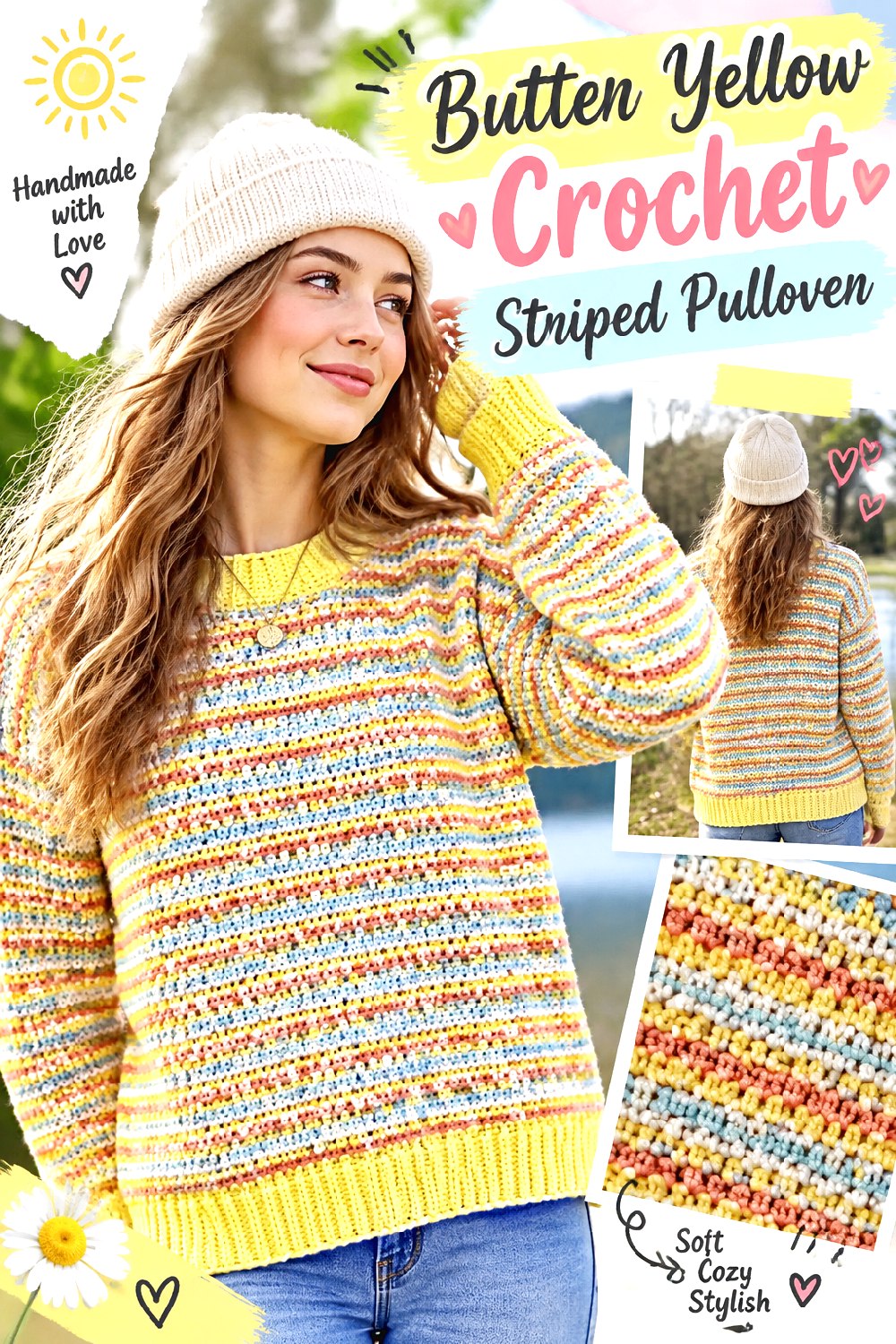
If an all-yellow sweater feels too strong, use butter yellow as the lead color in a striped pullover. Crochet with Carrie’s Kylemore Sweater uses a slightly oversized silhouette, striped color transitions, ribbing, and a four-panel construction that gives the finished garment a relaxed, graphic appearance.
A Fall 2026 version could shift the palette toward butter yellow, cream, camel, cocoa, or muted blue rather than reproducing the tutorial sample exactly. The stripe structure lets you control how dominant the trend color becomes: broad yellow sections create a stronger statement, while narrower bands make it an accent. Because stripe placement draws attention to garment proportions, decide where you want visual emphasis before buying a collection of coordinating yarns.
Decide Where the Stripes Should Lead the Eye
Horizontal color changes can visually emphasize width, garment length, or sleeve shape depending on where they fall. Before improvising your own stripe sequence, sketch the color distribution or arrange the yarn in order. This is particularly useful if butter yellow is much lighter than every other shade because the eye will naturally notice those bands first.
You do not need equal-width stripes. A predominantly yellow body with restrained neutral interruptions can feel calmer than a perfectly alternating pattern, provided any changes remain compatible with the tutorial’s construction.
Measure Before Settling the Sleeve Length
Relaxed pullovers can still feel awkward when sleeves are significantly shorter or longer than expected. Compare the designer’s measurements with a sweater whose sleeve length you already like, especially if you are changing yarn or adjusting body proportions.
Try not to evaluate a sleeve only while the panel is flat. Crochet fabric can behave differently after assembly and under its own weight. If the source gives checkpoints for customization, use those rather than adding arbitrary length at the very end.
Choose Drape Deliberately
The same oversized dimensions can look soft and fluid in one yarn but bulky and architectural in another. If you want butter yellow to read as a refined fall neutral, swatch for fabric behavior as carefully as you swatch for gauge.
Hold the swatch vertically and let it hang. That simple check gives you a better idea of whether the finished sweater may drape, flare, or remain stiff. Fiber choice, stitch structure, washing, and tension can all influence the result, so follow the tutorial and yarn-care information rather than assuming a substitution will behave identically.
Original Tutorial and Creator Credit
Creator/Site: Crochet with Carrie
4. Butter Yellow Crochet Ribbed Scarf
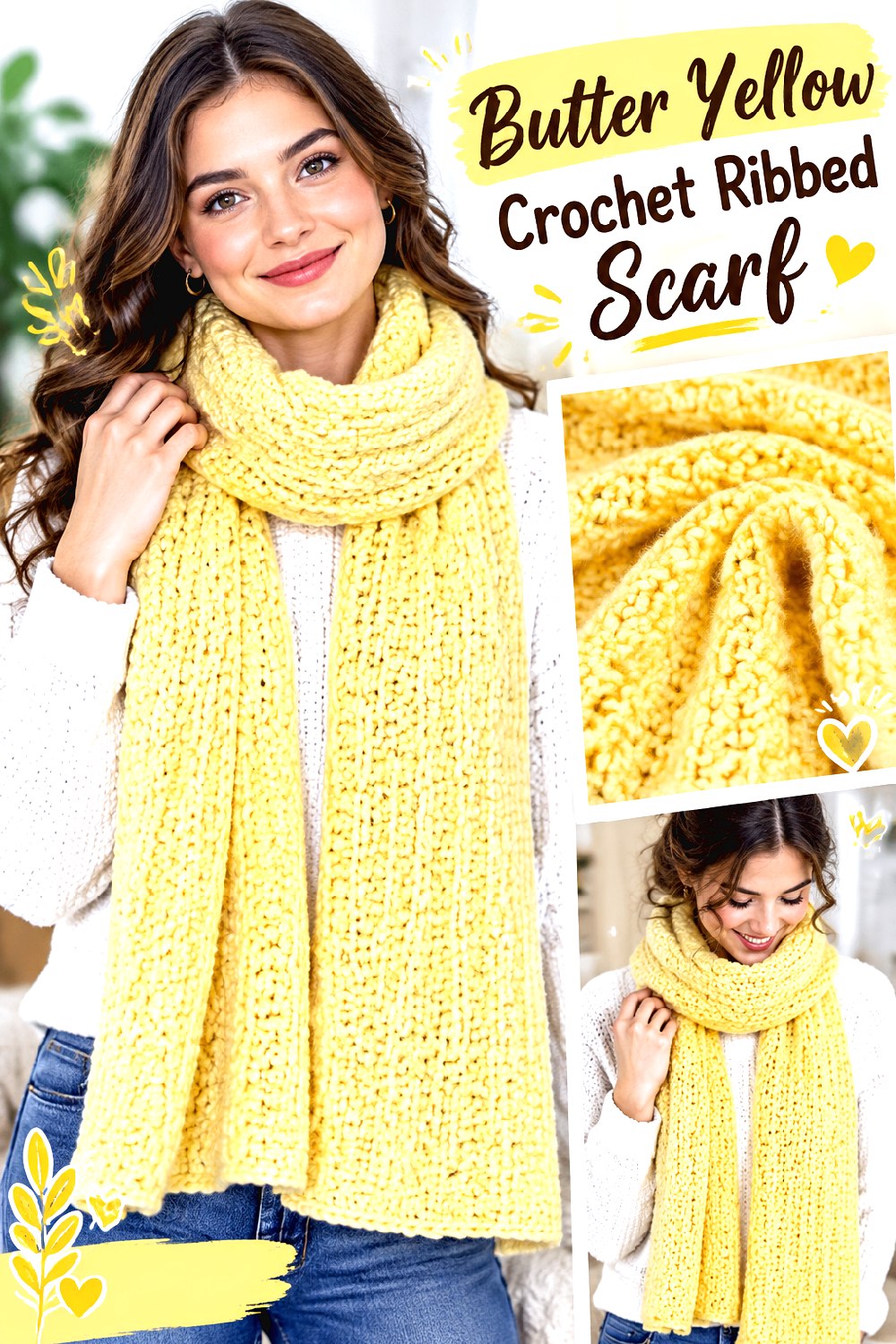
A scarf is a low-risk way to see how butter yellow works near your face and with the coats you already own. Ned & Mimi’s ribbed scarf design emphasizes raised texture rather than complicated colorwork, giving a solid shade plenty of visual definition. The source also provides several size options and a coordinating tutorial.
That makes this project particularly suited to a single creamy yellow yarn. The ridges naturally create light and shadow, so the scarf can look dimensional without adding contrast stripes. Worn with camel, gray, navy, deep brown, or denim, it becomes a concentrated flash of the Fall 2026 shade rather than an entire outfit commitment. Check the source sizing before beginning, since your preferred scarf length and wrapping style may differ from the sample.
Let Texture Do the Color Work
Pale solid yarn can sometimes hide subtle stitch changes, but pronounced ribbing has the opposite effect because the raised and recessed areas create their own contrast. Check your swatch in daylight and indoor light; the yellow may appear warmer in one setting while the texture remains visible in both.
If your chosen yarn has a strong halo or very fuzzy surface, stitch definition may soften. That is not necessarily a problem, but decide whether your priority is a crisp ribbed appearance or a softer, more blended look before committing to the full scarf.
Choose Width for the Way You Actually Wrap It
A broad scarf can feel substantial and blanket-like, while a narrower one can sit more cleanly under a coat. Rather than choosing dimensions only from appearance, think about how you wear scarves most often.
If you tend to wrap a scarf multiple times, added bulk can accumulate around the neck. If you usually let the ends hang, width and drape become more visible. Use the source’s size information as the construction guide, then select the version that best matches your clothing and intended use.
Original Tutorial and Creator Credit
Creator/Site: Ned & Mimi
5. Butter Yellow Crochet Ribbed Beanie
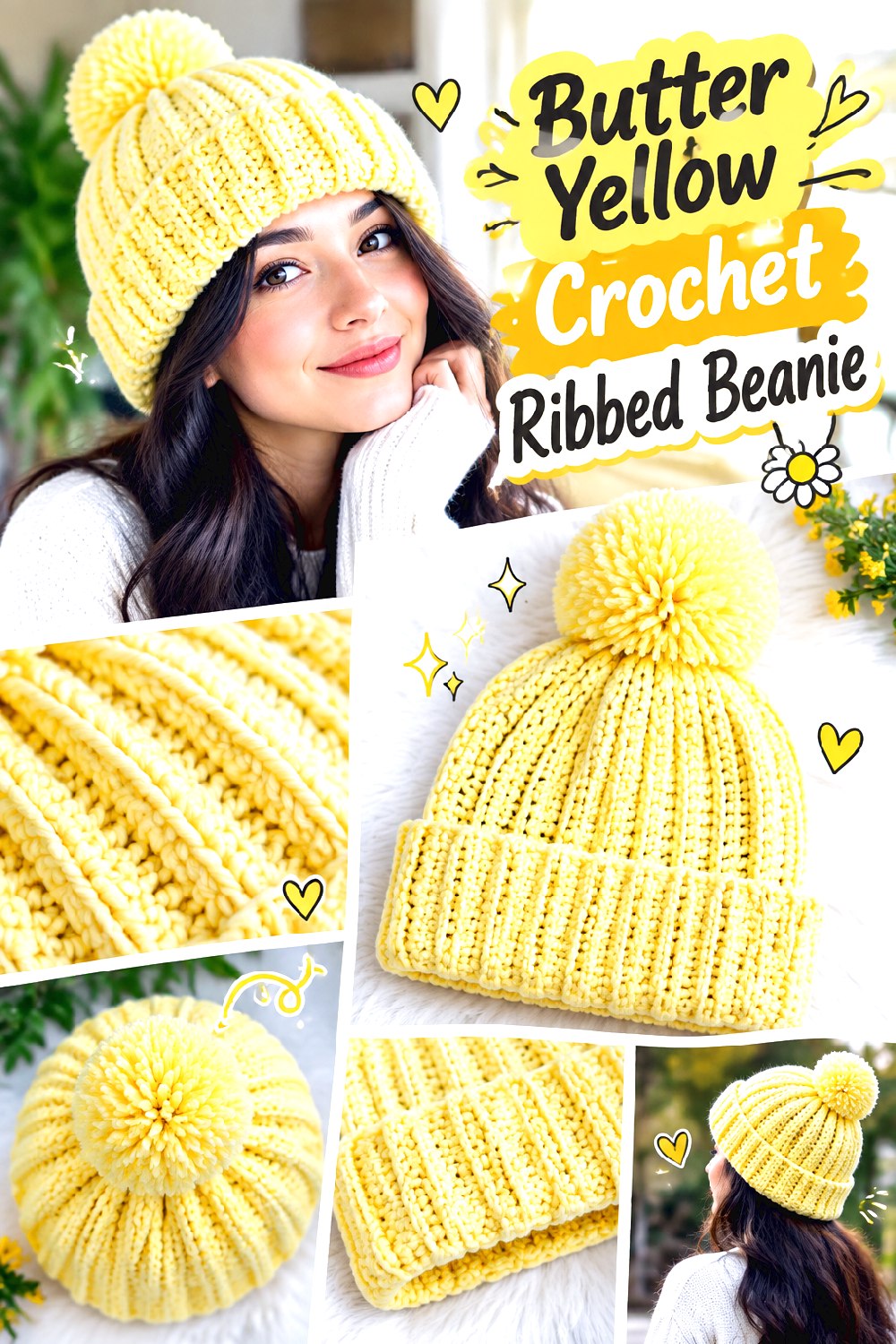
A butter yellow beanie gives the trend immediate visibility without requiring a full garment. Daisy Farm Crafts’ design creates a ribbed look with back-loop single crochet and finishes the crown after the main fabric is formed, with a pom-pom presented as an optional detail. The tutorial also discusses adjusting the beanie to the intended head size.
The monochrome ribbing makes pale yellow look richer because every ridge catches light differently. Keep the top minimal for a cleaner city look, or use the optional pom treatment if that suits your style. Since hats depend heavily on circumference and stretch, treat fit as the main checkpoint rather than assuming the same dimensions will suit every wearer.
Fit Matters More Than the Size Name
Headwear needs enough negative or close ease to stay in place without becoming uncomfortably tight. Follow the designer’s measuring and customization guidance, and consider how your yarn stretches before finalizing the circumference.
A yarn substitution that produces a looser fabric may relax more during wear, while a firm fabric may feel tighter even at similar dimensions. If possible, check the developing band around the intended wearer—or against an accurately measured hat—before the crown is completely finished.
Decide How Minimal You Want the Crown
Butter yellow already attracts attention, so the top finish can change the personality of the beanie considerably. A plain crown keeps the focus on ribbing and color. A pom adds height, movement, and a more casual winter character.
If you add an embellishment, remember that it can affect care and storage. Follow the yarn label and any guidance from the creator rather than assuming the completed hat can be washed or dried the same way as an unembellished swatch.
Original Tutorial and Creator Credit
Creator/Site: Daisy Farm Crafts
6. Butter Yellow Crochet Balaclava Hood
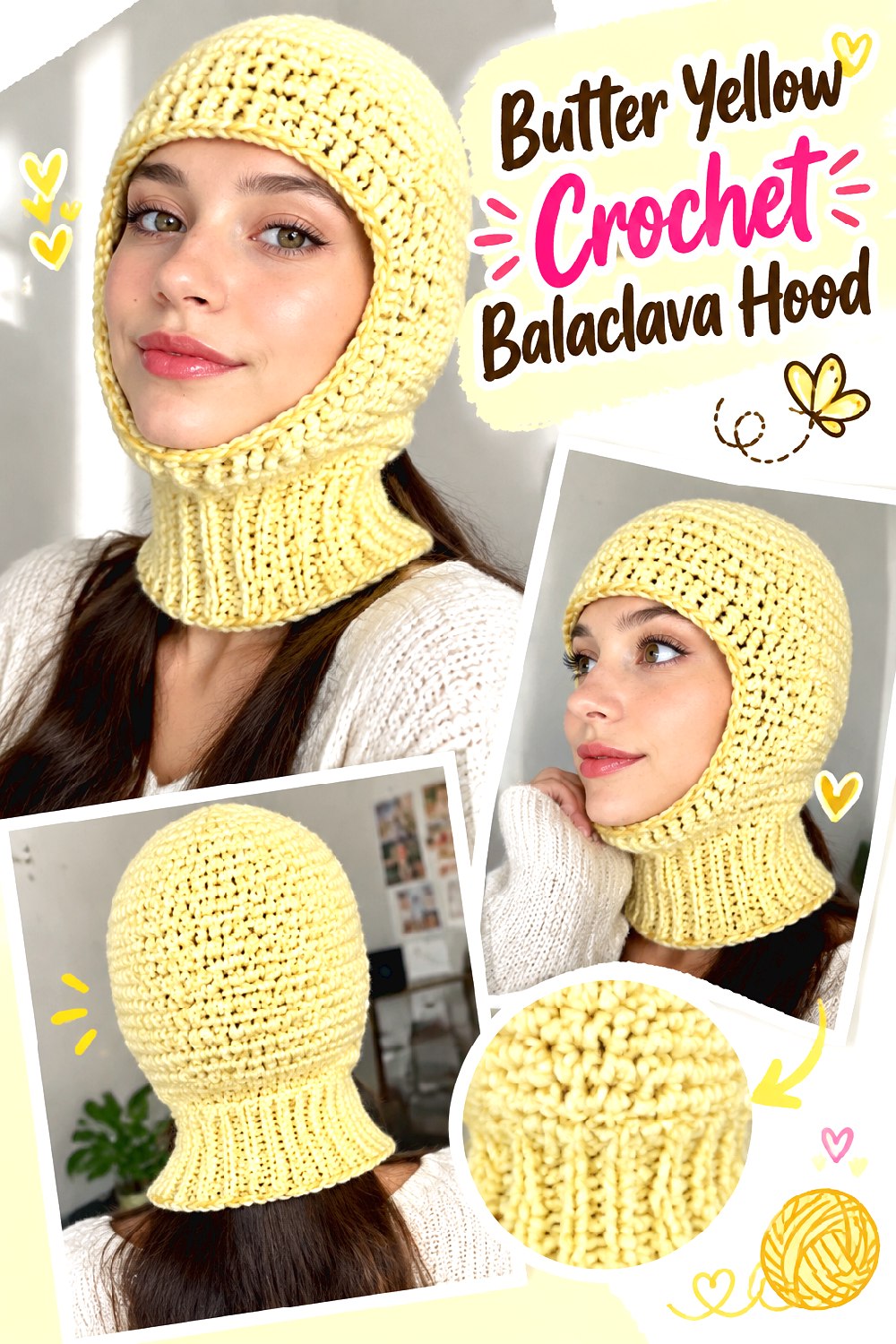
A balaclava pushes butter yellow in a more fashion-forward direction. Instead of functioning only as a small accent, the color frames the face and extends around the head and neck. The full-length video tutorial from brittanyalicecrochet demonstrates a crocheted balaclava with a defined face opening and fitted hood form.
For Fall 2026, the contrast between a soft, almost creamy yellow and a utilitarian hood silhouette is what makes the idea interesting. Wear it with a dark coat for maximum color separation, or keep the rest of the look tonal with camel and oatmeal. Because the opening sits close to the face, fit and comfort deserve more attention here than decorative color changes.
Check the Face Opening Placement
A balaclava can have the correct overall size yet still feel awkward if the face opening sits too high, too low, or too close to the eyes. Use the tutorial’s construction as the primary guide and check the fit during any stage where adjustment is still possible.
Keep the opening comfortable and unobstructed. If you change yarn, remember that a fabric with different stretch or thickness may alter how the edges sit around the forehead, cheeks, and chin even when the stitch count is unchanged.
Balance Coverage With Comfortable Fabric
A dense hood can provide more coverage, but greater thickness is not automatically better for every wearer or climate. Consider whether the balaclava will be worn alone, under a coat hood, or beneath other headwear. Excess bulk can make layering uncomfortable.
The fabric should also move with the head without pulling across the face opening. Swatching helps reveal whether your butter yellow yarn creates the same general flexibility as the material used in the tutorial.
Examine the Neck Area Before Finishing
The lower portion of a balaclava affects how it meets a jacket or coat collar. Too much volume can bunch; too little coverage may leave an unwanted gap. Follow the tutorial closely, then assess the relationship between the finished hood and your own outerwear.
If you customize length, do so with movement in mind. Turn your head, look down, and check that the fabric sits comfortably rather than judging the shape only from a front-facing mirror view.
Original Tutorial and Creator Credit
Creator: brittanyalicecrochet
7. Butter Yellow Crochet Fingerless Gloves
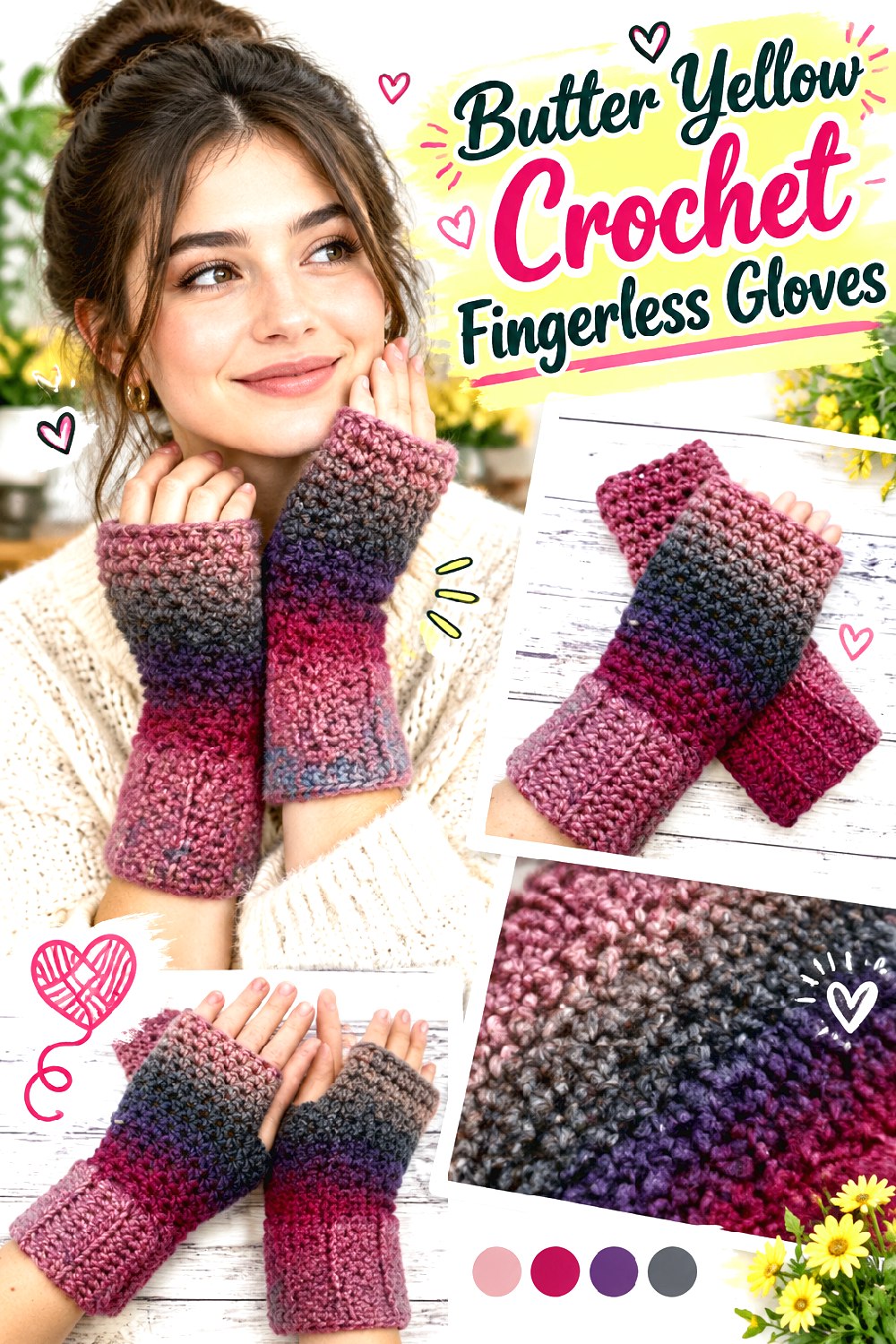
Fingerless gloves are ideal when you want butter yellow to function as a small repeatable accent. The love. life. yarn. tutorial uses half-double crochet with ribbed cuff detailing, producing gloves that leave the fingers uncovered while adding fabric around the hand and wrist.
That open-finger design makes the project easier to combine with other fall accessories because the color does not cover the entire hand. A pair can echo a scarf, beanie, bag, or cardigan without requiring an exact matching set. Pale yellow also places the stitch texture in clear view, so consistent tension becomes part of the finished appearance. Check the tutorial’s sizing information before selecting your version, particularly if your yarn substitution has noticeably different stretch.
Prioritize Wrist and Thumb Comfort
The wrist needs enough hold to keep the glove in place, but an overly tight cuff can be uncomfortable. The thumb opening matters just as much. Follow the designer’s sizing and construction guidance, then move your hand through a normal range of motion before considering the fit complete.
If the fabric stretches substantially during wear, avoid judging it only immediately after finishing. Yarn behavior varies, so a properly sized swatch and the source measurements are more dependable than assumptions based on another pair made from a different fiber.
Use Yellow as a Repeating Accent
Because fingerless gloves are visually small, they can introduce butter yellow without dominating an outfit. Repeat the shade once elsewhere—a bag detail, scarf, or hat—and the result can feel intentional without becoming a literal matching set.
If you have leftover yarn from a larger garment, first confirm that its weight and behavior are compatible with the glove tutorial. A color match is useful, but construction requirements should still determine whether the same yarn is appropriate.
Original Tutorial and Creator Credit
Creator/Site: love. life. yarn.
8. Butter Yellow Crochet Ribbed Leg Warmers
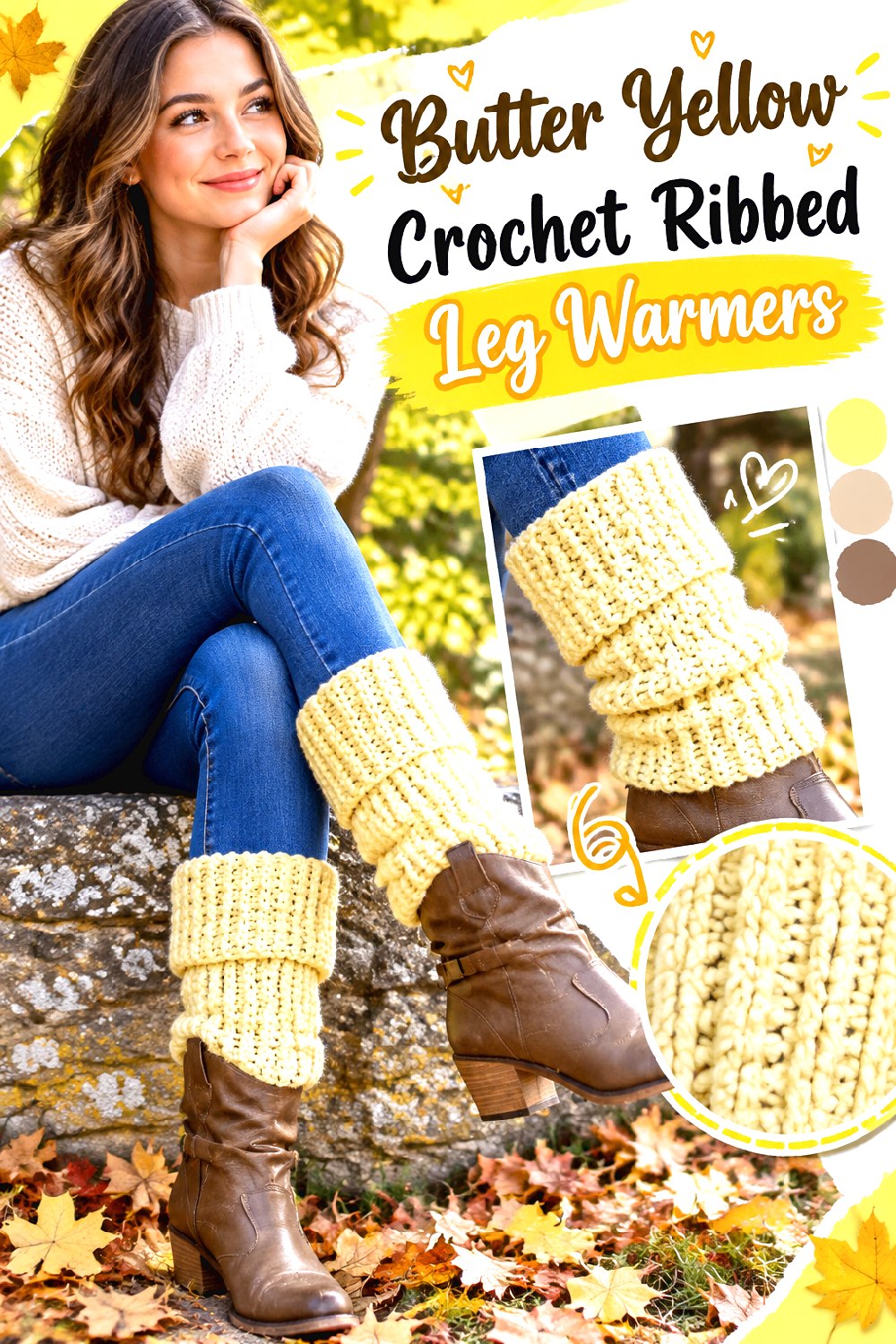
Leg warmers let butter yellow appear lower in the outfit, where it can contrast with brown boots, dark denim, tights, or an autumn skirt. Life + Yarn’s pattern focuses on a chunky, ribbed leg-warmer silhouette designed as a seasonal layering accessory.
The strong vertical texture is particularly effective in a pale solid because the ribs keep the surface from looking blank. You could make the pair entirely butter yellow or introduce a restrained darker edge if you want a clearer boundary against light-colored footwear. Since calves vary considerably, do not rely on the appearance of the sample alone. The practical success of this project depends on the warmers staying in the intended position without excessive squeezing or slouching.
Make Calf Fit the Main Checkpoint
Measure the area where you actually intend the leg warmers to sit and compare that with the source sizing. If you plan to wear them over leggings or another layer, account for the added thickness rather than measuring bare skin and assuming the result will feel the same.
Ribbed crochet can have substantial stretch, but the amount depends on yarn and tension. Test the fabric’s recovery as well as how far it stretches; a piece that expands easily but does not spring back may slide during wear.
Pair Them With Boots Without Excess Bulk
The relationship between the warmers and your footwear matters. Some styling places the fabric mainly above the boot, while other looks allow it to extend inside the shaft. A very thick fabric can become uncomfortable if compressed between the leg and a close-fitting boot.
Try the developing warmer with the footwear you intend to use before completing both pieces. That check is more informative than judging the accessory alone and can prevent making an entire matching pair in proportions that do not work with your boots.
Original Tutorial and Creator Credit
Creator/Site: Life + Yarn
9. Butter Yellow Crochet Crossbody Bag
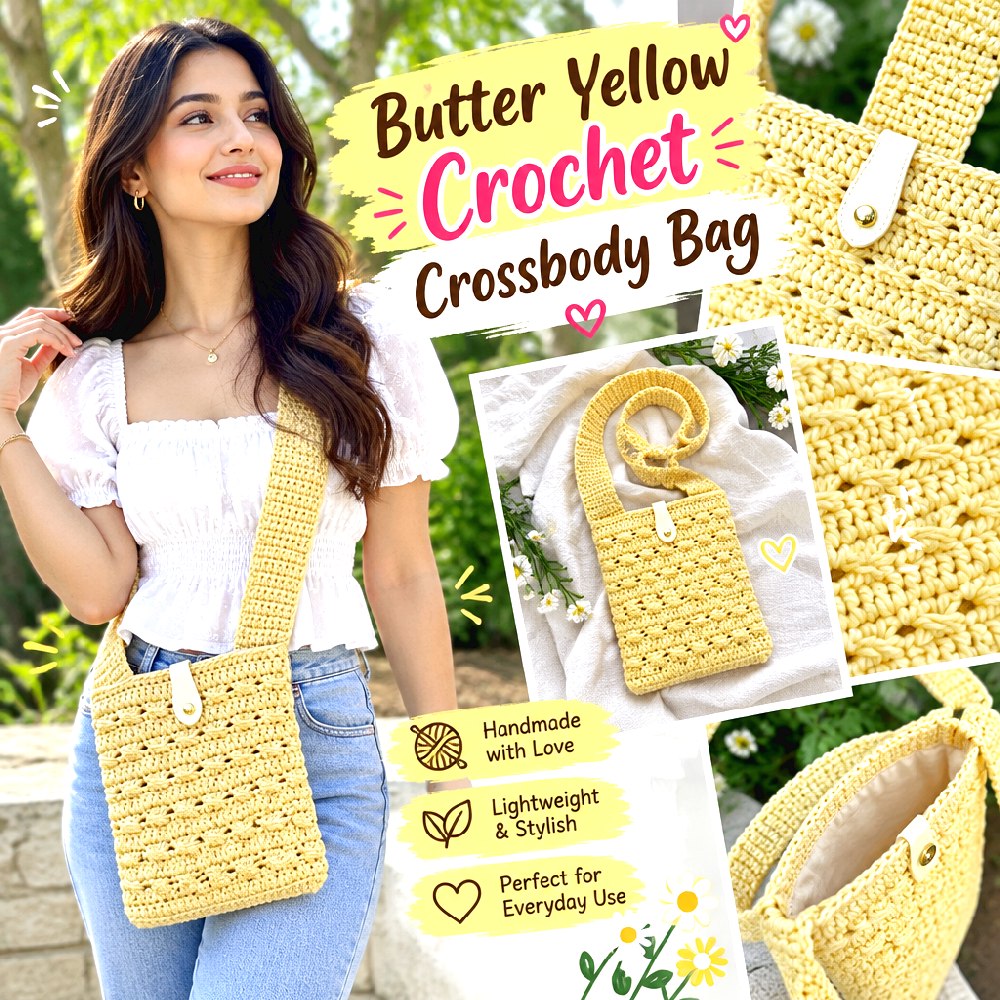
A crossbody bag turns butter yellow into an everyday accessory rather than a seasonal novelty. HanJan Crochet’s Coco bag combines a textured body with a long strap, and the designer discusses customization such as altering the bag height and strap dimensions. The source also works with yarn held together, creating a more substantial-looking fabric.
In pale yellow, the texture helps disguise the simplicity of a single-color palette while letting the bag stand out against dark coats and denim. Before choosing it as an everyday carry, think about what you actually expect it to hold. Crochet fabric and straps react differently to weight than woven commercial bags, so capacity, stretch, closure, and lining decisions should follow function rather than appearance alone.
Protect the Strap From Unwanted Stretch
A crossbody strap carries nearly all of the bag’s suspended weight, making it one of the first areas to evaluate when changing yarn. A soft or highly elastic substitute may lengthen more than expected once the bag is loaded.
Follow the source construction and customization guidance, then test the strap with modest representative weight before deciding its final length. If you choose to add reinforcement, make sure it does not interfere with the intended attachment points or distort the bag body.
Match the Interior to Real Use
A small crossbody intended for a phone and a few essentials has different structural demands from a bag expected to hold heavier objects. Before modifying the size upward, remember that extra capacity can also create extra load.
Open crochet textures may also allow very small contents to catch or poke through. A lining can be worth considering for some uses, but it changes the finishing process and care requirements. Treat it as an optional adaptation unless the original tutorial specifically incorporates one.
Think About How the Opening Behaves
A crossbody bag that looks attractive while empty can behave differently when worn. Check whether the opening naturally stays close to the body and whether the contents you intend to carry need more security.
If you add a button, magnetic closure, zipper, or other hardware not present in the source, plan the attachment carefully and consider how it affects laundering. Do not assume the crochet fabric alone is suitable for hardware that concentrates stress in a very small area.
Original Tutorial and Creator Credit
Creator/Site: HanJan Crochet
10. Butter Yellow Crochet Bucket Hat
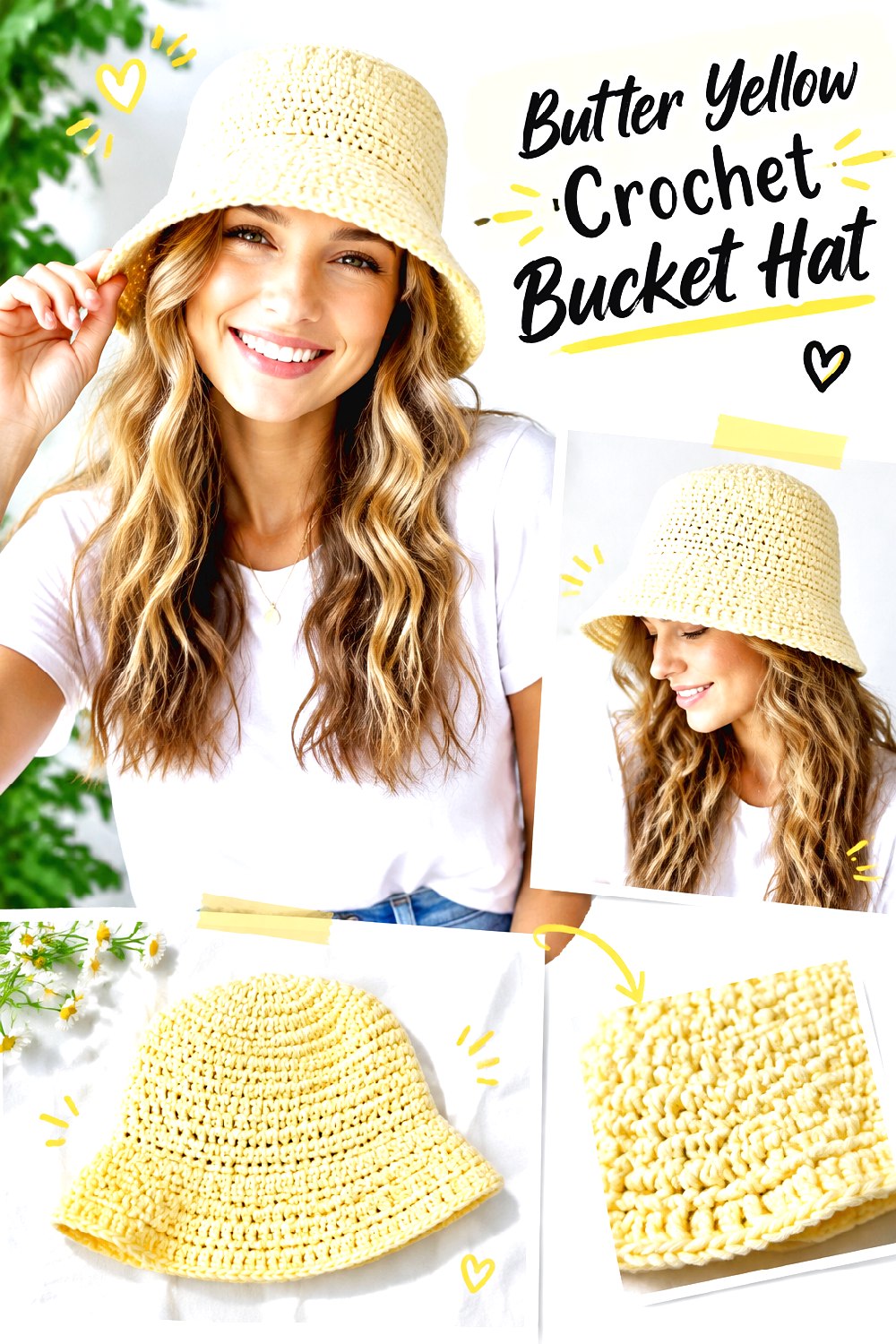
A bucket hat carries butter yellow into the first part of fall without pretending to be heavy cold-weather headwear. Lakeside Loops’ Grayson hat is designed as a lightweight, packable bucket hat available in multiple sizes, with a brim that maintains a recognizable bucket shape.
That makes it a strong transitional piece for mild September and early-autumn outfits. Use the pale yellow with a brown jacket, denim overshirt, or cream knit rather than styling it only as a summer accessory. Because the hat’s silhouette depends on the brim, yarn substitution should preserve enough body for the edge to read clearly. A very floppy replacement can alter the character of the finished project even if the crown still fits.
Preserve the Brim Silhouette
The brim is what separates a bucket hat from a simple crocheted cap. If you change the yarn or hook setup, check how the developing fabric behaves when held horizontally and when worn. A substitute that is much softer than the original material may produce a different degree of droop.
Gauge also affects circumference, so structural experimentation should not replace the fit information in the tutorial. Aim for a fabric that meets the source measurements while still giving the brim the amount of definition you want.
Make a Transitional Hat Feel Autumnal
The construction does not have to change for the styling to move into fall. Butter yellow beside chocolate brown, olive, burgundy, or dark denim reads differently from the same hat paired with bright summer whites.
This is also a useful project if you like the color trend but do not want a warm scarf or sweater yet. Think of it as a seasonal color bridge rather than a substitute for insulating headwear when temperatures drop.
Original Tutorial and Creator Credit
Creator/Site: Lakeside Loops
11. Butter Yellow Crochet Chunky Cowl
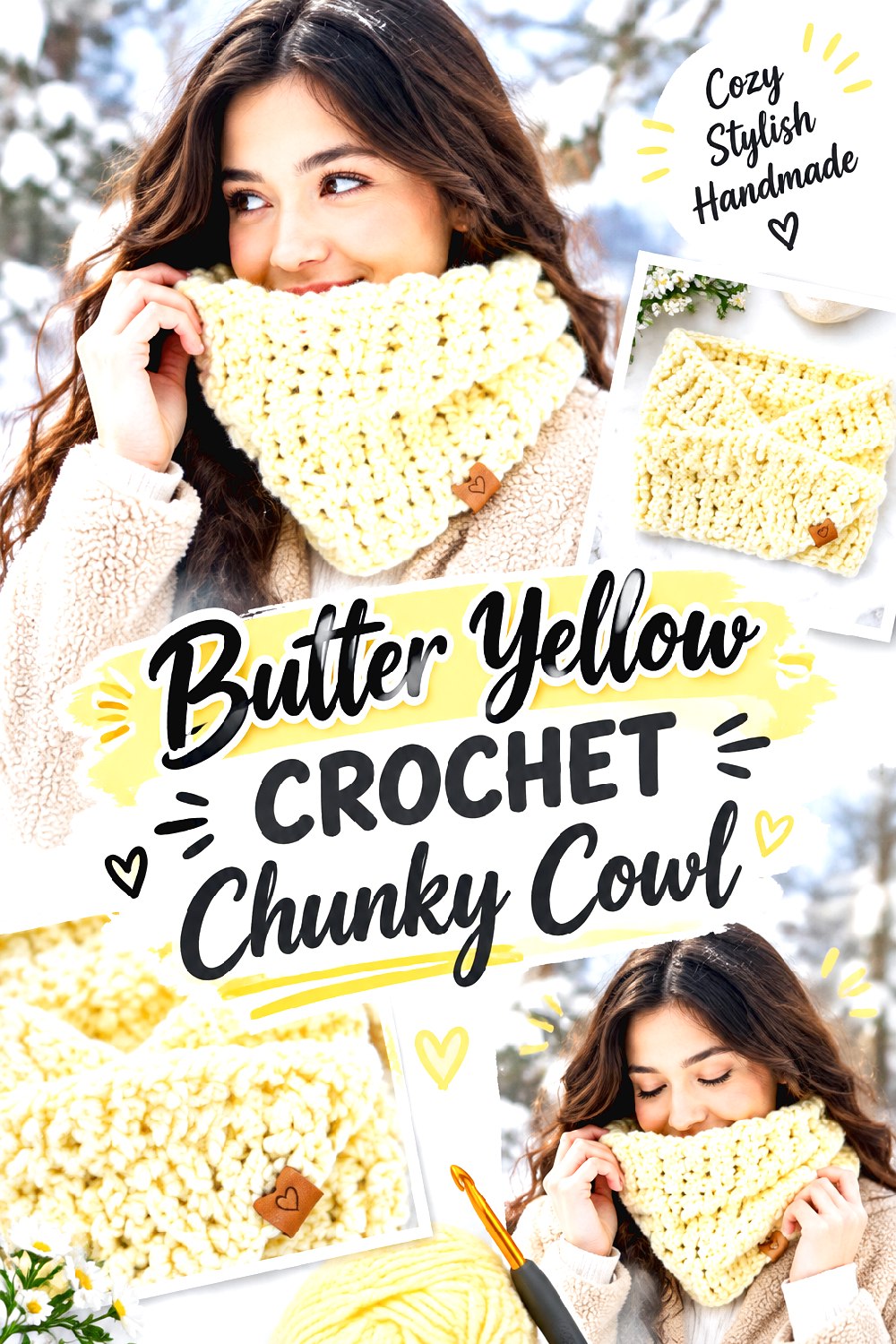
A chunky cowl concentrates color and texture around the neckline without long scarf ends. All About Ami’s Summit Cowl uses a pronounced ribbed surface created through alternating stitch textures and is joined into a circular form, producing a substantial neck accessory that can also be pulled higher for added coverage.
Butter yellow softens the visual weight of a chunky cowl, which can be useful if dark winter accessories feel too heavy next to your face. The ridges also cast enough shadow to keep the pale color dimensional. Pair it with camel, espresso brown, charcoal, or a dark denim jacket. Before changing yarn, pay attention to thickness and circumference because both influence whether the cowl sits neatly or feels bulky under outerwear.
Decide How Close You Want the Neck Fit
A cowl can function as a loose decorative loop or sit much closer for coverage. Those two uses require different comfort expectations. Compare the tutorial dimensions with a neck accessory you already enjoy wearing rather than choosing solely from the styled photos.
If you use thicker yarn, the interior space can feel smaller even when the outer circumference looks generous. Check the fabric around the neck before final joining whenever the construction allows, and follow the source dimensions for the intended shape.
Use Ribbing to Deepen a Pale Color
Butter yellow can appear almost flat in smooth fabric, but pronounced ribbing adds natural tonal variation. The raised sections catch direct light while the recesses appear warmer and darker, giving one yarn more range.
This effect is useful if you want a monochrome cowl but still want visible surface detail. Avoid choosing an extremely fuzzy yarn solely for softness if preserving the ribbed appearance is important; a halo can blur the edges between textured sections.
Original Tutorial and Creator Credit
Creator/Site: All About Ami
12. Butter Yellow Crochet Triangle Shawl
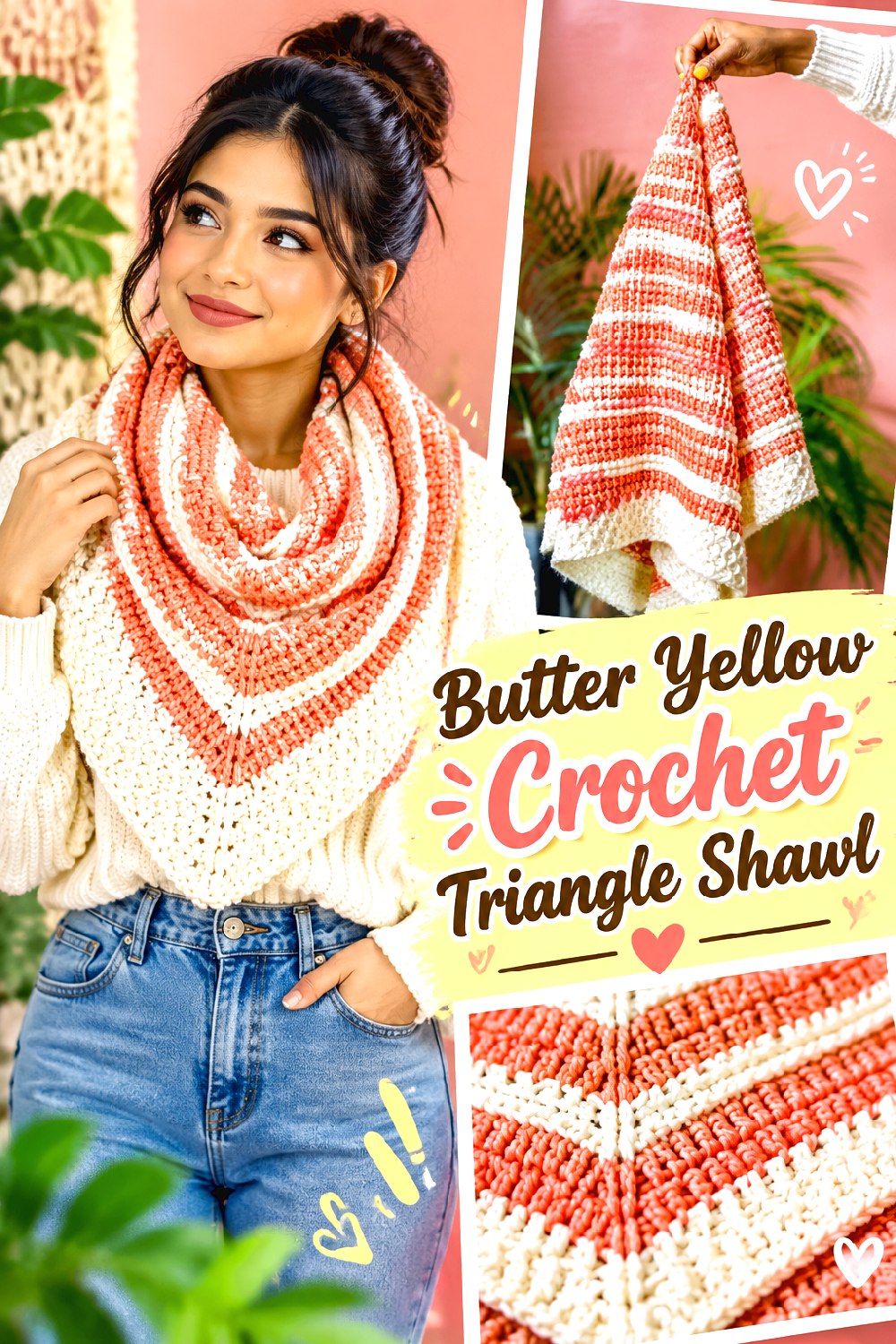
A triangle shawl gives butter yellow room to move rather than holding it in a fitted silhouette. TL Yarn Crafts’ Kiki Shawl is a top-down Tunisian crochet triangle that combines several textured stitch sections, creating enough surface variation for either a solid or multicolor interpretation.
For fall, a full butter-yellow version could work as a bright layer over a brown or navy coat, while a tonal arrangement of butter, cream, honey, and tan would emphasize the changes in texture. The triangular shape also makes styling flexible: spread it across the shoulders, let it hang as a wrap, or arrange it more narrowly near the neck. If you have not worked Tunisian crochet before, use the creator’s tutorial rather than assuming the technique behaves exactly like standard crochet.
Choose Between Tonal and Solid Color
Multiple stitch textures mean the shawl does not need multiple colors to create visual variety. A single butter yellow lets the eye notice those structural changes, while tonal yellow and neutral sections can make each texture more distinct.
If you plan a custom palette, arrange the skeins in sequence before starting. Consider which shade you want closest to the face and which will appear around the widest lower portion. That planning is easier before the shawl grows than after several color blocks are already established.
Check Drape Before Making It Larger
Triangle shawls gain substantial fabric as both width and depth increase. Extending the project therefore affects more than just one edge. A heavier yarn or denser tension can make an enlarged shawl considerably weightier and less fluid than the designer’s sample.
Swatch the intended substitution and hold it over your shoulder to judge movement. If the source includes guidance for dimensions or repeats, use that information rather than assuming unlimited enlargement will preserve the same drape.
Let Finishing Reveal the Texture
Textured shawls often look different once the fabric has been allowed to settle and, when appropriate for the yarn, finished according to the designer’s or fiber manufacturer’s guidance. Do not invent a blocking method or temperature.
Instead, check the yarn label and source recommendations. The goal is to encourage the edges and stitch patterns to present cleanly without applying a treatment that is unsuitable for the fiber you chose.
Original Tutorial and Creator Credit
Creator/Site: TL Yarn Crafts
13. Butter Yellow Crochet Shell Stitch Poncho
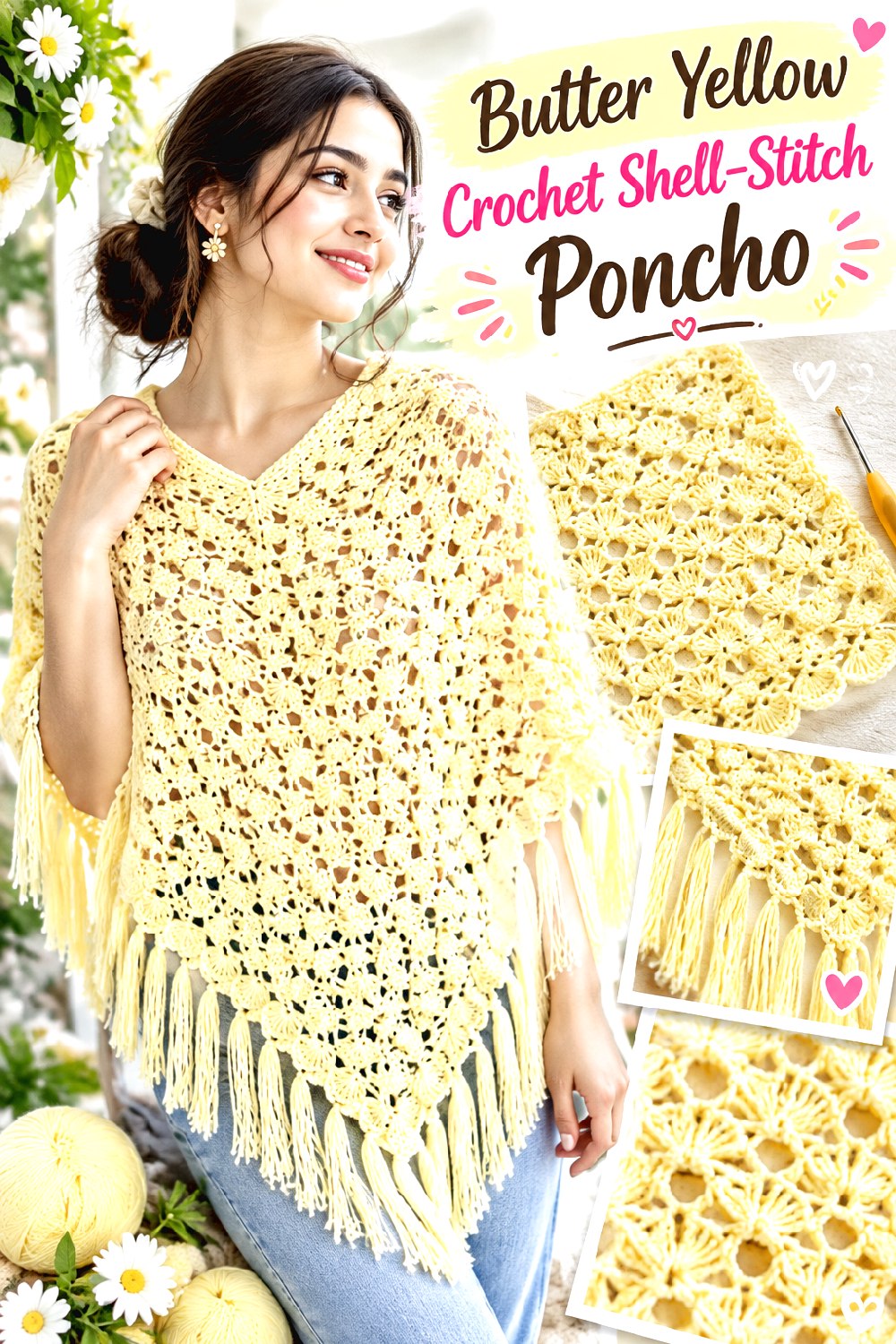
A poncho creates a broad sweep of butter yellow while remaining easier to layer than a fitted pullover. MJ’s Off The Hook Designs’ Sienna poncho uses a relaxed, seamless top-down construction with open shell and V-stitch texture, and the design includes an optional fringe treatment. The source uses a lightweight yarn, positioning the piece well for transitional layering rather than only deep-winter wear.
That open texture is an interesting counterpoint to the creamy shade because the clothing underneath becomes part of the color composition. Wear it over chocolate brown for high contrast or over ivory for a softer tonal look. Since a poncho’s comfort depends on how it falls around the shoulders and arms, evaluate both finished dimensions and fabric weight before substituting yarn.
Layering Room Is the Main Fit Decision
A poncho may appear forgiving because it is not shaped closely around the torso, but shoulder placement, neckline size, and overall length still affect comfort. Think about what you will wear underneath it. A lightweight shirt and a thick sweater create very different layering requirements.
Use the tutorial’s measurements and sizing guidance rather than increasing dimensions automatically. More width or length also means more fabric weight, which can change how the neckline and upper portion hang.
Fringe Changes the Visual Weight
Fringe can extend the silhouette and add movement, while leaving it off produces a cleaner lower edge. In butter yellow, fringe can also make the color feel more bohemian and textural rather than minimal.
If you add it, consider how the extra yarn affects maintenance and whether it will catch on bags, furniture, or outerwear. Because fringe is optional in the source, you can make that decision according to your wardrobe rather than treating it as essential to the poncho’s identity.
Watch the Weight of a Yarn Substitution
Open shell fabric can look airy in one material and considerably heavier in another. Replacing a lightweight yarn with something much thicker can alter drape, stitch scale, neckline behavior, and the overall amount of fabric hanging from the shoulders.
Compare the source yarn specifications and gauge with your proposed substitute. If you want a warmer result, do not assume going substantially heavier is the only route; preserving the intended construction may produce a more wearable layer.
Original Tutorial and Creator Credit
Creator/Site: MJ’s Off The Hook Designs
14. Butter Yellow Crochet Fitted Skirt
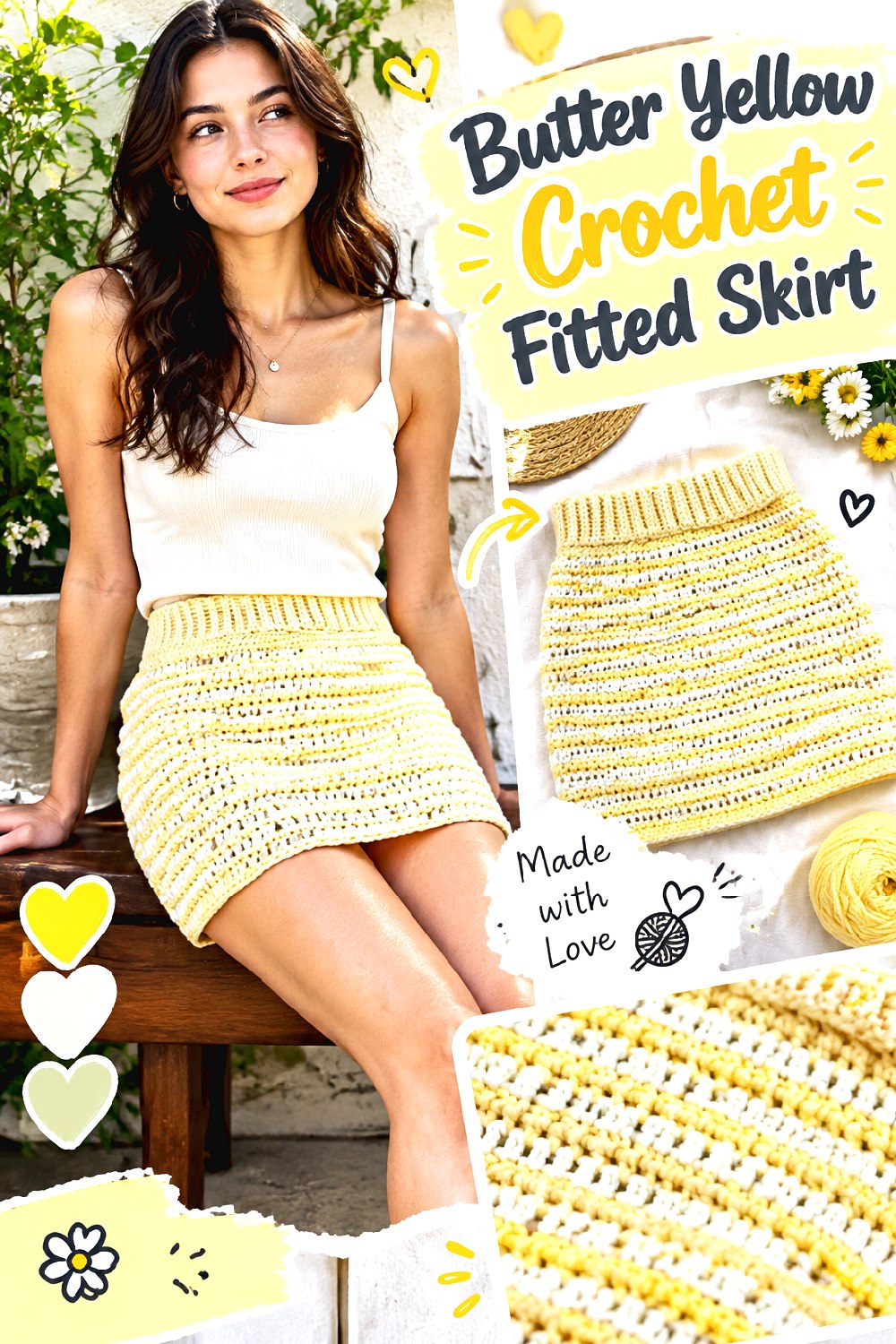
A fitted skirt takes butter yellow away from soft accessories and turns it into a more deliberate fashion statement. Kiks + Jack Crochet’s striped fitted skirt is designed around made-to-measure construction and customizable length, with a close silhouette that makes body measurements central to the project.
For a Fall 2026 interpretation, butter yellow could dominate the stripe sequence or alternate with deep brown, cream, charcoal, or muted olive. The combination of a pale color and fitted crochet fabric also makes coverage, stretch, and styling important considerations. This is the kind of project where swatching is not simply about stitch appearance; it helps you judge whether the fabric has the opacity, recovery, and drape you want for a skirt.
Fit From Waist Through Hip
A skirt must work across several measurements, not just the waist. Follow the designer’s made-to-measure guidance and pay attention to how the fabric stretches over the fullest part of the hip while still recovering around narrower areas.
Do not assume that adding extra width is always the safest approach. Too much ease can cause a fitted skirt to sag or lose its intended line. Conversely, fabric that must stretch excessively may become more open than expected.
Plan Coverage Before the Final Styling
Crochet fabric can become more transparent when stretched, particularly with open stitches or pale colors. Hold your swatch against a contrasting background and gently stretch it to approximate wear. That reveals more than viewing it flat on a table.
Depending on your fabric and intended use, you may prefer a slip or lining. If you add a permanent lining that is not part of the tutorial, make sure it allows comparable movement and does not fight the stretch of the crocheted outer layer.
Choose Stretch With Intention
A yarn that produces attractive stretch is useful only if it also has enough recovery for the garment to hold its shape. Make and measure a meaningful swatch, then manipulate it rather than measuring it once and putting it aside.
If the skirt length or circumference changes significantly after the fabric relaxes, revisit the source instructions before continuing. Fiber, tension, garment weight, and wear can all affect behavior, so avoid assuming two yarns in the same broad weight category are interchangeable.
Original Tutorial and Creator Credit
Creator/Site: Kiks + Jack Crochet
15. Butter Yellow Crochet House Slippers
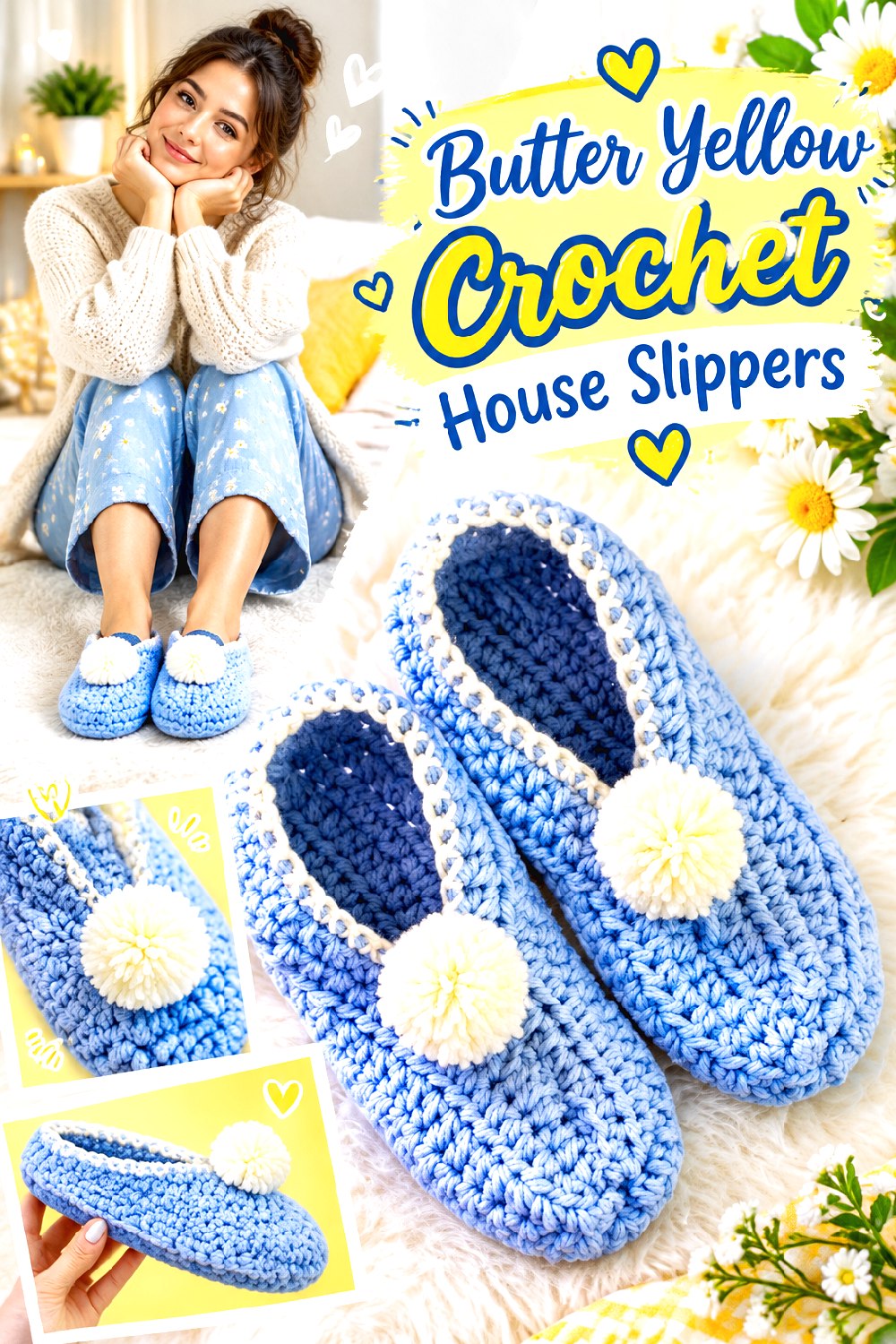
Butter yellow slippers bring the color trend indoors in a way that feels seasonal without becoming decorative clutter. TREASURIE’s slipper tutorial builds the footwear from flat crocheted pieces and uses the maker’s foot measurements as an important part of sizing.
The soft yellow shade works especially well with oatmeal pajamas, a brown robe, or other warm neutrals. Because slippers experience movement, friction, and direct contact with flooring, this project deserves more practical scrutiny than a decorative sock-shaped item. Pay attention to fit, yarn behavior, and the intended walking surface. The tutorial should remain your construction guide; any sole reinforcement or traction treatment is a separate adaptation that needs to suit the materials and household environment.
Fit the Foot Rather Than Guessing a Size
Foot length is only one consideration. Width, instep volume, yarn stretch, and the way the fabric is joined can influence whether a slipper stays on comfortably. Follow the source measurement method instead of assuming your usual shoe size translates directly to crochet.
Try the first completed or partially assembled slipper as soon as the construction permits. It is easier to discover a proportion problem before making a second identical piece than after the pair is fully finished.
Consider the Walking Surface
Crochet soles can be slippery on some smooth flooring, and yarn alone should not be assumed to provide dependable traction. Think about where the slippers will actually be worn.
If you decide to add an anti-slip treatment or separate sole, use a material intended for that purpose and make sure the attachment is secure and compatible with laundering. This is an adaptation rather than a guarantee of safety, so continue to use ordinary caution on slick surfaces and stairs.
Original Tutorial and Creator Credit
Creator/Site: TREASURIE
16. Butter Yellow Crochet Market Tote
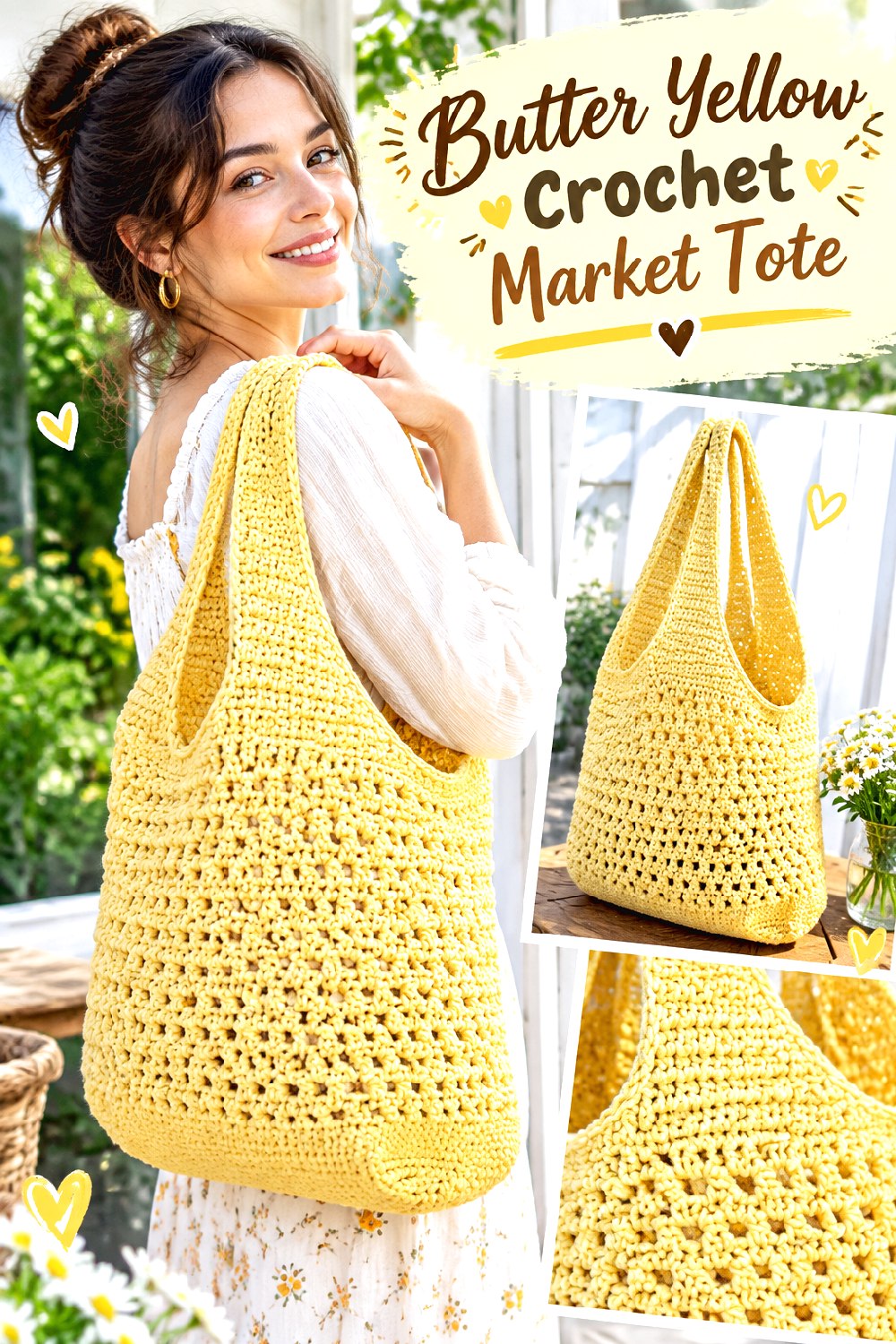
A market tote lets butter yellow travel through everyday errands rather than staying in the wardrobe. Hooked on Homemade Happiness’ Farmer’s Market Bag uses a textured body and cotton yarn in the original project, producing a reusable open-top tote with handles integrated into the practical design.
The pale yellow makes the bag feel fresh against a brown jacket or denim while its utilitarian shape keeps the color from reading too precious. Before changing the dimensions or loading it heavily, remember that crochet bags respond to weight by stretching according to yarn, stitch structure, and handle construction. Decide whether this will be a lightweight produce bag, an everyday carryall, or mostly a seasonal accessory, then make adaptations around that use.
Treat Handle Stretch as a Structural Issue
Handles experience repeated tension, so a yarn that feels fine in the bag body may behave differently under concentrated load. Follow the source construction first and observe how the handles respond with a modest test load before depending on the bag for heavier contents.
If you add reinforcement, distribute it smoothly rather than creating a stiff section that pulls against softer crochet. Any substantial modification should preserve the attachment area instead of shifting all stress to a few stitches.
Decide Whether an Open Top Suits You
An open market bag is convenient for produce or larger items because contents are easy to reach. It offers less containment for small personal belongings. Decide whether that matches the way you intend to use this project.
A lining, inner pocket, or closure can change the bag’s function, but those additions also change construction and care. Treat them as optional customizations rather than details implied by the source if the tutorial does not include them.
Match the Bag Size to the Expected Load
It is tempting to make a useful tote larger, but greater capacity can encourage carrying more weight than the original proportions were designed around. Increasing width and height also affects handle leverage and the way the base stretches.
Before resizing, test the original fabric and review the designer’s measurements. If the intended contents are unusually heavy, a different bag construction may be a better choice than simply enlarging a flexible crochet market tote.
Original Tutorial and Creator Credit
Creator/Site: Hooked on Homemade Happiness
17. Butter Yellow Crochet Woven Tassel Pillow
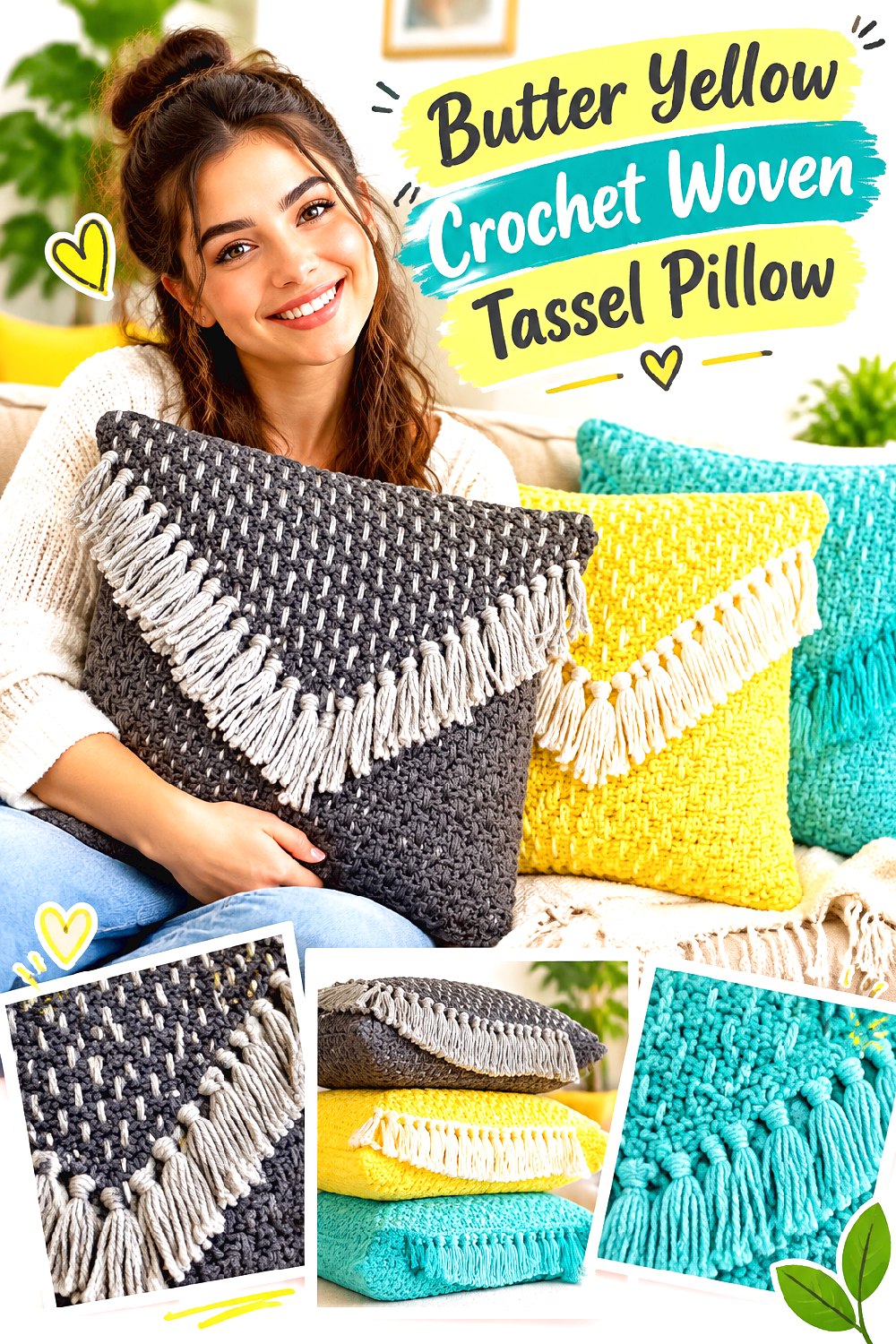
Persia Lou’s woven tassel pillow gives butter yellow a home-decor treatment that relies on layered texture rather than a standard solid crochet square. The project combines a crocheted mesh-like foundation with yarn woven through the surface and finishes the pillow with tassel details; the original tutorial also incorporates a backing and pillow form.
In butter yellow, the woven areas can create subtle shifts in depth even when you stay within a narrow tonal palette. For more contrast, weave cream, ochre, camel, or brown through a yellow base. This is a useful choice if you want a fall accent that does not rely on leaf or pumpkin motifs and can remain on display after the season changes.
Size the Cover for the Actual Insert
A pillow cover needs to relate closely to the insert dimensions if you want a filled, structured appearance. Changing yarn or tension can shift the size of the crocheted panel, while adding woven strands may also affect the way the surface settles.
Use the source dimensions and construction as your guide, and check the panel against the actual pillow form before final assembly. A significantly oversized cover can look loose; one that is too small may stretch the texture more than intended.
Use Yellow Through Surface Depth
The woven construction gives you more than one place to introduce color. A butter yellow crochet base with slightly darker golden weaving creates tonal depth, while a cream base with yellow woven sections makes the trend color more restrained.
Tassels add another color opportunity, but they also affect care and can become uneven with heavy handling. Choose their shade and placement as part of the overall composition rather than adding every available accent at once.
Original Tutorial and Creator Credit
Creator/Site: Persia Lou
18. Butter Yellow Crochet Ribbed Pumpkin
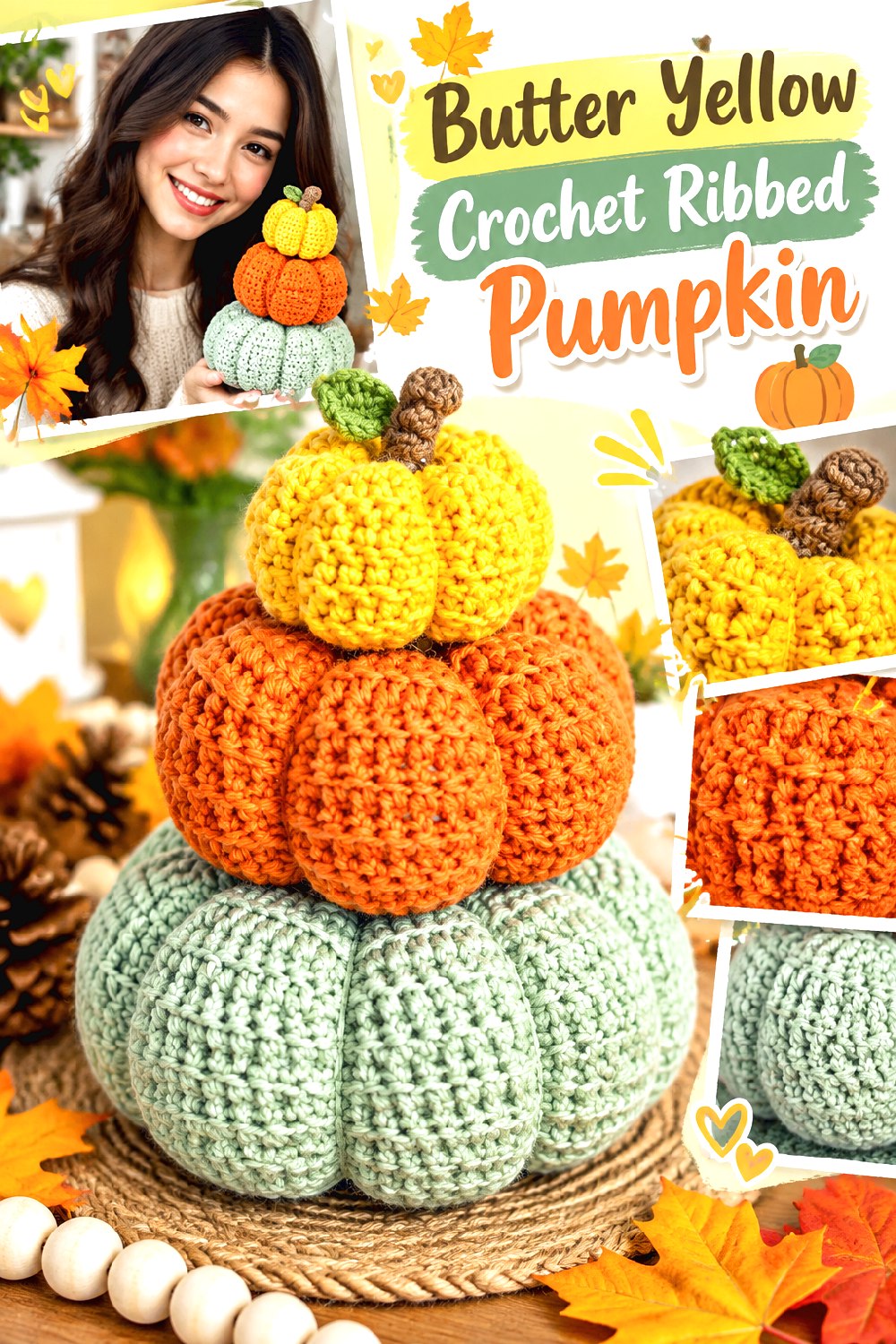
A butter yellow pumpkin is an easy way to translate a fashion color into recognizable fall decor. Winding Road Crochet’s modern pumpkin tutorial creates a ribbed form from side-to-side crochet that is shaped and stuffed into a dimensional pumpkin rather than relying on orange color alone to establish the motif.
That construction makes pale yellow particularly effective. The ribs provide the shadow and segmentation that identify the pumpkin, while a brown, taupe, cream, or muted green stem detail can push it further into an autumn palette. Try one larger statement pumpkin or group several sizes only if the tutorial provides a responsible way to adjust them. For display pieces, prioritize stable shaping and neat finishing over adding numerous detachable embellishments.
Shape Matters More Than Traditional Orange
A nontraditional pumpkin color works when the silhouette remains unmistakable. As you shape and stuff the piece, check the profile from several angles rather than only from the front. Uneven filling can make one side bulge or flatten.
The ribbed texture also benefits from consistent tension. If one section is significantly looser, the final shaping may emphasize the difference. Take time with finishing because the form, not the yellow yarn alone, is what communicates “pumpkin.”
Display It With Basic Household Safety in Mind
Crochet pumpkins are decorative textile objects, so keep them away from candles, fireplaces, hot surfaces, and other ignition or heat sources. If you add small detachable stems, beads, buttons, or other embellishments, consider whether young children or pets can reach them.
Care also depends on yarn, stuffing, and any mixed materials. Follow the relevant labels and the creator’s guidance instead of assuming the completed decoration can be washed like an ordinary swatch.
Original Tutorial and Creator Credit
Creator/Site: Winding Road Crochet
19. Butter Yellow Crochet Ripple Throw Blanket
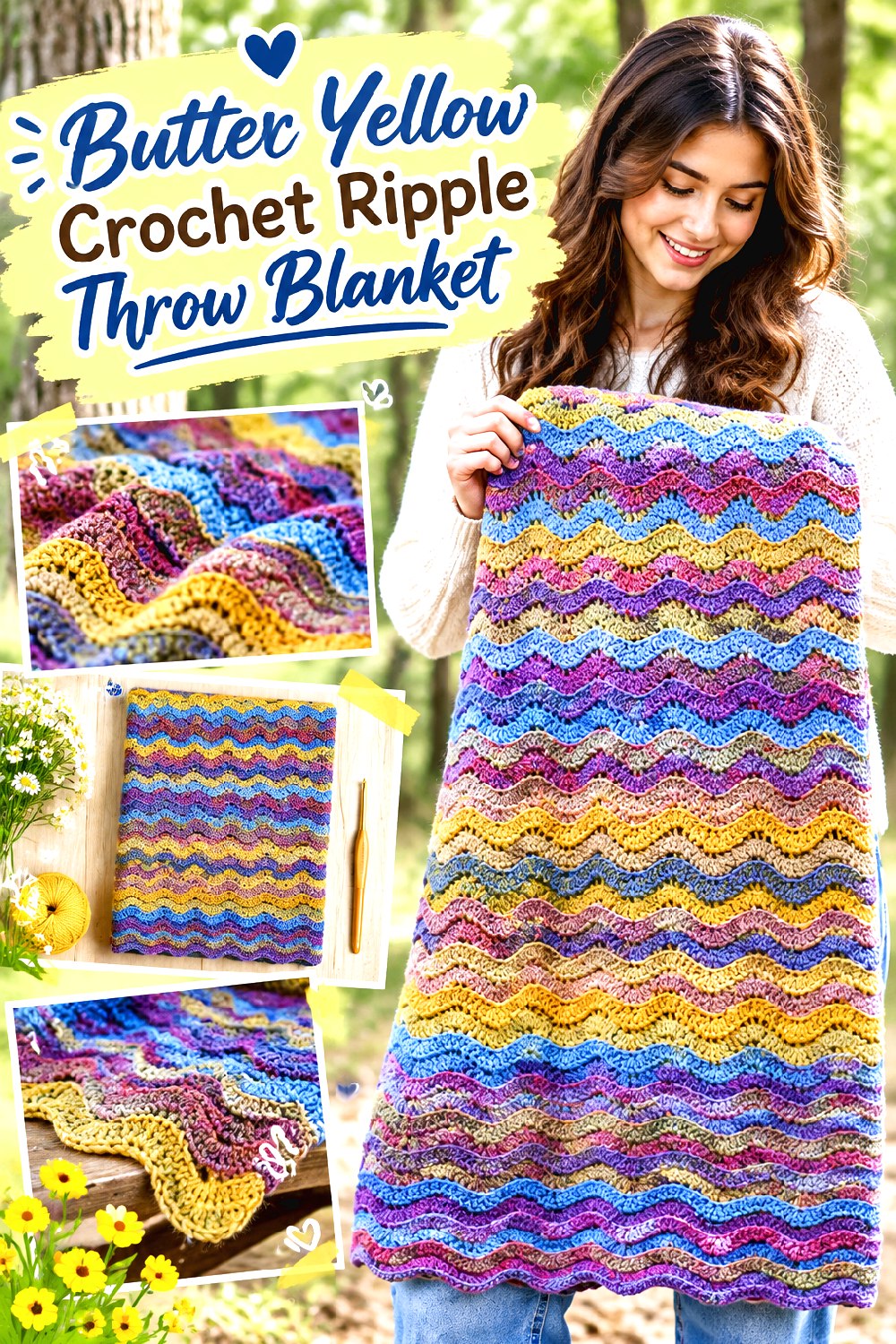
A throw blanket gives butter yellow enough surface area to influence an entire room. Mama In A Stitch’s Rolling Hills Ripple Throw uses a repeating wave texture with pronounced ridges, and the original project works with self-striping yarn to let color move across the ripple pattern.
For a Fall 2026 version, you could keep the blanket mostly butter yellow for a sculptural monochrome effect or build a restrained palette around it with cream, tan, caramel, or brown. The ripple itself provides movement, so multiple colors are optional rather than necessary. Because blankets amplify every yarn substitution in both size and weight, make a generous swatch and decide on your palette before buying the full quantity.
Choose Solid Yellow or Let the Ripple Carry Stripes
A solid butter yellow puts the focus on the wave structure. Self-striping or intentionally changed colors create stronger horizontal movement and can break up a large pale surface. Neither approach is inherently better; it depends on whether you want texture or color to dominate.
If you substitute a self-striping yarn, remember that stripe lengths depend partly on the yarn’s color sequence and the width of each row. Your finished transitions may not resemble another sample even when the crochet construction is the same.
Swatch the Wave Before Scaling Up
Ripple patterns depend on consistent shaping across the row. A mistake that seems small in a swatch can become more obvious across blanket width. Work enough of the repeat to see whether the peaks and valleys settle evenly before committing to the full project.
Gauge also affects total dimensions and yarn use. If you want a different blanket size, use the tutorial’s repeat and sizing logic rather than adding an arbitrary number of stitches that could interrupt the established wave structure.
Plan Care Before Making a Large Textile
Blankets are large enough that laundering method matters practically. Check the yarn label before purchasing the full amount, especially if the throw will be used frequently in a household with children or pets.
Do not assume a fiber can tolerate a particular wash temperature, dryer setting, or blocking method. If you combine several yarns, the safest care approach needs to be compatible with all of them as well as any fringe or other finishing you add.
Original Tutorial and Creator Credit
Creator/Site: Mama In A Stitch
20. Butter Yellow Crochet Velvet Scrunchie
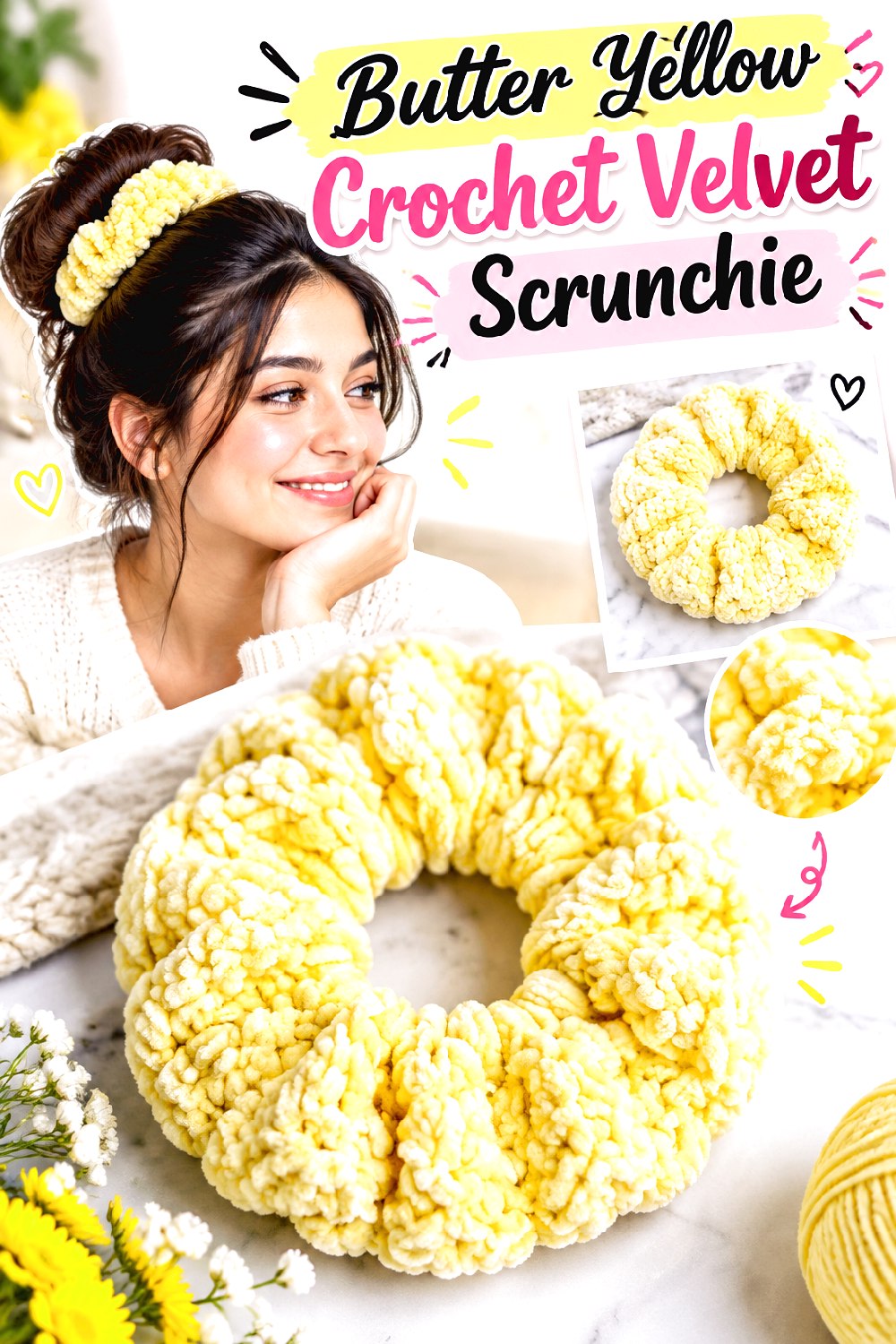
A velvet scrunchie may be the smallest project in the list, but it changes the character of butter yellow more than you might expect. Sarah Maker’s tutorial builds crochet around a hair elastic using velvet yarn, producing a plush accessory whose soft surface catches light differently from ordinary smooth yarn.
That makes the shade look richer and less pastel, which suits fall particularly well. Wear it as a subtle color repeat with a yellow scarf or cardigan, or let it be the only bright note in an otherwise brown or charcoal outfit. The project depends on both yarn and elastic, so durability and care are controlled by more than the crochet stitches alone.
Let the Fiber Change the Mood
Velvet can deepen a pale color because the pile creates areas of highlight and shadow. If your butter yellow yarn appears almost cream in a smooth skein, the finished plush surface may still have substantial depth.
The trade-off is visibility while crocheting. Plush yarn can make individual stitches harder to see, so rely on careful counting and the tutorial rather than repeatedly pulling the work apart. Aggressive frogging may also be less pleasant with some textured yarns.
Protect the Elastic’s Stretch
The crochet covering should allow the underlying elastic to continue doing its job. Avoid stretching the band to its maximum unnecessarily while working, and make sure the finished fabric is distributed in the manner shown by the tutorial.
If the elastic or velvet has specific care limitations, those become the care limitations of the whole scrunchie. Follow both material labels rather than assuming a small accessory can automatically go through the same laundry routine as other crochet pieces.
Original Tutorial and Creator Credit
Creator/Site: Sarah Maker
21. Butter Yellow Crochet Boot Cuffs
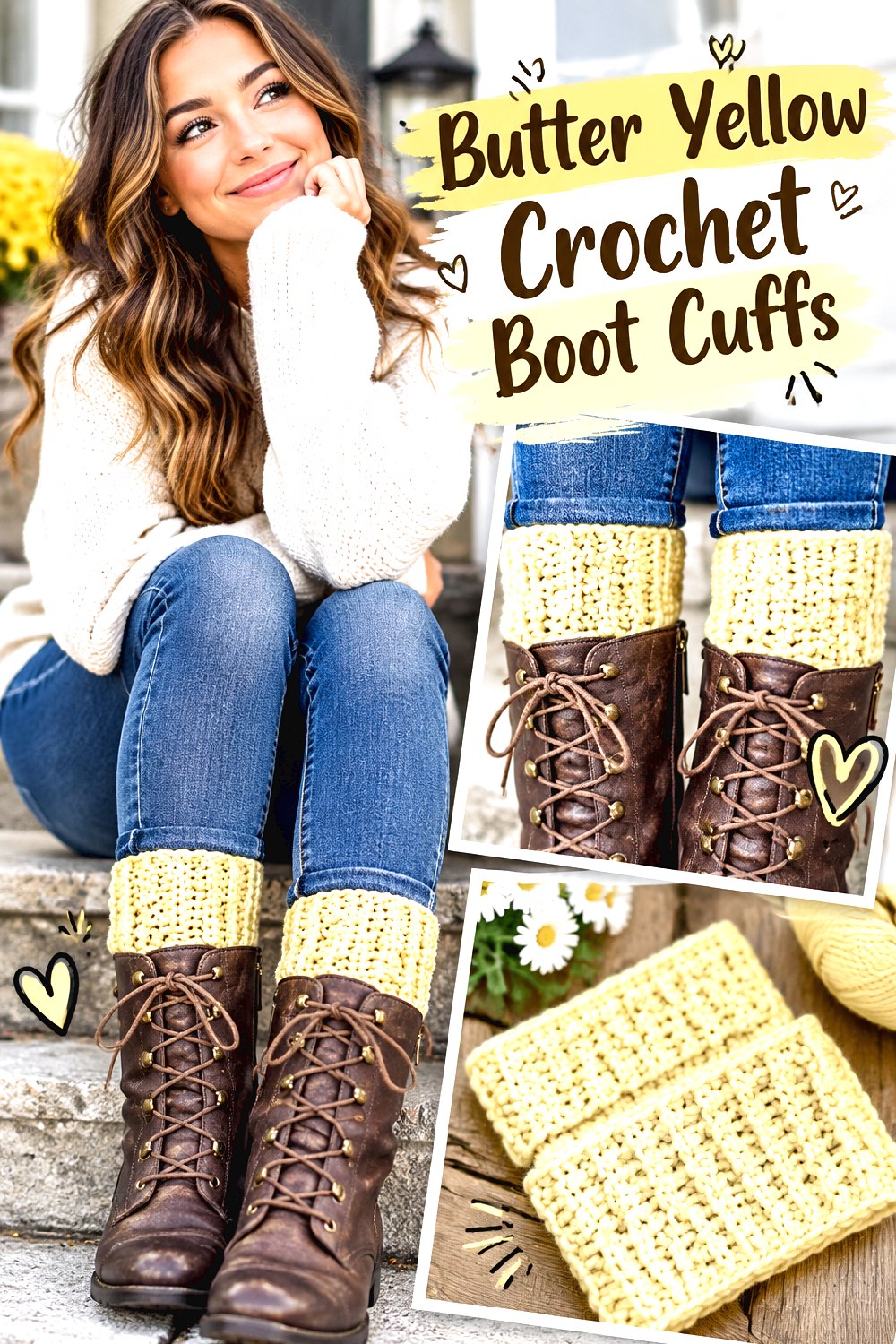
Boot cuffs place just a narrow band of butter yellow between footwear and the rest of an outfit, making them a useful option if you prefer trend color in small doses. Skip To My Lou’s crocheted boot cuffs use back-loop half-double crochet to produce a visible ribbed effect designed to sit around the top of a boot.
In pale yellow, the ribbing creates enough shadow to stand apart from cream socks or light-colored tights. Try them with brown leather, suede-like textures, or dark boots for stronger contrast. Because the cuffs occupy the same limited space as the boot opening and your clothing layers, their circumference and thickness matter just as much as their appearance.
Measure for the Boot as Well as the Calf
A cuff that fits comfortably around your leg may still be too bulky for a close boot shaft. Decide whether the crochet will sit mainly above the boot, partly inside it, or around another layer before choosing the final fit.
Measure at the actual wearing position rather than using the widest calf measurement by default. Follow the source construction, and check the first cuff with the intended boots before making its partner.
Let Ribbing Keep the Pale Shade Visible
A narrow accessory could disappear visually if both yarn and surrounding clothing are light. Ribbing helps by creating repeated shadows that define the cuff even in a soft butter yellow.
For a stronger Fall 2026 look, place it next to darker footwear or denim. If your yarn is extremely fuzzy, the ribbed ridges may appear less crisp, so decide whether softness or stitch definition matters more before you make the pair.
Original Tutorial and Creator Credit
Creator/Site: Skip To My Lou
Which Butter Yellow Crochet Project Should You Make First?
The best choice depends less on the color trend than on where you want that color to live. A cardigan, pullover, poncho, or skirt makes butter yellow a major wardrobe statement. The vest, shawl, scarf, cowl, and leg warmers add visible layers without committing the entire outfit to one shade. The crossbody and market tote move the color into everyday accessories, while the pillow, pumpkin, and blanket bring it into the home.
| If you want… | Strong options to compare | Main checkpoint |
|---|---|---|
| A large fashion statement | Pocket cardigan, striped pullover, poncho | Drape, finished measurements, layering |
| A fitted fashion piece | Skirt, beanie, balaclava | Gauge and body-specific fit |
| A small color accent | Gloves, scrunchie, boot cuffs | Comfort and proportion |
| A transitional layer | Vest, bucket hat, shawl | Fabric weight and styling |
| An everyday bag | Crossbody, market tote | Strap or handle stretch |
| A home accent | Pillow, pumpkin, blanket | Structure, scale, and care |
| Strong texture in one shade | Scarf, cowl, leg warmers | Stitch definition and yarn surface |
Conclusion
Butter yellow can work across much more than lightweight summer crochet. For Fall 2026, its strength lies in contrast: pale color against deep ribbing, soft yellow beside brown outerwear, a bright bag against denim, or an unconventional yellow pumpkin among traditional autumn neutrals. Current fashion coverage supports the shade’s continued seasonal relevance, even as vanilla and richer mustard yellows broaden the palette.
Start with the scale that suits your wardrobe or home. A scrunchie, scarf, or boot cuff tests the color quietly; a cardigan, skirt, blanket, or poncho commits to it fully. Once you choose a project, use the original tutorials linked above for exact construction, sizing, materials, and creator-specific instructions rather than treating color adaptation as a substitute for the pattern.
Frequently Asked Questions
Can I use butter yellow yarn even if the original tutorial uses another color?
Yes, as long as the replacement yarn also suits the construction requirements of the project. Color is generally the easiest element to change, but do not choose a substitute based on shade alone. Compare the yarn category, gauge, fiber behavior, and any specifications supplied by the creator. A butter yellow yarn that is substantially heavier, stiffer, stretchier, or more delicate than the original can change fit, drape, structure, and care even when the color is ideal.
What colors make butter yellow feel more appropriate for fall?
Chocolate and espresso brown are particularly effective because they give pale yellow strong seasonal contrast. Camel, oatmeal, denim blue, olive, charcoal, burgundy, and muted rust can also move the shade away from a spring or summer palette. Current Fall 2026 styling coverage has likewise shown soft yellow working alongside autumnal neutrals and deeper colors.
You do not need many colors at once. Often one dark neutral plus butter yellow is enough to establish the seasonal direction.
Which project is easiest to use if I am unsure about wearing butter yellow?
Rather than choosing based on an unsupported difficulty label, start with scale. A scrunchie, pair of boot cuffs, fingerless gloves, beanie, or scarf introduces less yellow into an outfit than a full cardigan or skirt. That lets you judge how the shade works with your complexion, coat, denim, and existing accessories.
Project complexity is a separate question. Check the linked creator’s tutorial for the required techniques and construction before deciding whether a particular small project matches your crochet experience.
Does butter yellow hide crochet texture?
It can soften low-contrast stitch detail, especially in flat fabric or fuzzy yarn, but pronounced texture can actually look excellent in a pale shade. Ribbing, ripples, woven surfaces, shell stitches, and dimensional granny-square joins create highlights and shadows that make one color appear more varied.
Make a swatch and view it in both daylight and indoor lighting. If the texture disappears more than you want, changing the yarn surface or choosing a more dimensional stitch-based project may be more effective than simply selecting a darker yellow.
Should a butter yellow crochet bag be lined?
Not automatically. Lining is more relevant when the fabric is open enough for small objects to catch, when you want additional containment, or when your intended contents make an interior layer useful. A lining does not eliminate every structural issue, and it introduces additional materials, finishing, and care considerations.
First follow the original bag tutorial and assess the finished fabric. If you decide to add a lining that the source does not include, treat it as a separate customization and make sure it does not distort the crocheted body.
How do I keep a butter yellow wearable from looking too summery?
Use the surrounding outfit to change the context rather than forcing the crochet construction to become heavier. Butter yellow beside brown boots, dark denim, camel outerwear, charcoal trousers, olive layers, or burgundy accessories reads much more autumnal than the same shade paired only with bright summer colors. Fall 2026 coverage is already positioning creamy yellows within deeper seasonal palettes.
Texture helps too. Ribbing, chunky surfaces, layered silhouettes, and substantial accessories can make pale yellow feel grounded without turning every project into heavy winter crochet.