A kiss lock can transform crochet from a soft pouch into an accessory with a clearly defined opening, vintage character, and surprisingly polished structure. For Fall 2026, the most useful possibilities go well beyond tiny change purses. This collection ranges from a roomy granny-trim handbag and hidden-frame raffia clutch to compact floral, embroidered, beaded, puff-textured, and graphic frame purses.
The biggest differences are not simply color. Frame shape changes how the upper edge must fit; yarn choice affects weight and rigidity; motifs and beadwork change finishing demands; and straps or lining introduce additional stress points. The 18 ideas below highlight those distinctions so you can choose a project for everyday organization, evening use, gifting, or a more substantial handmade bag while returning to each original tutorial for exact construction details.
Quick List
- Crochet Granny-Trim Kiss Lock Handbag
- Crochet Hidden-Frame Raffia Dumpling Clutch
- Crochet One-Skein Kiss Lock Handbag
- Crochet Arched Raffia Coin Purse
- Crochet Tulip Stripe Frame Purse
- Crochet Puff-Stitch Kiss Lock Pouch
- Crochet Graphic Spike-Stitch Coin Purse
- Crochet Snowflake Square Frame Purse
- Crochet Beaded Evening Coin Purse
- Crochet Linked-Double-Crochet Frame Pouch
- Crochet Tassel-Trim Clasp Purse
- Crochet Macramé-Yarn Structured Coin Purse
- Crochet African Flower Kiss Lock Pouch
- Crochet Cactus-Embroidered Coin Pouch
- Crochet Quick-Change Scrap Yarn Purse
- Crochet Lemon-Peel Vintage Coin Purse
- Crochet Zigzag Lozenge Frame Purse
- Crochet Metal-Frame Clutch Bag
Match the Crochet to the Frame Before Styling the Bag
With kiss lock projects, the hardware is part of the construction rather than an accessory added casually at the end. A rounded frame, squared frame, hidden clasp, and wide handbag frame each ask the crochet opening to behave differently. Several of the tutorials below explicitly size the crochet around a particular frame, which is why substituting hardware without checking dimensions can create gathering, gaps, twisting, or an opening that simply will not seat correctly.
Before committing to decorative details, compare the finished upper edge with the frame while it is open. For a substitute frame, consider both its width and overall shape rather than assuming two pieces of hardware with similar advertised measurements will fit identically. When a tutorial was designed around a particular frame, use the creator’s fitting guidance as the primary reference.
Choose Fall Materials for Structure, Not Color Alone
Rust, olive, espresso, cream, charcoal, muted plum, and ochre can all create an autumn palette, but fiber and construction have a much larger effect on whether a kiss lock bag succeeds. Raffia and paper-style yarn can emphasize a crisp silhouette, while cotton and dense crochet can give compact purses enough substance to hold their form. Thick macramé or T-shirt-style yarn creates a different scale again.
The trade-off is weight. A denser or thicker material may make the bag feel substantial, but it can also place more strain on a sewn frame or strap attachment. Conversely, a very soft fabric can collapse below rigid hardware. When changing the yarn suggested by a tutorial, make a small fabric sample and compare firmness, thickness, and stretch before deciding that matching gauge alone is enough.
Think About Lining, Hardware Stress, and What the Bag Will Carry
Lining is particularly useful when the crochet has visible spaces, when the project will hold jewelry or other snag-prone objects, or when you want the interior to conceal frame-attachment stitches. Some original tutorials below include lining directly, while others leave the crochet exposed.
Do not assume lining will compensate for an unstable frame fit, however. The top edge still needs to meet the hardware cleanly. For larger bags, also inspect handle or strap attachment points separately from the closure. A frame that comfortably controls a coin purse opening may be subjected to much greater leverage when a shoulder strap and heavier contents are added. Keep realistic carrying weight in mind and follow the original source whenever the designer specifies a particular attachment method.
1. Crochet Granny Trim Kiss Lock Handbag
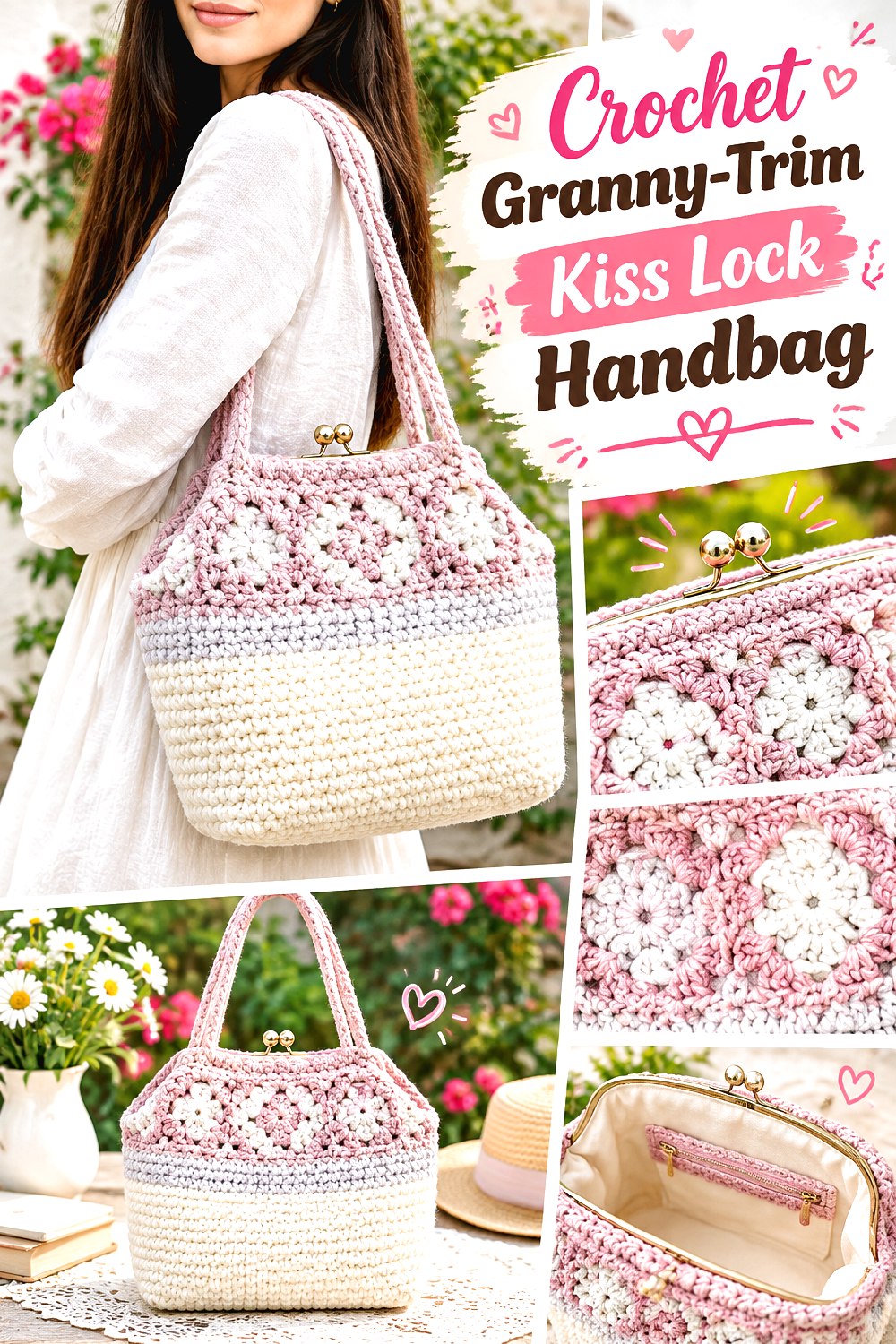
This is the option to study when a kiss lock needs to read as part of a substantial handbag rather than a tiny notions pouch. Handmade by Derya’s project uses bulky yarn, begins with a rectangular bottom, builds the body upward, and places granny-square decoration around the upper area before adding the metal frame. The tutorial also includes crochet handles, so the result has a much stronger handbag identity than the compact coin-purse designs later in the list.
For fall, the combination works particularly well when the granny section is treated as an architectural border rather than a random burst of color. A restrained three- or four-color palette can keep the motifs prominent while allowing the metal frame to remain visually important.
Let the Granny Squares Stay Architectural
Because the motifs occupy the upper portion of the bag, they influence more than decoration. Unevenly sized squares or bulky joins can alter the line immediately below the rigid frame. Check motif consistency before assembly rather than hoping the hardware will disguise small differences. If you change yarn within the granny section, compare the completed motif dimensions first; a softer or thicker substitute can change the transition from the main body to the frame.
Watch the Frame-to-Body Transition
A roomy lower body narrowing toward rigid hardware naturally creates visual and structural tension. The top should look intentionally gathered or shaped, not accidentally puckered. Before the permanent attachment, distribute the crochet evenly across both sides of the frame and inspect the bag from the front as well as the side. Correcting an uneven section is easier before every frame connection has been secured.
Plan Handles for Real Carrying
Handles turn this from a decorative clasp pouch into an object that may carry considerably more weight. That makes the upper corners and handle attachment areas worth inspecting independently. If you adapt the handle length, think about whether the bag will be handheld or carried over the arm and whether extra leverage could distort the frame area.
Original Tutorial and Creator Credit
Creator/Site: Handmade by Derya
2. Crochet Hidden Frame Raffia Dumpling Clutch
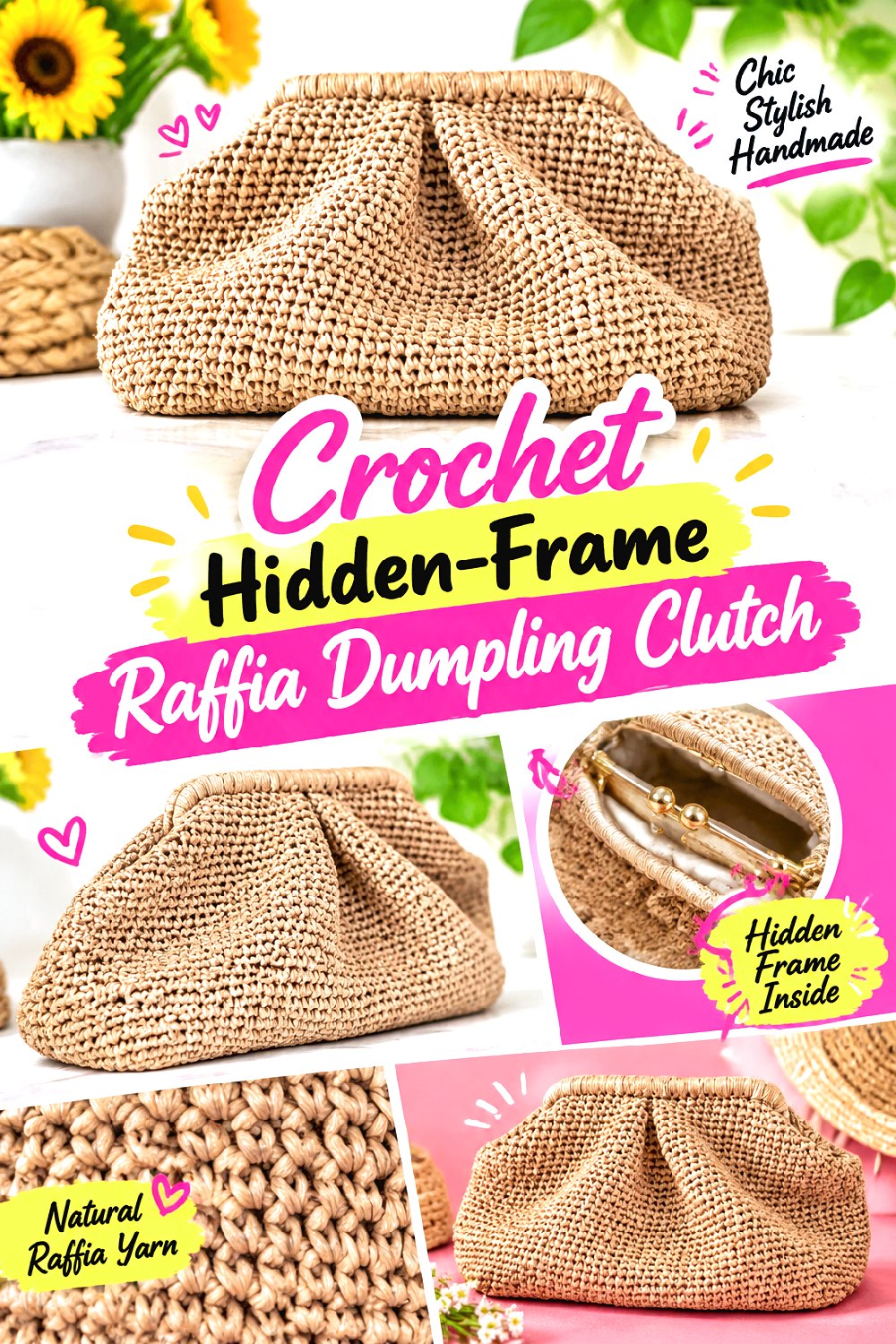
A hidden clasp produces a noticeably different effect from a decorative arched coin-purse frame. Kristina Virka’s clutch uses raffia or paper yarn around a concealed frame, creating the softly pleated, dumpling-like silhouette often associated with clasp clutches. The source also covers lining and notes that rings and a chain strap can be added if you want the clutch to function as a small carried bag.
For autumn styling, this design does not need heavy-looking yarn to feel seasonal. Warm tan, deep brown, black, burgundy, or muted olive can move a raffia-based shape away from a purely summer look while preserving the crisp quality that makes the concealed hardware effective.
Hidden Hardware Changes the Silhouette
With an exposed frame, decorative metal can distract from slight irregularities. A hidden frame places more visual emphasis on the crochet itself. Pleats, corners, and the upper edge therefore need to look deliberately balanced. Check the bag when closed as well as fully open, because the silhouette readers see most often is the one created by the clasp under tension.
Raffia Needs a Structure Check
Paper and raffia-style yarns can create excellent definition, but substitutions vary widely in stiffness. If you switch materials, compare whether the new fabric folds cleanly enough to close without becoming bulky. A yarn that is pleasant for a drapey tote may be too soft here, while an extremely rigid cord may fight the gathered clutch shape.
Decide on Lining Before Final Assembly
This source includes lining guidance, which is valuable because a hidden frame leaves less room for casual interior finishing. If you want lining, plan it while the crochet body can still be measured accurately. Added lining should support the interior without becoming so tight that it restricts the way the upper body folds beneath the clasp.
Creator/Site: Kristina Virka / StylishKnitting
3. Crochet One Skein Kiss Lock Handbag
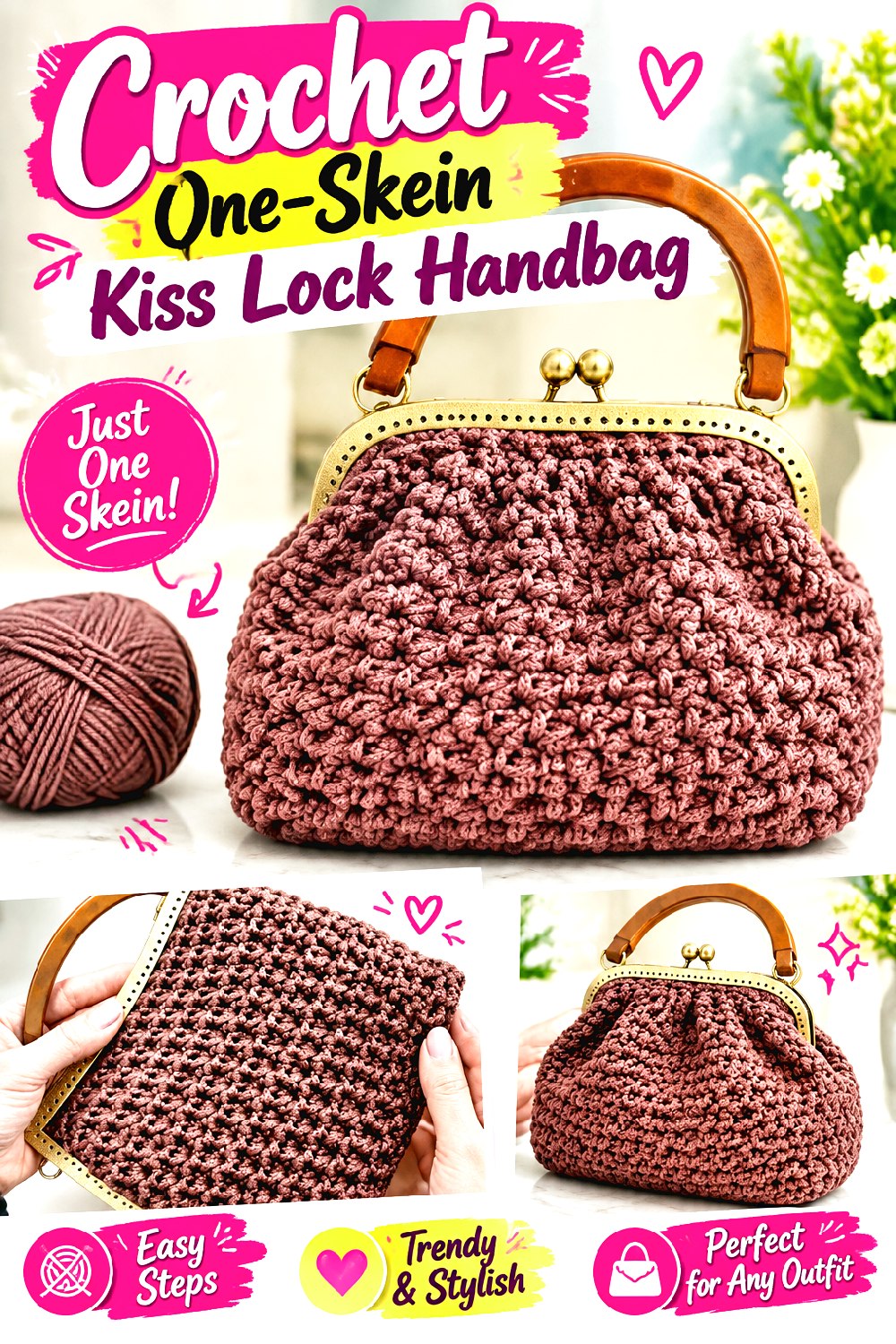
Caroline Andrea’s video moves the idea back toward a carried bag while keeping the kiss-lock closure prominent. The tutorial presents a crocheted bag made with a clasp frame and notes that the project uses less than one skein of the featured yarn. Because the finished item is presented as a bag rather than only a coin holder, it offers useful inspiration for readers who want compact proportions without dropping all the way to pocket size.
For a fall version, allow the frame and silhouette to do more of the work than elaborate embellishment. A saturated solid or quiet heathered yarn can give the metal closure enough contrast to look intentional.
Keep a Small Handbag From Feeling Flimsy
A modest yarn requirement does not automatically mean the finished fabric should be loose. Kiss lock hardware introduces a rigid top line, so the body usually looks more coherent when it has enough substance to hang beneath that frame without appearing stretched. If changing yarn, hold the sample vertically and judge how much it lengthens under its own weight.
Treat the Kiss Lock as the Focal Point
This style is a good candidate for simpler color decisions because the closure itself supplies detail. If you choose antique brass, silver, black, or another frame finish, compare it with the yarn before crocheting the full body. The relationship between metal and fiber can change the whole mood without adding appliqués or extra surface work.
Original Tutorial and Creator Credit
Creator: Caroline Andrea – Linhas e Fios
4. Crochet Arched Raffia Coin Purse
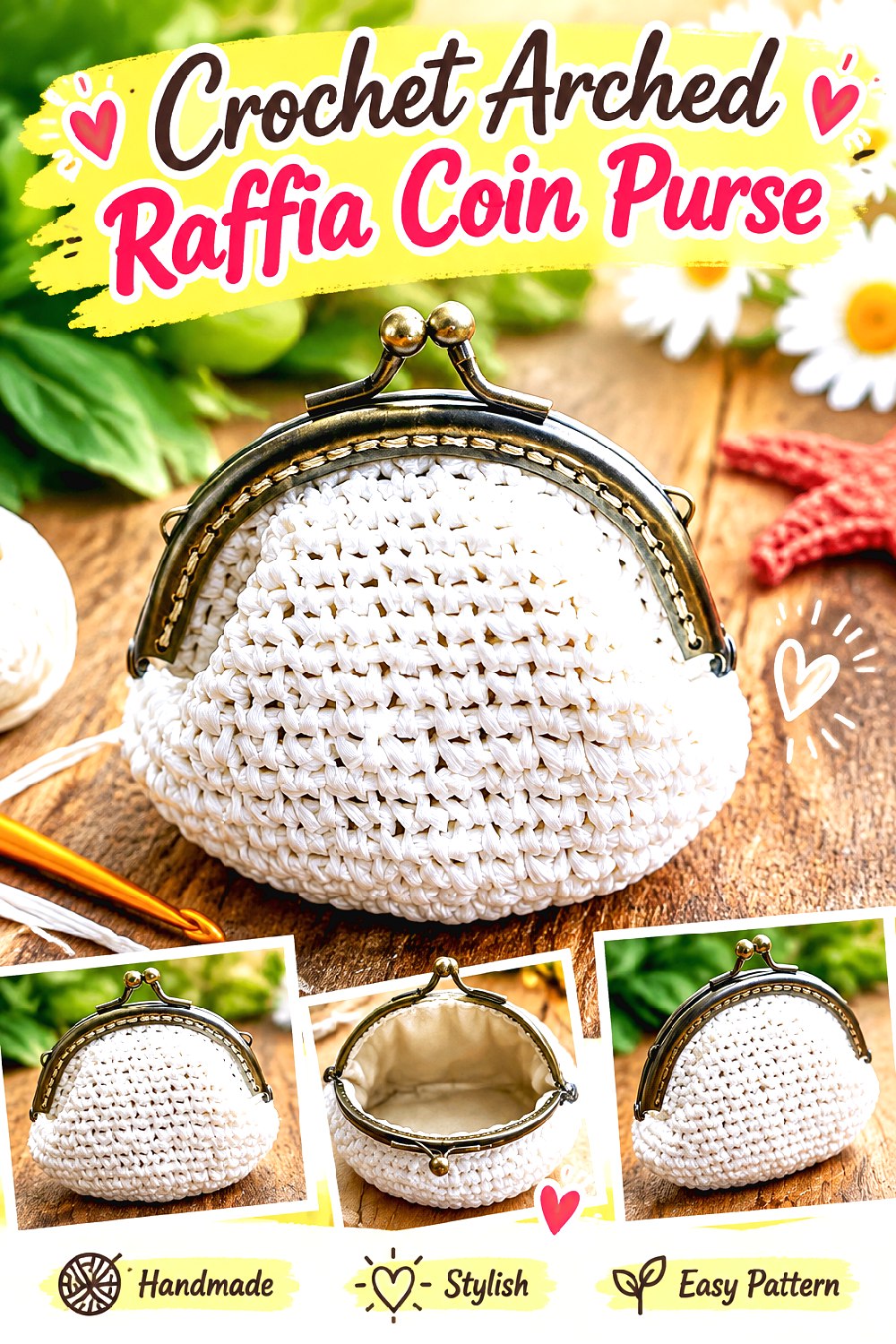
Craft Passion’s kisslock purse uses a round arched sew-in frame with a closely fitted crochet body. Joanne Loh’s tutorial works with crochet raffia and also discusses optional fabric lining, making the project a good choice for readers who like the vintage coin-purse outline but want a firmer, more modern fiber surface.
The rounded shape is especially useful in a long list like this because it demonstrates how much frame geometry matters. A purse fitted to a curved arch behaves differently near the hinges from a square or wide rectangular clutch.
Round Frames Need Round Thinking
A curved frame rewards a body that echoes its geometry. If the crochet becomes too wide or develops pronounced corners, the upper edge may need awkward gathering to enter the frame. Compare the growing base and body with the hardware periodically instead of treating the listed frame as interchangeable with every other kiss-lock style.
Use Lining to Control Small-Item Snagging
Raffia can create a crisp interior texture. For coins that is rarely a major concern, but earrings, stitch markers, or other small objects may catch more easily depending on the fabric. The tutorial treats lining as optional, so decide based on what you intend to store rather than adding it automatically.
Original Tutorial and Creator Credit
Creator/Site: Joanne Loh / Craft Passion
5. Crochet Tulip Stripe Frame Purse
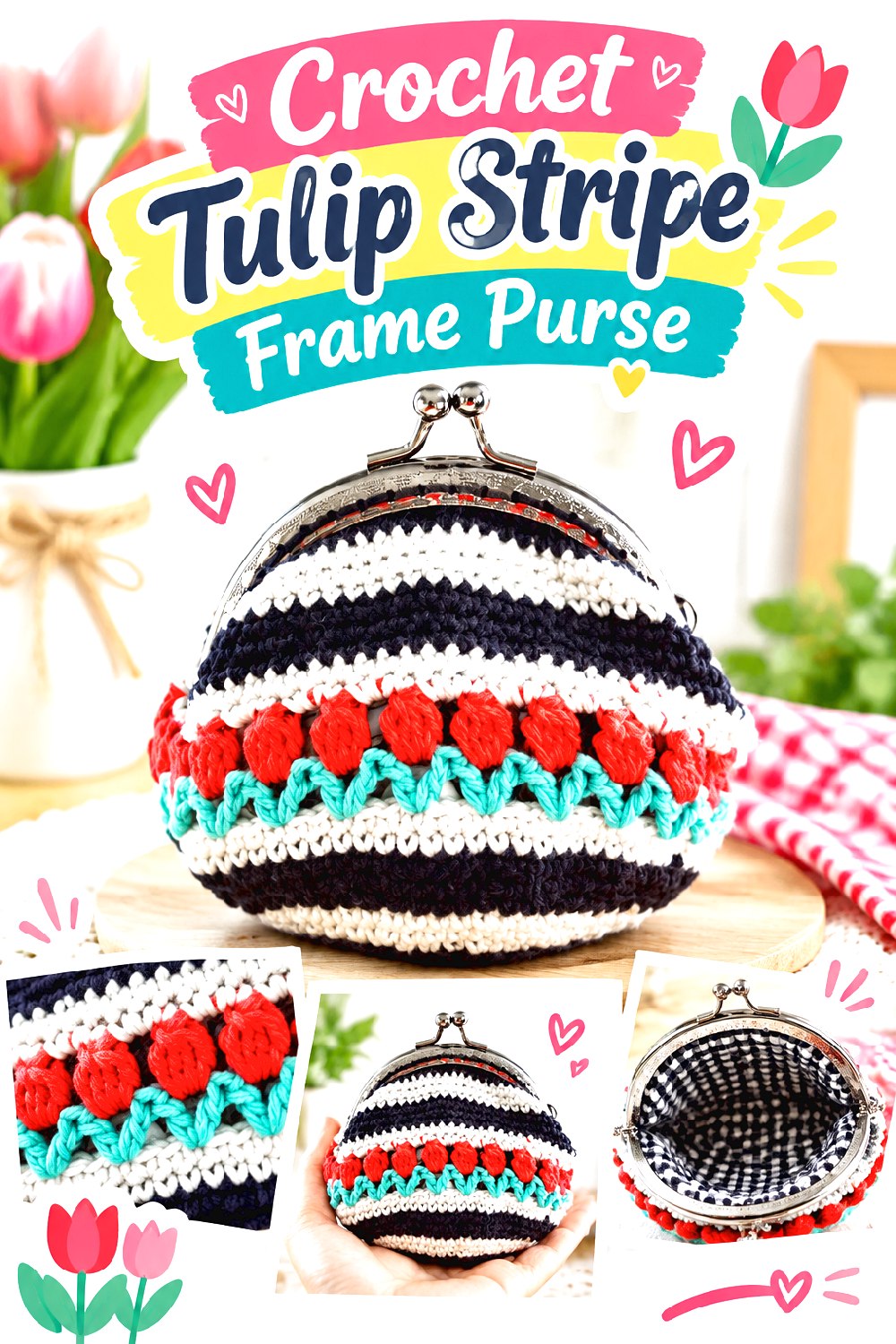
De Estraperlo turns a small framed purse into a decorative surface by combining alternating stripes with a tulip-stitch band. The original tutorial uses a small coin-purse frame and explains that the base should be developed with the actual hardware, yarn, hook, and gauge in mind rather than assuming one fixed size works universally.
This has strong fall potential without requiring literal autumn motifs. Replace springlike brights with cream, tobacco, moss, brick, or plum and the same flower band can read more like vintage textile ornament.
Balance the Tulip Band Against the Frame
The floral stripe is the visual center of the purse, so its vertical position matters. If you adapt the height, avoid leaving the motif awkwardly crowded against the frame or stranded near the base. Think about the finished object as three zones—base, decorative band, and closure—and keep their proportions deliberate.
Color Changes Can Affect More Than Appearance
Multiple colors introduce extra ends and slightly more interior bulk. Keep finishing controlled so those transitions do not create lumps near the top edge or catch stored items. If you add lining, it can conceal the interior color management, but it should not alter the fit of the crochet into the frame.
Original Tutorial and Creator Credit
Creator/Site: De Estraperlo
6. Crochet Puff Stitch Kiss Lock Pouch
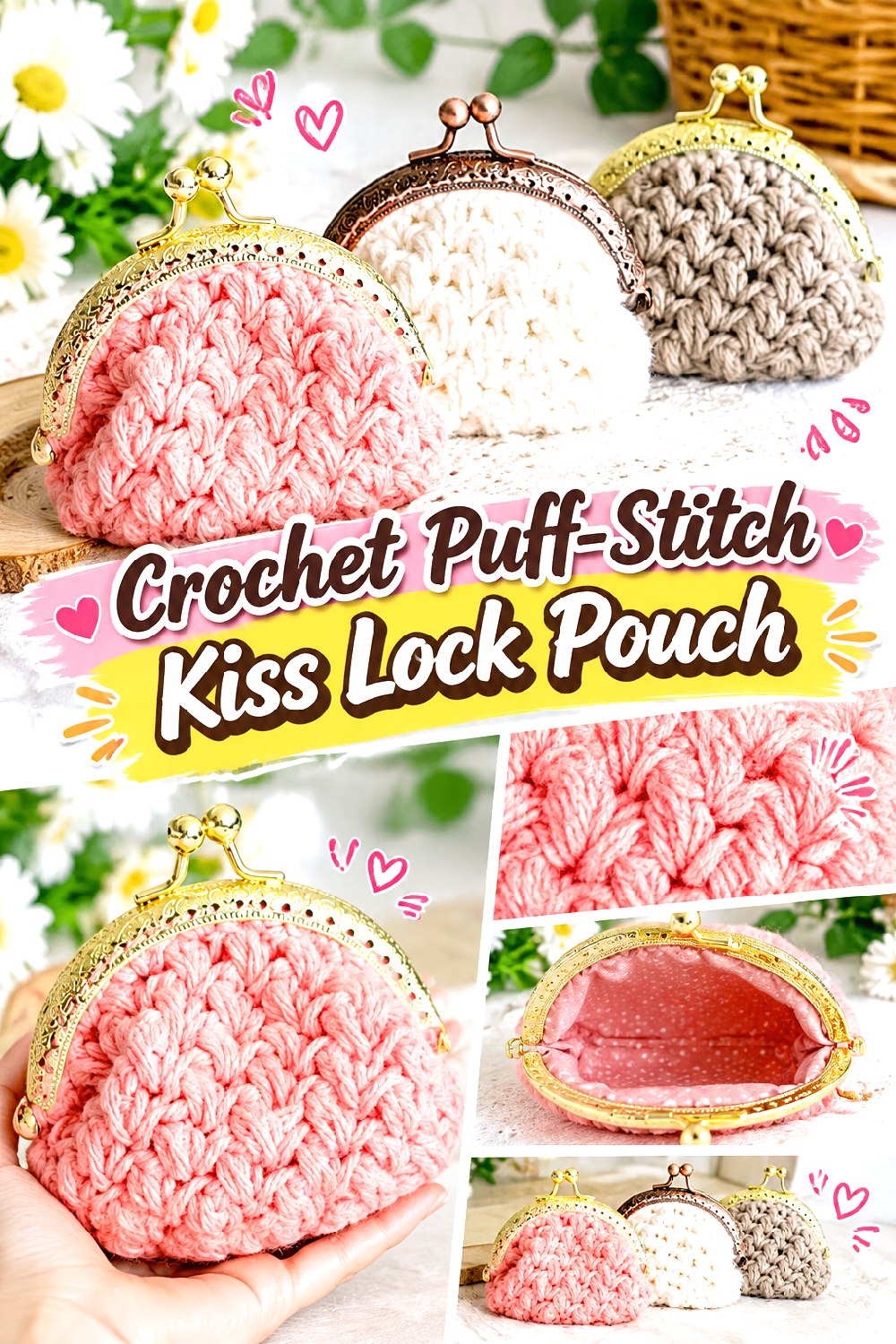
Crochet Dreamz uses modified puff texture to make a compact kiss-clasp purse feel dimensional without relying on appliqués. The source works in cotton and emphasizes checking the base against the clasp, giving the project a practical fitting reference as well as a clearly raised surface.
This is an appealing fall choice when you want texture to provide warmth visually. Cream can make the stitch relief obvious, while cinnamon, mustard, deep green, or wine shades can push the same texture toward a richer seasonal finish.
Puff Texture Adds Thickness
Raised stitches do not behave like flat single crochet. If you change yarn or tighten the tension substantially, the fabric may become thicker around the frame area than expected. Check whether the completed upper edge can still sit neatly beneath the hardware lip before permanently sewing everything in place.
Keep the Texture From Competing With the Clasp
A decorative frame plus a highly textured body can become visually busy at this scale. If the hardware has ornate knobs or a detailed finish, a single yarn color may create better balance than multiple stripes. Conversely, a plain frame gives the puff texture room to become the main decorative feature.
Original Tutorial and Creator Credit
Creator/Site: Crochet Dreamz
7. Crochet Graphic Spike Stitch Coin Purse
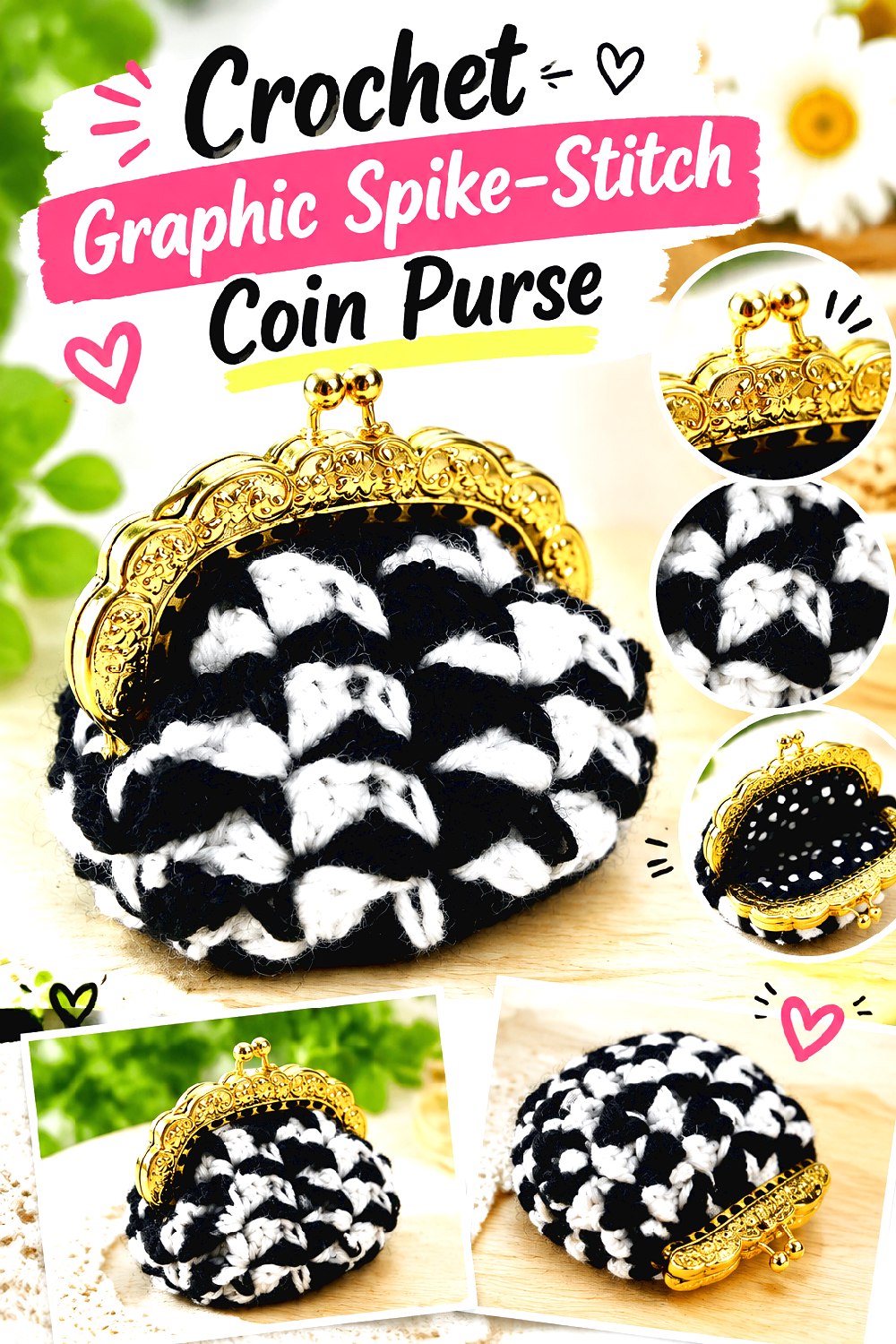
Persia Lou’s purse takes a graphic route, using spike-stitch patterning to produce a bold black-and-white surface beneath a metal purse frame. The source presents the finish as something reminiscent of houndstooth, giving this project a sharper visual personality than the rounded, solid-color purses around it.
For fall, the two-color logic is easy to reinterpret without copying the sample palette. Espresso and cream, charcoal and camel, or burgundy and blush can retain the graphic contrast while changing the mood.
Contrast Controls the Pattern
A graphic stitch only reads clearly when the yarn colors separate enough in value or hue. Two dark autumn shades may look sophisticated in the skein but merge once crocheted. Place short sample rows side by side before deciding whether your palette actually preserves the elongated stitch effect.
Check the Interior After Colorwork
Carried colors and multiple yarn ends can change the inside surface. If the purse is intended for jewelry, earbuds, or other snag-prone items rather than coins, inspect the interior before deciding whether to leave it unlined. A simple lining may improve function, but its thickness still needs to coexist with the frame attachment.
Original Tutorial and Creator Credit
Creator/Site: Alexis Middleton / Persia Lou
8. Crochet Snowflake Square Frame Purse
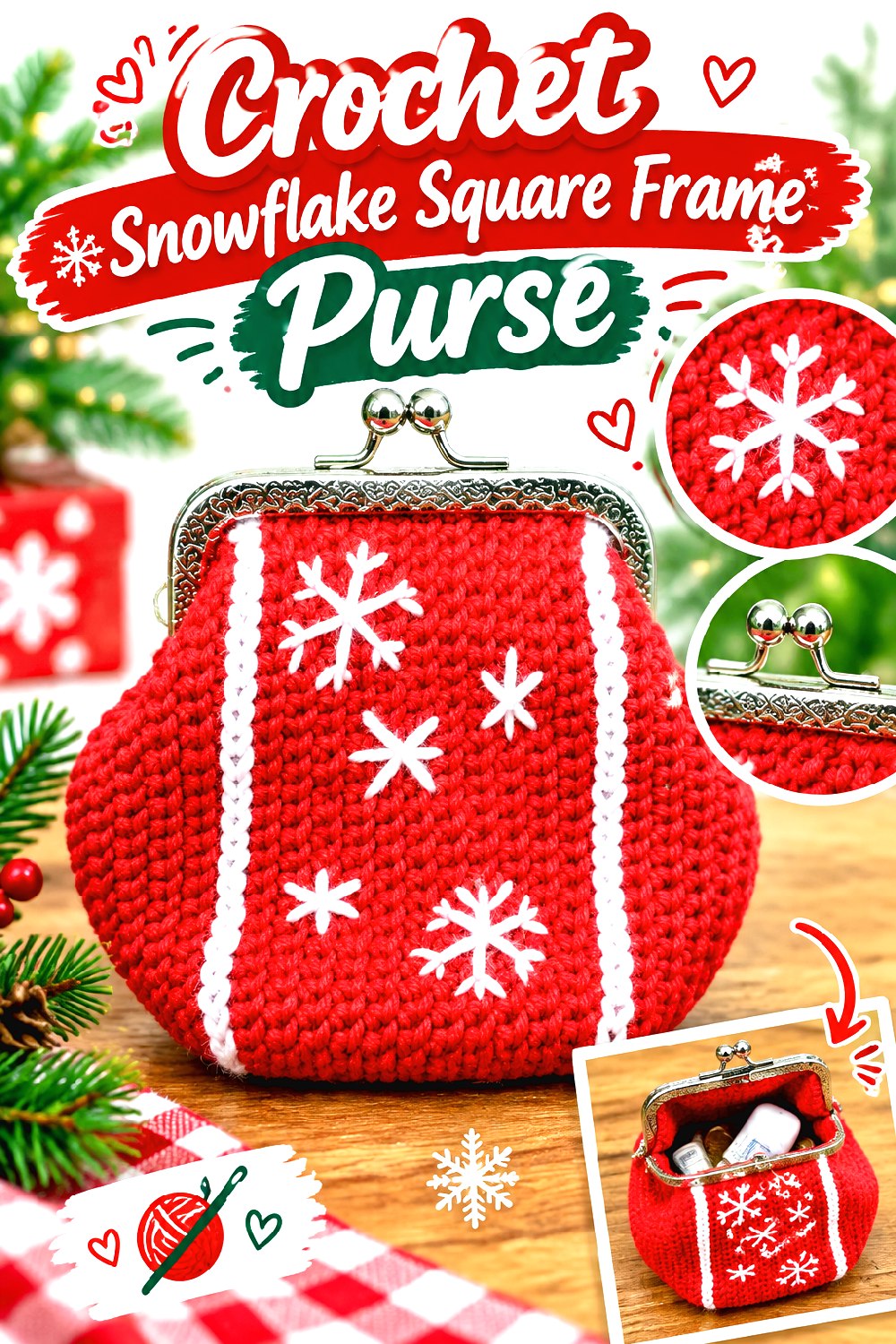
Stitches n Scraps approaches the kiss-lock purse from a squarer geometry. Its Snowflake Crochet Coin Purse uses split single crochet, a square base, surface crochet details, and embroidered snowflakes before being fitted to a nearly square metal frame. The original instructions explicitly discuss frame perimeter as an important fitting measurement.
Although the source styling is wintry, the construction is useful well before December. Replace the snowflake surface treatment with a simpler geometric accent, or keep the motif if you want a fall-to-holiday transition piece.
Square Bases Expose Alignment Errors
When a purse has defined corners, a slight twist is more noticeable than it would be on a round pouch. Marking the relationship between crochet corners and frame corners before sewing can prevent the front panel from ending up skewed. Look at the purse from above as well as head-on while positioning it.
Embroidery Should Follow the Fabric
Surface details work best when the underlying crochet remains stable. If your tension is loose, embroidery can pull stitches out of alignment or pucker the panel. Add decorative stitching with enough tension to sit cleanly on the surface without cinching the bag inward.
Original Tutorial and Creator Credit
Creator/Site: Stitches n Scraps
9. Crochet Beaded Evening Coin Purse
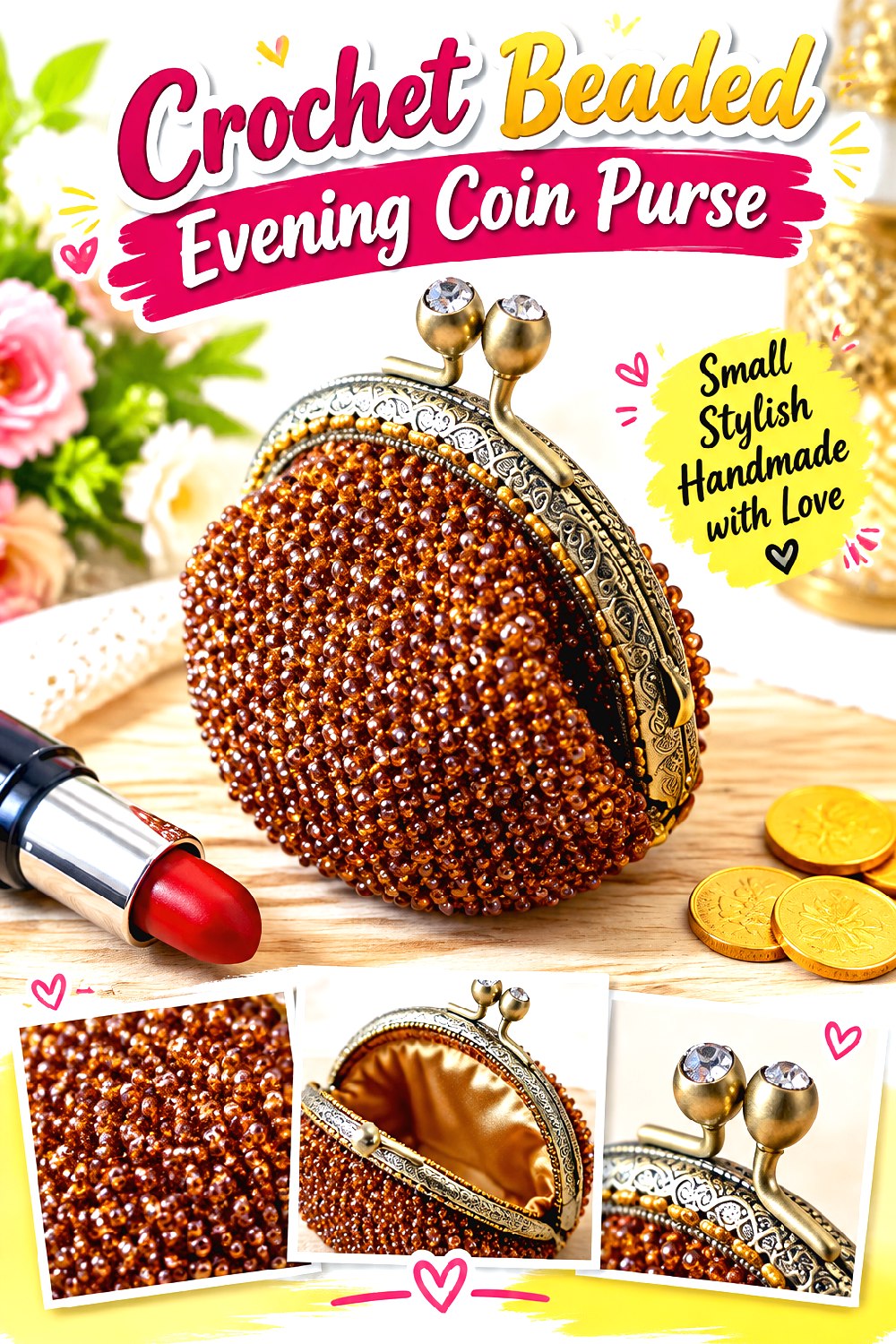
Paraligo’s beaded coin purse is one of the clearest departures from ordinary yarn-only texture. Sofia’s tutorial combines crochet thread, glass beads, and a sew-on clasp frame, creating a dense beaded surface that can move the finished purse toward evening or occasion use.
For Fall 2026 styling, smoky bronze, garnet, black, deep green, or warm metallic bead colors can give the small purse a jewel-like effect without requiring a larger silhouette. The most important decision here is not color, though—it is whether you actually want the extra weight and preparation that bead crochet introduces.
Beads Change the Weight Distribution
A beaded pouch carries more of its own weight before anything is placed inside. That makes the upper connection to the frame particularly important. Inspect the attachment periodically rather than assuming a decorative coin purse receives no stress. The frame should support the fabric evenly instead of concentrating load near one hinge.
Preplanning Matters More Than Improvisation
Bead crochet is less forgiving of last-minute color changes because bead placement is integrated into the work. Decide on the overall appearance before beginning and confirm that the chosen beads move comfortably on the thread. A substitution that is slightly larger or heavier can affect both the visual density and finished drape.
Protect the Dimensional Surface
Raised beads can rub against other items in a larger handbag. If this will live inside a tote, think about how keys, hardware, or rough objects may interact with the surface. For occasional use, storing the purse separately can also help prevent the beadwork from becoming tangled with other accessories.
Original Tutorial and Creator Credit
Creator/Site: Sofia / Paraligo
10. Crochet Linked Double Crochet Frame Pouch
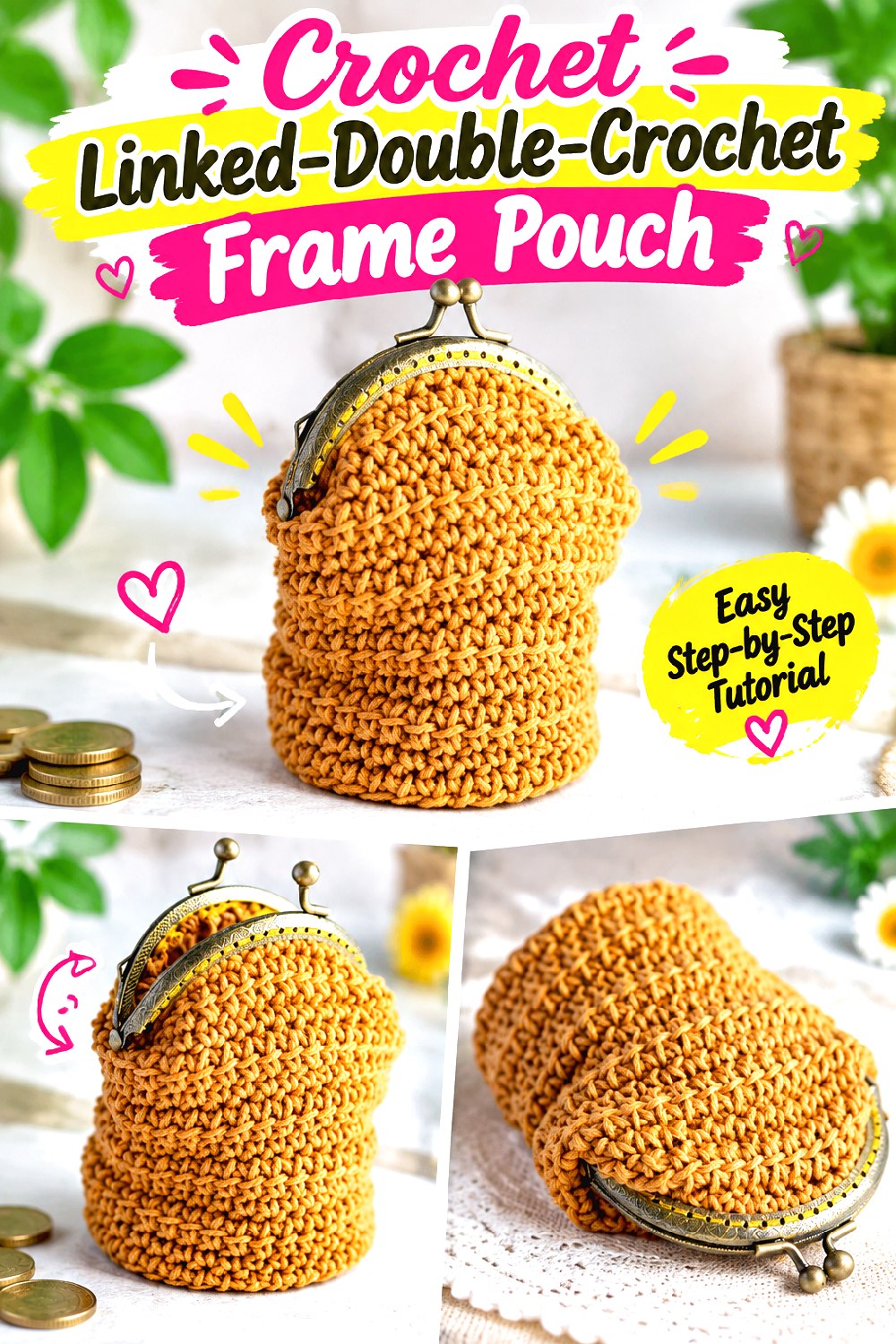
Nicole Riley’s coin purse for Nicki’s Homemade Crafts uses linked double crochet in the body and finishes with a metal coin-purse frame. Compared with very dense single-crochet designs, linked double crochet gives readers another way to create height while keeping neighboring stitches visually connected.
This understated structure makes a useful fall organizer for coins, stitch markers, small cosmetics, or other compact items. It also provides a good canvas for yarn colors that would be overwhelmed by elaborate stitch patterning.
Watch Vertical Stretch
Taller stitches can react differently under load than tightly packed single crochet. Even when they are linked, evaluate the finished fabric vertically. If it lengthens noticeably while holding your intended contents, the purse may lose its compact proportions below the rigid frame.
Keep the Final Edge Predictable
The frame is attached only after the crocheted body is complete, so the last rounds should remain even and free of accidental flare. If the upper circumference changes after a yarn substitution, correct the fit before sewing the hardware rather than forcing excess fabric into the frame.
Original Tutorial and Creator Credit
Creator/Site: Nicole Riley / Nicki’s Homemade Crafts
11. Crochet Tassel Trim Clasp Purse
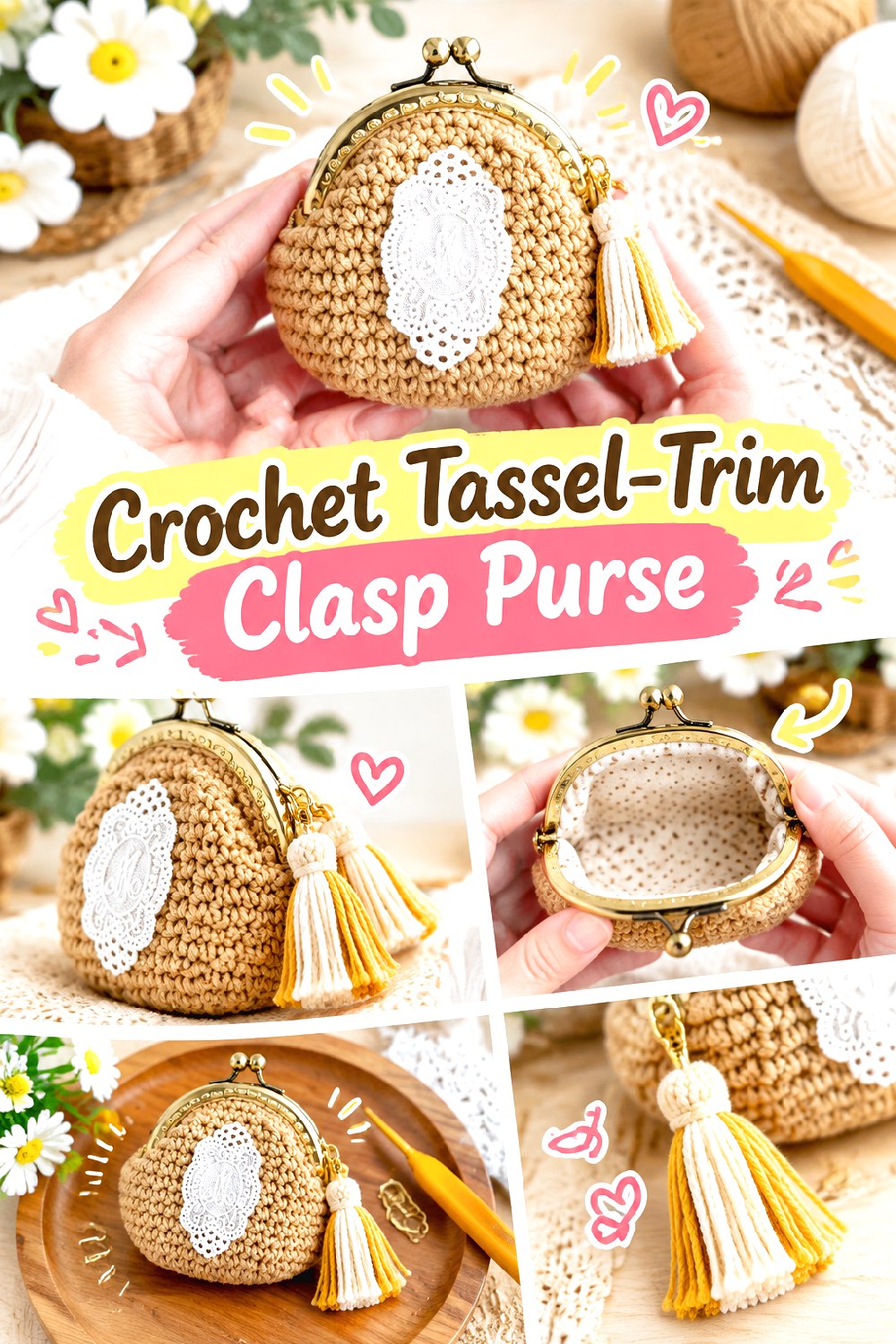
May’s clasp-purse tutorial combines a small framed crochet body with optional mini tassel finishing, giving the finished piece a playful accessory detail without changing the fundamental hardware. The video also shows more than one mouthpiece example, making the frame itself a visible part of the design decision.
For fall, a tassel can be an efficient way to bring in a second color. A neutral body with a rust, moss, plum, or gold-toned tassel keeps the bag easy to coordinate while still feeling intentionally styled.
Add Tassels Where They Will Not Fight the Hinge
A charm or tassel should swing freely without interfering with the kiss-lock movement. Before permanently attaching embellishment, open and close the purse several times and check whether fibers can become trapped near the hinge or clasp knobs.
Small Hardware Rewards Precise Finishing
Compact frames leave little room for uneven distribution. A small shift can make one side look noticeably fuller than the other. Center the crochet carefully and use temporary markers or pins before committing to the permanent attachment.
Original Tutorial and Creator Credit
Creator: May | ちょこっといい日
12. Crochet Macramé Yarn Structured Coin Purse
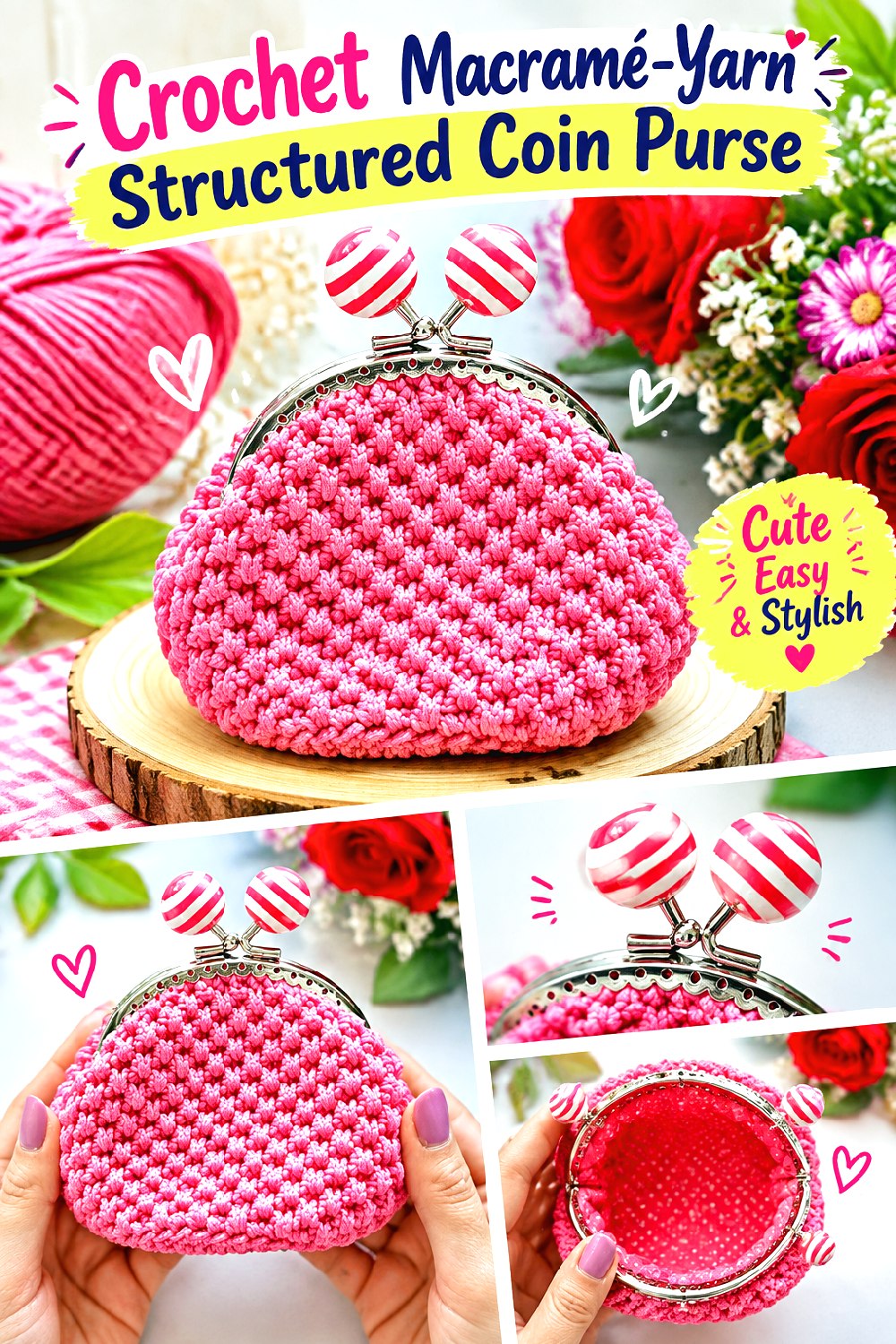
Crochet by Unique Soul uses YarnArt Macrame and a metal purse clasp for a firm-looking compact purse. The video separates the base, body, and clasp-attachment portions clearly enough to make this a useful reference when you want a denser, cord-like material instead of conventional soft yarn.
That added substance works naturally with fall accessories, especially in dark neutrals or earthy colors. It also creates an important trade-off: stronger visual structure can mean more bulk at the very place where the crochet needs to meet the metal channel.
Test Cord Thickness at the Frame
A cord that looks excellent in the body may become difficult to compress into narrow frame hardware. When substituting macramé yarn or cord, compare the thickness of the finished upper edge with the available space in the clasp rather than evaluating the skein alone.
Structure Should Not Become Stiffness
A compact purse needs enough flexibility to open when the kiss lock spreads apart. If the body is crocheted extremely tightly, the frame may open while the pouch below resists expanding. Check that the finished fabric is firm but still able to move naturally with the hardware.
Original Tutorial and Creator Credit
Creator: Crochet by Unique Soul
13. Crochet African Flower Kiss Lock Pouch
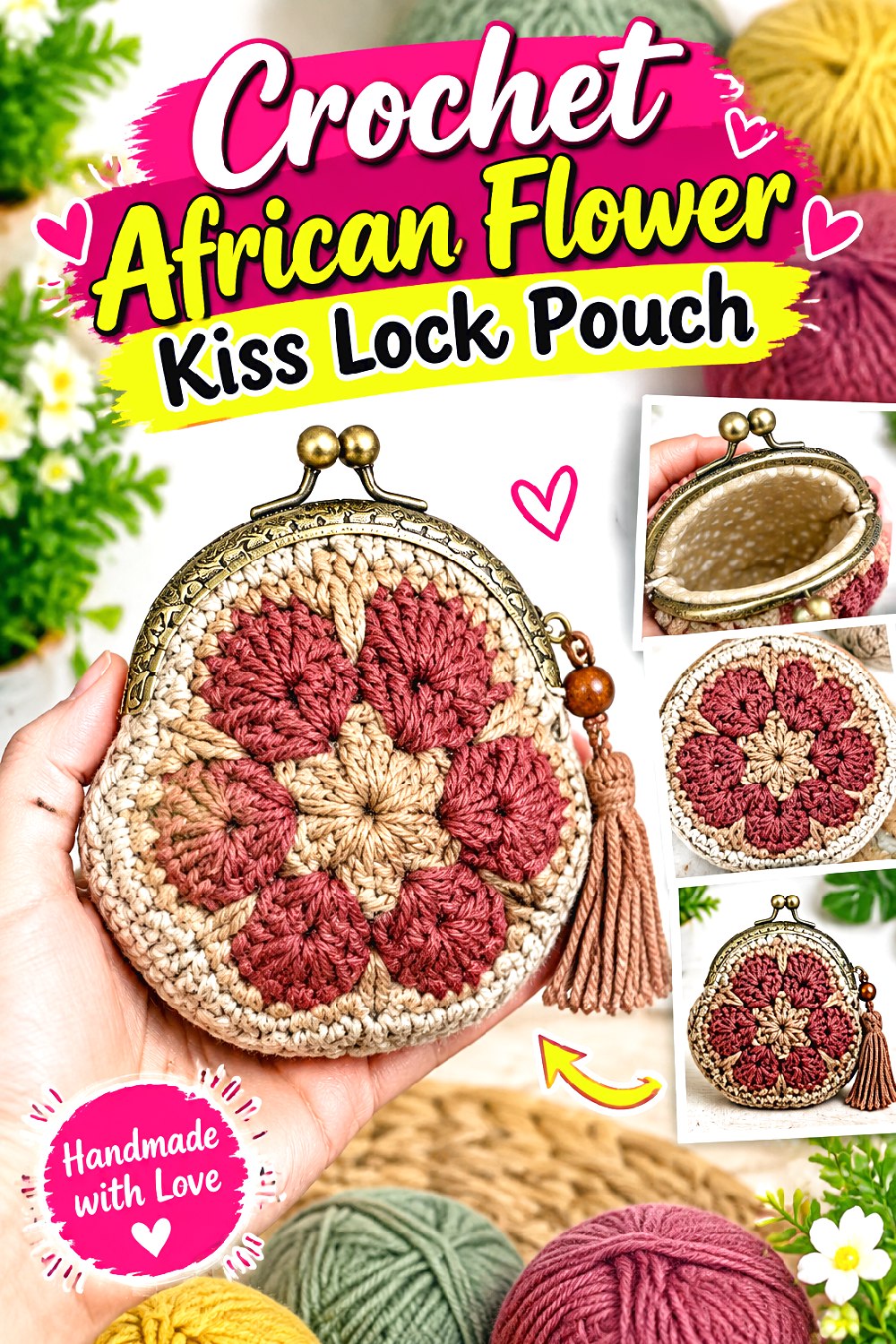
Day’s Crochet builds this small pouch around an African Flower motif rather than adding decoration to a plain cylindrical body. That immediately changes the visual structure: the motif itself becomes part of the pouch shape, and the tutorial pairs it with an 8.5 cm kiss clasp.
For autumn, the motif offers an easy way to combine multiple colors without turning the entire bag into stripes. Try treating one shade as a dominant background and using the remaining colors as smaller accents so the frame does not disappear against the flower.
Motif Size Is the Fit Check
With motif-based construction, the individual shape needs to reach the right scale before assembly. If your completed flower is noticeably different from the tutorial’s intended size, continuing with the same frame may produce distortion. Adjusting the hook or yarn earlier is cleaner than forcing a mismatched motif beneath rigid hardware.
Control Color Without Losing the Flower
Too many equally strong colors can make the geometry difficult to read at coin-purse scale. For a quieter fall palette, repeat one neutral or dark shade across several rounds and reserve brighter rust, ochre, or berry tones for selected motif sections.
Original Tutorial and Creator Credit
Creator: Day’s Crochet – Modern Crochet Patterns
14. Crochet Cactus Embroidered Coin Pouch
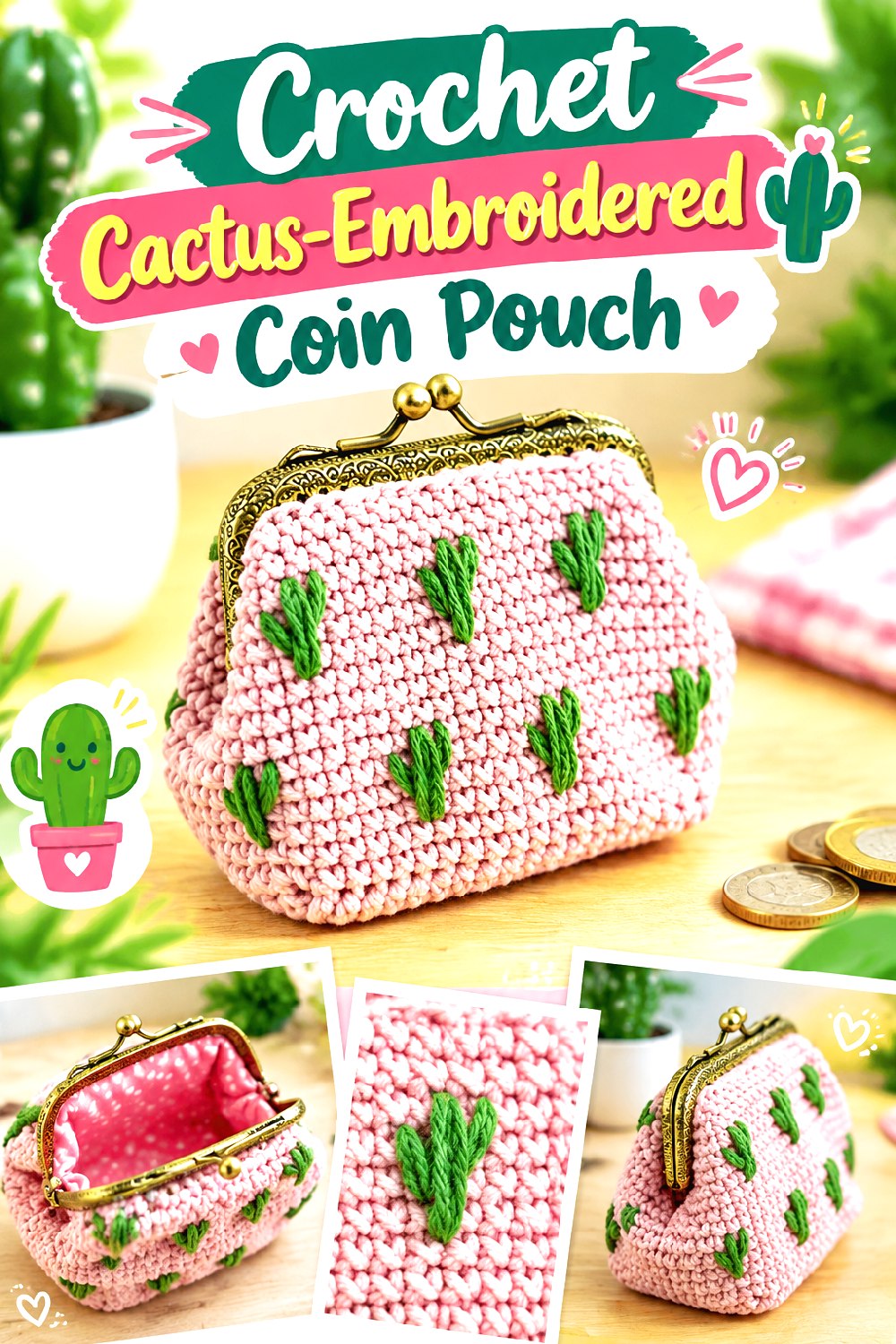
Whistle and Ivy’s framed pouch combines a structured crochet body with embroidered cactus motifs. The original pattern stresses gauge because the finished rectangle needs to match the kiss-clasp hardware, and the embroidery is applied after the main body is established.
Although cactus imagery may first suggest summer, an autumn version can shift the mood through color: clay, cream, sage, olive, and dark brown can make the motif feel more earthy than tropical. This project is particularly useful for readers who enjoy embroidery but do not want the weight of beadwork.
Embroider After the Shape Is Stable
Surface embroidery can subtly tighten crochet. Completing the pouch body first lets you see the actual scale and decide how much decorative coverage it can handle. Avoid pulling embroidery yarn so firmly that the front panel becomes narrower than the back before the frame is attached.
Give the Hardware Breathing Room
The embroidery should support the composition rather than crowding the metal frame. Leaving some visual space near the top edge helps the kiss lock read as a deliberate feature and keeps decorative stitches away from the area that must be manipulated during attachment.
Original Tutorial and Creator Credit
Creator/Site: Whistle and Ivy
15. Crochet Quick Change Scrap Yarn Purse
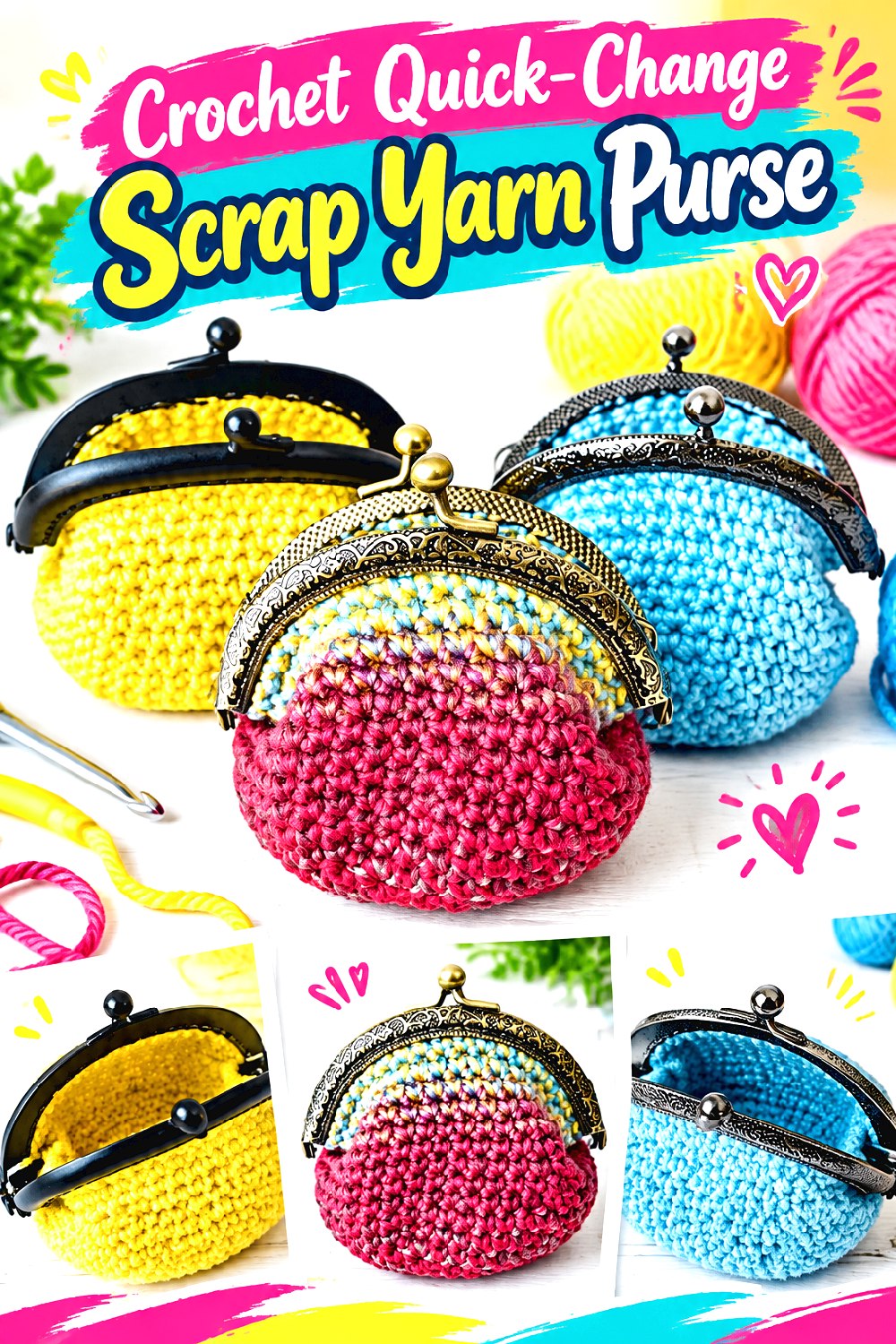
Chrisette Designs offers a straightforward framed coin purse intended to use a small amount of worsted-weight yarn. The source works the pouch in continuous rounds and pairs it with a small purse frame, making this one of the least ornament-dependent ideas in the collection.
That simplicity makes it useful for leftover fall yarns, particularly when you have a small quantity of a favorite brown, mustard, berry, or forest shade. More importantly, it provides a comparatively uncluttered project for practicing the relationship between a crocheted opening and a metal frame.
Scrap Yarn Still Needs Consistent Thickness
Two leftovers labeled the same yarn weight can behave very differently. A dense cotton and a springy acrylic may produce different diameters and stretch even with the same hook. If you need to switch yarn partway through, compare the fabrics before assuming the frame fit will remain unchanged.
Use Simplicity to Practice Alignment
Without motifs or colorwork to distract the eye, any uneven frame placement becomes obvious. Mark the side centers and check symmetry before sewing. This is a useful project for learning the finishing skill itself rather than trying frame attachment for the first time on a heavily embellished purse.
Original Tutorial and Creator Credit
Creator/Site: Chrisette Designs
16. Crochet Lemon Peel Vintage Coin Purse
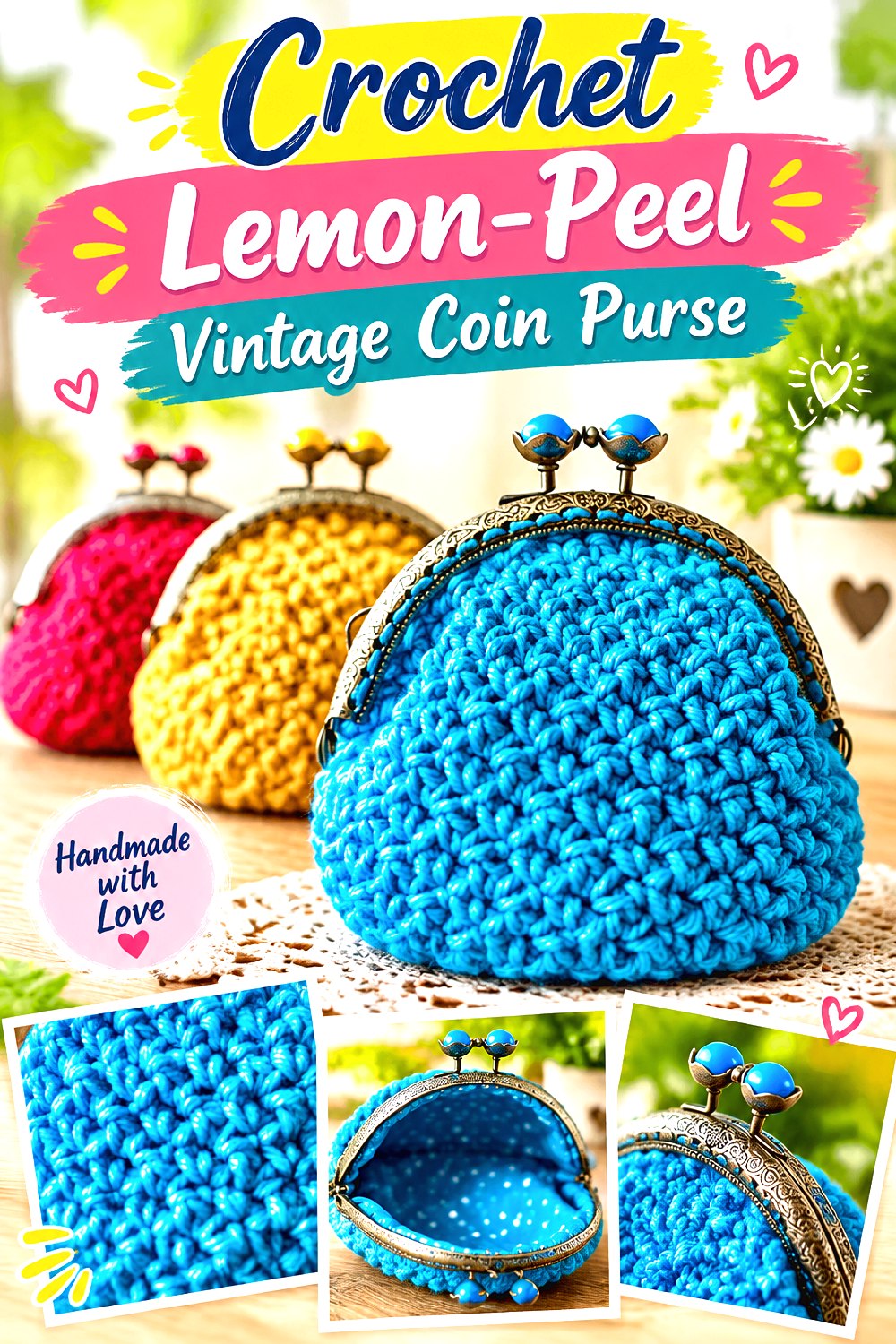
Heart Hook Home’s Classic Coin Purse uses lemon-peel texture beneath a small vintage-style kiss clasp. Ashlea’s tutorial also devotes substantial attention to sewing the frame to the crochet, which makes this project valuable for readers whose biggest uncertainty is not the pouch itself but the final hardware installation.
The subtle alternating texture works particularly well with fall solids because it creates surface interest without interrupting the silhouette. Camel, burgundy, olive, cream, or charcoal can all emphasize the stitch pattern differently.
Let Texture Replace Extra Decoration
Lemon-peel stitch already creates a pebbled surface. If your clasp has decorative knobs or a vintage ornamental finish, consider stopping there. Adding tassels, beads, and appliqués at the same scale can dilute the clean relationship between textured crochet and metal.
Use the Midpoint as a Finishing Check
The source’s attachment guidance emphasizes keeping the frame and crochet aligned as sewing progresses. That principle is broadly useful: mark key points rather than attaching one side by eye and discovering at the end that the remaining fabric no longer meets the opposite hinge cleanly.
Original Tutorial and Creator Credit
Creator/Site: Ashlea / Heart Hook Home
17. Crochet Zigzag Lozenge Frame Purse
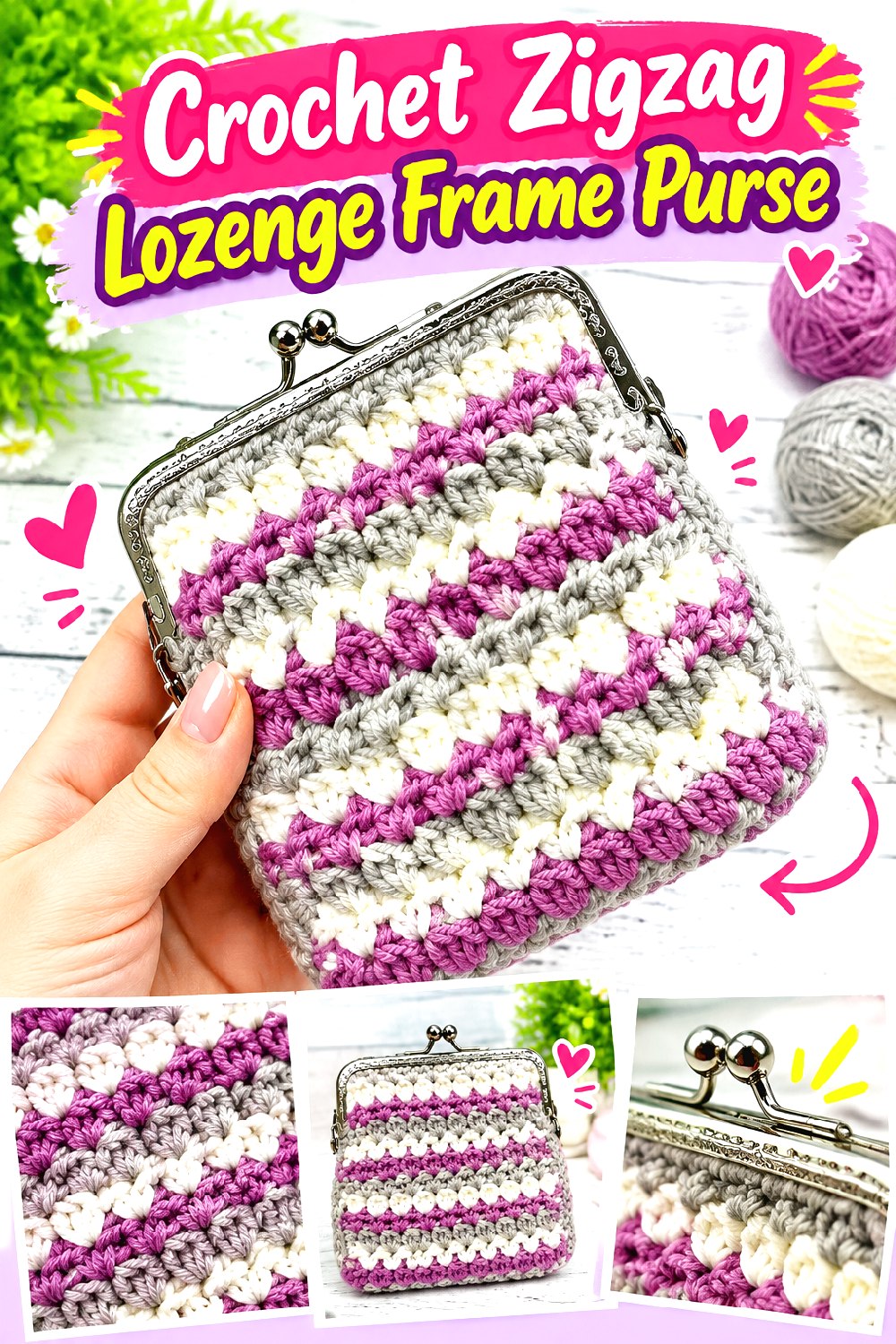
Cosy Rosie Crochet’s Ides of March Coin Purse introduces a zigzag lozenge stitch pattern and multiple colors beneath a metal frame. Fiona Field’s original page provides both the decorative stitch concept and the complete purse construction, giving this project a stronger textile-pattern focus than the solid and puff-textured designs above.
For autumn, the repeating geometry can look particularly effective in three related shades such as cream, camel, and brown or plum, rust, and charcoal. The goal is to preserve the zigzag rhythm rather than simply adding seasonal colors.
Protect the Lozenge Rhythm
A multicolor repeat works best when the eye can follow it cleanly around the purse. If you change the number of colors or substitute yarns with very different values, make a small swatch first. A beautiful palette can still flatten the motif if adjacent rows lack enough contrast.
Fit the Frame After the Colorwork Settles
Clustered and textured rows may relax differently from plain crochet. Before attaching the metal frame, allow the finished body to rest and check its actual upper width. If blocking is appropriate for your chosen fiber, do that before making the permanent hardware connection rather than trying to reshape the purse afterward.
Original Tutorial and Creator Credit
Creator/Site: Fiona Field / Cosy Rosie Crochet
18. Crochet Metal Frame Clutch Bag
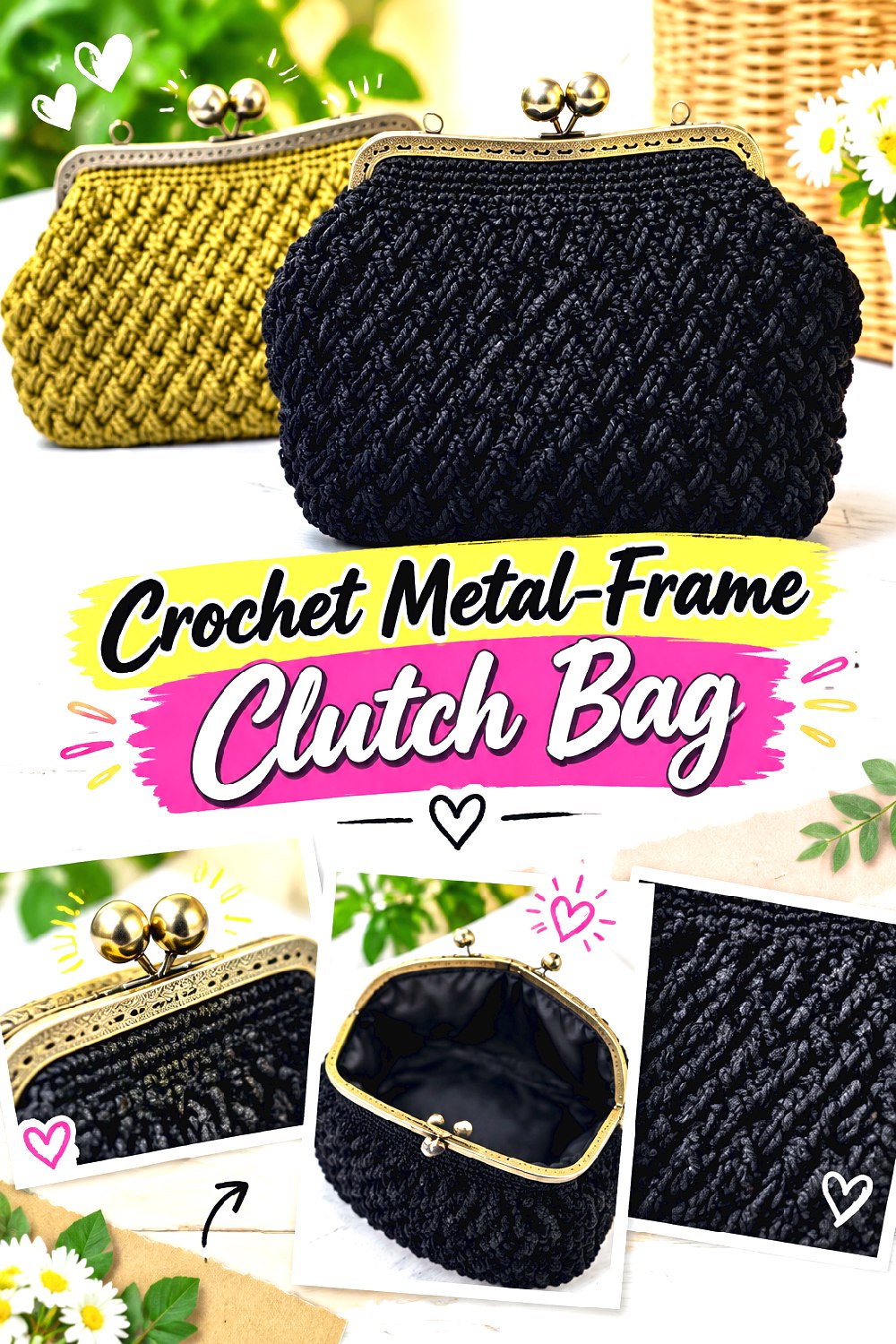
Örgü Kanalım’s 2026 video focuses directly on a crochet clutch bag built around a metal kiss-lock frame. The project provides another larger-format alternative for readers who like clasp hardware but do not specifically want a coin purse. Because the tutorial centers on the framed clutch itself rather than a detachable pouch or secondary accessory, it earns a separate place at the end of this collection.
A fall version can remain minimal: deep brown, black, wine, olive, or oatmeal yarn paired with a contrasting frame can make the closure and overall outline do most of the visual work.
Scale Up the Fit Checks
The larger the frame, the more obvious uneven distribution can become. Instead of judging only the center point, compare the crochet along several locations across each half of the opening. Excess concentrated near one area can create an unintended fold once the clasp closes.
Check What the Clutch Must Hold
Before altering dimensions, decide whether this is meant for a phone and a few essentials or something roomier. Changing only the height will not help if the rigid opening remains too narrow for the intended object. Measure the items that must pass through the open frame as well as the space available inside the crocheted body.
Original Tutorial and Creator Credit
Creator: Örgü Kanalım
How to Choose Among These Fall Kiss Lock Styles
| If you want… | Projects worth comparing | Main decision |
|---|---|---|
| A more substantial carried bag | Granny-Trim Handbag, One-Skein Handbag, Metal-Frame Clutch | Handle or clutch use, frame scale, carrying weight |
| A crisp modern silhouette | Hidden-Frame Raffia Clutch, Arched Raffia Coin Purse | Hidden versus exposed hardware and material stiffness |
| Strong stitch texture | Puff-Stitch Pouch, Linked-Double-Crochet Pouch, Lemon-Peel Purse | Thickness, stretch, and how texture meets the frame |
| Decorative colorwork | Tulip Stripe Purse, Graphic Spike-Stitch Purse, Zigzag Lozenge Purse | Contrast and managing the interior of color changes |
| Motif or embroidery detail | African Flower Pouch, Cactus Pouch, Snowflake Purse | Motif sizing, surface tension, and alignment |
| A dressier small accessory | Beaded Evening Coin Purse, Tassel-Trim Clasp Purse | Added weight, embellishment placement, and snagging |
| A straightforward practice project | Quick-Change Purse, Macramé-Yarn Purse | Fabric density and accurate frame positioning |
Conclusion
The most successful crochet kiss lock bag is not necessarily the most elaborate one. A hidden-frame raffia clutch depends on controlled folds and crisp structure, while a granny-trim handbag must balance a much larger body with handles and rigid hardware. Small purses create their own challenges: motif scale, bead weight, colorwork, embroidery tension, and even a few millimeters of uneven frame placement can become visible quickly.
For Fall 2026, use color to set the seasonal mood, but make your first decisions around frame geometry, fabric density, intended contents, and the amount of structure the project needs. Once you have chosen a silhouette that suits its real use, visit the credited original tutorials for exact construction, frame sizing, materials, and finishing instructions.
Frequently Asked Questions
Can I use a different kiss lock frame from the one in the tutorial?
Sometimes, but matching only the advertised width is not enough. Frames vary in curvature, depth, hinge placement, total perimeter, and the shape of the channel that receives the crochet. Compare your hardware with the tutorial’s finished opening before making permanent adjustments. For projects designed closely around one frame, changing the hardware may require changes to the crochet body rather than simply gathering the final edge.
What yarn works best for a crochet kiss lock bag?
There is no universal best fiber. Dense cotton, raffia, macramé yarn, crochet thread, and other materials all appear successfully in the projects above because each supports a different result. Consider structure, thickness at the frame, stretch, finished weight, and stitch definition. If substituting yarn, make a sample and judge how it behaves vertically and when folded instead of relying on yarn-weight labels alone.
Should every crochet kiss lock purse be lined?
No. Several designs can function without lining when the crochet is sufficiently dense, while other tutorials deliberately include fabric lining. Base the decision on stitch openness, what the purse will carry, whether interior floats or ends could snag, and whether you want to conceal frame sewing. Follow the yarn’s care information and remember that lining or interfacing may change washing and drying options.
How do I prevent the crochet from bunching under the frame?
Uneven bunching usually deserves attention before the permanent sewing is complete. Mark the center and hinge areas, distribute the crochet symmetrically, and compare both halves repeatedly as you attach the frame. If significant excess remains, the problem may be the body-to-frame size relationship rather than your sewing technique. Avoid forcing a badly mismatched opening into place merely to finish the project.
Can I add a shoulder strap to a coin-purse pattern?
A strap is possible on some designs, but the frame and attachment points must be able to cope with the new load. A coin purse held inside another bag experiences different forces from a crossbody purse carrying a phone and other essentials. Look for strong, suitable connection points and consider how strap leverage could distort the crochet or frame. When a tutorial includes a strap method, follow that construction rather than assuming any clasp can support one.
Which designs are easiest to adapt for fall colors?
Solid and two-color projects give the most freedom because the construction does not depend on a specific motif palette. The lemon-peel, puff-stitch, linked-double-crochet, macramé-yarn, hidden-frame, and straightforward framed purses can all shift easily into rust, olive, cream, brown, burgundy, charcoal, or ochre. For multi-color motifs, swatch the proposed palette first so reduced contrast does not make the stitch pattern disappear.