A crochet shawl can solve two very different fall-wedding problems: adding warmth when temperatures drop and completing an outfit without hiding the dress underneath. The right choice depends less on color alone and more on shape, fabric density, shoulder coverage, texture, and how easily the shawl stays in place through a ceremony or reception.
These 18 crochet fall wedding shawl ideas cover delicate lace triangles, rectangular wraps, asymmetrical designs, textured shells, a practical pocket shawl, and several classic shoulder-covering shapes. The tutorials were not all created specifically for weddings, so think of them as construction options that can be adapted to bridal, bridesmaid, wedding-guest, or reception styling. Use the comparisons below to decide how much warmth, visual detail, and coverage your event actually needs.
Quick List
- Crochet Autumn Lace Triangle Wedding Shawl
- Crochet Openwork Wedding Guest Shawl
- Crochet Vintage Lace Bridal Shawl
- Crochet Fan-Lace Ceremony Shawl
- Crochet Wonderwall Reception Shawl
- Crochet Pocket Shawl for an Outdoor Fall Reception
- Crochet Tunisian Asymmetrical Wedding Wrap
- Crochet Shell-Stitch Wedding Shawl
- Crochet Gradient Fall Triangle Wedding Shawl
- Crochet Chart-Led Statement Wedding Shawl
- Crochet Bordered Formal Triangle Shawl
- Crochet Airy Triangle Wedding Wrap
- Crochet Simple Openwork Bridesmaid Shawl
- Crochet Time in a Bottle Evening Shawl
- Crochet Clean-Line Triangle Wedding Shawl
- Crochet Minimal Fall Wedding Guest Shawl
- Crochet Elegant Lacy Evening Shawl
- Crochet Textured Cluster Triangle Shawl
Choose Coverage for the Ceremony, Photos, and Reception
A shawl that looks delicate in posed photos may provide very different coverage from one intended for an outdoor reception. Triangle shawls concentrate fabric across the upper back and can create a decorative point below the shoulders. Rectangular wraps spread coverage more evenly across the arms, while asymmetrical designs give you more freedom to drape one end across the body.
Before choosing a tutorial, put on the dress or a garment with a similar neckline and sleeve shape. Decide whether you need only shoulder coverage, protection for bare arms, or enough fabric to wrap more securely after sunset. Also check whether you will need your hands free for a bouquet, dinner, dancing, or photographs. A beautiful shawl that constantly slips from the shoulders can become inconvenient during a long event.
Yarn, Drape, and Warmth Matter More Than the Fall Color Palette
For wedding wear, yarn choice affects how formal the finished shawl looks as much as the stitch pattern. An airy stitch can become heavier and less fluid in a thick yarn, while very fine yarn may emphasize lace but provide less insulation. Fibers and yarn constructions also differ in softness, elasticity, sheen, and how strongly they hold blocking.
Make a generous swatch when substituting yarn, particularly for lace or shell patterns. Hold it against the planned outfit rather than judging it flat on a table. You are looking for enough drape to follow the shoulders without becoming stiff, while still keeping the stitch definition you want. If warmth is important, compare fabric density rather than assuming that a visually bulky shawl is automatically the better choice.
Coordinate the Shawl With the Dress Before Adding Decorative Details
Ivory, cream, champagne, rust, burgundy, forest green, muted gold, dusty rose, and warm neutrals can all work in an autumn wedding setting, but the shawl does not have to match the dress exactly. A tonal difference can make lace easier to see, while a closely matched shade keeps the layer quieter in photographs.
Pay attention to the dress itself before adding tassels, fringe, contrasting borders, or strongly textured edges. An embellished gown may pair better with restrained crochet. A simple dress can carry a more noticeable lace border. If you are crocheting shawls for several attendants, compare finished swatches side by side first; small differences in yarn, tension, and blocking are more noticeable when multiple handmade pieces appear together.
1. Crochet Autumn Lace Triangle Wedding Shawl
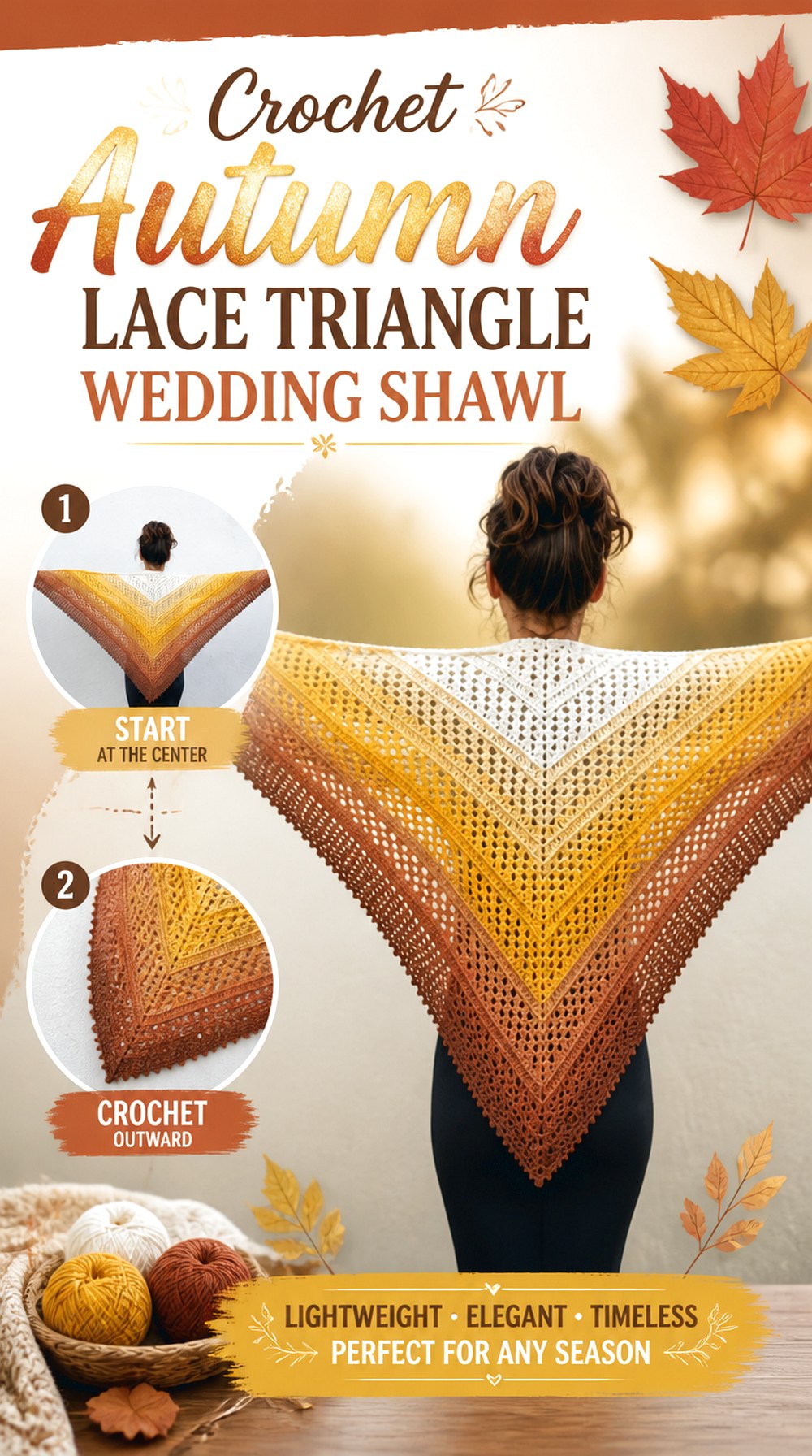
This triangular option has a clear autumn connection and gives the shoulders a traditional shawl silhouette without requiring the bulk of a rectangular blanket-style wrap. The pointed back adds a visible crochet feature in rear-view photographs, while the open fabric keeps the construction from looking overly heavy.
For a wedding adaptation, the biggest decision is whether to make the stitch definition part of the outfit or let the yarn color do most of the visual work. A restrained solid or softly blended shade can move the attention toward the lace, while a stronger autumn gradient will make the shawl more prominent beside the dress.
The Triangle Shape Keeps the Back Visually Defined
A symmetrical triangle naturally creates a central focal point down the back. That can work particularly well with a simple dress, but it may compete with dramatic back details, buttons, lace panels, or a train. Compare the shawl against the dress from behind before committing to the final size. You may decide that a shallower triangle gives enough shoulder coverage without concealing an important gown feature.
Decide How Much Openwork the Weather Can Support
Decorative holes create a lighter appearance, but they also mean less continuous fabric over the shoulders. For an early-fall indoor ceremony that may be ideal; for a late-evening outdoor event it may not provide the warmth you expect. Instead of choosing by appearance alone, hold a sample against bare skin outdoors at a similar temperature and decide whether this design should be the main warm layer or primarily a decorative one.
Original Tutorial and Creator Credit
Creator: Sirin’s Crochet
2. Crochet Openwork Wedding Guest Shawl
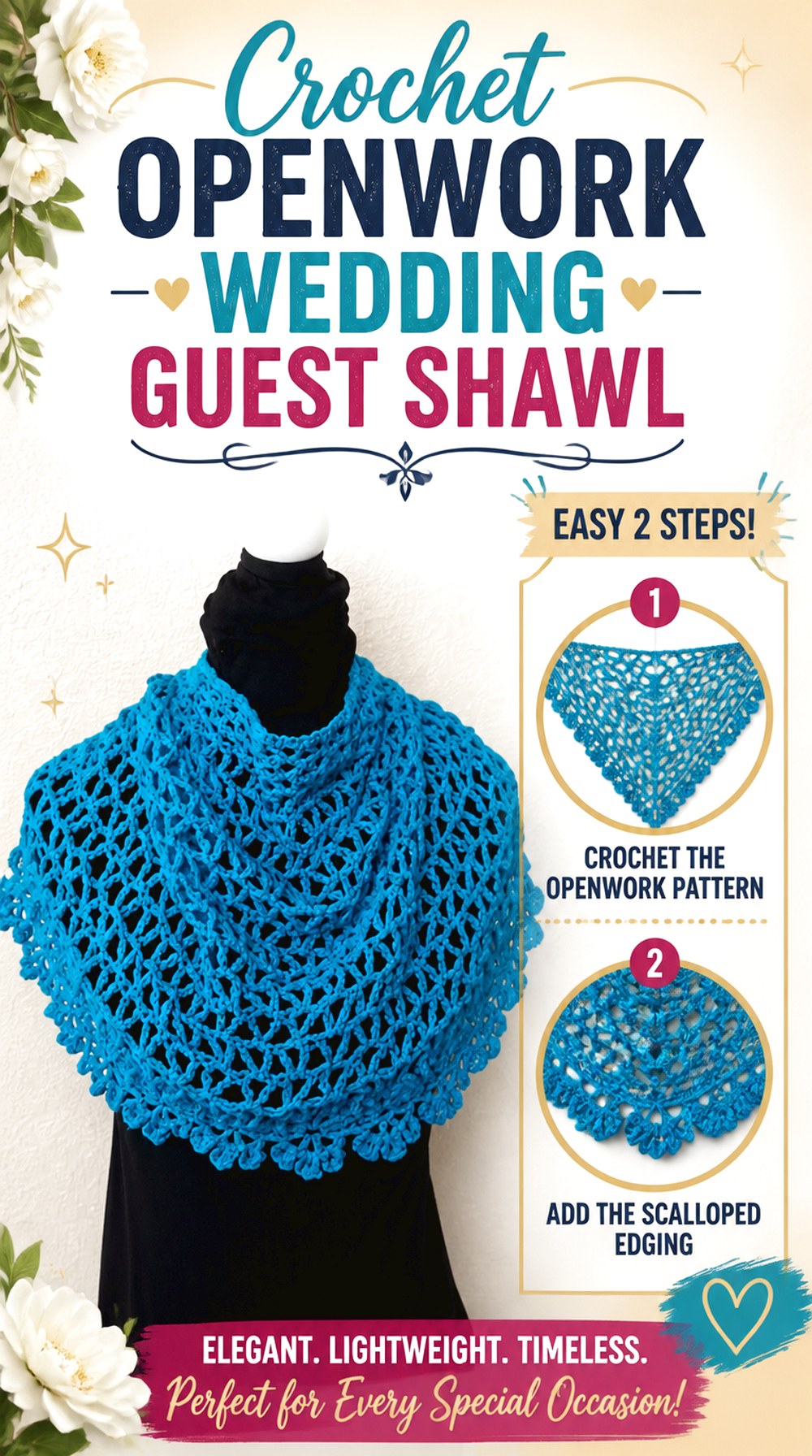
This shawl is a useful choice when the goal is a recognizable crochet layer that still feels light enough to wear with a dress. The tutorial itself specifically identifies the project as suitable for gifts and wedding shawls, making it one of the closest direct matches in this collection.
Its openwork character makes it particularly suited to a guest, bridesmaid, or bride who wants coverage without creating the visual weight of a dense wrap. Because the design contains noticeable stitch detail, a wedding version can stay understated in one quiet color or become more dramatic when paired with a contrasting dress.
Let the Neckline Determine How You Drape It
A shawl can change the apparent neckline of the dress once its upper edge crosses the shoulders. With a strapless or sleeveless dress, a higher drape gives more coverage; with an embellished neckline, letting the shawl sit farther back preserves more of the dress. Try the shawl position while standing, sitting, and raising your arms rather than evaluating it in a single mirror pose.
Keep Decorative Crochet From Fighting the Dress Fabric
Open stitchwork can look especially distinctive beside smooth satin, crepe, or other relatively plain dress fabrics. Against heavily beaded or all-over lace garments, the combination may become visually busy. If your dress already contains strong texture, consider using a low-contrast yarn shade and letting the shawl function as a soft frame instead of another competing pattern.
Original Tutorial and Creator Credit
Creator: Crochet with Clare
3. Crochet Vintage Lace Bridal Shawl

Vintage-inspired lace suits weddings because it can read as intentional dress detailing rather than simply an extra cold-weather layer. This triangular shawl has enough stitch variation to stand out in photographs, making it a stronger choice for a bride who wants the crochet itself to be part of the wedding look.
The design is also a good alternative to minimalist wraps elsewhere in the list. Instead of relying on a plain surface and luxurious yarn alone, this option puts the patterning front and center. That means finishing, blocking, and yarn definition deserve extra attention before the event.
Vintage Lace Benefits From Careful Blocking
When a shawl depends on visible lace, uneven openings can interrupt the overall effect. Follow the creator’s finishing guidance and the yarn manufacturer’s care information, then allow enough time before the wedding for the piece to settle after blocking. Do not leave this step until the night before the event, especially if you are unfamiliar with how the chosen fiber reacts to water or steam.
Check the Lace Against Jewelry and Dress Embellishments
Fine crochet openings may catch on pointed prongs, elaborate bracelets, sequins, or other raised details. Try the complete outfit before the wedding and move your arms naturally. If anything repeatedly snags, changing the way the shawl is positioned may be safer than relying on constant adjustment during the ceremony.
An Heirloom Look Does Not Require an Exact Dress Match
A slightly warmer ivory, soft cream, or another related neutral can distinguish handmade lace from the dress itself. Before purchasing all the yarn, compare the swatch under daylight and indoor lighting. Whites and creams can shift noticeably between environments, and the combination that looks coordinated at home may appear more contrasted at the venue.
Original Tutorial and Creator Credit
Creator: Jayda InStitches
4. Crochet Fan Lace Ceremony Shawl
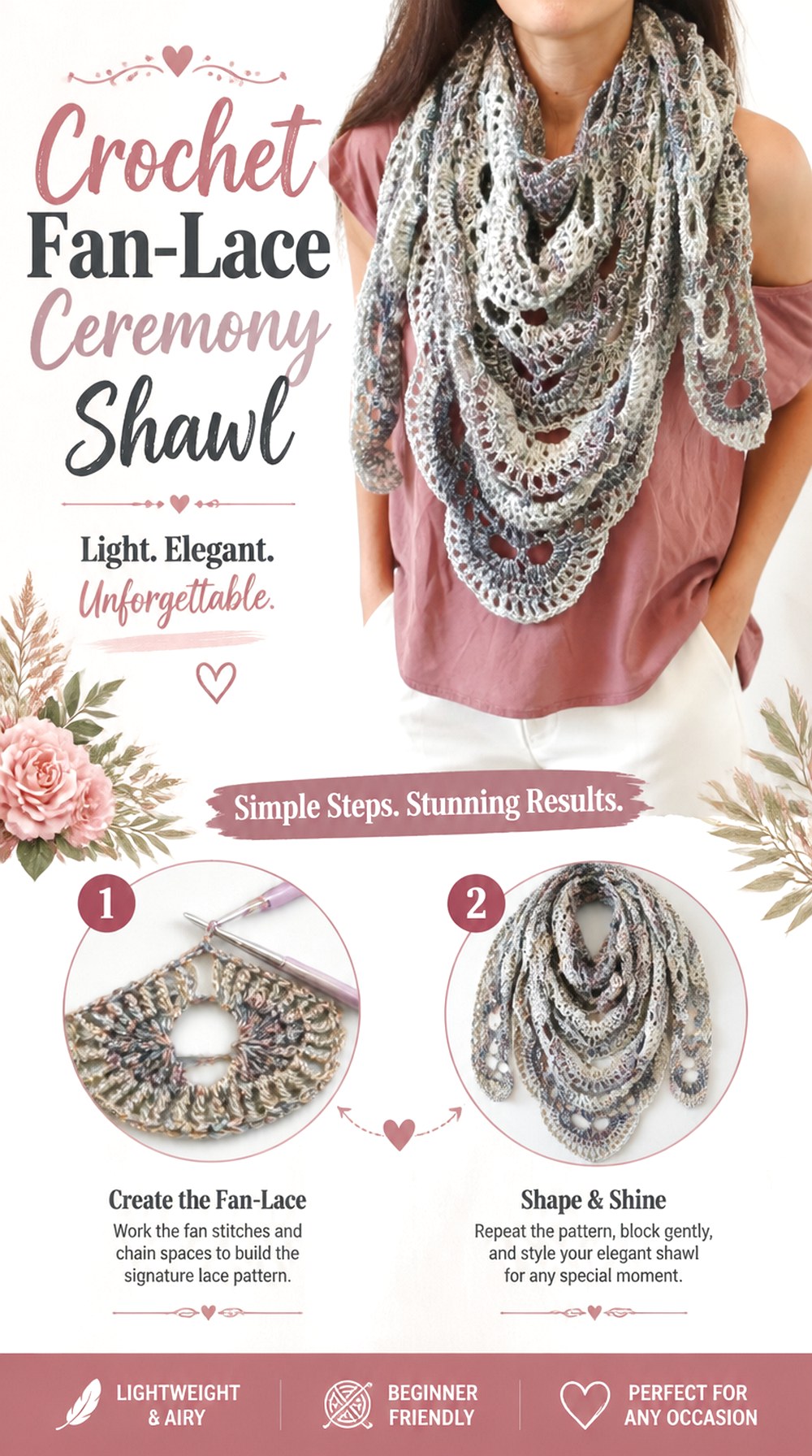
The familiar fan-like structure of the Virus Shawl creates a more dramatic lace surface than a plain triangle. Repeated curved sections spread outward from the center, so the shawl develops a strong decorative rhythm that can complement a simple wedding dress or monochrome bridesmaid outfit.
This is a good candidate when the shawl needs to look intentional in photographs rather than disappear into the clothing. It is less ideal when the dress already carries elaborate lace across the entire bodice and sleeves. In that case, compare a swatch directly against the garment before deciding whether two strong patterns can coexist comfortably.
The Expanding Fans Make Yarn Color Changes Very Visible
Because the lace develops in widening sections, changes in color can become a major part of the finished composition. For formal wear, plan self-striping or gradient yarn carefully instead of assuming every transition will land where you want it. A solid shade puts the focus on the fan structure and can make the result easier to coordinate with multiple wedding accessories.
Give the Lower Point Enough Room Around the Dress
A longer triangular point can overlap belts, sashes, back embellishments, or fitted waist details. Try the shawl at the intended size before continuing simply because the construction allows additional repeats. More fabric is not automatically better for formal styling; the right stopping point is where the shoulders are covered without hiding the parts of the outfit you want seen.
Original Tutorial and Creator Credit
Creator: The Snugglery
5. Crochet Wonderwall Reception Shawl
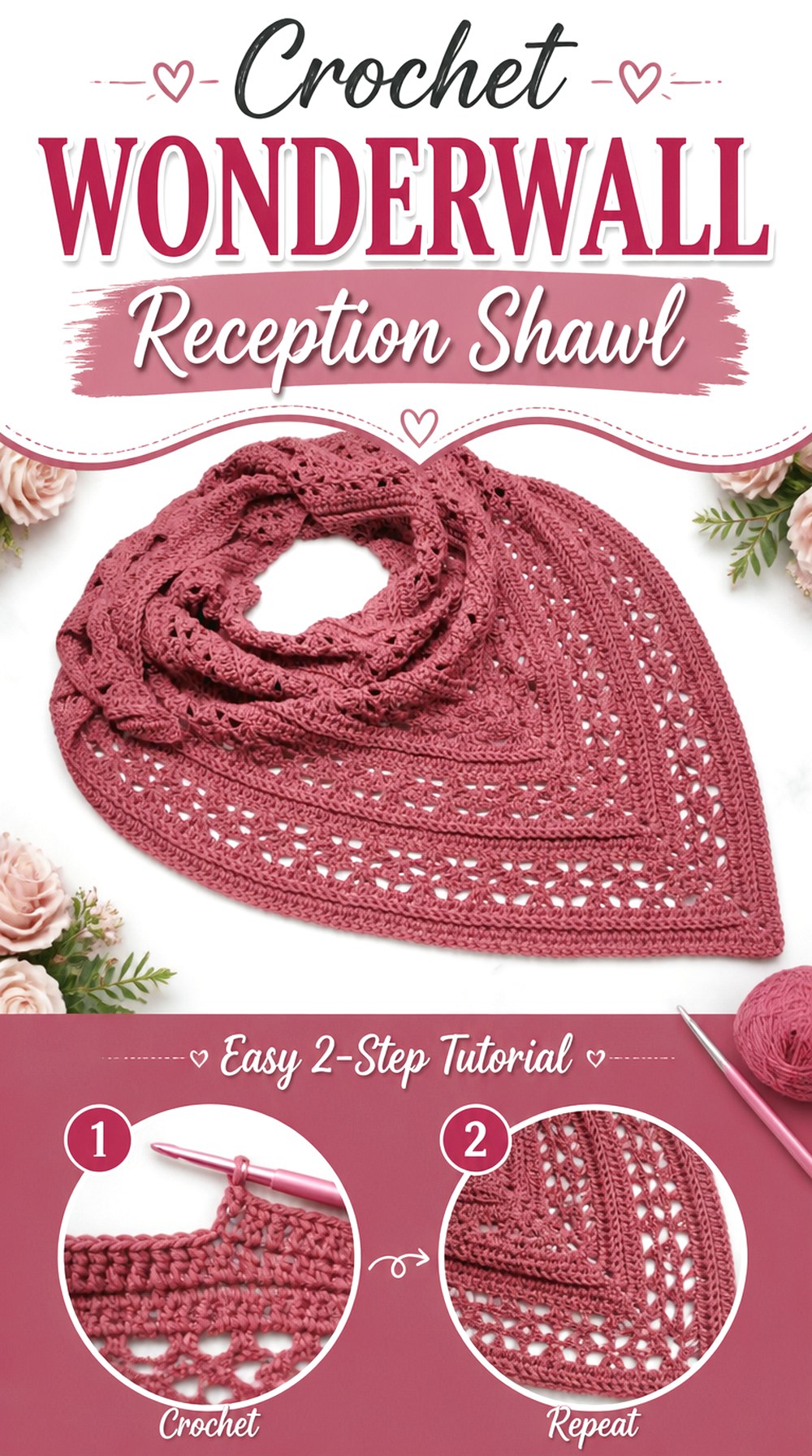
A wide triangle like the Wonderwall Shawl offers more of a wrap-like presence than a tiny shawlette, making it worth considering for a cool reception or an event that moves between indoor and outdoor spaces. Its broad silhouette can cover the upper arms while still leaving the front of a dress largely visible.
Compared with the highly ornamental vintage and fan-lace ideas, this option can be styled more quietly. That makes it useful when you want the handmade layer to support the outfit instead of becoming its focal point. For a fall wedding, consider how much shoulder coverage you want once temperatures drop after sunset.
Prioritize Shoulder Span Over a Dramatic Center Point
For actual warmth, width across the shoulders can matter more than how long the triangle becomes down the back. When adapting the shawl, periodically try it on over the intended dress or a similar garment. A shape that appears large on a table may still leave the outer arms exposed once it curves around the body.
A Wide Shawl Needs a Plan for Hands-Free Wear
During a reception you may be eating, carrying a drink, greeting guests, or dancing. Experiment with different drapes before the event and see whether the ends remain stable without constant gripping. If you plan to use a shawl pin or another accessory, make sure it suits both the crochet fabric and the dress underneath rather than introducing snagging or excessive strain.
Original Tutorial and Creator Credit
Creator: Bag-O-Day Crochet
6. Crochet Pocket Shawl for an Outdoor Fall Reception
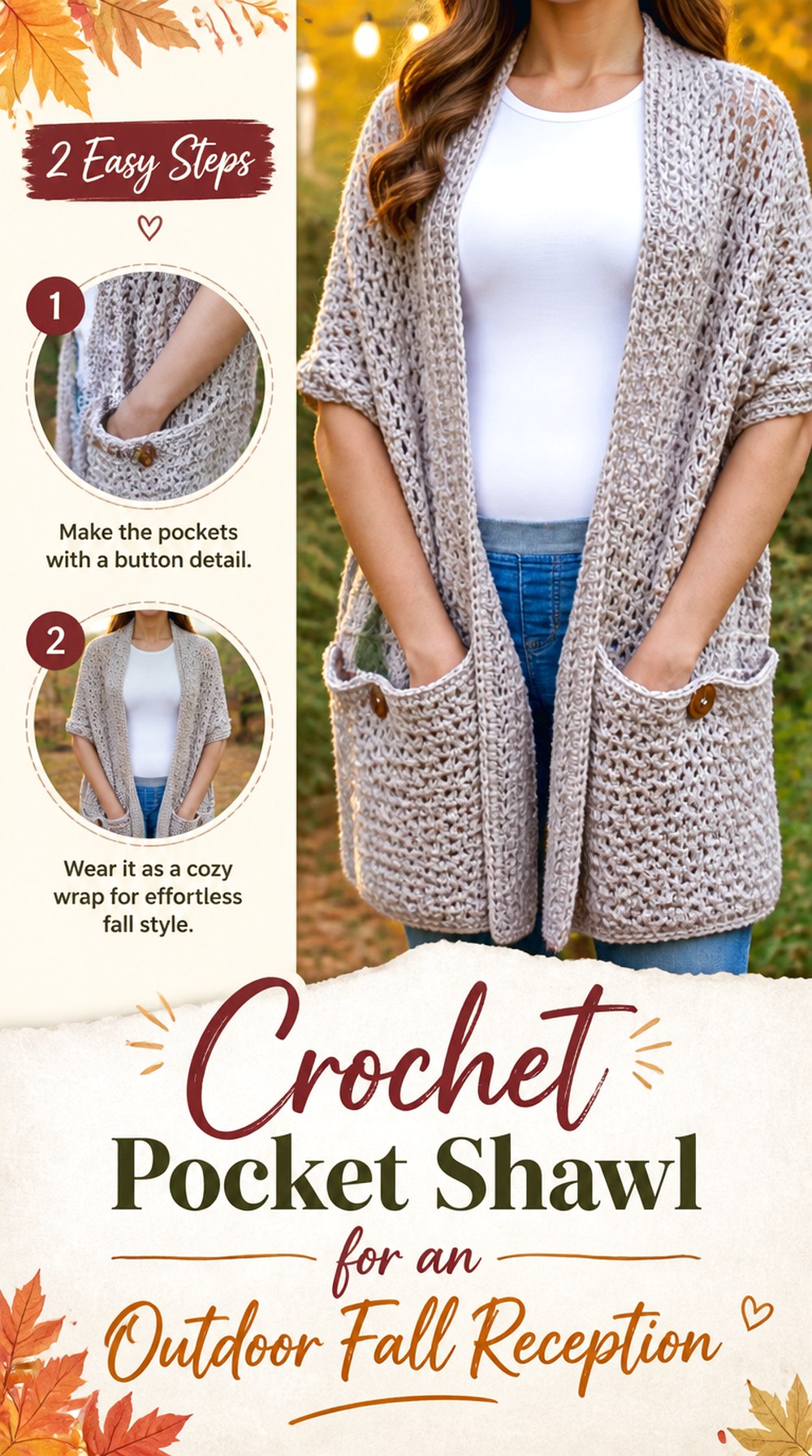
A pocket shawl changes the purpose of the accessory. Instead of being purely decorative, it is a long wrap with built-in hand-warming storage areas, making it the most casual and functional option in this wedding collection. It is better suited to a rustic outdoor reception, rehearsal gathering, bridal weekend, or relaxed guest outfit than to an extremely formal ceremony.
The finished shape also differs substantially from the triangular pieces. Its long rectangular body spreads warmth across the back and arms, while the pockets create extra visual and physical weight near the ends.
Pockets Make This Better for Practical Wedding Settings
If the event includes outdoor seating, a barn venue, a bonfire, or a long evening in cool weather, pockets can be genuinely useful. They are less compatible with a sleek formal silhouette because the added fabric becomes visible at the front. Decide whether warmth and utility or a nearly invisible layer is the higher priority for the event.
Check Pocket Placement While Wearing the Intended Shoes
Pocket position depends on how the shawl hangs on your body, not simply on how it measures flat. Try the wrap with the clothing and footwear you expect to wear so you can judge where the ends naturally fall. Avoid assuming another person’s finished placement will be ideal for your height and preferred drape.
Optional Buttons Change How Formal the Wrap Feels
The tutorial includes optional buttons. For a wedding adaptation, that detail can shift the finished look considerably. A discreet closure may help control the wrap, while a large rustic button can make the piece read more like casual outerwear. If you add hardware, confirm that its weight and attachment do not distort the crochet fabric.
Original Tutorial and Creator Credit
Creator: naztazia
7. Crochet Tunisian Asymmetrical Wedding Wrap
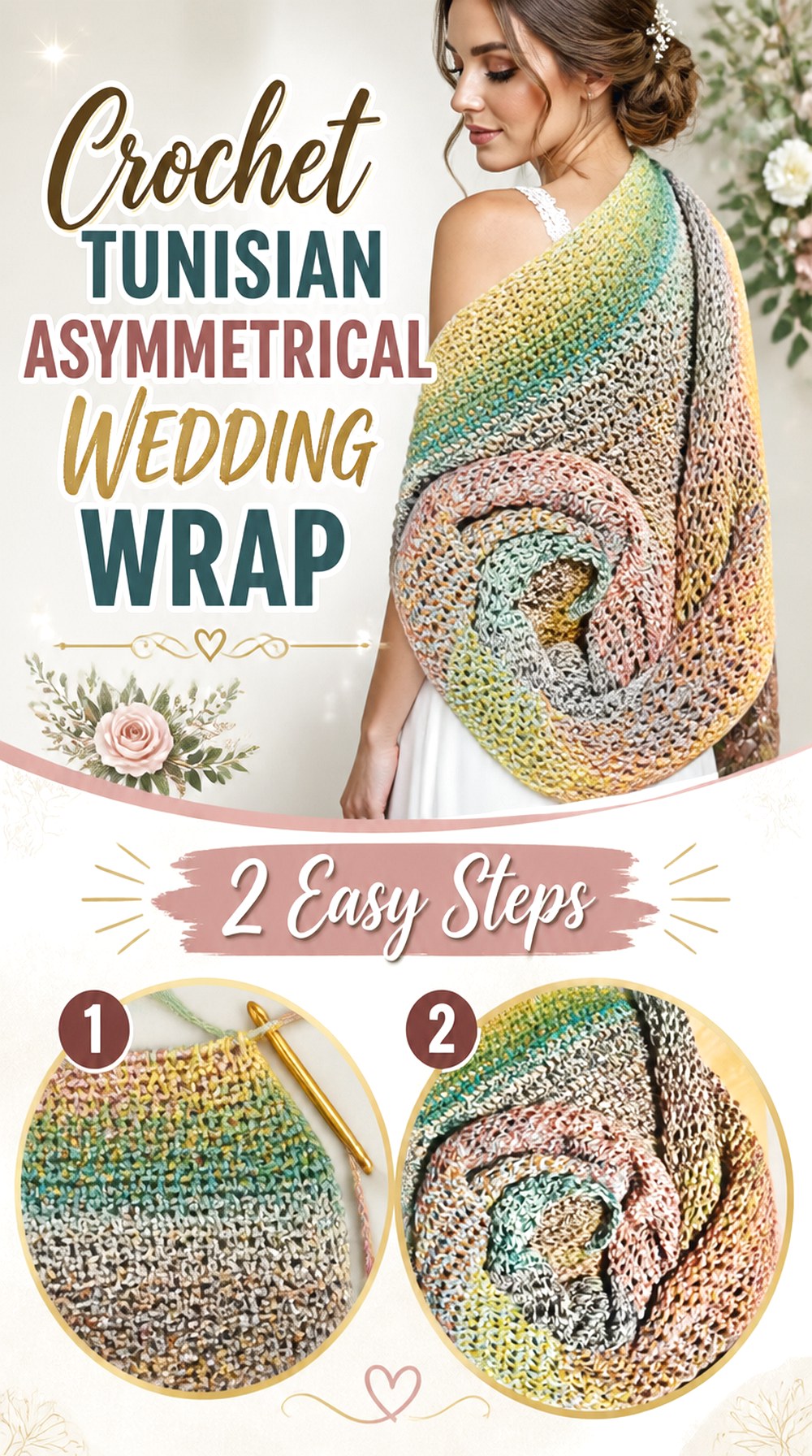
This asymmetrical shawl brings a noticeably different silhouette to the collection. Instead of a centered triangle, the fabric extends unevenly, allowing one side to sweep farther across the body. The tutorial uses Tunisian crochet, so it also offers a different learning route from standard crochet shawls.
For wedding styling, the asymmetry works well when you want an intentionally draped accessory rather than a traditional shawl centered perfectly down the back. It can be especially effective with simple dresses because the diagonal lines provide movement without requiring fringe, motifs, or a heavily ornamental border.
Asymmetry Gives You More Draping Choices
The long side can cross the front, fall over one shoulder, or become part of a scarf-like wrap. Try several placements before choosing your final dimensions because the shawl’s usefulness depends on how much of that longer edge you actually need. A very long point can look elegant in still photographs but may become cumbersome in crowded seating or while moving around a reception.
Tunisian Fabric Deserves a Separate Swatch
Do not assume the same yarn will behave identically in Tunisian and standard crochet. Make a sample using the actual technique, then evaluate thickness, flexibility, and stitch definition after finishing. If the result feels too firm for a dressy shoulder wrap, changing hook size or yarn requires returning to the tutorial and recalculating your material needs rather than blindly substituting.
Original Tutorial and Creator Credit
Creator: Fiber Fox Studios
8. Crochet Shell Stitch Wedding Shawl
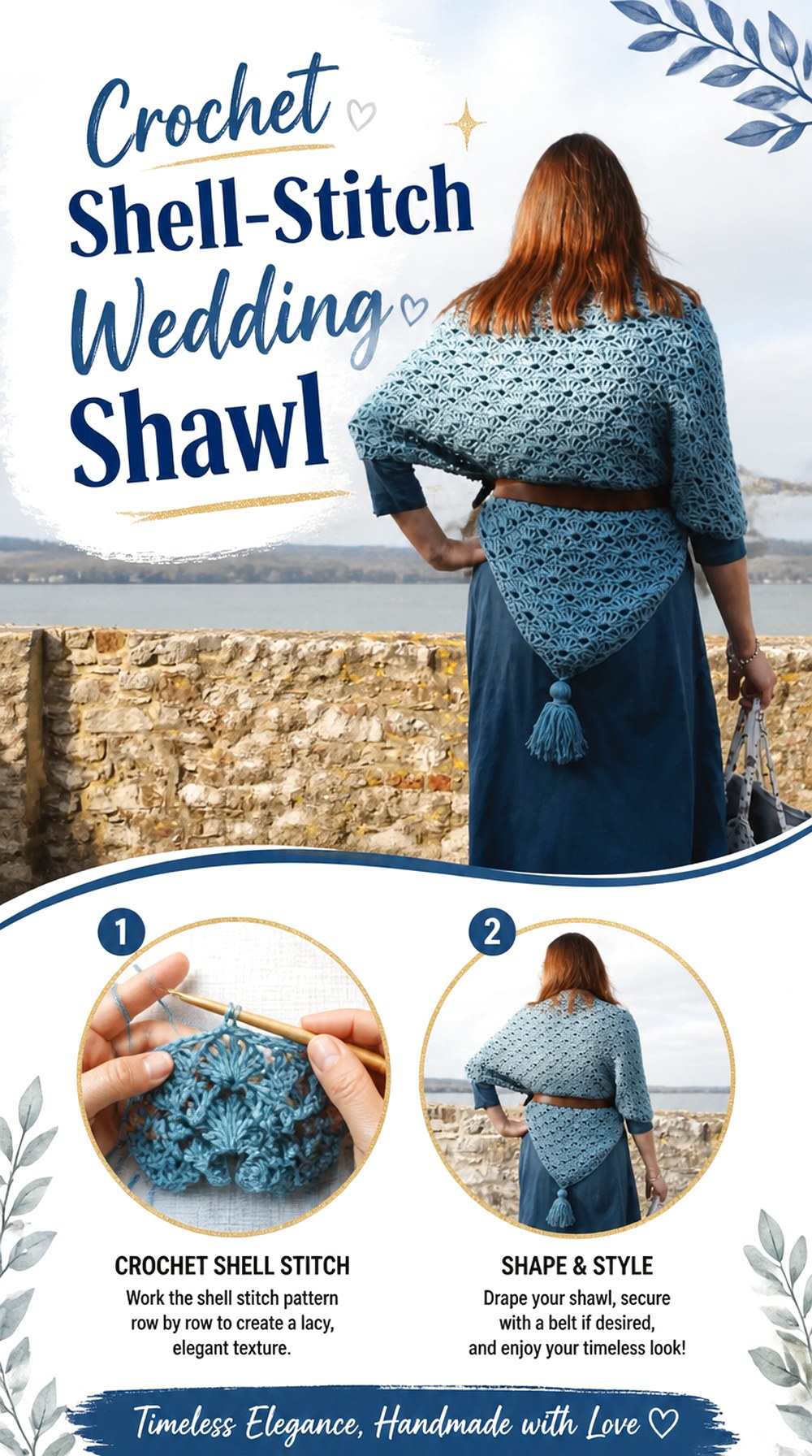
Shell stitches create a scalloped rhythm that feels decorative without requiring separate motifs or complicated embellishments. The Quay Lane Shawl is worked with a loose, lacy appearance, giving it enough openness for formal layering while maintaining a recognizable repeated texture.
This design sits comfortably between plain and highly ornate options. It can complement a simple bridesmaid dress, a minimal bridal gown, or a wedding-guest outfit without looking like a heavy winter accessory. The main styling decision is whether the shells should strongly contrast with the dress or remain tonal and subtle.
Shell Definition Depends on the Fabric Staying Open
If your yarn substitution creates a dense fabric, the shell shapes can lose some of their airy character. Crochet a sample large enough to show multiple repeats and assess it after the finishing method you intend to use. The goal for wedding wear is usually enough structure for the shells to remain visible without creating a stiff cape-like surface around the shoulders.
Scalloped Texture Can Replace Extra Fringe
A shell pattern already creates movement along the shawl, so additional tassels or fringe may not be necessary. Before adding anything to the edges, photograph the finished shawl over the dress from several angles. If the stitch pattern already supplies enough visual detail, a cleaner finish may look more formal and be less likely to catch on jewelry or venue furniture.
Original Tutorial and Creator Credit
Creator: Ophelia Talks Crochet
9. Crochet Gradient Fall Triangle Wedding Shawl
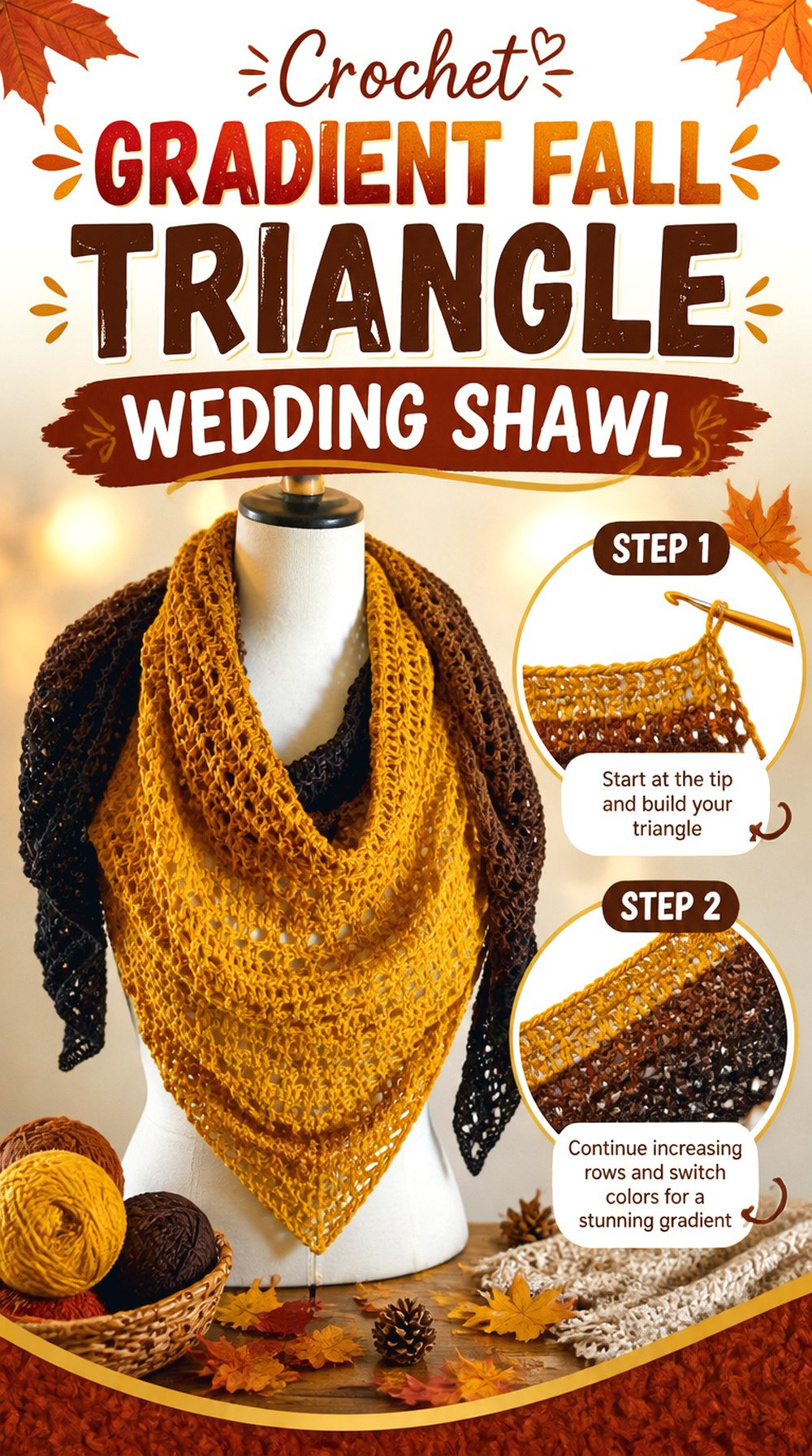
The fall theme is already built into this tutorial’s presentation, making it an obvious starting point for rust, gold, berry, plum, forest, or sunset-inspired wedding colors. The triangular silhouette is classic, while a gradient can turn the surface into a major color feature even when the stitch pattern itself remains restrained.
This idea works particularly well for a wedding guest or bridesmaid whose outfit can support stronger seasonal color. A bride could also adapt the construction in a solid neutral if the shape is appealing but the gradient effect would compete with the gown.
Place Strong Color Where It Helps the Outfit
A gradient does not always distribute color evenly across the body. The deepest shade may land near the neck, along the lower point, or somewhere between, depending on the yarn and final size. If color placement matters for photographs, inspect the yarn sequence before starting and consider whether a solid yarn gives you more control.
Fall Styling Does Not Require a Heavy Fabric
Autumn color and autumn warmth are separate decisions. A shawl can look seasonally appropriate while remaining lightweight, or it can provide more substantial coverage in a quiet neutral. Choose based on the expected venue temperature first, then decide how strongly you want the palette to signal the season.
Original Tutorial and Creator Credit
Creator: Pattern Princess
10. Crochet Chart Led Statement Wedding Shawl
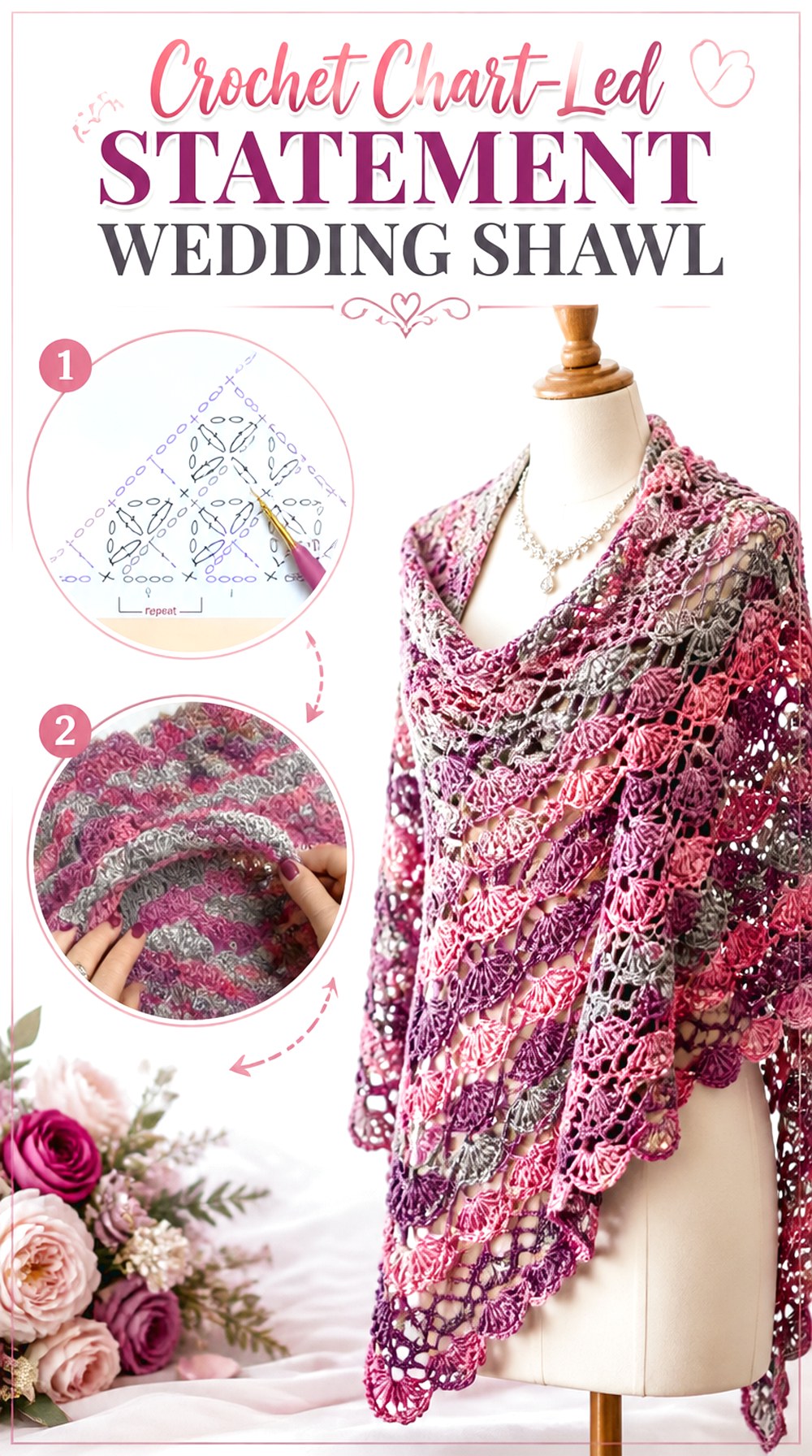
This project is useful for crocheters who want the shawl itself and the learning process to be more involved. Marly Bird’s tutorial combines shawl construction with reading a crochet chart, making it distinct from tutorials that rely almost entirely on spoken row-by-row demonstration.
For a wedding, a chart-supported project can be attractive if you want to understand the full visual structure before committing to yarn or color. It is also a useful choice when you prefer checking your place against a diagram instead of relying on a long video every time you return to the project.
A Chart Helps You See the Pattern as a Whole
For lace intended for formal wear, understanding where sections repeat can help you notice errors before they travel far across the shawl. Use the chart as a visual checkpoint alongside the creator’s instructions rather than trying to recreate the pattern from this article. The goal is to keep the finished surface balanced and consistent enough for the stitch design to read clearly.
Choose This Route When Learning Format Matters
If you dislike charts, a wedding deadline may not be the best moment to force yourself into an unfamiliar format. If you have been wanting to learn them, however, this project gives the chart a practical purpose. Build extra time into the schedule for pausing, comparing symbols, and correcting mistakes rather than assuming your usual crochet pace will apply.
Make the Statement Through One Main Feature
A strongly patterned shawl often looks more polished when one element leads the design. That may be the stitch pattern, yarn color, border, or the dress itself. Combining a dramatic charted pattern, multicolor yarn, heavy fringe, and ornate gown can make all the details compete. Remove one or two variables if the finished styling feels crowded.
Original Tutorial and Creator Credit
Creator: Marly Bird
11. Crochet Bordered Formal Triangle Shawl
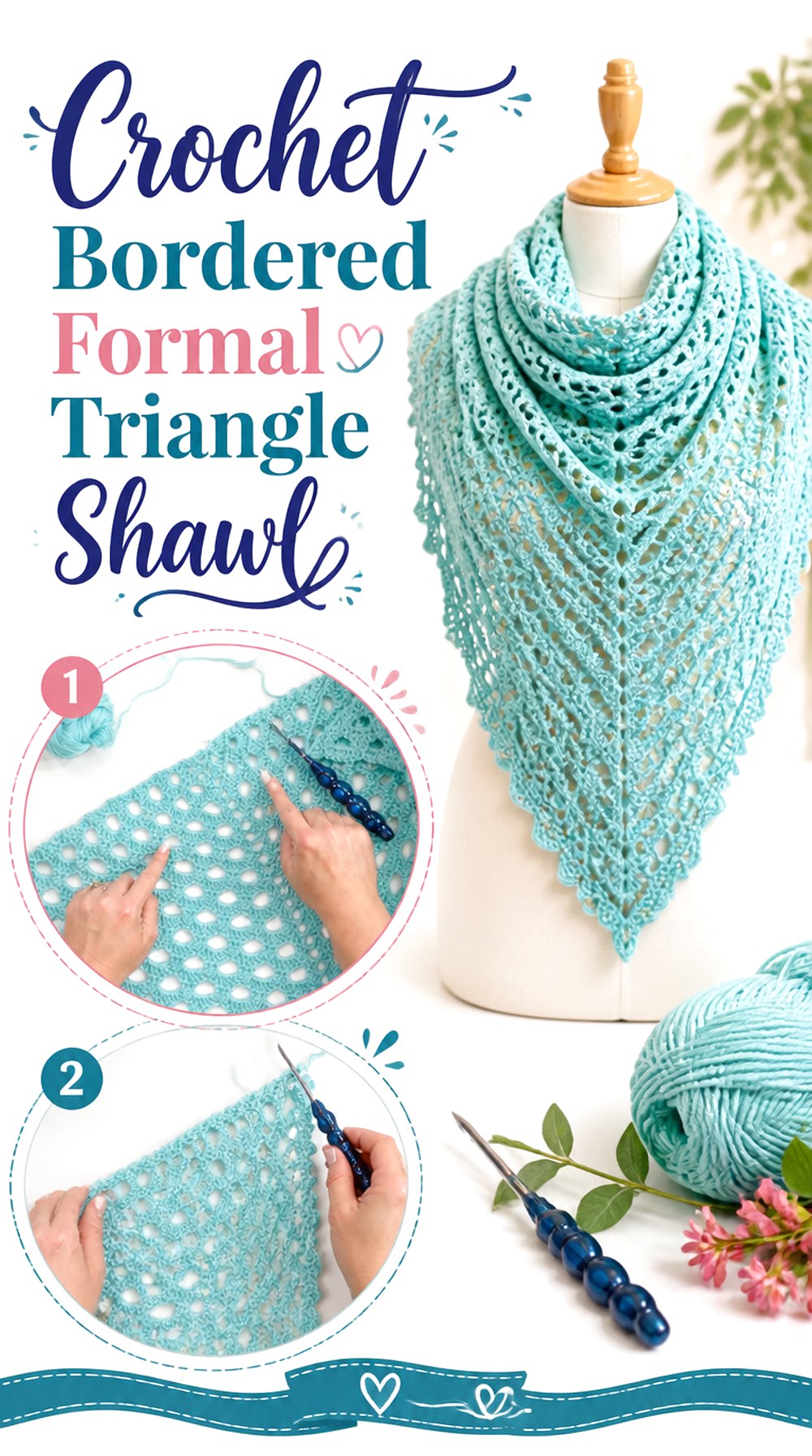
This Yarnspirations tutorial creates a triangular shawl with a noticeable border, which gives the finished piece a more defined perimeter than an all-over repeat that simply stops at the final row. That distinction can matter for formal wear because an intentional edge helps frame the shoulders and the lower point.
The source project uses Caron Simply Soft, and the tutorial emphasizes sheen and drape. If you substitute another yarn, compare the resulting fabric rather than assuming you will reproduce those same characteristics automatically.
A Border Can Echo Other Wedding Details
Look at the dress hem, veil edge, jewelry, and bouquet ribbon when deciding whether the shawl border should stand out. A defined border can visually connect with another edge in the outfit, but it can also become distracting when several accessories already have strong trims. Photograph the whole outfit instead of judging the shawl in isolation.
Yarn Substitution Can Change the Border More Than the Center
Borders often contain concentrated stitch detail, so a thicker or less flexible yarn may make the outer edge behave differently from the main fabric. Swatch the actual border pattern if possible, not just the central stitch. If the edge flares, curls, or feels rigid, revisit your yarn and hook choices before completing the entire wedding shawl.
Original Tutorial and Creator Credit
Creator: Yarnspirations
12. Crochet Airy Triangle Wedding Wrap
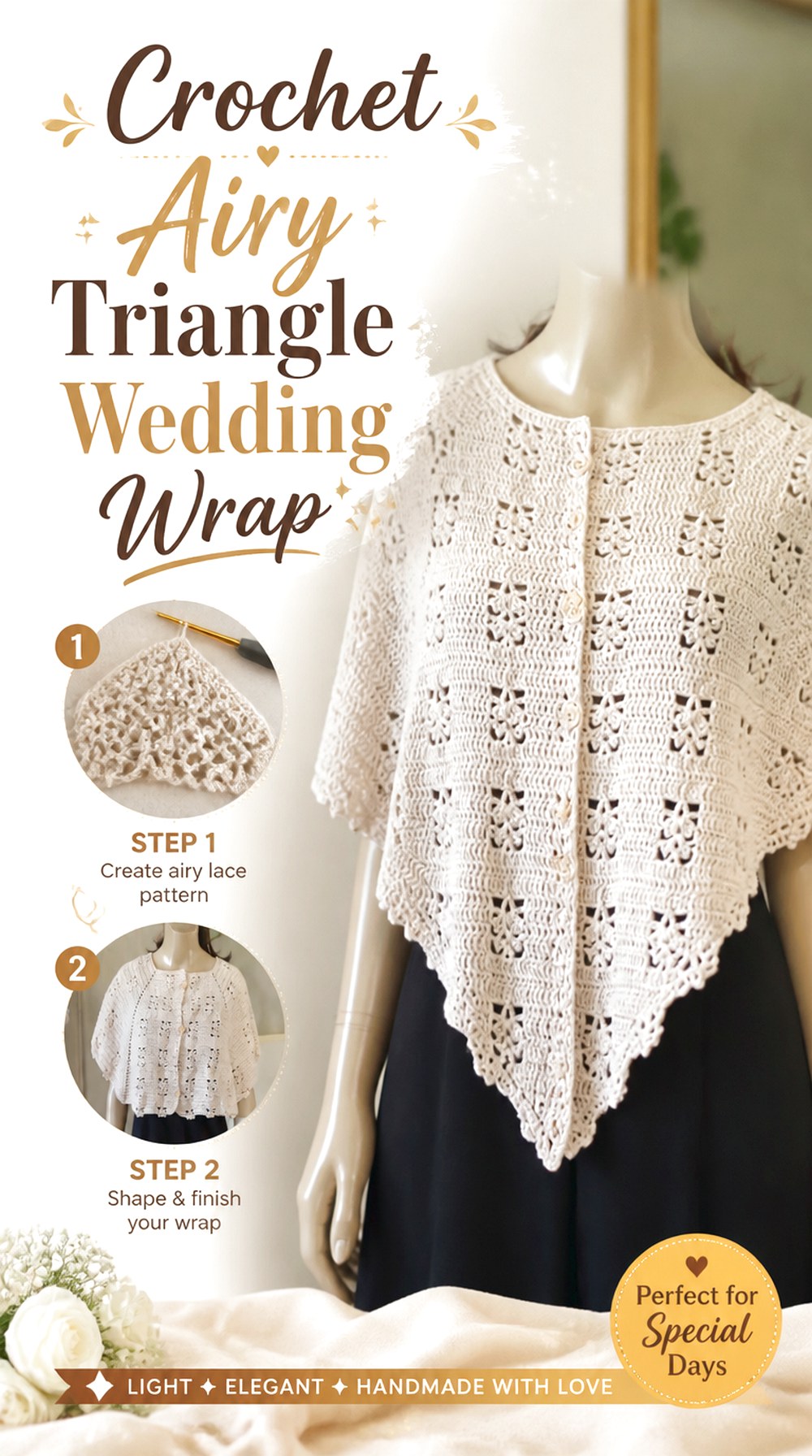
This tutorial offers another triangular construction but with a straightforward step-by-step presentation that makes it useful when the wedding goal is a classic silhouette rather than an unusual construction. An airy triangle can sit over a formal dress without creating the broad horizontal block of a rectangular wrap.
Its adaptability is the main attraction. Keep the color close to the dress for a bridal layer, choose the wedding palette for attendants, or use a richer fall shade for guests. The critical planning decision is how large the triangle should become before it begins to obscure the outfit beneath it.
Stop at the Size That Serves the Dress
Shawls are often designed so the maker can continue until reaching a preferred size. For wedding use, decide that size by trying the project on, not simply by continuing until the yarn is gone. Mark your preferred shoulder coverage while the piece is in progress, then account for any change expected from the creator’s recommended finishing process.
Light Fabric Still Needs Clean Edges
An airy shawl draws attention to irregular borders because there is less dense texture to disguise them. Check the outer edges periodically as you work. If one side begins growing differently from the other, correct the issue before final finishing rather than hoping blocking will solve a substantial construction problem.
Original Tutorial and Creator Credit
Creator: elylou crochette (Le Crochet et vous !)
13. Crochet Simple Openwork Bridesmaid Shawl
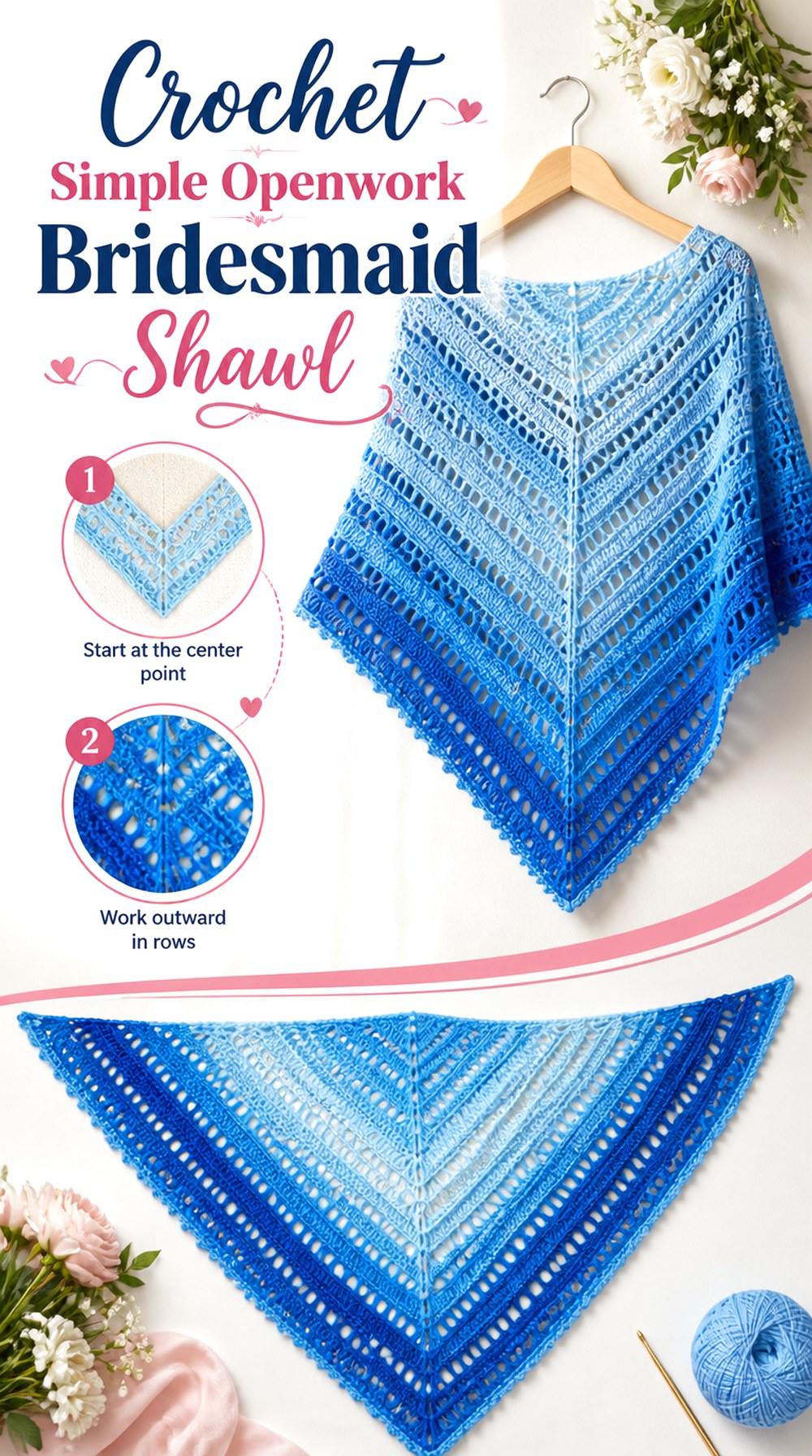
A relatively uncomplicated shawl can be a better bridesmaid choice than an elaborate one, particularly when several matching pieces need to be made. This design offers an open crochet surface without relying on a complex motif layout, so the wedding color can do more of the styling work.
It is also flexible enough to look different depending on yarn choice. A quiet solid can coordinate across a bridal party, while a more expressive color can make the same general construction suitable for a guest. When multiples are involved, consistency in finished size and fabric matters more than making every shawl as elaborate as possible.
Matching Shawls Require Matching Fabric, Not Just Matching Yarn
Two people can use the same yarn and hook yet produce different dimensions because tension varies. If several crocheters are sharing the work, compare blocked swatches before everyone begins. If one person is making the full set, keep notes on hook choice and any project-specific measurements so the later pieces do not drift significantly from the first.
Give Yourself More Finishing Time for a Bridal Party Set
Weaving ends, checking edges, blocking, and comparing several finished pieces can take longer than expected. Build those tasks into the schedule rather than treating the final crochet stitch as the completion date. Multiple shawls look more cohesive when they receive the same level of finishing and are evaluated together before the wedding.
Original Tutorial and Creator Credit
Creator: The Craft Nut
14. Crochet Time in a Bottle Evening Shawl
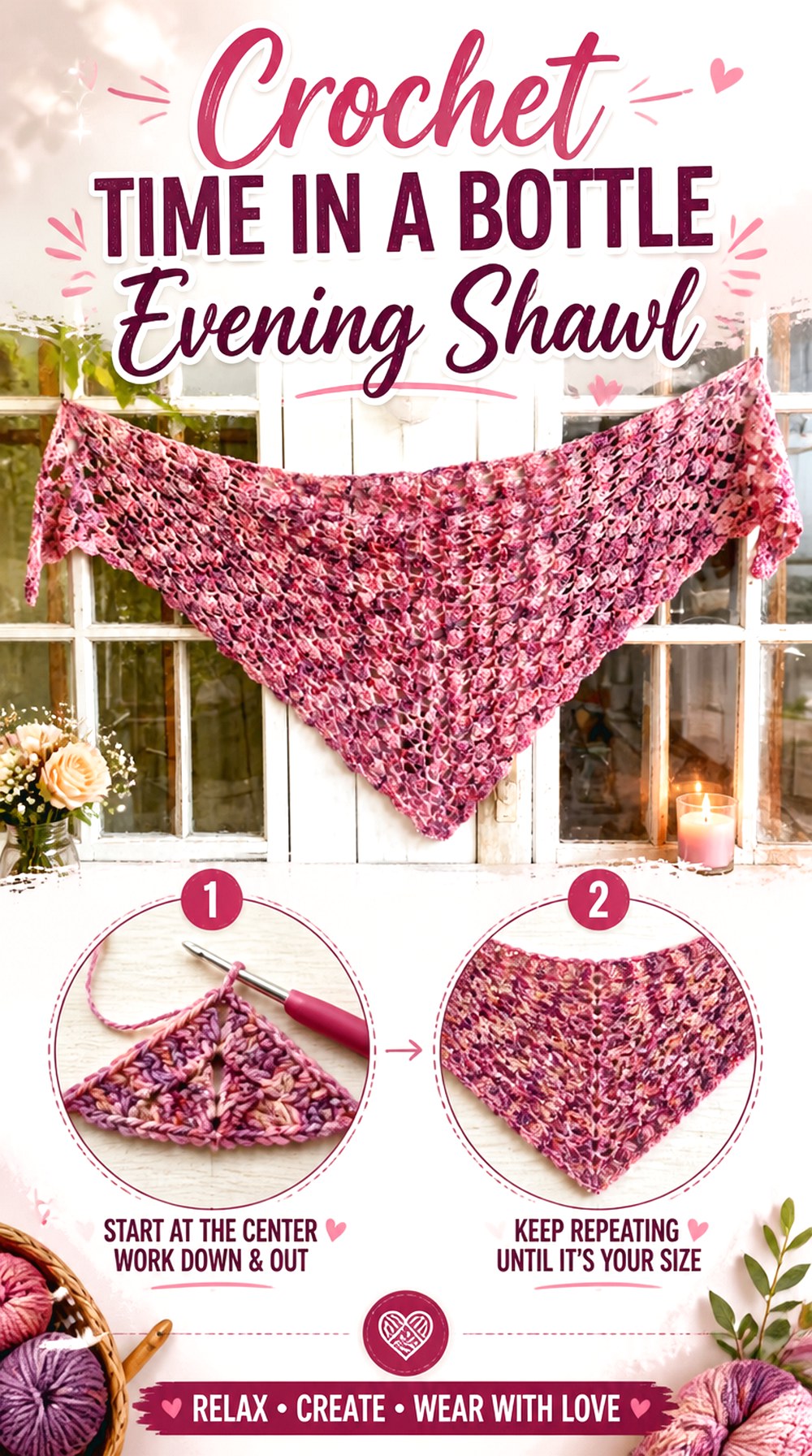
The Time in a Bottle Shawl offers a dressier triangular option with enough surface interest to work beyond daytime casual styling. The creator notes that the design can work with a dressy outfit, which makes it a useful candidate for an evening reception or a wedding guest who wants the shawl to remain part of the outfit indoors.
A self-striping yarn can emphasize the triangle’s growth, while a solid or tonal yarn would produce a quieter result. For formal use, make that color decision before buying materials rather than relying on the sample’s original appearance.
Evening Wear Rewards Controlled Color Placement
Reception lighting can make strong color transitions look different from daylight. If you are considering a multicolor yarn, photograph the swatch both indoors and outside. For a more restrained result, a solid shade allows the stitch architecture to remain visible without introducing additional bands of color across the shoulders.
Look for the Creator’s Correction Before Starting
The YouTube description includes a correction for the tutorial. Check the current video description and any creator updates before beginning the project. This is especially important when working toward a fixed wedding date: discovering a correction early is far easier than undoing a large section after the shawl has grown.
Original Tutorial and Creator Credit
Creator: Ninja Bunny Crochet
15. Crochet Clean Line Triangle Wedding Shawl
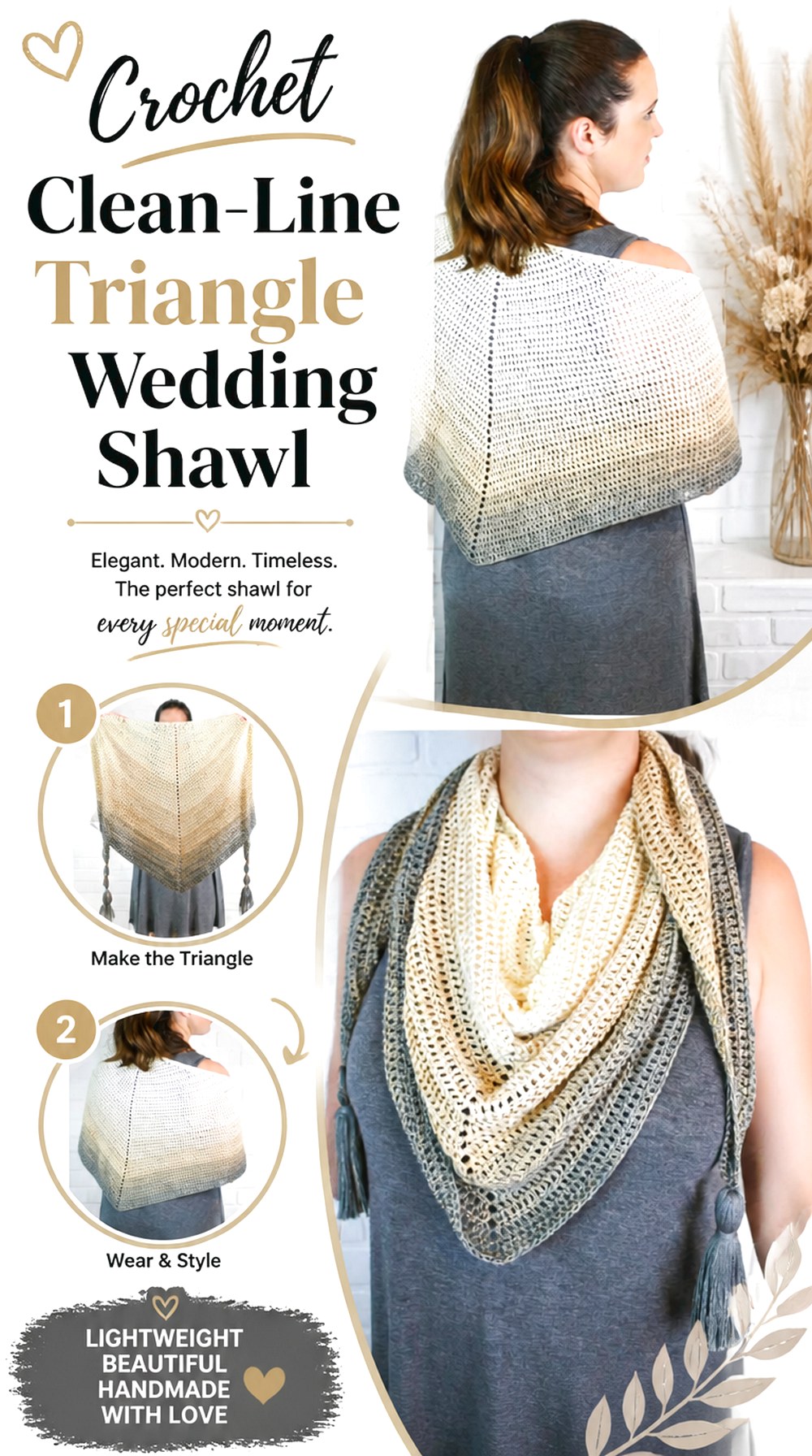
This classic triangle is particularly useful for left-handed crocheters because the selected tutorial is specifically demonstrated left-handed. That learning format is the meaningful difference here: instead of mentally reversing a right-handed video, you can watch the project from a matching orientation.
The finished idea itself is deliberately uncomplicated, which makes it adaptable to a wide range of wedding styling. Choose a refined neutral for bridal wear, a wedding-palette shade for attendants, or an autumn accent color for guests. Its simple surface can also provide a visual break when the dress already contains lace, beading, or embroidery.
A Simpler Surface Can Make Yarn Quality More Visible
When there are fewer competing stitch details, texture, twist, fuzziness, and color variation in the yarn become more noticeable. Make a swatch and view it against the dress under natural light. If the yarn appears too fuzzy or casual for the desired look, switching material may make a larger difference than adding extra edging.
Left-Handed Instruction Removes an Unnecessary Translation Step
For makers who naturally crochet left-handed, a mirrored demonstration can make stitch placement easier to follow. Use the tutorial as intended rather than reconstructing it from another source. If you are right-handed, choose one of the many right-handed options in this collection instead of forcing this particular learning format.
Original Tutorial and Creator Credit
Creator: Winding Road Crochet
16. Crochet Minimal Fall Wedding Guest Shawl
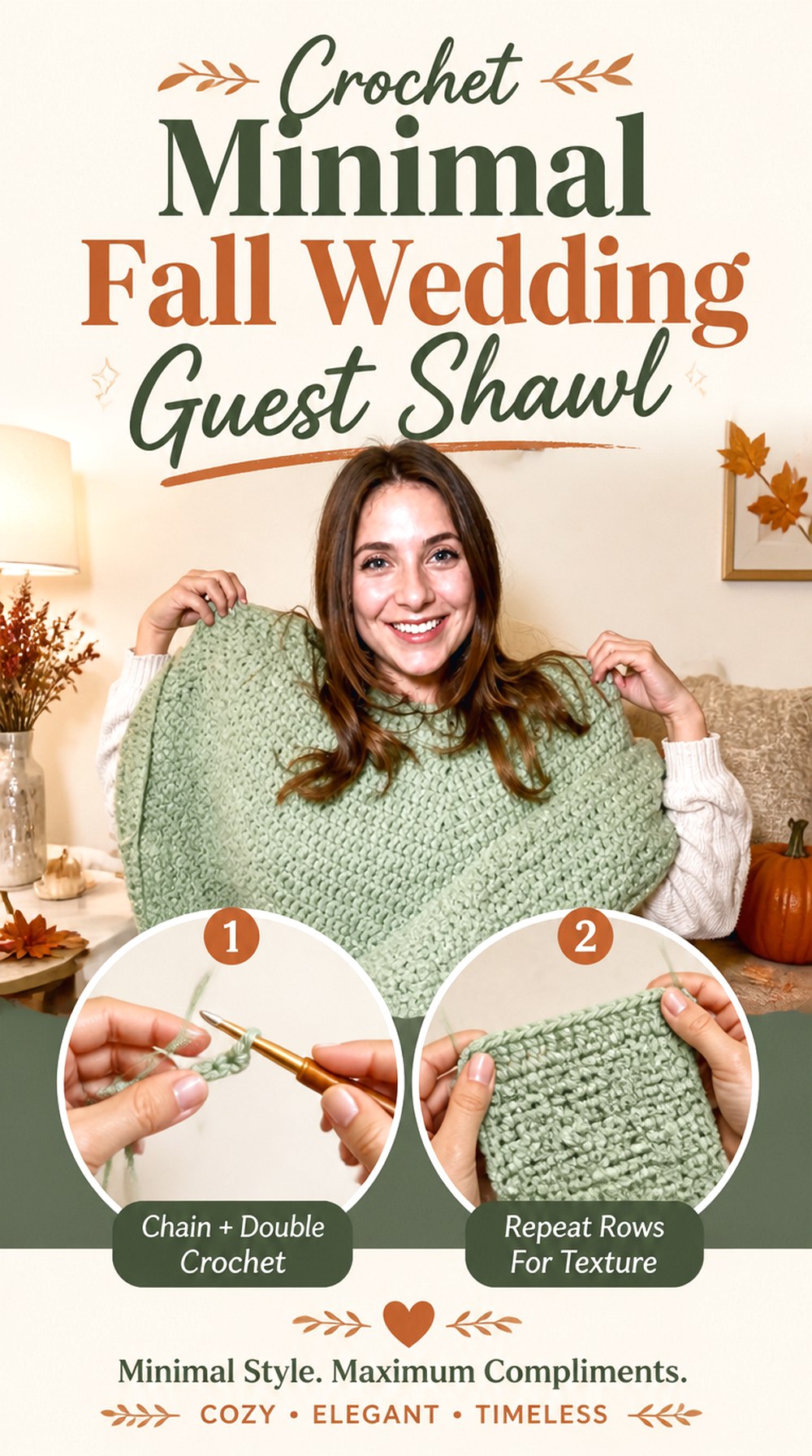
This project is a good counterpoint to the ornate lace pieces in the collection. The straightforward shawl shape lets you create an understated layer for a guest outfit without making the crochet compete with the dress, jewelry, shoes, and other accessories.
A minimal shawl is also easier to style repeatedly after the wedding. Rather than choosing it solely for one event, think about whether the yarn color could work with other autumn outfits. That makes this option practical for someone who wants handmade wedding attire without creating a highly specialized bridal accessory.
Minimal Styling Makes Proportion More Important
With less decorative detail to distract the eye, the basic width and depth of the shawl become noticeable. Try it on as it grows and decide whether it reaches the arms where you want it to. Do not assume that a larger piece automatically hangs better; too much depth can overwhelm a fitted or shorter dress.
Use Color as the Main Wedding Connection
A simple construction can become event-specific through color rather than extra crochet decoration. Pull one subdued shade from the invitation palette, florals, suit accessories, or dress print instead of adding fringe or motifs simply to make the project feel special. This keeps the finished wrap easier to wear again.
Original Tutorial and Creator Credit
Creator: Crocheted By Vivi
17. Crochet Elegant Lacy Evening Shawl

This shawl is presented specifically as an elegant design, making it a natural fit for evening wedding styling. It offers another route for readers who want decorative crochet but prefer not to use the recognizable Virus or vintage-lace patterns elsewhere in the list.
For a fall reception, consider a color that remains distinct under lower indoor lighting. Deep green, burgundy, plum, charcoal, champagne, and other subdued shades can all produce different effects, but test your actual yarn beside the dress rather than selecting from an online color image alone.
Let the Lace Carry the Formal Detail
When the stitch surface already reads as decorative, additional trims may not improve the result. Finish the main shawl first, place it with the complete outfit, and only then decide whether the edges need anything further. Formal styling often benefits from stopping before every possible embellishment has been added.
Check the Tutorial Language and Visual Format Before the Deadline
The channel name includes Arabic and English, so preview the tutorial before committing to it and confirm that its visual and spoken presentation works for the way you learn. A beautiful finished object is not enough if the teaching format is difficult for you to follow under time pressure.
Original Tutorial and Creator Credit
Creator: روائع الكروشية – Aml Younes
18. Crochet Textured Cluster Triangle Shawl
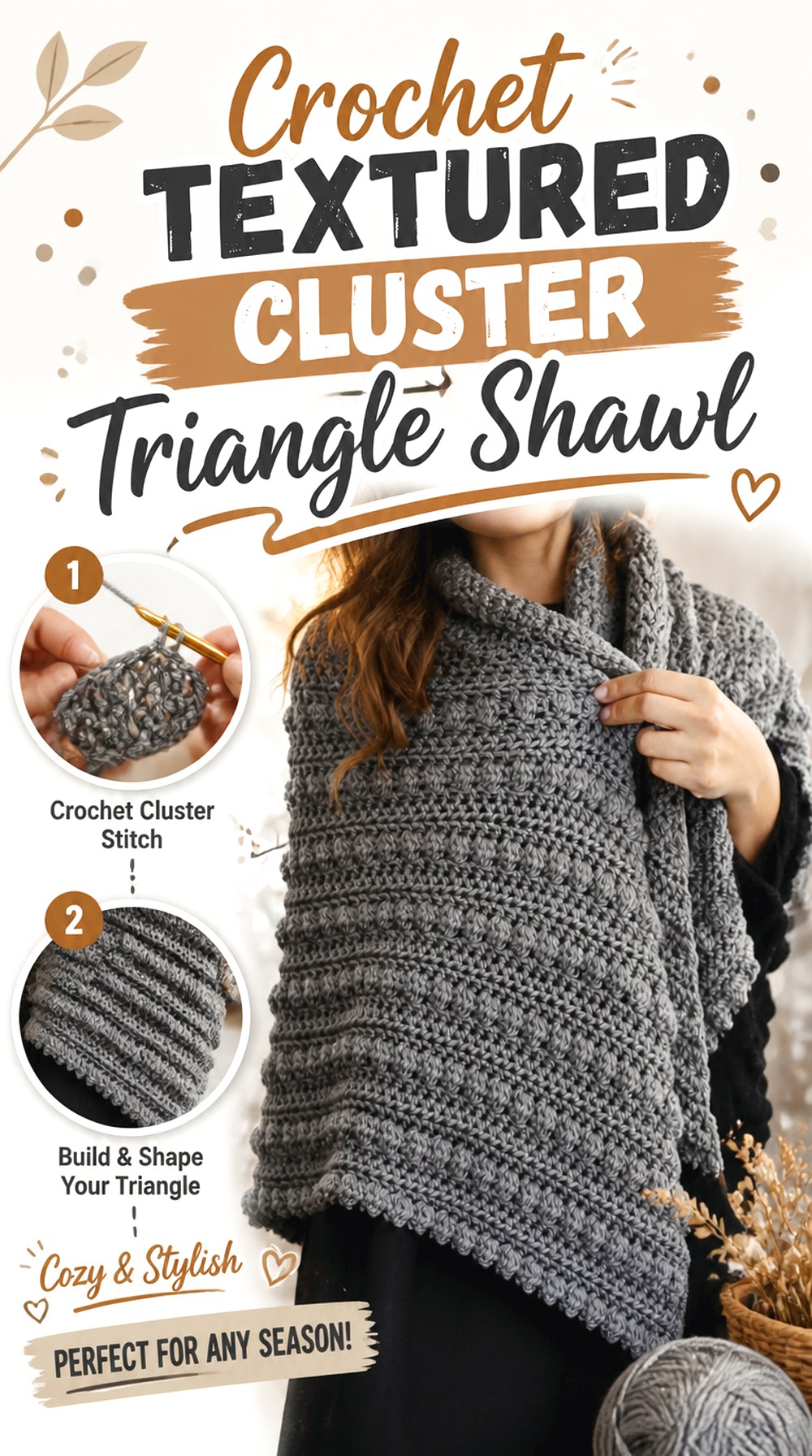
A cluster-stitch shawl gives you texture without turning the entire piece into open lace. Leelee Knits’ design develops as a triangle and combines a smoother background with raised cluster detail, making it a useful choice when you want the crochet to be visible but not as delicate as the vintage or fan-lace options.
For a fall wedding, this balance can work well when the ceremony begins in mild weather and the reception continues into a cooler evening. The texture creates more visual substance than a minimalist shawl, while the triangular outline still keeps much of the dress front visible.
Cluster Texture Shows Best in a Readable Yarn
Highly variegated yarn can sometimes compete with raised stitch texture. If the clusters are the reason you chose this design, compare a solid or gently tonal yarn with your multicolor option before committing. The most interesting skein on its own is not always the one that makes the crochet pattern easiest to see.
Check the Center and Upper Edge Before Final Finishing
A triangle worn over formal clothing puts the center line and neckline edge in prominent positions. Lay the shawl flat during construction and verify that the shape remains balanced. Minor inconsistencies are easier to address while working than after the entire piece has been finished and blocked.
The Textured Surface Can Replace Extra Accessories
If the shawl already provides visible raised detail around the shoulders, you may need less statement jewelry near the neckline. Try earrings, necklace, shawl, and dress together rather than selecting each item separately. Removing one accessory can sometimes make both the crochet and the garment easier to appreciate.
Original Tutorial and Creator Credit
Creator: Leelee Knits
Which Fall Wedding Shawl Shape Should You Choose?
For the most traditional bridal appearance, start with the Vintage Lace Bridal Shawl, Fan-Lace Ceremony Shawl, or Shell-Stitch Wedding Shawl. All three make the crochet pattern an important visual part of the outfit.
If warmth and coverage matter more, the Wonderwall Reception Shawl gives you a broad triangle, while the Pocket Shawl is the most practical choice for a relaxed outdoor celebration. The Tunisian Asymmetrical Wedding Wrap is better when you want an intentionally off-center drape instead of a classic pointed back.
For bridesmaids or guests wearing detailed dresses, the Simple Openwork Bridesmaid Shawl, Clean-Line Triangle Wedding Shawl, and Minimal Fall Wedding Guest Shawl keep the crochet quieter. If color is the main attraction, the Gradient Fall Triangle Wedding Shawl gives seasonal color room to become part of the design.
Conclusion
The right crochet fall wedding shawl depends on what the layer needs to do once you are actually at the event. Choose open vintage or fan lace when decoration is the priority, a broad triangle or rectangular pocket wrap when evening warmth matters more, and a clean simple shawl when the dress already carries plenty of detail. Asymmetrical and bordered designs offer useful middle ground when you want something distinctive without relying on elaborate motifs.
Before committing, compare a finished swatch with the outfit and check the planned shoulder coverage, drape, color, and finishing. Then use the original tutorials linked with each idea for the creators’ exact construction details and project-specific instructions.
Frequently Asked Questions
What crochet shawl shape works best over a wedding dress?
There is no single shape that suits every dress. Triangles leave much of the front visible and create a decorative point at the back, while rectangular wraps give more even arm coverage. An asymmetrical shawl creates a less traditional drape. Try the shape against the actual neckline, back details, and sleeves before deciding, because those garment features determine whether the shawl complements or conceals the dress.
Should a fall wedding shawl be dense enough to provide real warmth?
Only if warmth is part of its job. Open lace can work beautifully for an indoor ceremony or as a decorative layer, but it may not replace outerwear at a cold outdoor reception. Think about the venue, time of day, and expected exposure to wind before choosing the stitch density. If uncertain, crochet a swatch and evaluate it outdoors in conditions similar to the event.
Does a bridal crochet shawl have to match the dress exactly?
No. A closely related ivory, cream, champagne, or other neutral can still look coordinated, and a subtle contrast may make the crochet easier to see. The important step is comparing the actual yarn with the actual dress under more than one light source. Photographs, screens, and indoor lighting can all make pale shades appear different from how they look together in person.
How can I keep a crochet wedding shawl from slipping off my shoulders?
Start by choosing enough width for the shawl to curve around the shoulders rather than merely resting across the back. Test several draping positions while moving, sitting, and lifting your arms. A suitable shawl pin or closure may help with some designs, but check that it will not damage delicate crochet or snag the dress. Some shapes naturally stay in place better on a particular body or neckline than others.
Should I block a crochet wedding shawl before wearing it?
Follow the creator’s instructions and the care guidance for the yarn you use. Blocking can be especially important when the design relies on open lace, shells, or a defined finished shape, but fibers respond differently to moisture and heat. Do not experiment on the completed wedding shawl first. Test your intended finishing method on the swatch, and leave enough time before the event for the piece to dry and settle completely.
How far in advance should I start crocheting shawls for bridesmaids?
Work backward from more than the crochet time alone. You also need time for swatching, yarn ordering, corrections, weaving ends, finishing, blocking if appropriate, and comparing all the completed shawls. If several people are making them, differences in tension can also require adjustment. Completing one sample shawl early is the most useful way to estimate the real workload before committing to an entire bridal-party set.