An oversized crochet flap bag can range from a soft messenger that molds around what you carry to a structured satchel with side depth, pockets, lining, hardware, and a reinforced strap. Those differences matter much more than color alone. A bag meant for books or a laptop needs a different shape from an outfit-focused crossbody, while a large motif bag brings its own joining and lining decisions.
The tutorials below cover genuinely roomy messenger bags as well as smaller flap-bag constructions that can serve as adaptation references. Not every creator shows an oversized finished size, so those cases are identified rather than presented as larger than they really are. Compare the body proportions, side depth, opening, strap, pockets, closure, and material before deciding which construction is appropriate to enlarge.
Quick List
- Crochet Custom Pixel-Pocket Oversized Messenger Bag
- Crochet Sturdy Lined Oversized Fall Messenger Bag
- Crochet Super-Bulky Multi-Pocket Laptop Messenger Bag
- Crochet Structured T-Shirt Yarn Flap Satchel
- Crochet Streetwear Inflorescence Flap Messenger Bag
- Crochet Bunny School-and-Work Messenger Bag
- Crochet Convertible Book-Sleeve Flap Bag
- Crochet Cozy Square Button-Flap Messenger Bag
- Crochet Neutral Striped Minimalist Flap Bag
- Crochet Cherry-Blossom Textured Messenger Bag
- Crochet Zippered Adjustable-Strap Flap Messenger Bag
- Crochet Front-Pocket Star-Accent Messenger Bag
- Crochet Soft Button-Flap Crossbody Messenger Bag
- Crochet Granny-Square Patchwork Messenger Bag
- Crochet Star-Granny Graphic Flap Messenger Bag
- Crochet Textured Puff-Style Shoulder Flap Bag
- Crochet Classic Over-the-Shoulder Messenger Bag
- Crochet Decorative Boho Flap Crossbody Bag
- Crochet Elegant Structured Chain-Strap Flap Bag
- Crochet Lined Compartment Flap Bag
- Crochet Relaxed Everyday Messenger Bag
Decide What “Oversized” Needs to Carry Before Choosing a Tutorial
Start with the objects rather than a vague idea of making the bag “bigger.” Books, a tablet, a laptop, a water bottle, a project pouch, and everyday essentials create very different requirements. Compare the finished dimensions provided by a creator with the largest flat item you expect to carry, then consider whether the bag also has enough side depth and opening width.
A wide front panel does not automatically create useful capacity. A shallow bag can still feel restrictive, and a deep bag with a narrow flap may become awkward to close when filled. When dimensions are not stated, do not estimate capacity from a thumbnail. Watch the finished-object section and confirm the creator’s measurements before buying materials or enlarging the construction.
Structure, Stretch, and Strap Support Matter More as the Bag Gets Larger
Increasing width and height also increases the amount of yarn in the finished bag and the leverage placed on the strap. That makes stretch more noticeable than it is in a small purse. Dense crochet, thicker cord, T-shirt yarn, super-bulky yarn, or lining can all change the behavior of a bag, but they do not produce identical results.
Think about the trade-off you want. A soft fabric can create the relaxed drape associated with oversized messenger bags, while a firmer fabric is more suitable when a crisp rectangular profile matters. For heavier everyday use, also inspect how the strap connects to the side panels. Reinforcement or lining may be worth considering, but follow the source construction rather than assuming one solution works with every yarn and stitch pattern.
Check the Flap, Closure, and Pocket Layout Before Scaling Up
A flap has to remain proportional to the opening. If a bag body is enlarged without reconsidering the flap, the top may have too little overlap or the closure may land in an awkward position. The same applies to buttons, magnetic snaps, turn locks, and buckle-style hardware. Their placement should be confirmed after the fabric has reached its intended dimensions.
Pocket layout also deserves an early decision. A large exterior pocket is useful for flat items, while several interior compartments can keep a roomy bag from becoming one open space. If the tutorial uses lining, a zipper, or hardware, review that section before starting the crochet body. Enlarging first and planning those details afterward can leave pockets, closures, or strap attachments poorly positioned.
1. Crochet Custom Pixel Pocket Oversized Messenger Bag
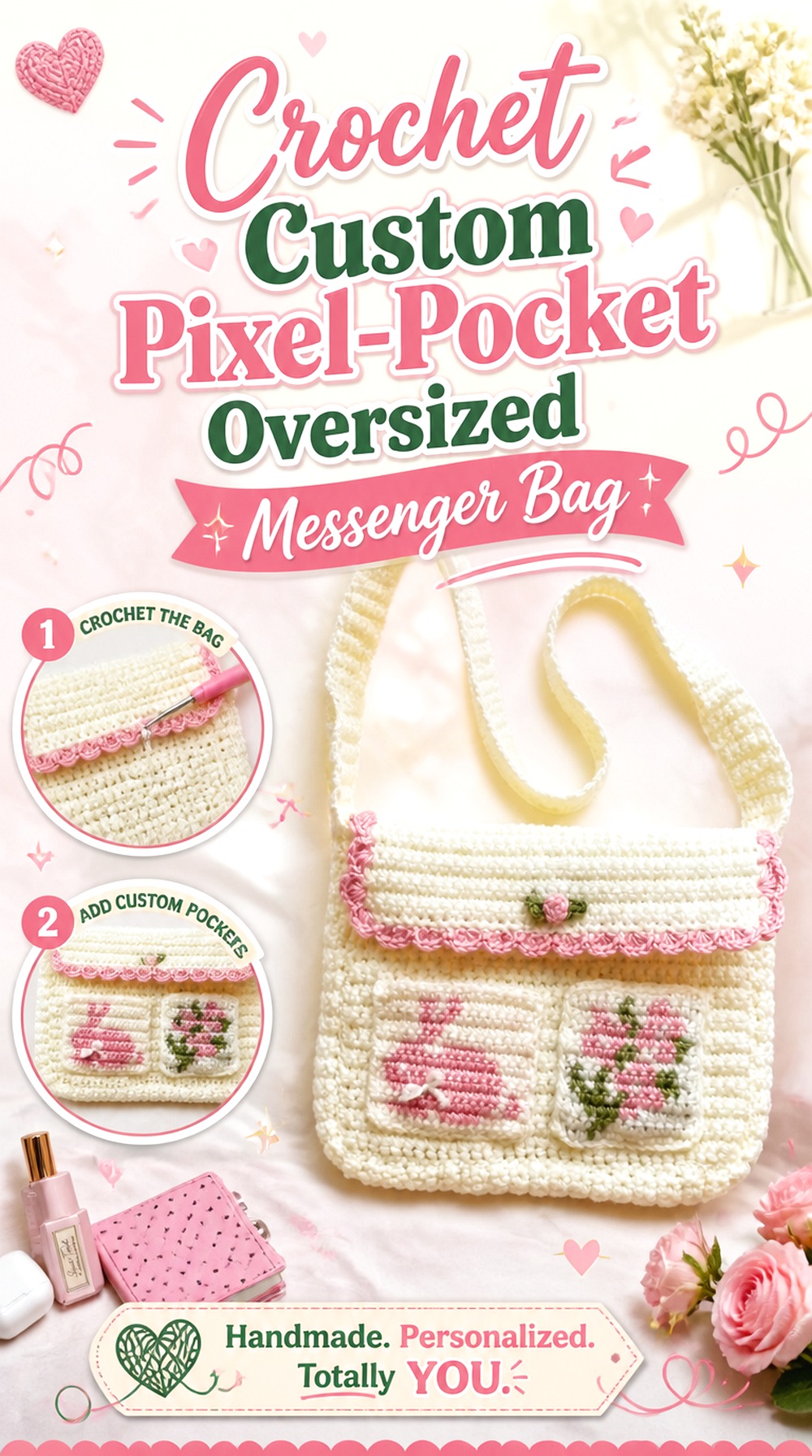
This graphic messenger bag is one of the clearest choices when customization and oversized proportions are both priorities. Mahum’s tutorial is explicitly designed around changing the size and design, while pixel-grid pockets turn the broad front of the bag into usable decorative space. The construction keeps the recognizable messenger profile: a large rectangular body, long strap, generous flap, and customizable front.
It suits readers who want a school, book, or everyday bag that can carry a personal motif rather than relying on one fixed design. Because the pixel pockets and flap border command attention, plan their relationship to the enlarged body before settling on colors.
The Pixel Pocket Should Be Planned Before the Main Body
A graphic pocket works best when its scale makes sense against the finished front panel. If you enlarge the body substantially but leave the motif very small, it may look visually disconnected; making the motif much larger can change pocket depth and fabric weight. Choose the graphic concept first, then compare its finished dimensions with the area you want it to occupy.
“Any Size” Still Requires Proportion Checks
The tutorial specifically supports size customization, which makes it unusually useful for this topic. Still, width, height, flap depth, and strap length should be considered together instead of enlarging one measurement in isolation. Before joining pieces, lay the major panels together and confirm that the flap has the coverage you want and that the side/strap section matches the body.
Decorative Edging Can Soften a Very Large Rectangle
The tutorial includes optional decorative treatment around the flap. On an oversized rectangular bag, that edge can make the outline feel less severe, while omitting it creates a cleaner messenger profile. Decide which direction you prefer before adding front embellishments so the pixel design, flap border, and overall silhouette do not compete for attention.
Original Tutorial and Creator Credit
Creator: mahum 🎀
2. Crochet Sturdy Lined Oversized Fall Messenger Bag
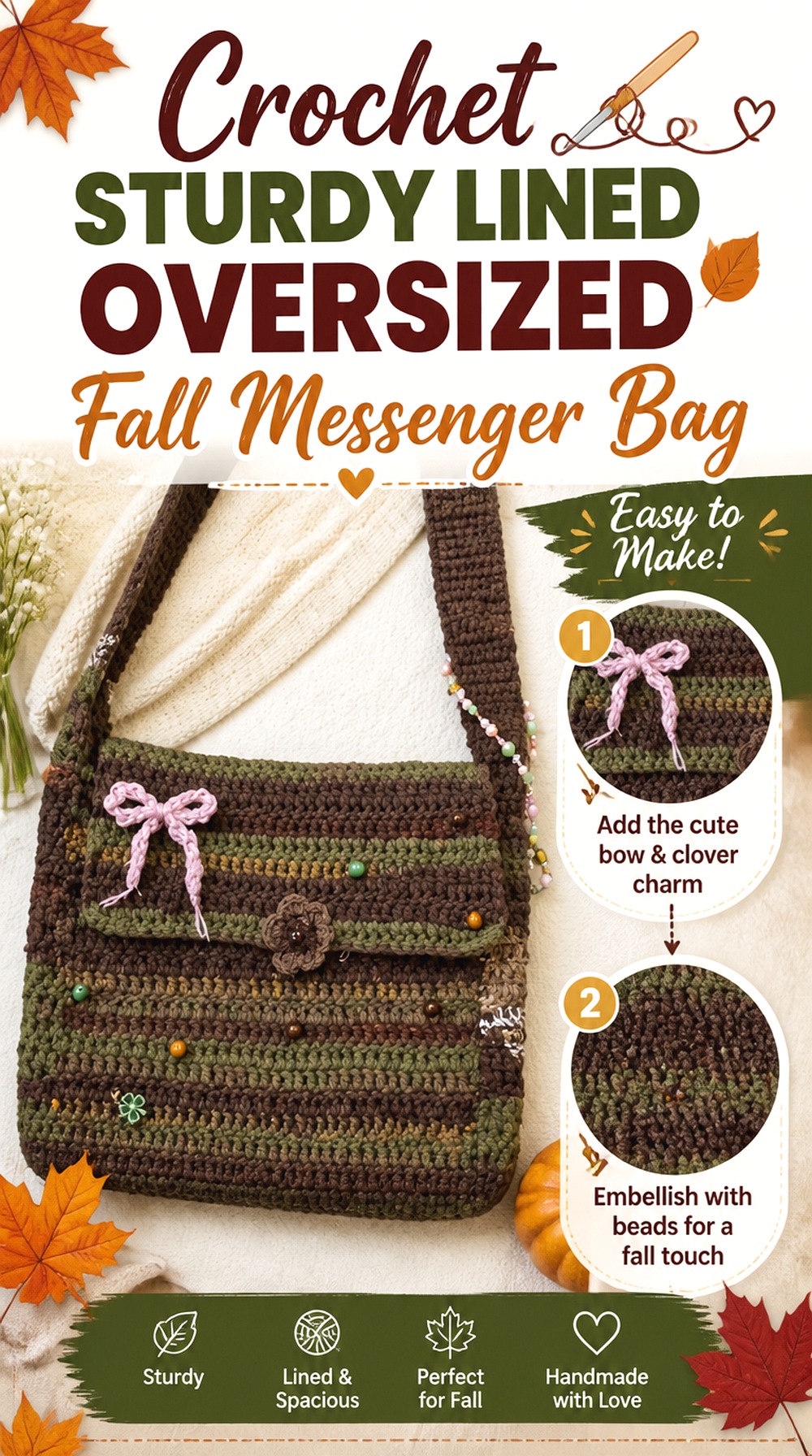
For a bag that is already large rather than merely adaptable, CrochetCrys offers a strong reference. The creator lists the finished bag at about 16 inches wide by 14 inches long and specifically discusses making the structure sturdy, adding side depth, and lining the finished bag. Decorative flowers, beads, and seasonal color give the surface personality without replacing the practical messenger construction.
This option makes sense for someone who likes a soft handmade appearance but does not want a flat envelope-style bag. The side panel creates actual depth, while the broad flap gives the large front a defined top. It is also a useful reminder that an oversized bag and a secure bag are separate design questions.
Lining Matters More Once the Body Is Roomy
The creator explicitly recommends lining this project. A lining can help isolate the crochet fabric from loose objects and can reduce how directly contents pull on the stitches. If you plan to use the bag frequently, watch the lining discussion before finishing the opening so you know which edges and attachments will eventually need to remain accessible.
Side Depth Creates More Useful Space Than Width Alone
This design includes a distinct side panel instead of relying on two flat rectangles sewn directly together. That depth is worth comparing with flatter messenger bags if you intend to carry multiple items at once. When judging another oversized construction, look at the side view as carefully as the front; the profile often reveals more about practical capacity.
Embellishment Should Stay Clear of the Closure
Flowers, beads, and charms make this version visually different from a plain utility messenger. On a large flap, however, decorations need to coexist with the area that bends, closes, and gets handled repeatedly. Position decorative details so they do not make the flap difficult to lift or interfere with an optional button.
Original Tutorial and Creator Credit
Creator: CrochetCrys
3. Crochet Super Bulky Multi Pocket Laptop Messenger Bag
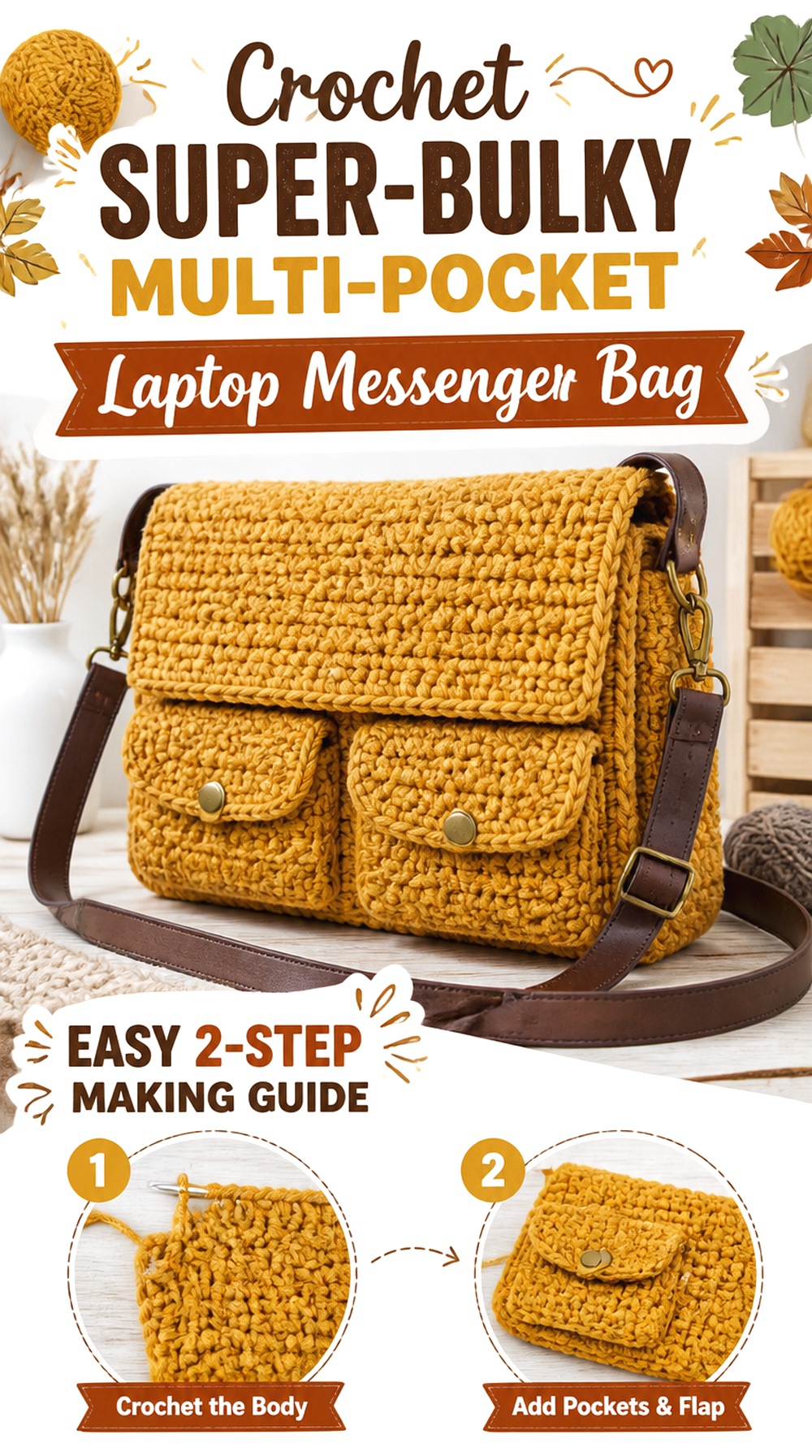
This design from Rich Textures Crochet is one of the most function-focused options in the collection. The published pattern gives a finished size of 12 by 16 by 4 inches and says the bag was designed to accommodate a 16-inch laptop. It also combines a front pocket, two smaller interior pockets, a bottle sleeve, a flap, hardware, and a substantial crossbody format.
The textured fabric and super-bulky yarn give it a visibly different character from thin, flat messenger bags. Choose this direction when organization and side depth matter more than having a light, delicate purse. Its multiple components also make it a better planning reference for an everyday carry bag than a simple two-panel construction.
Interior Zones Keep a Large Bag from Becoming One Open Compartment
A roomy bag is more useful when small belongings do not disappear underneath larger ones. This design includes several storage areas, so it is worth studying if organization is a priority. Before changing the bag dimensions, consider whether pocket sizes and positions should remain proportional to the objects they are intended to hold rather than being enlarged automatically.
Super-Bulky Yarn Changes Both Presence and Weight
The thick yarn helps create the substantial visual texture of this bag. That is useful when you want an oversized satchel to look deliberate rather than floppy, but more yarn also means more material in the finished object. Compare the feel of a super-bulky messenger with the T-shirt-yarn and medium-yarn options before choosing solely on appearance.
The 4-Inch Depth Is Part of the Capacity Story
The published measurements include a 4-inch depth, which helps explain why this bag functions differently from a flat crossbody. When evaluating another tutorial for laptop or book carry, look for a similar side or bottom dimension instead of comparing front width alone. A wide panel with almost no depth can accommodate a very different load.
Original Tutorial and Creator Credit
Creator: Rich Textures Crochet
4. Crochet Structured T Shirt Yarn Flap Satchel
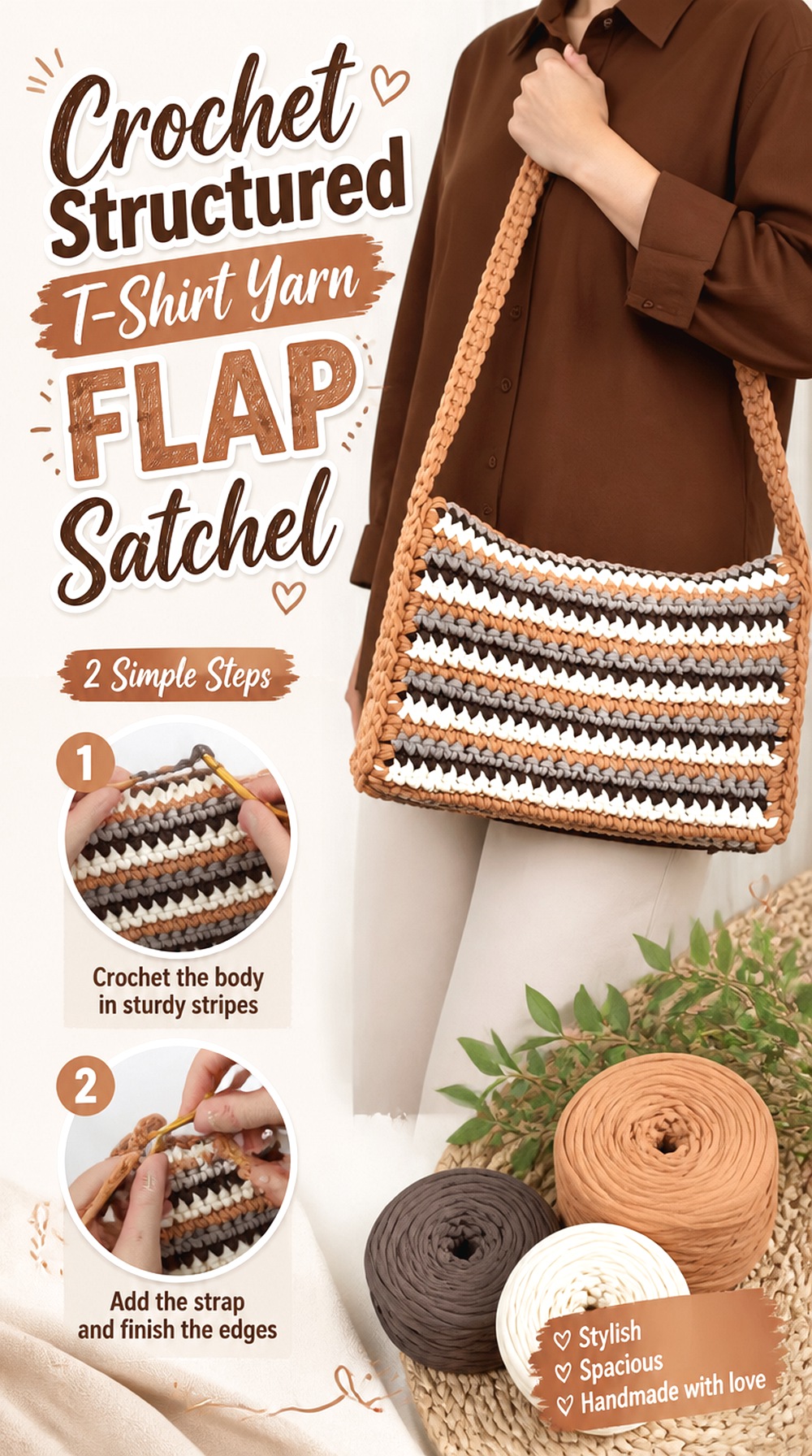
Magic Knot Bag uses T-shirt yarn for a messenger bag with a thicker, sportier profile than most conventional yarn versions. The creator lists the finished size at about 34 by 24 centimeters, while noting that yarn and tension can affect it. The rectangular body, broad flap, and sturdy-looking yarn make this a useful bridge between a casual crochet messenger and a more structured satchel.
This is not the largest finished bag in the collection, so readers seeking a dramatically oversized version should treat its proportions and construction as the reference rather than assuming the listed dimensions are already oversized. The main appeal is how the thick material changes the body and edge definition.
T-Shirt Yarn Produces a Different Kind of Bulk
Large dimensions and thick yarn are not interchangeable. T-shirt yarn can make even a moderate-size bag appear substantial because the stitches and edges have more visual mass. If you enlarge this type of construction, consider whether you actually need more width and height or whether the chunky material already provides the oversized effect you want.
Keep the Rectangular Footprint in Balance
The clean shape depends on a sensible relationship between width, height, and flap depth. Stretching the design much wider without changing the rest may turn a practical satchel into a shallow horizontal bag. Compare your intended proportions with an existing messenger bag before committing to a size modification.
Check Hardware Before Substituting Materials
A thicker crochet fabric can interact differently with rings, buckles, clasps, or other attachments than a fine fabric does. Review the creator’s supply list before choosing replacement hardware. The openings need to accommodate the thickness of whatever strap or crocheted attachment passes through them.
Original Tutorial and Creator Credit
Creator: Magic Knot Bag
5. Crochet Streetwear Inflorescence Flap Messenger Bag
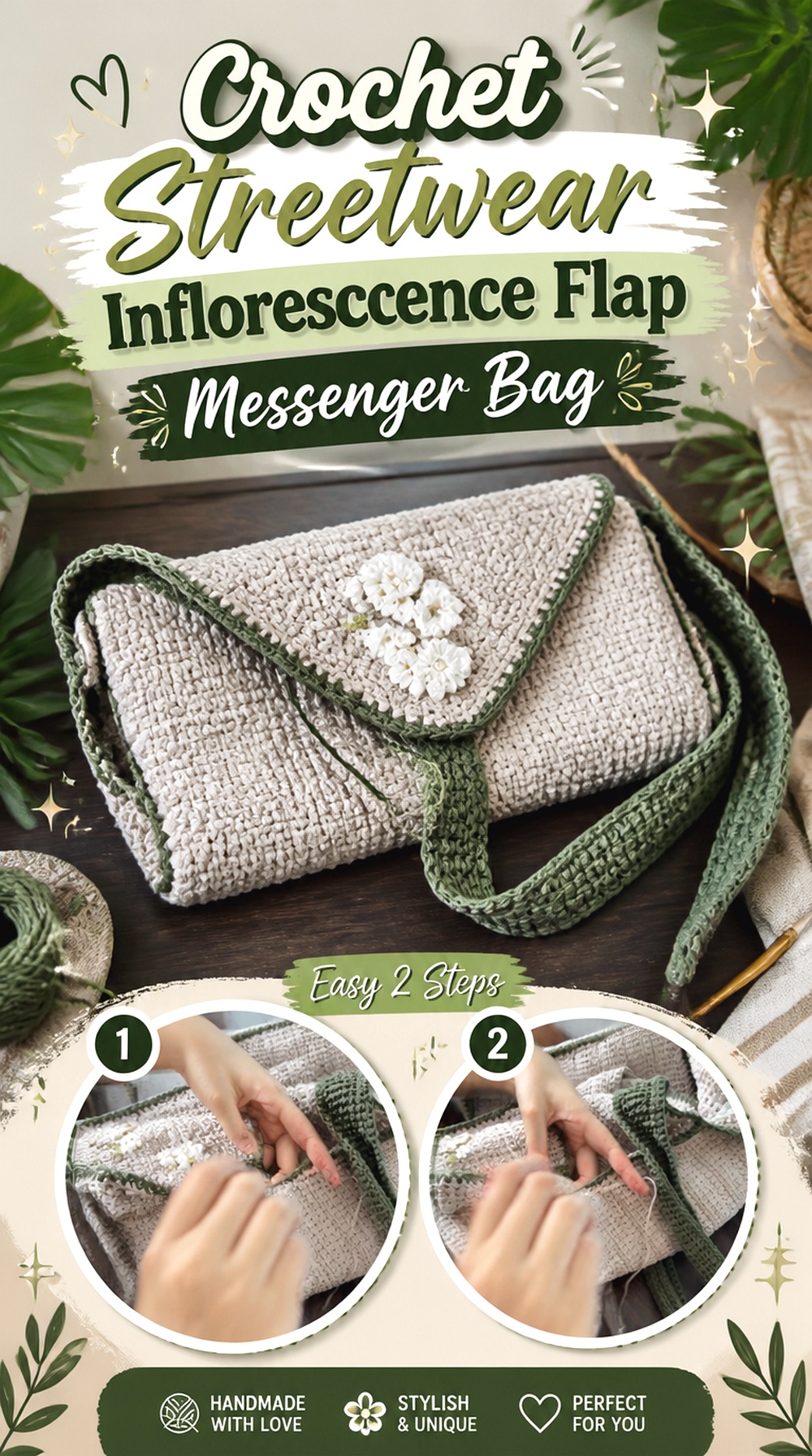
The Inflorescence messenger bag from by red bean takes the oversized-bag idea in a more fashion-led direction. The video separates the project into the base, lining and straps, embellishments, and finishing, so the completed bag is not simply a plain crochet rectangle with a strap added afterward. Its decorated surface and relaxed presentation fit the streetwear-inspired oversized messenger look particularly well.
Choose this concept when the bag itself is intended to be a visible part of an outfit. It differs from the laptop-style options because surface styling matters just as much as storage. Before enlarging any similar design, watch how the lined body and decorative elements behave at the finished scale.
Lining Supports a More Finished Streetwear Shape
The tutorial includes a lining stage, which is relevant when a bag is expected to retain a deliberate silhouette while being worn. A lining can also create a cleaner interior behind decorative crochet. If you alter the dimensions, plan the lining from the actual completed crochet measurements rather than assuming the fabric pieces can be predetermined exactly.
Statement Scale Needs Restraint in the Embellishments
On a broad messenger front, several small decorations can read differently from one large focal detail. Decide whether you want an intentionally busy streetwear surface or more negative space. Enlarging every embellishment together with the body can overwhelm the design; keeping selected details at their original visual scale may create a stronger contrast.
Strap Placement Changes How a Slouchy Bag Hangs
A relaxed messenger can collapse toward the center when worn, especially if the strap pulls from high side points. That may be desirable for a soft streetwear silhouette but less useful if you want a rigid rectangular profile. Watch the completed bag on the video before deciding whether this carrying behavior matches your intended use.
Original Tutorial and Creator Credit
Creator: by red bean
6. Crochet Bunny School and Work Messenger Bag
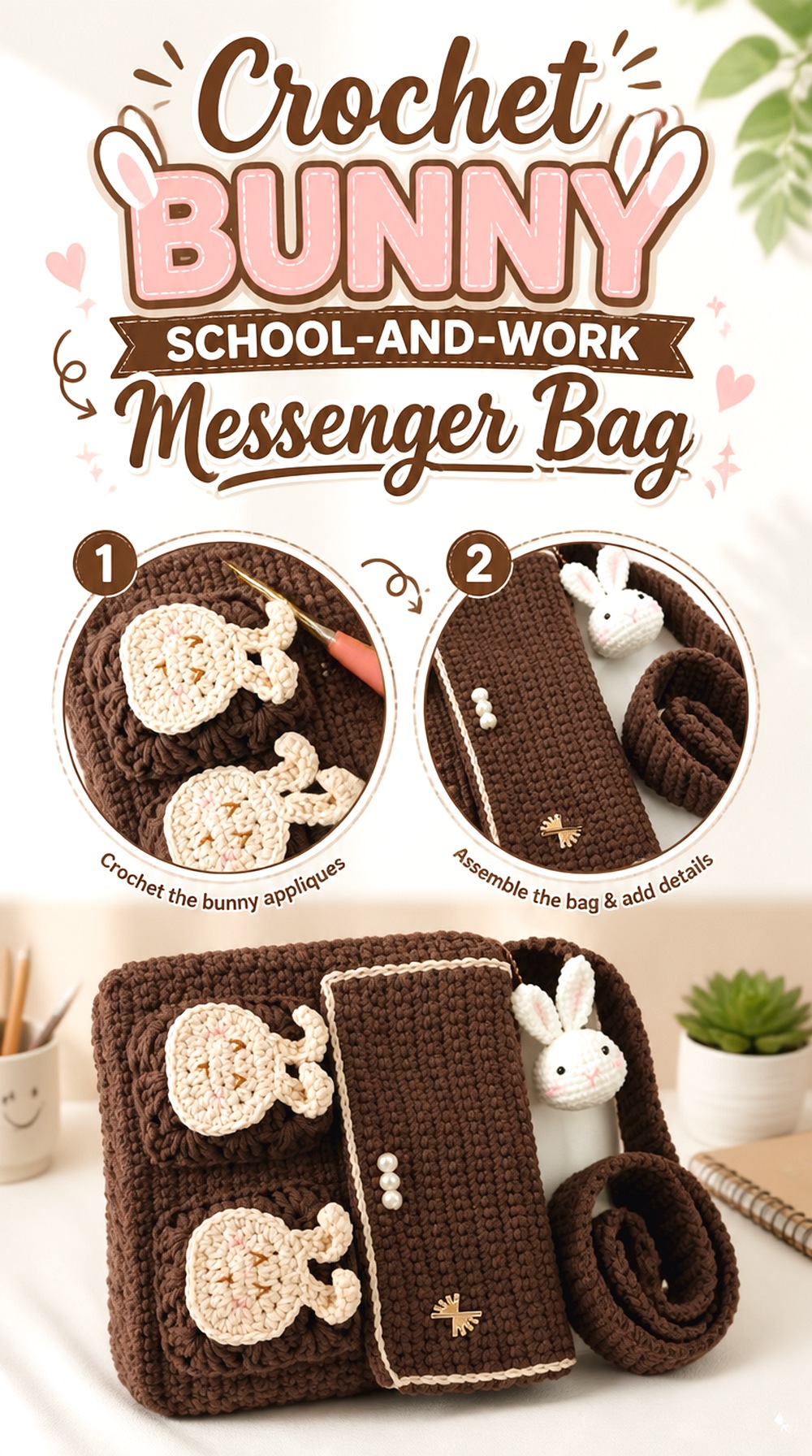
Handmade’s bunny messenger is positioned by the creator as a bag for school or work, giving it a different purpose from compact outfit purses. The flap-bag silhouette leaves a broad visible area for the bunny theme while retaining the familiar long-strap messenger form. The tutorial is also clearly presented as a complete project rather than an inspiration clip.
This idea works well when you want an oversized bag to feel playful without turning it into a novelty-shaped object. The body remains practical and recognizable. If you intend to enlarge it further, pay particular attention to how motif scale, flap coverage, and the carrying strap relate to the body.
Keep the Bunny Detail Readable on a Broad Front
A character or motif can disappear visually if it becomes too small relative to a much larger front panel. On the other hand, increasing it excessively can dominate the flap and make placement harder. Treat the motif as a separate design decision: establish the bag size, then check the motif’s blocked dimensions against the visible area.
School Carry Makes Opening Width Important
Books, folders, and similar flat objects need enough opening width to enter without being bent around a narrow top. If this is the intended use, compare the bag opening with the widest item rather than judging only the outside front panel. Also check whether the flap and any fastening reduce practical access when the bag is full.
A Large Flap Needs Enough Overlap When Loaded
Contents can push the front and back panels apart. A flap that looks generous on an empty bag may sit differently once the body has depth. When adapting the size, assess closure placement after the body can be held in its intended three-dimensional shape rather than positioning a button solely from flat measurements.
Original Tutorial and Creator Credit
Creator: MIMI Handmade
7. Crochet Convertible Book Sleeve Flap Bag
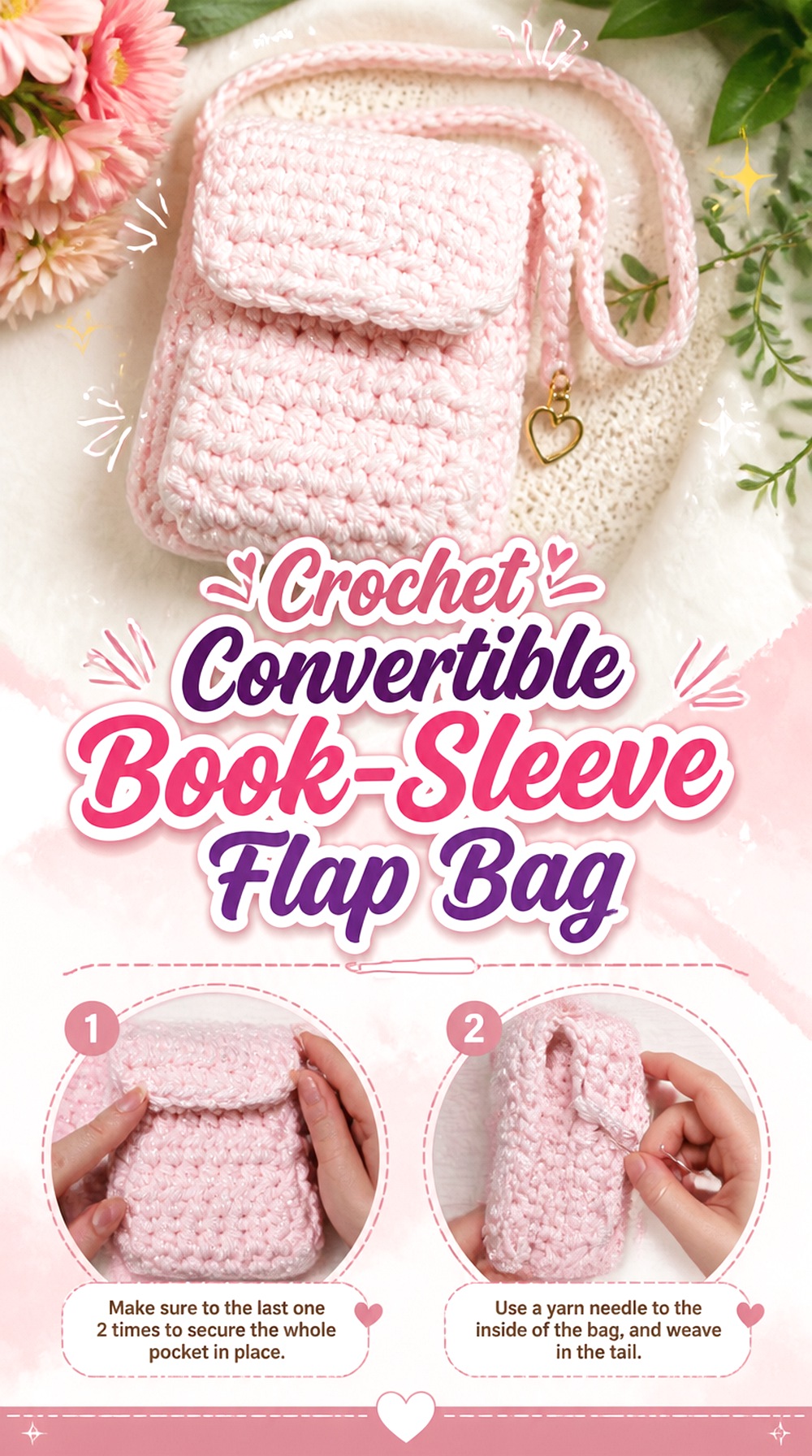
Biyabimi’s project is unusually specific about organization. The finished piece combines a book sleeve and bag, with two compartments, pocket options, and convertible strap choices. The creator lists the finished bag at about 8 inches high, 11.6 inches long, and 2 inches deep, so this should be viewed as a medium book-carry design rather than an oversized finished object as shown.
Its value for an oversized flap-bag article is the internal logic. If you want a larger bookish satchel, this offers a much more purposeful starting concept than simply enlarging an empty crossbody. The main adaptation challenge is preserving sensible compartment and pocket proportions while increasing the outer body.
Two Compartments Solve a Different Storage Problem
Separating a book or tablet from loose everyday items keeps the contents more organized than one large cavity. If you enlarge this idea, do not automatically enlarge every divider and pocket by the same percentage. First identify the items each compartment needs to hold, then size those zones around their actual purpose.
Convertible Straps Change the Bag’s Role
The source offers crossbody and shoulder-carry possibilities. That versatility is useful if you want a roomy bag that can sit differently depending on how much it contains. When increasing body size, confirm that the strap width, attachment points, and intended wearing lengths still feel proportionate to the larger silhouette.
Scale This One From Real Objects, Not the Thumbnail
Because the creator supplies finished measurements, it is easy to see that the original is not a huge messenger. For an oversized interpretation, place the book, device, or notebook you actually want to carry on a table and use its dimensions as the planning constraint. Preserve the construction concept while confirming any size changes independently.
Original Tutorial and Creator Credit
Creator: Biyabimi
8. Crochet Cozy Square Button Flap Messenger Bag
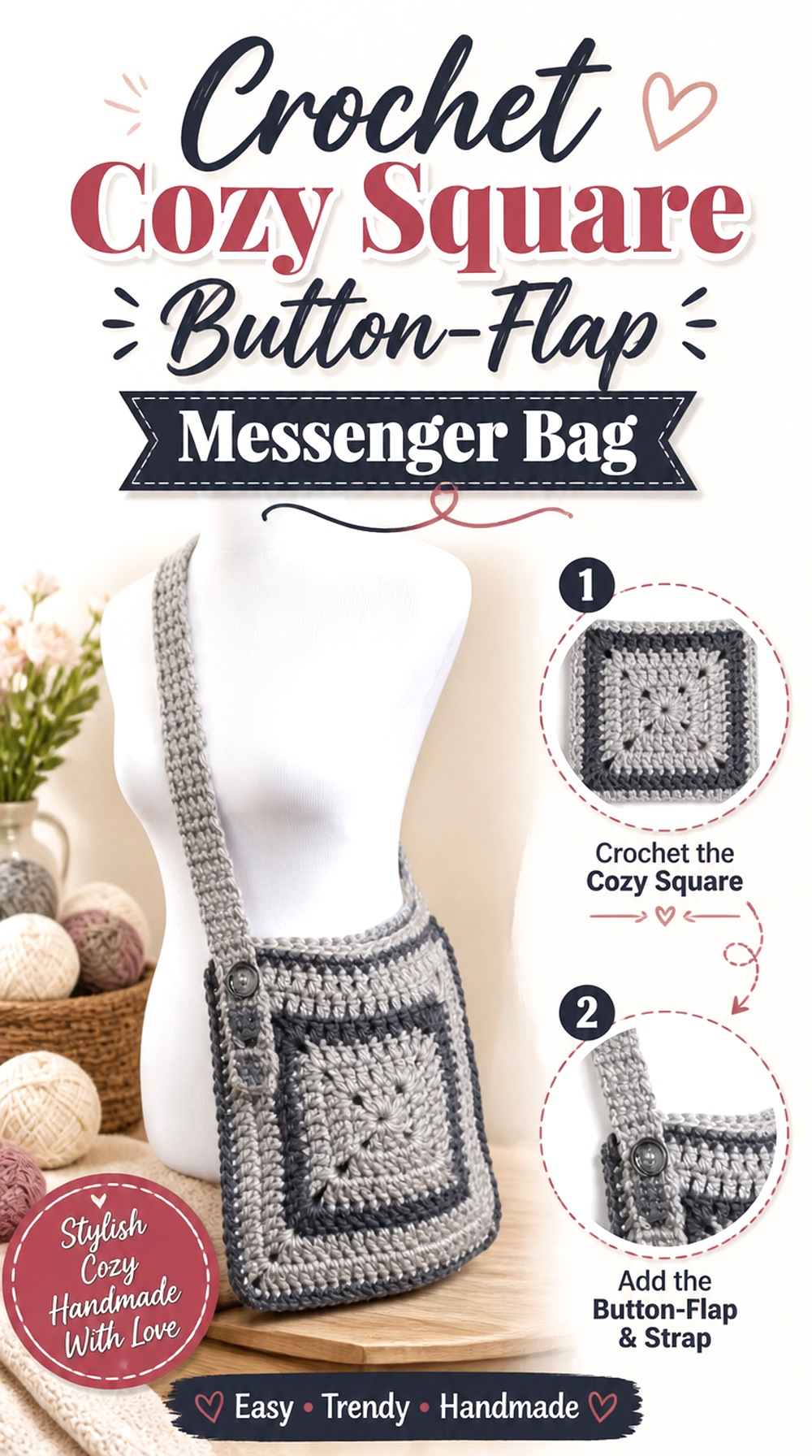
Fiber Flux’s Cozy Messenger Bag begins with a very different geometry from long horizontal satchels. Supporting pattern information describes a body based on two large squares, with a buttoned crossbody strap that can be adjusted through buttonholes. The broad square silhouette feels relaxed and handmade rather than office-like.
This is a useful choice when the oversized effect should come from generous square panels and chunky visual texture instead of a long laptop-bag profile. It can also help readers who find highly segmented messenger constructions unnecessarily complex. Before adapting it, decide whether the square format suits the objects you carry; a tall book and a wide laptop need different proportions.
Two Large Squares Create a Softer Kind of Oversized
A square messenger does not distribute volume in the same way as a long rectangular satchel. It can feel more casual and may create a deeper visual drop on the body. If you want a wide academic-style messenger, choose a different construction; if you prefer a cozy crossbody shape, the square proportions are the point.
Buttoned Strap Adjustment Is Worth Studying
The adjustable strap concept is more flexible than committing immediately to one fixed length. That can be useful if the bag will be worn over different layers. For a significantly larger adaptation, however, strap width and attachment strength matter too, so do not treat length as the only carrying decision.
Chunky Texture Can Add Volume Without Extra Decoration
A square body made in substantial yarn already has a strong handmade presence. Before adding pockets, fringe, or motifs, consider whether the texture supplies enough visual interest. Keeping the surface simpler can make a larger bag easier to style and prevents the flap area from becoming crowded.
Original Tutorial and Creator Credit
Creator: Fiber Flux
9. Crochet Neutral Striped Minimalist Flap Bag
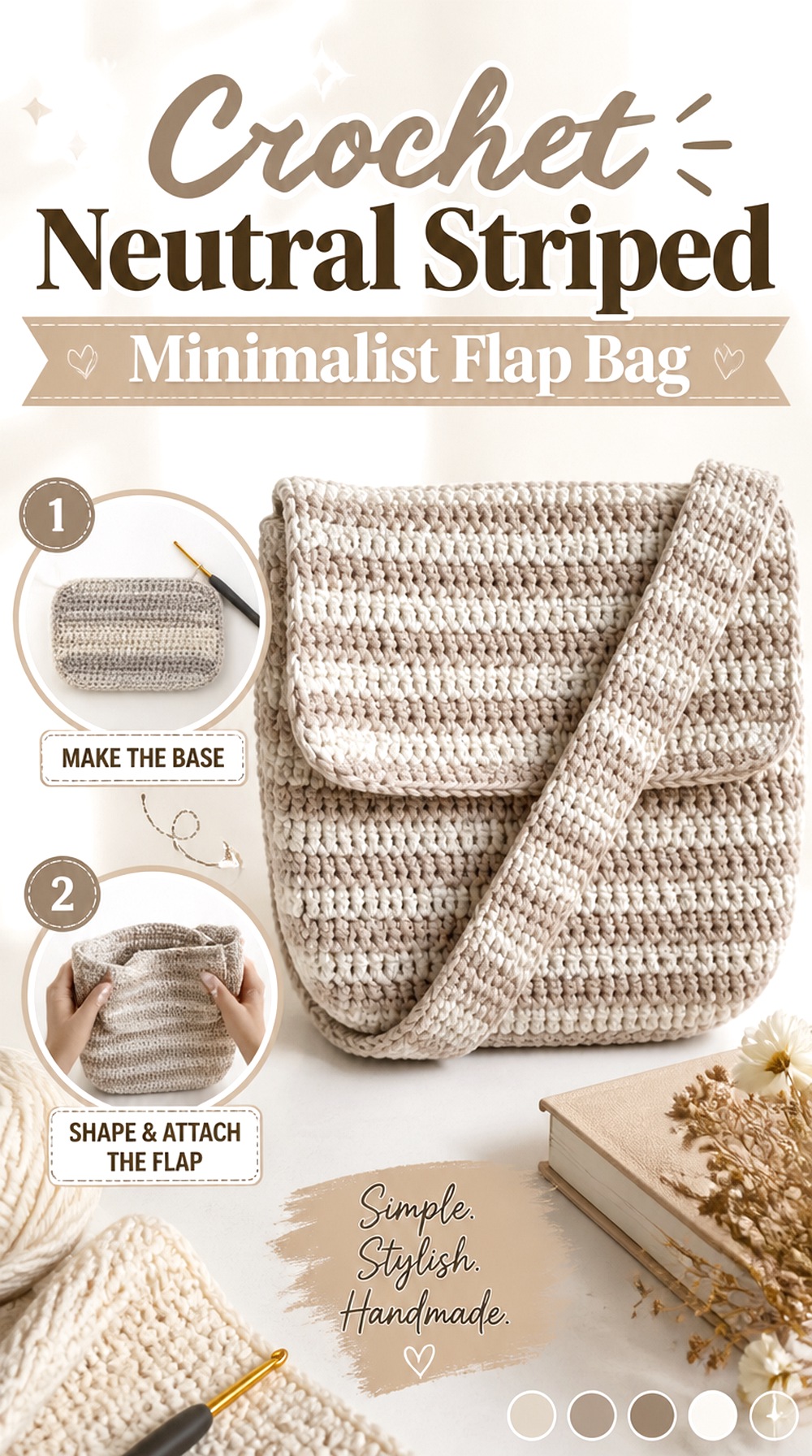
Crochiquely’s shoulder bag strips the messenger idea back to a clean neutral profile. The creator describes a tight-textured bag with a flap closure and sturdy strap, and specifically suggests it for daily essentials, a tablet, or a small laptop. The tutorial also uses a crochet joining approach rather than relying on conventional sewn assembly.
For an oversized interpretation, this is a good direction when you want the bag to look quiet and architectural rather than decorative. Neutral stripes can emphasize the width of the body without needing motifs. It is also a strong contrast to the embellished, granny-square, and character-based projects elsewhere in the list.
Horizontal Striping Can Visually Widen the Bag
On an already large messenger, stripes influence proportion. Broad horizontal divisions can make the bag read wider, while very frequent color changes may make the surface busier than the minimalist construction suggests. Decide whether the stripes should reinforce an oversized silhouette or simply provide subtle contrast.
Tight Fabric Supports the Clean Outline
The creator emphasizes a close texture and sturdy result. That matters because a minimalist bag has fewer decorative elements to distract from sagging or uneven edges. If substituting yarn, make a small fabric sample and compare its firmness with the appearance in the tutorial before committing to a much larger panel.
Device Carry Requires Measurement, Not Assumption
The creator mentions tablets and small laptops, but devices vary considerably. Measure the exact device, including any case, and compare it with the creator’s finished result or stated dimensions. For an oversized adaptation, leave enough usable opening space that the flap and side structure do not obstruct insertion.
Original Tutorial and Creator Credit
Creator: Crochiquely
10. Crochet Cherry Blossom Textured Messenger Bag
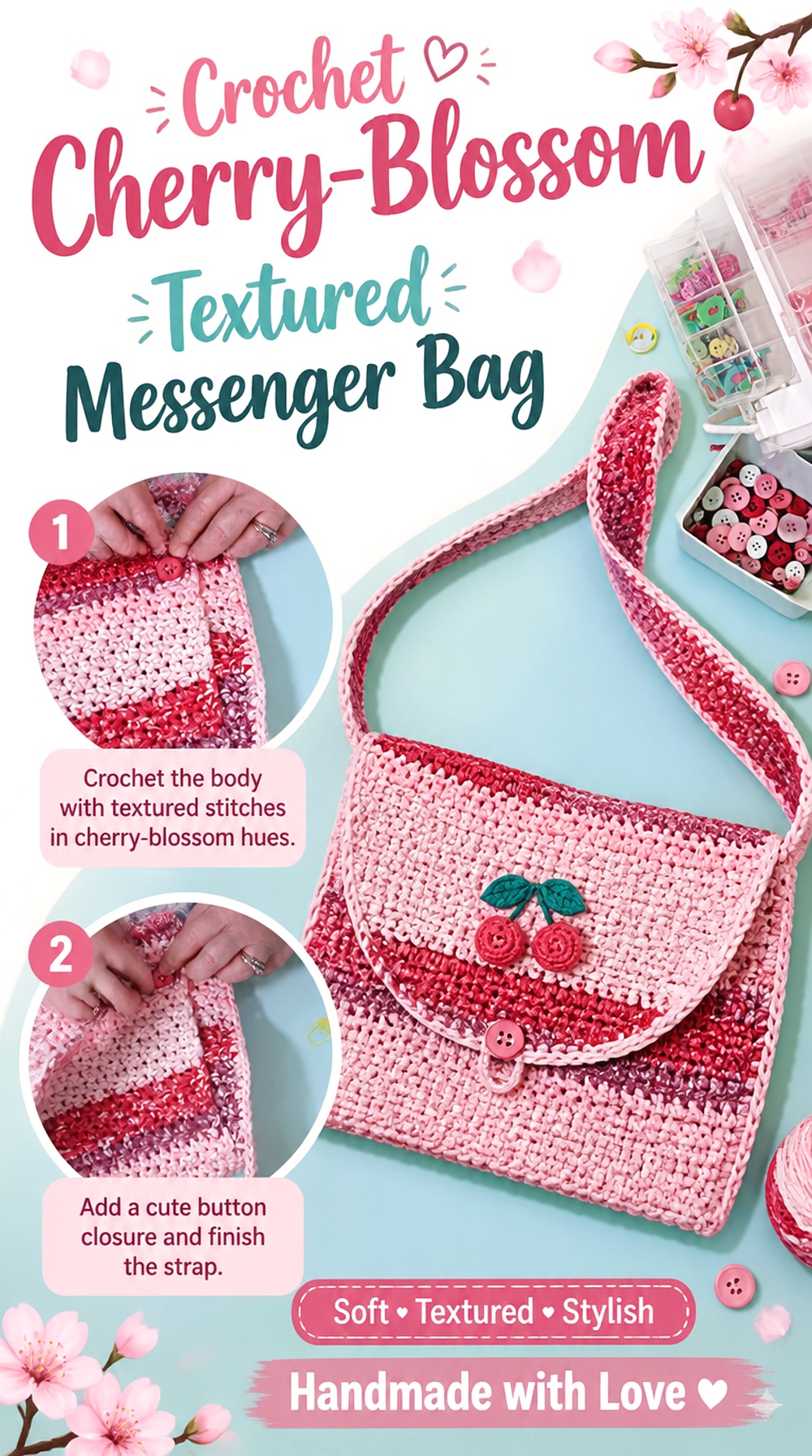
Hooked and Steeped with Lynn’s Cherry Blossom Messenger Bag gets its identity from surface texture rather than pockets or graphic motifs. The creator uses an original Farmhouse Stitch, a flap construction, buttons, and a side-and-strap element. The source also notes that the yarn used in the demonstrated project has noticeable stretch.
This direction fits an oversized bag when you want one continuous textured surface to do the visual work. It can look more refined than patchwork while retaining a distinctly handmade finish. Because stretch is specifically relevant to the demonstrated yarn, compare the fabric behavior carefully if you plan to make the body wider or load it more heavily.
Texture Needs Enough Surface Area to Read Clearly
A large panel can showcase a repeating texture particularly well, but strongly variegated yarn may compete with the stitch definition. Decide whether color or texture should be the primary feature. If texture is the goal, examine a swatch from normal viewing distance rather than judging only a close-up of individual stitches.
Position Buttons After the Flap Can Hang Naturally
On a larger bag, gravity and stretch can change where the flap settles. Temporary markers are useful while assessing the closed position. The practical checkpoint is simple: let the bag body hang as it will be worn, fold the flap into place, and confirm the visual alignment before permanently fixing closure hardware.
Stretch Should Be Considered Before Increasing the Load
The demonstrated yarn’s stretch is acknowledged by the creator. Enlarging a bag while also adding heavier contents could make that behavior more apparent. If you use a different yarn, compare its fabric characteristics rather than assuming it will react the same way. Lining or reinforcement decisions should follow the actual material and intended use.
Original Tutorial and Creator Credit
Creator: Hooked and Steeped with Lynn
11. Crochet Zippered Adjustable Strap Flap Messenger Bag
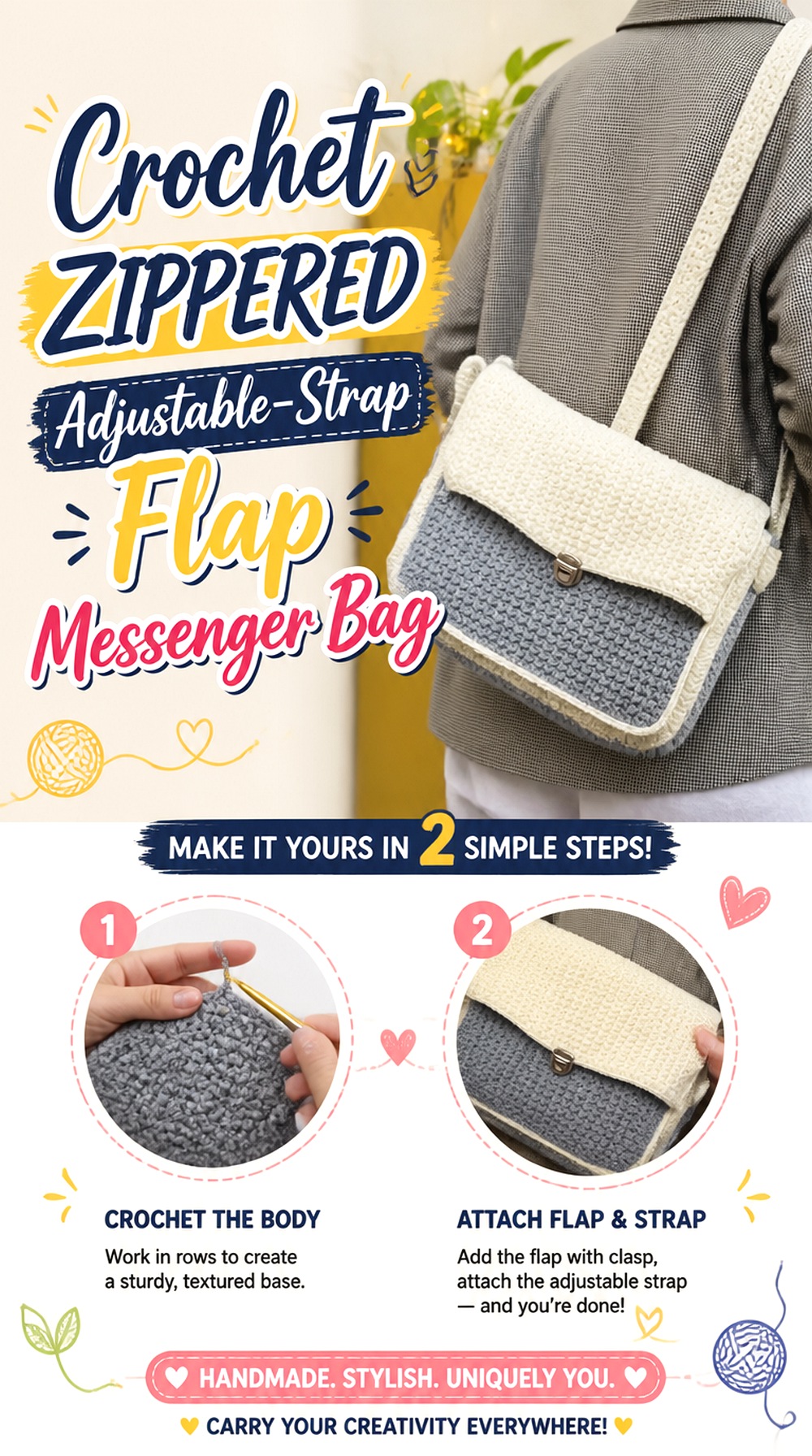
Zaen’s Craft Studio combines several security and fit features that are often missing from simple crochet messenger tutorials. The 2026 video covers front and back panels, a side panel, bottom panel, pocket, joined flap, buttons, adjustable strap hardware, and a zipper. Its materials also include a turn-lock clasp and strap hardware.
That combination makes this especially relevant to someone planning a roomy commuter-style bag. The flap provides the messenger appearance, while the zipper creates an additional controlled opening underneath. If you dislike the idea of a large crochet bag whose contents sit directly behind an unsecured flap, this construction is worth comparing with the softer open-top options.
Flap Plus Zipper Changes the Security Trade-Off
A large flap gives coverage but does not necessarily close the entire opening. A zipper underneath creates a different level of containment for small items. Before deciding you need both, think about access: a double closure is more controlled, but it also requires more actions whenever you reach into the bag.
Adjustable Hardware Helps an Oversized Bag Sit Where You Want
The video uses slider and rectangular buckle hardware for the strap. This is especially useful when a larger body might otherwise hang too low or feel awkward on different wearers. Check the strap width against the selected hardware before crocheting the full strap so the pieces are physically compatible.
A Separate Bottom Panel Helps Define the Base
This construction includes both side and bottom components, which distinguishes it from flat messenger bags. A defined base can make a roomy shape easier to organize. If you scale the body, make sure the bottom depth still matches the side construction and the opening; increasing front width alone will not create balanced capacity.
Original Tutorial and Creator Credit
Creator: Zaen’s Craft Studio
12. Crochet Front Pocket Star Accent Messenger Bag
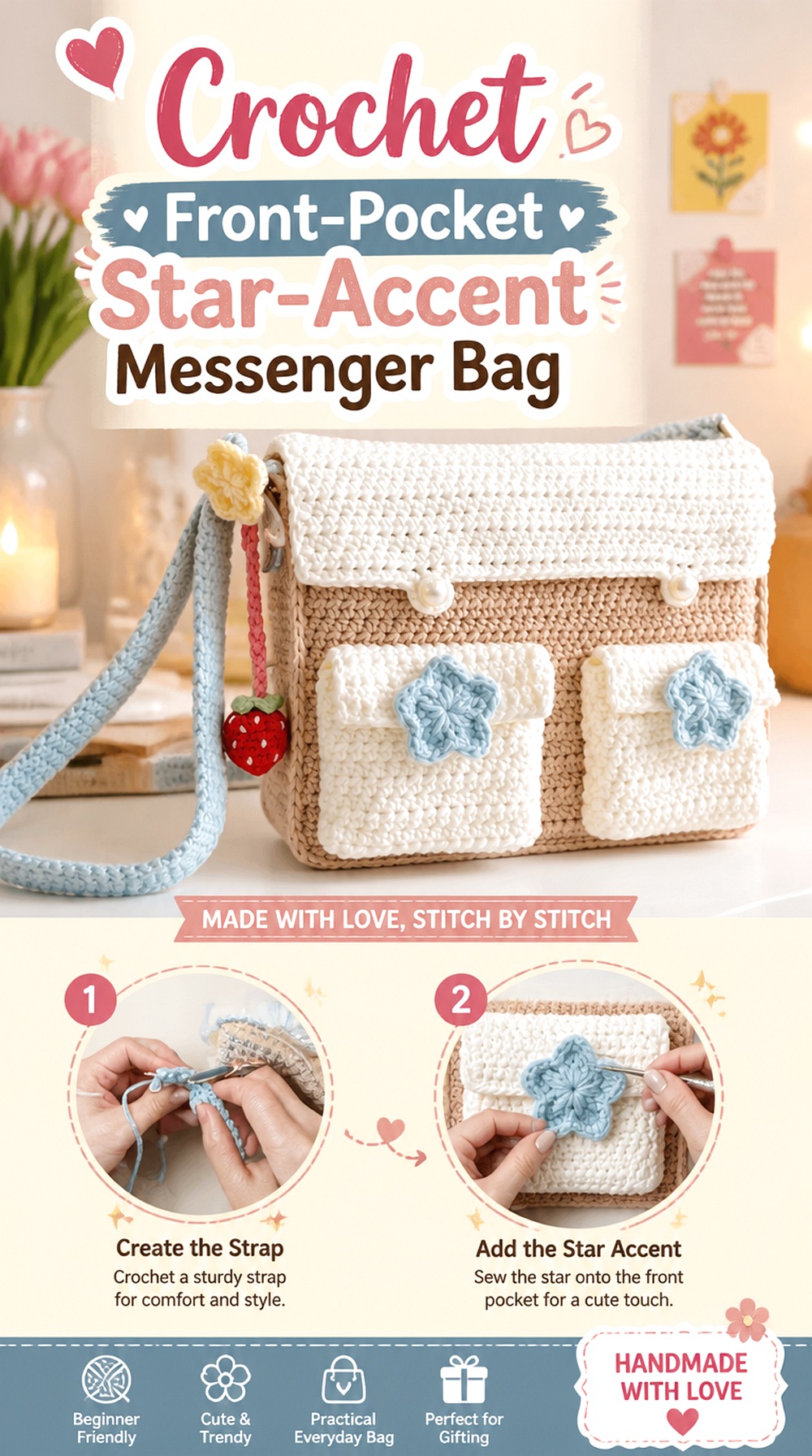
Vivi Crochet’s messenger bag is more layered on the front than a minimalist satchel. The tutorial includes the main body, sides, a flat bottom, pockets, a star detail, and fastening elements. The creator lists the finished bag at roughly 26.6 centimeters wide by 19.8 centimeters high, making it a medium bag as shown rather than a truly oversized one.
Its value here is as a pocket-and-detail layout that can inspire a larger version. Unlike a single giant motif, the front uses several smaller elements, so an oversized adaptation can preserve visual interest without turning the entire flap into one graphic panel.
Front Pockets Need a Job Before You Enlarge Them
Small exterior pockets are useful for objects you want to reach quickly, but only if their openings and depth match those objects. When adapting the body, decide whether the pockets are decorative, functional, or both. There is no reason to enlarge them proportionally if their intended contents are staying the same size.
The Flat Bottom Gives the Medium Bag More Definition
Even before scaling, a bottom panel changes how the bag occupies space compared with a completely flat crossbody. If you want a larger version, this feature is worth retaining because it separates added capacity from simply making a wider envelope. Check that the side and bottom measurements remain compatible after any size changes.
Keep Small Accents From Getting Lost on an Oversized Front
The star detail works at the creator’s scale, but a much larger panel introduces more empty space. You could keep the smaller accent for a restrained look or repeat the visual theme elsewhere, but do not assume every decorative element needs to become physically bigger. Mock up the placement before attaching anything permanently.
Original Tutorial and Creator Credit
Creator: Vivi Crochet 🌷
13. Crochet Soft Button Flap Crossbody Messenger Bag
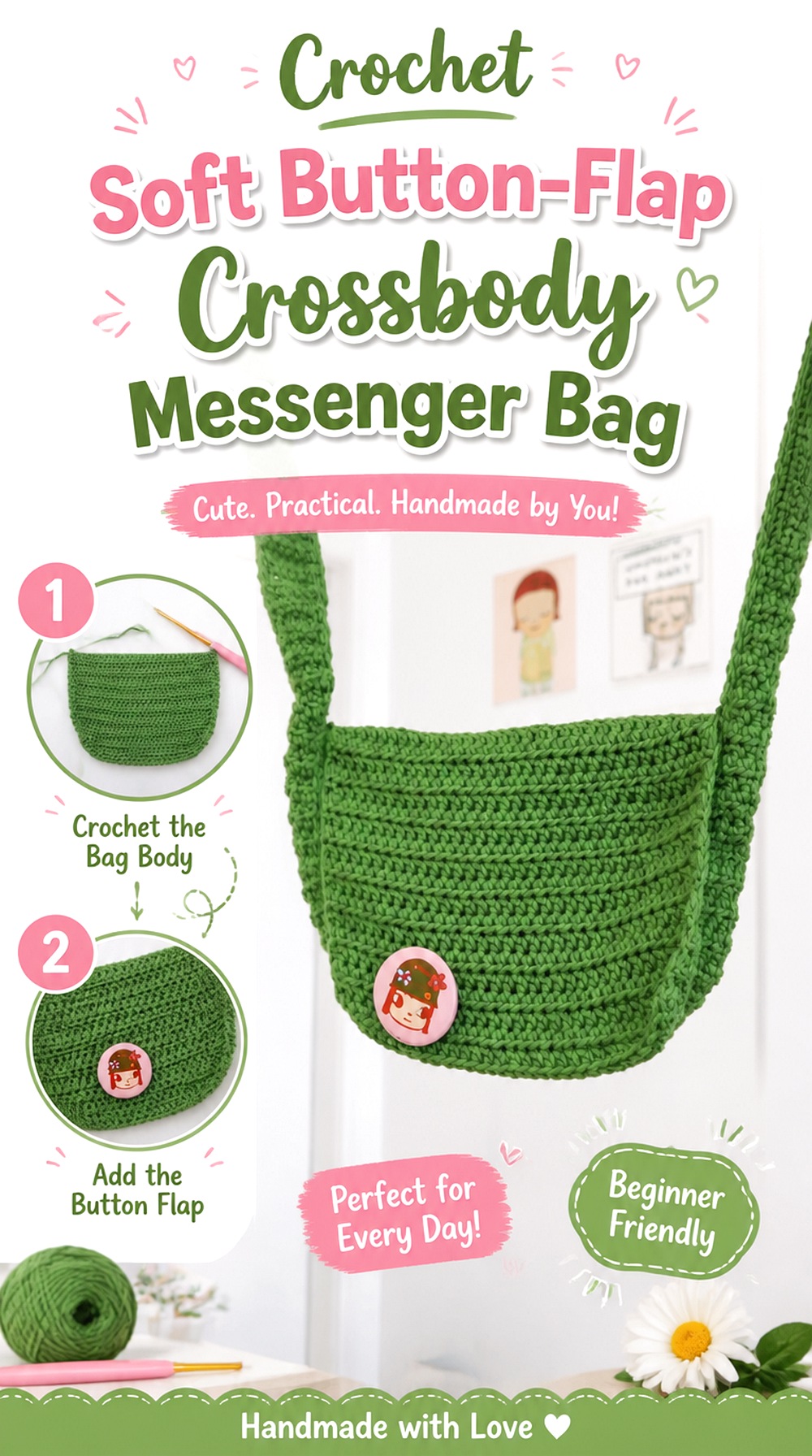
Miu’s messenger bag takes the opposite approach from the hardware-heavy and structured options. Its soft panel construction, long strap, and button-flap appearance create a relaxed handmade crossbody with little visual bulk beyond the crochet itself.
That simplicity makes it a useful oversized idea when you want a bag that drapes rather than stands upright. A larger soft messenger can sit closer to the body and change shape around its contents, which some readers will prefer to a stiff laptop satchel. The trade-off is that it should not be expected to protect flat items or retain a crisp rectangle in the same way as a heavily structured design.
Soft Panels Create Drape Instead of a Boxed Profile
Enlarging a flexible panel construction usually emphasizes the fabric’s movement. That can produce the laid-back slouch associated with oversized crossbody bags. If you actually want straight sides and a self-supporting base, choose one of the gusseted or cord-based tutorials instead of trying to force this softer concept into a different role.
A Single Button Is a Simple Closure, Not a Sealed Top
The button-flap look is visually clean and quick to access, but openings may remain around the sides of the flap. That is an important distinction for a large bag carrying loose items. Consider using internal pouches for small belongings if the tutorial’s closure does not provide the containment you need.
Long-Strap Fit Should Be Tested With the Bag Loaded
A soft body may hang lower once it contains weight. Before permanently fixing an oversized crossbody strap, compare the intended drop with a bag you already find comfortable and consider how the body will sit when filled rather than empty. Follow the creator’s construction for attachment rather than copying a generic reinforcement method.
Original Tutorial and Creator Credit
Creator: miu
14. Crochet Granny Square Patchwork Messenger Bag
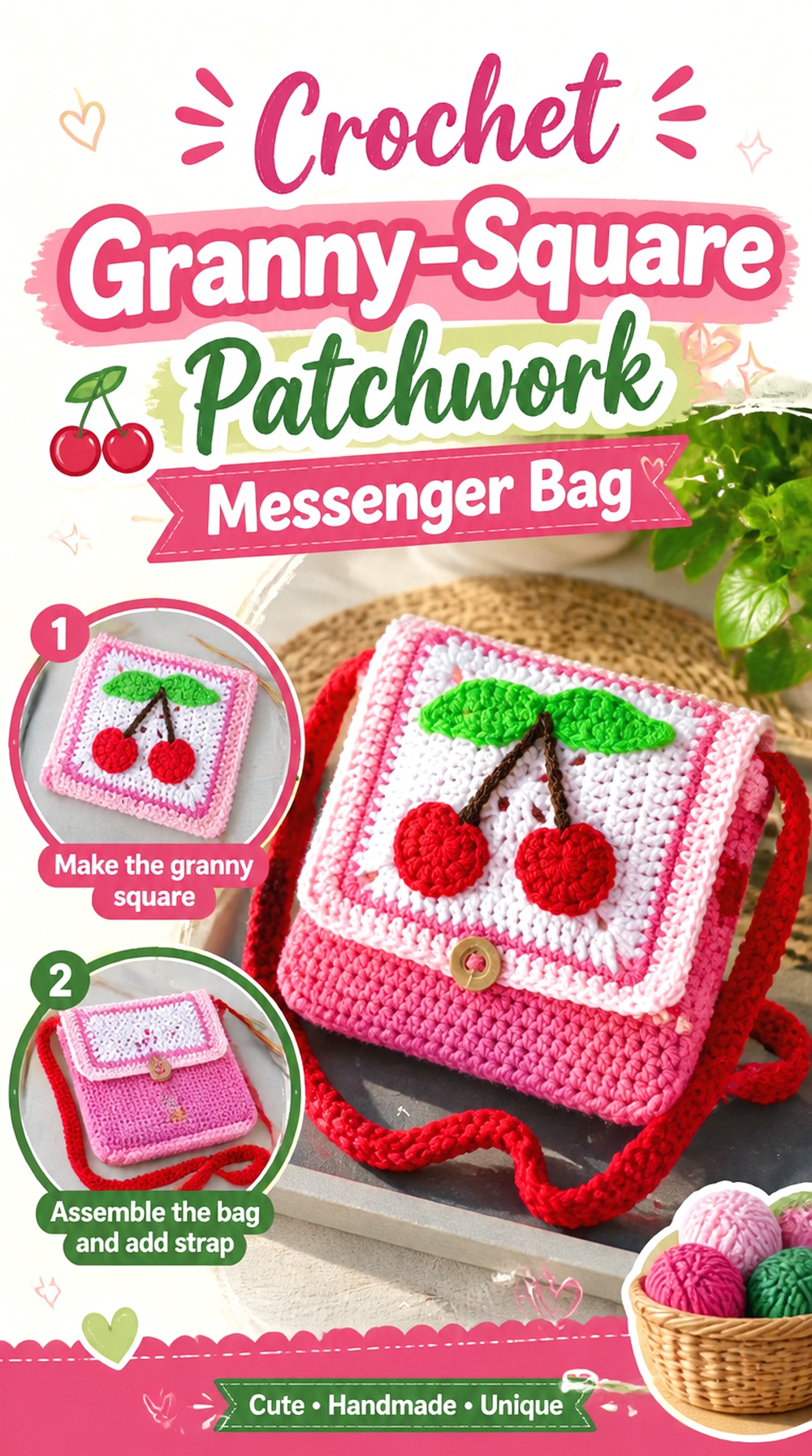
Strong Earth Creations provides a granny-square messenger tutorial that shifts the design emphasis from one continuous panel to joined motifs. The visual appeal comes from the repeated square layout, making this a good route for an oversized bag that should read as patchwork rather than plain fabric.
Motif construction also changes the planning process. Instead of deciding only how many rows to add to a panel, you need to compare the blocked dimensions of the squares with the final front, back, and flap layout. That makes it especially suitable for readers who like modular crochet and want to plan the bag visually before full assembly.
Blocked Square Size Controls the Finished Grid
Measure completed motifs after they have settled into their intended finished state. As a planning example, if one square measures 5 inches across, four placed side by side span about 20 inches before joins, borders, edging, and construction adjustments are considered. This is only layout math; the tutorial remains the source for actual assembly.
Joining Lines Become Part of the Design
An oversized patchwork bag contains more visible seams than a one-piece panel, so join consistency has a large visual effect. Lay the squares out before joining and check motif orientation, color distribution, and edge alignment. Correcting a noticeably different square is easier before the whole front panel has been assembled.
Consider the Interior Behind Open Motifs
If the granny-square fabric has visible openings, small objects may interact differently with the surface than they would in dense crochet. A lining can be considered when containment matters, but confirm how it would work with the tutorial’s opening, flap, and strap attachments rather than adding it without a finishing plan.
Original Tutorial and Creator Credit
Creator: Strong Earth Creations
15. Crochet Star Granny Graphic Flap Messenger Bag
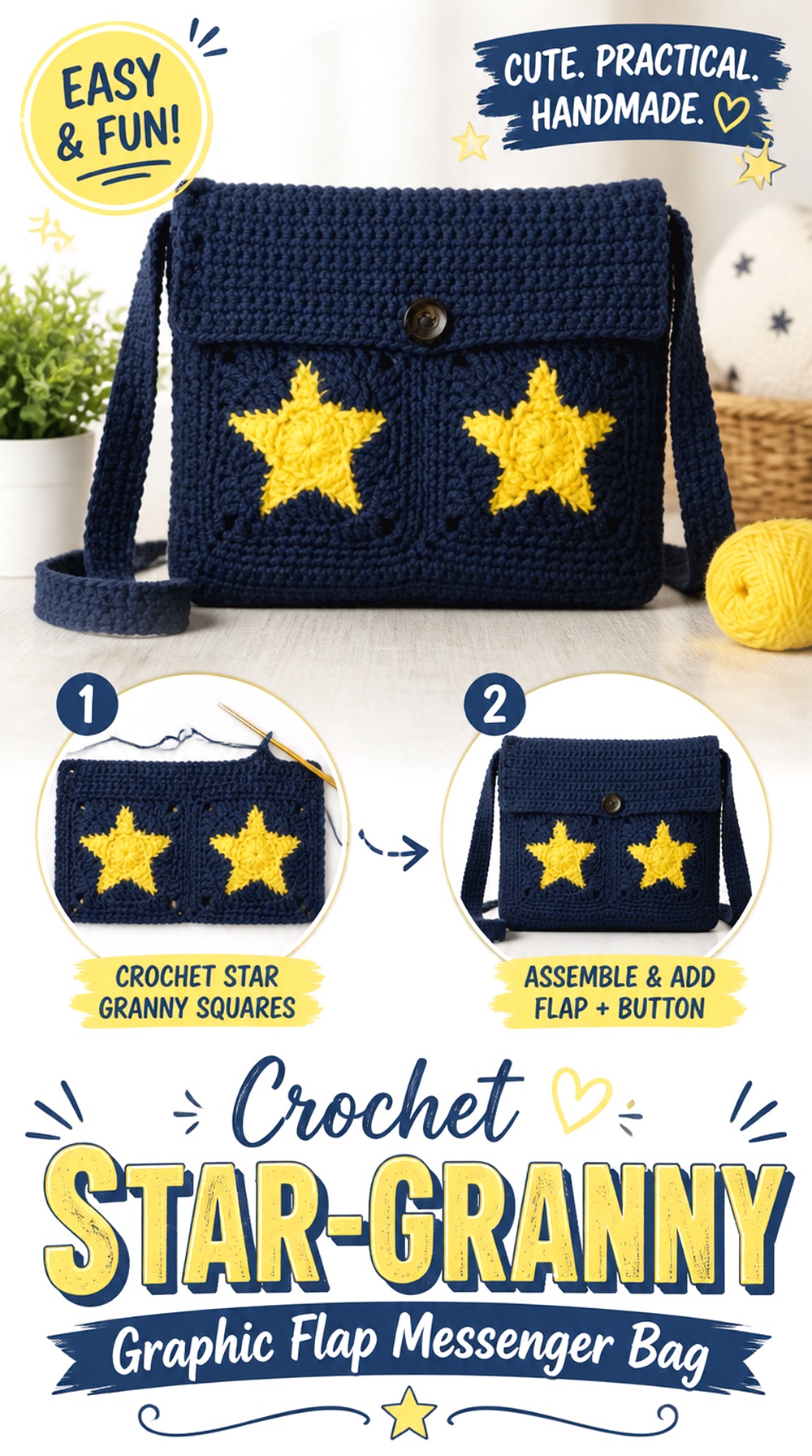
Knotting Hook Crochet turns the granny-square idea into a more specific graphic statement with star-centered motifs. The project keeps a crossbody messenger identity while giving the front a recognizable repeated shape.
This style is useful when you like motif construction but want a stronger visual theme than classic multicolor granny squares provide. On an oversized version, the star motifs become major design units, so orientation and scale need to be planned before joining. A few very large stars create a bold graphic effect; more smaller motifs produce a busier patchwork surface.
Decide Whether the Stars Should Read Individually or as a Pattern
Large, high-contrast stars can function almost like logos on the bag front, while repeated smaller stars merge into an all-over textile. Both approaches can work, but they create different oversized effects. Arrange the blocked motifs at the intended panel size before committing to the final layout.
Flap Placement Can Hide Part of the Motif Story
A messenger flap overlaps the front, so some stars may be covered when the bag is closed. That overlap can create intentional layering or accidentally hide the motif you most wanted to display. Check both the open and closed views during layout planning rather than arranging squares only on a flat work surface.
Reinforce Your Planning at the Join Points
More motifs mean more intersections where several edges meet. Uneven motif sizes can make those points pull or buckle. Compare blocked dimensions first and correct obvious differences before final joining; forcing mismatched squares together can distort the larger panel and make the flap edge less even.
Original Tutorial and Creator Credit
Creator: Knotting Hook Crochet
16. Crochet Textured Puff Style Shoulder Flap Bag
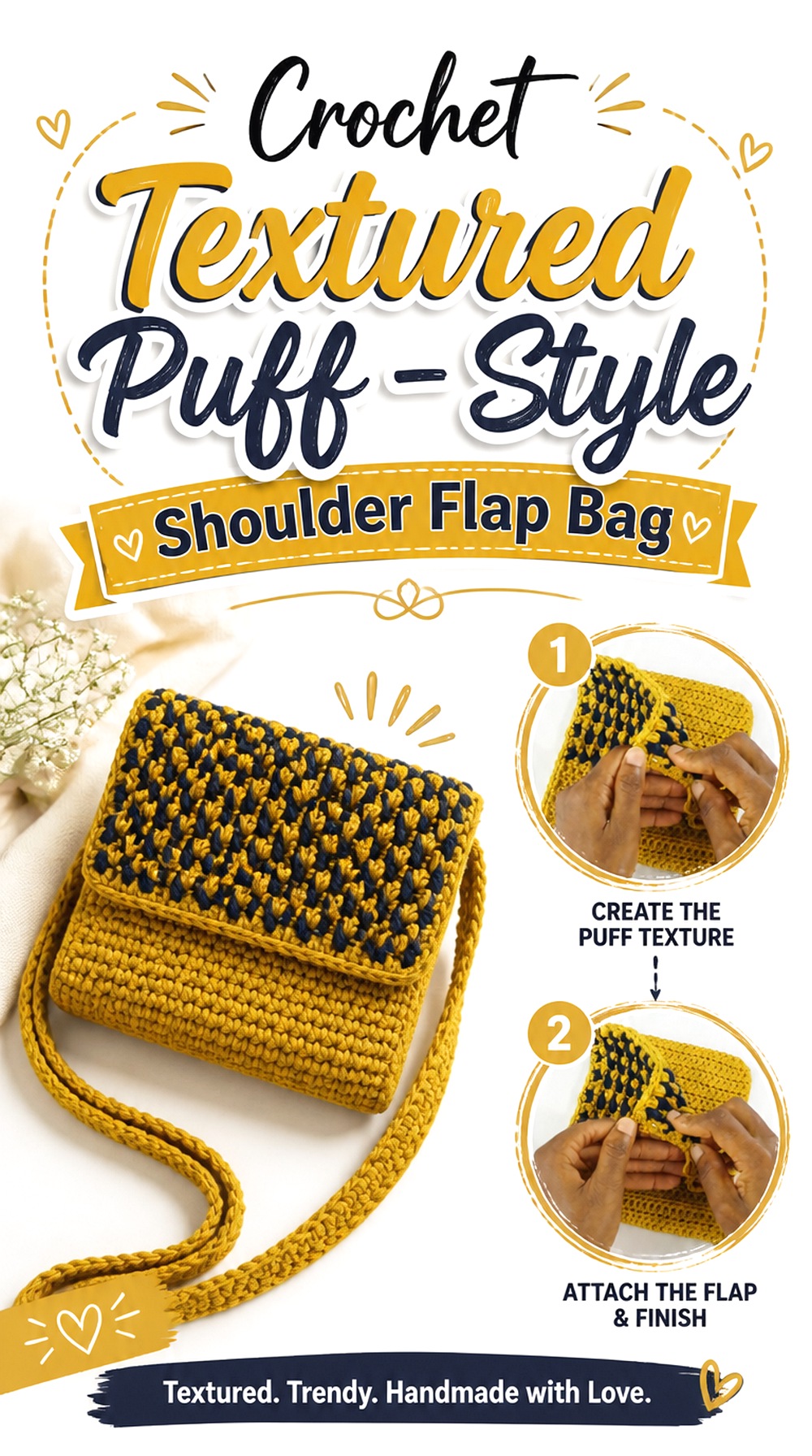
Yarn Craftee’s shoulder-bag tutorial offers another route to a decorative flap: texture rather than colorwork or joined motifs. The source presents it as a crochet flap bag, giving readers a smaller, purse-oriented construction that can inspire a larger shoulder version.
Because the demonstrated project is not one of the largest bags in this collection, treat it as a surface-and-flap reference rather than assuming its original scale matches an oversized messenger. Its advantage is visual concentration. A textured flap can carry most of the decoration, allowing a larger body underneath to remain comparatively calm.
Put Raised Texture Where It Will Stay Visible
A highly textured flap makes sense because it remains on the outside when the bag is closed. Repeating the same dense texture over an entire oversized body may add unnecessary visual and physical weight. Consider whether the flap should remain the focal area while the larger front and back use a quieter fabric.
Larger Scale Can Change the Shoulder-Bag Proportion
A small shoulder purse can become awkward if simply widened into a huge rectangle while keeping the original strap relationship. Decide whether the enlarged version should remain a shoulder bag or shift toward a longer messenger fit. The intended carrying position should guide strap length and attachment planning.
Original Tutorial and Creator Credit
Creator: Yarn Craftee
17. Crochet Classic Over the Shoulder Messenger Bag
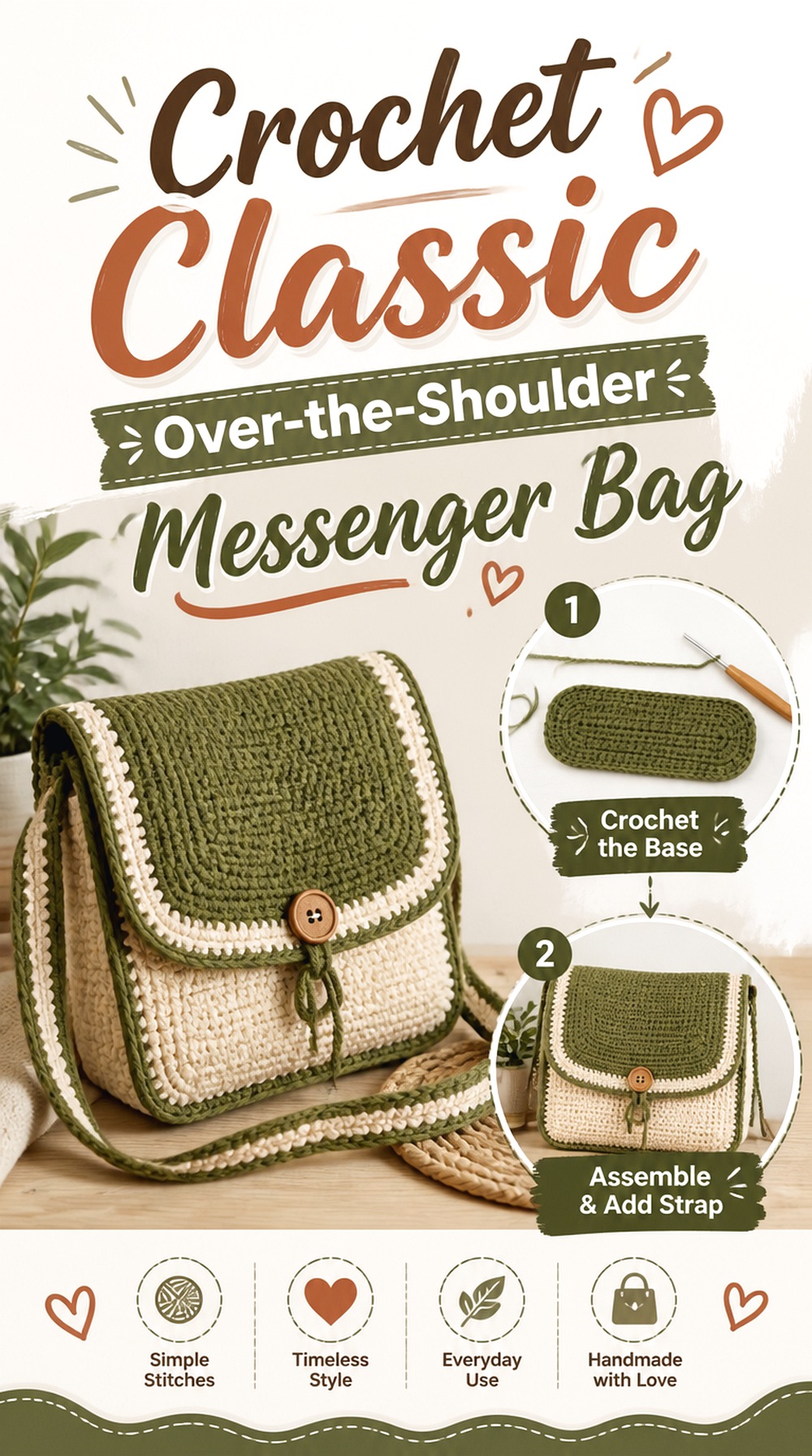
The All Crafts Channel tutorial offers a more traditional messenger silhouette without making one motif, character, or modern hardware system the entire concept. That makes it useful as a neutral base for readers who want a straightforward over-the-shoulder crochet bag with room for personal finishing choices.
A classic construction can be especially effective at oversized scale because the shape itself is familiar. Instead of making the bag larger and then adding every possible detail, you can let proportion, yarn, and one restrained trim choice establish the look. It provides a strong contrast to the graphic and heavily compartmentalized designs elsewhere in the article.
A Plain Front Gives You More Freedom With Scale
Without a fixed motif grid, enlarging the body does not create the same placement problems as a granny-square or pixel design. That makes this approach useful if size is the priority. Still, check the relationship between the flap and opening carefully so the enlarged body retains the classic messenger balance.
Optional Trim Should Match the Bag’s Real Use
Decorative edging or bead details can make a simple messenger feel more personal, but an everyday bag is repeatedly handled at the flap and sides. Place delicate additions away from high-friction areas if snagging would be inconvenient. If the bag is primarily decorative, you have more freedom to make trim a prominent feature.
Keep the Traditional Silhouette From Becoming Too Deep
A classic messenger is usually easy to access because the body remains relatively broad and flat compared with a bucket bag. When adding depth for an oversized version, avoid changing the geometry so much that it becomes difficult to reach the bottom while worn. Compare depth with the objects you actually plan to carry.
Original Tutorial and Creator Credit
Creator: All Crafts Channel
18. Crochet Decorative Boho Flap Crossbody Bag
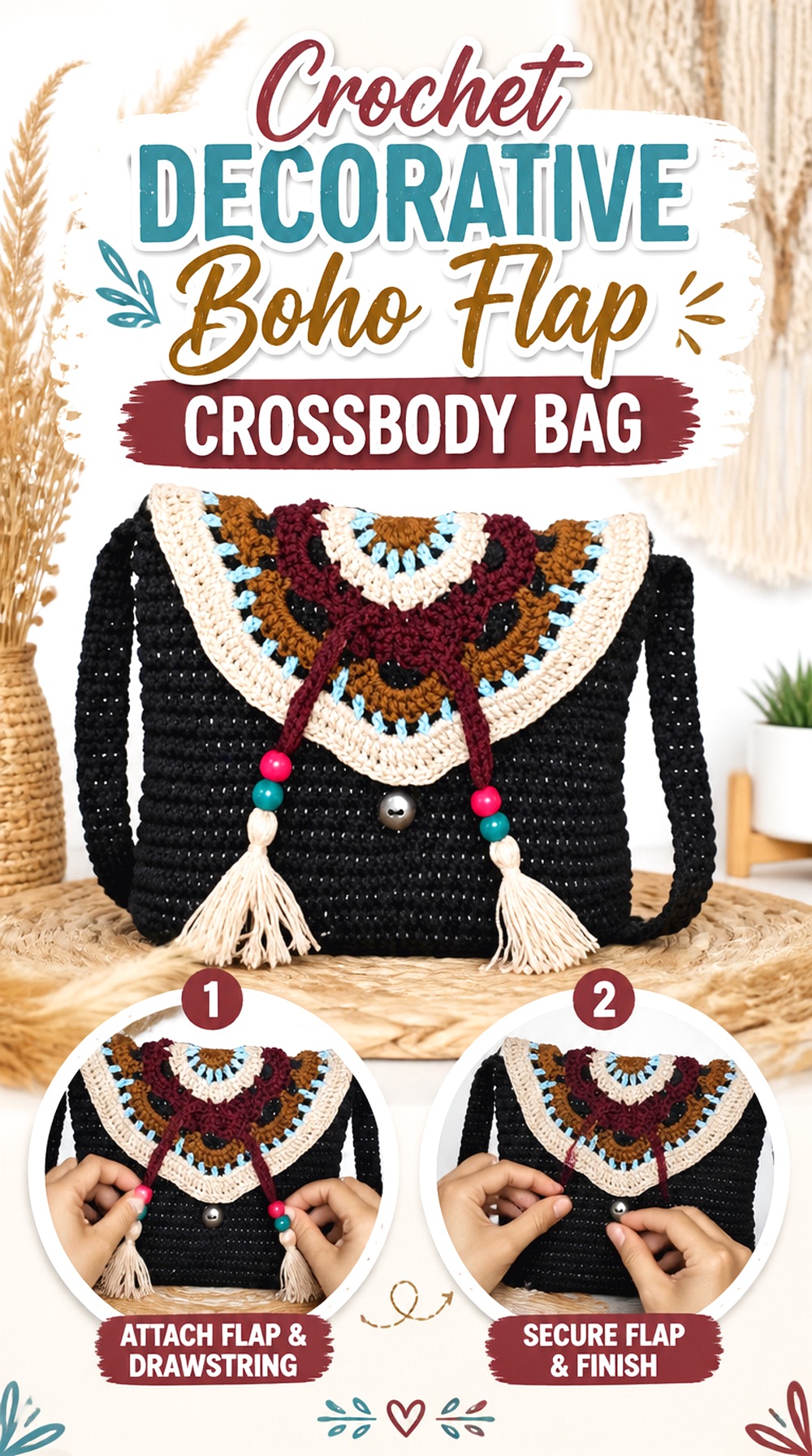
Diah Ayu Widyaningrum’s tutorial focuses on a distinctive flap crossbody rather than a plain school messenger. The shaped, decorative front makes it useful for an oversized bag intended primarily as a fashion accessory. Its polished flap treatment separates it from the soft rectangle and patchwork options.
This is another source where the construction is more relevant to the topic than claiming the demonstrated bag is enormous. If you adapt the concept upward in size, protect what makes it recognizable: the relationship between the body and the decorative flap. Simply increasing the lower body without reconsidering the flap would change the design substantially.
The Flap Should Remain the Visual Center
For this type of bag, the closure area is also the major decorative surface. Before increasing dimensions, sketch or mock up the body and flap as simple rectangles or paper shapes. That makes it easier to judge whether the flap still looks intentional instead of appearing too small on a larger body.
Boho Styling Benefits From Controlled Drape
A little softness can complement a decorative crossbody, but excessive stretch may make shaped flap edges and hardware sit unevenly. Compare the fabric you produce with the creator’s finished result. If your yarn creates substantially more drape, recognize that the same geometry may not have the same polished appearance.
Check the Interior Before Choosing It for Heavy Carry
A visually elaborate exterior does not automatically indicate how the inside is organized or supported. If you want a large daily-use version, confirm the tutorial’s interior, closure, and strap attachment before deciding what it should carry. Fashion-first and load-first bag designs can require different compromises.
Original Tutorial and Creator Credit
Creator: Diah Ayu Widyaningrum
19. Crochet Elegant Structured Chain Strap Flap Bag
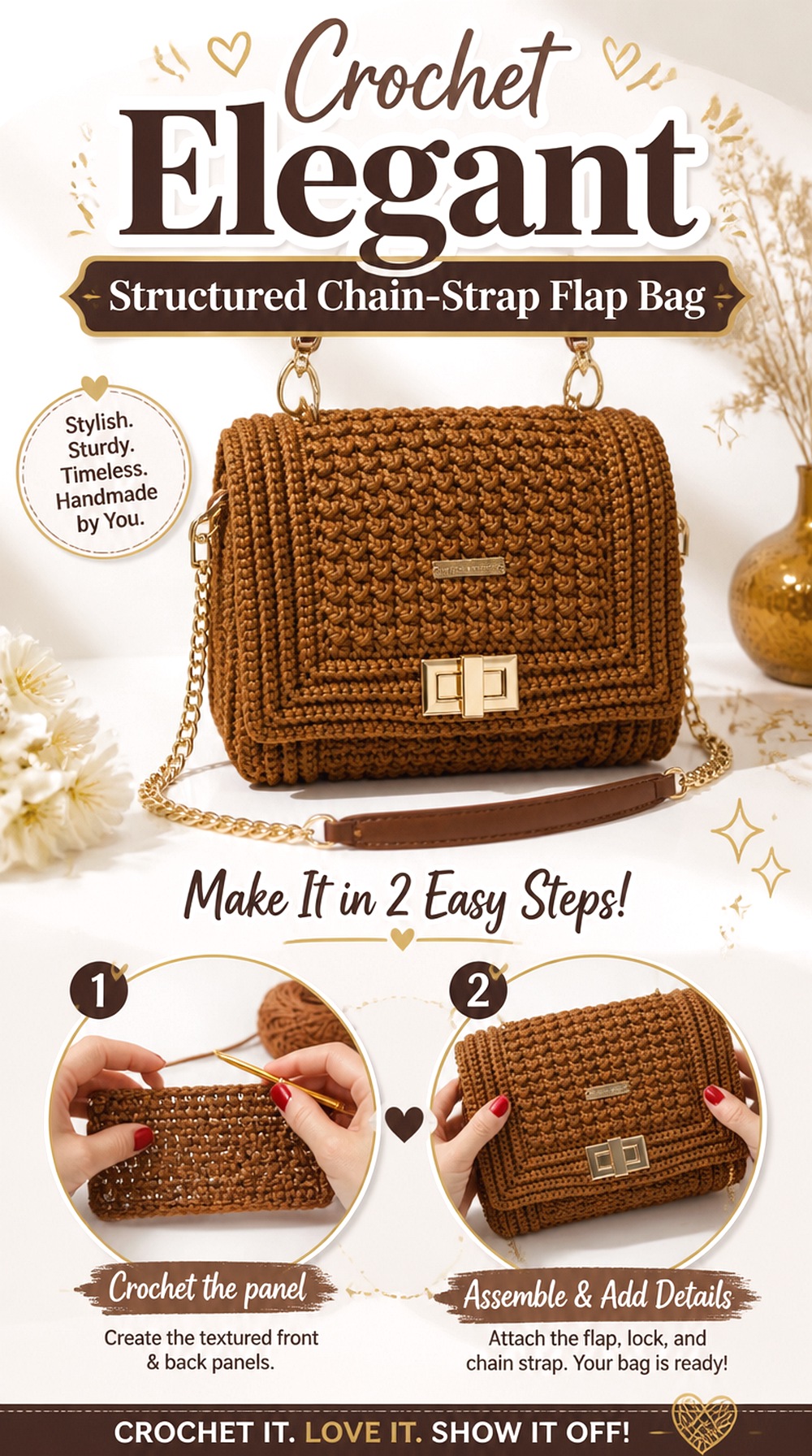
Cathérine Crochet’s handbag tutorial moves the flap-bag idea toward a polished purse. The finished design uses a structured handbag presentation with hardware and a chain-style carrying treatment rather than the broad crocheted straps found on many messenger bags.
This is not an oversized messenger as demonstrated, so its role in the collection is specific: it provides a structured finishing reference for readers who want a larger flap bag to look handbag-like rather than slouchy. If you enlarge the concept, the hardware and internal support should be reconsidered rather than assumed to scale automatically.
Chain Hardware Creates Different Attachment Stress
A chain connects to the bag at relatively concentrated points compared with a wide crocheted strap. That can look elegant, but it makes the attachment method particularly important on a larger body. Use hardware sized for the construction shown and do not assume a small-bag attachment should carry an arbitrarily enlarged load.
Internal Support Can Preserve a Polished Outline
Structured purse tutorials may use support materials that soft messenger tutorials do not. That changes how the front, sides, and flap behave when empty. If a crisp oversized handbag is your goal, study the creator’s support and assembly approach rather than trying to obtain the same shape from yarn stiffness alone.
Scale the Hardware Visually as Well as Functionally
A tiny clasp can look lost on a very broad flap even if it technically closes the bag. Conversely, oversized hardware can dominate a refined design. Before purchasing components, mock up the flap at its final dimensions and compare potential hardware against it at full scale.
Original Tutorial and Creator Credit
Creator: Cathérine Crochet
20. Crochet Lined Compartment Flap Bag
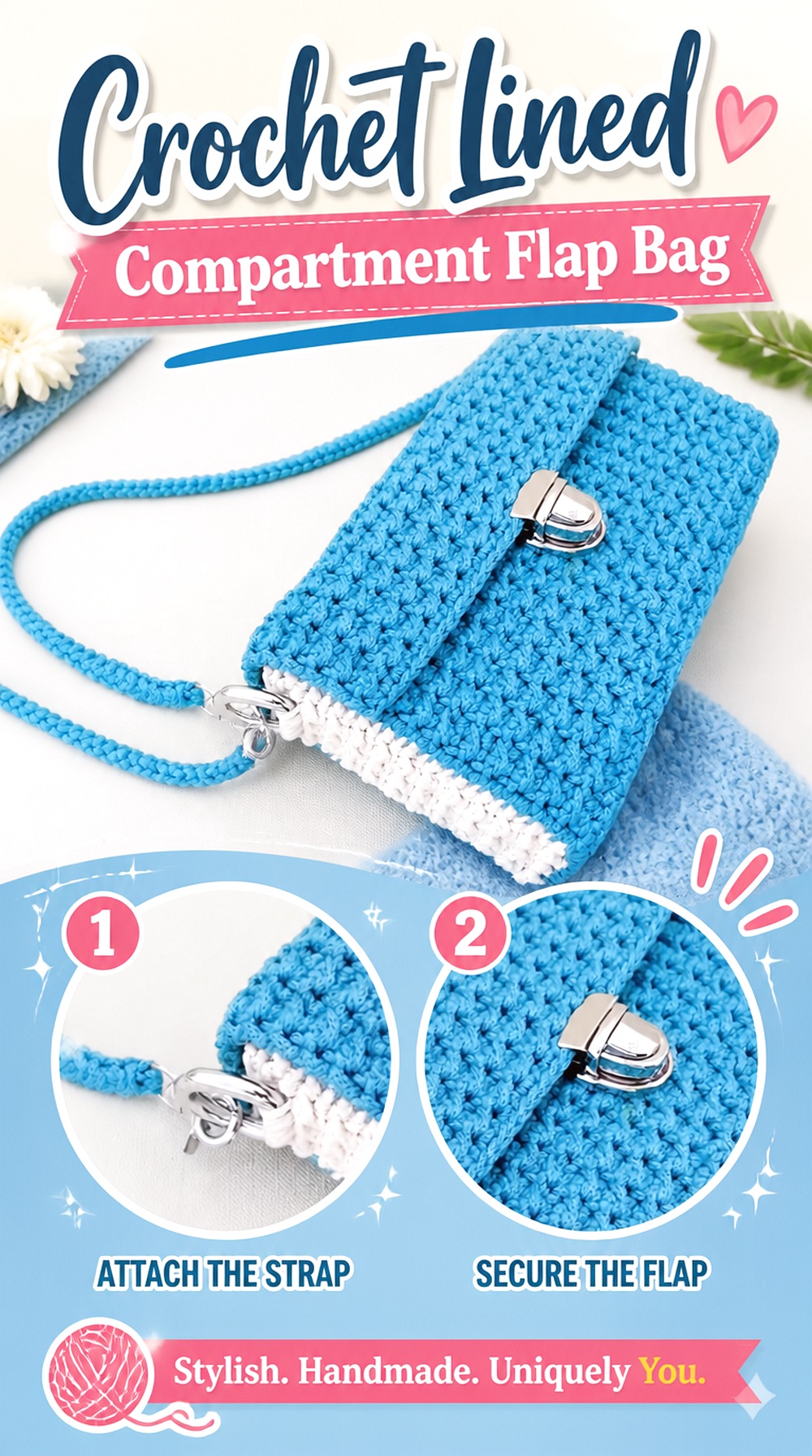
Knot So Hard’s flap crossbody is deliberately compact as shown—the creator gives a finished size of approximately 17 by 12 centimeters—so it should not be confused with an oversized finished tutorial. Its value is in the finishing details: the project includes lining and interior compartments within a neat flap-bag construction.
For someone planning a large everyday bag, those small-bag details can be useful inspiration because organization becomes even more important as capacity increases. Treat the source as an interior-finish reference. Any enlarged body, pocket dimensions, closure positioning, or structural changes need independent planning rather than a simple assumption that every measurement scales proportionally.
Compartment Planning Should Follow the Objects Inside
An oversized version may need one tablet-sized sleeve, a small phone pocket, or a divided organizer rather than several equally enlarged compartments. List the objects you want separated and plan around those dimensions. This creates a more useful interior than multiplying the creator’s compact proportions by an arbitrary factor.
Lining Is Easier to Plan Before the Final Opening Is Finished
If you know you want a lined oversized bag, review the complete lining stage before completing every edge and closure detail. Understanding where the lining sits can help you avoid placing decorative hardware or attachments where they make later finishing unnecessarily awkward.
Use This as a Finishing Reference, Not a Size Claim
The original project is small. Its inclusion here is specifically about how a lined, compartmentalized flap bag can be organized and finished. For readers who need a tutorial that is already oversized, the CrochetCrys or Rich Textures Crochet projects are much closer matches without significant scale reinterpretation.
Original Tutorial and Creator Credit
Creator: Knot So Hard
21. Crochet Relaxed Everyday Messenger Bag
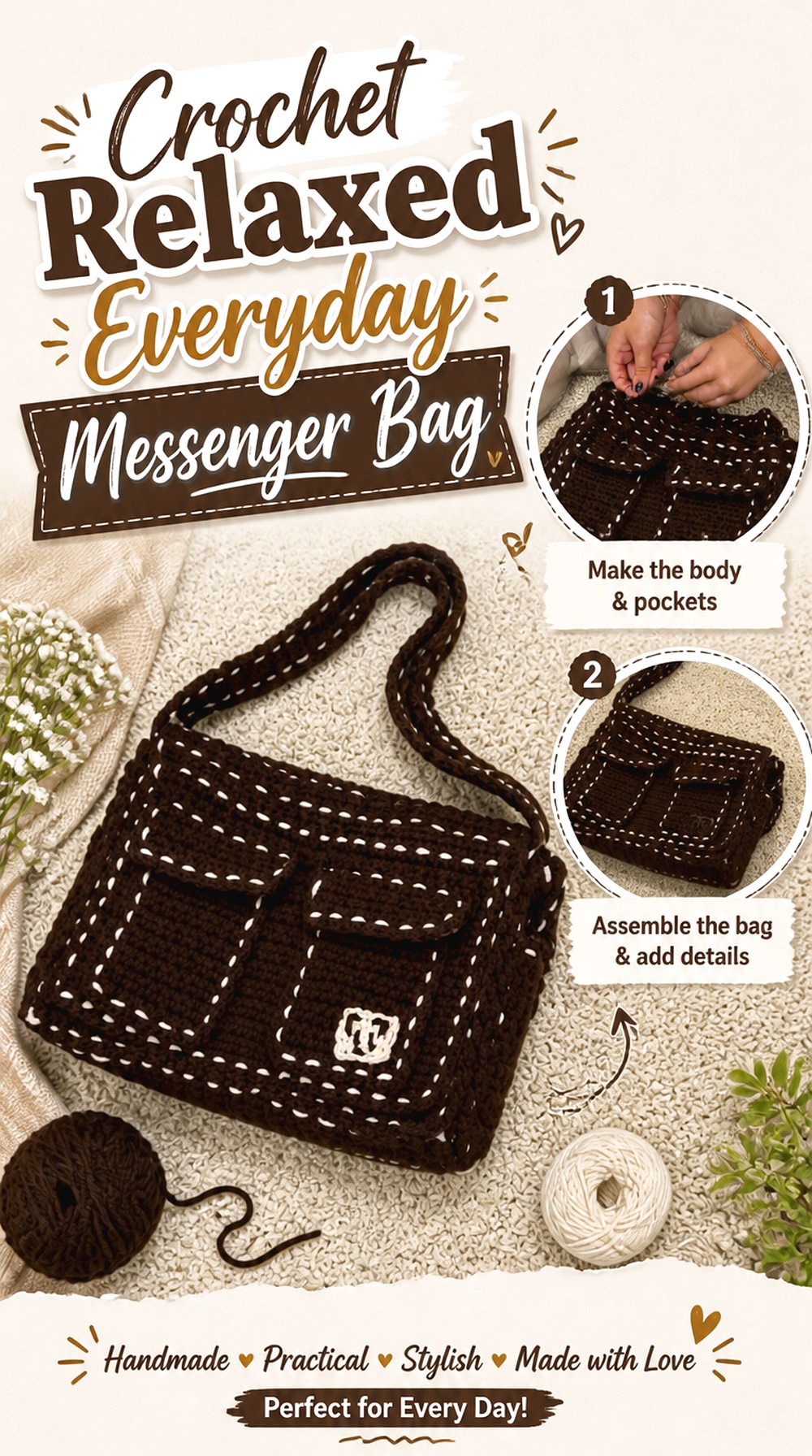
Sara Vila’s messenger tutorial offers a straightforward everyday interpretation that works as a useful counterpoint to the heavily structured and motif-driven projects. The recognizable flap-and-strap form keeps the focus on the overall bag rather than a special pocket system or elaborate hardware.
That makes it a practical inspiration source if you want an oversized messenger with a softer, uncomplicated personality. Rather than adding features for the sake of complexity, you can use a simple construction to concentrate on body proportion, yarn behavior, and comfortable carry. If finished dimensions are not clearly stated for the version you intend to follow, confirm them in the source before treating the tutorial as suitable for specific books or devices.
Simplicity Makes Proportion Mistakes More Visible
A plain messenger has nowhere to hide an awkwardly shallow flap or strap that looks too narrow against the body. Before assembly, lay the major pieces together and judge them as one silhouette. A few minutes spent checking visual balance can matter more than adding extra decorative finishing later.
Choose Drape According to the Intended Everyday Use
A soft oversized messenger can be comfortable against the body, while a firmer one makes finding items and inserting books easier. Neither is automatically better. Work a representative fabric sample with the yarn you actually intend to use and decide whether its flexibility matches the finished behavior you want.
Confirm Final Scale Before Calling It a Carry-All
A roomy-looking bag on screen is not a reliable measurement reference. If you need it to accommodate a particular notebook, tablet, or other object, verify the creator’s dimensions or compare the demonstrated bag with clearly identified objects. Otherwise, use the tutorial for its construction style without assigning an unsupported capacity.
Original Tutorial and Creator Credit
Creator: Sara Vila
Which Oversized Flap Bag Style Fits Your Use?
For books, devices, or substantial everyday carry, begin with the genuinely roomy constructions: CrochetCrys offers a large lined messenger, while Rich Textures Crochet adds a deep body and multiple storage zones. Zaen’s Craft Studio is the strongest choice when a zipper and adjustable hardware strap matter, and Biyabimi is particularly useful when separated book storage is the priority.
For a fashion-led oversized bag, the choices change. Mahum’s pixel pockets, the two granny-square options, and by red bean’s Inflorescence design make the front surface part of the outfit. Fiber Flux and miu suit a softer, cozier silhouette, while Crochiquely, Magic Knot Bag, and Cathérine Crochet point toward progressively more structured finishes. Smaller flap-bag tutorials are most useful as adaptation references, not as evidence of oversized finished dimensions.
Conclusion
The most useful oversized crochet flap bag is the one whose construction matches what you actually plan to carry. Choose a gusseted, pocketed, lined, or zippered messenger when organization and structure matter; choose a soft square or simple panel bag when drape is part of the appeal. Pixel pockets, granny squares, stars, puff texture, and embellishments make more sense when the bag is intended to be a visible outfit piece.
Before enlarging any design, confirm the finished dimensions, opening, flap coverage, strap attachment, yarn behavior, and closure. Use the original tutorials linked above for exact construction details rather than reconstructing their patterns from a roundup.
Frequently Asked Questions
How can I tell whether a crochet flap bag tutorial will work at an oversized scale?
Look at how the bag gets its depth, how the strap attaches, and whether the creator provides a way to alter dimensions. Flat rectangular panels are often straightforward to understand visually, but enlarging them also increases fabric weight and strap stress. Tutorials explicitly designed for size customization are the clearest choices. Otherwise, compare the finished measurements and construction before assuming that a small purse can simply be multiplied into a large messenger.
What yarn qualities are useful for an oversized crochet flap bag?
Think in terms of fabric behavior rather than one universally “best” fiber. A firmer fabric can help a large bag maintain a defined silhouette, while a softer fabric creates more drape. Thick cord, T-shirt yarn, super-bulky yarn, and conventional medium yarn can all produce very different weight and stretch. Follow the tutorial’s yarn requirements when reproducing its result, and make a sample before substituting a materially different yarn.
Should an oversized crochet messenger bag have a lining?
A lining is worth considering when you want a cleaner interior, need to contain small objects behind open stitches, or want to reduce direct friction between contents and the crochet fabric. It is not automatically required for every bag. If the source includes lining, follow its finishing approach. If it does not, check how adding fabric would interact with the flap, opening, pockets, zipper, and strap attachments before modifying the design.
Why do straps become a bigger issue on oversized crochet bags?
A larger bag can hold more, and more contents place additional pull on the strap and its attachment points. Crochet fabric may also lengthen under load depending on the yarn and stitch structure. Compare the strap width, construction, and attachment method with the intended use instead of judging only the unloaded appearance. Adjustable hardware can help with wearing length, while reinforcement decisions should match the actual tutorial and materials.
Is a flap enough to secure a large crochet bag?
A flap provides coverage, but it does not necessarily close the entire opening. Buttons, magnetic snaps, turn locks, or zippers change how controlled that opening is. A bag carrying books may need less containment than one holding small loose belongings. Decide what “secure” means for your use, then choose a closure accordingly; the zippered Zaen’s Craft Studio design is particularly useful for comparing a flap with an additional closed opening.
Can I add more pockets when enlarging a crochet messenger bag?
Yes as an independent adaptation, but plan them around real objects instead of simply filling empty space. A phone pocket, device sleeve, bottle section, or flat document pocket each needs different dimensions and placement. Also consider whether added pockets will sit behind the flap, affect lining, or place extra weight on one panel. Tutorials from Rich Textures Crochet, Biyabimi, Vivi Crochet, and mahum show several different ways that pocket planning can influence the finished bag.