Rust orange works especially well for fall crochet because it can shift from earthy and understated to bold and graphic depending on the project around it. In this collection, the color moves through very different finished forms: fitted and relaxed wearables, textured accessories, bags, table pieces, granny-square projects, soft furnishings, and seasonal decorations.
The tutorials below are not all demonstrated in rust orange. Instead, each one provides a useful finished shape or construction that can be interpreted in a rust, copper, terracotta, burnt-orange, or similarly warm autumn shade. That distinction matters because the right yarn behavior is different for a slouchy sweater, structured tote, stuffed pumpkin, openwork shawl, and flat placemat. Use the comparisons and checkpoints here to decide where the color—and your yarn—will work best.
Quick List
- Crochet Ribbed Rustic Pumpkin
- Crochet Autumn Granny Square Cardigan
- Crochet Rust Orange V-Neck Sweater
- Crochet Granny Square Layering Vest
- Crochet Structured Two-Square Tote
- Crochet Fall Bucket Hat
- Crochet Leaf Vine Garland
- Crochet Open-Lace Shrug
- Crochet Windowpane Granny Square Throw
- Crochet Arcade-Stitch Fall Shawl
- Crochet Twist-Front Ear Warmer
- Crochet Mesh Market Bag
- Crochet Autumn Table Coasters
- Crochet Pumpkin Granny Square Accent
- Crochet Buttoned Mug Cozy
- Crochet Drawstring Mini Pouch
- Crochet Chunky Infinity Scarf
- Crochet Pumpkin-Shaped Placemat
How to Use Rust Orange Without Making Every Project Look the Same
A single rust-orange yarn can read very differently depending on stitch density and scale. Dense ribbing makes the shade look deeper because the raised lines create their own shadows, while lace and mesh allow the background to break up a large field of orange. Granny squares give you another option: use rust as the dominant motif color, a narrow border, or one part of a larger fall palette instead of filling every square with the same shade.
Also consider where the finished piece will sit. A sweater or scarf already occupies a large visual area, so one solid rust tone can make a strong statement. Small pieces such as coasters, pumpkins, and mug cozies can handle concentrated color more easily. For a blanket or cardigan, cream, brown, muted olive, or another restrained companion color can separate repeated orange sections without changing the overall fall character.
Choose Yarn by Function, Not by the Color Name
Finding the perfect burnt-orange shade is only half the decision. A yarn that behaves beautifully in a loose shawl may stretch too much in a bag, while a firm yarn that helps a tote keep its outline may feel too rigid for a sweater.
For wearables, make a swatch large enough to judge both drape and recovery before committing to the final size. For bags, handles, and pouches, pay more attention to abrasion, stretch, and how securely the fabric contains what you plan to carry. Stuffed décor needs a fabric dense enough that filling does not dominate the surface. Flat table pieces need to settle evenly without persistent rippling.
Fiber care matters too. Check the yarn label before choosing a cleaning method, especially for pieces that will encounter food, frequent handling, or repeated washing.
Plan Fall Projects by Wear, Display, and Storage
Before choosing among these 22 ideas, decide what you want the finished crochet to do after October. Garments and accessories can remain useful throughout cooler weather even when the color reads strongly autumnal. A neutral-rust cardigan or cowl therefore has a longer practical season than a literal pumpkin motif.
Seasonal décor brings different questions. A stuffed pumpkin needs a stable shape after storage; a garland should fold or coil without damaging its leaves; a pillow takes considerably more storage room than a granny-square accent. Table pieces should return to a flat shape after being put away.
This is also a useful way to prioritize your time. If you want one large statement project, start with the cardigan, sweater, blanket, or shawl. If you would rather scatter rust orange through a room or outfit, smaller accessories give you more ways to repeat the color without committing to one large piece.
1. Crochet Ribbed Rustic Pumpkin
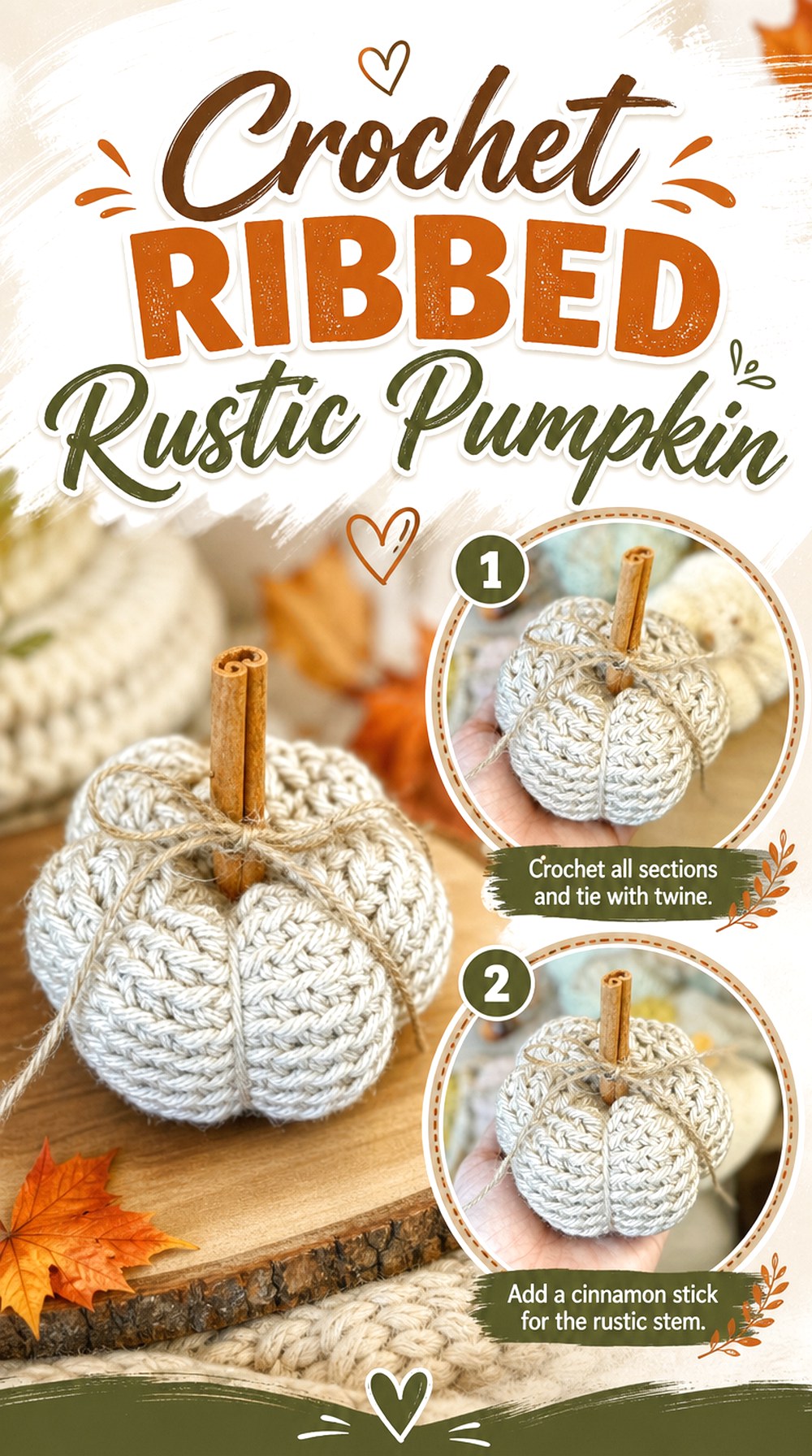
A ribbed crochet pumpkin turns rust orange into a three-dimensional fall accent rather than simply using the shade as a background color. The Hooked on Homemade Happiness tutorial produces a stuffed pumpkin with pronounced surface texture and a deliberately rustic finish, making the form easy to recognize even in a subdued burnt-orange yarn. It suits mantels, shelves, table groupings, and seasonal displays where a small dimensional piece can supply concentrated color without taking over the room.
Unlike the flat pumpkin motif later in this list, this project depends on shaping and stuffing. That makes the silhouette just as important as stitch appearance.
Shape First, Then Fine-Tune the Orange
Rust orange spans everything from muted clay to darker copper. For a dimensional pumpkin, look at the yarn under the lighting where the finished piece will actually be displayed. Heavy shadows between raised sections can make an already dark orange appear significantly deeper.
If you are grouping several pumpkins, you do not need identical shades. Keeping the values slightly different can make the individual silhouettes easier to see while preserving one autumn palette.
Stuffing Changes the Finished Silhouette
The amount and distribution of filling affect whether a crochet pumpkin looks rounded, tall, flattened, or uneven. Add filling gradually and check the object from the side and from above instead of judging only the front.
If stuffing starts showing through the crochet fabric, more filling is not necessarily the fix. A denser fabric or more suitable yarn-and-hook combination may be needed before finishing the piece.
Treat the Stem as Part of the Display
The tutorial uses a rustic stem treatment, so think about where the pumpkin will sit before finalizing the top. A tall or rigid stem can look charming on an open shelf but may complicate stacking or enclosed storage.
If you adapt the finishing, make sure any decorative component is secure enough for the intended display. Small attached parts also deserve extra consideration if the pumpkin will be accessible to young children or pets.
Original Tutorial and Creator Credit
Creator: Hooked on Homemade Happiness
2. Crochet Autumn Granny Square Cardigan
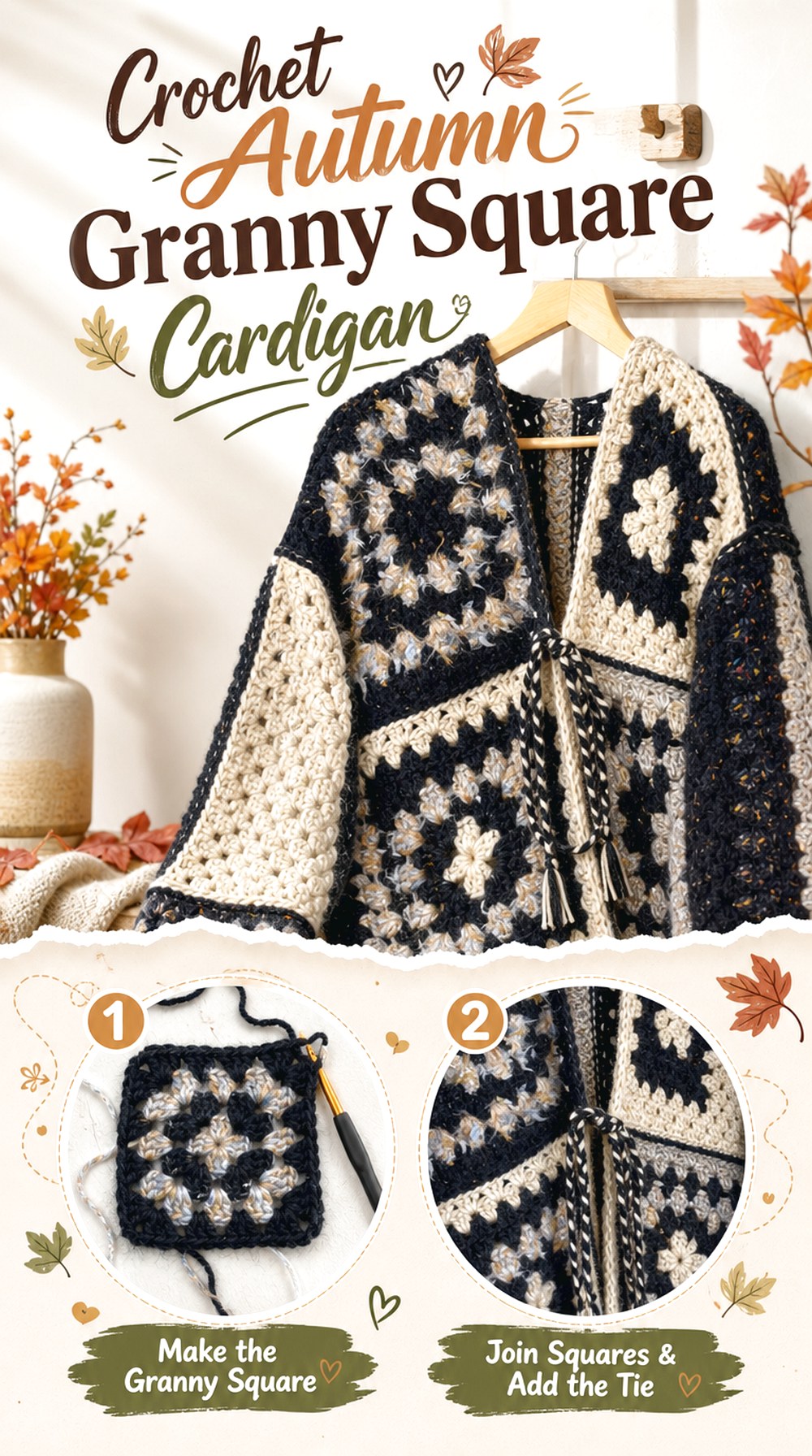
This granny square cardigan gives rust orange room to interact with other fall shades rather than carrying the entire garment alone. DIYGuru’s tutorial builds a cardigan from granny-square units and includes joining and neckline shaping, making it a useful choice for readers who want a clearly modular wearable.
For a Fall 2026 version, rust could dominate the square centers, appear only in later rounds, or alternate with cream, brown, mustard, olive, or another restrained companion color. Because the motifs repeat across a large area, placement has a bigger visual effect here than on a small accessory.
Color Placement Can Calm a Busy Cardigan
Before crocheting every square, make several color mockups or arrange yarn strands in the intended order. Repeating rust orange in exactly the same position on every motif creates a strong rhythm, while moving it around produces a more patchwork-like effect.
If you want a quieter garment, keep one joining or border color consistent across the whole cardigan. That shared color can visually connect squares even when their centers vary.
Block Squares Before Judging Panel Size
A granny square can change dimensions after relaxing or blocking, and small differences become much more noticeable when several motifs are joined side by side.
As a planning example, if a blocked square measures 5 inches across, four squares span about 20 inches before joins, edging, shaping, and garment ease are considered. Use your own blocked dimensions rather than relying on an assumed universal square size.
Watch the Weight Across the Shoulders
A modular cardigan can accumulate substantial yarn weight, especially when the squares are dense or the finished garment is long. Hold or temporarily arrange enough completed motifs to understand the fabric weight before committing to the entire layout.
If the shoulder area begins to feel heavy, changing yarn mid-project is rarely a simple fix. It is better to identify the issue while you still have only a sample panel or small group of squares.
One Edge Color Can Pull the Whole Garment Together
The neckline and exterior edging are an opportunity to repeat the most important shade in the palette. A dark brown edge can frame bright rust motifs, while a rust edge can make otherwise mixed-color squares feel more autumnal.
Check edging tension as you work. Too tight an edge can draw in an open front; too loose an edge can flare and distract from an otherwise clean square layout.
Original Tutorial and Creator Credit
Creator: DIYGuru
3. Crochet Rust Orange V Neck Sweater
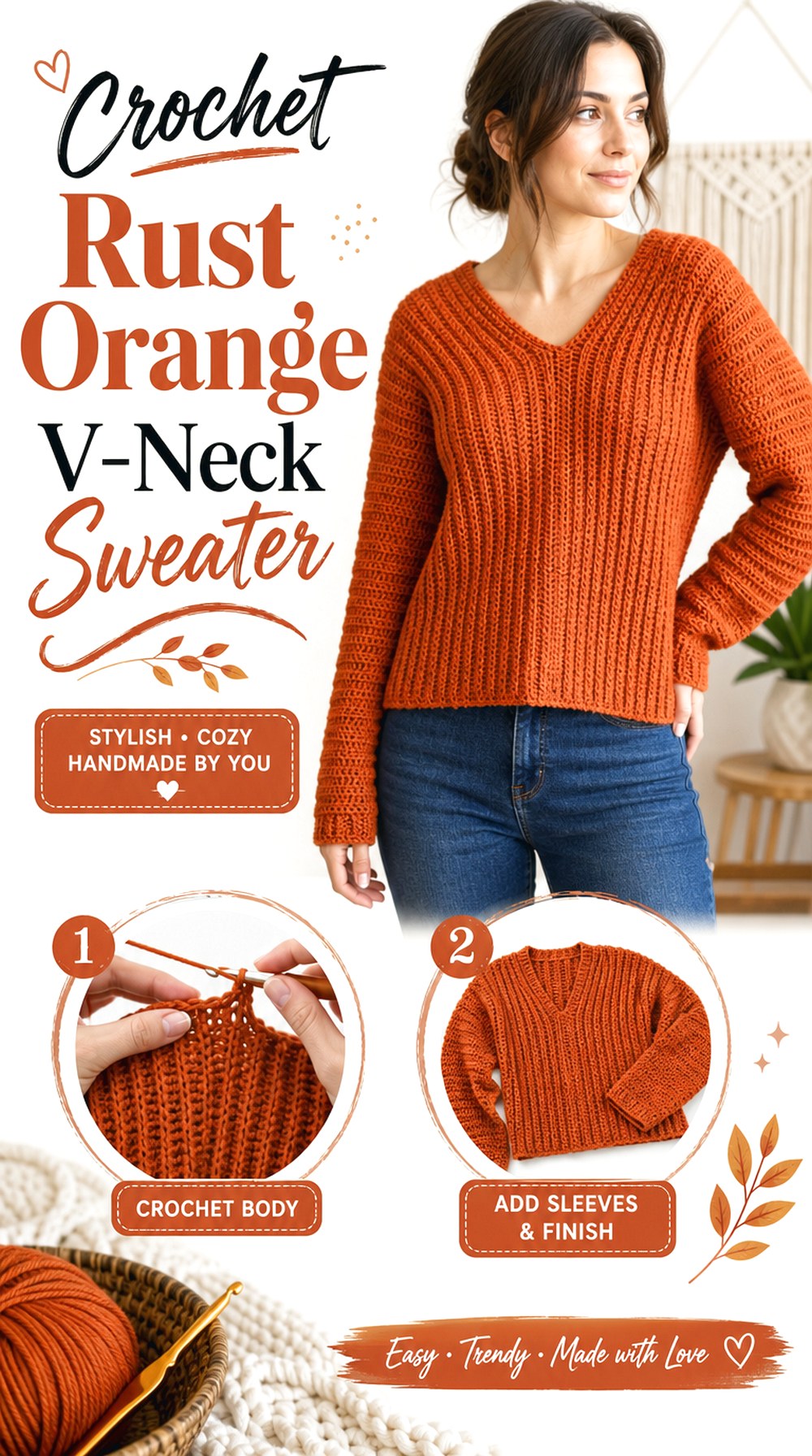
A rust-orange V-neck pullover gives you a large uninterrupted field of color with a completely different silhouette from the modular cardigan. The forthefrills tutorial shows a boxier body with a V neckline and tapered sleeves, making this option particularly suited to readers who prefer a recognizable sweater shape over visible motif joins.
In a solid autumn color, the neckline becomes an important break in the surface. That makes proportion, drape, and shoulder fit more noticeable than they would be in a heavily patterned garment.
A Boxy V-Neck Still Needs Planned Ease
“Boxy” should not mean choosing an arbitrary larger size. Compare the tutorial’s garment measurements or sizing guidance with a sweater you already like, then decide how much room you want around the torso.
Pay particular attention to shoulder width and neckline position. Extra body width can create a relaxed silhouette, but misplaced shoulders can change the way the sleeves hang.
Drape Matters More Than Warmth Alone
Rust orange naturally reads as a cozy fall color, but the yarn still needs to suit the sweater’s movement. A stiff fabric can make a boxy shape stand away from the body, while a more fluid fabric allows it to fall closer.
Make a meaningful swatch and hold it vertically. A swatch that looks attractive lying on a table may behave very differently when gravity is pulling on a completed garment.
Check Sleeve Proportion Before Permanent Seaming
Sleeve length, taper, and cuff position affect the final silhouette just as much as the body. Before fully closing seams, arrange the pieces together and compare them with your own arm measurement or a sweater whose sleeve fit you like.
If you alter body length, reconsider sleeve proportion as well. A strongly cropped body and very long sleeve create a different visual balance from a hip-length body with the same sleeve.
Original Tutorial and Creator Credit
Creator: forthefrills
4. Crochet Granny Square Layering Vest
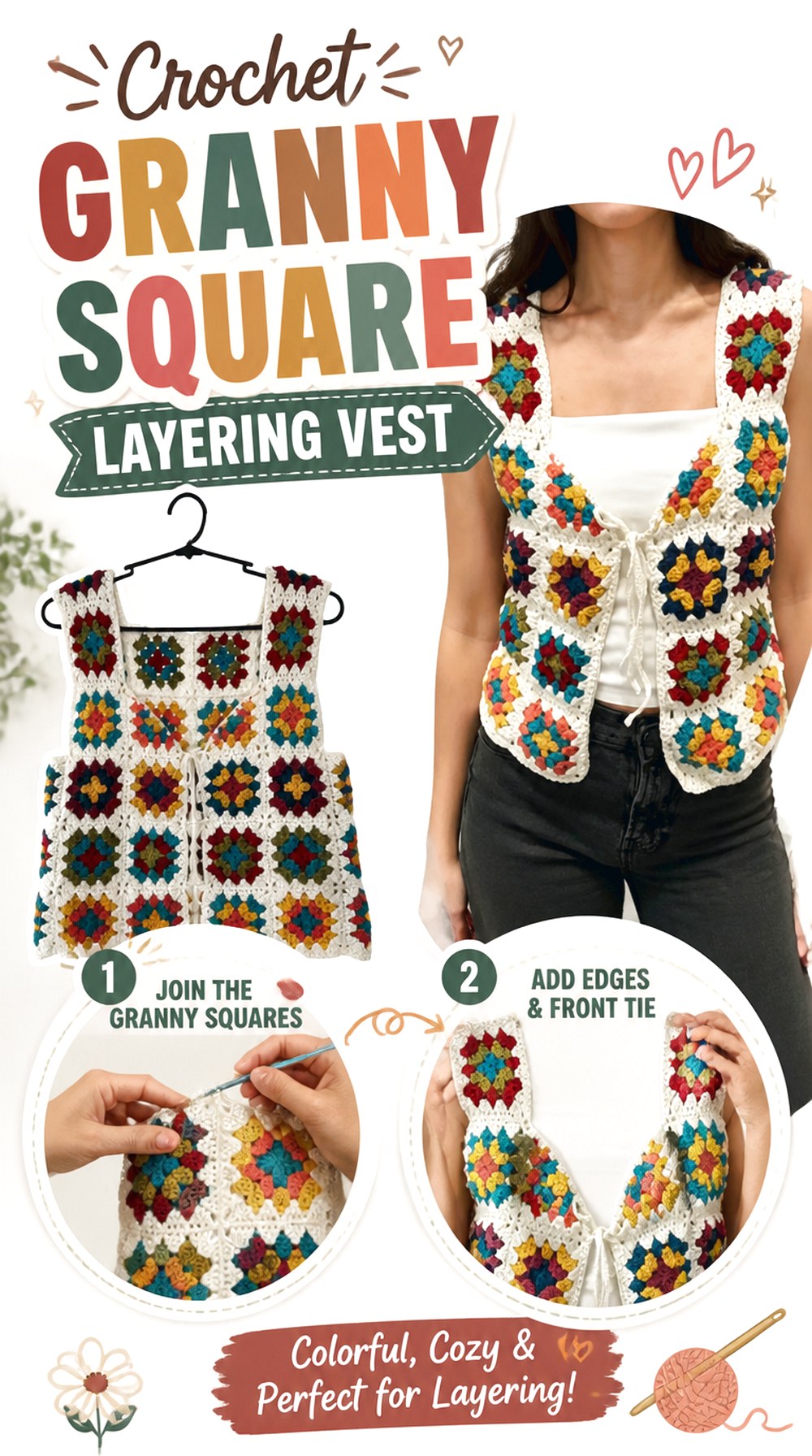
The sleeveless format makes a granny-square vest a lighter way to wear rust orange than a full cardigan. The crochetwithprachi tutorial shows a vest assembled from granny-square elements, so it offers a useful foundation for a fall layer that can sit over tees, shirts, turtlenecks, or dresses.
This project also lets you concentrate decorative color around the torso without adding the weight and visual density of motif sleeves. Rust orange can fill the majority of the squares or act as a recurring accent against a neutral background.
Square Size Drives the Vest Width
Do not plan a vest by counting motifs until you know the finished size of your own square. Crochet and block a representative motif first, then measure it.
If several motifs need to span the chest or back, even a small size difference per square can compound across the panel. Include joins, borders, and intended wearing ease when comparing the motif grid with body measurements.
Keep the Armhole From Becoming Too Dense
A thick border around a motif-based armhole can reduce flexibility and make the opening feel smaller than the initial square layout suggested. Check the armhole after joining but before adding every finishing round.
If the opening already sits close to the body, a visually substantial border may not be the right finishing choice. Follow the tutorial’s construction while using your own fit as the final checkpoint.
Let the Neck and Hem Control the Palette
Because a vest has fewer components than a cardigan, edging can carry more visual importance. Repeating rust orange at both neckline and lower edge makes the color feel deliberate even if many square centers are neutral.
For a more understated version, reverse that relationship: keep the main borders neutral and use rust only inside the motifs.
Original Tutorial and Creator Credit
Creator: crochetwithprachi
5. Crochet Structured Two Square Tote
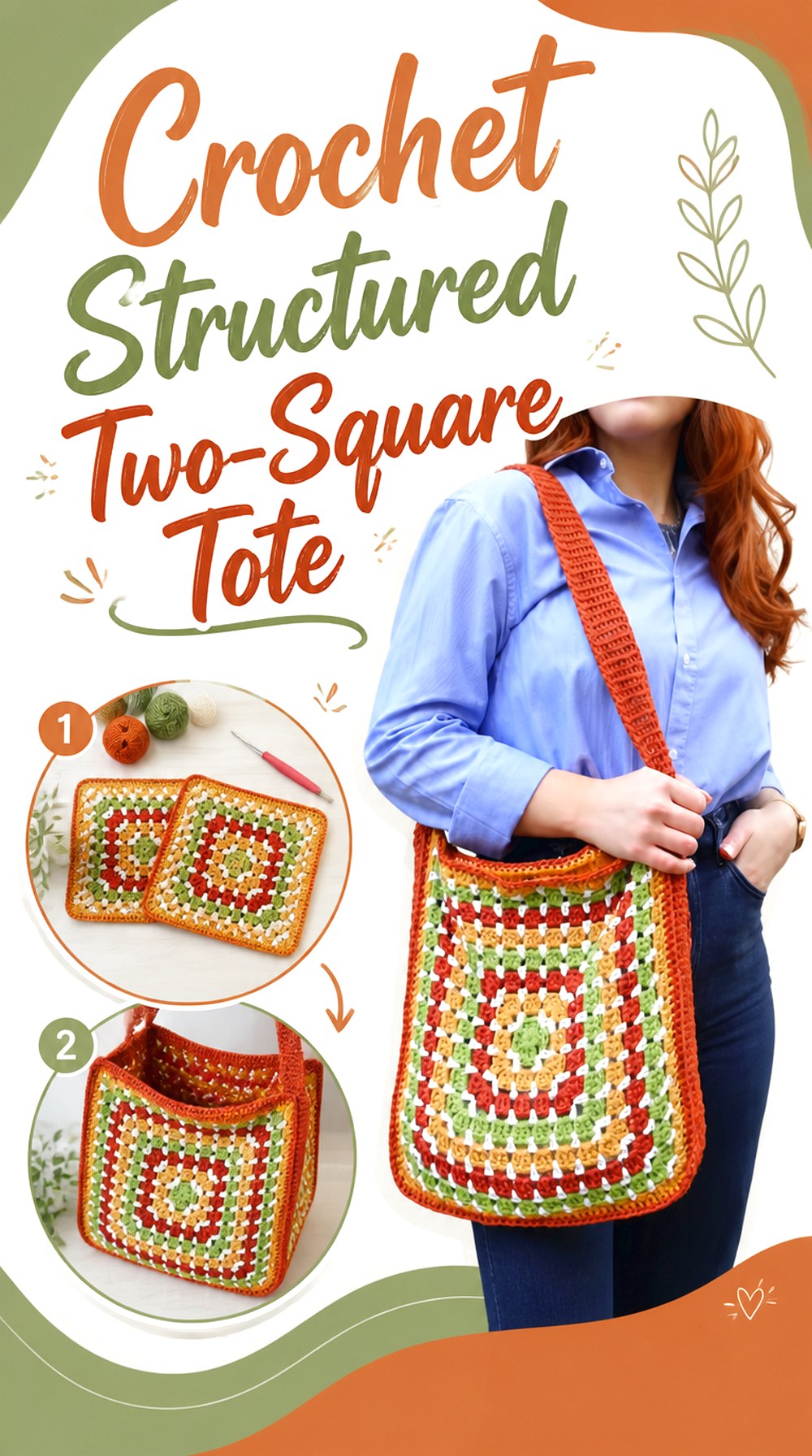
Brunaticality’s tote uses two large crochet squares with a connecting band that also forms the sides, bottom, and strap area. The tutorial additionally covers lining, an inner pocket, and a magnetic closure, so this is one of the more function-focused bag ideas in the collection.
Rust orange works well here because the bag has enough surface area to show the shade clearly without the commitment of a full garment. A copper-and-cream block combination can make the construction more graphic, while a mostly solid rust version puts attention on stitch texture.
The Two-Square Body Changes Bag Structure
A bag built around large squares behaves differently from a seamless round tote. The corners, joining band, and square edges all help define the final silhouette.
Before choosing a softer yarn simply because you like the color, consider whether the square will hold the shape you want. A very drapey fabric can make a visually structured design collapse more than expected once the bag is loaded.
Reinforcement Matters at the Strap and Opening
The strap carries repeated stress, so compare the finished strap fabric with the bag body rather than assuming they will stretch equally. If the strap already lengthens substantially when pulled by hand, expect the effect to become more noticeable in use.
The opening deserves the same attention. A closure may help keep the top controlled, but it does not correct a weak or excessively stretchy upper edge.
Lining Is Functional, Not Merely Decorative
The tutorial includes a lining and inner pocket, which can be valuable if you want the bag to contain smaller objects or reduce direct stress on open crochet fabric.
Plan lining before the crochet is completely finished so its dimensions match the actual bag, not a guessed measurement. A lining that is too small can distort the crochet, while excess fabric can bunch visibly at the bottom.
Original Tutorial and Creator Credit
Creator: Brunaticality
6. Crochet Fall Bucket Hat
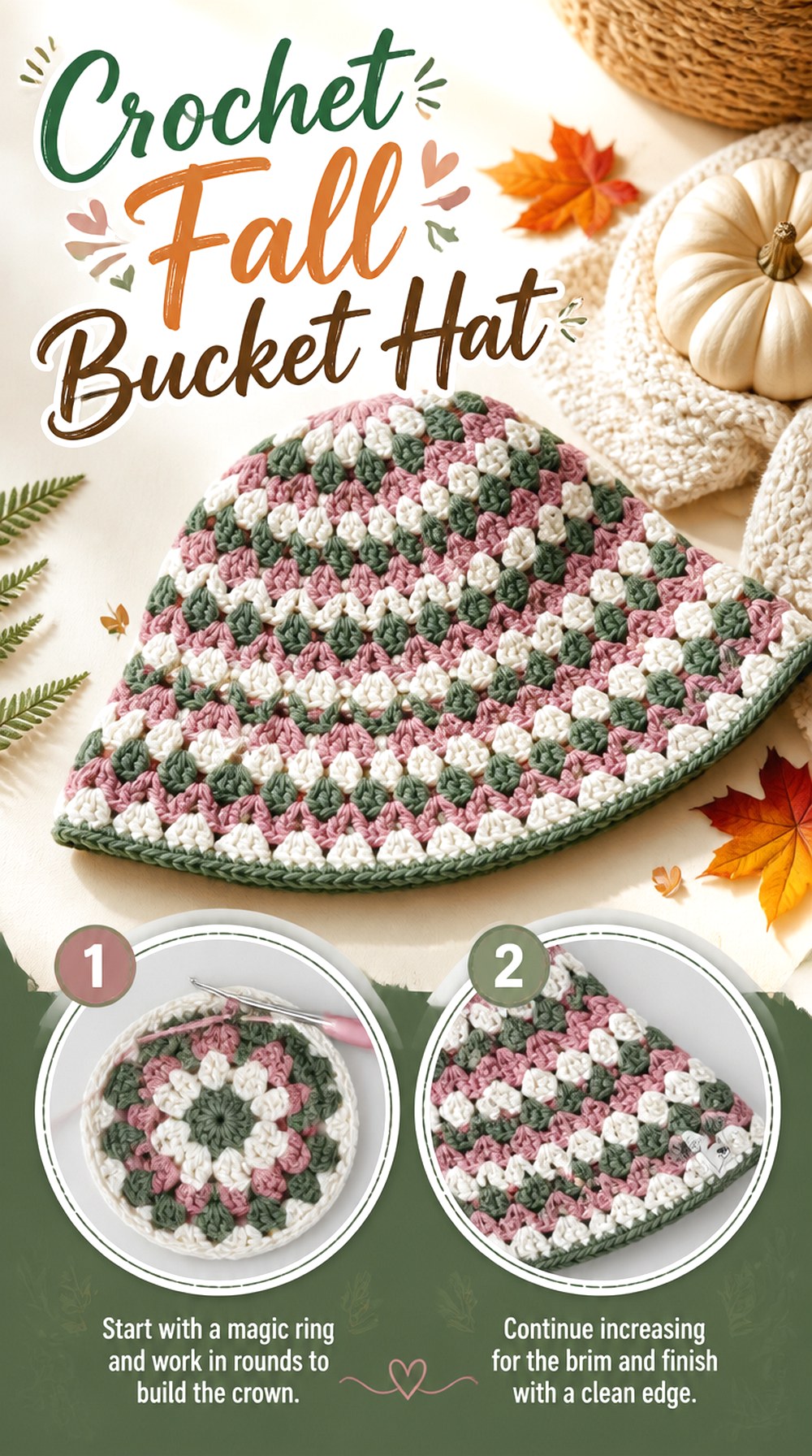
The Kelp Bucket Hat tutorial from PassioKnit Kelsie provides a rounded crochet hat with a distinct brim, giving rust orange a casual accessory format that is less winter-specific than a ribbed beanie.
A solid terracotta or burnt-orange version keeps the silhouette clear, while a subtly variegated yarn can add interest without breaking up the brim. This idea is useful for early fall when you want seasonal color but do not yet need the insulation of a close-fitting cold-weather hat.
Crown Fit Comes Before Brim Drama
The brim gets most of the visual attention, but the crown determines whether the hat actually sits where you want it. Compare the developing crown with the intended head before investing time in an especially wide or decorative brim.
If you substitute yarn, do not assume the same round count will automatically create the same finished dimensions. Gauge and fiber behavior can change the diameter and depth.
One Rust Shade Keeps the Silhouette Strong
A bucket hat already has a recognizable crown-to-brim transition, so it does not need complex colorwork to look finished. Solid rust orange keeps attention on that profile.
If you want contrast, a narrow edge or subtle stripe is less likely to visually shorten the crown than several broad horizontal color bands.
Original Tutorial and Creator Credit
Creator: PassioKnit Kelsie
7. Crochet Leaf Vine Garland
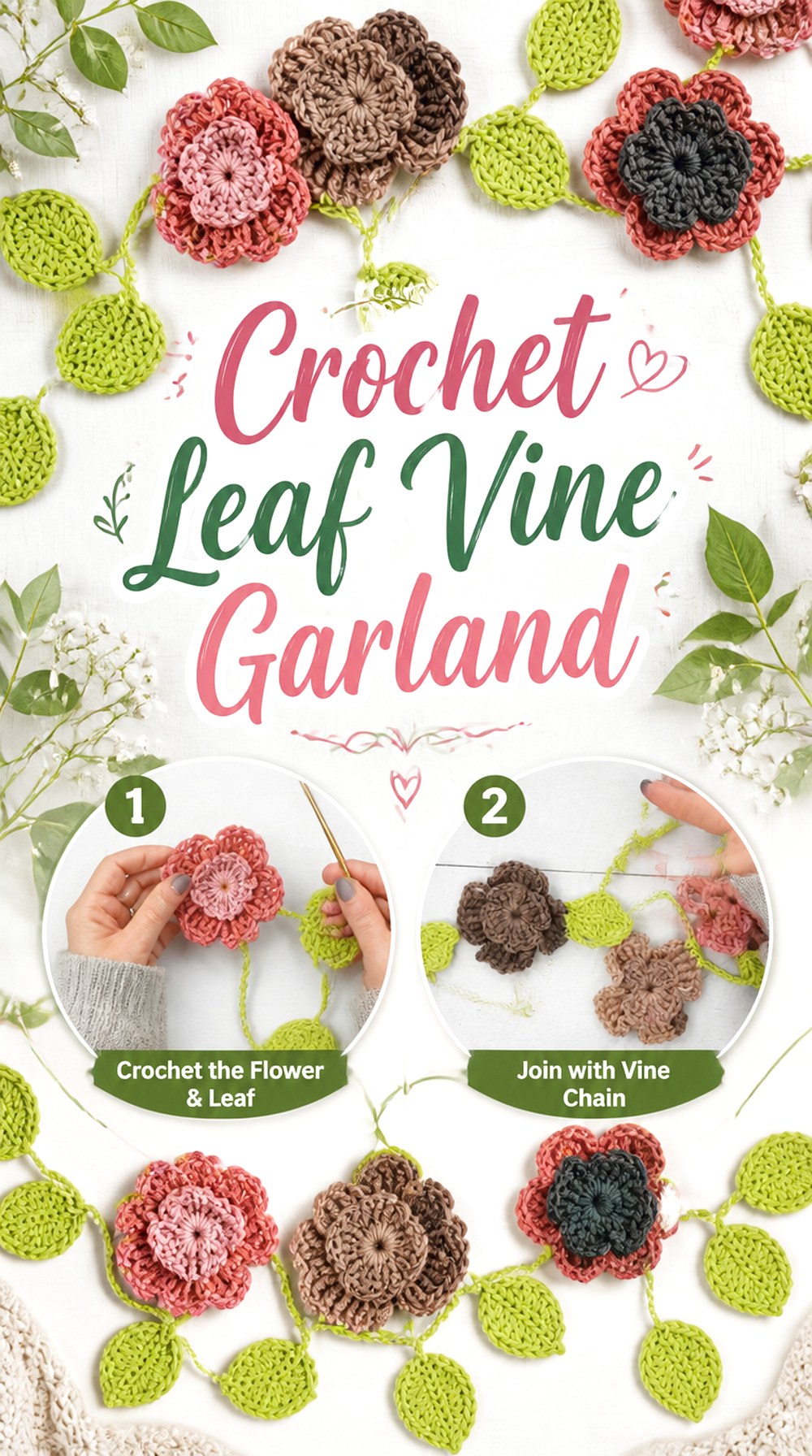
A leaf garland moves rust orange off the body and onto a shelf, mantel, doorway, wreath, or seasonal table display. Hooked by Robin’s tutorial forms leaves directly along the crocheted chain, avoiding a collection of separately sewn motifs.
This format makes it easy to treat rust as one shade in a broader leaf palette. Alternating burnt orange with brown, gold, olive, or muted red can create variation while keeping the overall display cohesive.
Garland Length Depends on the Display Site
Measure the intended location before deciding how much garland to make. A strand designed for a small shelf has very different spacing needs from one meant to drape across a long mantel.
Also account for curves and swag. A garland that matches a straight-line measurement exactly may become too short once it is allowed to dip between attachment points.
Use Multicolor Leaves With Restraint
Every leaf does not need a different shade. Repeating rust orange at predictable intervals can give a mixed autumn palette more structure.
Before making the entire length, crochet a short sample section and place it against the real wall, shelf, or furniture finish. Colors that look distinct on a worktable can blend together against warm wood or brick.
Original Tutorial and Creator Credit
Creator: Hooked by Robin
8. Crochet Open Lace Shrug
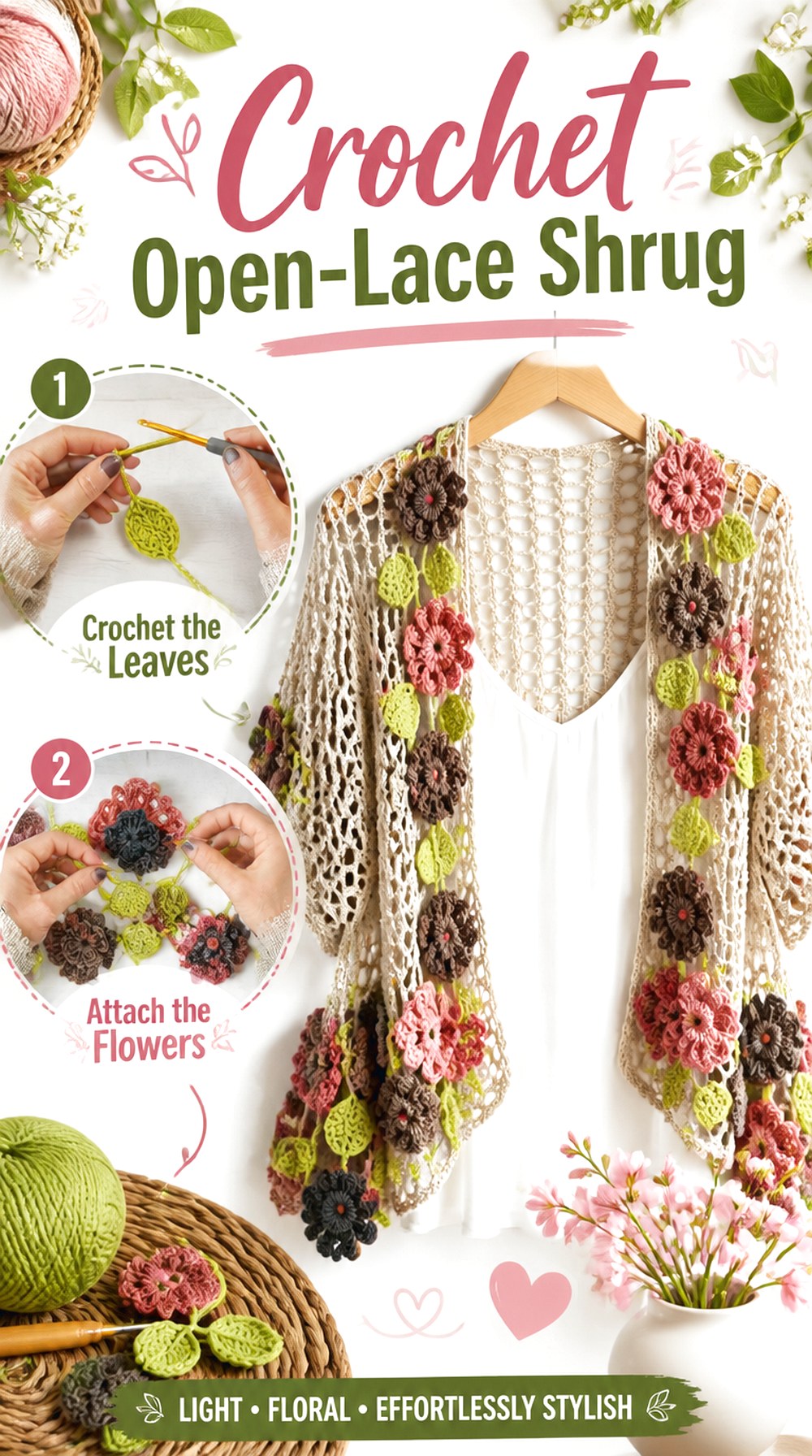
Chenda DIY’s lace shrug adds rust orange through an airy layer instead of a dense sweater. The tutorial shows a lightweight openwork shrug with sleeves, making the finished piece useful over camisoles, dresses, tanks, and fitted tops when you want coverage without the visual mass of a full cardigan.
In a deep terracotta shade, the open spaces let the clothing underneath become part of the color composition. That makes this one of the most adaptable projects in the list for early fall or indoor layering.
Lace Density Changes the Season
Openwork is not automatically warm just because it is made in an autumn color. The amount of open space, yarn fiber, and garment fit all influence how the shrug feels in actual use.
If you want a cooler layering piece, preserve the airy character. If you experiment with a thicker yarn, first check whether the larger stitches still produce a flexible fabric rather than an unexpectedly bulky mesh.
Sleeve Length Affects Layering
Long sleeves make the shrug more visually substantial, while a shorter sleeve can keep it closer to an accessory. Compare the tutorial’s sleeve proportions with the tops or dresses you actually plan to wear underneath.
Also check cuff comfort before finishing. An open body does not compensate for a cuff that feels restrictive around the wrist or forearm.
Fine Yarn Can Shift the Visual Weight
A saturated rust shade in a fine yarn often looks lighter because so much background shows through the lace. In a thicker yarn, the same color can become more dominant.
Make a swatch over both light and dark clothing. The contrast underneath can change how strongly the lace motif appears.
Original Tutorial and Creator Credit
Creator: Chenda DIY
9. Crochet Windowpane Granny Square Throw
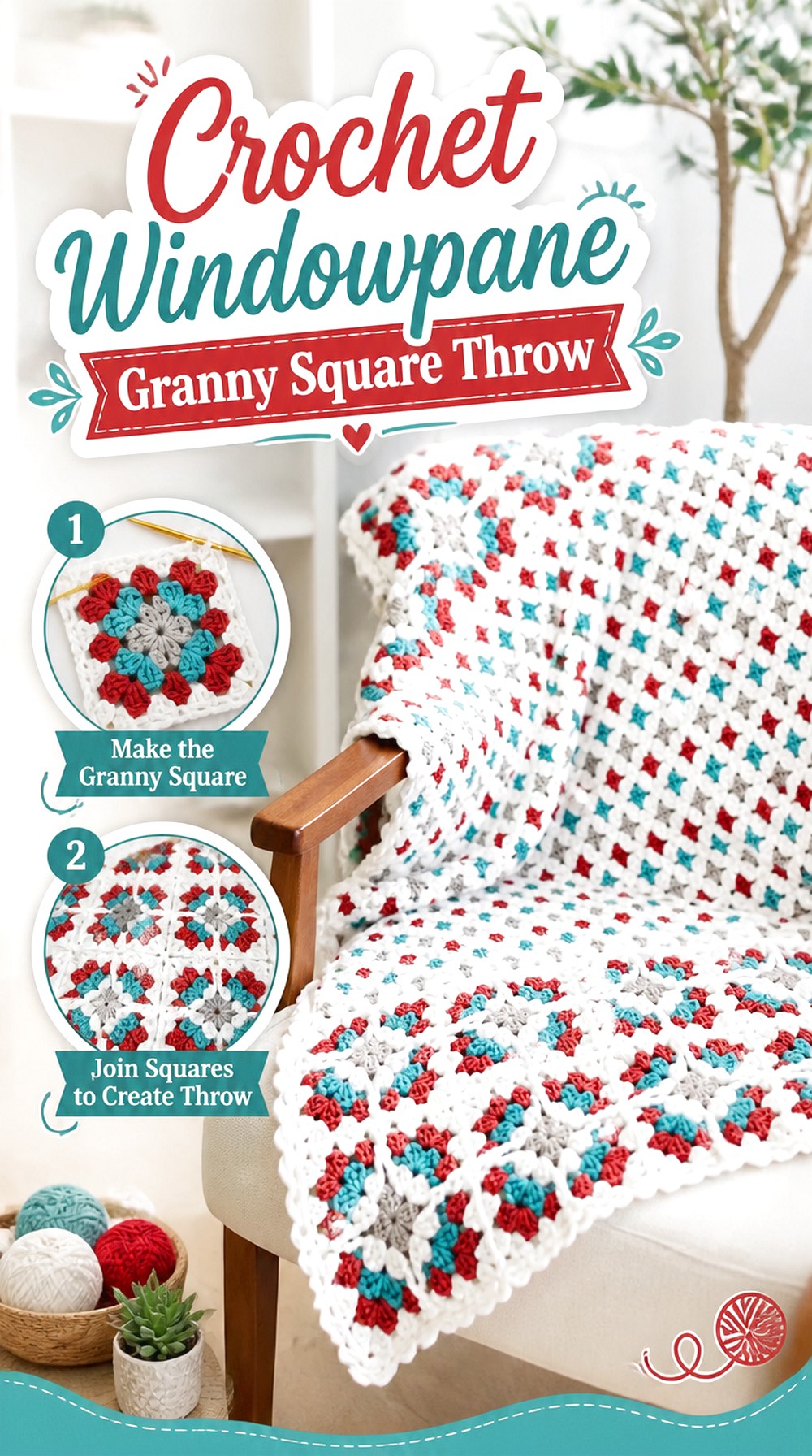
Briana K’s tutorial centers on a windowpane granny-square blanket, giving rust orange a larger home-decor role than the pumpkins, garland, or coasters. The modular grid offers several color strategies: rust-dominant squares, a rust border around lighter centers, or a repeated orange accent spread across a neutral field.
A blanket also makes color repetition easier to control because you can arrange finished squares before joining. This is useful if the yarn looks more brown, red, or copper under your room lighting than it did in the skein.
Plan Blanket Size From Blocked Squares
Finish and block at least one representative square before calculating the full layout. Multiply its actual width and height by the intended grid, then account separately for joining and any border.
This is planning math rather than a substitute for the tutorial’s pattern dimensions. Your own tension, yarn, and blocking response determine whether a motif-based calculation is reliable.
Give Rust Orange Breathing Room in the Grid
A large blanket made entirely from one strong rust shade can be dramatic, but the grid structure provides an easy way to introduce visual relief. Cream or another light neutral can separate darker orange motifs and make the windowpane effect easier to read.
For a moodier throw, use brown or charcoal as the separator instead. Test a few adjacent squares before committing to the whole arrangement.
Joining Color Changes the Whole Throw
The yarn used to connect squares can disappear into the motifs or become a deliberate graphic line. That decision is especially important in a windowpane design because the joins reinforce the overall grid.
Lay several finished motifs together and place a strand of the proposed joining color between them. It is a quick way to preview whether the blanket will feel high-contrast or blended.
Original Tutorial and Creator Credit
Creator: Briana K
10. Crochet Arcade Stitch Fall Shawl
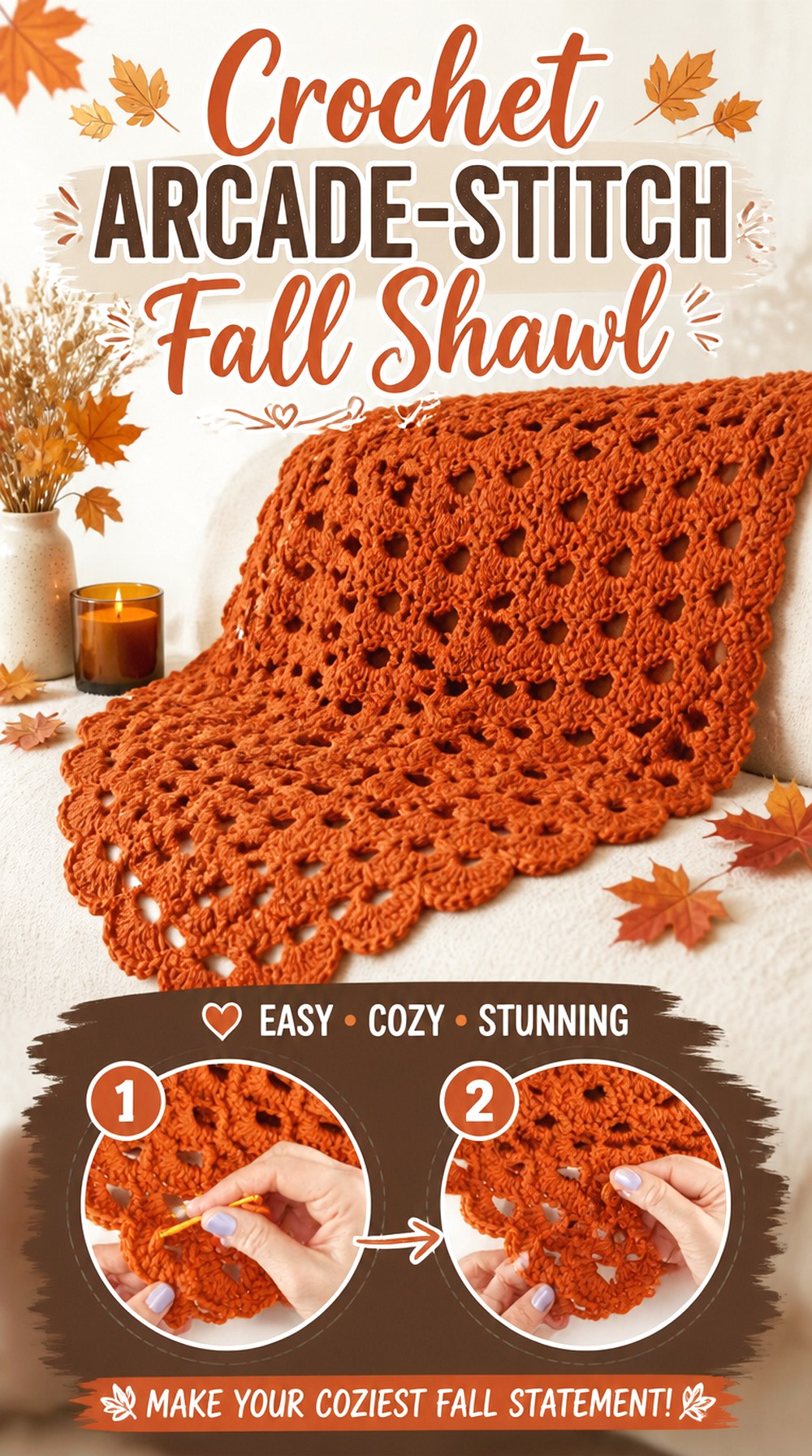
Fiber Flux’s Apple Cider shawl is already designed with fall in mind and uses rows of open arcade-style stitches, making it a natural fit for rust, copper, cider, or burnt-orange yarn.
The shape gives the color far more movement than a sweater or blanket because the fabric folds, overlaps, and drapes around the shoulders. Openwork also prevents a saturated orange from becoming one uninterrupted block. This option is especially useful when you want a statement fall piece that can move between wrap and scarf-like styling.
Openwork Keeps a Strong Orange From Feeling Solid
The negative space between stitches allows clothing underneath to show through, so the yarn color interacts with the rest of the outfit. Rust over black will read differently from rust over cream.
Before committing to a large shawl, hold your swatch against several tops or coats you expect to wear. That gives a more realistic color preview than viewing the yarn by itself.
Shawl Scale Changes How You Can Wear It
A smaller triangular wrap behaves more like a decorative shoulder piece or scarf, while a larger shawl offers more coverage and more ways to cross or drape the ends.
If you adapt the size, remember that increasing scale also changes weight. Make sure the fabric still hangs comfortably rather than pulling backward from the neck.
Check the Edge Before Blocking
Openwork edges can look irregular while the fabric is still compressed from crocheting. Blocking may help reveal the stitch pattern, but it should not be used to force a fundamentally uneven piece into shape.
Before blocking, check for accidental changes in stitch count or pattern rhythm. Correct structural errors first, then follow the yarn’s appropriate care and blocking method.
Original Tutorial and Creator Credit
Creator: Fiber Flux
11. Crochet Twist Front Ear Warmer
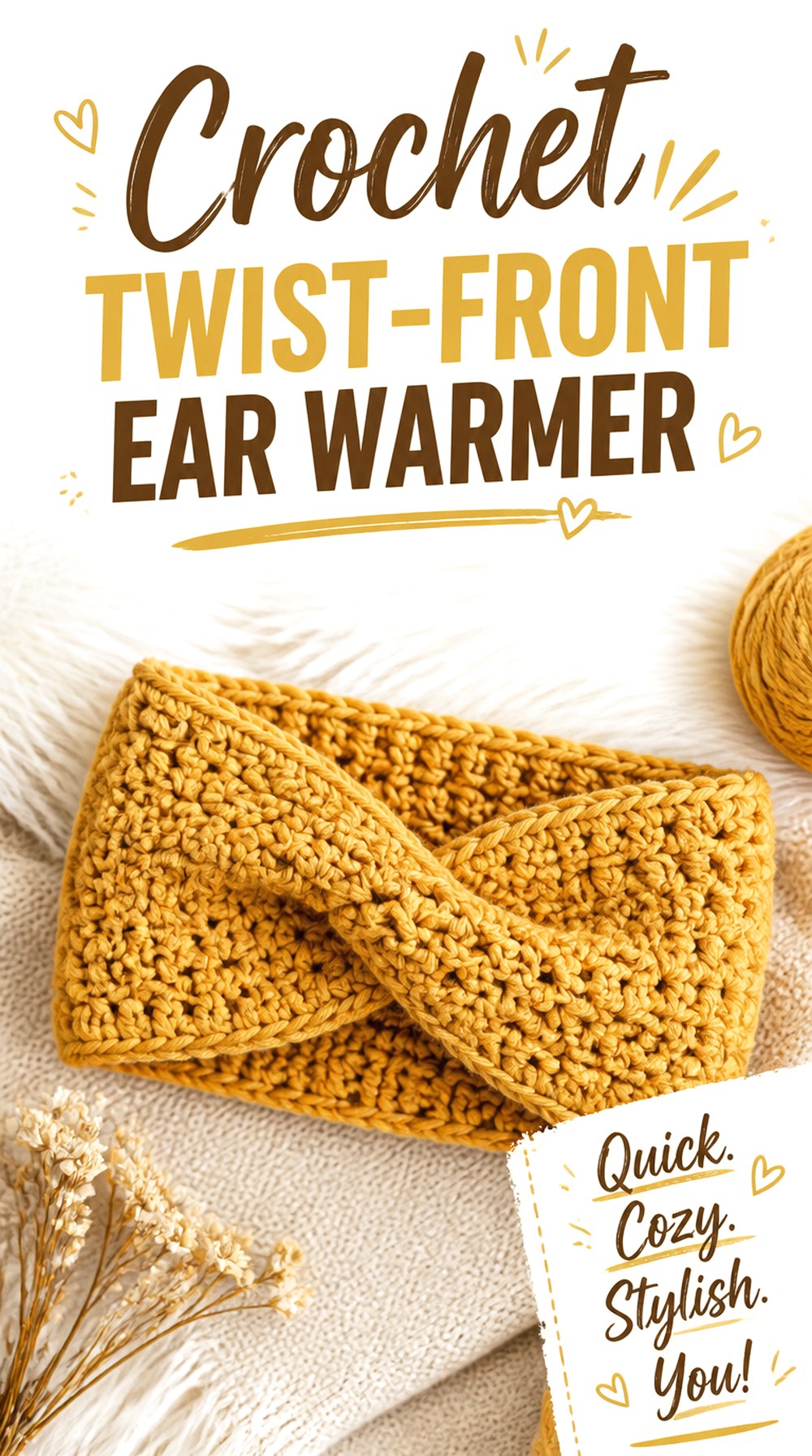
A rust-orange twist-front headband is a smaller alternative to a beanie when you want ear coverage without enclosing the entire head. KnitcroAddict’s tutorial uses a textured band and demonstrates the seaming method that creates the center twist.
Because the project is narrow, it is also a practical place to use a strong orange shade that might feel overwhelming in a large sweater. The texture provides enough surface detail that one solid color can still look finished.
Stretch Determines the Real Fit
Measure the intended head, but also test how the actual crocheted fabric stretches and recovers. Two yarns labeled the same weight can produce noticeably different headband behavior.
Before seaming, wrap the band around the intended wearer with the amount of tension you expect in use. It should stay in place without relying on excessive stretching.
Center the Twist Before Securing It
The twist is the focal point, so small alignment errors remain visible when the headband is worn. Mark the center of the band and arrange the layers carefully before making the seam permanent.
Also check which side of the textured fabric you want facing outward. That decision is easier to make while the piece is still flat.
Original Tutorial and Creator Credit
Creator: KnitcroAddict
12. Crochet Mesh Market Bag
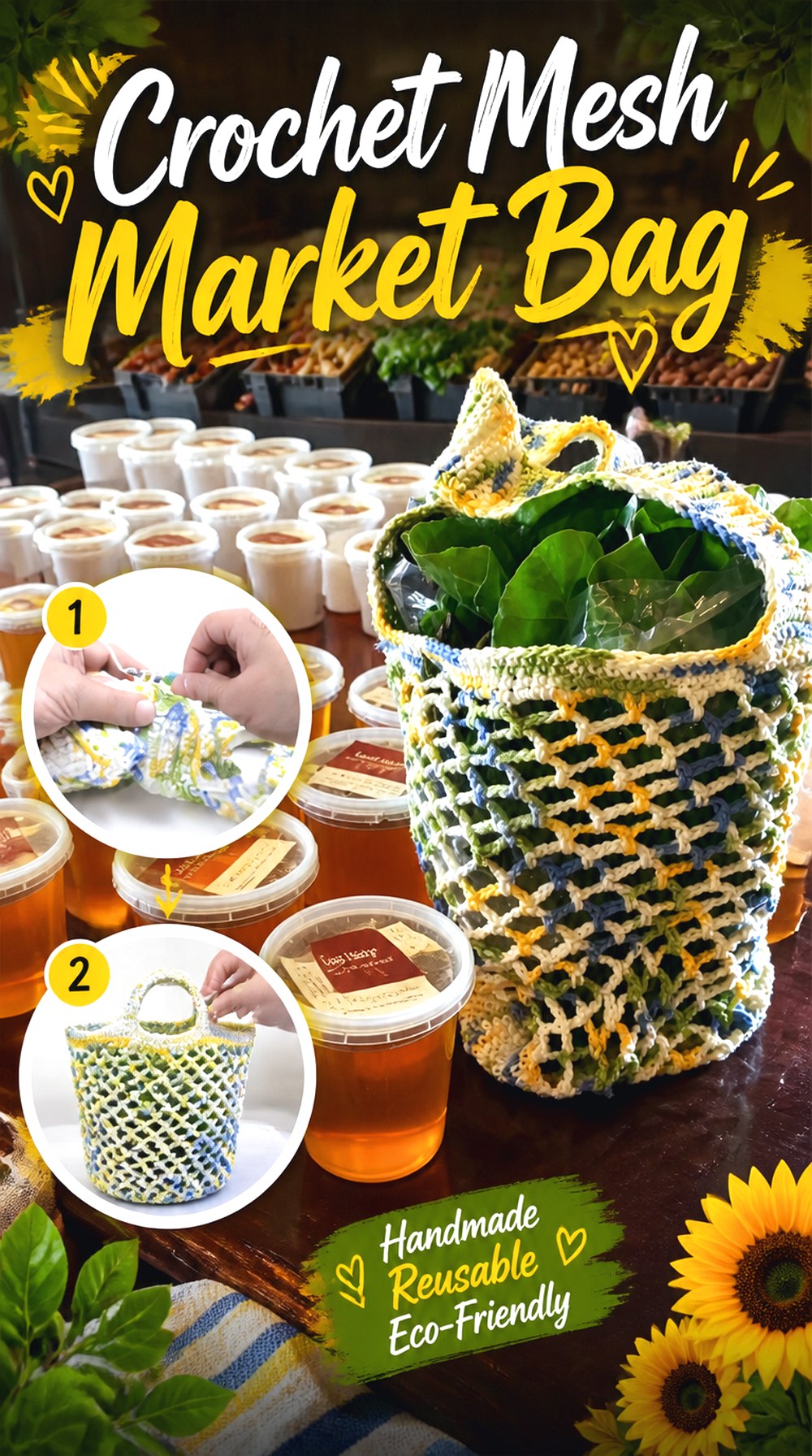
The Crochet Crowd’s market bag uses an expandable mesh structure, which makes it functionally different from Brunaticality’s two-square tote. Rust orange gives the open fabric a strong fall character while still letting the bag’s contents and background show through.
This construction is useful for produce, yarn, lightweight shopping, or other situations where expansion matters more than a rigid rectangular silhouette. The same openness, however, creates different decisions around stretch and containment.
Mesh Expands Under Load
Do not judge the eventual bag size only while it is empty. Open crochet can lengthen and widen considerably once contents pull on it.
If you substitute yarn, make a mesh swatch and apply gentle weight to see how it behaves. A fiber with limited recovery may continue to look stretched after the bag is emptied.
Handles Carry Concentrated Stress
The mesh body distributes weight over many stitches, but handles concentrate that force into a much narrower area. Inspect the handle attachment points as carefully as the handle itself.
If you plan to carry denser items, follow the tutorial’s construction and avoid making unsupported claims about capacity. Crochet bag strength depends on yarn, stitch structure, handle design, and use.
Consider What the Open Fabric Can Contain
Mesh is excellent for larger objects but less appropriate for loose small items that can push through the openings. If you want to carry keys, notions, or other small pieces, use a separate pouch or consider a lining that does not interfere with the bag’s intended expansion.
That makes this design very different in function from the lined two-square tote.
Original Tutorial and Creator Credit
Creator: The Crochet Crowd
13. Crochet Autumn Table Coasters
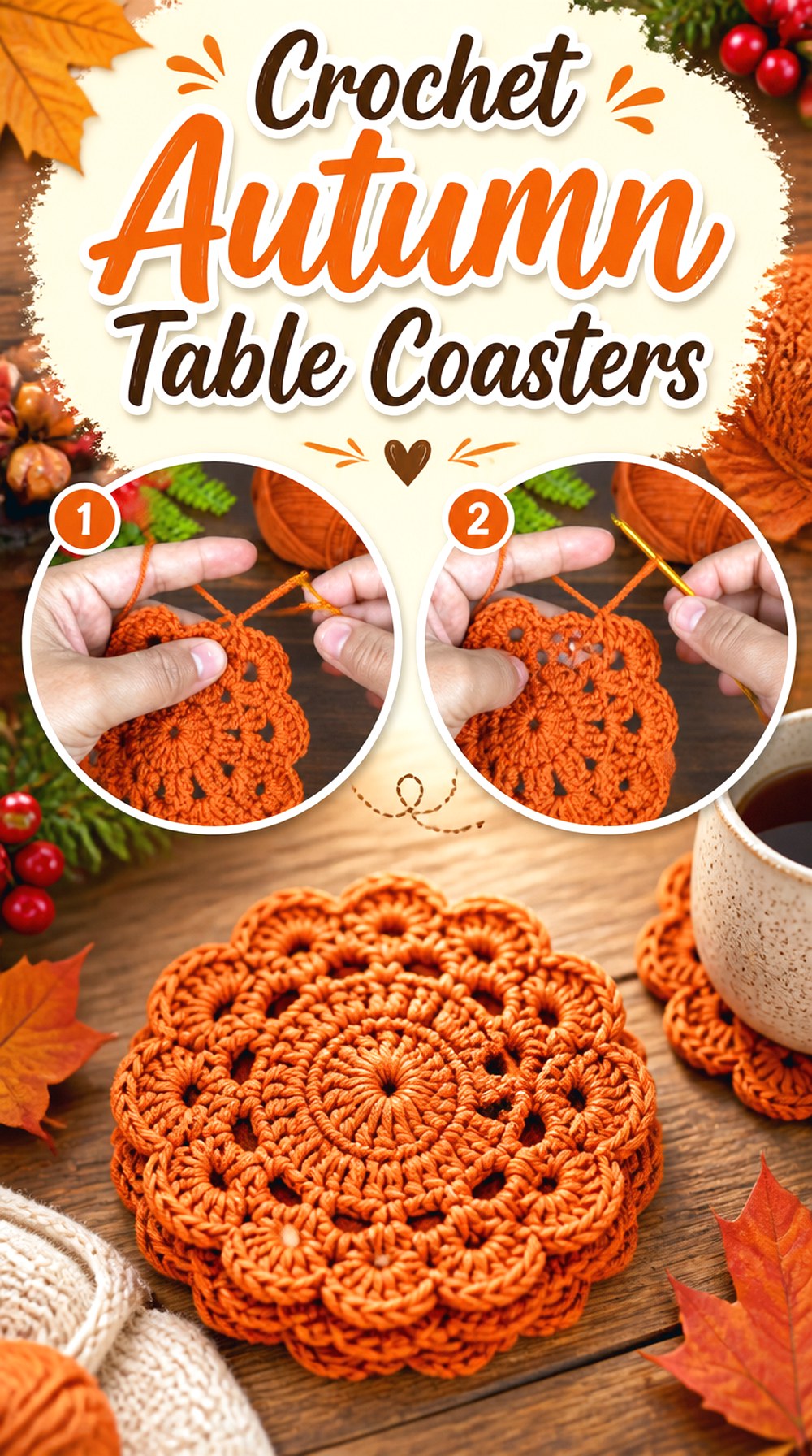
These autumn-themed crochet coasters put rust orange into a very small, repeatable home accent. The tutorial from FUNDA’ NIN ÖRGÜLERİ -knitting patterns shows a fall-themed coaster format that can be made as a coordinated set instead of one large décor project.
That small scale is useful for experimenting with several orange shades. You could make every coaster the same rust tone for a restrained table or vary copper, clay, amber, and burnt orange while keeping the same construction.
Consistent Blocking Makes a Set Look Intentional
Small differences are easy to see when several coasters are placed together. After finishing, compare their dimensions and edge shape before deciding they are ready for the table.
If the fiber is suitable for blocking, use the same method for the whole set. Do not stretch one piece aggressively to match another; large differences may signal inconsistent tension that is better corrected during crocheting.
Table Use Requires Sensible Fiber Choices
A coaster may encounter condensation, spills, and warm drinkware, so choose materials based on the yarn manufacturer’s care information and intended use rather than appearance alone.
Do not assume that a yarn is heat-resistant because it is cotton-colored, thick, or handmade. For unusually hot cookware or heat protection, use products and materials specifically appropriate for that purpose.
Original Tutorial and Creator Credit
Creator: FUNDA’ NIN ÖRGÜLERİ -knitting patterns
14. Crochet Pumpkin Granny Square Accent
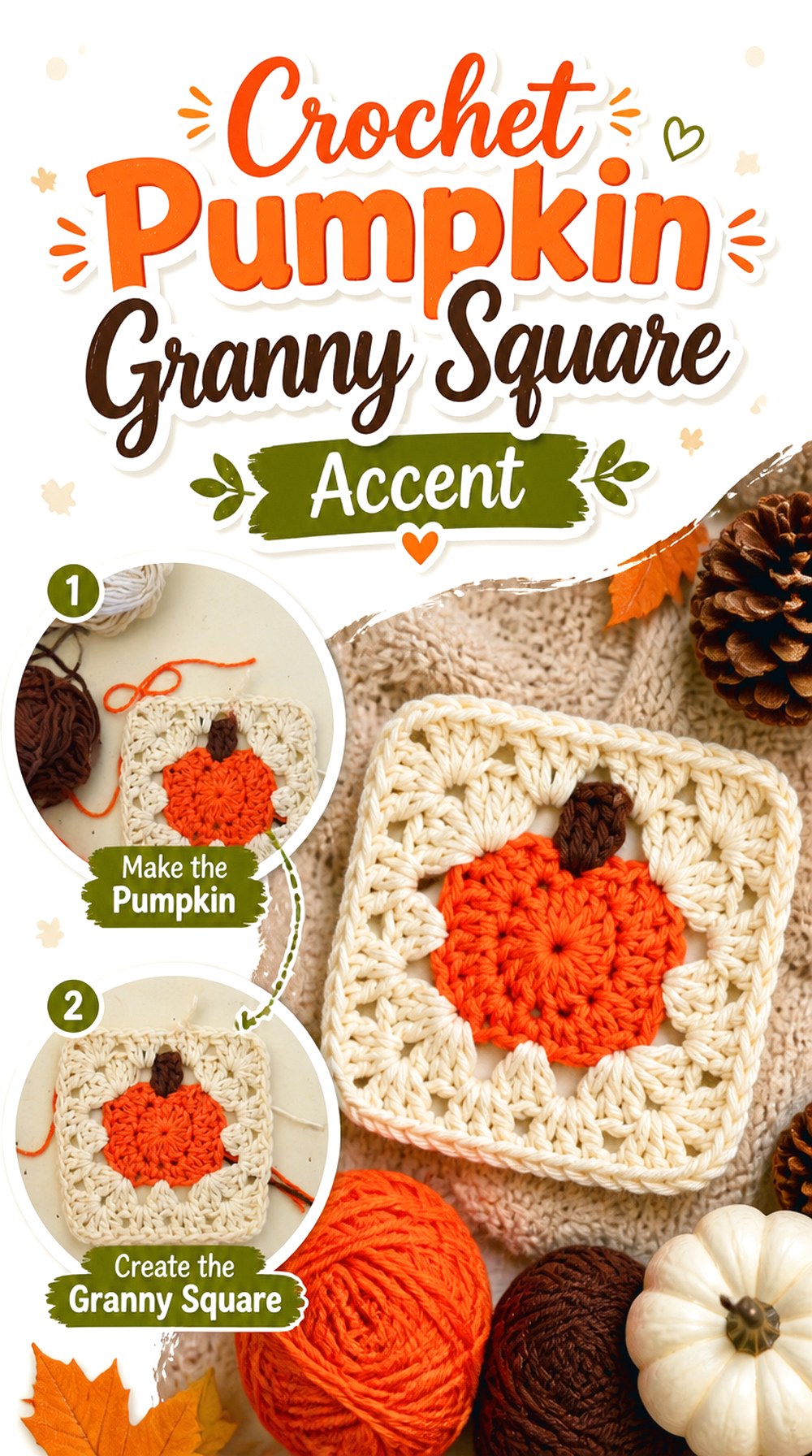
The crochetcakes tutorial turns a pumpkin into a square motif, making this one of the most adaptable rust-orange ideas in the collection. The pumpkin sits inside a granny-square framework, so the motif can remain a single accent or become part of a pillow, bag, banner, blanket, or garment layout.
Unlike the stuffed pumpkin and pumpkin pillow, the seasonal symbol stays flat. That makes it easier to store and gives you much more flexibility in how prominently fall imagery appears in the final project.
Match Blocked Dimensions Before Combining Motifs
If you plan to mix this pumpkin square with plain granny squares or other fall motifs, make one of each and block them before joining.
Two squares can have the same apparent stitch count yet finish at different sizes because of motif density and stitch placement. Correct compatibility before creating dozens of pieces.
Background Color Controls How Strongly the Pumpkin Reads
Rust orange against cream creates a clear seasonal motif, while rust against brown or another warm medium-value color produces a more subdued effect.
Make one complete sample rather than choosing colors from adjacent skeins. Crochet changes the proportion of each shade, and the background can occupy enough area to shift the entire square’s visual balance.
Choose the Final Project Before Mass-Producing Squares
One pumpkin square may be enough for a bag pocket or pillow center, while a blanket could require repeated motifs. Decide the intended use before making a large stack.
This is especially important because a wearable, blanket, and bag all impose different demands on yarn weight, drape, seams, and overall fabric density.
Original Tutorial and Creator Credit
Creator: crochetcakes
15. Crochet Buttoned Mug Cozy
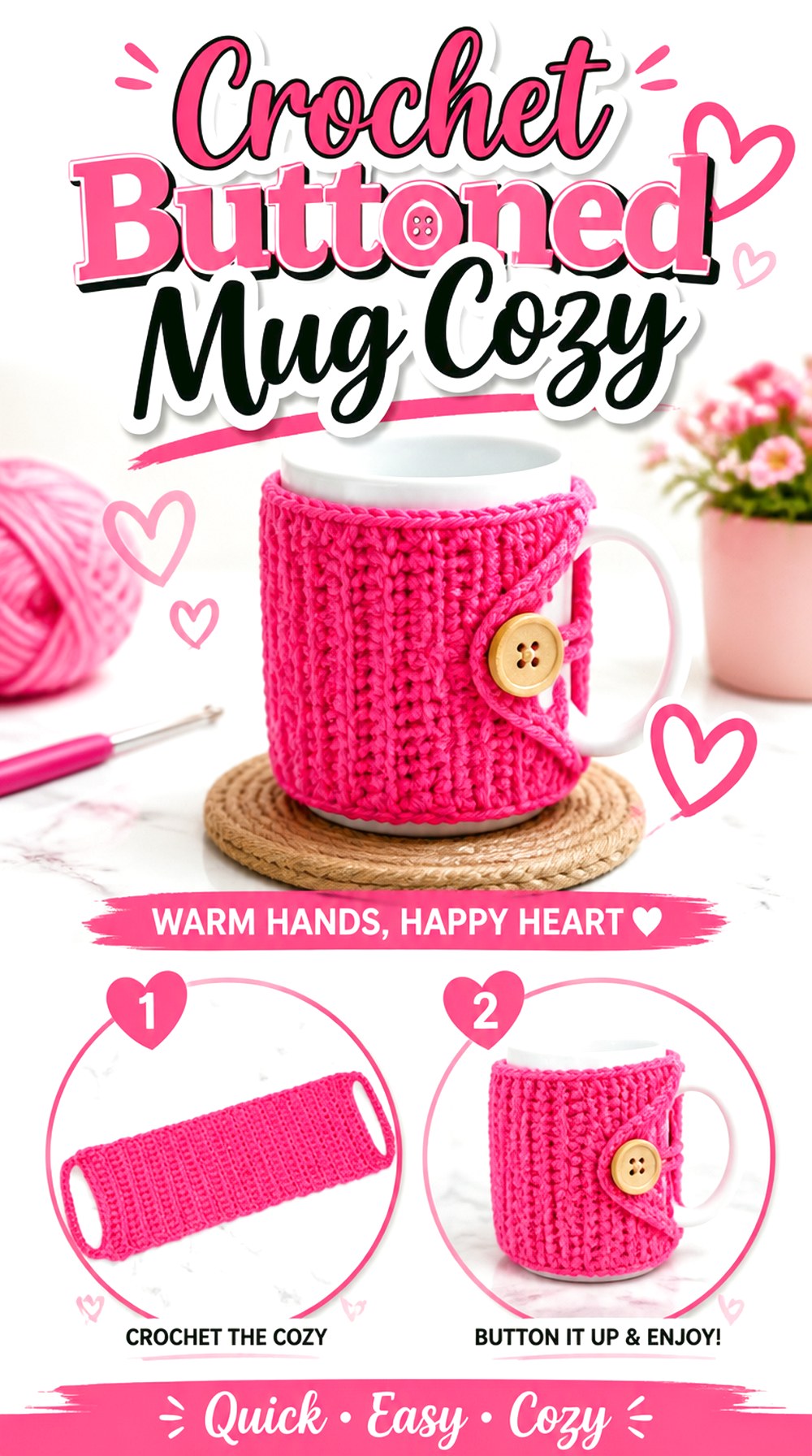
A mug cozy is one of the smallest practical ways to bring rust orange into an everyday fall setting. Crochet Jewel’s tutorial shows a cozy made specifically to wrap around a mug, creating a project where fit and handle clearance matter more than total size.
The concentrated color looks particularly seasonal around coffee, tea, or cocoa service, but the design can remain useful beyond fall if you choose a simple texture and restrained button.
Fit the Mug You Will Actually Use
Mug circumference, taper, and handle position vary considerably. Do not rely on the word “standard” without checking the intended cup.
Test the cozy around the mug before finalizing the closure. It should sit securely without interfering with the handle or slipping toward a narrower part of the cup.
Button Placement Controls the Closure
The button and loop need to align without pulling the crochet fabric out of shape. Mark the intended button position while the cozy is wrapped around the mug rather than deciding from a flat measurement alone.
If you change yarn thickness, reassess the closure because a bulkier edge can alter how the two ends meet.
Original Tutorial and Creator Credit
Creator: Crochet Jewel
16. Crochet Drawstring Mini Pouch
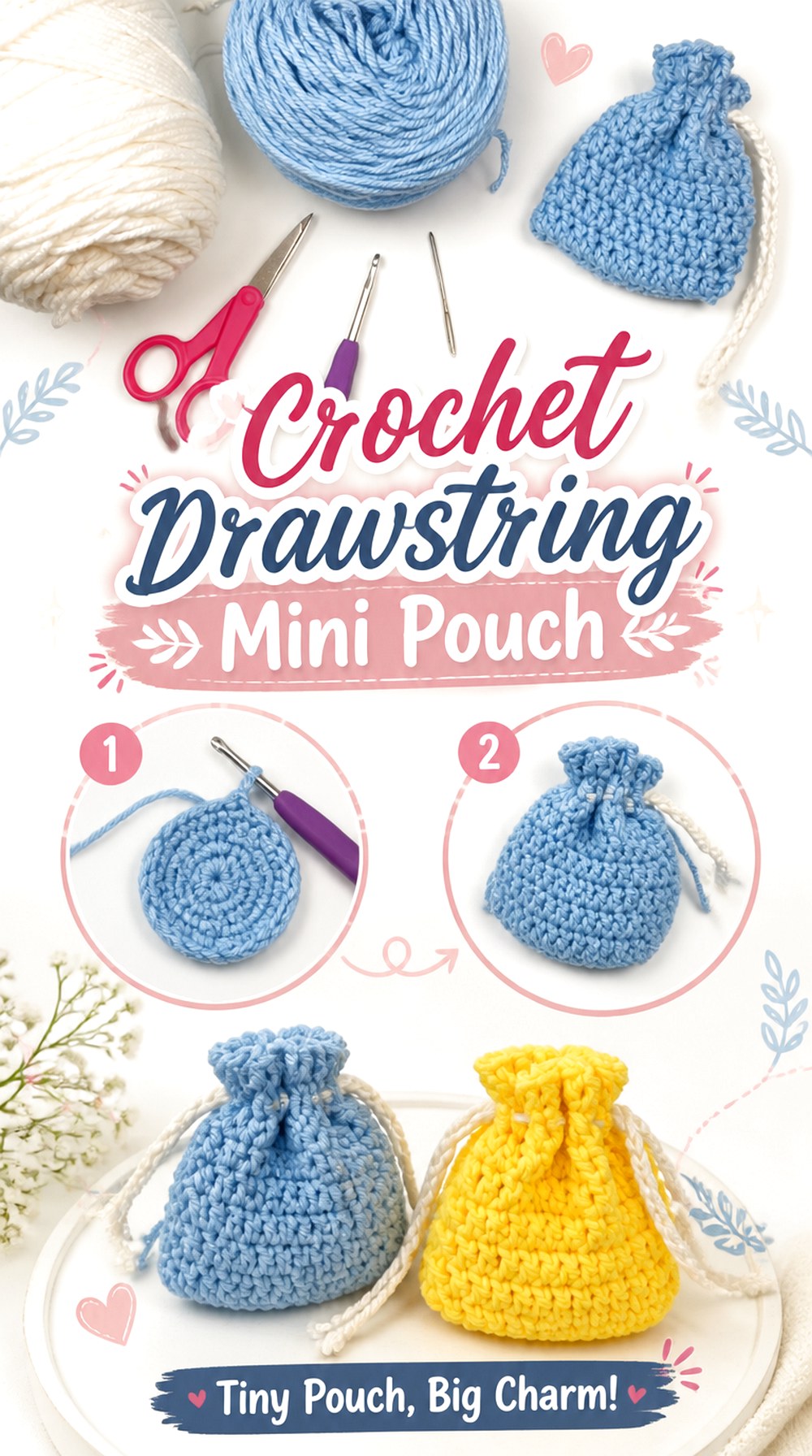
ElyseCrochets demonstrates a small drawstring pouch built in the round, creating a useful rust-orange project for little essentials, gift packaging, crochet notions, or other compact items. The drawstring opening gives it a completely different function from the open market bag and structured tote.
Because the pouch is small, it is also a sensible place to use leftover yarn from a larger fall project, provided the yarn still suits the intended contents.
Opening Size Determines What the Pouch Can Do
A drawstring gathers the top instead of creating a rigid closure. Before adjusting the dimensions, think about the largest object that needs to pass comfortably through the opening.
A pouch may have enough internal volume yet still be inconvenient if its gathered opening is too narrow. Check access as well as capacity.
Small Contents May Need a Denser Interior
If you plan to store tiny stitch markers, jewelry, or similarly small objects, inspect the crochet openings before relying on the pouch alone. Dense fabric may contain them adequately; more open fabric may not.
A small lining is an adaptation worth considering when containment matters, but size it from the finished pouch so it does not restrict the drawstring action.
Original Tutorial and Creator Credit
Creator: ElyseCrochets 💌
17. Crochet Chunky Infinity Scarf
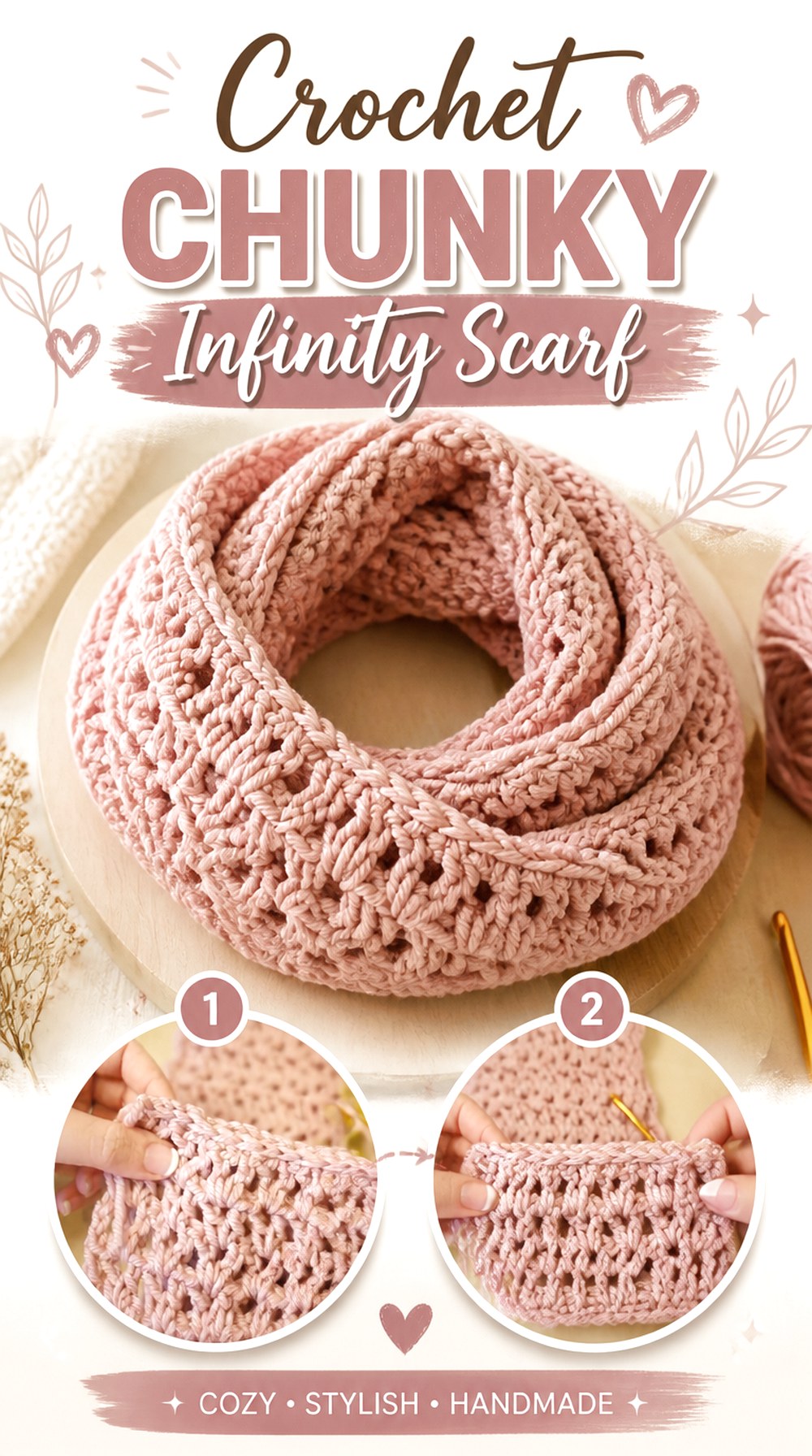
Bella Coco’s infinity scarf tutorial produces a long crocheted piece that is joined into a continuous loop, giving rust orange a softer and more draped alternative to the compact cowl. The tutorial uses a repeating V-stitch structure, so the finished scarf combines noticeable texture with enough openness to avoid looking like a solid block of color.
An infinity scarf is especially useful if you like adjustable styling: the same loop can create different amounts of volume depending on how it is wrapped.
Length and Drape Work Together
A longer loop provides more wrapping options but also increases total fabric and weight. If you change the tutorial length, test the developing scarf around your neck before joining the ends.
The fabric should fall comfortably after wrapping rather than forming a stiff stack. Yarn substitution can change this behavior even when the dimensions remain similar.
Chunky Texture Makes Solid Orange Enough
A rust-orange infinity scarf does not need several accent colors to create interest. The V-stitch openings, folds, and overlapping layers already break up the surface.
If you do add color, consider broad sections rather than frequent narrow stripes. Too many transitions can compete with the movement created by the looped construction.
Original Tutorial and Creator Credit
Creator: Bella Coco
18. Crochet Pumpkin Shaped Placemat
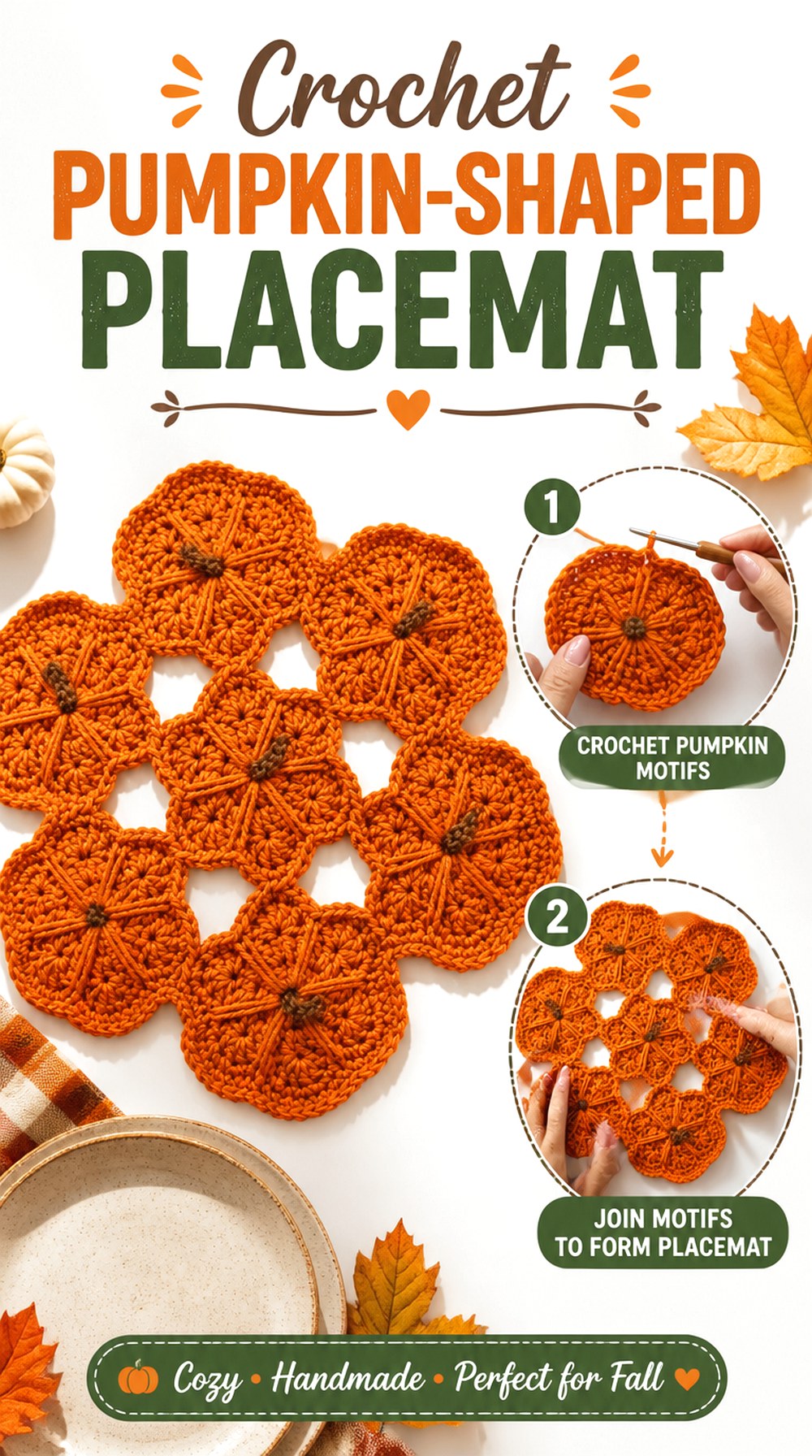
Sirin’s Crochet finishes the collection with a pumpkin-shaped placemat or doily, bringing rust orange directly onto the fall table in a larger format than the coasters. The tutorial demonstrates a flat pumpkin silhouette designed as seasonal table décor.
This is a good project when you want an unmistakable autumn motif without adding stuffed objects to the room. It can work as an individual place setting accent or decorative centerpiece layer depending on how you choose to use the finished piece.
Flatness Is the First Quality Check
A placemat that ruffles or cups will be difficult to arrange neatly on a table. As the project grows, place it on a flat surface periodically rather than waiting until the end to discover persistent distortion.
Small tension adjustments can matter. If the piece consistently refuses to lie flat, review the tutorial and your stitch placement before assuming blocking will solve everything.
Table Contrast Changes the Pumpkin Outline
A rust pumpkin placed on a dark wood table may look quieter than the same piece on a pale tablecloth. If the outer edge needs stronger definition, consider how your yarn contrasts with the actual dining surface.
You can test this before crocheting by placing the skein, or a small swatch, directly on the table in normal room lighting.
Separate Decoration From Heat Protection
A seasonal placemat can protect a table from minor contact and create a decorative layer, but do not assume that crochet fabric is automatically suitable as a heat barrier for very hot cookware.
Check the yarn manufacturer’s information and use purpose-made heat-safe products when substantial heat protection is required. For ordinary decorative table use, prioritize a fiber and construction that can be cleaned according to its care instructions.
Original Tutorial and Creator Credit
Creator: Sirin’s Crochet
How These Rust Orange Crochet Ideas Compare
For the strongest wearable statement, the V-neck sweater, granny cardigan, vest, and lace shrug place rust orange across a large part of an outfit, but they also require the most careful fit and drape decisions. The beanie, cowl, headband, mitts, bucket hat, shawl, and infinity scarf are easier ways to introduce the color without committing to a full garment.
For practical projects, choose between the structured two-square tote, expandable market bag, drawstring pouch, and mug cozy according to what the item actually needs to contain or fit. For home décor, the pumpkin pillow and blanket create the largest visual impact, while the pumpkin, garland, motif square, coasters, and placemat are easier to distribute, combine, store, or replace as the season changes.
Conclusion
The most useful way to choose among these 22 rust orange crochet ideas is to decide first whether you want the color to be worn, carried, displayed, or used around the home. A solid beanie, cowl, or sweater lets stitch texture carry the design, while granny squares and fall motifs give you more control over how much orange appears. Bags need structure and stretch planning; wearables need fit and drape checks; seasonal décor needs sensible storage and care.
Once you have chosen the finished form, match the yarn to that function rather than shopping by color alone. Then use the original tutorials for the creators’ exact construction, measurements, materials, and finishing details.
Frequently Asked Questions
What type of rust orange yarn should I choose for fall crochet?
Choose the yarn for the project first and the exact orange second. A sweater or shawl benefits from fabric that produces the intended drape, while a bag may need more structure and resistance to stretching. A stuffed pumpkin needs a fabric dense enough to contain filling neatly.
Once you know the appropriate yarn category and fiber behavior, compare rust, terracotta, copper, cinnamon, clay, or burnt-orange shades within those suitable options.
Can I use the same rust orange yarn for all 22 projects?
Usually that is not the best approach. Even when several tutorials use yarns in the same broad weight category, their finished objects ask the fabric to behave differently. A successful market bag, lace shrug, stuffed pillow, and fitted hat do not necessarily need the same amount of stretch, softness, density, or drape.
Treat leftover-yarn projects separately. A pouch, motif, garland, or coaster may be a reasonable place to reuse yarn after confirming that its properties suit the new purpose.
How can I stop a solid rust orange crochet project from looking flat?
Use texture before automatically adding more colors. Ribbing, raised stitches, granny clusters, open lace, mesh, and strong shaping all create highlights and shadows within one solid shade.
If the design still needs contrast, introduce it strategically. A cream motif border, dark brown edging, or small olive accent can separate rust sections without turning the project into a multicolor piece. Make a sample first because the proportion of each color matters more than how the skeins look beside one another.
Which rust orange crochet projects are easiest to adapt for size?
Simple décor and some small accessories generally allow more straightforward scale changes because they do not have to conform precisely to the body. Garments, hats, mitts, and fitted headbands need more careful measurement and gauge work.
For granny-square projects, blocked motif dimensions are particularly important. Determine the real size of one finished square before calculating a larger panel. Always keep the original tutorial’s construction in mind when changing dimensions so that an alteration does not unintentionally affect openings, joins, or shaping.
Should I block every rust orange crochet project?
No single blocking method is correct for every yarn or project. Granny squares, lace, and some flat pieces may benefit from blocking because it can help reveal shape and stitch definition. Stuffed objects, structured bags, and certain finished accessories may require a different approach or very little blocking.
Check the yarn’s care information and the creator’s guidance first. Blocking should refine correctly crocheted fabric, not be relied on to repair substantial sizing errors or missing stitches.
What colors pair well with rust orange without losing the fall look?
Cream and warm off-white create clear contrast, while brown makes the palette deeper and more tonal. Muted olive can add an earthy contrast, and mustard or burgundy can build a richer multicolor fall scheme.
The right combination depends on proportion. On a large blanket or cardigan, several saturated fall colors can become visually dense quickly. On a small pumpkin square or garland, the same palette may feel balanced because each color occupies much less space. Test the colors in the intended stitch pattern before purchasing yarn for the full project.