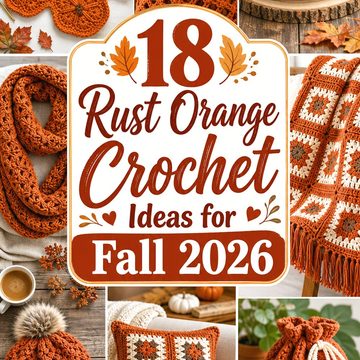
Earth tones can do much more than turn every fall crochet project brown. Camel, moss, olive, clay, rust, oatmeal, walnut, stone, muted mustard, and deep forest green can emphasize texture, soften color blocking, or give traditional autumn motifs a quieter look. The right palette also depends on the project: a structured tote needs different planning from a draped shawl, while small leaves can handle stronger color contrast than a full cardigan.
These 20 ideas cover layering pieces, cold-weather accessories, bags, home textiles, storage, and seasonal décor. They are intentionally varied by construction and use rather than color alone, so you can compare meaningful differences before choosing a tutorial. Each source teaches the underlying project; the earth-tone combinations are styling directions you can adapt to your own yarn choices.
Quick List
- Crochet Drop-Shoulder Cardigan in Warm Neutrals
- Crochet Granny Square Vest with Muted Autumn Motifs
- Crochet Fitted Ribbed Beanie in Cocoa Brown
- Crochet Granny Triangle Scarf in Rust and Oatmeal
- Crochet Compact Crossbody Bag in Clay and Taupe
- Crochet Everyday Tote with a Structured Olive Finish
- Crochet Textured Ear-Warmer Headband in Oatmeal
- Crochet Stitch-Sampler Leg Warmers in Woodland Browns
- Crochet Moss-Stitch Fingerless Gloves in Olive
- Crochet Draped Triangle Shawl in Woodland Neutrals
- Crochet Chunky Textured Pillow Cover in Sand and Bark
- Crochet Chenille Color-Block Throw in Forest and Stone
- Crochet Alpine-Stitch Nesting Baskets in Linen Neutrals
- Crochet Stuffed Pumpkin Décor in Clay or Flax
- Crochet Woodland Mushroom Amigurumi in Chestnut and Cream
- Crochet Autumn Leaf Garland in Rust, Olive, and Ochre
- Crochet Buttoned Mug Cozy in Espresso Brown
- Crochet Textured Cowl in Camel and Moss
- Crochet Stuffed Acorn Accent in Taupe and Walnut
- Crochet Classic Bucket Hat in Olive or Camel
How to Build an Earth-Tone Palette Without Making It Look Flat
A fall palette becomes easier to control when the colors do different jobs. Start with a light neutral such as cream, flax, oatmeal, or stone; add a darker anchor such as walnut, espresso, forest, or charcoal-brown; then introduce one or two muted colors such as clay, rust, olive, or ochre. That creates contrast without losing the earthy character.
Pay particular attention to neighboring colors in granny squares, stripes, and color blocks. Two mid-value shades can look distinct in separate skeins but merge once crocheted together. Before committing to a large project, place yarn strands or small swatches side by side in the lighting where the finished piece will usually be seen. For heavily textured stitches, simpler color placement often lets the stitch surface do more of the visual work.
Match Yarn Behavior to the Project, Not Just the Color
The prettiest olive or camel yarn is not automatically the best choice for every item. Smooth, well-defined yarn can make ribs, granny clusters, and raised textures easier to see, while very plush yarn can soften those details. That may be desirable for a blanket but less useful when the stitch pattern is the main design feature.
Structure matters too. A bag or basket generally benefits from fabric that resists excessive stretching, while a shawl or cardigan needs enough flexibility to sit comfortably rather than feeling board-like. If you substitute yarn in a wearable tutorial, compare the tutorial’s recommended yarn category and check your resulting fabric before committing to the full piece. Color substitutions are usually far less disruptive than changing yarn thickness, fiber behavior, hook size, and tension all at once.
Plan Fit, Structure, and Display Before Choosing a Tutorial
Earth-tone styling cannot correct a project that is the wrong shape for its intended use. For a cardigan, vest, hat, leg warmer, or glove, use the creator’s sizing information and compare the relevant finished dimensions or fit checkpoints with what you actually want. Granny-square wearables deserve extra attention because motif dimensions affect the entire layout after joining.
For bags, think about opening style, strap stretch, and whether you want lining or reinforcement before selecting yarn. Decorative pieces require a different question: where will they sit? A large mushroom, pumpkin, or acorn can be a focal point, while smaller motifs work better repeated in garlands, bowls, or shelf displays. For pillows and blankets, consider cleaning needs and the existing room palette before investing in a large quantity of yarn.
1. Crochet Drop Shoulder Cardigan in Warm Neutrals
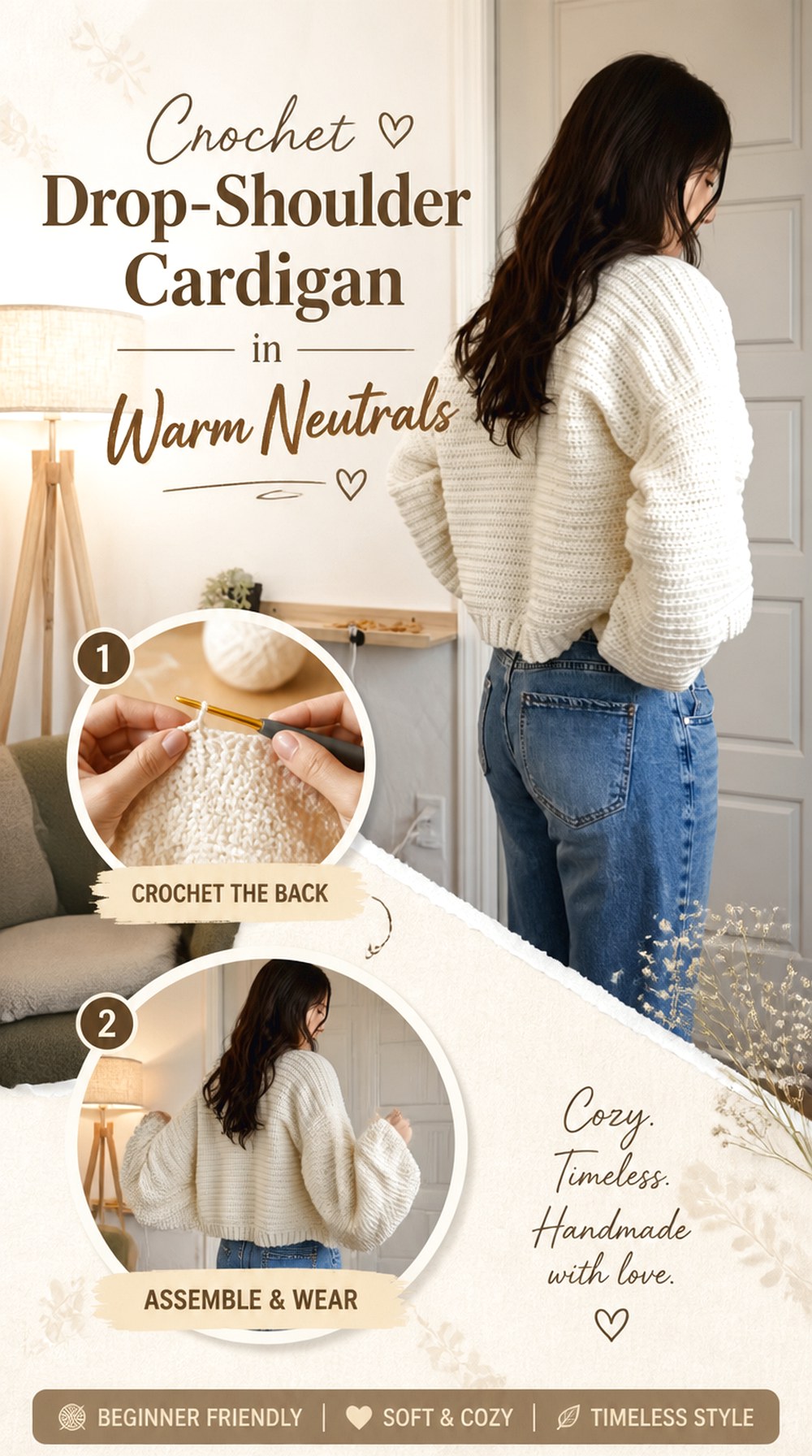
A relaxed drop-shoulder cardigan is a strong starting point when you want the earth-tone palette to feel wearable rather than overtly seasonal. Camel, mushroom, oatmeal, or warm gray can turn a simple cardigan into a flexible layer for denim, black, cream, and other autumn basics. The generous shoulder shape also gives the fabric a broad uninterrupted surface, so you can choose between one quiet neutral or restrained color blocking.
Unlike the smaller accessories in this collection, a cardigan makes yarn behavior especially noticeable. Before substituting materials, check how the fabric hangs and how much weight the finished garment may carry through the shoulders.
Shoulder Width Changes More Than the Sleeve Position
A drop shoulder intentionally extends beyond the natural shoulder, so do not evaluate it like a fitted set-in sleeve. Compare the creator’s finished shape with a cardigan you already enjoy wearing. If you want a more compact silhouette, pay attention to total body width rather than trying to correct an oversized panel only after assembly.
Warm Neutrals Let the Ribbed Edges Stand Out
When the body and edging are similar in color, texture becomes the contrast. Oatmeal with cocoa edging can make the borders more obvious, while camel-on-camel keeps the finish quieter. If you introduce a darker trim, repeat it deliberately at more than one edge so it reads as a design choice instead of an accidental yarn change.
Swatch for Drape Before Committing to the Panels
A cardigan fabric that feels pleasant as a small swatch can become noticeably heavier across a full body panel. Hold or hang the swatch after it has settled and check whether it stretches vertically. If you substitute yarn, use the tutorial’s gauge and sizing guidance rather than assuming two yarns labeled with the same broad weight category will behave identically.
Original Tutorial and Creator Credit
Creator: VivCrochets
2. Crochet Granny Square Vest with Muted Autumn Motifs
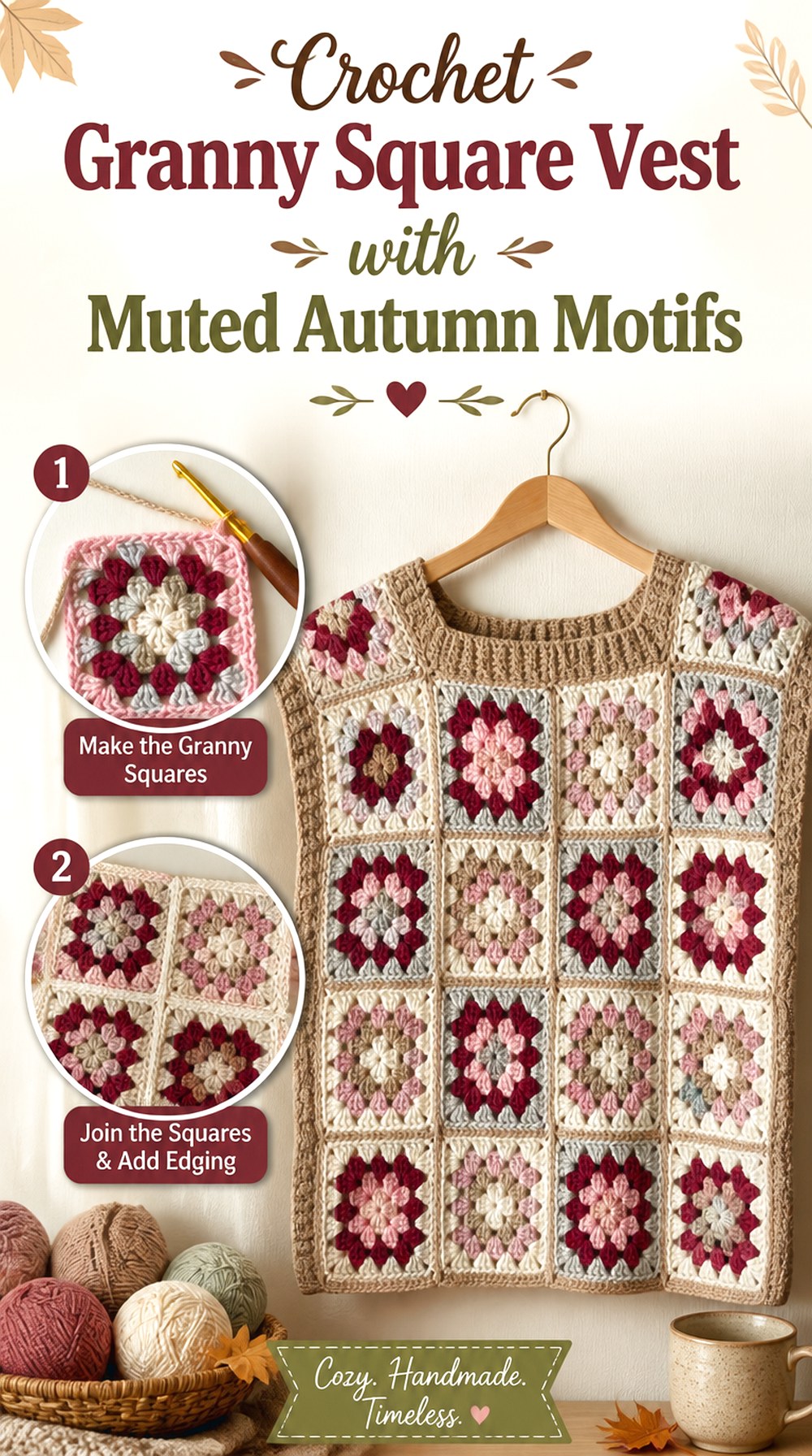
A granny square vest gives you far more control over color placement than a solid garment. Try cream or almond as a repeating background, then rotate burgundy-brown, rust, faded rose, olive, or mustard through the motif centers. The goal does not need to be maximum color variety; repeating a restrained sequence can make a patchwork garment feel cohesive.
This project differs from the cardigan because individual motif dimensions drive the garment layout. Blocking and arrangement therefore matter before the final joins. It is a good choice for readers who want visible autumn color without committing to an entire sweater-sized layer.
Lay Out Every Motif Before the Final Join
The same squares can create very different visual weight depending on where the darkest colors land. Spread all finished, prepared motifs into the intended vest layout and step back. If walnut, burgundy, or forest squares cluster on one side, redistribute them before joining rather than hoping the edging will balance the garment later.
Blocked Square Size Controls the Vest Geometry
Treat the measured motif as a building unit. As a simple planning example, four blocked squares measuring 5 inches across would span about 20 inches before joins, edging, and intended garment ease are considered. That is planning math, not a replacement for the tutorial’s sizing information. Small differences repeated across several motifs can become significant.
Use the Ribbing to Calm a Busy Palette
If several motif colors already compete for attention, a single repeated neutral around the neckline, armholes, and lower edge can visually contain the patchwork. Cream creates a lighter outline; cocoa or deep olive makes the border more pronounced. Keep the functional fit of those edges in mind as well—color cannot compensate for edging that is worked too tightly.
Original Tutorial and Creator Credit
Creator: Ariel Madeline
3. Crochet Fitted Ribbed Beanie in Cocoa Brown
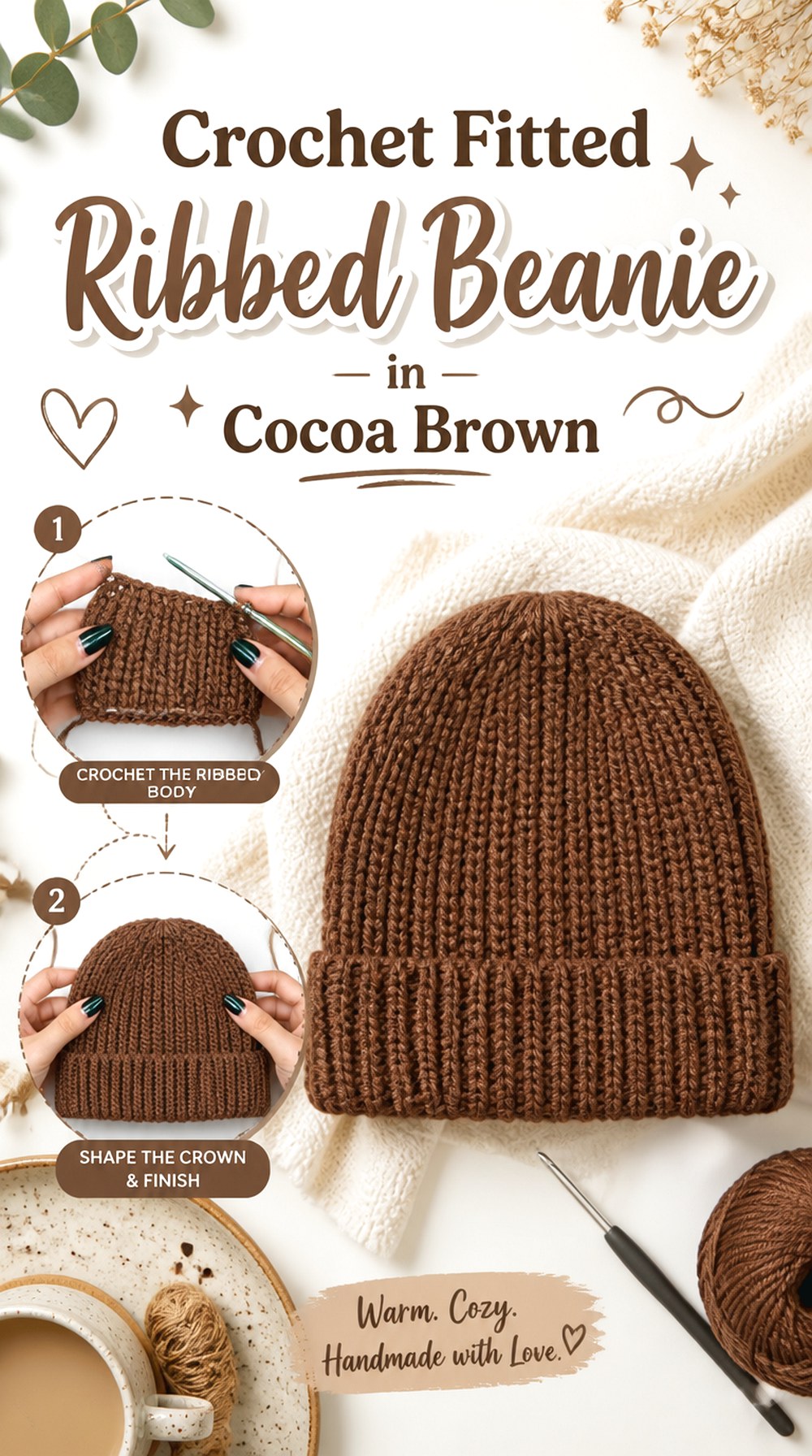
A cocoa, walnut, peat, or deep olive beanie adds fall color without requiring several coordinated skeins. Ribbing already creates plenty of surface interest, so this is one place where a single saturated earth tone can look stronger than multiple stripes. It also pairs naturally with busier scarves, patchwork vests, and color-block coats.
A fitted shape is useful if you prefer a cleaner crown rather than a deliberately slouchy silhouette. Because hats depend on stretch as well as circumference, yarn substitution deserves more attention than simply matching the finished color.
Ribbing Needs Enough Recovery to Keep Its Shape
Before finishing the whole hat, stretch the developing fabric gently and see how readily it returns. Excessively loose ribbing can grow during wear; extremely stiff ribbing may feel restrictive. If you change yarn or hook, compare the fabric behavior with the tutorial sample instead of relying only on an unstretched measurement.
Dark Cocoa Shows Texture Without Looking Harsh
Very dark brown can give nearly the same visual anchoring effect as black while staying within a warmer palette. If you want greater stitch visibility, move one step lighter toward chestnut or medium cocoa. Heathered browns can add subtle variation, but check that the variation does not obscure the clean ribbed lines you chose the design for.
Original Tutorial and Creator Credit
Creator: Cherilyn Q
4. Crochet Granny Triangle Scarf in Rust and Oatmeal
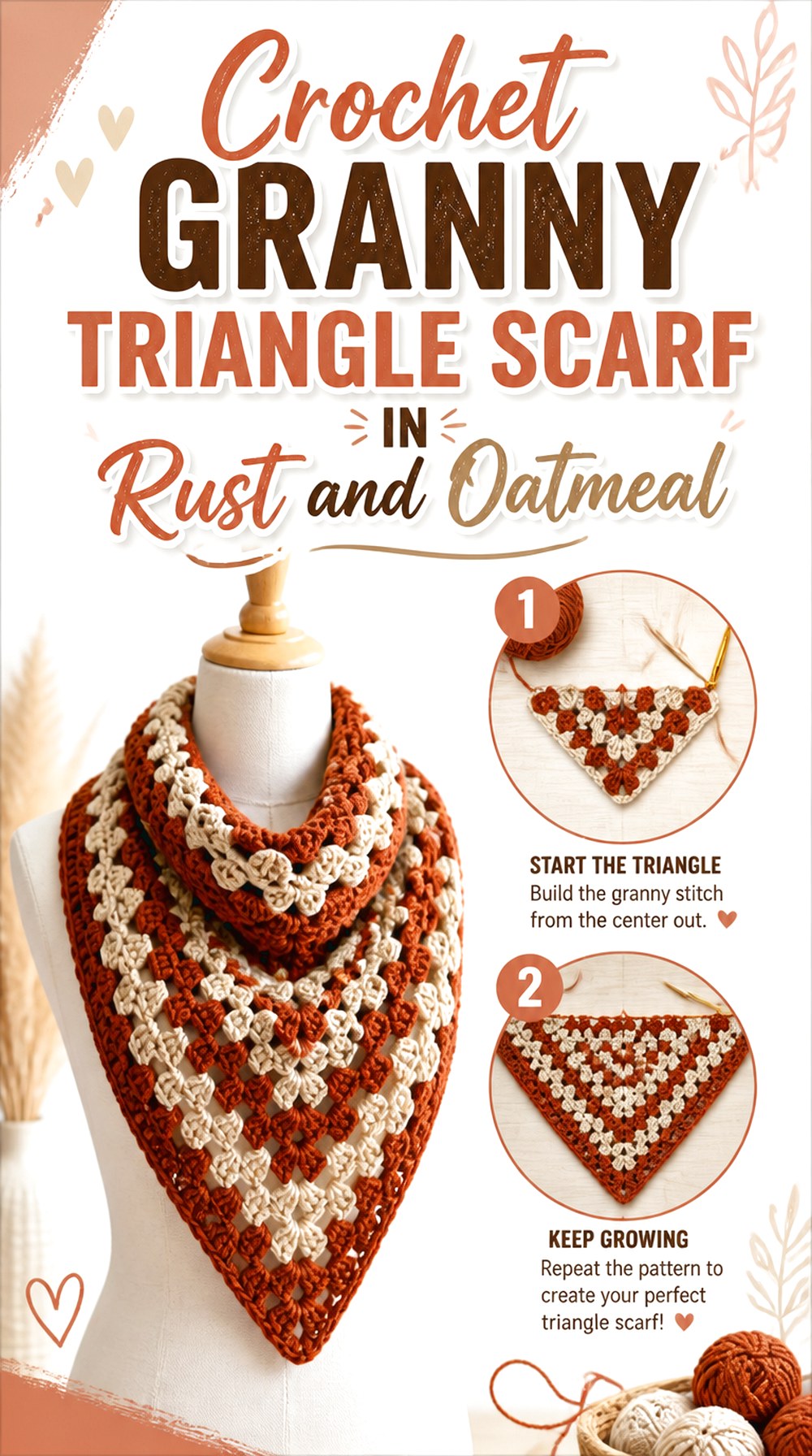
A triangle scarf gives granny-style color changes a smaller canvas than a vest or blanket. Rust, oatmeal, dark olive, and camel can be worked as broad bands, narrow accents, or a controlled sequence that changes as the triangle expands. The shape works especially well when you want color near the face without the bulk of a full shawl.
Because each new section becomes longer as the triangle grows, equal-looking color changes will not necessarily consume equal amounts of yarn. Plan the visual rhythm first and treat leftover quantities cautiously rather than assuming every stripe requires the same amount.
Decide Whether the Point or the Top Edge Gets the Darkest Color
A darker outer section gives the scarf a strong frame, while a dark center draws attention toward the point. Make this choice before using your limited accent yarn. If the scarf will usually be folded or wrapped, remember that the central sections may be less visible than they appear when the piece is laid flat.
Granny Spaces Make Contrast Especially Noticeable
Open granny construction reveals the colors underneath the scarf as well as the yarn itself. Closely related mid-tone shades can lose definition from a distance, so place a cream, pale flax, or another clear separator between two similar darker colors when you want the stripes to remain readable.
Original Tutorial and Creator Credit
Creator: HookedUpCrochet
5. Crochet Compact Crossbody Bag in Clay and Taupe
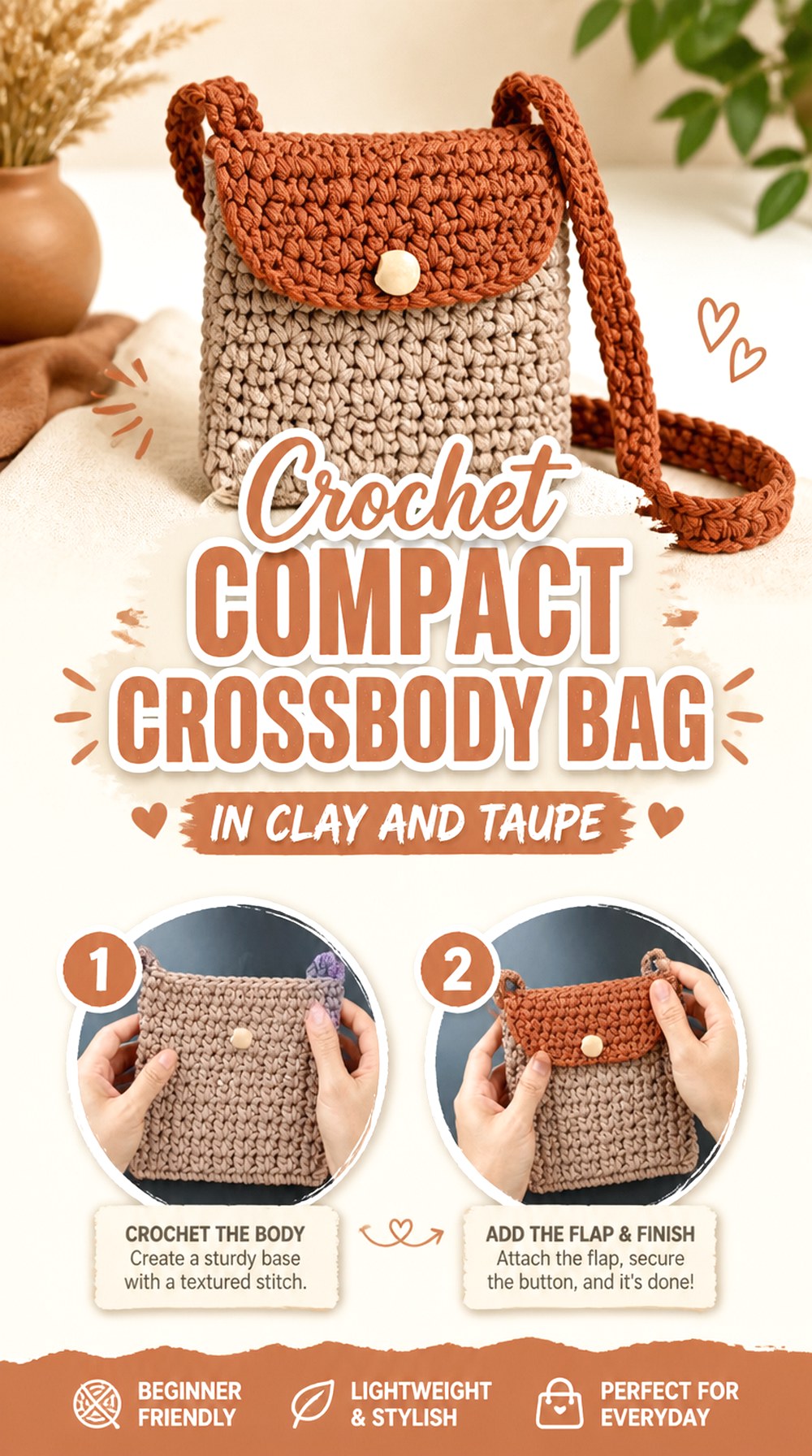
A compact crossbody bag is a practical place to use clay, terracotta, taupe, or bark tones because the color becomes part of an everyday accessory instead of obvious seasonal décor. A solid body with a contrasting strap or edge keeps the palette controlled, while narrow color blocks can use several leftovers without making the bag look overly busy.
Compared with a tote, this shape puts more attention on strap length and how closely the bag sits against the body. If you adapt the tutorial, think about what you normally carry before deciding whether the original opening and internal structure suit you.
Strap Stretch Can Change the Wearing Height
Crocheted straps can lengthen under load depending on stitch, fiber, construction, and strap length. Test the developing strap with the empty bag and again with a representative lightweight load. If excessive stretch matters for your intended use, investigate reinforcement or a less elastic strap solution rather than simply starting with a dramatically shorter strap.
Clay and Taupe Hide Into a Fall Wardrobe Easily
For a quiet bag, use clay for the main fabric and taupe or espresso for the strap. For more definition, reverse that relationship and place the darker shade around the perimeter or opening. Think about the coats and jackets you actually wear: a medium brown bag can disappear against a similarly colored coat unless you intentionally want a tonal look.
Check the Opening Before Adding Personal Extras
If you want a lining, magnetic closure, zipper, or internal pocket, first look at the finished opening in the source tutorial. Added hardware or fabric should suit the bag’s geometry and should not pull an otherwise flexible opening out of shape. When the video does not cover your planned modification, treat it as a separate construction decision.
Original Tutorial and Creator Credit
Creator: Toh Handmade
6. Crochet Everyday Tote with a Structured Olive Finish
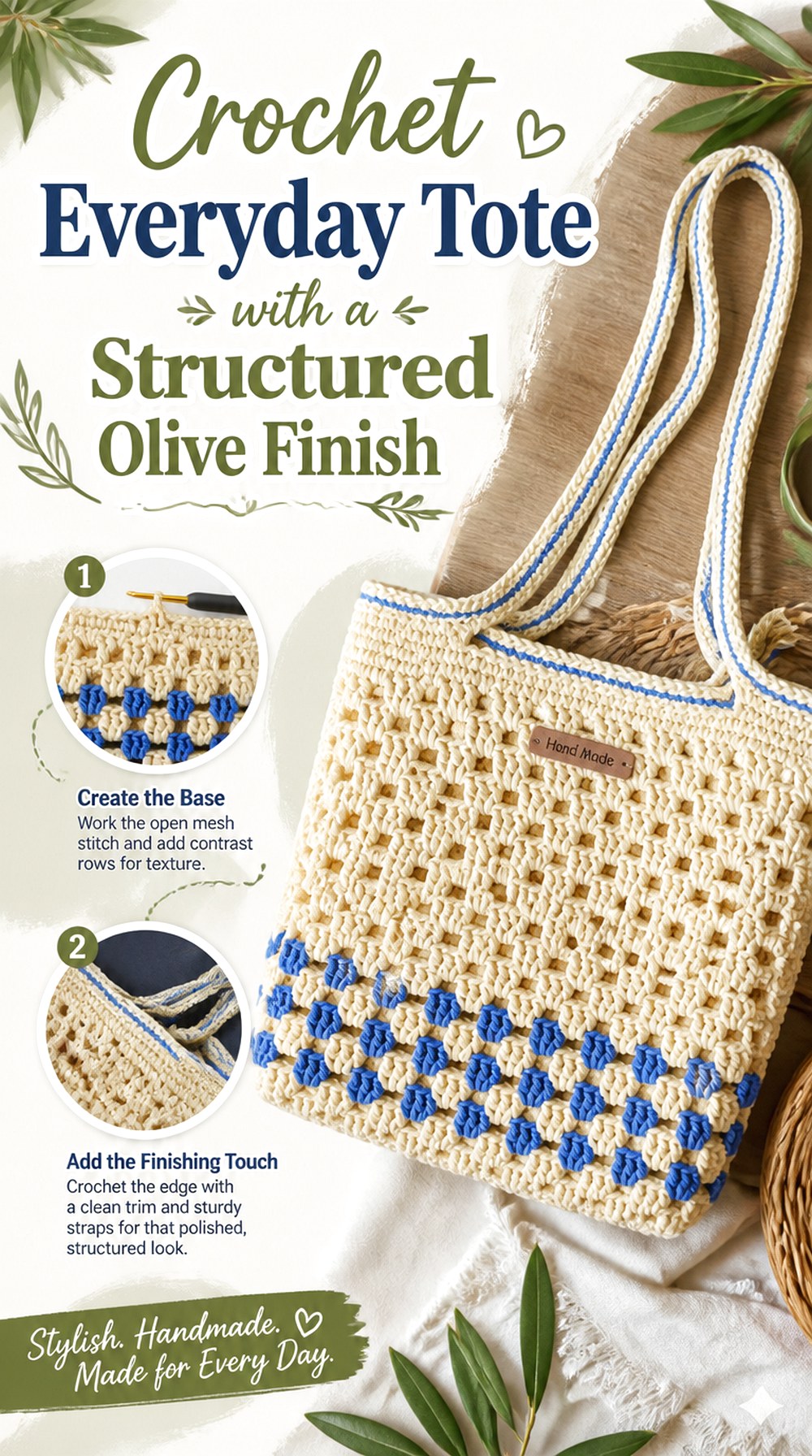
An olive tote feels autumnal without being limited to September and October. Forest, khaki, tobacco, or dark tan can create the same grounded effect, especially when the bag uses a relatively simple silhouette. Compared with the smaller crossbody, a tote exposes more fabric to stretching and puts more load on its handles, so function should guide the yarn choice.
Use one main color if texture is important, or put a darker neutral at the lower portion where you want a visual anchor. Before making major modifications, determine whether you want a flexible market-style tote or a bag that keeps a firmer outline.
The Base Tells You How Structured the Tote Will Feel
Study the source bag from the bottom upward. A broad, stable base behaves differently from an open, flexible fabric that expands around its contents. If you need a bag to stand upright, do not assume changing to a darker or thicker-looking yarn automatically supplies enough structure.
Handles Deserve Their Own Stretch Test
The handle is a small part of the project but carries much of the functional stress. After you have enough handle length to evaluate, pull it gently under the kind of load you expect to carry. If the fabric lengthens substantially, consider whether lining, reinforcement, or a different intended use makes more sense.
Olive Works Well With Natural-Looking Contrast
Cream creates a clear, casual contrast against olive; dark brown makes the combination quieter; muted mustard adds a warmer accent. If you want to add all three, keep them in limited areas so the tote remains easy to style. Stronger color changes are often more successful at edges or handles than scattered randomly across a large bag body.
Original Tutorial and Creator Credit
Creator: ViVi Berry Crochet
7. Crochet Textured Ear Warmer Headband in Oatmeal
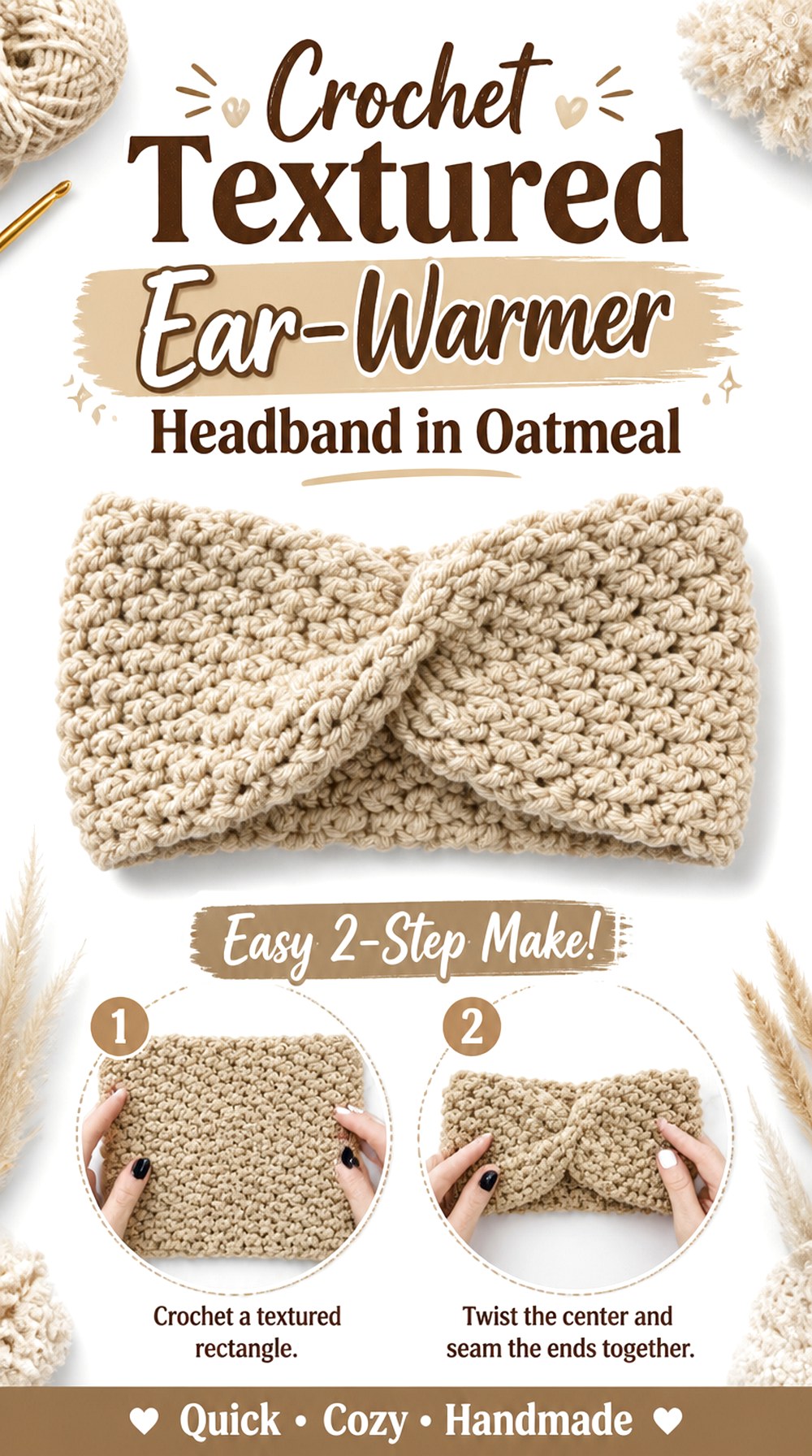
An oatmeal or mushroom ear warmer is an understated alternative to a full hat and lets a raised stitch pattern provide most of the visual interest. This project is especially useful when you want a small wearable that coordinates with several coats rather than matching only one fall outfit.
Headbands have less sizing tolerance than loose scarves because they need to stay in place without uncomfortable pressure. Color is straightforward here, but stretch and finished circumference deserve attention, particularly if your chosen yarn behaves differently from the one demonstrated.
Fit the Band for Wear, Not Just for a Flat Measurement
The relevant question is how the fabric stretches around the head. Check the creator’s sizing guidance and evaluate your own fabric under gentle stretch before closing or finishing the band. A very elastic yarn may need different judgment from a firm one even when both pieces measure similarly while resting.
Let Oatmeal Reveal the Surface Texture
Light warm neutrals often make shadows in textured stitches easy to see. If pure cream feels too bright for your wardrobe, oatmeal, mushroom, warm gray, or light camel keeps that stitch definition while looking softer. Save your darkest earth tones for a jacket or scarf if you want the small headband texture to remain visually clear.
Original Tutorial and Creator Credit
Creator: The Turtle Trunk
8. Crochet Stitch Sampler Leg Warmers in Woodland Browns
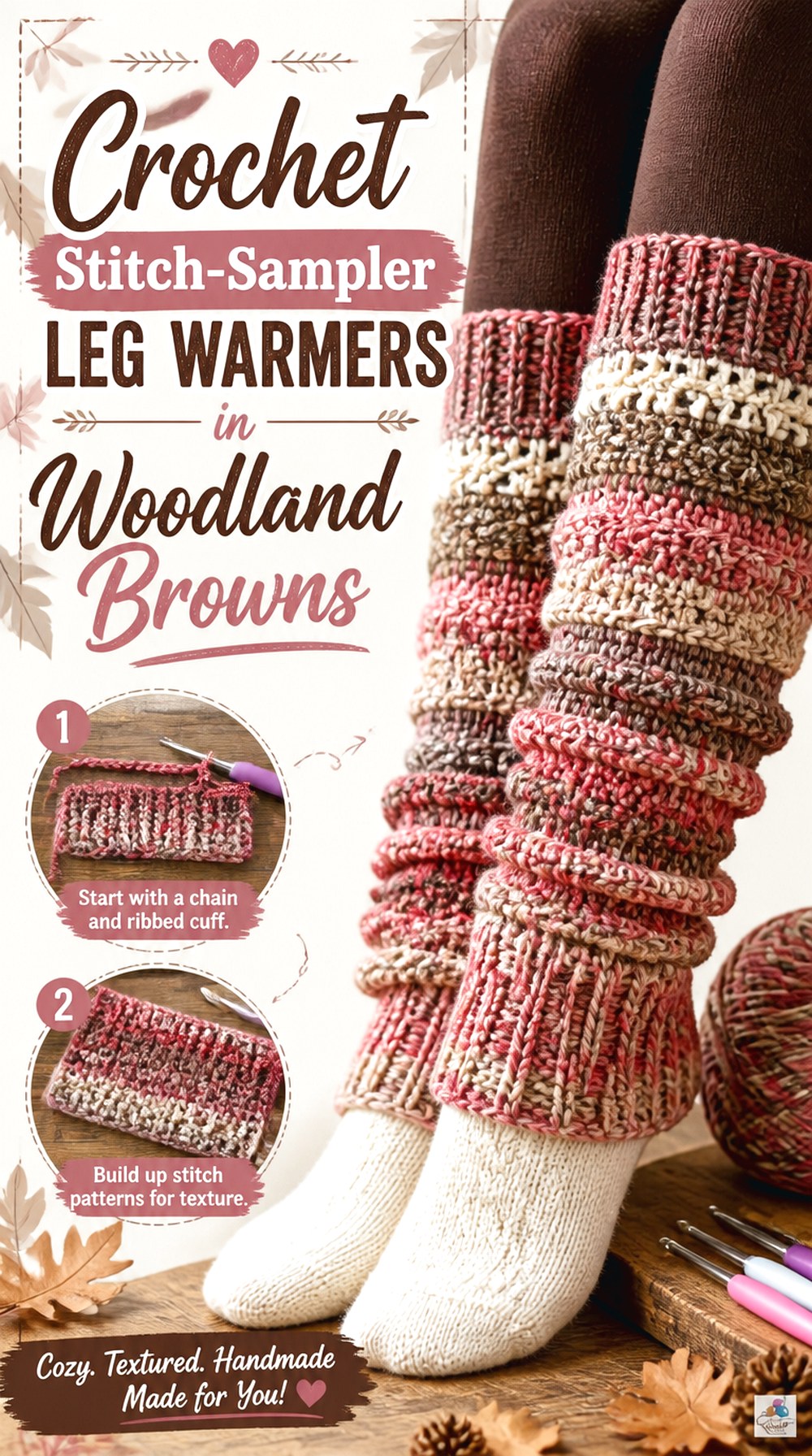
Leg warmers give you more room for texture than a pair of gloves and less commitment than a sweater. Walnut, fawn, peat, and heathered olive can separate stitch sections subtly, or the entire pair can stay in one color so changes in texture provide the variation.
This tutorial uses multiple stitch textures, which gives the project a different character from plain ribbed warmers. That also means gauge consistency matters across transitions. If your tension changes noticeably when the stitch pattern changes, the tube may flare or narrow even though you have not intentionally shaped it.
Keep Both Warmers Visually Paired
For multicolor warmers, record your color placement as you work the first piece so the second does not become an accidental variation. Exact mirror matching is optional, but it should be a conscious choice. When using variegated or hand-dyed earth tones, expect the distribution to differ and decide whether that organic mismatch suits the look.
Texture Changes Are Natural Fit Checkpoints
Because the stitch sampler moves through distinct fabric textures, use those transitions to inspect width and stretch. If one section draws in more tightly than the previous one, address the tension issue early. Do not assume a later section will automatically correct a circumference change.
Consider Where the Warmers Meet Footwear
A bulky lower edge may sit differently over ankle boots than a slimmer one. Decide whether you intend to wear the warmer over a boot shaft, above it, or with low shoes, then compare that use with the tutorial’s finished silhouette. This is more useful than choosing length based only on how the pair looks laid flat.
Original Tutorial and Creator Credit
Creator: The Crochet Crowd
9. Crochet Moss Stitch Fingerless Gloves in Olive
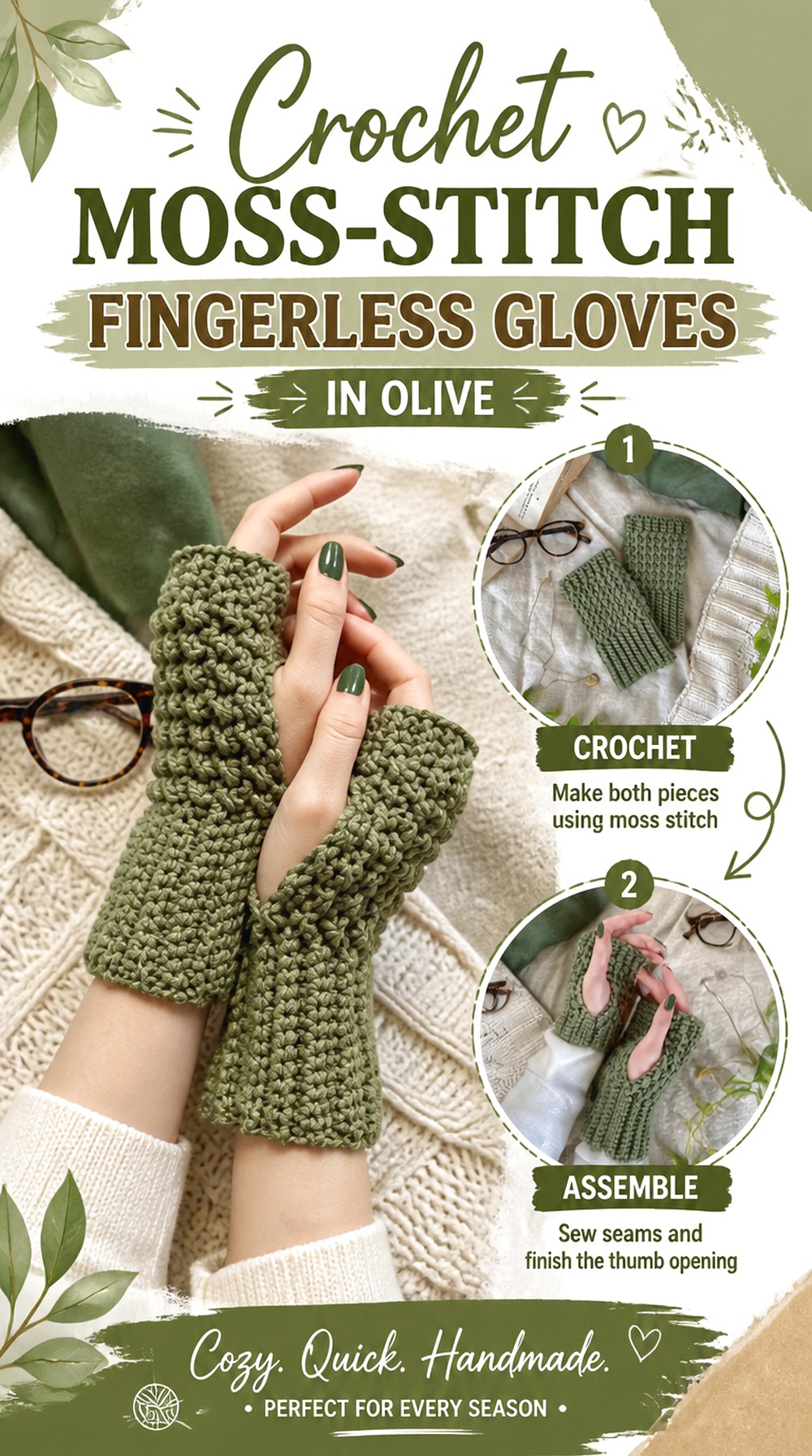
Muted olive is especially effective for fingerless gloves because it behaves almost like a neutral while still giving a plain coat some color. A moss-style surface keeps the fabric visually active without requiring stripes, and ribbed sections can be kept in the same shade for a quiet tonal finish.
Fingerless gloves need to move with the hand, so a yarn that produces an attractive swatch is not enough by itself. Check how the fabric feels around the wrist and palm, and make sure any adaptation does not interfere with comfortable hand movement.
Wrist Ribbing Should Recover After Stretching
Pull the ribbed section gently several times before judging the fit. If it remains noticeably stretched, the finished glove may loosen with use. Conversely, a rigid cuff can be inconvenient to pull over the hand. Match the tutorial’s intended fit rather than forcing a yarn with very different elasticity into the same dimensions.
Olive Can Shift Warm or Cool Beside Other Browns
Yellow-leaning olive looks especially cohesive with camel and rust, while gray-green olive pairs more quietly with taupe and stone. If these gloves are meant to coordinate with a scarf or hat, compare the actual yarns together in daylight. Color names on labels are much less reliable than seeing the skeins side by side.
Original Tutorial and Creator Credit
Creator: HayHay Crochet
10. Crochet Draped Triangle Shawl in Woodland Neutrals
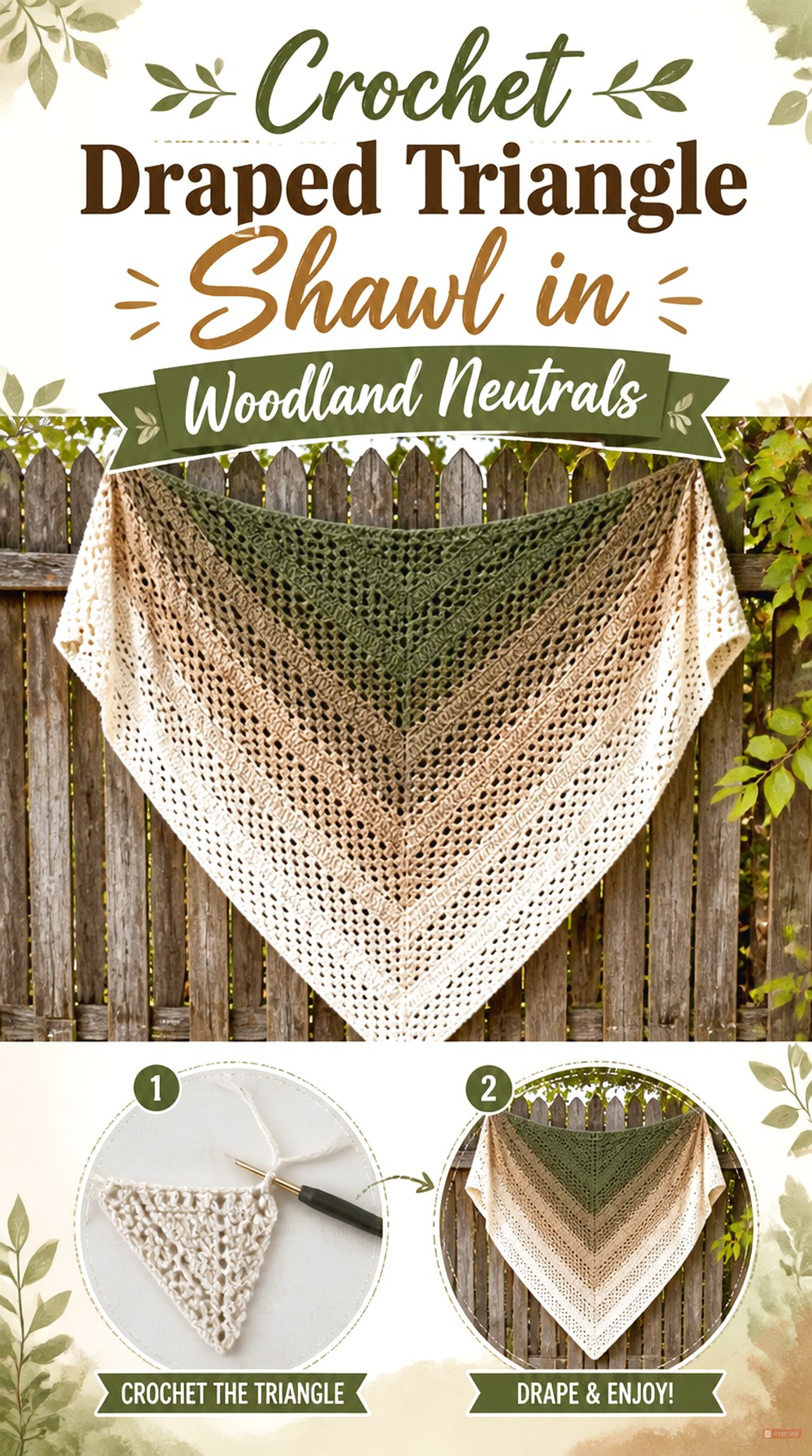
A full triangle shawl lets earth tones blend more gradually than the smaller granny scarf. Consider a progression from cream through camel and chestnut to deep forest, or keep the body in one subdued tone and use a contrasting edge. The larger surface is also a good place for a gradient yarn if the transitions stay within the palette you want.
Drape matters more here than firmness. A shawl that looks beautiful flat can feel cumbersome if the chosen yarn creates a dense, heavy fabric, so evaluate how the material hangs before committing to a large version.
Think About the Colors Where the Shawl Will Fold
When worn, a triangle shawl overlaps itself and hides portions of the flat layout. Put a favorite accent where it will remain visible near the edge or outer sections rather than burying a small stripe near the center. Photographing the work folded loosely around your shoulders can reveal whether the color plan still reads as intended.
More Weight Is Not the Same as More Warmth
A thicker substitution can change scale, drape, and total garment weight in addition to warmth. If you want a cozy fall result, first see what yarn category the tutorial is designed around. Moving to a substantially different yarn may require more than simply changing the hook.
A Tonal Border Can Finish a Multi-Shade Body
If the main shawl includes several browns, greens, and clays, one repeated dark neutral at the edge can visually connect them. Deep cocoa is softer than black and still provides separation. Check the tutorial before adding an unplanned border, though, because extra edging can affect the final hang and may not suit every construction.
Original Tutorial and Creator Credit
Creator: Bag-O-Day Crochet
11. Crochet Chunky Textured Pillow Cover in Sand and Bark
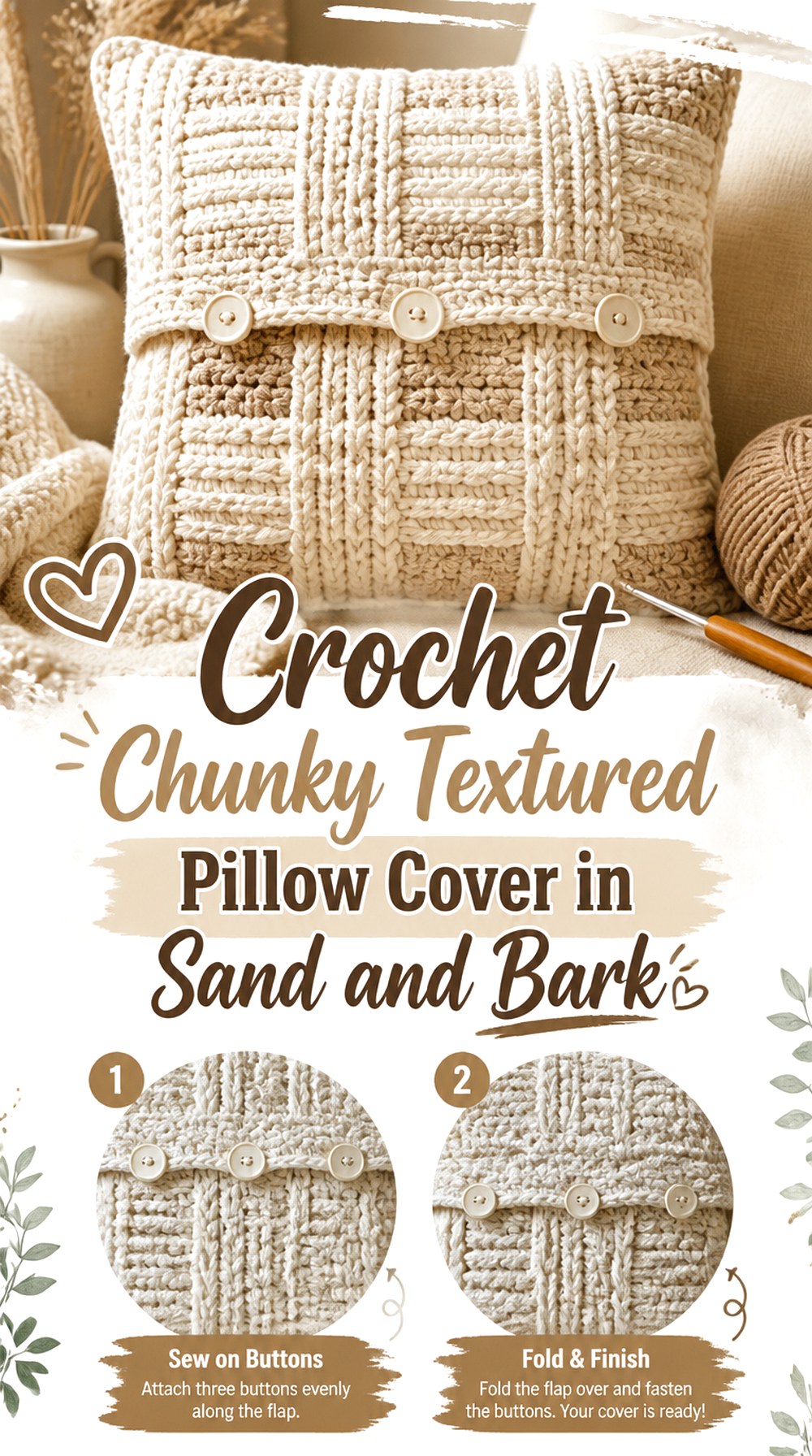
A crochet pillow is one of the easiest ways to bring an earth-tone palette into a room without committing to an entire blanket. Sand, flax, mushroom, bark, and clay work especially well because the raised crochet surface creates its own light and shadow. You can keep the cover monochrome or coordinate it with nearby throws and upholstery.
The practical decision is not only the yarn color. The cover needs to work with the intended pillow insert, and highly textured fabric can change how large or full the finished cushion appears. Confirm dimensions from the source before purchasing or repurposing an insert.
Let Texture Carry the Design
A complicated color sequence can compete with a strongly textured pillow. If the stitch surface is the feature you want to notice, start with a single sand, oatmeal, or camel shade. A subtle heather is another option, but inspect it from several feet away to ensure the tonal flecks do not make the texture look visually fuzzy.
Match the Cover to the Actual Insert
Measure the insert you intend to use instead of choosing a pillow tutorial by photograph alone. A cover that is too loose can look underfilled, while one that is excessively tight may distort the stitch texture or closure. If the tutorial’s intended dimensions differ from your insert, determine whether the construction is reasonably adaptable before starting.
Original Tutorial and Creator Credit
Creator: I-crochet
12. Crochet Chenille Color Block Throw in Forest and Stone
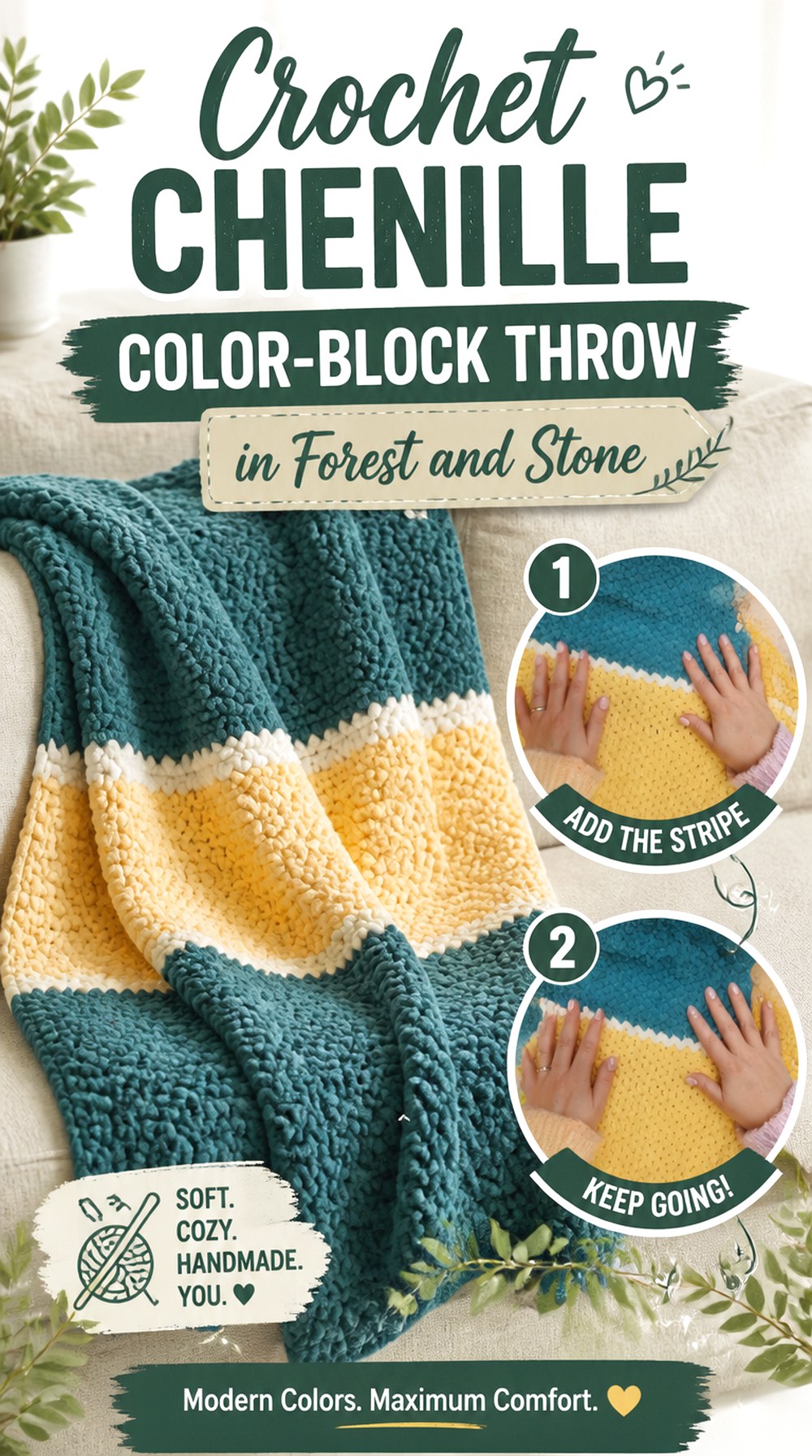
A forest-and-stone throw brings several earth tones into one large project without relying on tiny stripes. Broad blocks of deep green, warm gray, oatmeal, camel, and muted rust can give each color enough room to read individually. A plush yarn adds softness, but it can also reduce crisp stitch visibility compared with smoother yarn.
Because a throw uses much more material than a small accessory, make your palette decisions before buying the full quantity. Lay the intended colors together in their approximate proportions; a tiny rust skein may look dominant in a pile yet become only a small accent in the finished blanket.
Broad Color Blocks Reduce Visual Noise
When the yarn already has a soft, plush surface, large blocks usually give the colors clearer separation than rapid changes. Put your strongest accent between quieter neutrals or use it only once as a focal band. If every color occupies the same amount of space, the result may feel more striped than intentionally color blocked.
Plush Yarn Can Soften Stitch Definition
Chenille-like surfaces emphasize softness more than sharply etched stitches. That can be ideal for a throw, but it matters if you are choosing a pattern specifically for intricate texture. Watch the tutorial’s finished fabric closely and decide whether you like the stitch definition before substituting an even fuzzier yarn.
Check Finished Weight as the Blanket Grows
A small swatch does not communicate how a full plush throw will feel. Periodically lift and fold the growing blanket to evaluate its weight and drape. If you are substituting substantially heavier yarn, reconsider size early rather than discovering at the end that the finished piece is cumbersome for its intended sofa or bed.
Original Tutorial and Creator Credit
Creator: Hooked by Robin
13. Crochet Alpine Stitch Nesting Baskets in Linen Neutrals
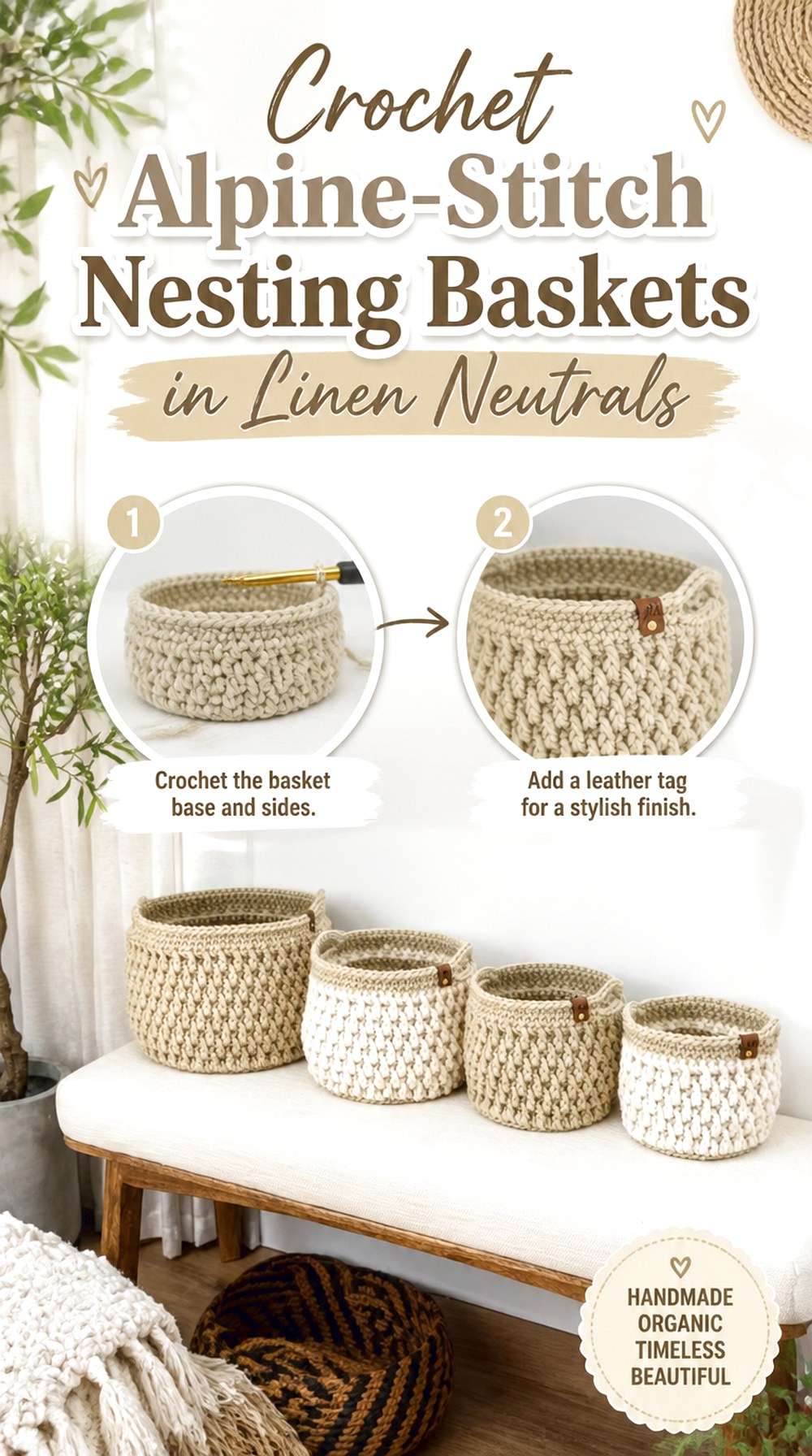
Nesting baskets turn the earth-tone idea into functional storage rather than seasonal decoration. Linen, flax, camel, warm gray, and dark brown can sit on open shelves all year, and the raised Alpine texture gives a neutral basket enough visual detail without needing a multicolor motif.
The most important consideration is shape retention. A basket needs more stability than a scarf, and a substitution that creates soft, collapsing sides may not give the storage look you expected. The source set includes multiple nesting sizes, which also makes coordinated tonal colors an option.
Give Each Basket a Job Before Choosing Its Size
Instead of making every size automatically, decide what you want to store: yarn notions, small accessories, rolled cloths, or another lightweight household category. Then check the tutorial or written pattern dimensions. A basket that looks roomy in a styled photograph may be smaller than the item you planned to place inside.
Texture Benefits From a Restrained Palette
Alpine stitch creates strong shadow lines, so solid flax or camel can be enough. If you want a nested set with more color, assign one related neutral to each basket instead of striping every piece. When stacked or grouped, the size changes and texture already provide plenty of variation.
Structure Should Be Evaluated Before Finishing
Stand the developing basket upright once the sidewalls have some height. If the fabric folds more than you want, address yarn, tension, or intended use while changes are still practical. Avoid making unsupported claims about load capacity; crocheted storage that looks firm is not automatically designed for heavy objects.
Original Tutorial and Creator Credit
Creator: MJ’s Off The Hook Designs
14. Crochet Stuffed Pumpkin Décor in Clay or Flax
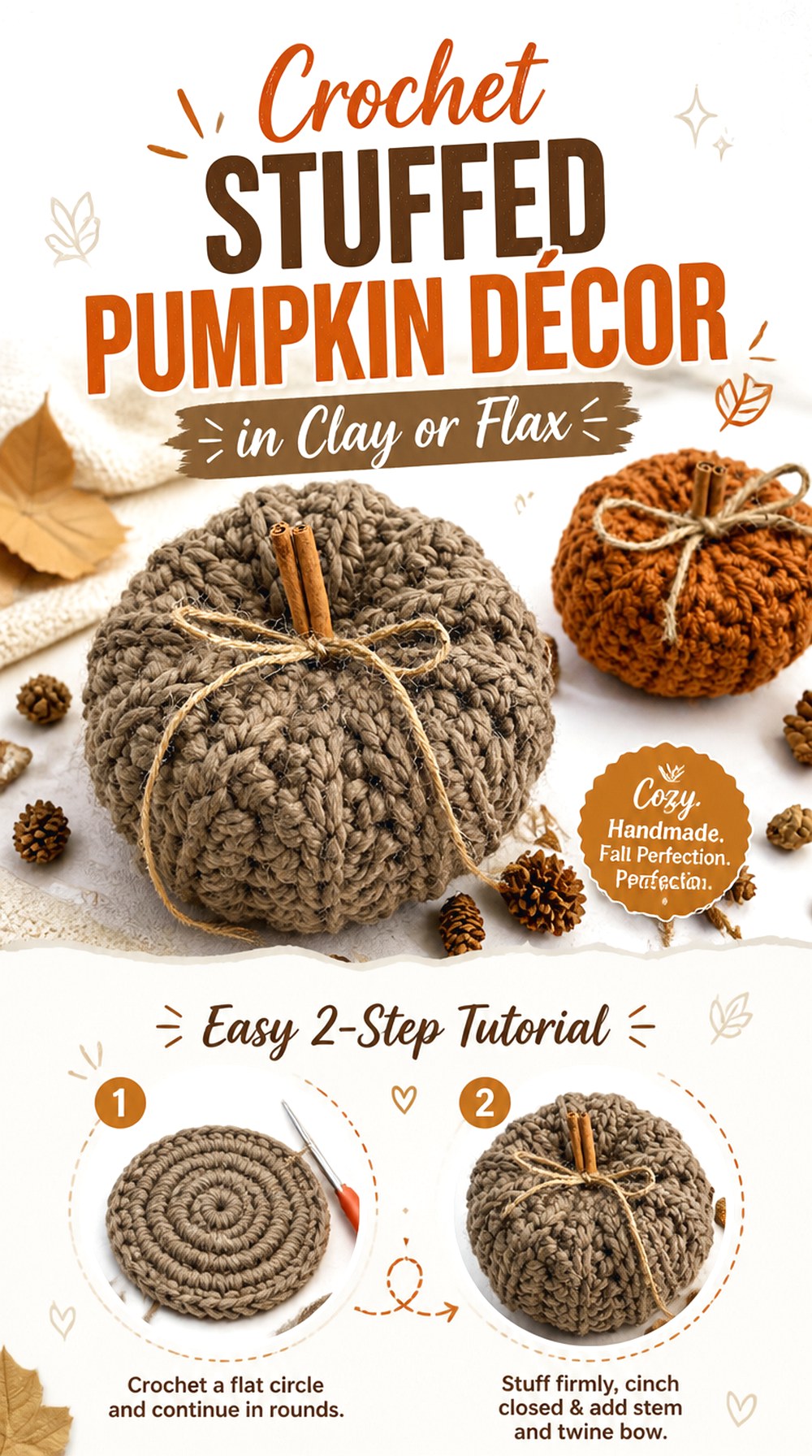
A crochet pumpkin does not have to be bright orange to signal fall. Clay, flax, muted mustard, moss, cream, and soft tobacco can create a quieter display that blends with neutral interiors. A single oversized shade can act as a focal piece, while several compatible colors can form a low centerpiece or mantel grouping.
This is a display project rather than a toy, so judge yarn by surface, shape, and where the pumpkin will sit. If you make several, variation in yarn thickness or hook choice can affect scale and texture, so confirm the creator’s options rather than guessing at finished dimensions.
Change the Palette Before Changing the Construction
If the original form already suits your display, color is the lowest-risk adaptation. Clay with a dark brown stem reads warmer; flax with an olive accent feels more understated. You do not need to alter the shaping just to make the pumpkin fit an earth-tone theme.
Stuffing Changes the Silhouette
Too little filling can leave the form deflated, while aggressive overfilling can reduce the intended shaping or open the fabric enough to reveal stuffing. Use the tutorial’s finished appearance as your visual checkpoint. If stuffing begins showing through, adding more is unlikely to improve the finish.
Keep Decorative Pieces Out of Unintended Play Use
The source explicitly treats its pumpkin as décor rather than a toy. If your version includes attached stems or other small components, keep that intended use in mind, particularly around young children.
Original Tutorial and Creator Credit
Creator: Just Be Crafty
15. Crochet Woodland Mushroom Amigurumi in Chestnut and Cream
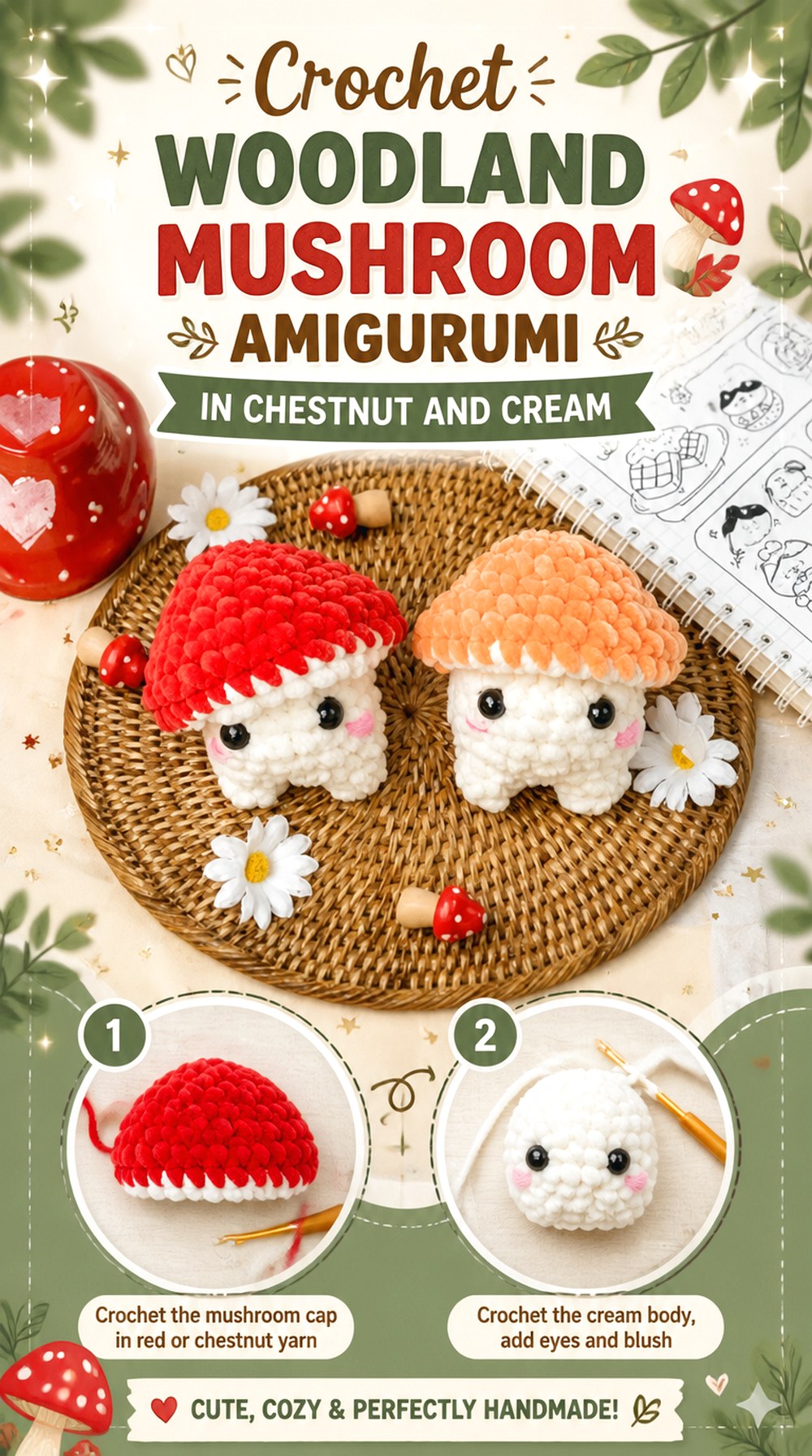
A chestnut-and-cream mushroom gives fall décor a woodland direction without repeating the pumpkin theme. Dark taupe, rust, faded brick, or olive can replace a conventional bright cap, while a warm cream stem keeps the form recognizable. One mushroom can sit beside books or a basket; several can create a small woodland grouping.
Unlike a flat leaf or garland motif, amigurumi depends on dense fabric and controlled stuffing to keep the form readable. If you substitute yarn, inspect the spaces between stitches early. A larger hook or very loose tension can make stuffing more visible.
Contrast the Cap and Stem Enough to Read the Shape
Two closely matched browns can turn the entire mushroom into one visual mass. Keep either the cap or stem clearly lighter. Chestnut over oatmeal is an obvious pairing, while moss over flax gives a less traditional woodland result without relying on bright color.
Dense Fabric Matters More Than a Perfect Color Match
If your preferred clay yarn produces obvious gaps at the tension used in the tutorial, solve the fabric issue rather than prioritizing the exact shade. Stuffing showing through can distract from an otherwise attractive palette. Any yarn or hook adjustment should still respect the tutorial’s construction rather than becoming an improvised pattern rewrite.
Keep Small Decorative Details Appropriate to the Setting
If a mushroom includes small added components, consider where the finished object will be displayed. A shelf decoration and an object intended for unsupervised child or pet use have different safety expectations. Do not assume a decorative amigurumi tutorial automatically produces a child- or pet-safe toy.
Original Tutorial and Creator Credit
Creator: Meow Amigurumi
16. Crochet Autumn Leaf Garland in Rust, Olive, and Ochre
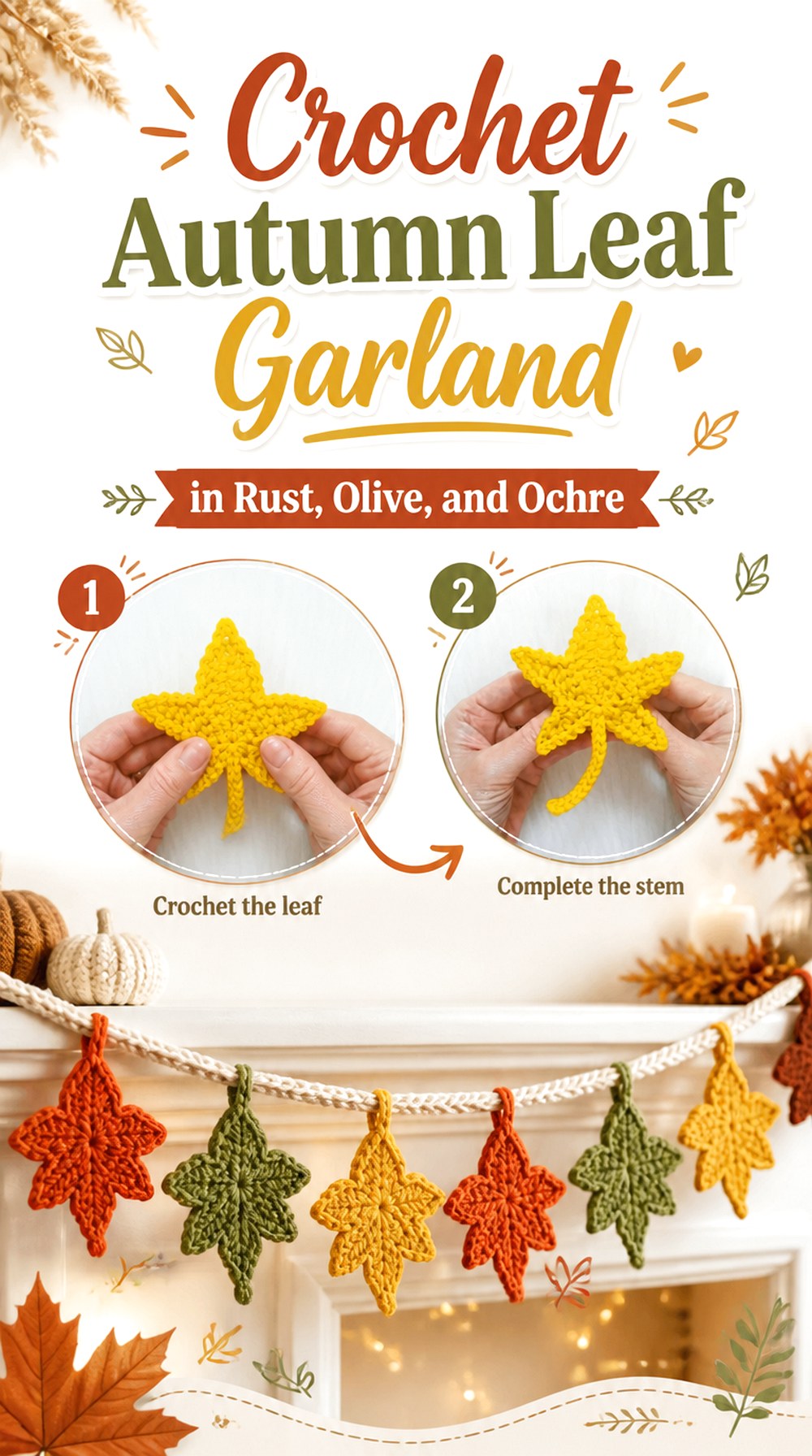
A leaf garland uses earth tones in their most obvious seasonal setting, but the palette can still be more sophisticated than alternating bright orange and yellow. Mix rust, dull ochre, dark olive, tobacco, and a small amount of flax so the leaves do not all carry the same visual weight.
Individual leaves are small enough to test colors before committing to a full strand. That makes the project useful for leftover yarn too, provided the yarns create compatible leaf sizes. The selected tutorial specifically shows a maple-style autumn leaf and notes that leaves can be connected for garland or fall-wreath use.
Mix Values as Well as Hues
A strand containing five different mid-tone colors can still look surprisingly flat. Include at least one pale leaf and one deeper brown or green among the rust and ochre pieces. Lay the leaves in sequence before attaching them so the darkest motifs do not form an accidental cluster at one end.
Keep Repeated Leaves Consistent in Scale
If you use several leftover yarns, check the finished dimensions of the first leaf in each yarn. A substantially thicker strand can create one oversized motif. That may work as a deliberate focal leaf, but otherwise choose yarns and hooks that give visually compatible results.
Original Tutorial and Creator Credit
Creator: Pora Pora Crochet
17. Crochet Buttoned Mug Cozy in Espresso Brown
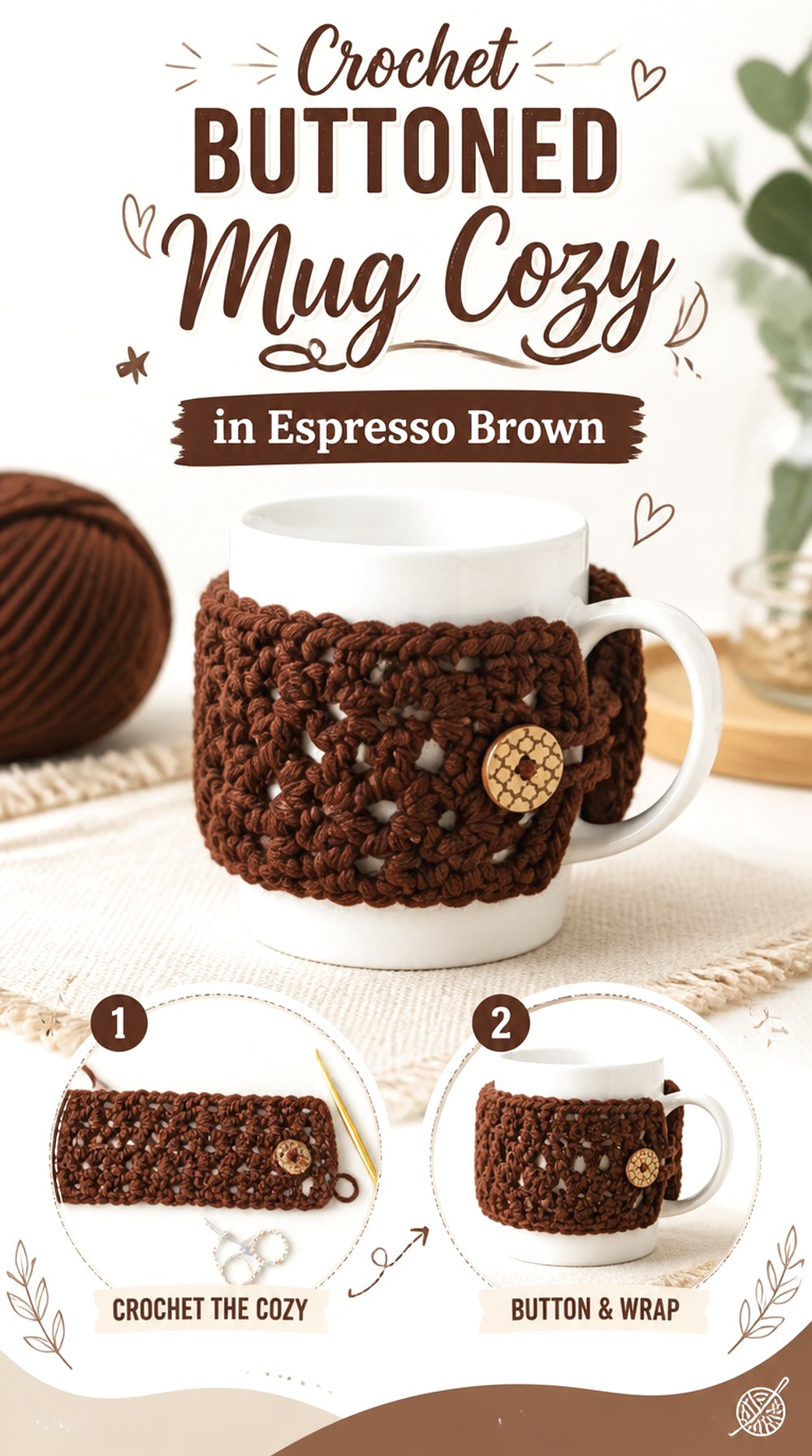
An espresso-brown mug cozy is a small way to use an earth-tone palette without starting another décor object that needs storage after fall. Cocoa, camel, rust, or oatmeal can coordinate with everyday ceramics, and a contrasting button can become the single focal detail.
Fit is more important than size labels because mugs vary in diameter, taper, handle shape, and handle position. Before finishing the closure, wrap the developing cozy around the specific mug you intend to use and check that the fabric does not interfere with a comfortable grip.
Test Around the Handle Before Securing the Closure
A cozy that fits the mug body may still bunch near a low or narrow handle. Position the closure while the cozy is on the mug rather than relying entirely on a flat measurement. If you plan to use it on several mugs, compare those shapes first; one fixed button position will not necessarily suit all of them.
Choose a Color That Contrasts With the Mug
Espresso on a cream ceramic mug creates a clear border, while oatmeal on tan stoneware gives a quiet tonal effect. Both can work, but they create very different visibility. If the stitch texture is a feature you want noticed, greater value contrast between mug and yarn usually makes the cozy easier to see.
Original Tutorial and Creator Credit
Creator: Fiber Flux
18. Crochet Textured Cowl in Camel and Moss
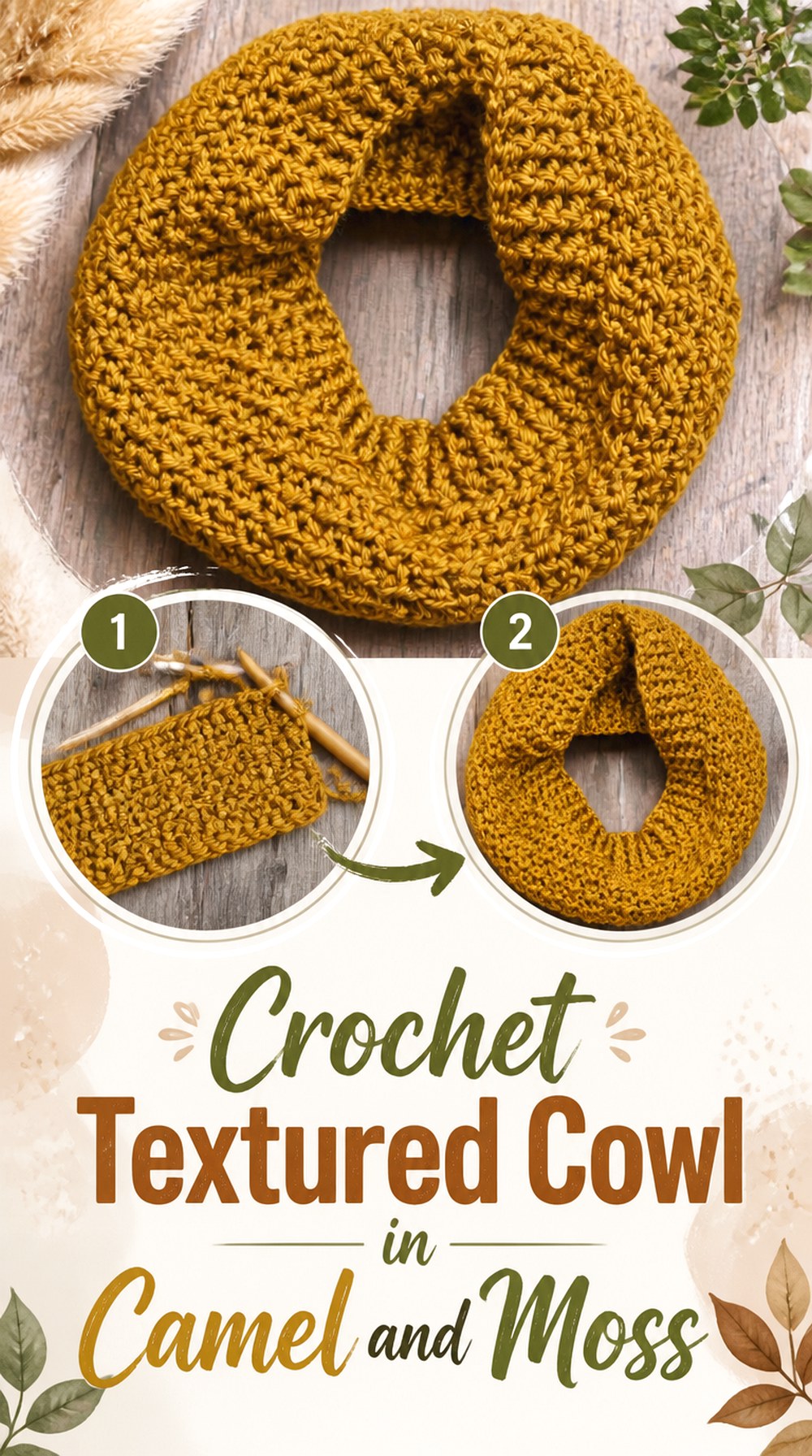
A cowl sits between the small ear warmer and the larger shawl in both yarn commitment and visual impact. Camel, moss, dark taupe, or rust can give a textured cowl a distinct fall identity while remaining easy to pair with solid outerwear. Using one color keeps the stitches prominent; two related tones can separate the body from the edging.
The selected Golden Cowl tutorial combines an even moss-style body with textured edges. That makes it a useful choice when you want surface detail but do not want the long ends or repeated arrangement of a traditional scarf.
Check the Neck Opening Before Prioritizing Length
A cowl that is attractive laid flat still has to pass comfortably over the head and sit as intended around the neck. When substituting yarn, pay attention to circumference and stretch rather than adjusting only height. A firmer fabric can change how the same nominal dimensions feel when worn.
Use the Edging as the Second Color Zone
If you want camel and moss together, placing one shade primarily in the body and the other at a defined edge can keep the palette cleaner than frequent stripes. First check where the tutorial’s textured borders occur so your planned color change reinforces the construction rather than interrupts it arbitrarily.
Original Tutorial and Creator Credit
Creator: Rich Textures Crochet
19. Crochet Stuffed Acorn Accent in Taupe and Walnut
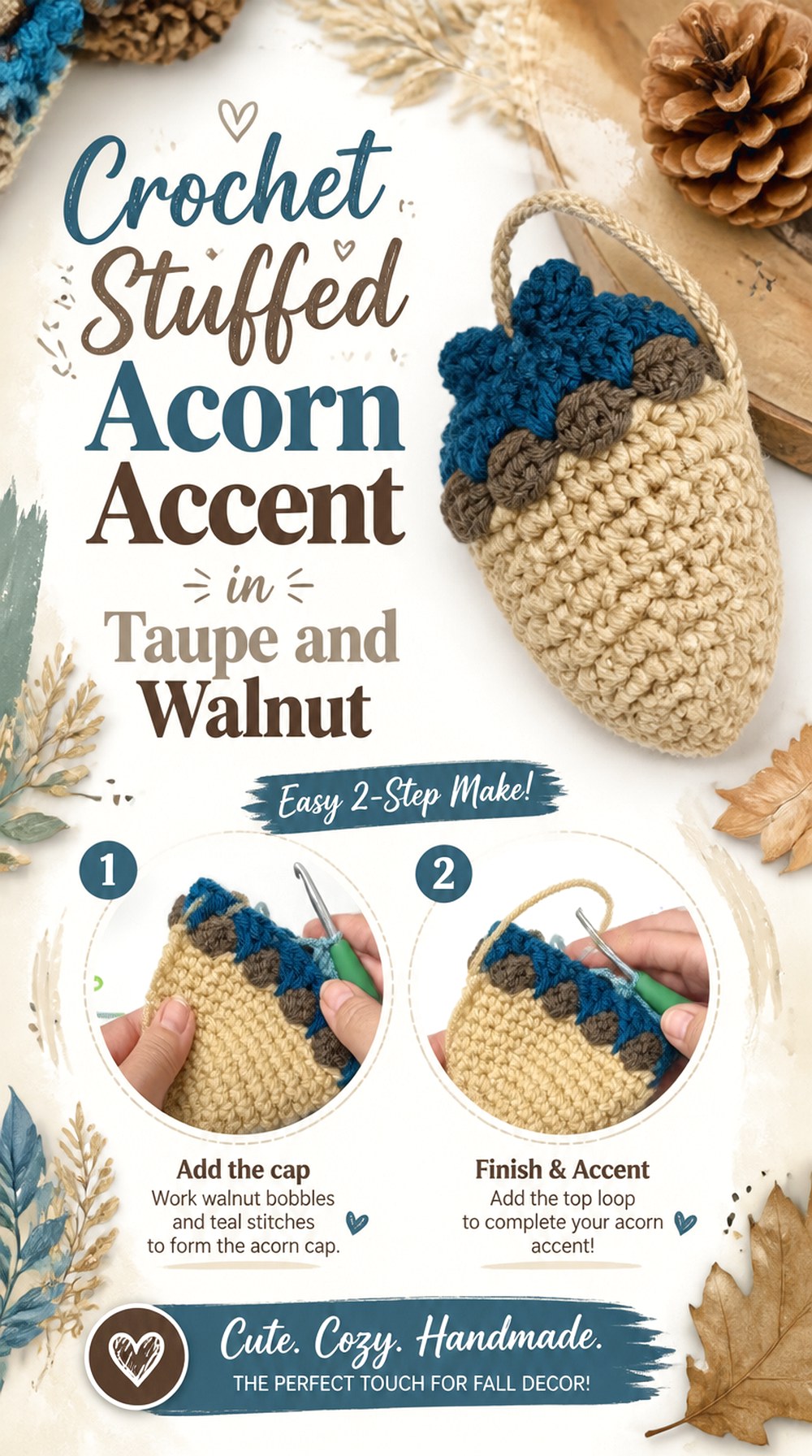
A stuffed acorn is smaller and more graphic than the pumpkin, making it useful for bowls, shelf groupings, or a mixed autumn display. Taupe with a walnut cap closely follows the natural subject, while clay, wine, muted mustard, or dark olive can make the body more decorative without losing the acorn silhouette.
The cap is the feature that creates most of the visual identity, so keep enough contrast between it and the body. This is also a useful project for comparing yarn-scale changes because the creator’s accompanying pattern supports several sizes and discusses how yarn choice can change the result.
Make the Cap Visibly Distinct From the Body
Medium taupe beside medium cocoa may not provide enough separation once the texture is added. Try a pale body with a dark cap, or a clay body with espresso. If you use stripes, keep the cap visually dominant so the finished object still reads immediately as an acorn.
Scale the Display, Not Just the Individual Acorn
Before making a large batch, decide where they will go. Tiny motifs can disappear on a wide mantel, while several bulky acorns can overcrowd a shallow bowl. Make one sample, place it in the intended setting, and use that visual test to choose the quantity and scale of the rest.
Original Tutorial and Creator Credit
Creator: Pretty Darn Adorable Crochet Tutorials
20. Crochet Classic Bucket Hat in Olive or Camel
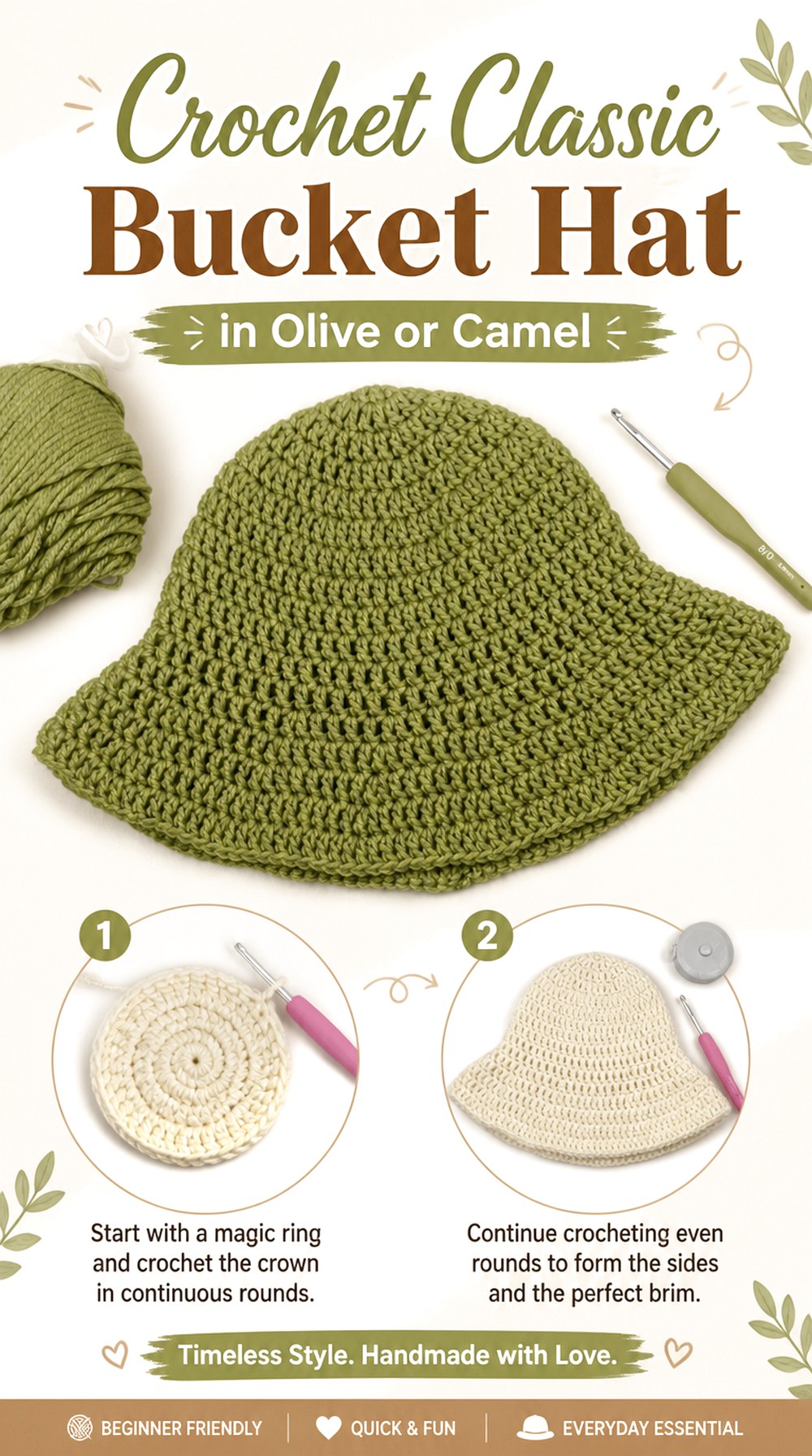
A bucket hat extends the earth-tone collection into transitional-weather accessories without repeating the beanie. Olive gives the shape a casual outdoor feel, while camel, tobacco, stone, or warm brown makes it easier to coordinate with neutral jackets. The brim is also a natural location for a contrasting final color if you want a two-tone version.
Unlike a ribbed beanie, the bucket-hat silhouette depends on a defined crown, side section, and brim. Yarn substitution can affect how firmly that brim sits, so judge the fabric as the hat develops instead of focusing only on the head circumference.
Brim Firmness Changes the Finished Silhouette
A very soft brim can droop more than you expect, while an excessively rigid one may flare awkwardly. If you change yarn, evaluate the first part of the brim before completing it. Compare the behavior with the tutorial sample and avoid assuming a thicker yarn automatically creates a better fall hat.
Olive Makes a Useful Bridge Between Seasons
Olive pairs easily with cream, denim, camel, rust, and dark brown, so the same hat can work before colder beanie weather arrives. If your wardrobe already contains several green jackets, choose camel or tobacco instead so the accessory does not disappear into the outer layer.
Keep Decorative Additions Secondary to Fit
A contrasting band, small appliqué, or alternate brim color can personalize the hat, but add-ons should come after the basic crown and brim fit is established. If an embellishment is not part of the tutorial, treat its attachment as a separate decision and avoid placing bulky details where they interfere with comfortable wear.
Original Tutorial and Creator Credit
Creator: ElyseCrochets 💌
Which Earth-Tone Crochet Project Fits Your Fall Plans?
For a substantial wardrobe addition, the drop-shoulder cardigan offers the largest uninterrupted neutral surface, while the granny vest is the better choice when color placement is the main attraction. The triangle scarf, cowl, beanie, ear warmer, gloves, and bucket hat are more manageable ways to introduce one or two earth tones without designing an entire outfit around crochet.
For function at home, choose the nesting baskets when structure matters, the pillow when you want concentrated texture, or the chenille throw when you want the palette spread over a larger area. The two bags sit between fashion and function, with strap behavior and fabric stability worth checking closely.
For unmistakably seasonal pieces, the pumpkin makes the strongest single statement. Mushrooms and acorns work as tabletop accents, while the leaf garland gives you the most freedom to mix many small shades without committing to a large quantity of any one color.
Conclusion
The strongest earth-tone crochet collection is not the one that uses the most brown. Choose color according to the finished object: calm neutrals can emphasize cardigan drape and pillow texture, olive can make bags and accessories versatile, and concentrated rust or ochre can give small fall motifs enough contrast to stand out. Larger wearables deserve careful fit and yarn-behavior checks, while bags and baskets need extra attention to structure.
If you want one substantial Fall 2026 project, start with the cardigan, vest, throw, or shawl. For smaller additions, consider the cowl, gloves, acorns, leaves, or mug cozy. Use the original tutorials for exact construction, sizing, stitch work, and finishing details.
Frequently Asked Questions
What colors count as earth tones for fall crochet?
Earth tones generally draw from colors associated with soil, stone, plants, wood, and muted natural pigments. For this type of fall collection, useful options include camel, cocoa, walnut, taupe, oatmeal, cream, clay, rust, ochre, moss, olive, forest green, and warm gray. You do not need to use all of them. Two neutrals plus one muted accent often create a more controlled palette than combining every autumn color in one project.
How can I keep an earth-tone crochet palette from looking muddy?
Create contrast in lightness as well as hue. Rust, olive, taupe, and medium brown may all be different colors, but if they have similar visual depth they can merge from a distance. Add a light flax or cream and a deeper espresso or forest shade to create clearer separation. For granny squares or stripes, arrange yarn strands or swatches in the planned order before you start joining or repeating the color sequence.
Can I change a tutorial’s colors to earth tones without changing the crochet pattern?
A color-only substitution is generally much simpler than changing yarn construction, thickness, hook size, and gauge. Look for a suitable yarn that meets the project requirements and compare it with the creator’s recommendation rather than choosing only by shade. This becomes particularly important for fitted garments, bags, hats, and baskets. If you also change yarn weight or fiber behavior, make a swatch and use the tutorial’s sizing or gauge information before assuming the finished dimensions will remain unchanged.
Which yarn textures show earth-tone crochet stitches most clearly?
Smooth yarns with visible strand definition generally make ribs, granny clusters, and raised textures easier to see than very fuzzy or plush yarns. Light-to-medium earth tones such as oatmeal, camel, clay, and olive also tend to show stitch shadows more readily than extremely dark brown. Plush yarn can still be a good choice when softness is the priority, as with a throw, but decide whether you want the viewer to notice the stitch pattern or the overall cozy surface first.
How should I arrange earth tones in granny squares or color-block projects?
Give each color a role. One neutral can repeat throughout the project, a darker shade can anchor edges or selected motifs, and one or two muted colors can provide variation. For a granny-square vest, lay out all motifs before joining and redistribute dark squares if one area looks visually heavy. For a blanket, broad color blocks can give olive, rust, stone, and camel more room to read clearly than numerous narrow, rapidly changing stripes.
Which ideas are practical if I only want a few crochet pieces for Fall 2026?
For a compact wardrobe update, the ribbed beanie, fingerless gloves, cowl, ear warmer, or bucket hat uses the earth-tone concept without requiring a large coordinated garment. For home décor, one pumpkin beside a few acorns or a short leaf garland can establish the seasonal palette without filling the room with crochet. If you prefer something usable beyond fall, the olive tote, neutral baskets, pillow cover, or warm-neutral cardigan has the least specifically seasonal imagery.