Plum noir gives crochet bags a darker, more polished direction than bright purple or classic burgundy. Here, the term is used as a color direction rather than a standardized yarn shade: think deep plum, blackened berry, aubergine, or wine-purple yarn that can appear almost black in low light. That makes stitch definition, bag shape, hardware, and finishing especially important.
These 12 crochet plum noir bag ideas cover substantially different constructions rather than repeating the same tote in different details. You can compare open totes, gathered openings, compact phone bags, envelope flaps, backpacks, framed clutches, curved silhouettes, mesh fabric, hobo shapes, bucket bags, granny-square assembly, and circular construction. The linked tutorials were selected for construction and finished-bag form, so not every creator uses a plum-noir color; adapt the palette only after confirming that your chosen yarn works with the tutorial.
Quick List
- Crochet Plum Noir Everyday Tote
- Crochet Plum Noir Drawstring Sling Bag
- Crochet Plum Noir Phone Crossbody Pouch
- Crochet Plum Noir Envelope Purse
- Crochet Plum Noir Daisy Granny Backpack
- Crochet Plum Noir Frame-Clasp Clutch
- Crochet Plum Noir Crescent Shoulder Bag
- Crochet Plum Noir Mesh Market Tote
- Crochet Plum Noir Slouchy Hobo Bag
- Crochet Plum Noir Drawstring Bucket Bag
- Crochet Plum Noir Three-Square Granny Shoulder Bag
- Crochet Plum Noir Round Bag
Make Dark Plum Yarn Show the Crochet, Not Hide It
Very dark yarn can make a beautifully textured bag look almost flat from a distance. Before committing to a full project, crochet a small swatch and examine it in daylight as well as ordinary indoor lighting. Raised stitches, strong geometric lines, granny motifs, ribbing, and open spaces generally remain more readable than subtle texture when the yarn approaches black.
Fiber surface matters too. A matte yarn can give plum noir a quiet, velvety appearance, while a smoother yarn may reflect enough light to separate individual stitches more clearly. Neither is automatically better. Match the finish to the bag: a frame clutch can benefit from a refined surface, while a hobo bag may look better with softer texture. Avoid choosing yarn by color alone; compare its weight, elasticity, and finished fabric with the tutorial’s requirements.
Choose the Bag Structure Before Choosing the Plum Shade
A dark color cannot compensate for the wrong fabric behavior. An everyday tote generally benefits from a body and handles that do not lengthen excessively under normal use, while a hobo or crescent design needs enough flexibility to create its intended curve. Mesh market bags deliberately expand, and a clutch depends much more on the relationship between its crocheted body and closure hardware.
If you substitute yarn, make a fabric sample first rather than assuming two yarns of similar labeled weight will behave identically. Check how easily the swatch stretches and whether it recovers. For bags carrying small loose items, consider whether the stitch openings make a lining useful. Long crocheted straps also deserve special attention because repeated loading can change their length even when the bag body still looks tidy.
What to Verify When Adapting a Tutorial to Plum Noir
The safest color adaptation keeps the tutorial’s construction logic intact. Confirm the recommended yarn characteristics, hook information, intended fabric density, and any hardware before purchasing a replacement simply because it comes in the perfect dark plum. If your substitute creates a noticeably different gauge, the opening, strap position, motif size, or compatibility with a metal frame can change.
Dark yarn also makes finishing errors easier to overlook while you work. Inspect joins, strap attachment points, skipped stitches, and seam alignment in strong light before weaving in every end. If the project includes several granny squares, compare their blocked dimensions before assembly. With purchased closures, clasps, rings, or frames, treat the actual hardware dimensions as fixed design constraints and make sure the crochet portion is compatible with them.
1. Crochet Plum Noir Everyday Tote
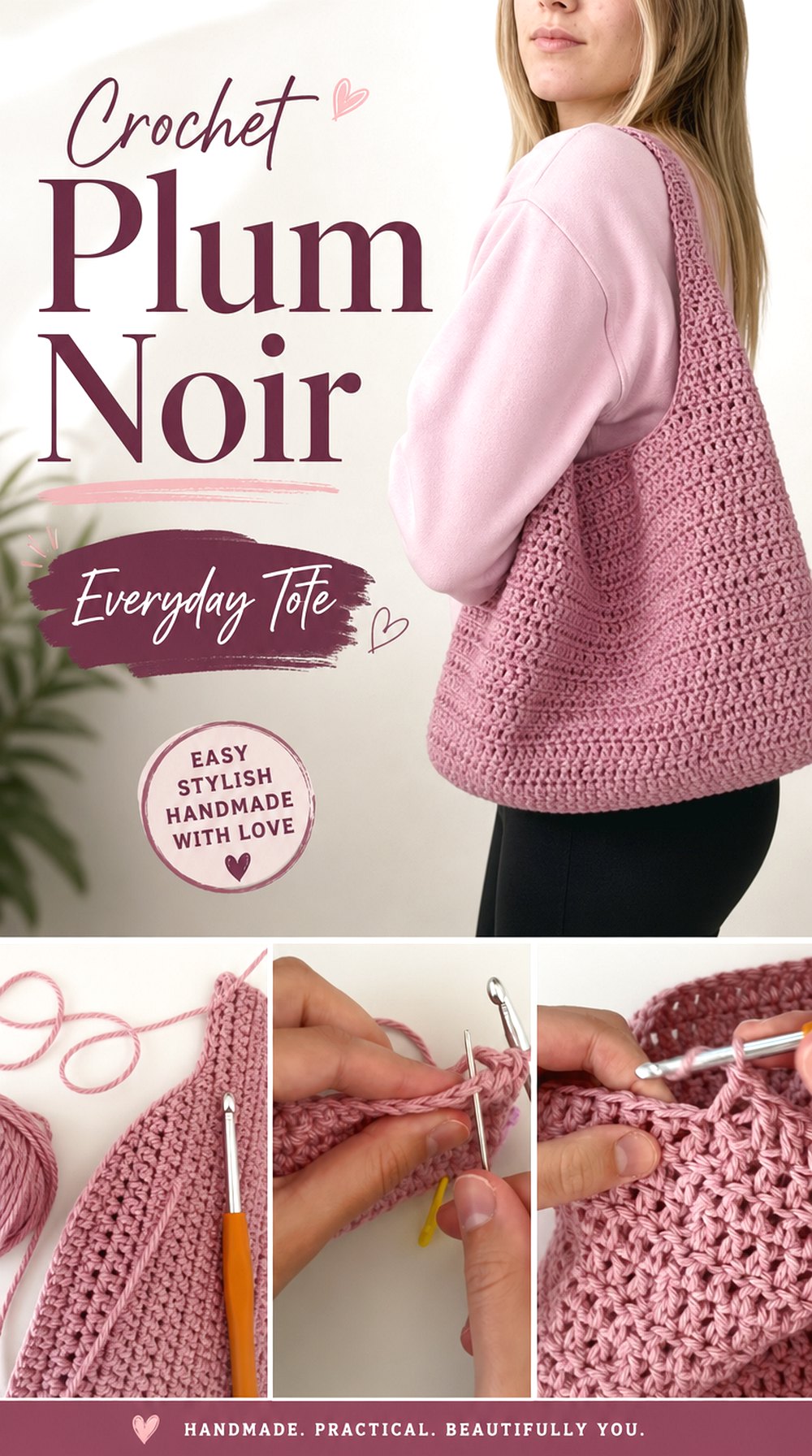
A straightforward tote lets the plum-noir color carry much of the visual impact without requiring an elaborate silhouette. The broad front and back panels create a generous uninterrupted area where a deep berry-black yarn can look rich rather than busy. This is the most versatile idea in the collection if you want a bag that can move between casual everyday use, yarn carrying, or light shopping.
Because the form is simple, proportion becomes more noticeable. Look at the relationship between body height, width, and handle length before choosing your adaptation. A narrow tall tote feels very different from a broad shoulder carryall even when both use the same stitch pattern.
Keep the Handle From Becoming the Weakest Visual Line
On a simple tote, the handles are prominent because there is no flap or decorative hardware to distract from them. Before finishing both sides, hold the bag at the intended carrying height and consider how much additional length normal use might create. A very elastic yarn can make an initially tidy shoulder handle look disproportionately long later.
If stretching is a concern, explore general reinforcement or lining options that suit your construction rather than changing the creator’s pattern sequence blindly.
A Plain Front Makes Finishing More Visible
Deep solid color simplifies the palette but also puts more attention on edges, joins, and symmetry. Check whether the top edge remains level and whether the two handles sit opposite each other before final finishing. Strong daylight helps when the yarn is nearly black.
If you want embellishment, one restrained element—a small tonal tassel, contrasting lining, or compatible piece of hardware—usually preserves the clean tote shape better than covering the entire surface with decoration.
Decide on Lining According to What You Carry
A lining is not automatically necessary for every crochet tote. It becomes more useful when the crochet fabric has openings large enough for small objects to escape, when you want to reduce direct abrasion on the stitches, or when extra interior organization matters.
Remember that lining can also alter the way a bag hangs. If the appeal of your plum-noir tote is a soft crochet drape, a very rigid lining may change that character considerably.
Creator: MirrymasCrafts
2. Crochet Plum Noir Drawstring Sling Bag
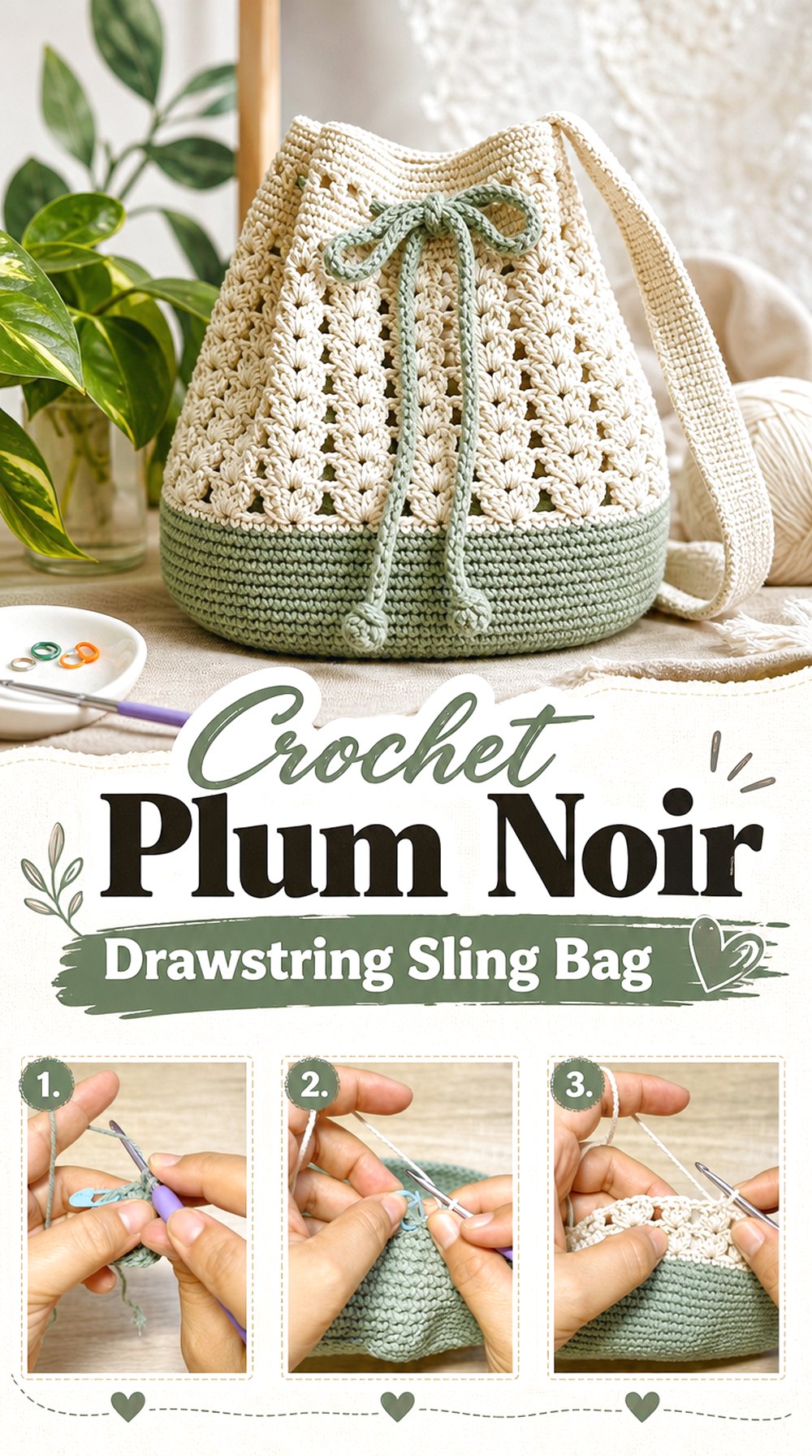
A drawstring bag changes both the function and the look of plum noir because the opening becomes part of the design. Instead of a rigid horizontal top, the fabric gathers inward and creates folds that catch light differently across dark yarn. That can give a solid plum shade more visual depth without requiring several colors.
This idea works well when you prefer a softer casual bag rather than a structured tote. Pay attention to the opening and cord system before adapting the tutorial. The bag should still open far enough for its intended contents, and the drawstring needs to move without pulling or distorting individual stitches around the channel.
The Gathered Crown Should Close Without Heavy Bunching
The top of a drawstring bag must move, so an extremely rigid fabric can work against the silhouette. Test a short section of your chosen plum yarn to see whether it folds comfortably. Conversely, very limp fabric may collapse more than you want once the bag is set down.
The target is not a universal level of stiffness. Compare the behavior of your fabric with the finished shape shown by the creator and decide which quality matters more to you.
Test the Cord Before Every End Is Hidden
Drawstrings create repeated friction against the opening. Before calling the bag finished, open and close it several times while empty and check that the cord moves smoothly without catching decorative fibers or pulling the channel unevenly.
Also examine the cord ends. If you add beads, knots, or other embellishments independently, keep their size and security appropriate for how the bag will actually be handled rather than treating them as purely decorative additions.
Let Softness Be Part of This Bag’s Identity
Trying to make every crochet bag rigid can erase what distinguishes a drawstring design. Compared with the structured tote, this silhouette can benefit from controlled softness because the gathering action naturally creates folds.
If you decide to line it, choose a lining approach that does not prevent the opening from closing properly. A stiff interior that refuses to gather with the crochet shell can produce a bulky top and reduce usable access.
Creator: August Craft & Crochet
3. Crochet Plum Noir Phone Crossbody Pouch
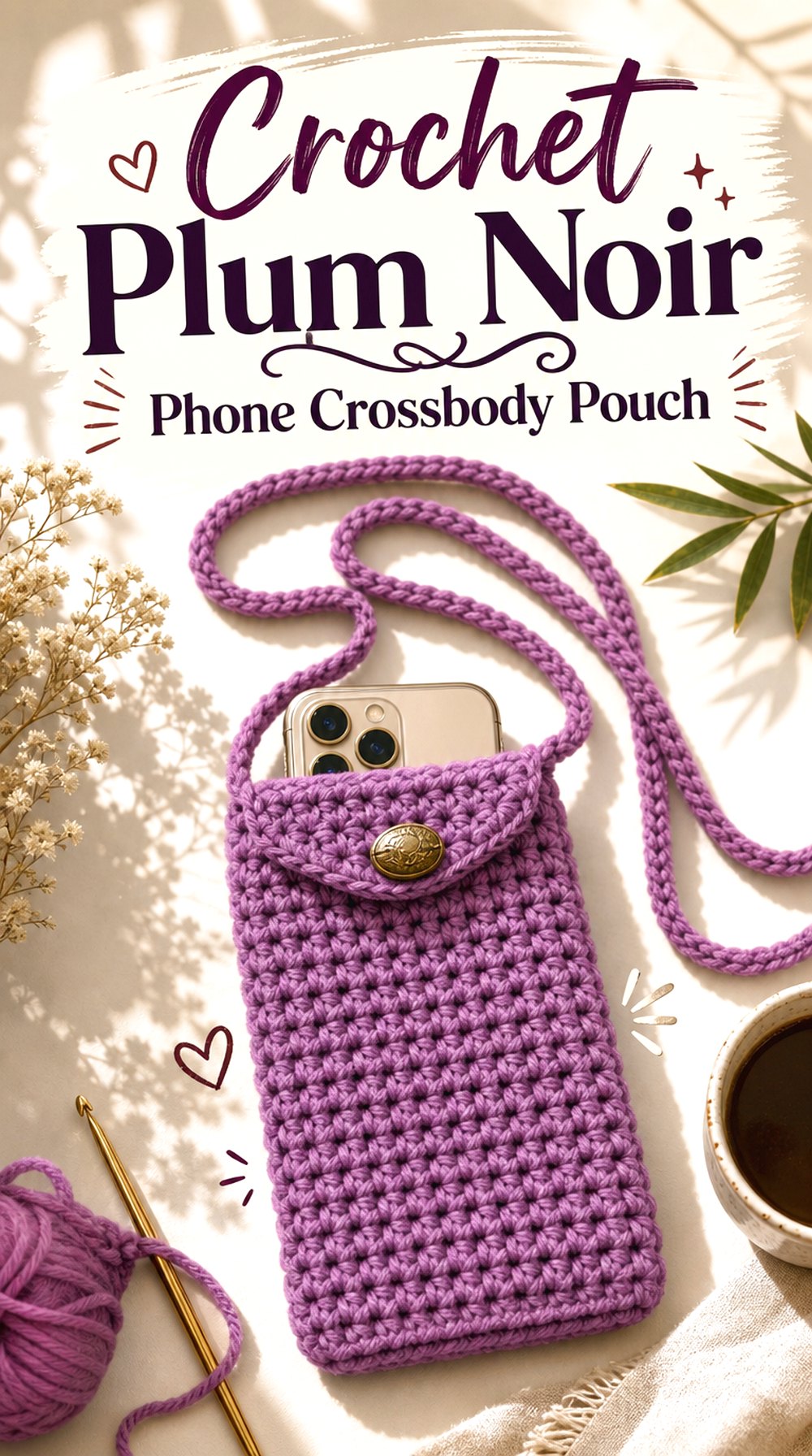
A phone pouch brings the plum-noir look down to a much smaller scale. Instead of relying on a broad bag body for impact, the design becomes a narrow vertical accessory where stitch scale and strap proportion matter more. It can be an appealing choice when you want only enough room for a phone and a limited number of small essentials rather than a full handbag.
The most important adaptation is size. Do not judge compatibility from the tutorial thumbnail or from another person’s phone. Measure the device you plan to carry, including its everyday case, and compare those dimensions with the finished internal space before making unnecessary decorative changes.
Measure the Actual Device With Its Case
Phone dimensions differ, and protective cases can add meaningful width and thickness. A pouch that fits a bare device may become awkward once the regular case is added.
Allow for the thickness of crochet fabric as well. The goal is an opening that permits comfortable insertion and removal without becoming so loose that the phone moves excessively. If you change yarn weight from the source project, recheck the finished scale rather than assuming the same proportions will result.
Keep a Small Bag’s Strap in Visual Balance
A long crossbody strap can weigh visually on a compact pouch, especially in one dark solid color. Before final attachment, temporarily position the strap and check where the pouch sits on the body.
Also consider stretch. A small bag may carry less than a tote, but a narrow crochet strap can still lengthen. If the tutorial’s strap construction is important to the finished proportion, preserve that relationship unless you have measured the alternative carefully.
Creator: Secret Yarnery
4. Crochet Plum Noir Envelope Purse
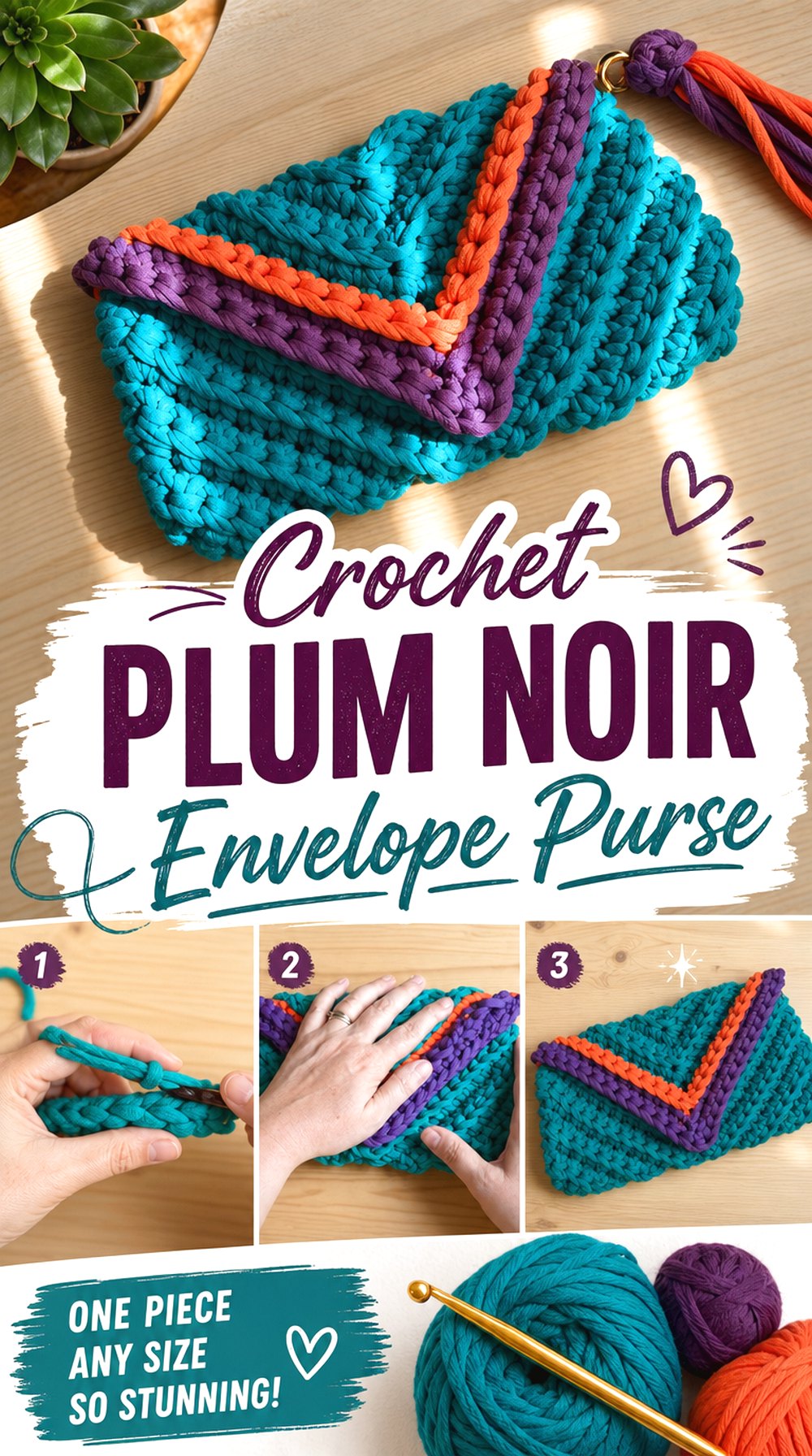
An envelope-style purse gives plum noir a sharper, more tailored look. Its defining feature is the fold-over front, which creates deliberate diagonal or geometric lines rather than the softly open top of a tote. In a dark plum shade, that clean flap can look understated until light catches the edges and stitch texture.
This style is worth considering when you want a smaller purse that feels more composed than a slouchy bag. The front closure deserves extra planning because it affects both appearance and access. Before adding independent hardware or changing the flap proportions, make sure the closed bag still aligns cleanly and leaves enough room for the contents you intend to carry.
Flap Alignment Becomes a Major Design Feature
A solid near-black plum color removes the distraction of stripes or color blocking, so a crooked flap edge becomes easier to notice. Lay the bag flat before adding the final closure and check whether the flap centers naturally over the front.
If the crochet fabric pulls to one side, investigate tension and edge shape before trying to disguise the problem with a button or embellishment. Hardware works best as a finishing feature rather than a correction for misalignment.
Closure Choice Changes the Entire Front Surface
An envelope purse can look minimalist or decorative depending on what happens at the flap point. If you adapt the design with a button, snap, magnetic component, or another closure, confirm that it is suitable for the crochet fabric and does not strain a small area repeatedly.
Plum noir pairs visually with many hardware finishes, but there is no need to add metal simply for contrast. A tonal closure can keep the silhouette quieter.
Watch for Excess Thickness at the Fold
Dense crochet plus a folded flap can create more bulk than the same yarn would in an open tote. Before substituting a substantially thicker yarn, fold your swatch over itself and assess whether the edge remains flexible enough for the intended shape.
If the fold feels rigid, changing the entire construction may be less successful than choosing a yarn whose finished fabric behaves more like the source project.
Creator: Gusiela
5. Crochet Plum Noir Daisy Granny Backpack
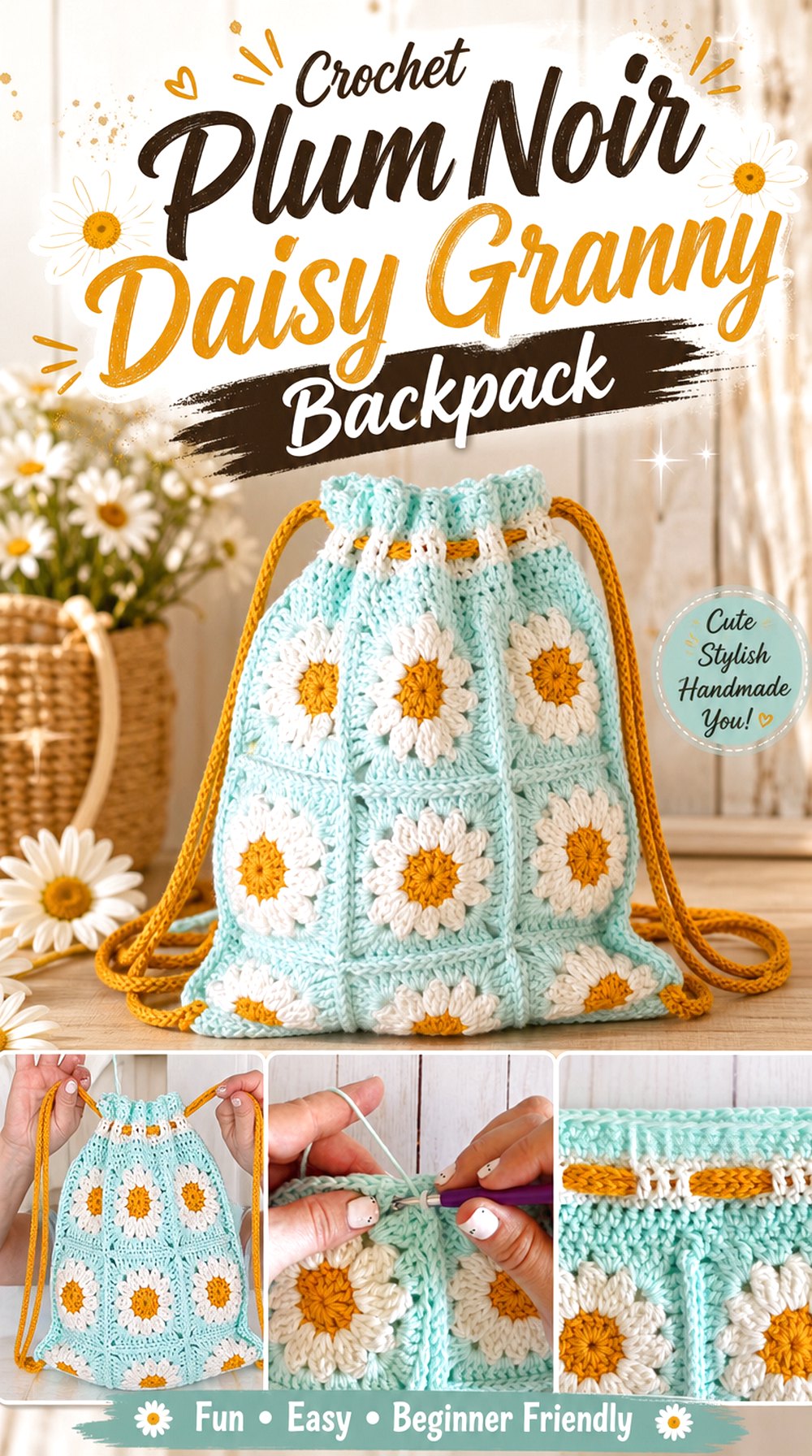
A granny-square backpack offers a very different way to use plum noir because the dark shade can become either the background of a motif or the framing color around lighter daisies. That contrast helps the floral layout remain visible while keeping the overall bag darker and more wearable than a bright multicolor backpack.
This design also introduces joined motifs and backpack straps, so layout matters before assembly. Decide where plum noir will dominate: in the square backgrounds, joining borders, straps, or several areas together. Repeating the darkest shade strategically can visually connect separate motifs without requiring every flower to use identical accent colors.
Give the Daisy Enough Contrast to Survive a Dark Background
A flower motif can disappear if its petals, center, and background all sit too close together in value. Place a few candidate yarn colors side by side in daylight before committing to the full set of squares.
You do not need a bright white flower. Cream, dusty rose, muted lilac, or another clearly distinguishable tone can work with plum noir as long as the motif remains readable from normal viewing distance.
Block the Motifs Before Trusting the Backpack Layout
Small size differences that seem harmless in separate granny squares can create uneven seams once multiple pieces meet. Compare the dimensions after the motifs have been prepared the way you intend to use them rather than joining the first finished square immediately.
This becomes particularly important in a dark border color, where repeated joining lines can make mismatched edges conspicuous. Correct motif compatibility before assembly instead of forcing unequal edges together.
Strap Junctions Deserve More Attention Than Decorative Motifs
A backpack concentrates repeated pulling where the straps connect to the bag. Examine those areas independently from the floral design and make sure your yarn substitution has not produced an unusually loose or fragile fabric.
If you add lining or reinforcement, think about how it interacts with the attachment areas rather than treating it as interior decoration. The daisies create the look; the strap junctions determine how the backpack behaves in use.
Creator: Erica Arndt
6. Crochet Plum Noir Frame-Clasp Clutch
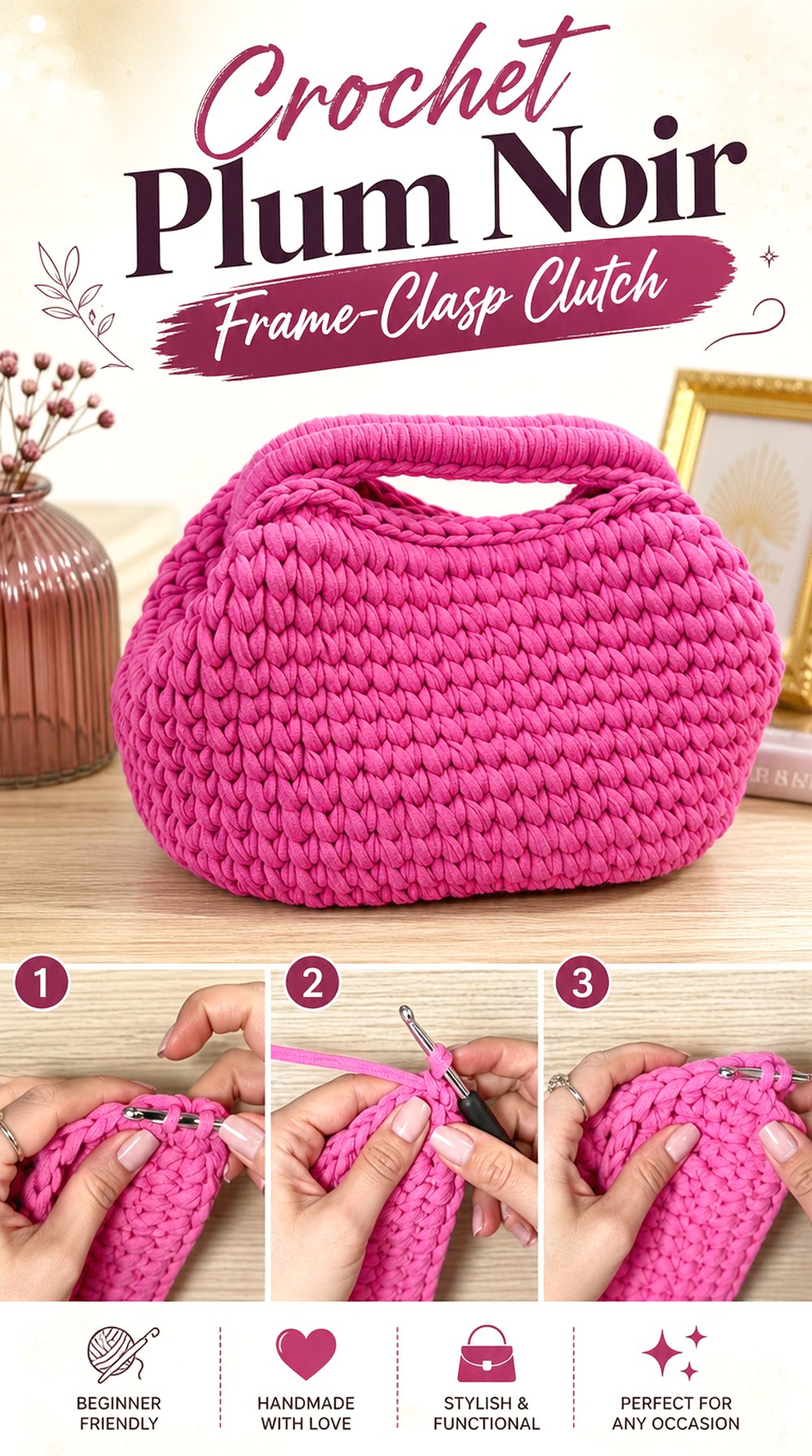
A frame-clasp clutch is one of the strongest choices for a polished plum-noir bag because the hardware creates a crisp boundary against the dark crochet. Unlike a drawstring or open tote, this project has a fixed closure component that directly influences the shape and opening.
That hardware means adaptation needs more discipline. Do not enlarge or shrink the crochet section casually while expecting the same frame to fit. If you already own a clasp, verify its dimensions and compatibility before beginning. The clutch format also keeps the silhouette compact, making it a good option when you want plum noir to read as an evening or occasion accessory rather than a large everyday carryall.
Treat the Metal Frame as a Fixed Design Constraint
A clasp frame is not as forgiving as a soft crochet edge. The crocheted opening has to work with the hardware, so yarn substitutions that significantly alter gauge can create a mismatch even when the body still looks attractive.
Before changing yarn thickness, compare the tutorial’s hardware information and construction with the components you plan to use. If the measurements do not correspond, choose compatible hardware or another tutorial instead of forcing the finished fabric into the frame.
Dark Plum Makes Hardware More Prominent
Plum noir can function almost like a neutral beside metal, allowing the frame to become a visible design line. Gold-toned, silver-toned, dark, or antique finishes will create different moods, but the useful decision is contrast rather than following a rigid color rule.
Set the yarn and hardware together under normal lighting before committing. A finish that looks distinct in a bright product photo may appear much subtler beside very dark yarn indoors.
Small Contents Make Interior Gaps More Important
A clutch often carries smaller objects than a market tote, so open crochet fabric deserves closer examination. Hold a swatch up to light and check the size of the gaps at normal tension.
If coins, jewelry, or other tiny items are likely to be carried, a suitable lining may make the interior more practical. It can also hide attachment work around hardware, provided it does not interfere with the clasp.
Creator: Bobilon
7. Crochet Plum Noir Crescent Shoulder Bag
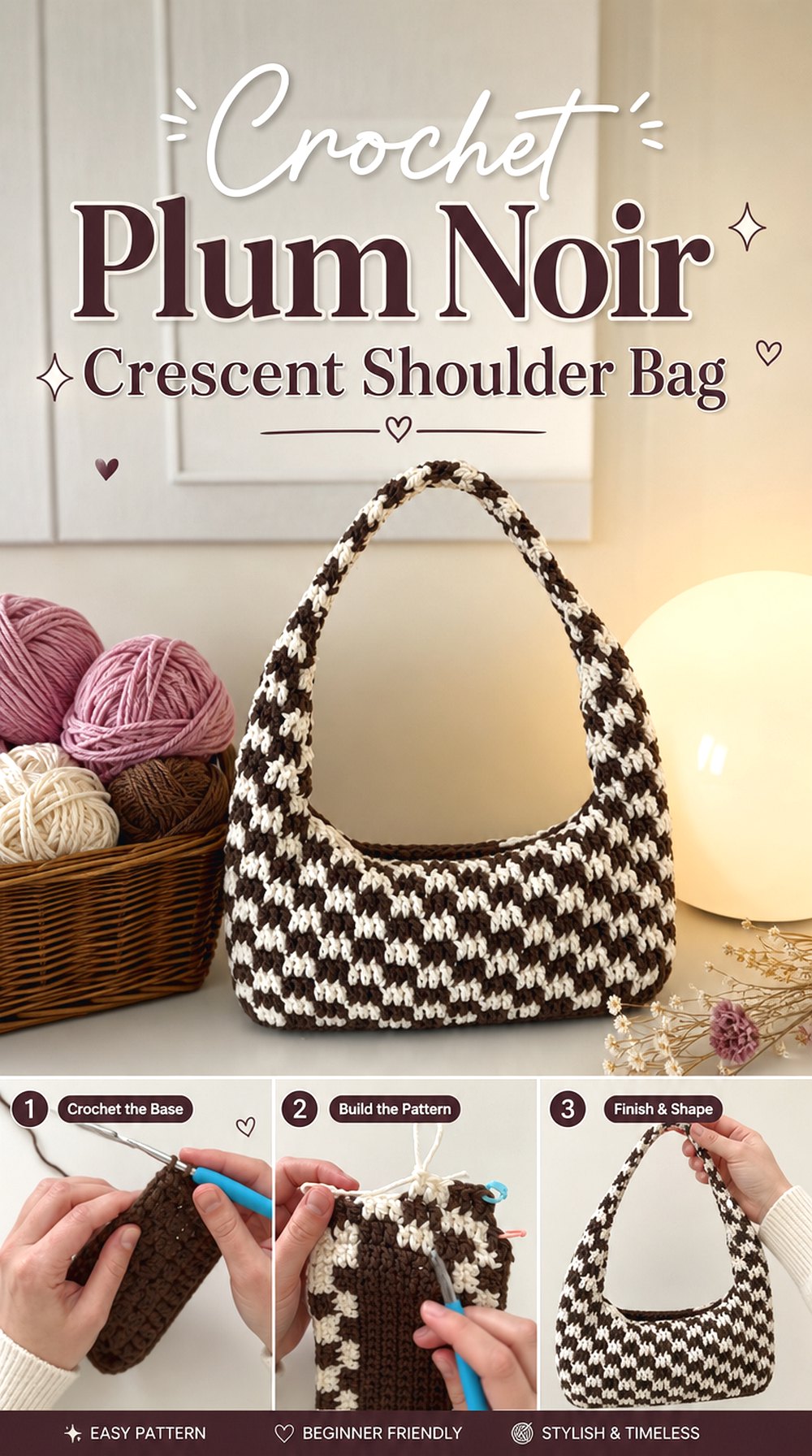
A crescent silhouette provides movement that a rectangular tote cannot. The body curves upward toward the strap, producing a soft moon-like profile that suits a dark plum palette especially well. The result can feel streamlined even when the crochet surface has visible texture.
Choose this idea when silhouette matters more than maximum rectangular storage. A crescent body distributes internal space differently, so it may not accommodate wide or rigid objects as efficiently as a tote. The payoff is a bag that follows the body’s line more naturally when carried. When adapting the color, preserve enough stitch visibility to make the curved shaping readable rather than letting very fuzzy dark yarn blur the outline.
The Curve Changes How Interior Space Is Used
A crescent bag should not be evaluated by width alone. The tapered portions near the upper sides may contribute to the overall silhouette without offering the same usable depth as the center.
Think about the objects you normally carry and whether they suit a curved compartment. If you regularly need a wide notebook or another rigid rectangular item, compare its dimensions with the actual finished interior rather than assuming a visually wide bag will accommodate it.
Strap Placement Controls How the Crescent Hangs
A curved bag can rotate or tilt differently depending on where its strap joins the body. Follow the creator’s construction carefully before experimenting with alternative straps or hardware.
If you want a longer carry option, temporarily test the proposed length before permanent attachment. The goal is to keep the crescent oriented the way you want rather than allowing the weight of the contents to pull the curved body into an unintended angle.
Protect the Silhouette From Overfilling
The recognizable curve is part of the design, so packing the bag until the crochet bulges can erase the feature that makes it different from the tote and hobo options.
If extra capacity is important, selecting a roomier construction from the beginning is usually more successful than expecting the crescent to behave like a rectangular carryall. Plum noir gives this option impact through shape, not sheer volume.
Creator: tinycrochet
8. Crochet Plum Noir Mesh Market Tote
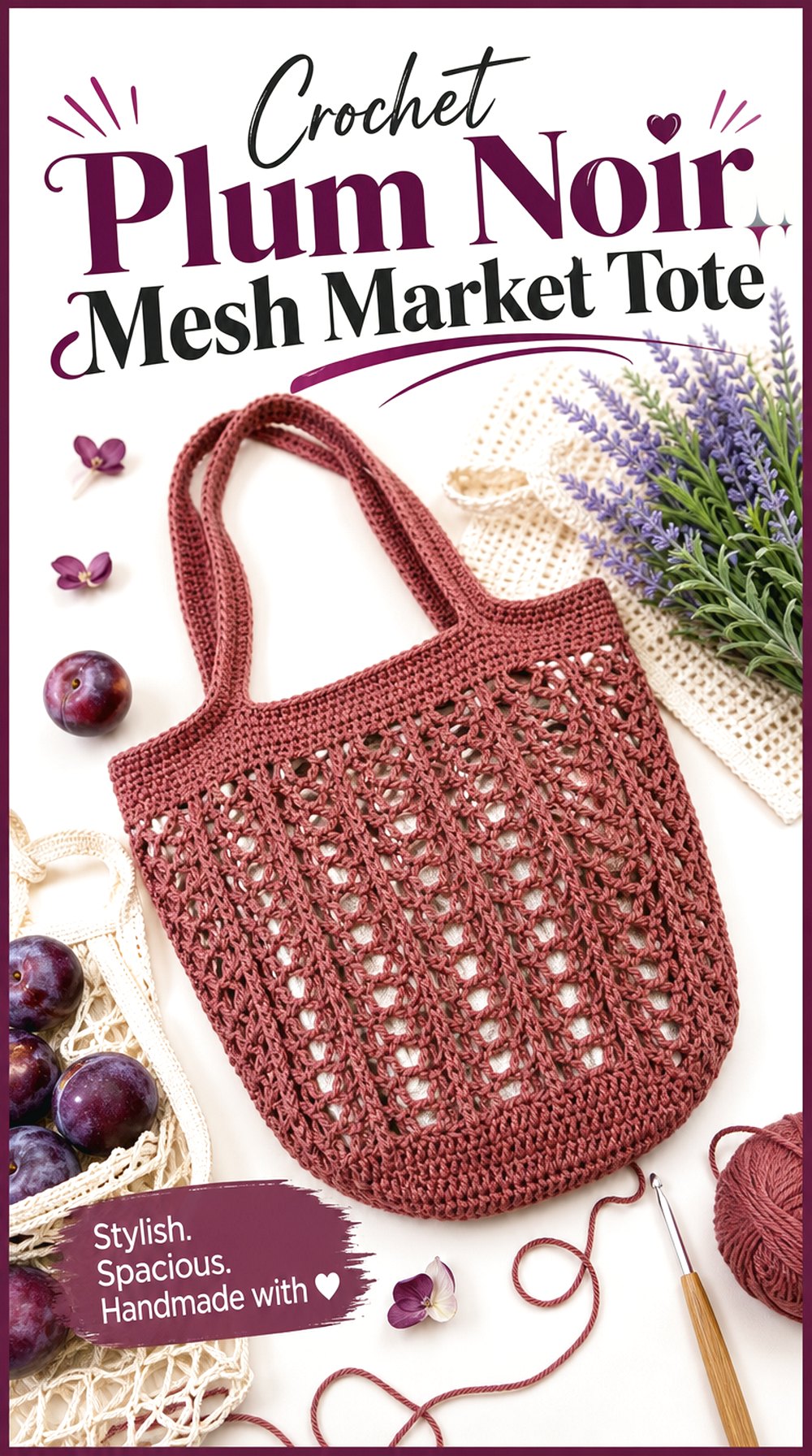
Openwork gives plum noir a completely different appearance. Instead of presenting the shade as one nearly solid dark surface, a mesh market tote allows the background or contents to show through, breaking the color into a lighter visual pattern. That makes it one of the better options if you like deep plum but worry that dense fabric will look too visually heavy.
The trade-off is stretch and containment. Mesh is designed to open, so the bag’s appearance can change considerably when filled. It is also less suitable for loose tiny items unless another containment solution is used. Choose this construction for flexible carrying rather than expecting it to behave like the structured clutch or tote.
Expect the Mesh to Look Different Once Loaded
Open crochet fabric can expand vertically and horizontally depending on the stitch structure, yarn, and contents. Judge the bag not only while it is lying flat but also in the shape it takes during use.
If maintaining a compact outline is your main priority, a dense tote may suit you better. If flexible capacity and a lighter visual effect matter more, the changing mesh shape can be part of the appeal rather than a defect.
Let the Denser Base Anchor the Dark Color
A market bag with an open body can look especially effective when the lower portion or edging provides a more substantial visual area. In plum noir, that denser section keeps the color recognizable even when the mesh is stretched over light-colored contents.
When substituting yarn, compare how the dense and open sections behave together. A dramatic difference in elasticity between them can affect how smoothly the transition sits.
Use Strong Light for Dark Openwork
Mesh creates many small intersections where missed spaces or misplaced stitches may be difficult to detect in deep plum. Work near good natural light or another bright source and periodically spread the fabric against a pale background.
That simple visual check is particularly helpful before continuing through a large repeat. Finding an irregular section early is much less frustrating than discovering it after the entire bag has expanded under use.
Creator: Briana K
9. Crochet Plum Noir Slouchy Hobo Bag
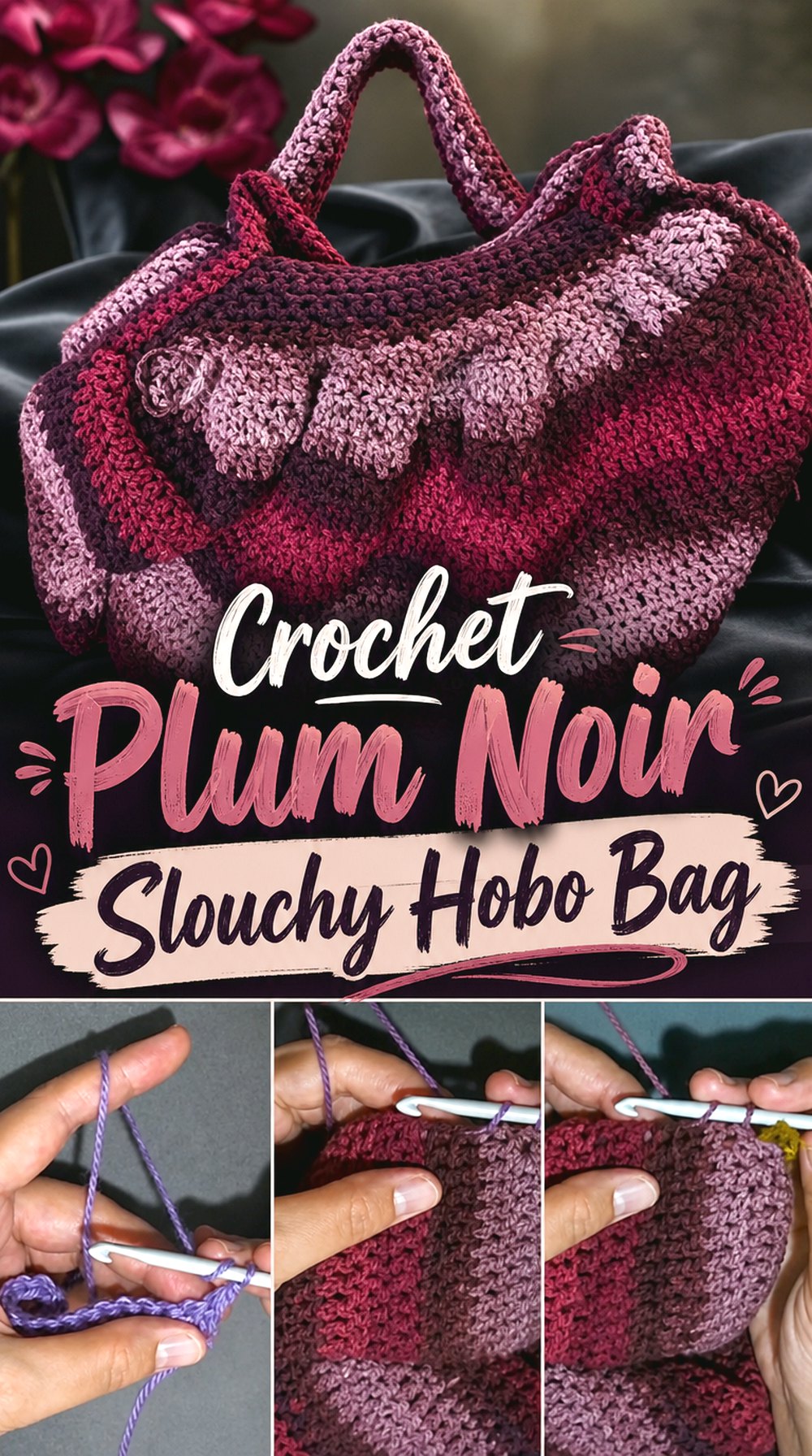
A hobo bag makes softness the defining feature. Its body is intended to hang with a relaxed outline rather than standing like a box, which gives plum noir a casual, slightly dramatic character. This is a strong alternative to the clutch if you like dark accessories but do not want them to feel formal.
The key decision is how much slouch you actually want. Yarn with very little body may let the bag collapse more than expected, while overly rigid fabric can fight the hobo silhouette. Look at the tutorial’s finished form and use that as your behavioral reference when selecting a plum substitute, not merely the yarn label or photographed skein.
Slouch Is Functional Shape, Not Poor Structure
The hobo should bend and settle, but that does not mean every part should stretch indiscriminately. Separate the desirable softness of the body from unwanted lengthening at the handle or attachment areas.
A useful swatch test is to hold the fabric from one edge and see how it hangs under its own weight. That tells you more about potential drape than evaluating the square only while it lies flat on a table.
The Handle Determines How Close the Bag Sits
A hobo silhouette changes considerably with handle length. A shorter carry keeps the soft body closer to the side, while a longer strap can let the bag swing and elongate visually.
Before adapting the creator’s handle, estimate where you actually want the top of the bag to sit. If your yarn is more elastic than the source material, account for that behavior rather than making the initial strap longer simply because you want shoulder room.
A Lining Can Quiet the Slouch
Lining may help contain small items, but it can also restrict the very movement that defines a hobo bag. If you want both functions, choose an interior construction that allows the outer crochet shell to retain some softness.
This is one reason the hobo and structured tote should not receive identical finishing decisions. The correct amount of support depends on the silhouette you are trying to preserve.
Creator: Meladora’s Creations for Crochet
10. Crochet Plum Noir Drawstring Bucket Bag
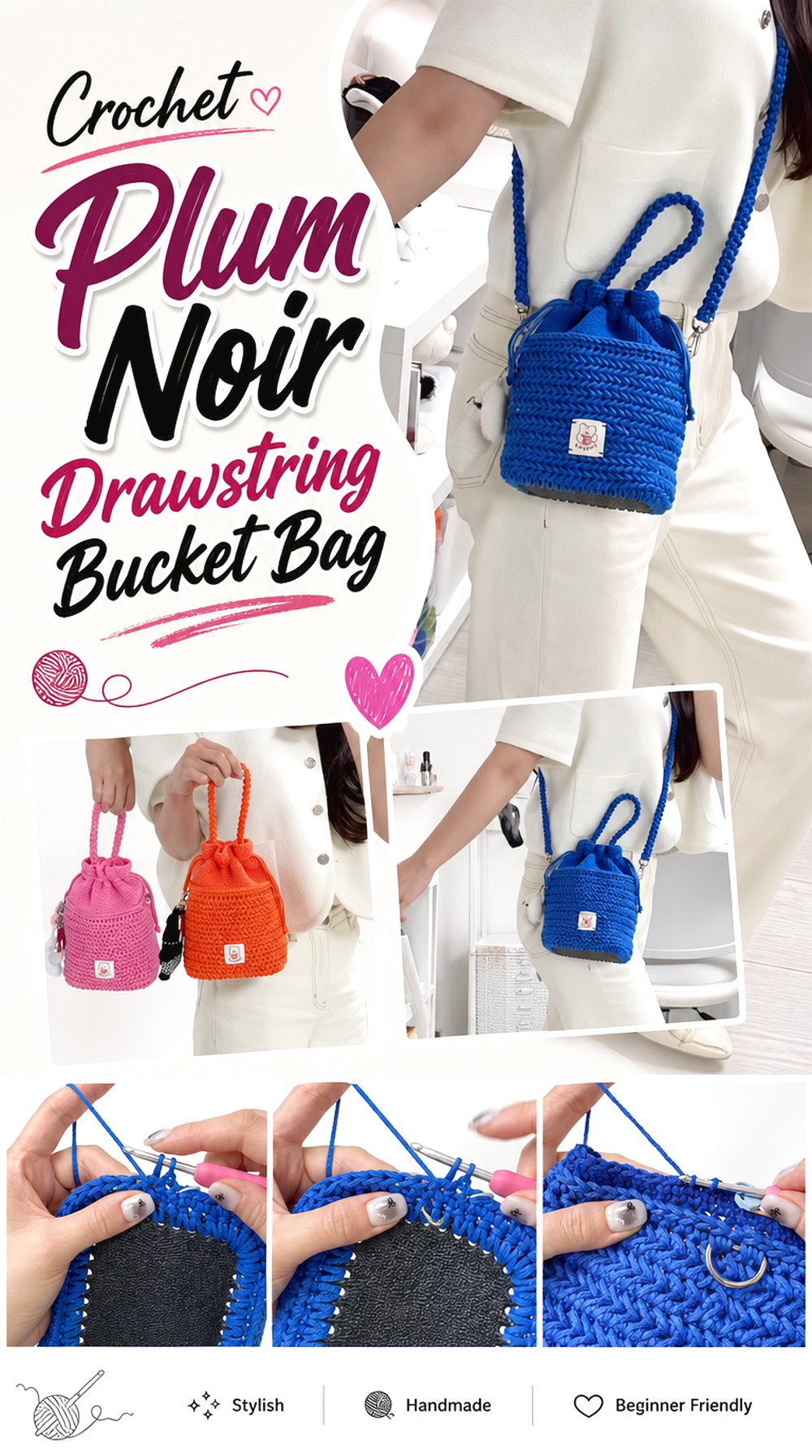
A bucket bag combines a defined base with a taller body and gathered opening, creating more vertical structure than the softer drawstring sling idea. Plum noir works particularly well here because the dark cylindrical surface can make texture and hardware stand out while the closing cord interrupts the top edge.
Before adapting this construction, focus on the base and opening rather than treating it as another shoulder bag. The bottom determines how the body rises, while the drawstring determines access. If you want to change strap hardware, rings, or decorative pieces, verify attachment compatibility first. Hardware has to work physically with the crocheted fabric; matching the plum color aesthetically is only the second decision.
The Base Determines Whether the Bucket Stands or Slumps
A bucket form relies heavily on the relationship between base and walls. If your substituted yarn produces much softer fabric than the tutorial, the sides may fold inward more readily even if the circumference seems correct.
Make a sample and assess firmness before completing a large body. If you specifically want a softer interpretation, that can be intentional, but it should be a design choice rather than an unexpected result of choosing yarn solely for color.
The Drawstring Should Gather the Entire Opening Evenly
Unlike a flap closure, a drawstring changes the perimeter of the bag every time it is used. Check that the top edge gathers without one section remaining noticeably looser or tighter.
When using very dark yarn, watch the channel carefully because individual openings can be hard to distinguish. A pale work surface underneath the bag can make the path easier to inspect before the cord is permanently finished.
Hardware Needs Both Visual and Physical Compatibility
Plum noir can make rings and metal strap fittings stand out, but the important question is whether the components fit the attachment points securely. Check ring diameter, strap thickness, and the way the crochet contacts the hardware.
Do not assume a fashionable chain or clasp can replace the tutorial’s component without affecting balance. A heavier or differently positioned strap can change the way a tall bucket body hangs.
Creator: 숩니공방 soobni’s knitting
11. Crochet Plum Noir Three-Square Granny Shoulder Bag
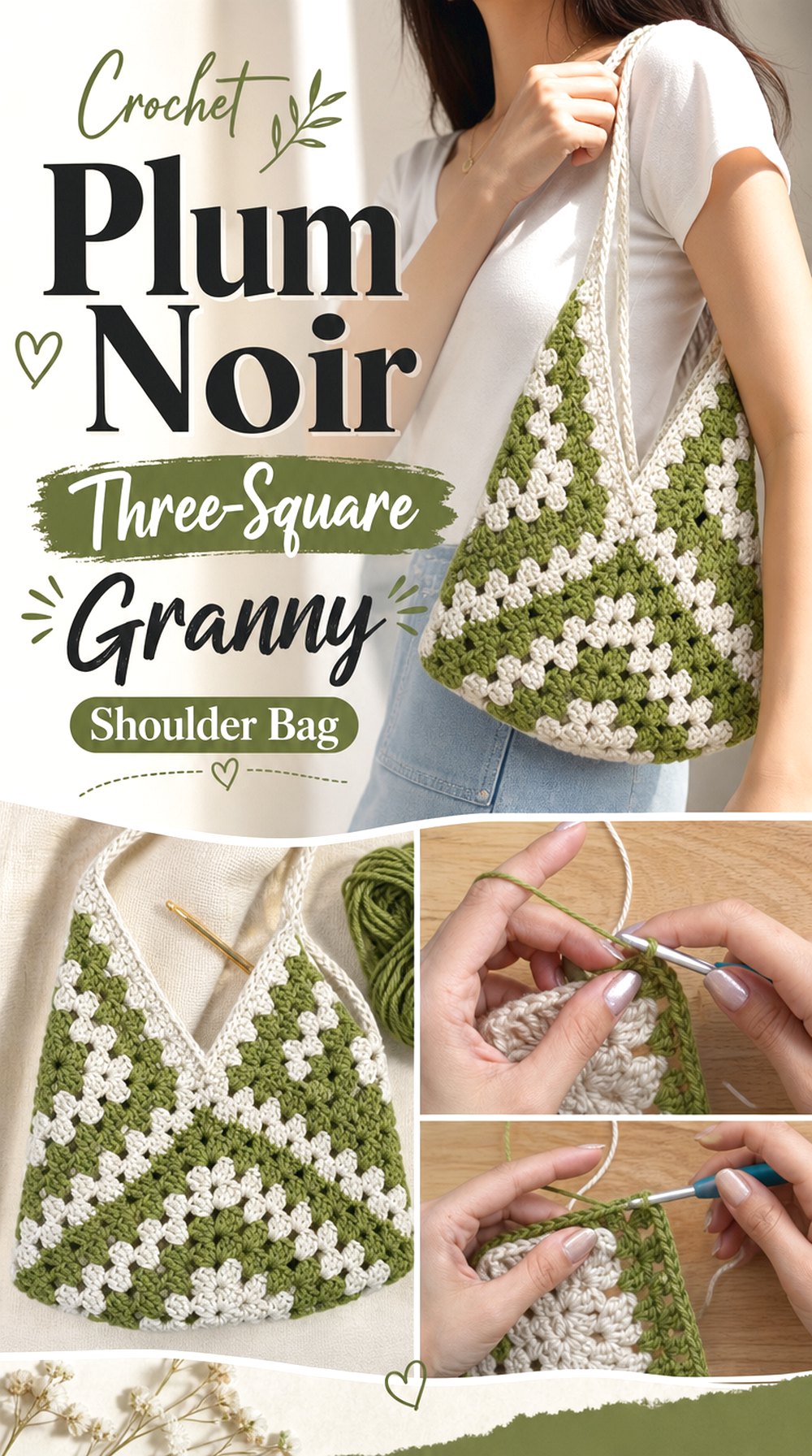
Three large granny squares can turn plum noir into a framing device rather than one continuous dark surface. You could keep the squares entirely tonal for a subtle geometric bag, or let plum form the outer rounds around lighter centers. Because there are relatively few large motifs, each square has more visual influence than one square in a large patchwork project.
The appeal here is assembly as much as stitch pattern. The joined pieces create the final bag shape, so motif size must be consistent. This is a useful option if you enjoy granny-square crochet but want a shoulder bag that looks more deliberately shaped than a conventional multi-square tote.
Three Large Motifs Leave Little Room to Hide Mismatch
When the entire bag depends on only a few squares, one noticeably smaller motif can pull seams or skew the opening. Compare the prepared dimensions before assembly rather than assuming equal round counts guarantee equal size.
Differences can come from tension, yarn changes, or the way individual motifs settle. Correct the compatibility problem first; forcing uneven edges together can transfer the distortion into the finished bag.
Use Plum Noir to Frame the Motif Layout
If you want the bag to read as plum noir without losing granny-square definition, repeat the deep color strategically in the outer rounds, joins, or strap. That creates a visual frame while still allowing interior motif details to show.
For a more understated version, use several closely related plum values rather than sharp contrast. Test them together in daylight, since very dark purples that look different in the skein can become nearly indistinguishable once crocheted.
The Strap Can Unify Three Separate Panels
A shoulder strap is visually important on a bag built from distinct motifs because it can either continue the granny-square palette or provide one solid line around the design.
Before choosing contrast, look at the assembled body as a whole. If the motifs are already complex, a plum-noir strap may calm the composition. If the bag is completely tonal, subtle texture in the strap can provide enough distinction without adding another color.
Original Tutorial and Creator Credit
Creator: VivCrochets
12. Crochet Plum Noir Round Bag
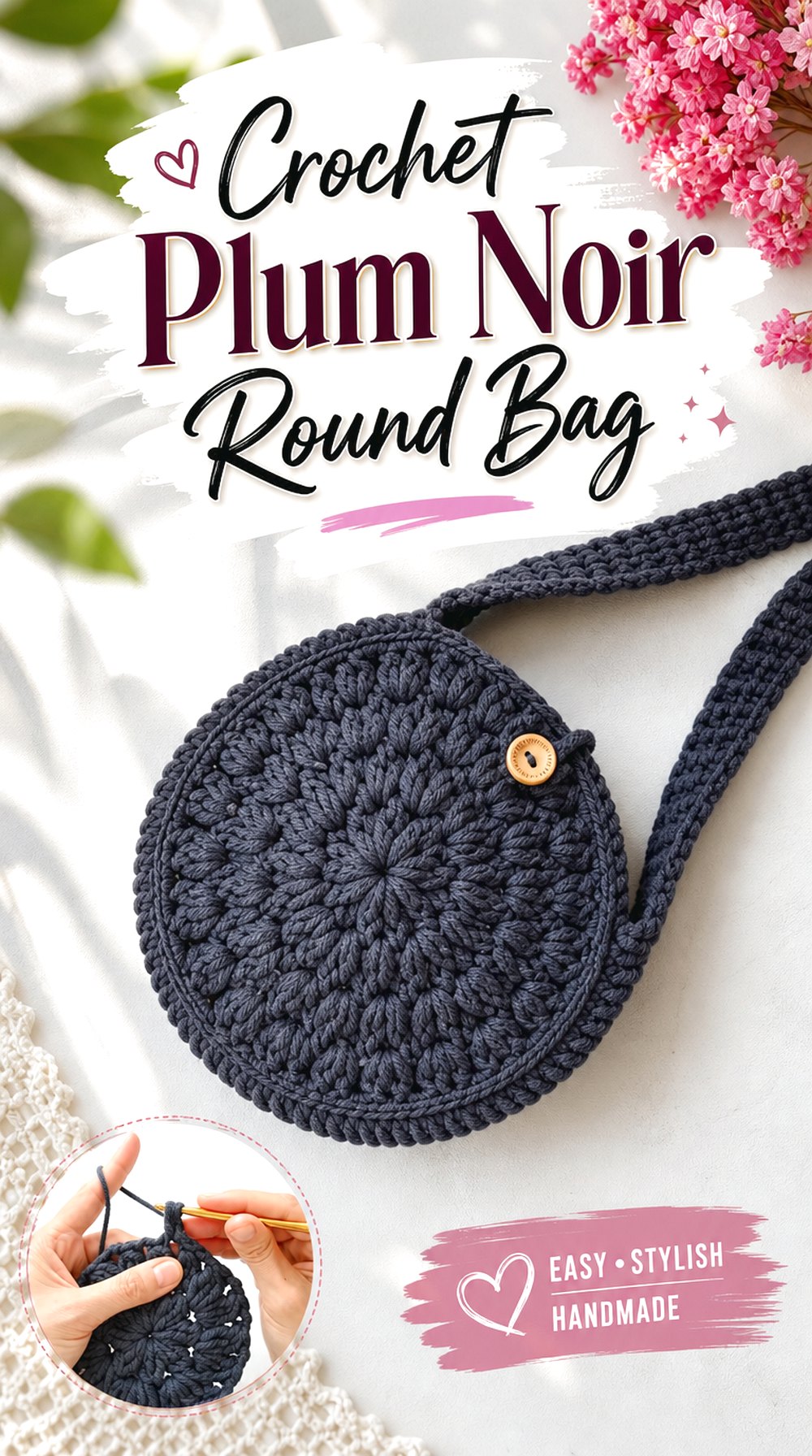
A circular bag finishes the collection with a strong geometric shape. Plum noir makes that geometry especially noticeable because there are few competing visual elements; the eye follows the expanding circular stitch lines and the outer edge. This can work as a compact statement bag when a rectangle, bucket, or crescent feels too conventional.
Round construction also introduces a useful checkpoint: symmetry. Increases, tension changes, or uneven finishing can become apparent around a dark solid circle. Lay the panels or body flat periodically and examine the outline rather than waiting until the strap is attached. If you want decorative contrast, consider how it affects the center-to-edge balance instead of scattering details randomly across the circle.
Check the Circle From a Distance, Not Only Stitch by Stitch
Crochet can look correct at hook level while the overall round begins to wave, cup, or lose symmetry. Periodically place the work on a flat surface and look at the whole outline.
This matters even more in plum noir because the strong uninterrupted color emphasizes silhouette. If the shape is drifting, resolve the tension or construction issue before adding sides, joining another panel, or attaching finishing elements.
Side Depth Separates a Bag From a Flat Motif
A circular front is only one part of the finished form. Consider how much depth the construction provides and whether that matches what you plan to carry.
A very flat round purse may suit a phone, card holder, and a few slim essentials, while a deeper circular bag behaves differently. Use the creator’s finished result as your reference rather than estimating capacity from the diameter of the front alone.
Center the Carrying Elements Against the Geometry
Round shapes make off-center straps, tabs, or closures easy to notice. Before permanent attachment, mark or visually compare opposite points and check how the bag hangs.
This is also the moment to confirm that any added closure aligns with the carrying position. A beautiful dark circular panel loses much of its impact if the finished bag consistently rotates because the attachment points are unbalanced.
Creator: Chompu Handicrafts
Which Plum Noir Bag Construction Fits Your Goal?
| Idea | Main Shape | Opening Style | Fabric Behavior to Consider | Choose It When |
|---|---|---|---|---|
| Everyday Tote | Rectangular | Open | Moderate structure | You want a versatile full-size carryall |
| Drawstring Sling | Soft rounded body | Gathered | Flexible | You prefer a casual closing system |
| Phone Crossbody | Narrow compact pouch | Small top opening | Size-sensitive | You carry only a phone and small essentials |
| Envelope Purse | Geometric folded front | Flap | Moderate structure | You want a sharper small-purse look |
| Daisy Granny Backpack | Joined motif body | Backpack opening | Motif seams and strap stress | You want floral motifs plus hands-free carrying |
| Frame-Clasp Clutch | Compact structured body | Rigid clasp | Hardware-dependent | You want a polished small accessory |
| Crescent Shoulder Bag | Curved | Top opening | Soft shaping | The silhouette matters more than rectangular capacity |
| Mesh Market Tote | Expandable openwork | Open | High expansion | You want flexible market-style carrying |
| Slouchy Hobo | Relaxed curved body | Open or shaped top | Deliberate drape | You prefer softness over crisp structure |
| Drawstring Bucket | Tall rounded body | Gathered | Base plus flexible top | You want a defined base with a closable opening |
| Three-Square Granny Bag | Joined geometric motifs | Open | Motif consistency | You want granny squares to form the construction |
| Round Bag | Circular | Compact top | Symmetry-sensitive | You want a strong geometric statement |
Conclusion
For the most versatile plum-noir bag, the everyday tote keeps construction straightforward and lets the color dominate. Choose the hobo or crescent version when drape and silhouette matter more than rigid storage, or the frame clutch and envelope purse when you want a smaller, cleaner shape. The mesh market tote breaks up the darkness with openwork, while the granny backpack and three-square shoulder bag use motifs to keep a deep palette visually active.
Whichever construction you choose, match the yarn to the required fabric behavior before matching the exact shade. Use the original tutorials near each idea for the creators’ exact construction details, materials, assembly, and finishing.
Frequently Asked Questions
Is plum noir a standardized crochet yarn color?
No single universal yarn specification is implied here. In this article, plum noir describes a very dark plum-to-wine-purple color direction that may appear almost black under some lighting. Yarn companies can use completely different shade names for similar colors.
Instead of searching only for the words “plum noir,” compare actual yarn photographs or samples labeled deep plum, aubergine, blackberry, wine, dark berry, or similar shades, then confirm that the yarn itself is suitable for your chosen bag tutorial.
Can I use a tutorial even if the creator’s bag is not plum noir?
Yes. The tutorial can provide the bag construction while the dark-plum palette is your color adaptation. The important part is not to substitute yarn based on color alone.
Compare the new yarn with the tutorial’s yarn requirements, especially weight, fabric density, and behavior. A beautiful plum yarn that produces much larger motifs, softer walls, or a thicker opening may change the finished bag enough that straps, frames, or closures no longer work as intended.
Which of these designs shows dark plum stitch texture most clearly?
A design with pronounced texture, granny motifs, openwork, or strong geometric shaping generally gives the eye more information than a very subtle stitch worked in nearly black yarn. The mesh market bag, granny constructions, and round bag are useful directions if visible stitch architecture is a priority.
For any option, make a swatch and view it under the lighting where the bag will usually be seen. Dark yarn can look dramatically different in daylight and indoors.
When is lining worth adding to a plum noir crochet bag?
Consider lining when the crochet openings could allow small contents to escape, when you want interior pockets, or when reducing direct abrasion on the crochet fabric matters. A clutch or loose openwork bag may benefit more from this than a dense phone pouch.
Do not assume lining automatically improves every design. A stiff lining can reduce the intentional drape of a hobo, interfere with a drawstring opening, or change how a crescent body settles.
Why can crochet bag straps become longer after use?
Crocheted straps can stretch because the stitches and yarn deform under repeated load. How much they move depends on fiber, yarn construction, stitch structure, strap width, length, and what the bag carries.
Before finalizing a long strap, examine how your chosen fabric behaves under gentle tension. If excessive stretching would compromise the bag, consider a compatible reinforcement concept or a different strap construction rather than assuming the initial crocheted length will remain unchanged.
How can I work with very dark plum yarn without missing stitches?
Strong, directional light and a contrasting work surface help considerably. Place pale fabric, paper, or another light background behind the crochet when you need to inspect openings, joins, or mesh repeats. Periodically spread the work out instead of checking only the stitches immediately beside the hook.
This is especially useful around granny-square joins, drawstring channels, circular increases, and strap attachment areas, where a small error can affect the finished shape even if it is difficult to see in dark yarn.