Ghost granny squares can take surprisingly different forms. Some tutorials build the ghost directly into a complete square, while others create a separate flat ghost that can be attached to a compatible granny-square background. That difference affects thickness, joining, motif placement, and how easily the design can be adapted for blankets, clothing, bags, or seasonal decor.
The 15 ideas below cover both routes, plus several finished-project adaptations that show how ghost motifs can move beyond a single block. Not every linked tutorial is a complete ghost-square pattern; where a source teaches an appliqué, coaster, sweater, blanket, or bag instead, that distinction is clearly noted. Use the comparisons and checkpoints to decide what construction makes sense before committing to a larger Halloween project.
Quick List
- Crochet Integrated Ghost Granny Square Blanket Block
- Crochet High-Contrast Ghost Granny Square Pillow Front
- Crochet Mixed-Motif Ghost Granny Square Tote Panel
- Crochet Witch-Hat Ghost Granny Square Banner Tile
- Crochet Standalone Ghost Granny Square Wall Tile
- Crochet Solid-Background Ghost Granny Square Table Mat
- Crochet Appliqué Ghost Granny Square Blanket Block
- Crochet Raised Ghost Motif Granny Square Cushion Panel
- Crochet Mini Ghost Patch Granny Square Garland Tile
- Crochet Two-Expression Ghost Granny Square Pair
- Crochet Corner-Accent Ghost Granny Square Cardigan Block
- Crochet Oversized Ghost Center Granny Square Wall Hanging
- Crochet Haunted Ghost Granny Square Blanket Accent
- Crochet Ghost Accent Granny Square Sweater
- Crochet Ghost-Face Granny Square Bag Panel
Choose Between an Integrated Ghost and an Appliqué
An integrated ghost granny square keeps the character and background within one planned block. That can be useful when you want repeated squares to have similar thickness and a clean joining edge. A separate appliqué gives you more freedom to decide where the ghost sits, how many ghosts appear, and whether some background squares remain plain.
The trade-off is extra layering. A sewn-on ghost adds thickness and can pull or ripple a softer square if the two pieces have noticeably different dimensions or fabric density. Before attaching an appliqué permanently, block or smooth the background square, position the motif without stretching either piece, and check how the edges behave. For a large blanket or wearable, make one finished sample block first rather than assuming every ghost-and-square combination will behave the same way.
Match Blocked Square Size Before Planning the Layout
The finished dimensions of a granny square matter more than the number of rounds it appears to contain. Two designs worked with different yarn, hooks, stitch densities, or border structures can finish at noticeably different sizes even when they look similar on screen.
Measure the square after it has been finished in the same way you intend to treat the full project. If you are combining ghost blocks with pumpkins, bats, skulls, or plain filler squares, compare their blocked dimensions before joining. As a simple planning example, four squares that each measure 5 inches across would span about 20 inches before joining seams, borders, and any intended garment ease are considered. If one motif is smaller, adjusting a surrounding border may be more practical than forcing mismatched edges together.
Think About Motif Weight, Faces, and Orientation
Ghosts have a recognizable upright direction, so layout needs more attention than it does with a fully reversible geometric granny square. Mark the top edge of finished blocks before arranging a blanket or garment; otherwise, a rotated square can become obvious only after several joins are complete.
Raised appliqués can also make one section heavier or stiffer than surrounding plain blocks. Spread dimensional motifs through a larger project rather than automatically concentrating them in one area. For faces, embroidered details keep the surface flatter than separate attached components. If a finished item could be handled by a small child or pet, assess all loose embellishments, attachments, cords, and intended use rather than assuming a decorative Halloween project is suitable simply because it is made from yarn.
1. Crochet Integrated Ghost Granny Square Blanket Block
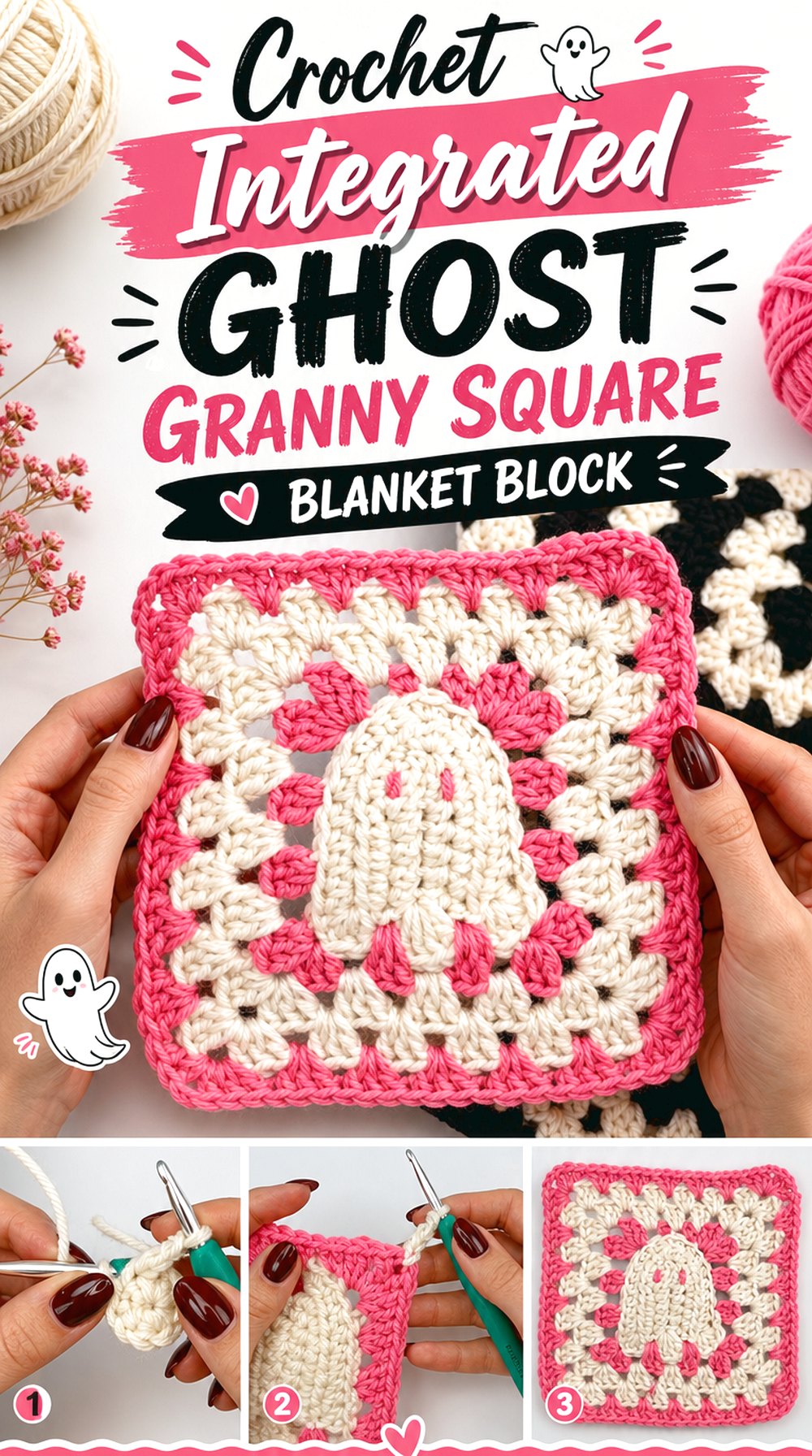
This idea keeps the ghost and its surrounding square together as one primary motif, making it a useful starting point for a repeated Halloween blanket. An integrated construction is especially appealing when you want the ghost to feel like part of the block instead of an embellishment added afterward. It can also make it easier to compare multiple completed squares before joining because you are evaluating the whole unit at once.
For a blanket, resist deciding the full square count before you know the actual blocked dimensions. A single finished sample tells you far more about scale, visual density, and how much contrast the ghost needs against its background.
Repetition Makes Small Differences More Noticeable
A slightly uneven edge may be inconspicuous on one decorative square but much easier to see when several copies are joined in rows. Compare opposite sides and corner placement on your sample block before producing a large batch. If the motif pulls the center in one direction, correct the underlying tension issue early rather than expecting joining or blocking to disguise a repeated distortion.
Leave Enough Contrast Around the Silhouette
A white or pale ghost needs sufficient separation from the surrounding square to remain recognizable from across a room. Contrast does not have to mean black or orange, but the ghost and immediate background should not merge visually. Before committing to yarn for an entire blanket, photograph one sample from a few feet away. A combination that looks clear close up may lose the ghost outline at normal viewing distance.
Decide Whether Every Block Needs a Ghost
Repeating the same character in every square creates a strong graphic surface but can also make a blanket visually busy. Plain granny squares or simpler Halloween motifs can provide pauses between ghost blocks. If you mix designs, compare finished dimensions and edge structure first; visual variety helps only when the blocks can join without one motif being stretched to match another.
Creator: ElyseCrochets 💌
2. Crochet High-Contrast Ghost Granny Square Pillow Front
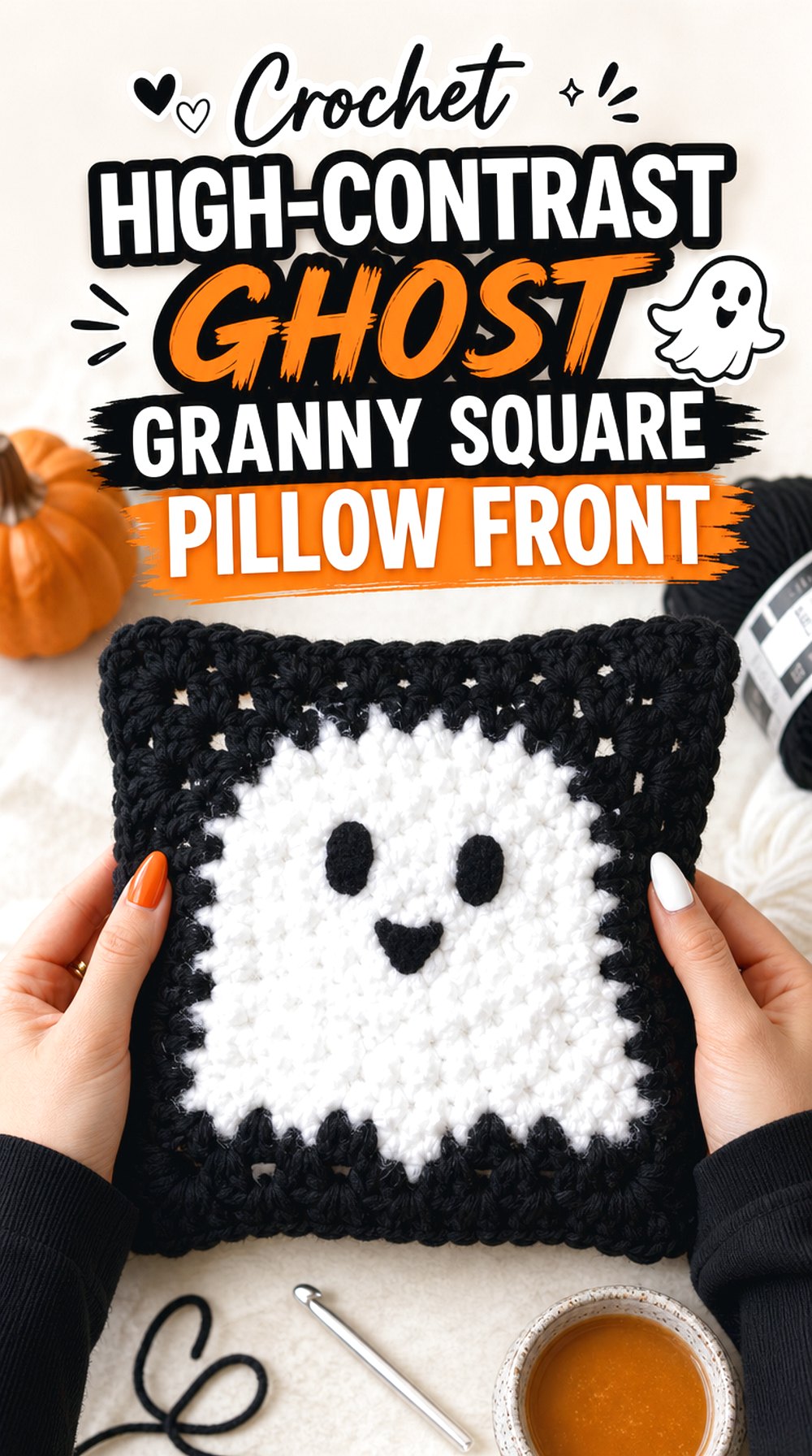
A single ghost square can become the visual center of a pillow without requiring the repetition of a full blanket. This approach works well when you want the character to read clearly from a distance: enlarge the overall panel through compatible surrounding squares, additional framing, or a layout of ghost and filler blocks rather than assuming one tutorial square will match a particular cushion insert.
A pillow also changes how you evaluate texture. The front is viewed almost straight on, so the ghost outline, facial details, and border alignment become prominent. Plan the completed front panel first, then decide how the crochet relates to the pillow construction you intend to use.
Center the Design Before Adding the Outer Layout
If one ghost is the focal point, decide whether it should sit exactly in the middle or slightly offset as part of a larger patchwork arrangement. Build your layout around the measured block rather than estimating from photographs. Once several surrounding squares are joined, correcting an off-center centerpiece can require much more reworking than moving blocks during the planning stage.
A Pillow Front Can Handle Stronger Contrast
Garments often benefit from colors that coordinate across many panels, but a decorative cushion can support a more concentrated focal point. Use the ghost, background, and outer framing as three separate visual decisions. If the face disappears against a dark or variegated section, simplifying the surrounding colors may improve readability more effectively than adding further embellishment.
Check the Panel Against the Actual Insert
Do not assume a stated or estimated square dimension will automatically suit the pillow you already own. Complete and measure the front arrangement before final construction. Crochet fabric can also change after finishing, so compare the panel with the real insert or intended finished cushion dimensions rather than relying only on nominal product sizing.
Creator: Krystal Everdeen
3. Crochet Mixed-Motif Ghost Granny Square Tote Panel
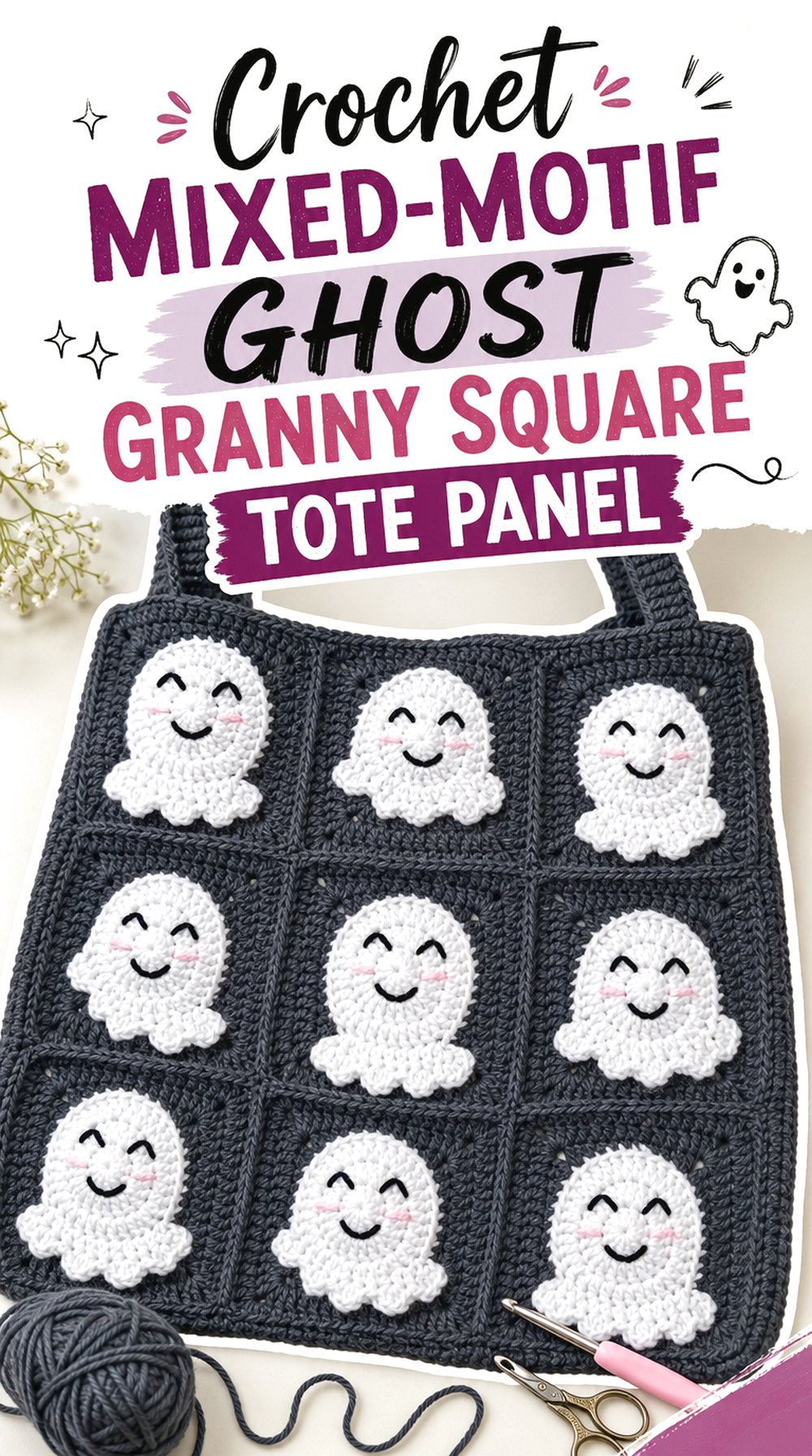
Instead of covering a bag with identical blocks, use a ghost square as one character within a mixed Halloween panel. A tote could combine ghosts with geometric filler blocks or other seasonal motifs, allowing the ghost to remain recognizable without dominating every part of the bag. This also gives you more control over where character squares appear once the bag is carried.
The key planning issue is not simply color coordination. Bag panels experience pulling and movement, so blocks with substantially different stretch or open space can behave differently under load. Make the ghost square and at least one intended companion block before settling on the panel arrangement.
Keep the Ghost Away From Awkward Fold Lines
A motif that looks balanced when the bag is lying flat can become distorted if its face lands directly on a side fold, lower corner, or heavily curved portion of the finished bag. Sketch the panel boundaries first and position character squares where most of the block can remain visible. Save plainer squares for areas that will wrap around edges or sit near seams.
Compare Fabric Openness Across the Panel
If the ghost square has a denser center than the surrounding blocks, the finished tote may stretch unevenly. Hold sample squares by one edge and compare how readily they elongate under their own weight. You do not need identical stitch patterns, but a dramatic difference in flexibility is worth noticing before joining an entire panel.
Treat Straps as Their Own Structural Decision
A decorative granny-square body and a carrying strap perform different jobs. Do not assume the yarn or stitch structure that looks attractive in the ghost panel will automatically make the strap behave the way you want. Check the bag tutorial or your chosen construction reference for its strap approach and consider reinforcement or lining only when appropriate for your intended use.
Creator: Handmade with love
4. Crochet Witch-Hat Ghost Granny Square Banner Tile
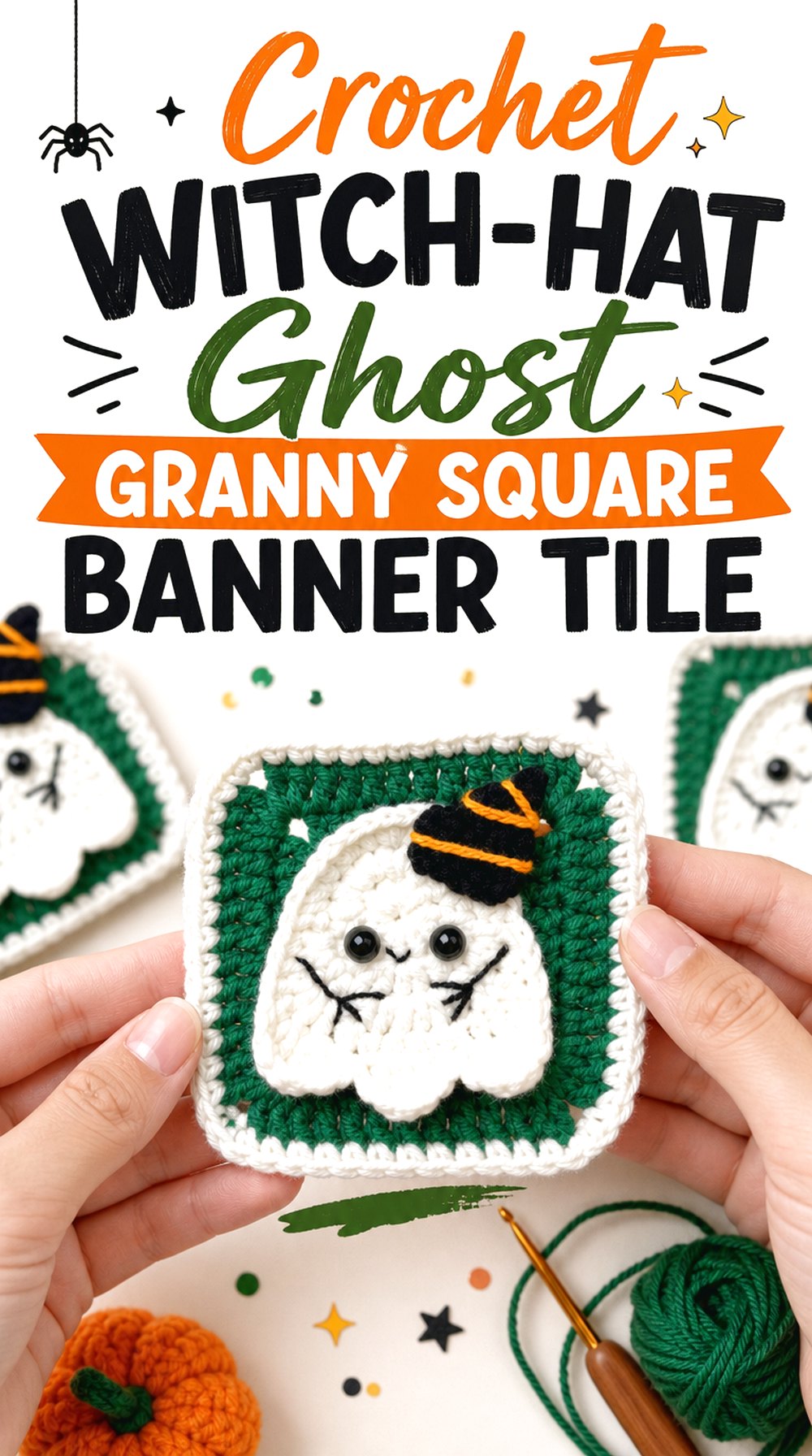
A character square with an extra Halloween detail such as a hat works particularly well when each block is meant to be viewed separately. Rather than joining dozens of identical squares into a blanket, turn several finished tiles into a small banner or vertical seasonal display. The extra character detail then has room to remain visible instead of competing with a dense field of repeated motifs.
The Loopara source is a full ghost granny-square tutorial, so the square itself can be the starting point. For a banner adaptation, the main editorial decision is how the blocks hang: orient every ghost consistently and decide whether the joining cord or connectors should visually disappear or become part of the display.
Preserve Space Around the Character Details
A hat, face, and surrounding border all need enough separation to read as distinct features. If you add an additional decorative edging for a banner, check that it does not crowd the motif. Lay the square at the distance from which the finished decoration will normally be seen. Small details that are clear in your hands may become much less obvious on a wall.
Hanging Changes Which Edge Matters Most
A blanket square is supported by neighboring blocks on several sides, while a banner tile may hang mainly from its top edge. Check that the square does not noticeably sag or rotate when suspended. If it does, consider whether a different connection point, lighter decoration, or more stable finished edge would make the display sit more evenly.
Mix Character Tiles With Plain Separators
A banner does not need a ghost in every position. Alternating detailed ghost blocks with simpler squares can make the character motifs easier to see and reduce the amount of detailed work. Keep any separator squares close to the same finished dimensions so the hanging rhythm remains consistent rather than stepping up and down along the display.
Creator: Loopara
5. Crochet Standalone Ghost Granny Square Wall Tile
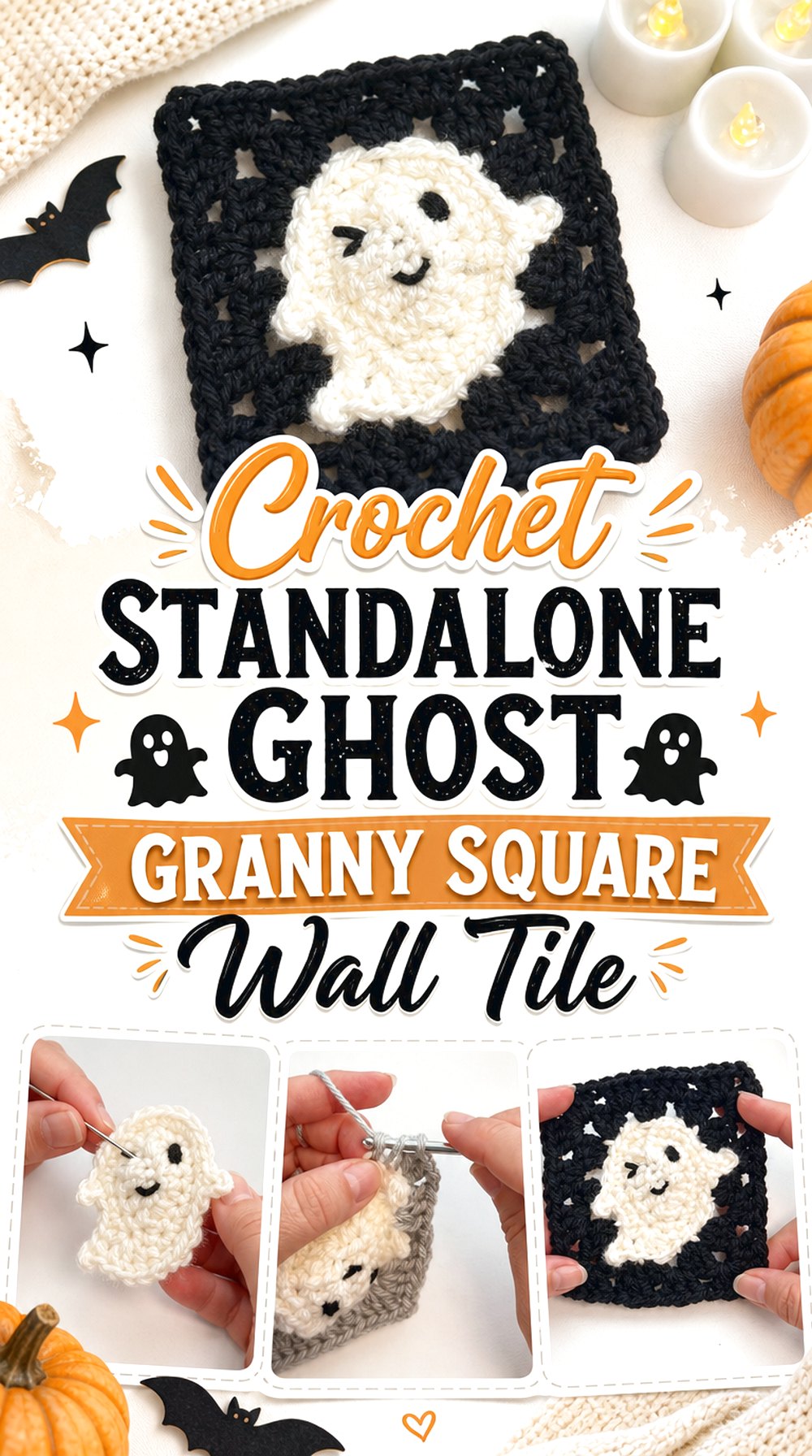
Not every granny square needs to become part of a larger project. A single ghost block can work as a small seasonal wall tile, particularly if you enjoy detailed motifs but do not want to commit to a blanket or garment. This route also lets you focus on finishing one square neatly because all four edges remain visible.
The Knotting Perch tutorial provides the ghost granny square itself; the wall-tile use is an adaptation rather than a separate construction supplied by the creator. Before choosing how to display it, finish the square and assess its natural drape. A soft block may hang differently from one made with a firmer fiber or denser border.
Square Corners Matter More When Nothing Hides Them
Joining can conceal minor differences between neighboring blocks, but a standalone tile exposes the entire outline. Check whether the corners lie in the same plane and whether opposite edges appear balanced. If the piece needs blocking, shape it according to the fiber and care guidance appropriate to the yarn rather than forcing the motif into dimensions it does not naturally support.
Keep the Display Method Visually Quiet
The ghost should remain the focal point, so oversized clips, loops, or mounting hardware can distract from a relatively small crochet tile. Decide how the square will hang before adding extra trim. If you plan to suspend it from only two points, test whether the top edge bows between them; a different mounting approach may preserve the square silhouette better.
One Tile Makes a Useful Color Test
A standalone block is also a low-commitment way to evaluate a Halloween palette. Look at the finished square in the room where it will be displayed, not only under your work light. If the ghost and background lose contrast in normal room lighting, revise the palette before making coordinated pieces such as a garland or pillow.
Creator: The Knotting Perch
6. Crochet Solid-Background Ghost Granny Square Table Mat
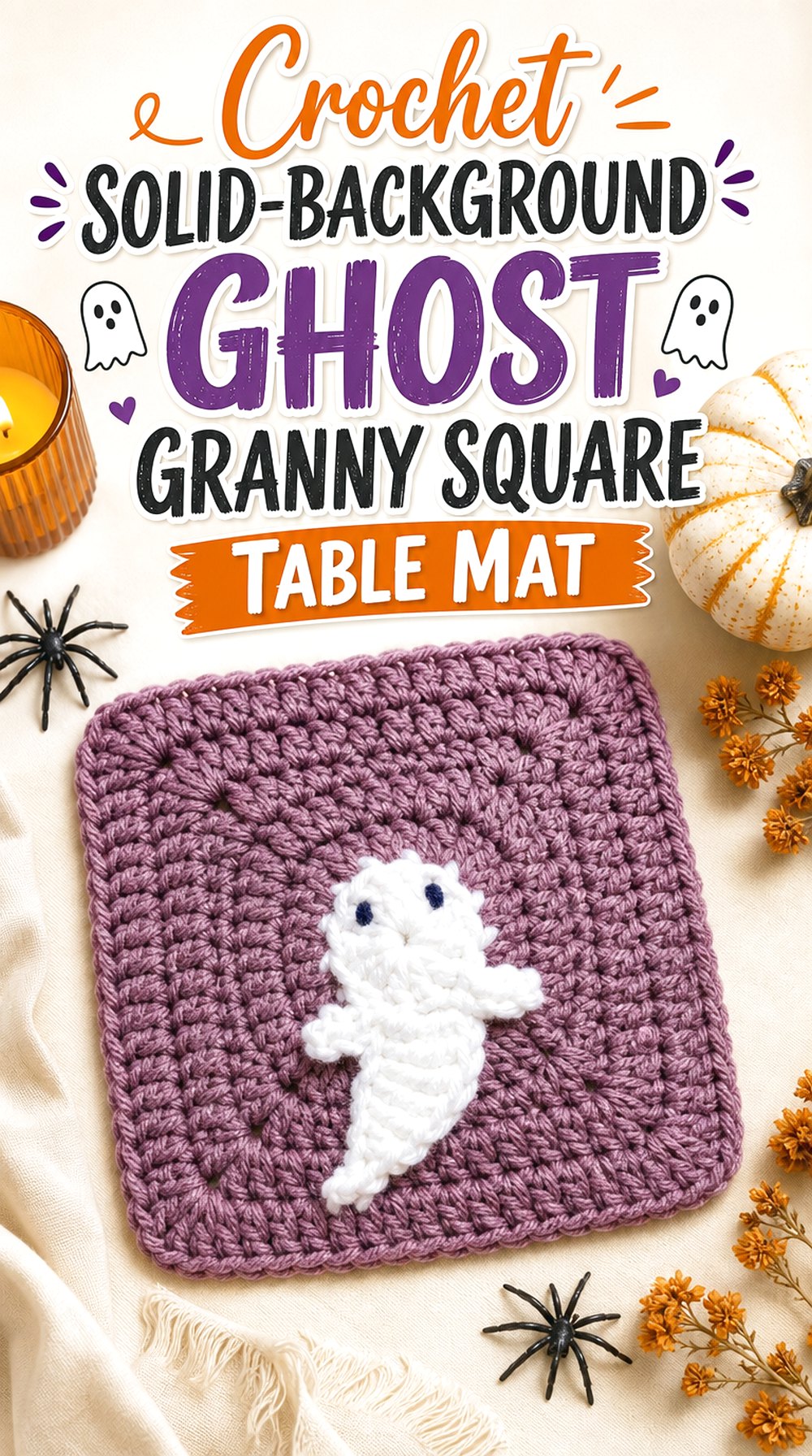
A solid-background ghost block has a different visual and functional character from a more open classic granny square. Raji’s Craft Hobby specifically builds a ghost appliqué into a solid granny square, creating a surface with fewer visible gaps than a traditional open cluster layout.
That makes the concept worth considering for decorative table pieces where a continuous background is part of the look. Treat “table mat” here as decorative placement rather than an assumption of heat protection: crochet fiber appearance alone does not establish heat resistance. If you intend to place hot cookware or dishes on any crocheted item, verify the material and its appropriate use independently.
The Denser Background Changes the Visual Weight
A solid square gives the ghost a broad field of color rather than a visibly open framework. That can make each block feel more substantial, especially when several are placed side by side. If you combine solid ghost squares with traditional granny squares, preview the full arrangement first because the change in negative space may be more noticeable than a change in color.
Decorative Table Use Needs Flat Finishing
Raised edges, poorly secured yarn tails, or a ghost detail that does not lie consistently can make a table piece look uneven. Place the completed block on a flat surface and view it from the side as well as from above. Correct any finishing issue that causes rocking or curling before deciding whether to repeat the design in a larger runner-style arrangement.
Separate Decoration From Heat-Use Claims
A Halloween square can look appropriate beneath a mug or dish without being automatically suitable for high heat. Yarn composition, construction, and the temperature of the object all matter. Use the square decoratively unless you have reliable material information for the intended application, and follow the yarn manufacturer’s care instructions when washing or reshaping it.
Creator: Raji’s Craft Hobby
7. Crochet Appliqué Ghost Granny Square Blanket Block
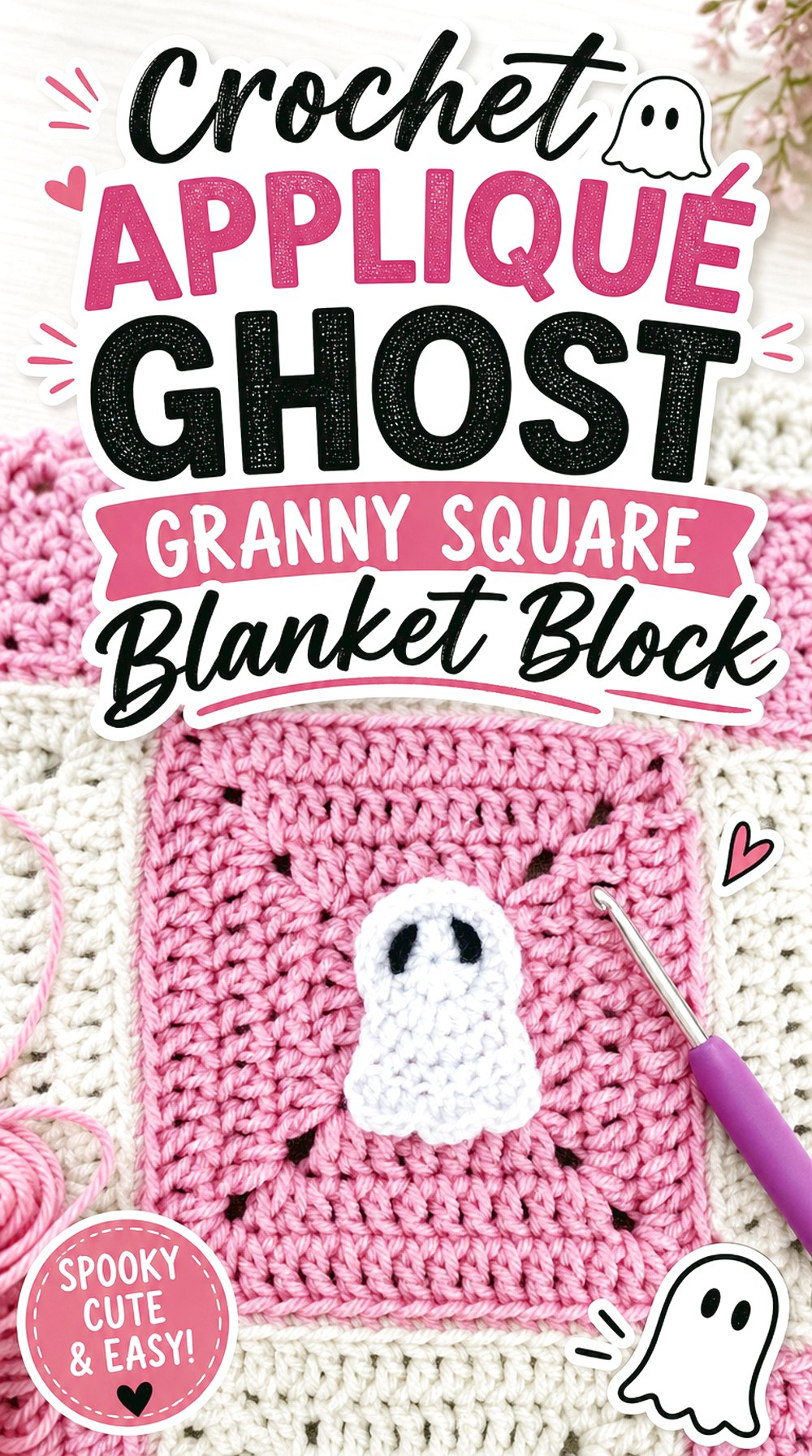
This route separates the ghost from the background entirely. Maria’s Blue Crayon teaches a ghost appliqué intended for a Halloween-themed granny-square blanket, making it a particularly relevant source when you want to place character motifs on otherwise compatible background blocks.
The advantage is layout flexibility. You can crochet background squares first, audition different ghost positions, and decide which blocks receive motifs. The challenge is that the appliqué and square must cooperate as two layers. Compare their size, stretch, and orientation before sewing anything down. A ghost that nearly fills the square may behave very differently from one surrounded by a generous background margin.
Attach Only After the Layout Looks Balanced
Place several background blocks together and position the loose appliqués on top before stitching them down. This lets you compare spacing across the whole blanket rather than judging each square in isolation. You may decide that every second or third block needs a ghost, or that a few deliberately empty areas make the character motifs stand out more clearly.
Leave Joining Areas Free to Move
A raised motif placed very close to a joining edge can complicate seaming and make the boundary feel bulky. Keep the ghost comfortably inside the usable face of the square unless your chosen project specifically calls for edge overlap. When testing placement, include the amount of edge that will be consumed or visually altered by your eventual joining method.
Check the Appliqué After the Square Is Finished
A motif may fit an unblocked square but look crowded after the background has been finished to its final dimensions—or the opposite may happen. Prepare both pieces consistently before making placement decisions. This small checkpoint is especially valuable when the ghost tutorial and the granny-square base come from different designers or use different yarn assumptions.
Creator: Maria’s Blue Crayon
8. Crochet Raised Ghost Motif Granny Square Cushion Panel
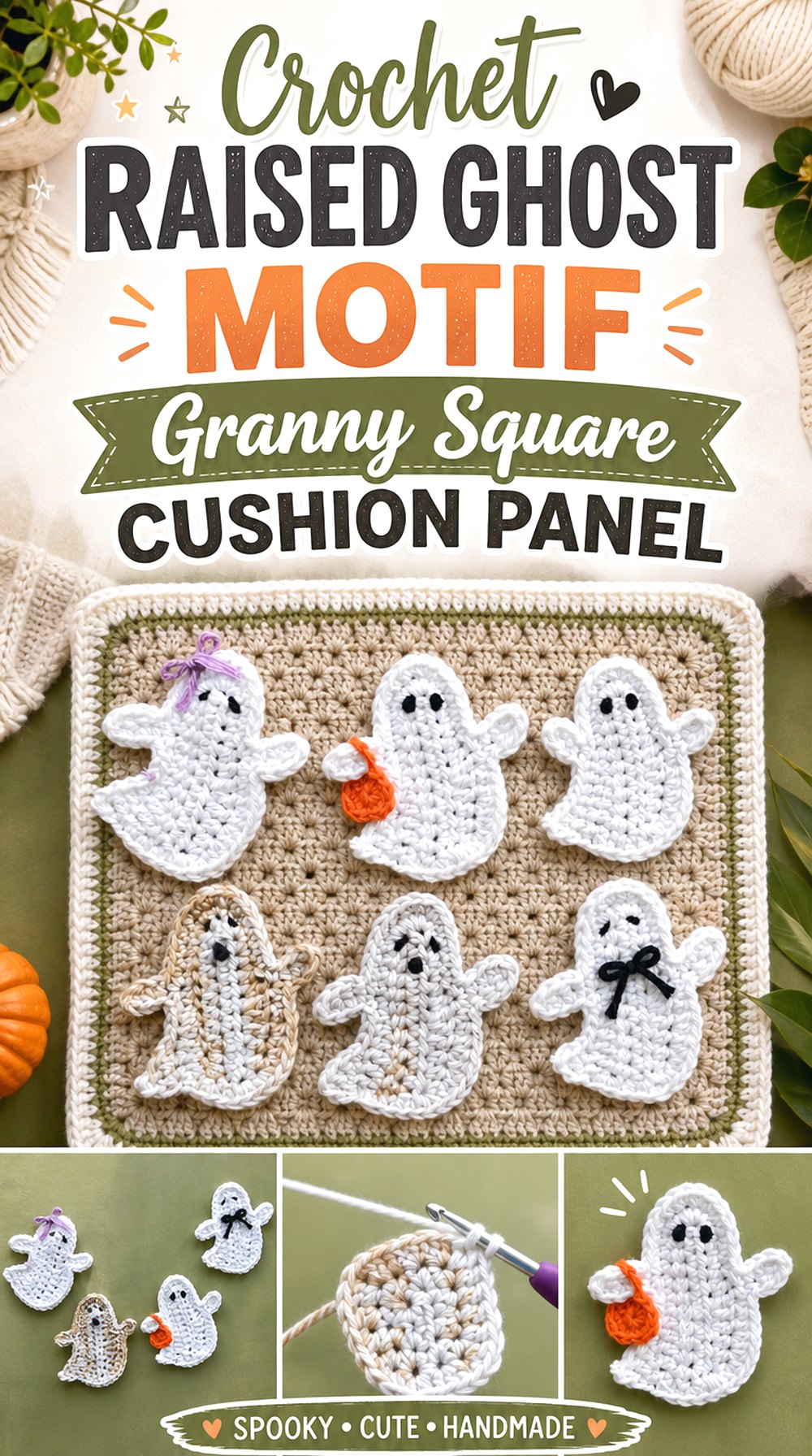
A separate ghost appliqué can create a more dimensional cushion front than an integrated colorwork motif. OhMeOhMyCrochet’s tutorial teaches the ghost component rather than a complete granny square, so you will need a background block or panel that fits the appliqué you actually make.
This is a good option when you want the ghost to sit visibly above the background. The raised layer becomes part of the design, but it also affects how the cushion feels and how the fabric moves. Before repeating the motif across several blocks, make one complete appliqué-on-square sample and check whether the thickness suits a decorative surface that may be handled regularly.
Give the Ghost Enough Background Margin
A raised appliqué looks more deliberate when its outer edges have room to breathe. If the ghost extends almost to the square’s joining line, the final cushion panel can appear cramped and the edges may compete with seams or borders. Place the appliqué on the finished background and compare the margin on all sides before securing it.
Stitching Down the Perimeter Affects the Relief
An appliqué can lie nearly flat or retain more dimensional character depending on how it is attached. Whatever method you use, keep the underlying square relaxed rather than pulling it inward while securing the motif. Pause partway through and lay the block flat; if the square begins to cup around the ghost, address the tension before continuing.
Consider Where the Cushion Will Be Used
A highly raised decorative front may be attractive on a display pillow but less desirable where the cushion is regularly leaned against. Decide whether the ghost is primarily visual decoration or whether you want a relatively smooth surface. That use decision can guide how dimensional your appliqué, facial details, and outer border should become.
Creator: OhMeOhMyCrochet
9. Crochet Mini Ghost Patch Granny Square Garland Tile
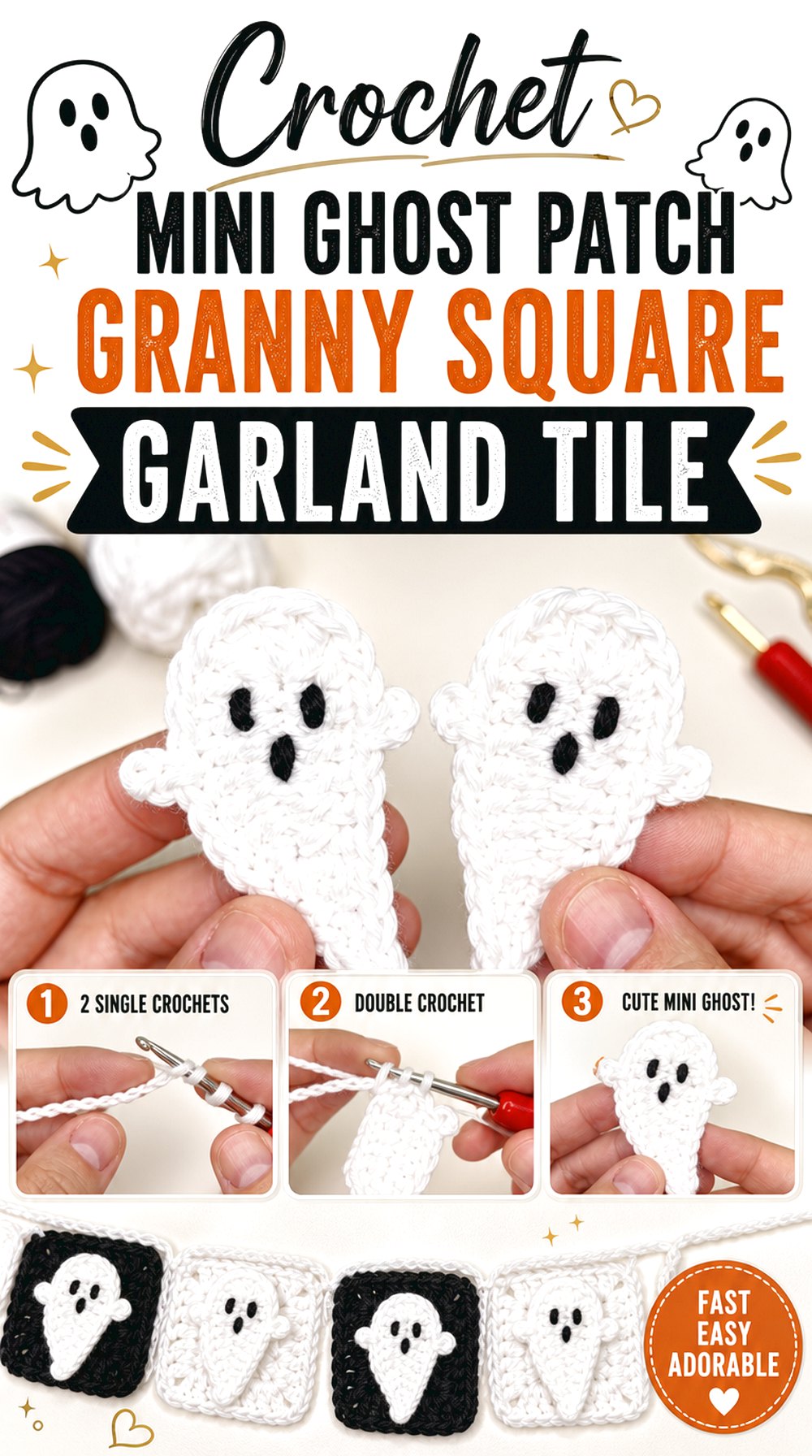
Jolly Lizard’s tutorial focuses on a small ghost appliqué rather than a finished granny square, which makes it useful when the goal is a compact character centered on a larger block. The creator describes the ghost as a one-row appliqué for Halloween crafts and decorations.
Mounting a small motif on granny-square tiles can work especially well for a garland because each ghost gets its own visual frame. Instead of increasing the ghost itself, you can adjust the surrounding square concept to produce the amount of negative space you want. That separation also gives you room to alternate ghosts with letters, plain tiles, or other seasonal motifs.
Small Motifs Need Deliberate Placement
A tiny ghost automatically attracts attention to any centering difference. Use the square’s visible geometry to position each appliqué consistently rather than relying only on eye judgment. If you prefer a playful look, vary the placement intentionally—slightly left, right, or tilted—so the changes read as design choices rather than accidental misalignment.
Keep Garland Tiles Light Enough to Hang Cleanly
Adding several layers of dense borders, appliqués, and decorative edging can make small garland blocks droop. Finish one complete tile and test it on the cord or attachment system you intend to use. If it folds forward or rotates, simplifying the outer frame may improve the hanging shape more than adding stiffness indiscriminately.
Alternate Detailed and Quiet Blocks
Because the ghost is small, surrounding it with highly complex filler motifs can make the whole banner harder to read. Simple neighboring tiles can provide enough contrast for the ghosts to remain the stars. Check the sequence from several feet away before permanently connecting the blocks; garlands are normally viewed as a complete line rather than one square at a time.
Creator: Jolly Lizard
10. Crochet Two-Expression Ghost Granny Square Pair
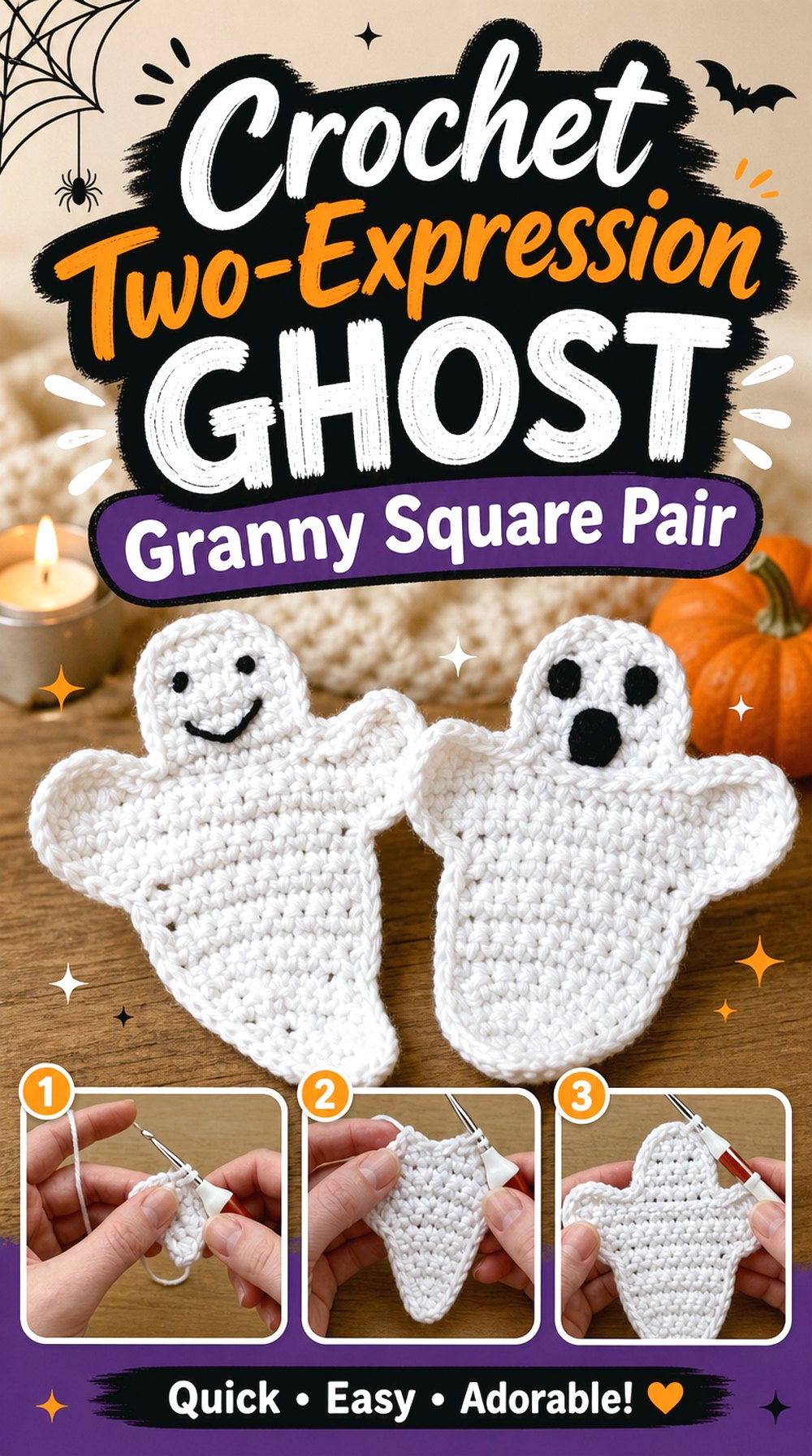
Facial expression is enough to make two ghost blocks feel different without changing the entire square construction. Craft Fix demonstrates both friendly and scary embroidered faces on its flat Halloween ghosts, so the tutorial can support a pair of appliqué-based granny squares with contrasting personalities.
The creator’s project is the ghost decoration or appliqué, not a completed granny square. For this adaptation, use the same compatible square background for both ghosts so the facial variation remains the main difference. A matched pair could become two pillow blocks, adjacent blanket accents, or small wall tiles without requiring an entirely new motif pattern for each expression.
Keep the Backgrounds Consistent for a True Pair
If the purpose is to compare expressions, changing the square shape, border colors, and ghost placement at the same time can dilute the effect. Start with matching background blocks and position both ghosts similarly. Once you know the faces provide enough contrast, introduce color differences only if they serve the larger project rather than competing with the character details.
Embroidery Lets the Face Stay Relatively Flat
The Craft Fix tutorial demonstrates stitched facial options rather than requiring bulky facial components. That can be useful on a square intended for a blanket or cushion, where projecting embellishments may alter the surface. Keep facial stitching proportionate to the motif so an expressive mouth does not overpower a relatively small ghost body.
Check Expressions at Normal Viewing Distance
A small mouth shape that looks dramatic while you are stitching may become subtle when the square is seen across a room. Place both finished ghosts beside each other and step back. If the “friendly” and “scary” versions no longer read differently, adjust future color or facial choices before making a larger coordinated set.
Creator: Craft Fix knitting & crochet
11. Crochet Corner-Accent Ghost Granny Square Cardigan Block
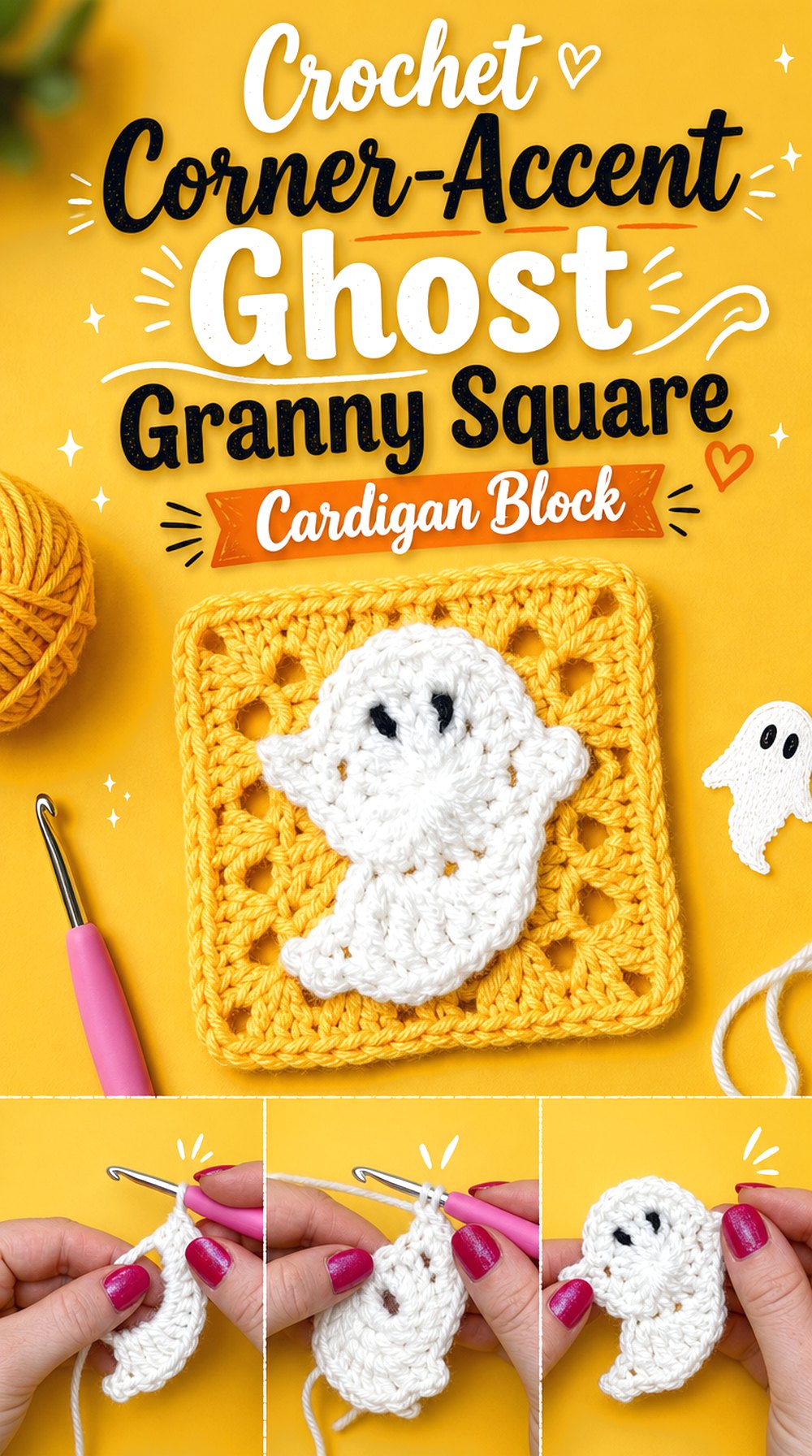
A ghost does not have to fill the center of a granny square. Katie Jones teaches a mini ghost patch and explicitly discusses using the patches on garments and garlands, making it a useful component source for a more restrained cardigan block.
For this idea, place the small ghost off center on selected cardigan squares rather than repeating a large character across every block. The result can feel less visually dense while still delivering a Halloween theme. Because the source tutorial is for the patch rather than the granny square or cardigan construction, use a separate garment plan whose square size, fit, and joins are already appropriate for the wearer.
Off-Center Placement Needs a Repeatable Rule
Random placement can look lively, but truly uncontrolled positioning may make a wearable feel unbalanced. Decide on a system before attaching the patches: for example, ghosts can face inward toward the garment center or alternate between upper and lower corners. You do not need identical positions, but a recognizable visual rhythm helps scattered appliqués look intentional.
Keep Shoulder Areas From Becoming Needlessly Bulky
A garment carries weight and movement differently from a blanket. Before adding raised motifs around the shoulder or armhole area, pin or temporarily position the patches and try the garment construction on at the appropriate fitting stage. If the appliqué feels stiff where the fabric needs to bend, move the decorative block to a flatter area of the body panel.
Fit Comes From the Garment Squares, Not the Patch
Changing the ghost size does not solve a cardigan-sizing problem. Plan the garment from measured, blocked squares and the intended fit, then treat the ghost as decoration that must fit within those blocks. If you substitute a different granny-square construction, confirm its dimensions and stretch before assuming it can replace the original garment blocks one for one.
Creator: Katie Jones
12. Crochet Oversized Ghost Center Granny Square Wall Hanging
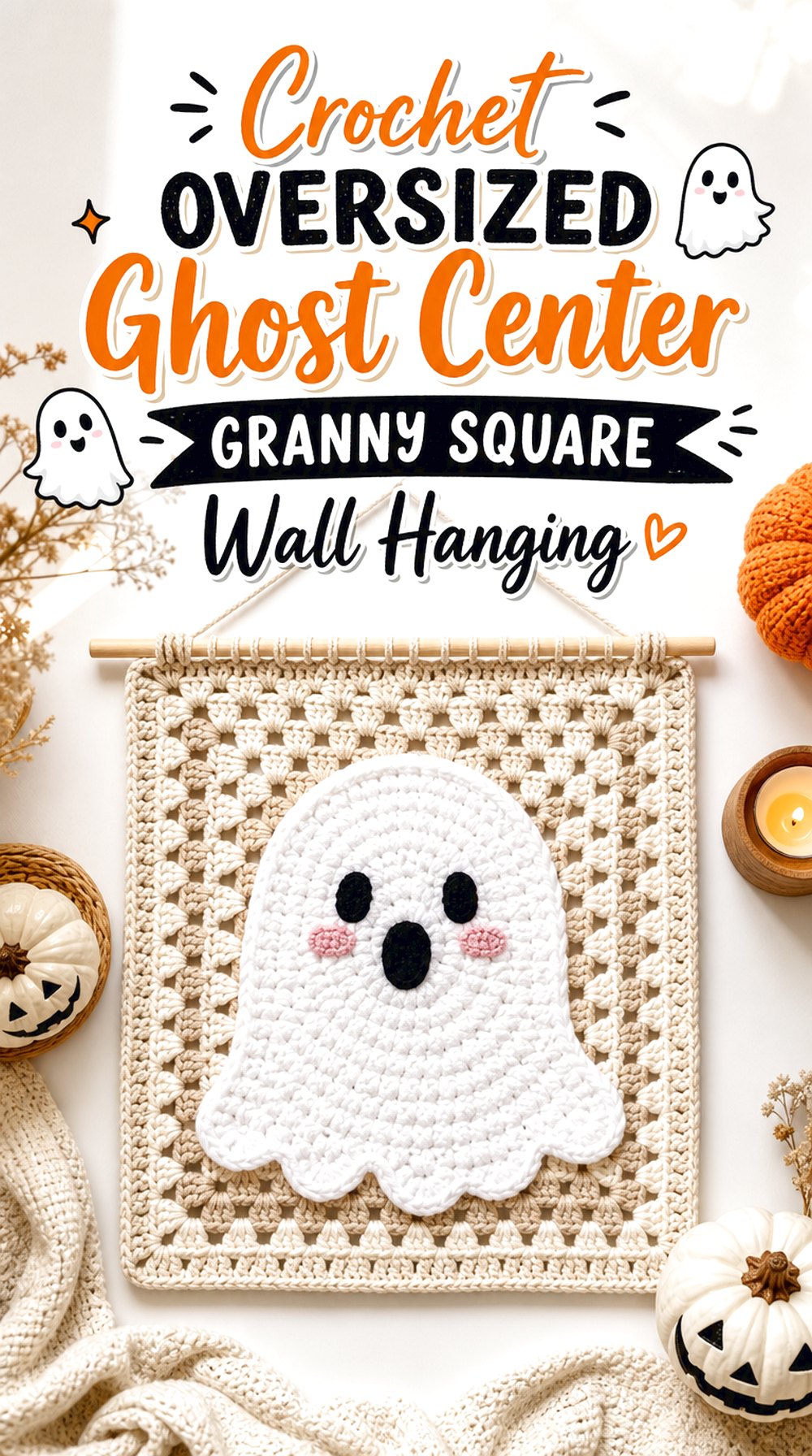
A flat ghost coaster provides a larger character shape that can inspire a statement-center block without requiring dozens of repeated miniature motifs. The stringbbeans tutorial teaches a complete ghost-shaped coaster with an embroidered face, not a granny square. For this adaptation, treat the finished ghost as the central appliqué and build or choose a separate square background that gives it comfortable space.
This idea suits a wall hanging because the large ghost can remain the focal point and the square does not need to function as a repeated modular unit. It also gives you more freedom to frame the motif with broad negative space or a decorative border.
Measure the Ghost Before Choosing the Background
Do not begin the square first and hope the completed ghost will fit. Make or determine the actual size of your selected ghost motif, then decide how much visible border you want around it. A large center appliqué needs enough room for attachment and visual separation, particularly around projecting arms or a wavy lower edge.
Larger Appliqués Reveal More Rippling
The longer an appliqué edge becomes, the easier it is to notice sections that have been stretched or eased unevenly during attachment. Position the entire ghost first and secure it provisionally at several points before completing the perimeter. Frequently lay the work flat so the square does not gather beneath one side of the motif.
Let One Square Carry the Whole Composition
A statement wall hanging does not need additional ghost blocks around the central character. Use simpler framing if the large motif already occupies most of the visual field. This can also reduce competition between the ghost’s curved outline and the geometry of the granny-square border, producing a clearer focal point when the piece is viewed from a distance.
Creator: stringbbeans
13. Crochet Haunted Ghost Granny Square Blanket Accent
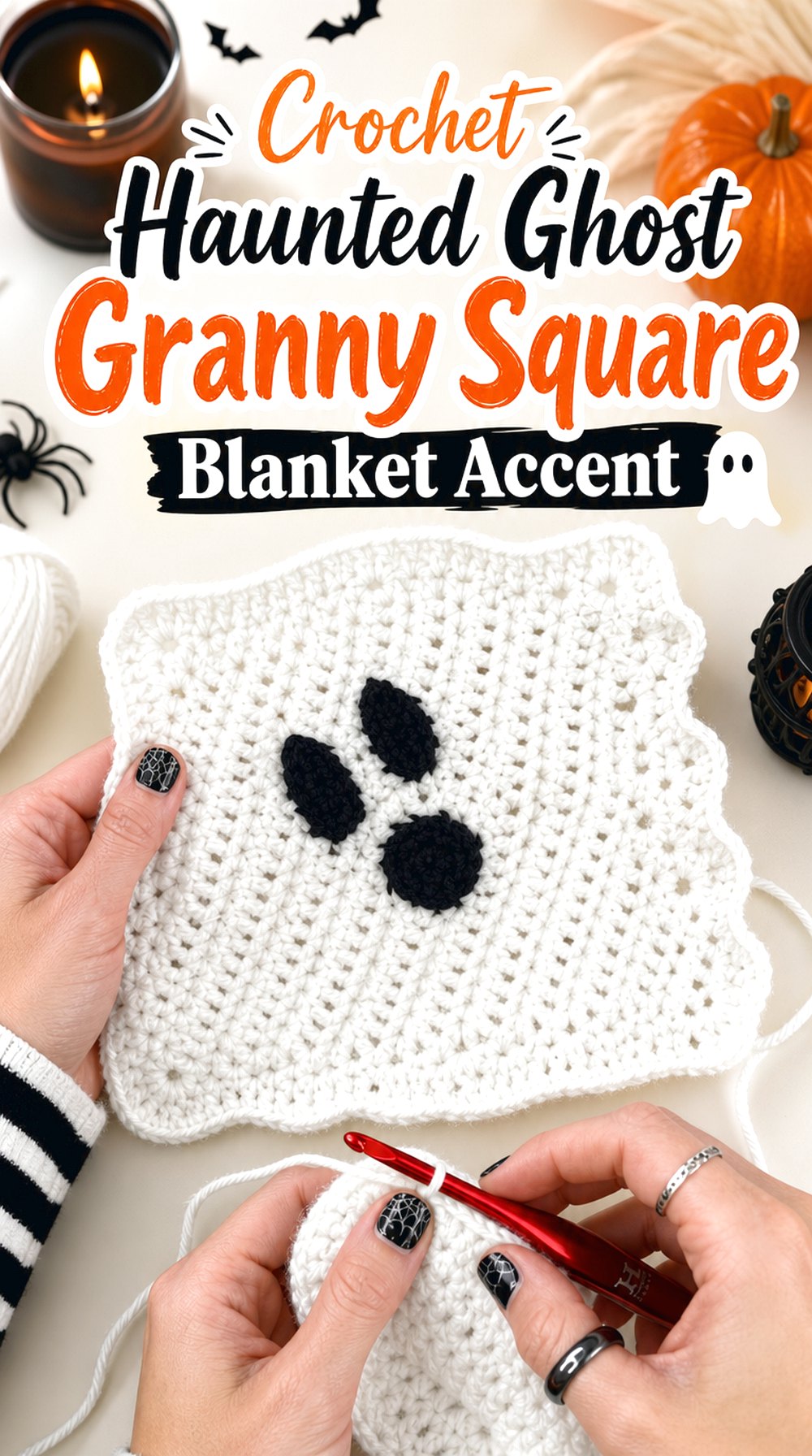
Alt Knots provides a ghost appliqué specifically as part of the Haunted Video Store Blanket crochet-along, making this source useful for readers interested in a ghost that participates in a larger themed blanket rather than standing alone. The tutorial is for the appliqué component, so a granny-square version still requires your own compatible block plan.
This adaptation works well when ghosts are accent motifs rather than the dominant repeat. Place them among simpler squares or other Halloween imagery and use the background blocks to control how crowded the finished blanket feels. The larger lesson is that character placement can be planned at project scale, not one block at a time.
Start With the Whole Blanket Map
Lay out placeholders for every square before deciding where the ghost appliqués will go. If several other motifs have strong faces or silhouettes, avoid clustering all of them in one corner unless that imbalance is intentional. A quick paper grid or digital sketch can reveal concentration problems before any embellishments are permanently attached.
Give Dimensional Motifs Breathing Room
An appliqué naturally creates a different surface from a plain crocheted block. Surrounding every raised ghost with equally detailed neighbors may produce a visually and physically dense area. Alternating motif blocks with quieter squares can distribute texture more evenly and make individual ghosts easier to recognize.
Check Washing and Finishing as a Complete Unit
The appliqué and square may respond differently during cleaning or blocking, especially if they use different yarns. Confirm the care guidance for the actual fibers you choose and make a sample combination when possible. A blanket is much harder to correct after many motifs have been attached, so it is worth evaluating the layered block before repeating it.
Creator: Alt Knots
14. Crochet Ghost Accent Granny Square Sweater
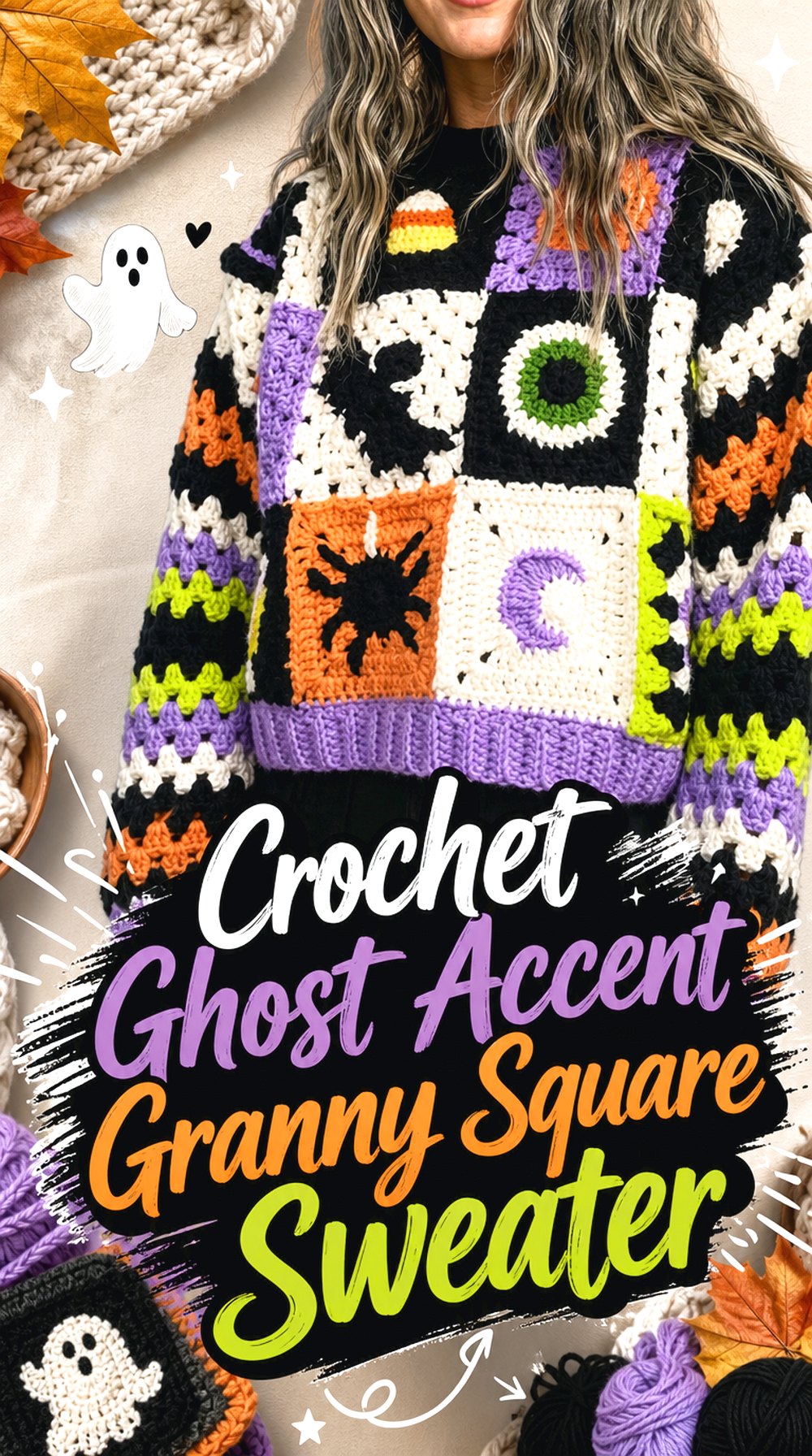
A sweater shows what happens when ghost squares have to work as garment components rather than flat decor. Grandma Era’s Halloween Granny Square Sweater includes ghost-square and ghost-appliqué references alongside other seasonal blocks, then discusses the broader sweater assembly. That makes it a valuable application source even though the garment is a mixed Halloween design rather than an all-ghost sweater.
For a ghost-focused version, use character blocks selectively across the front, back, or sleeves and let simpler squares handle areas where the garment needs visual rest. Most importantly, determine fit from the actual blocked garment squares and intended construction rather than copying a motif count from an unrelated body size.
Ghost Orientation Matters on the Sleeves
A square that looks upright while the sweater lies flat may rotate visually once it wraps around an arm. Before joining sleeve blocks, arrange them around the approximate sleeve shape and check where each ghost will face when the garment is worn. Save the most recognizable motifs for positions that remain visible from the front or side.
Distribute Detailed Blocks Across the Garment
Several dense or appliquéd ghost squares concentrated on one panel can change both appearance and hand feel. Mix them with compatible simpler blocks rather than assuming every square needs equal detail. This also gives you flexibility if one character block finishes slightly stiffer than the plain motifs surrounding it.
Measure Panels Before Closing the Sweater
Do not wait until final assembly to discover that the square grid creates more or less width than expected. Compare the joined or arranged panel dimensions with the intended garment measurements at a stage when changes are still possible. Borders, joins, ribbing, and yarn stretch can all influence the final feel, so the motif alone cannot determine fit.
Creator: Grandma Era
15. Crochet Ghost-Face Granny Square Bag Panel
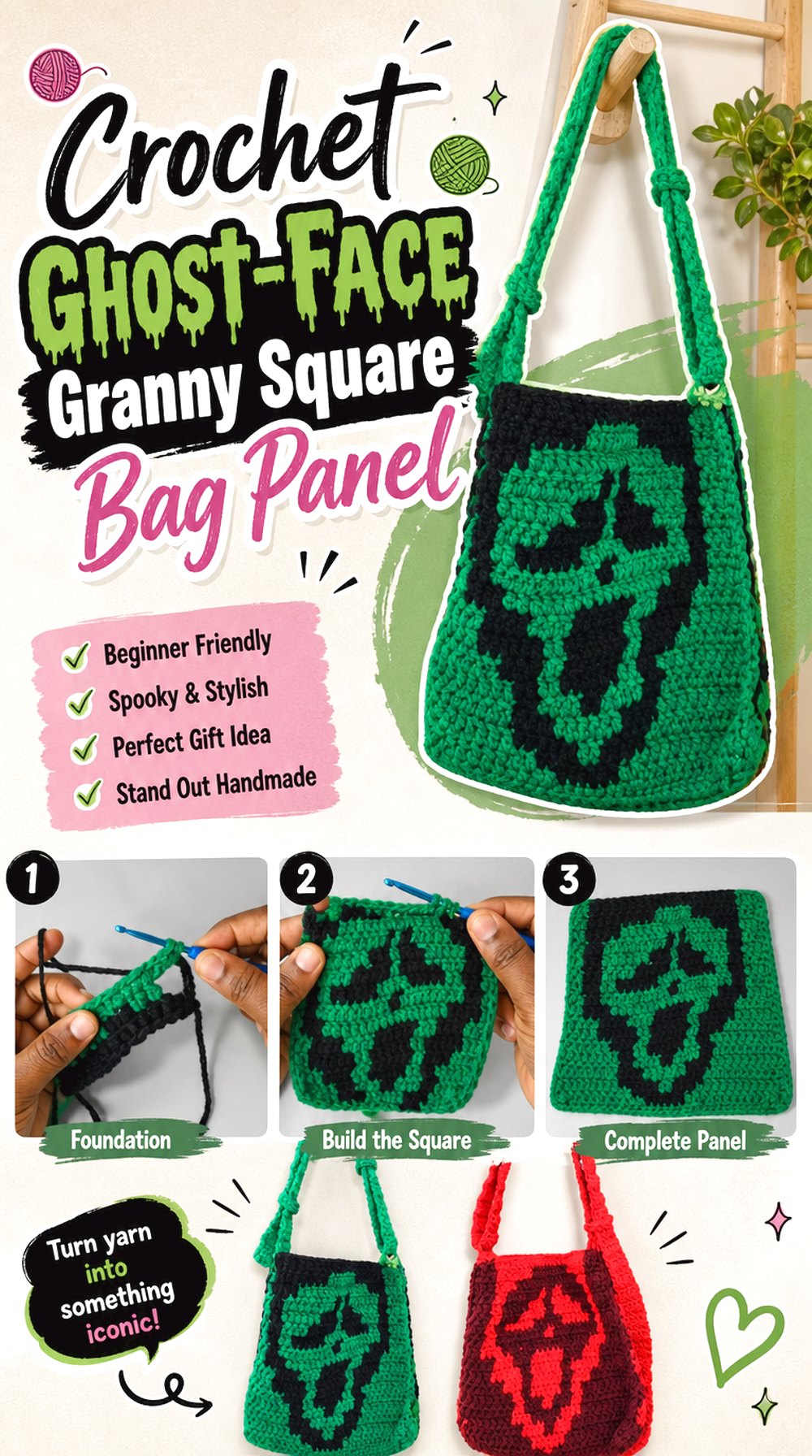
A ghost does not have to be a full white silhouette. A graphic ghost face can become the focal image of a square or rectangular bag panel, creating a flatter alternative to sewn-on appliqués. The m_babi tutorial is a finished two-faced crochet bag with a ghost-face side and a checkered side, not a granny-square tutorial. For this idea, use it as the graphic-bag reference while developing any modular square construction separately.
This route suits readers who prefer bold facial graphics and relatively flat fabric. It also creates a useful contrast with the appliqué ideas above: instead of attaching a character on top, the image becomes part of the panel surface.
Keep the Face Readable Across Joins
If you divide a large ghost graphic across several granny-style blocks, seams can interrupt the eyes or mouth. Plan the complete image on a grid before crocheting individual modules. Ideally, the most important facial features should sit comfortably within blocks or be positioned where joining lines do not distort their shapes.
A Flat Graphic Reduces Added Layers
A colorwork-style image can avoid the extra thickness of a separately sewn ghost, which may be useful on a bag panel that already has seams, straps, and possibly lining. The trade-off is planning: color placement becomes part of the fabric itself, so mistakes cannot simply be repositioned as they can with a loose appliqué.
Compare the Decorative Panel With the Bag Structure
A striking front panel does not answer practical questions about the opening, base, straps, or lining. Treat those as separate construction decisions. Before converting any graphic into granny-square modules, determine how the completed panel will connect to the rest of the bag and whether the selected squares provide the stability you want.
Creator: m_babi
Integrated, Appliqué, or Project-Scale Ghost Squares?
Choose an integrated ghost square when you want a repeatable modular block with the character already contained inside its edges. This is the most straightforward route for blankets, pillow grids, and other projects where many blocks need to align.
Choose an appliqué-based square when placement flexibility matters more. You can prepare background blocks independently, move ghosts around before sewing, and leave selected squares plain. The trade-off is a layered surface and additional attachment work.
Choose a project-scale adaptation for a sweater, bag, or wall hanging when the final object is more important than repeating one identical block. In these designs, motif orientation, panel placement, garment fit, bag structure, and overall composition become just as important as the ghost itself.
Conclusion
For the cleanest modular approach, start with one of the complete ghost granny-square tutorials and make a blocked sample before planning a blanket or pillow. If you want more freedom over placement, the appliqué-based options let you add ghosts selectively to compatible background squares. The sweater and bag concepts make more sense when your main goal is a finished wearable or accessory rather than a collection of identical blocks.
Whichever route you choose, compare actual square dimensions, motif density, orientation, and intended use before making multiples. Use the original tutorials for the creators’ exact construction details, then make your project-level decisions around the finished pieces you actually produce.
Frequently Asked Questions
Can I put any crochet ghost appliqué on any granny square?
Not automatically. The ghost needs to fit within the usable face of the finished square without interfering with corners, joins, or borders. The two pieces should also have compatible stretch and fabric density. Finish and measure both components before attachment. If an appliqué nearly reaches the square edges or causes the background to cup when positioned, a larger or differently structured base may work better.
Should ghost granny squares be blocked before I join them?
Blocking or otherwise finishing the squares consistently can make it much easier to compare their real dimensions and identify mismatches before joining. Follow the care and finishing guidance appropriate to your yarn rather than treating every fiber the same way. If your project mixes several motif designs, compare them after the same finishing process so you are not measuring one relaxed square against another that may still change shape.
How can I combine ghost squares with pumpkin, bat, or skull granny squares?
Start with dimensions rather than theme. Make one finished sample of each motif and compare the blocked width, height, edge stitch structure, thickness, and general stretch. Then arrange the motifs on a grid to check visual balance. If one design is noticeably smaller, consider whether its surrounding border can be adjusted rather than stretching it during joining. Keep all directional characters upright when planning the final layout.
Is an integrated ghost square better than a sewn-on ghost?
Neither construction is universally better. Integrated motifs provide a single-layer block and can be convenient for repeated modular projects. Sewn-on ghosts provide more freedom to position, remove, or vary motifs across otherwise identical background squares. Appliqués add another layer and attachment stage, so test one complete block before committing to a large blanket or wearable.
How do I stop a ghost appliqué from making the square pucker?
First check that neither piece is being stretched to match the other. Position the finished ghost on the relaxed background square and secure it at several points before completing the attachment. Periodically lay the block flat and inspect the surrounding fabric. If the square begins pulling inward, correct the attachment tension rather than relying on aggressive blocking to fix distortion afterward.
What facial details work well on a crochet ghost granny square?
Embroidered eyes and mouths are useful when you want a relatively flat surface and precise control over expression. The face should remain visible against both the ghost and surrounding square at normal viewing distance. For items that may be accessible to young children or pets, assess the complete project carefully and avoid assuming detachable decorative components are appropriate simply because they are common on crochet toys or decor.
Can I turn one ghost granny square into a larger project without making dozens of copies?
Yes. One character block can become the center of a pillow front, wall hanging, tote panel, cardigan accent, or seasonal banner. Surrounding it with compatible plain squares can enlarge the project while keeping the ghost as the focal point. Measure the finished motif first and design the surrounding layout from that real dimension rather than estimating the eventual project size from the tutorial image alone.