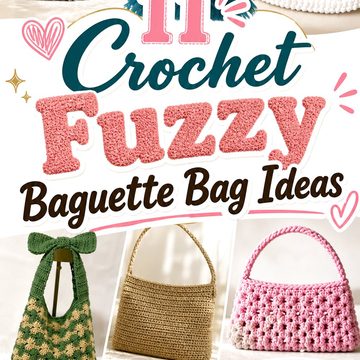
Fuzzy crochet clutch bags can share the same soft, plush look while behaving very differently once you start using them. A chenille bag built around a spring frame has a shaped, dressier profile, while an eyelash-yarn pouch with a zipper puts more emphasis on closure security. Sherpa, velvet, and plush yarn create still other levels of bulk, stitch visibility, and structure.
The ideas below include exact clutch tutorials plus several compact fuzzy handbag tutorials that work as useful clutch-style inspiration. Where a source includes a shoulder strap or handle, that difference is made clear rather than treating every design as a traditional strapless clutch. Use the comparisons to choose a silhouette, closure, texture, and level of structure before following the original creator for the exact construction.
Quick List
- Crochet Chenille Spring-Frame Clutch
- Crochet Sparkle-Accent Chenille Evening Clutch
- Crochet Faux-Fur Zipper Clutch with Chain Strap
- Crochet Fluffy Panel Clutch with Long Strap
- Crochet Plush Mini Grab Clutch with Flower Accent
- Crochet Structured Plush Side-Panel Clutch
- Crochet Velvet Handle Clutch Bag
- Crochet Compact Velvet Mini Clutch
- Crochet Inside-Out Fluffy Mini Clutch
- Crochet Lined Chenille Chain Clutch
- Crochet One-Handle Faux-Fur Clutch
- Crochet Sherpa Built-In-Handle Clutch
Match the Fuzzy Yarn to the Clutch Silhouette
“Fuzzy” can mean several very different surfaces. Velvet and chenille generally create a plush, rounded fabric while still leaving more of the bag silhouette visible. Eyelash or faux-fur yarn creates a longer pile that can obscure stitch definition, seams, and even the edge of the opening. Sherpa gives a dense fleece-like surface, while other plush yarns can produce a thicker, stuffed appearance.
That distinction matters more on a clutch than on a large tote because the opening, frame, zipper, and corners occupy a greater percentage of the finished bag. If crisp hardware is the main feature, consider whether an extremely long pile will visually crowd it. If softness is the priority, a simple body shape can let the yarn provide most of the design interest.
Choose the Closure Before the Texture Takes Over
A clutch opening affects both appearance and everyday use. Spring frames create a defined gathered top. Zippers give a clear closed edge. Magnetic clasps are visually quieter but usually depend on the surrounding bag structure to keep the opening aligned. Some fuzzy mini-bag tutorials use handles without specifying a secure closure at all.
Before substituting a different fuzzy yarn, look closely at the area where the closure attaches. A thicker yarn can change the bulk around a frame or zipper, while long fibers may need to stay clear of moving hardware. If you plan to convert a small shoulder bag into a handheld clutch, first confirm that the strap is independent of the opening and does not provide structural support.
Plan for Structure, Lining, and Hidden Stitches
Soft yarn does not automatically produce a structured clutch. Base construction, side depth, lining, hardware, and the density of the crochet fabric all influence whether the bag looks crisp or relaxed. A liner can also separate small contents from the crochet fabric and may reduce how much the exterior is asked to stretch.
Stitch visibility is another practical issue. Very fluffy fibers can hide the loops you normally use as visual landmarks. Mark important positions as you work and compare both sides of a panel or opening before finishing the bag. If you are changing yarn from the tutorial, make a small sample first. A yarn that looks similar in the skein may create a noticeably different thickness or finished scale.
1. Crochet Chenille Spring-Frame Clutch
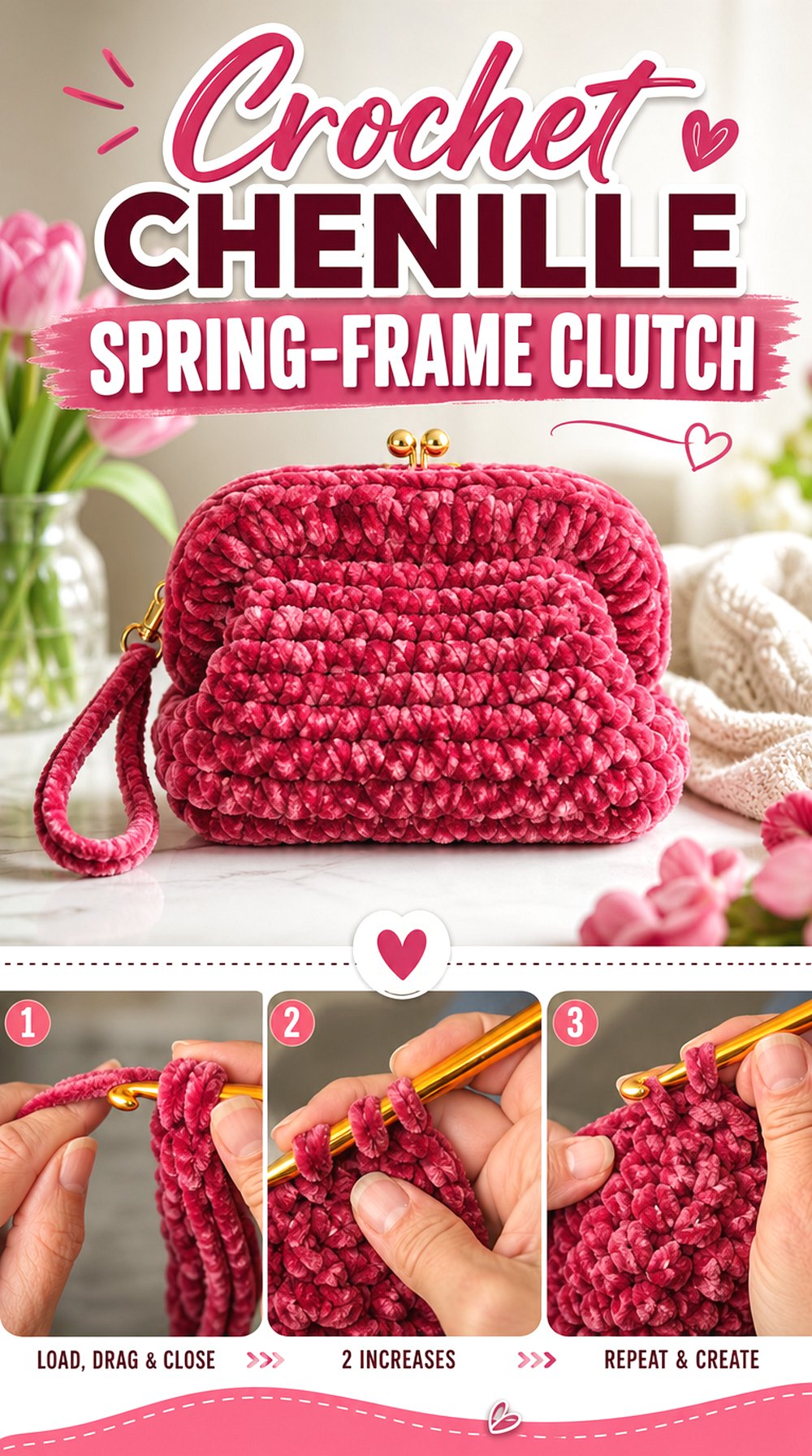
his chenille clutch takes the most traditional clutch direction in the collection. Macrè Bag’s tutorial uses a spring clasp to create a gathered, defined opening above a soft chenille body. That combination gives the bag more visual structure than a plain fuzzy pouch while keeping the tactile surface that makes chenille appealing.
It is a strong option if you want the closure itself to be part of the design rather than hidden inside the bag. Because the source is already presented as a clutch, there is less adaptation to plan than with the shoulder-bag tutorials later in this roundup.
The Spring Frame Controls the Finished Profile
With this style, the frame is not merely a fastener added at the end. Its width and shape influence how the upper part of the bag gathers and how broad the finished opening appears. If you want to change the size, do not assume that enlarging only the crochet body will preserve the same proportions. Choose compatible hardware and check how the body width relates to it before committing to a larger or smaller version.
Chenille Bulk Needs Space Around the Hardware
Chenille adds volume along the top edge, which is attractive here because it reinforces the soft, gathered look. Too much bulk immediately beside a mechanical closure, however, can make the area visually crowded. When considering a yarn substitution, compare the compressed thickness of the new yarn with the chenille shown in the tutorial rather than comparing skeins only by label.
A Defined Base Keeps the Clutch from Looking Like a Pouch
The source design includes a distinct base rather than functioning as a completely flat envelope. That depth changes what the bag looks like when placed on a surface and gives the chenille body room to form a fuller silhouette. If your goal is a very flat evening clutch, this may feel more substantial than necessary; if you prefer a compact bag with visible depth, the construction is a closer match.
Creator: Macrè Bag
2. Crochet Sparkle-Accent Chenille Evening Clutch
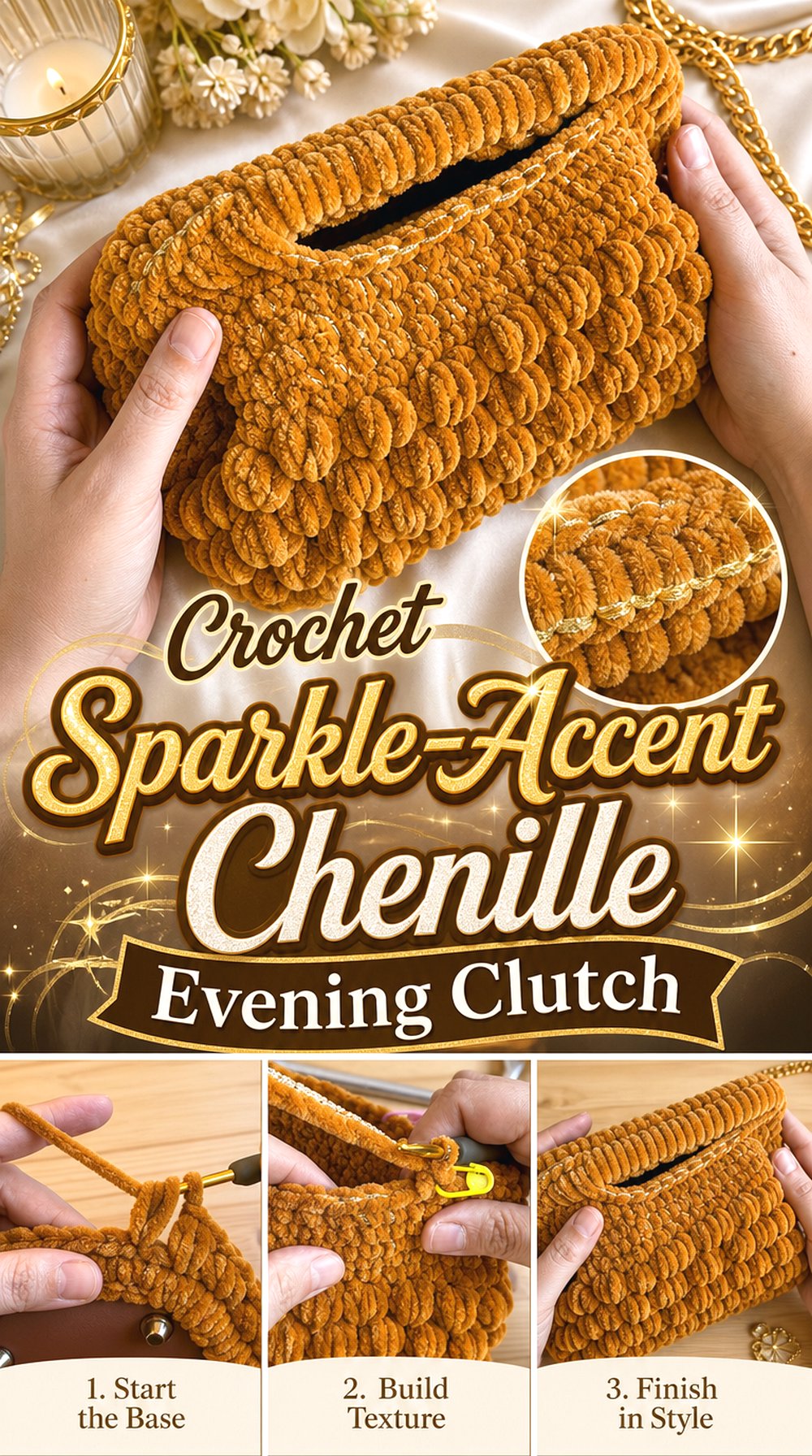
Gusiela’s chenille clutch offers a dressier variation on the soft frame-bag idea. The tutorial materials include chenille along with a metallic Lurex element, giving this project a useful reference point if you want fuzzy texture without making the finished surface completely matte. The source also uses a structured base and spring hardware.
This direction makes sense for an evening-style clutch where a subtle reflective detail can provide contrast against the velvety chenille. Compared with the first project, the appeal is less about a purely plush surface and more about combining softness with a finer decorative accent.
A Fine Metallic Accent Changes the Surface Without Adding More Fur
Pairing chenille with a finer reflective yarn can introduce visual detail without relying on another bulky texture. That is useful on a clutch because the bag is small enough for subtle surface changes to register clearly. If you substitute a carry-along yarn, first make sure it does not become abrasive against the soft chenille or interfere with the way the main yarn moves through your hook.
The Firm Base Balances the Soft Upper Body
The tutorial includes a separate bag base, creating a contrast between a controlled lower edge and the softer crocheted body. That balance is useful if you want a clutch to look shaped rather than pillow-like. When adapting the idea, decide whether the base should disappear beneath the fuzzy texture or remain a noticeable design element before choosing its color and finish.
Keep Evening-Clutch Proportions Deliberate
A fuzzy clutch can quickly read as a small handbag if it becomes very deep or gains a prominent permanent strap. For a more evening-oriented result, compare the opening width, depth, and intended contents before scaling anything. A slim wallet, phone, and a few essentials require a different silhouette from a bag intended to replace an everyday purse.
Creator: Gusiela
3. Crochet Faux-Fur Zipper Clutch with Chain Strap
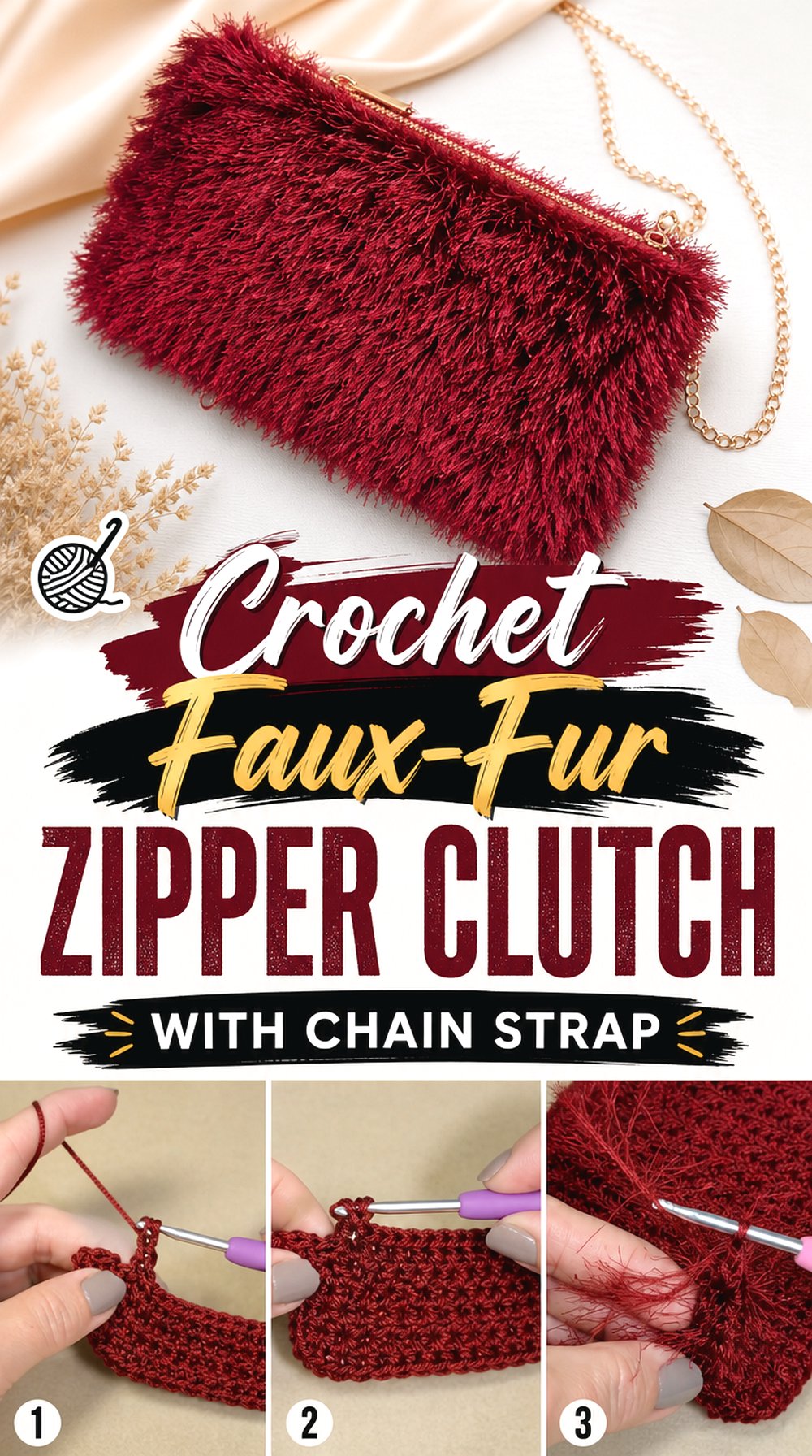
For a noticeably shaggier finish, Paraligo’s faux-fur bag uses eyelash yarn over a more defined bag structure and finishes the opening with a zipper. A metal chain shoulder strap is also part of the source design, so this is technically a convertible purse rather than a purely strapless clutch.
It belongs in this collection because the zipper and rectangular fuzzy body translate naturally to clutch-style use when the carry configuration suits your plan. Compared with chenille, eyelash yarn creates a longer surface pile that hides far more of the underlying stitch definition.
A Zipper Gives the Fuzzy Opening a Clear Boundary
Long fibers can soften the visual edge of a bag, so the straight zipper creates useful definition across the top. It also offers a different type of closure from the spring frames above. If you use another fur-style yarn, check whether loose fibers are likely to enter the zipper path and keep the attachment area controlled rather than allowing the pile to cover the mechanism.
Eyelash Yarn Makes Stitch Visibility a Bigger Challenge
The creator specifically uses eyelash yarn to achieve the faux-fur appearance. That texture is effective because it obscures much of the crochet fabric underneath, but the same quality can make missed loops or uneven placement harder to see while working. Marking key positions and checking the fabric by touch can be more useful than relying only on visible stitch tops.
The Chain Creates a Useful Convertible Carry Option
A removable-looking chain-style carry concept gives this fuzzy bag a different role from a permanently handled mini purse. If your preferred look is a handheld clutch, study how the strap connects and whether the body remains complete without it. If you like switching between evening clutch and shoulder bag, attachment points near the upper edge are worth planning before lining or finishing.
Creator: Paraligo
4. Crochet Fluffy Panel Clutch with Long Strap
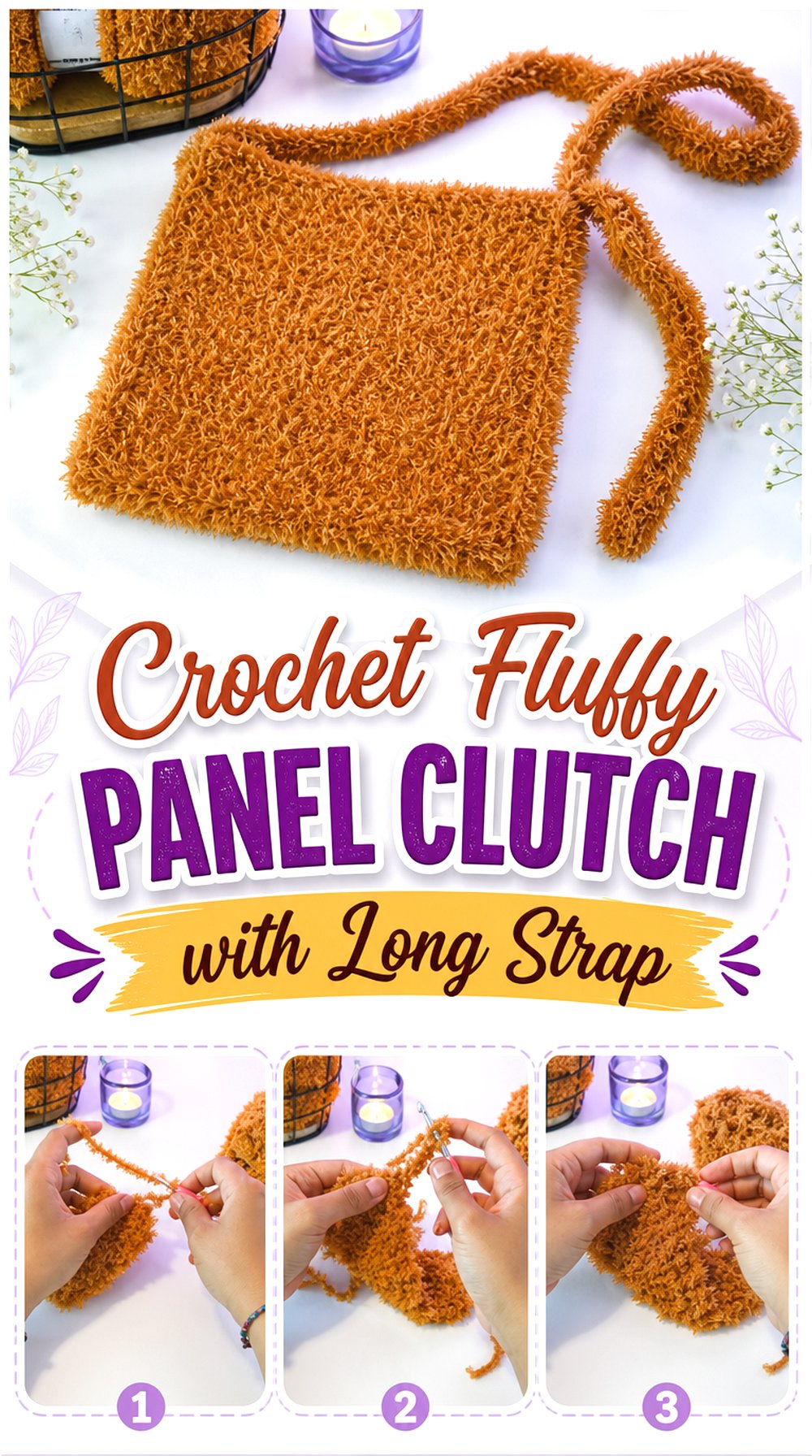
Pipa’s fluffy bag is built from distinct front and back panels, a bottom section, and a strap. That gives it a visibly different construction route from the framed clutches and continuously worked bags in the rest of the article. The original tutorial is a wearable bag rather than a strict clutch, so treat it as a construction reference if you prefer the panel-built fuzzy look.
For clutch inspiration, the main attraction is the clean rectangular body. Panels make it easier to evaluate width and height as flat pieces before assembly, which can be useful when your preferred finished shape is more envelope-like than rounded.
Flat Panels Make the Silhouette Easy to Judge Early
A panel construction lets you see the front proportions before the entire bag is assembled. That is useful if you care about a particular clutch shape, because an overly tall panel can make the finished piece read as a small shoulder bag instead. Compare the width and height visually while the pieces are still flat rather than waiting until after seaming.
Decide Whether the Strap Belongs in Your Version
The original tutorial includes a strap, so omitting or altering it should be treated as an adaptation rather than part of the source design. Before leaving it out, check whether its attachment points are independent of the side seams and top edge. If you prefer convertible use, a removable hardware-based strap is another concept to evaluate rather than permanently changing the tutorial construction.
Fluffy Seams Can Change the Edge Shape
Longer fibers may hide the stitching that joins panels, but they do not remove the physical thickness of the seam. On a small clutch, bulky side edges can noticeably change the outline. Before final assembly, hold the panels together in their intended orientation and check whether the seam allowance or join creates more depth than you want.
Creator: pipa
5. Crochet Plush Mini Grab Clutch with Flower Accent
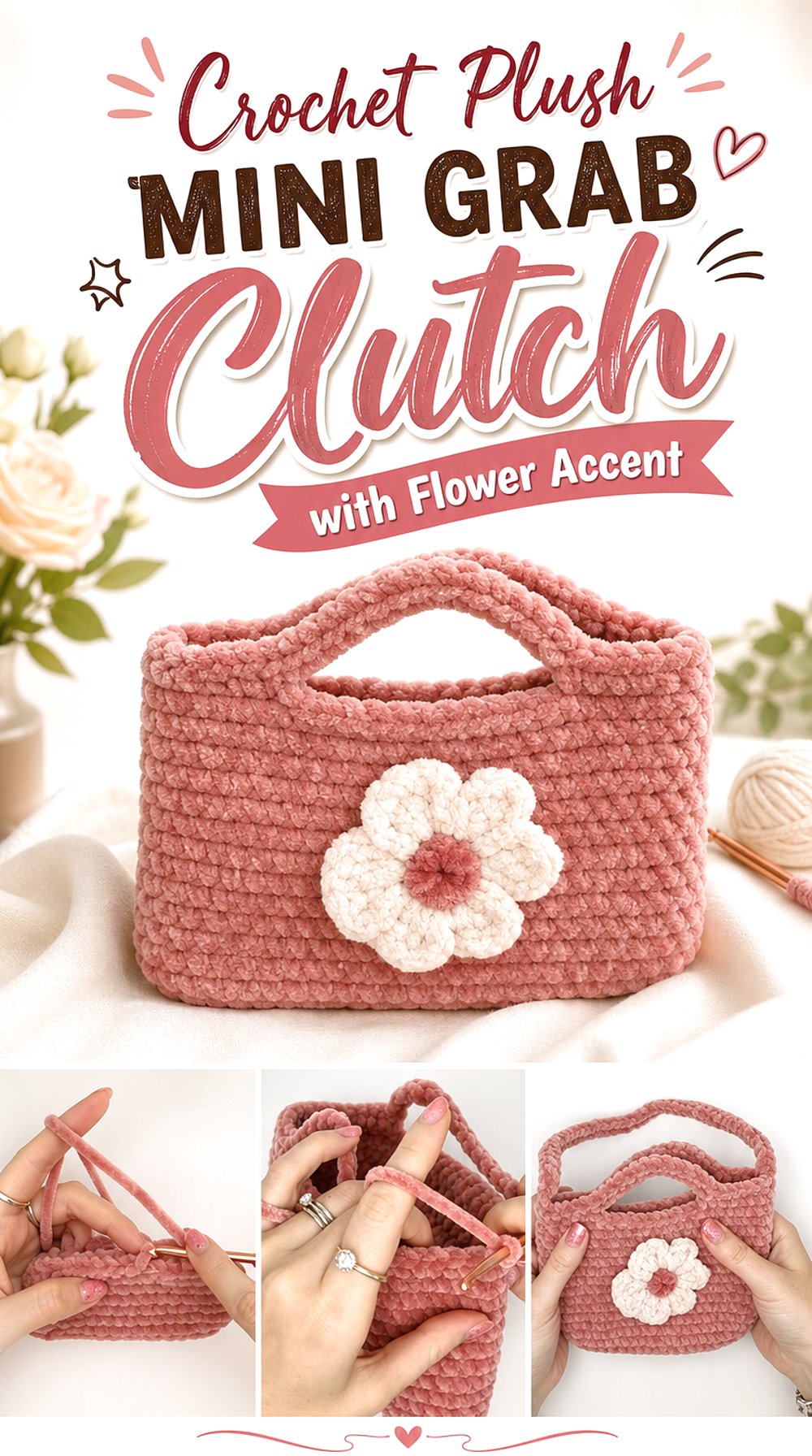
Rose and Lily Crochet’s little plush bag introduces a more playful approach. The tutorial includes both short and long strap options plus a flower, giving the finished design more accessory detail than the minimal framed clutches. The source uses Hobbii Baby Snuggle yarn and presents a compact plush bag rather than a formal clutch.
For this roundup, it works well as inspiration for a soft mini grab bag that can sit between a clutch and a tiny purse. The flower also demonstrates how an appliqué can change the focal point without requiring a heavily textured stitch pattern underneath.
Short and Long Carry Options Change the Bag’s Role
The original project demonstrates both short and long straps. That makes it useful if you are undecided between hand carry and a more practical shoulder or crossbody configuration. Before changing strap length or removing one option, think about where the bag should sit against the body and whether the attachment area will still look intentional when the alternate strap is not being used.
One Accent Can Be Enough on Plush Yarn
The flower provides a clear focal detail against an already soft surface. With plush yarn, adding several dimensional embellishments can make a small bag visually crowded, particularly around the opening. If you customize the decoration, try positioning a single motif on the front first and judge the balance before repeating it or adding charms.
Check the Interior Against What You Actually Carry
Mini plush bags are appealing partly because of their scale, but exterior softness can make the interior look larger than it is. Before choosing this direction, group the actual items you expect the clutch to hold. A phone, cardholder, keys, cosmetics, or glasses case each affect the useful shape differently, and the tutorial should be checked for finished size before you commit.
Creator: Rose and Lily Crochet
6. Crochet Structured Plush Side-Panel Clutch
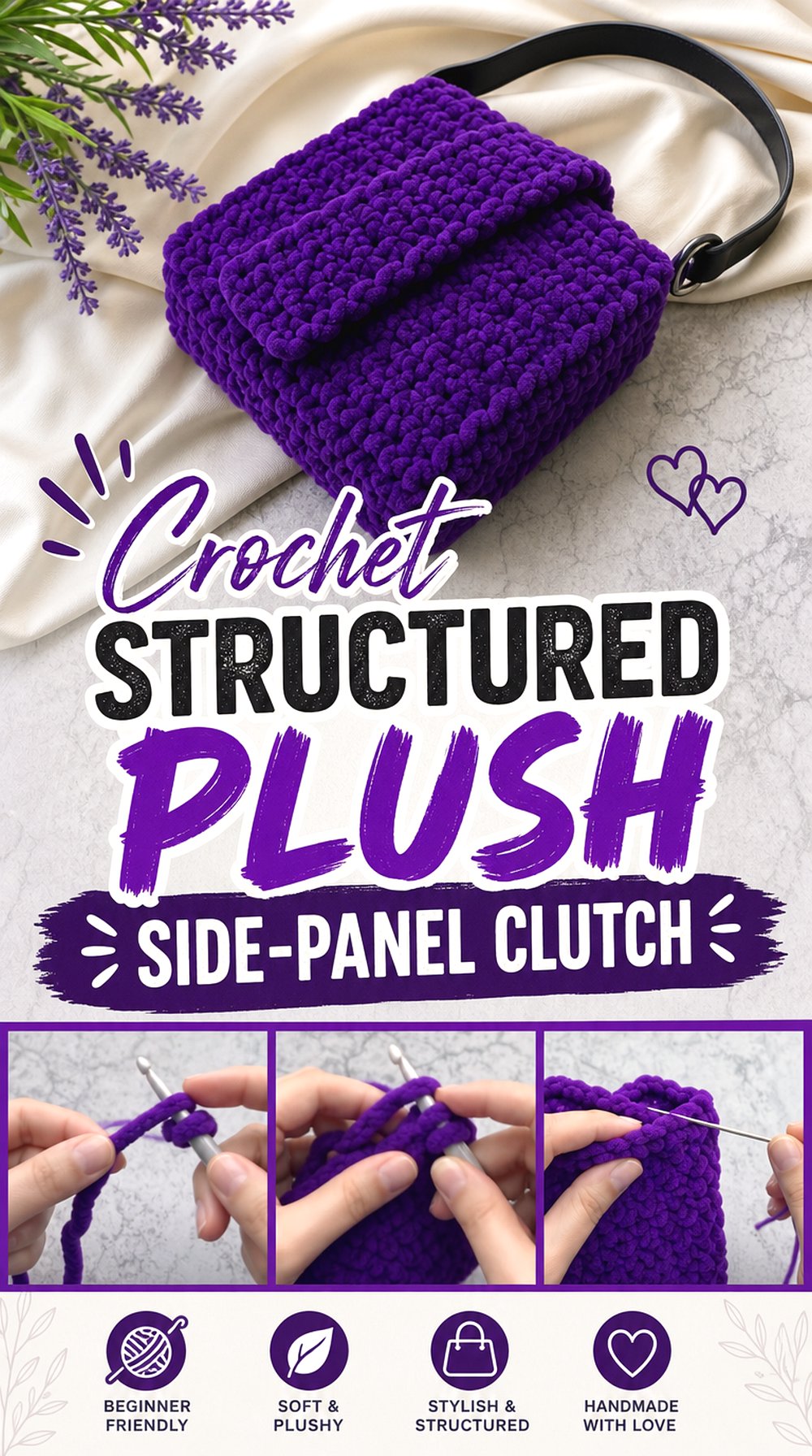
Nadezhda Lab’s plush handbag has a more constructed body than a flat pouch. The video separates the main section from side pieces and later adds carrying hardware, creating a bag with visible depth and a more architectural outline. The tutorial also shows a textile belt rather than treating the project as a strapless clutch.
That side-panel approach is valuable if you want a fuzzy clutch with enough depth to look dimensional when set down. It is less suitable if your goal is a very flat envelope silhouette, because the side construction is part of what gives the source bag its character.
Side Pieces Create Depth Without a Wide Flat Front
Adding separate sides allows the front profile to stay comparatively clean while building usable thickness around the edges. On a clutch-sized adaptation, the key decision is how much depth you really want. Too much can move the design toward a small handbag; too little may make the side construction unnecessary. Use the source proportions as a reference rather than assuming every fuzzy bag needs the same gusset.
A Textile Belt Gives a Casual Carry Style
The source uses a textile belt as part of the carrying setup, which makes the original bag more casual than a metal-chain evening clutch. If you are borrowing the body shape but want a dressier result, compare strap hardware, attachment points, and the color of any visible rings before choosing materials. Carry hardware can change the entire visual category of a fuzzy bag.
Let the Construction Provide Shape Instead of Overworking the Yarn
The source describes the finished plush handbag as holding its shape, and the side construction contributes to that impression. When adapting the idea, focus first on the architecture of the bag rather than simply tightening every stitch to make fuzzy yarn stiffer. Excessively tight work can make already hard-to-see loops more difficult to handle.
Creator: Nadezhda Lab
7. Crochet Velvet Handle Clutch Bag
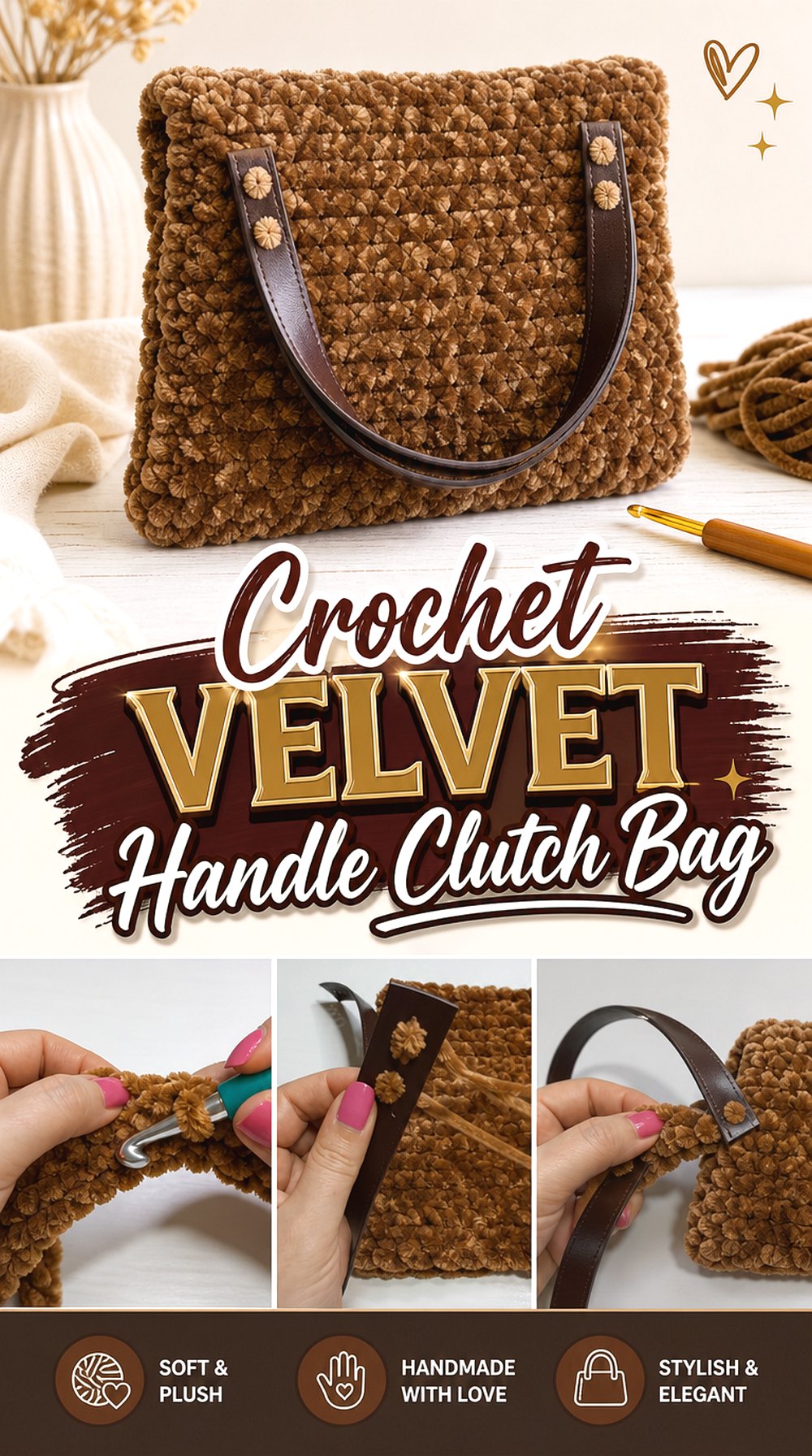
Crochet Capri’s project shifts from shaggy fibers to a smoother velvet finish. The tutorial uses Katia Big Bambi yarn and added bag handles, so the original result is a handled bag rather than a conventional clutch.
As an idea source, it suits readers who want fuzzy softness without the long pile of faux fur. Velvet can keep the outline more readable, which makes hardware and edge finishing more visible. This direction can work particularly well when you want the handles to be the strongest design detail instead of hiding them within a very furry surface.
Velvet Keeps More of the Crochet Shape Visible
A smooth plush yarn generally allows the eye to read the bag’s edges more clearly than eyelash-style fibers do. That means uneven upper edges or poorly aligned handles may also stand out more. Before final attachment, place both handles against the finished body and compare their height, spacing, and visual center from the front.
Added Handles Push the Design Toward a Handbag
The hardware is a defining part of the source project. If you want a classic handheld clutch with no handle, do not assume you can simply leave the hardware off without reviewing the top edge. Check whether the tutorial’s finishing was designed specifically around the handle attachment and whether a separate closure would then be required.
Hardware Scale Should Match the Plush Body
Thick velvet yarn can make very delicate handles look visually undersized, while oversized handles may dominate a compact bag. If you substitute hardware, compare it against the completed body rather than selecting it only from catalog measurements. A quick mock placement can reveal whether the proportions feel balanced before anything is permanently secured.
Creator: Crochet Capri
8. Crochet Compact Velvet Mini Clutch
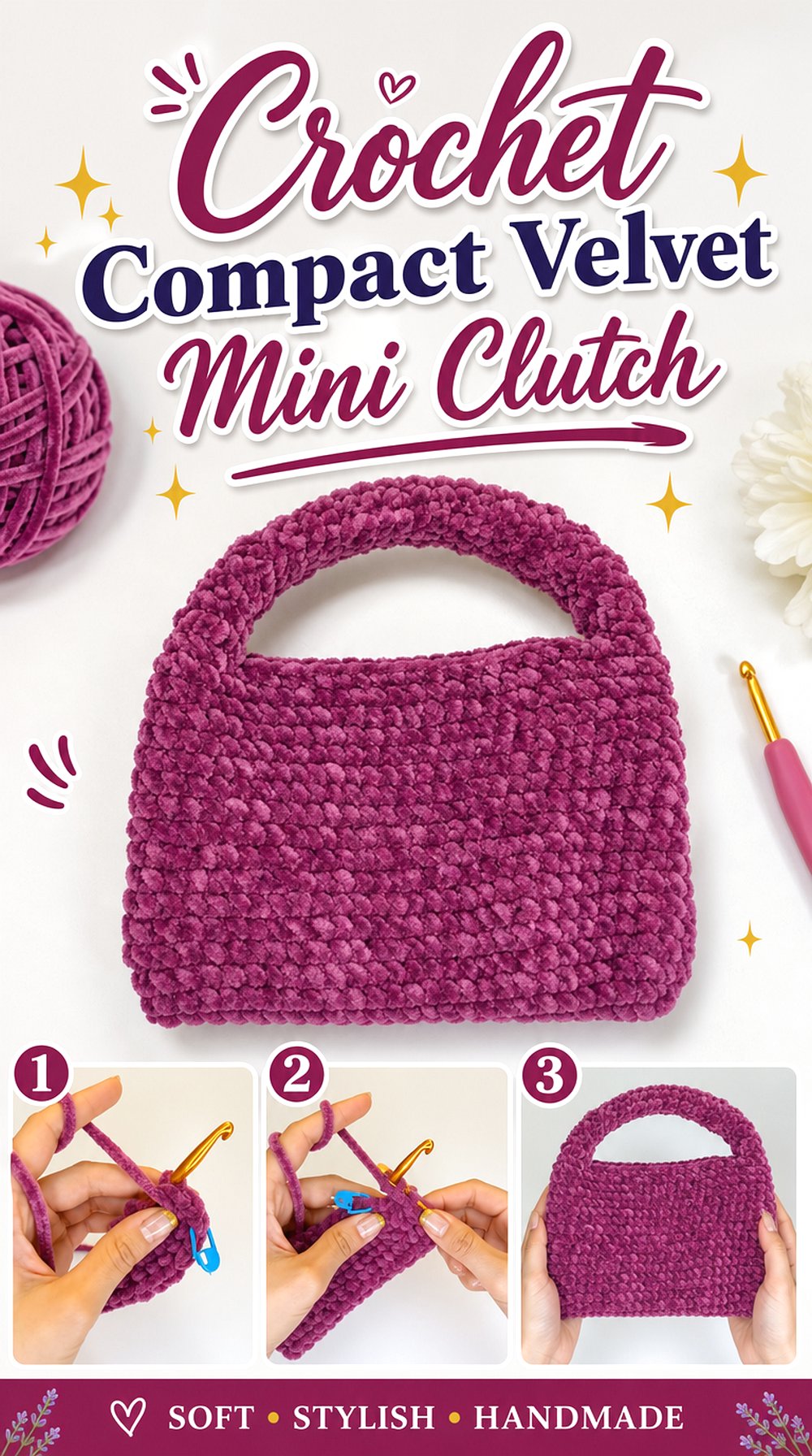
Wb crochet’s tutorial focuses on a small velvet bag with a simple, compact silhouette. Unlike the spring-frame clutches, the publicly visible video description does not specify a particular closure, lining, or elaborate hardware system, so those are details to confirm in the full tutorial before planning modifications.
This project earns its place because the smaller scale lets velvet texture carry much of the visual interest. It can provide a cleaner starting point if you prefer a fuzzy clutch without a large frame, shaggy fur, or prominent decorative surface work.
Small Scale Makes Hand Carry More Natural
A compact body is easier to interpret as a clutch than a deep tote-like form. When deciding whether this tutorial suits your needs, compare the finished shape with the longest item you expect to carry rather than judging the bag only from exterior photos. A clutch that is attractive but too narrow for your essentials will not become more practical simply by changing yarn.
Minimal Styling Lets Velvet Do the Work
Velvet already changes the way light moves across the crochet surface, so the bag does not need many competing details to look distinct. If you customize it, consider choosing one feature to emphasize—closure, handle, edge finish, or color contrast—rather than adding several decorative elements to a very small body.
Confirm the Opening Before Buying Extra Hardware
Because the searchable video information does not clearly identify a closure, do not assume the project includes a zipper, snap, or frame. Watch the opening and finishing sections before purchasing hardware. If you later add a closure that is not part of the source design, check that it suits the thickness of the completed top edge.
Creator: Wb crochet
9. Crochet Inside-Out Fluffy Mini Clutch
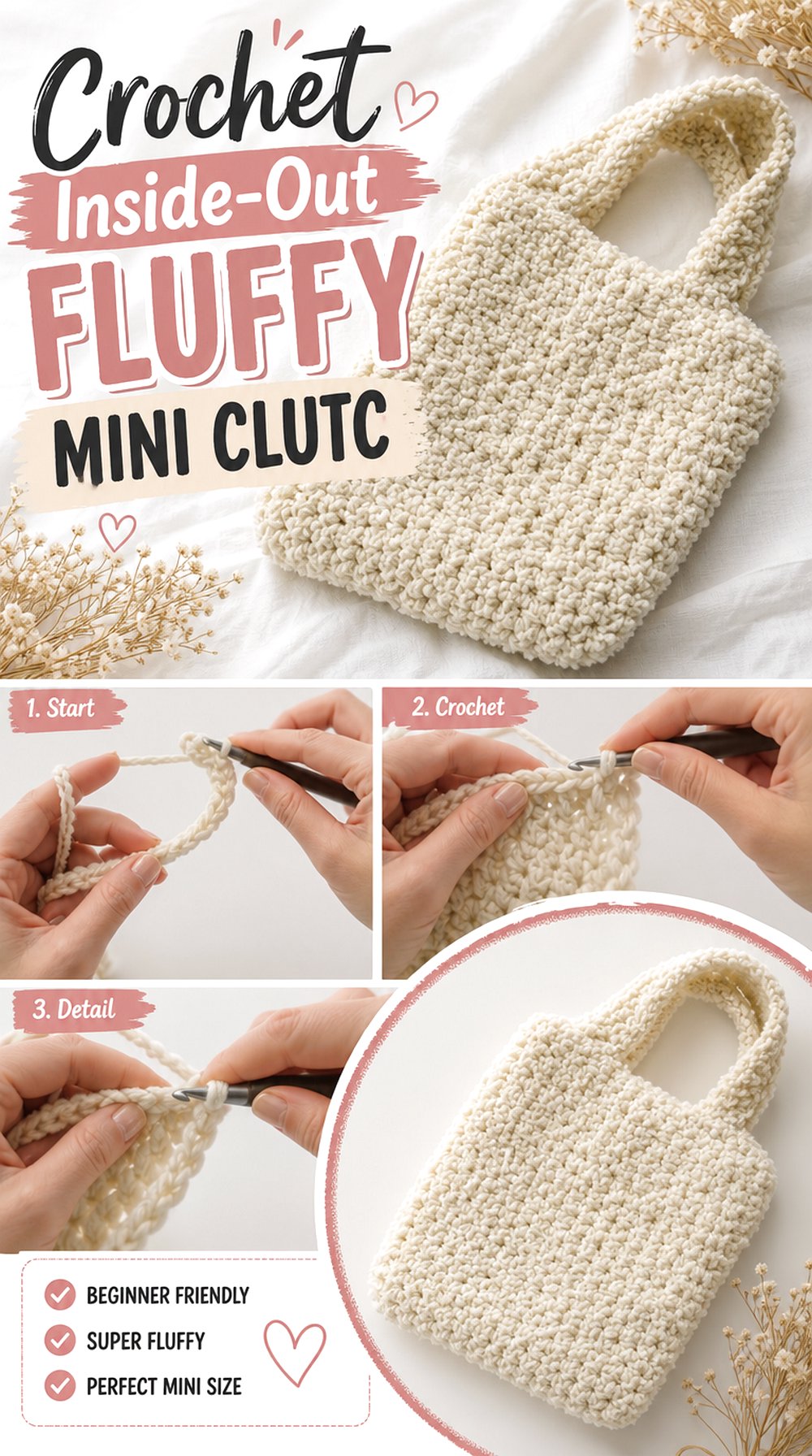
Jul Knitting’s fluffy mini bag uses a particularly interesting finishing choice: the tutorial turns the crocheted body inside out to increase the fluffy, plump appearance. The source gives a compact square-like finished format with an integrated handle, making it more of a mini grab bag than a formal evening clutch.
That inside-out texture makes this idea meaningfully different from simply choosing a fuzzier yarn. The construction itself changes which side of the fabric becomes the exterior, so it is worth considering if your priority is a stuffed, soft-looking surface rather than crisp stitch definition.
The Reverse Surface Is Part of the Design
The creator intentionally uses the opposite side of the fabric to increase the fluffy effect. If you experiment with another yarn, make a small sample and inspect both sides before deciding which should face outward. Some yarns create a dramatic difference between surfaces, while others may show almost no useful change.
Square Proportions Feel More Like a Mini Bag
The source is approximately square rather than wide and low. That makes it a good choice if you like compact, toy-like proportions, but it will not mimic the long envelope shape associated with many evening clutches. If horizontal proportions matter to you, choose a different source rather than forcing this design to become something structurally unrelated.
The Small Handle Creates a Grab-Bag Crossover
The integrated handle keeps the finished project easy to pick up while preserving the visual simplicity of the plush body. It is a useful middle ground between a strapless clutch and a shoulder bag. When deciding whether this carry style works for you, check that the handle opening and overall hand position feel comfortable for the way you intend to use the bag.
Creator: Jul Knitting
10. Crochet Lined Chenille Chain Clutch
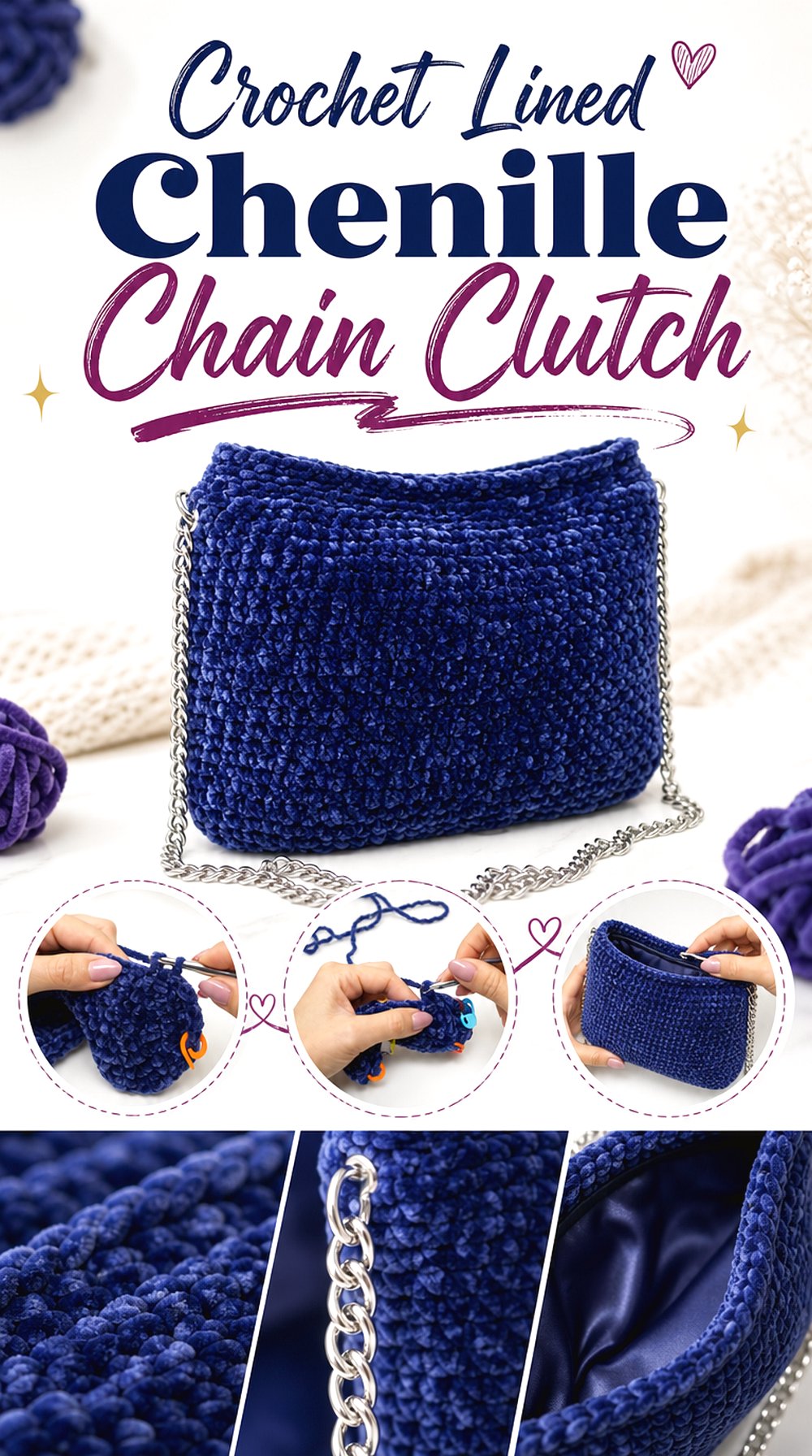
Momì’s Crochet’s Andromeda bag brings several finishing elements together: chenille, a defined bottom and body, a finished upper edge, lining, a magnetic clasp, and chain hardware. That makes it one of the more complete references in this roundup for readers interested in a polished fuzzy bag interior as well as the exterior.
The original project is a chain-strap handbag, but its combination of lining and discreet closure translates well to clutch-inspired styling. It is particularly useful if you prefer a cleaner opening than faux-fur around a zipper or a strongly gathered spring frame.
Lining and Closure Work as a System
A magnetic clasp relies on the upper sections of the bag meeting consistently, so the lining and edge finish matter to the final result. When changing the yarn or finished size, do not treat the clasp as an isolated accessory. Check where the closure will sit once the bag contains something and whether the surrounding fabric has enough support to keep the two sides aligned.
A Chain Strap Can Preserve an Evening Look
Compared with a broad textile belt, chain hardware keeps the carry system visually lighter against a soft chenille body. If you want both clutch and shoulder use, consider how visible the attachment points remain when the chain is removed. Small but well-positioned hardware can make the bag look intentional in both configurations.
The Finished Top Edge Deserves Extra Attention
Fuzzy yarn tends to attract attention through texture, but on a lined clutch the upper edge still frames the entire opening. Check that the lining does not pull the crochet inward or show unevenly above the edge. This is also the point where a yarn substitution can become obvious if the new material is substantially thicker than what the tutorial uses.
Creator: Momì’s Crochet
11. Crochet One-Handle Faux-Fur Clutch
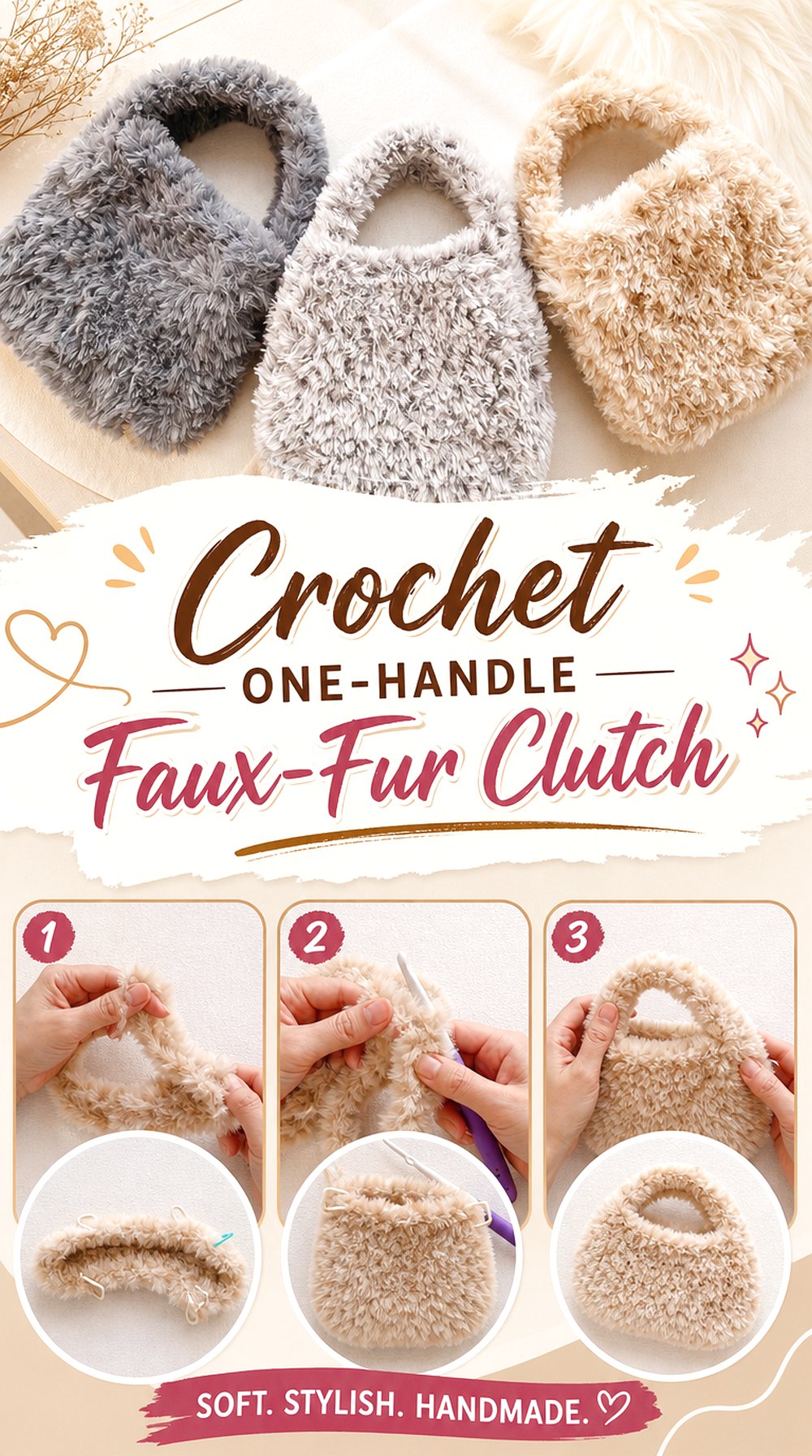
The one-handle fur bag from kaco ゆるゆると編みもの暮らし provides a different solution to carrying a very fuzzy bag. Instead of a long strap or external rigid hardware, the design uses a single handle with fur-style yarn, creating a soft grab-bag silhouette. The listed source identifies Seria Dream Cat fur yarn and a jumbo crochet hook for the project.
For clutch inspiration, the appeal is the compact carry system. You still get a handle, but the bag remains visually close to the hand instead of hanging from a long shoulder strap.
One Handle Sits Between Strapless and Shoulder-Carry Styles
This configuration can work well if you like the visual compactness of a clutch but do not want to hold the entire body in your palm all evening. The handle becomes part of the top silhouette, so its location and proportion matter. If you alter it, check how the bag hangs when lifted rather than assessing the shape only while it lies flat.
Fur Yarn Makes the Surface the Main Feature
The tutorial specifically uses a fur-style yarn, giving this idea a longer, more diffuse pile than most chenille projects in the roundup. That means complex stitch texture would be largely hidden. If you substitute another yarn, decide whether you want the crochet pattern itself to remain visible or whether the goal is an almost fabric-like fuzzy exterior.
Preview the Visual Demonstration Before Relying on Text
The verified video title and channel information are in Japanese. If that is not a language you use, preview the full tutorial before buying materials and confirm that the camera angles and on-screen demonstration give you enough information to follow comfortably. A visually clear video may still work well, but that is a personal learning-format decision.
Creator: kaco ゆるゆると編みもの暮らし
12. Crochet Sherpa Built-In-Handle Clutch
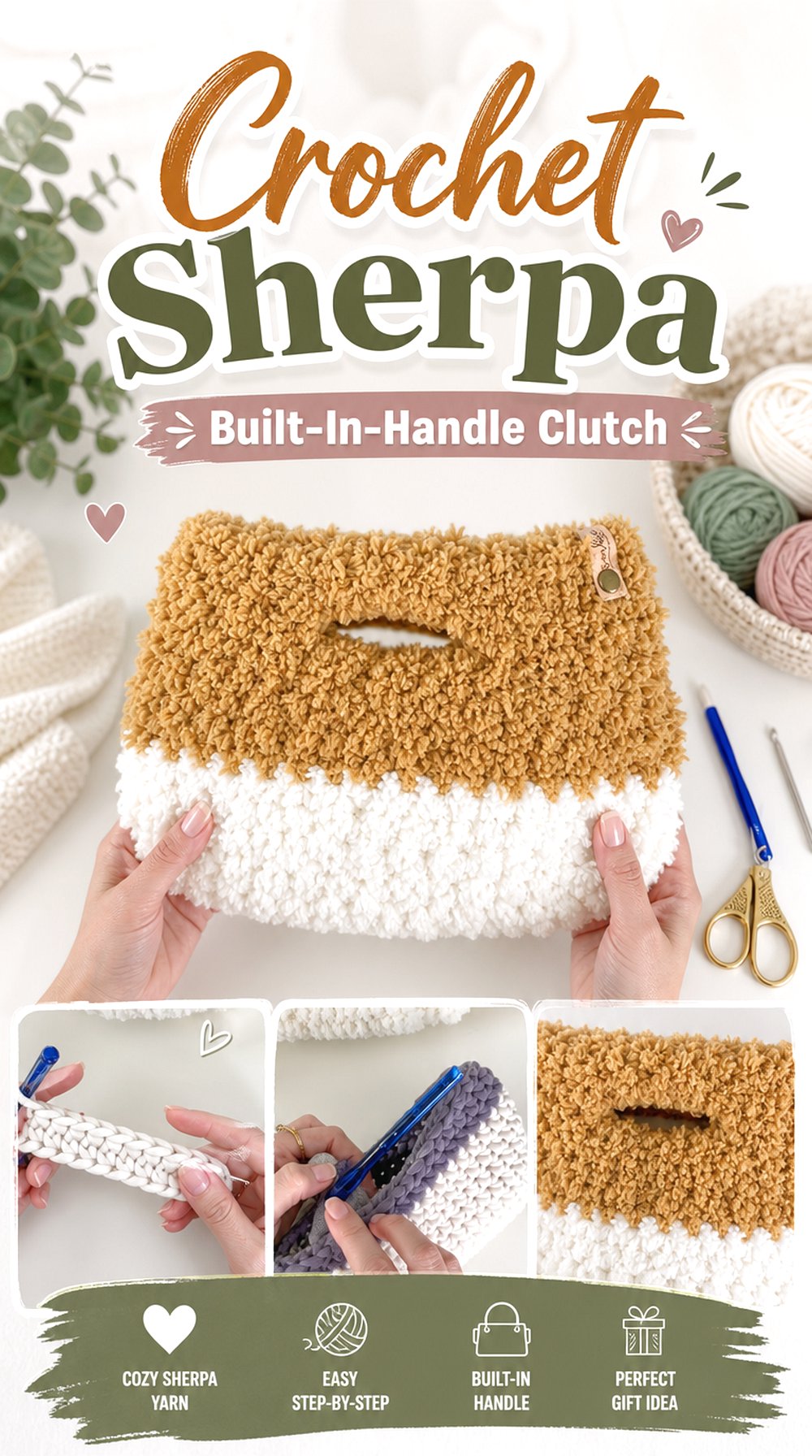
Simply Made by Erin Crochet’s sherpa bag closes the collection with a dense, fleece-like texture and handles formed directly into the upper part of the bag. Unlike designs that depend on purchased chain, frames, or separate handles, this project keeps the carry feature within the crochet construction itself.
The source is a grab bag rather than a strict clutch, but its compact shape and integrated handles make it useful inspiration for a fuzzy handheld accessory. It also demonstrates how a very bulky sherpa surface changes stitch visibility and how optional lining can be considered when stretch is a concern.
Sherpa Creates a Different Kind of Fuzz
Sherpa is visually dense and fleece-like rather than silky like velvet or long-haired like eyelash yarn. That gives the bag a substantial winter-accessory feel even with a simple silhouette. If you are comparing fuzzy yarns in person, look at both pile length and compressed thickness; two equally soft yarns can create very different edge bulk.
Built-In Handles Eliminate Separate Hardware
Because the handle openings are part of the crocheted upper body, there is no need to visually coordinate rings, clasps, or purchased handles. The trade-off is that handle placement becomes part of the crochet structure. If you change the overall width, review how that modification affects handle centering instead of assuming the original placement will still look balanced.
A Liner Can Help a Soft Body Behave More Predictably
The accompanying source material presents a liner as optional and notes its usefulness for reducing stretch. That is worth considering if you plan to carry objects that could pull unevenly against the sherpa fabric. Fit the liner to the finished crochet body rather than forcing the exterior to match a premade liner that is the wrong shape.
Creator: Simply Made by Erin Crochet
Which Fuzzy Clutch Style Should You Choose?
For the closest match to a classic evening clutch, start with the two spring-frame chenille projects or the faux-fur zipper design. Their closures clearly define the opening and give the body a recognizable clutch profile. The lined Andromeda bag is another strong direction when a discreet magnetic closure and optional chain appeal more than a gathered frame.
If texture matters most, Paraligo’s eyelash-yarn bag and kaco’s fur bag provide the shaggiest look, while the sherpa project offers a denser fleece effect. Velvet is a better fit when you want plushness but still want the silhouette and hardware to remain easy to see. For softer casual styling, the Jul Knitting, Rose and Lily, pipa, and Nadezhda Lab tutorials provide useful mini-bag constructions that can inspire clutch-adjacent versions without pretending they are originally strapless clutches.
Conclusion
The most useful way to choose among these crochet fuzzy clutch bag ideas is to start with structure rather than color. Pick a spring frame if you want a strongly shaped opening, a zipper when secure closure is the priority, or a magnetic clasp for a quieter finish. Then decide how much texture you want: velvet and chenille keep the silhouette clearer, while eyelash yarn, fur yarn, and sherpa make the surface itself the main feature.
For true clutch use, pay particular attention to handle and strap construction in the mini-handbag sources before adapting them. Once you have chosen the right shape, use the original tutorials for exact construction, materials, and finishing details.
Frequently Asked Questions
Which fuzzy yarn is easiest to work with for a crochet clutch?
There is no universal easiest option, but yarns with a shorter, more uniform pile generally make stitch placement easier to see than long eyelash or fur-style yarn. Sherpa can also hide loops because of its dense fleece texture. If visibility is a concern, make a small sample before starting the bag and use stitch markers at important points instead of relying entirely on visible stitch tops.
Should a fuzzy crochet clutch have a lining?
Not every clutch requires one, but a lining can be useful when the crochet fabric is soft, stretchy, or likely to let small objects press through the stitches. It can also provide a cleaner interior around magnetic hardware. The lining should suit the finished bag rather than forcing the crochet body into a different size or shape. Check the original tutorial first because some projects already include lining instructions and others do not.
Can I turn a fuzzy shoulder-bag tutorial into a strapless clutch?
Sometimes, but only when the strap is structurally independent of the bag body and opening. A tutorial may use strap attachments as part of the edge finishing or hardware arrangement. Before omitting anything, watch the complete assembly and check what remains at the attachment points. If the body still has a clean, functional opening without the strap, a clutch-style adaptation may be practical.
What closure works well with very fluffy crochet yarn?
Spring frames, zippers, and magnetic closures can all work, but each handles bulky yarn differently. A spring frame creates a strongly defined gathered edge, while a zipper needs a clear path that is not obstructed by long fibers. Magnetic hardware is less visually dominant but depends on the two sides of the opening aligning properly. Match the closure to the finished thickness rather than choosing hardware before examining the crocheted fabric.
How can I avoid losing stitches in faux-fur or sherpa yarn?
Mark important positions as you work and count regularly instead of waiting until the end of a long section. With extremely fuzzy fibers, you may need to feel for the stitch opening rather than rely only on sight. A practice sample using the intended hook and yarn can also help you learn how the loops feel before mistakes become difficult to locate in the full bag.
Can I replace chenille with faux-fur yarn in the same clutch tutorial?
Not automatically. Even when both yarns look fuzzy, their thickness, stretch, pile length, stitch visibility, and compressed bulk can differ enough to change the bag dimensions or interfere with hardware. Make a sample and compare it with the tutorial’s intended fabric before committing. Frame widths, zipper edges, handle placement, and lining fit are especially sensitive to a major change in yarn thickness.