Argyle can turn a practical hooded scarf into a much more graphic winter accessory, but the diamond pattern is only part of the decision. Hood depth, scarf width, pockets, texture, yarn weight, and construction all affect how successfully the colorwork will sit and how the finished piece will drape.
These 13 crochet argyle hooded scarf ideas use different hooded-scarf tutorials as construction starting points. Some already use stripes or multiple colors; others provide a solid base that could carry argyle through tapestry crochet, larger intarsia-style color sections, surface-crochet diagonal lines, or motif placement. The tutorials are credited for their original construction. When adding argyle, swatch the planned colorwork separately and check that it does not make the scarf noticeably stiffer, heavier, or narrower than the source design.
Quick List
- Continuous-Diamond Crochet Hooded Scarf
- Pocketed Classic Argyle Crochet Hooded Scarf
- Ribbed-Stripe Argyle Crochet Hooded Pocket Scarf
- Wide-Wrap Argyle Crochet Hooded Scarf
- Deep-Texture Argyle Crochet Scoodie Scarf
- Two-Color Graphic Argyle Crochet Hooded Scarf
- Chunky Traditional Argyle Crochet Hooded Scarf
- Mini-Bean Accent Argyle Crochet Hooded Scarf
- Bordered Chunky Argyle Crochet Scoodie Scarf
- Granny-Square Argyle Crochet Hooded Scarf
- Rounded-Hood Argyle Crochet Scarf
- Slim-Tie Argyle Crochet Hooded Scarf
- Tapered-End Argyle Crochet Hooded Scarf
Plan the Argyle Before You Commit to the Hood
A hooded scarf has more shaping and movement than a flat scarf, so a diamond repeat that looks balanced on a rectangle may shift when it reaches the crown or hood opening. Decide first whether the argyle will cover the whole accessory or remain on the long scarf panels. Keeping the hood comparatively simple is often the easier planning route because the diamonds can remain symmetrical on flatter fabric.
Before starting the full piece, make a blocked colorwork swatch in the yarn and technique you intend to use. Compare it with a plain swatch from the same yarn. If the argyle sample is noticeably denser or narrower, putting it across the entire hood can change the fit. A scarf-end panel or pocket accent gives you more freedom to use stronger color contrast without interfering with hood shaping.
Choose an Argyle Method That Matches the Base Fabric
Traditional argyle combines diamond-shaped color areas with narrow diagonal lines crossing the diamonds. Crochet can suggest that look in several ways, and each changes the fabric differently. Tapestry-style colorwork can create crisp repeated diamonds, but carrying unused yarn tends to produce a denser fabric. Larger separate color sections can reduce long floats, although they create more yarn management and finishing.
Another option is to crochet the hooded scarf first and add selected diagonal lines afterward with surface crochet or embroidery-style yarn work. That keeps the underlying construction intact, which can be particularly useful with textured or shaped tutorials. Keep added lines relaxed; tight surface work can pull a soft scarf into ridges. Motif-based versions can also create an argyle-inspired grid, but check blocked square dimensions before joining them into wearable panels.
Check Weight, Drape, and Pattern Placement Together
A large hood already concentrates fabric around the head and shoulders. Adding carried colorwork, dense diamonds, borders, pockets, or multiple joined motifs can increase that visual and physical weight. This matters most when adapting chunky or heavily textured tutorials.
For a lighter-looking result, concentrate diamonds near the scarf ends and allow more solid fabric around the face. For a stronger statement, continue the pattern upward but stop periodically to try the piece against the intended wearer or compare it with the source tutorial’s proportions. Also check what happens at seams. A centered back-hood seam can split a diamond awkwardly, while a deliberate half-diamond placement can make the seam look planned. The same principle applies to pockets: align the pattern before attaching or folding them so two competing diamond grids do not meet at different heights.
1. Continuous-Diamond Crochet Hooded Scarf
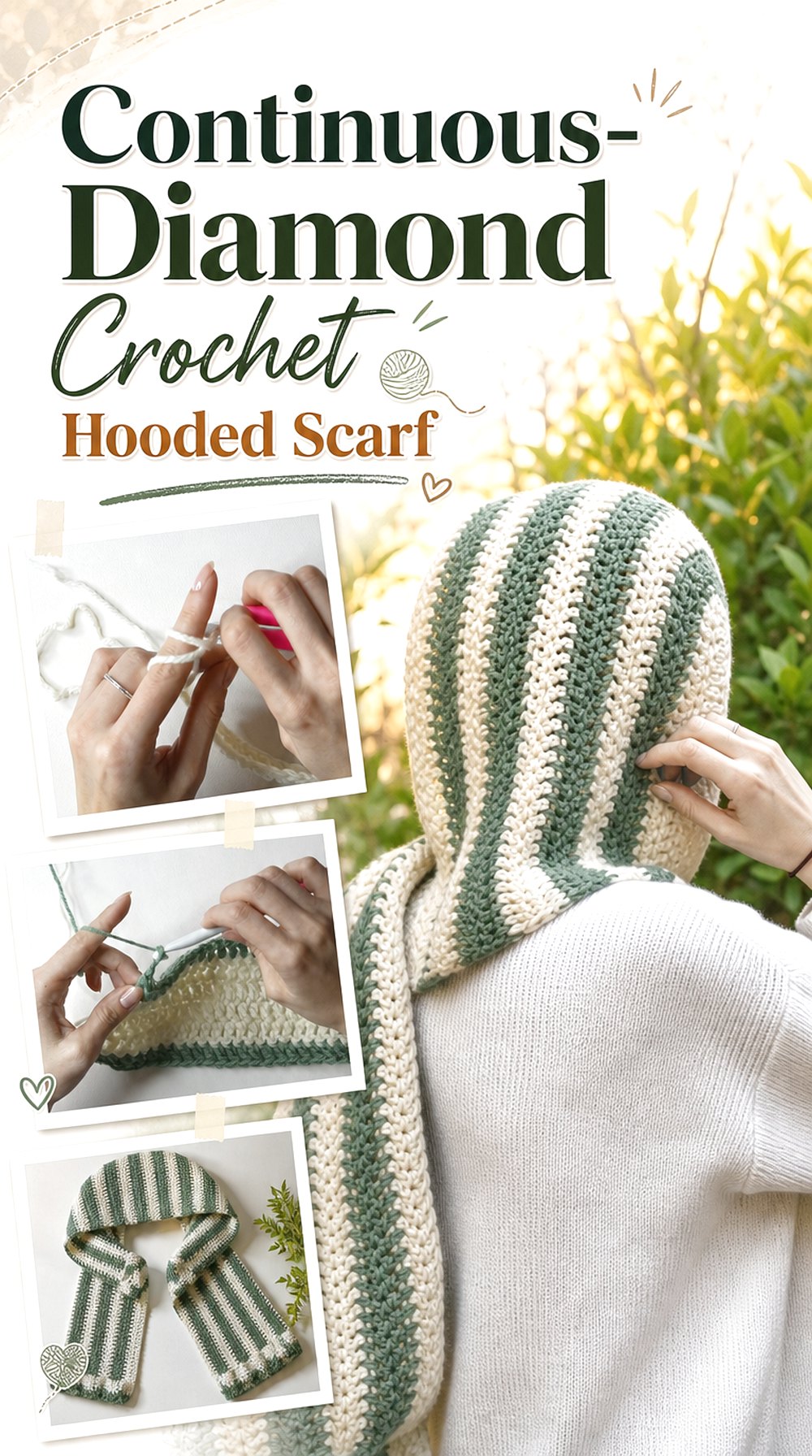
This version starts with the streamlined hood-and-scarf silhouette demonstrated by VivCrochets. The source design is worked as a no-sew hooded scarf and shows how stripes can travel through the accessory, which makes it a useful base for thinking about uninterrupted color placement.
For an argyle interpretation, keep the underlying shape intact and replace some of the visual striping with spaced diamond panels or add diagonal surface lines after the scarf is complete. This option suits someone who wants the hood and scarf to read as one continuous accessory rather than a separate hood attached to long tails.
Let the Diamond Sequence Flow Through the Center
A continuous construction can make color placement look especially deliberate because there is no obvious assembly break between major sections. Before adding diamonds, map where the center of the hood falls relative to the scarf tails. A full diamond landing exactly on an important shaping area may become distorted, so shifting the repeat slightly can produce a cleaner transition.
Surface Lines Can Preserve the Original Drape
The source already provides a strong graphic framework through color changes. Instead of rebuilding the fabric as dense tapestry crochet, consider forming the larger colored areas first and adding the thin crossing lines afterward. This separates structure from decoration. Keep those added diagonals flexible enough that the scarf still bends naturally around the neck rather than puckering along the line.
Watch the Pattern Where the Hood Curves
A straight diamond grid is easiest to read on the hanging scarf portions. Around the hood, shaping changes the direction of the fabric, so the same repeat may appear tilted once worn. If maintaining perfectly recognizable argyle is the priority, limit the strongest diamonds to the scarf tails and use simpler color blocks around the crown.
Creator: VivCrochets
2. Pocketed Classic Argyle Crochet Hooded Scarf
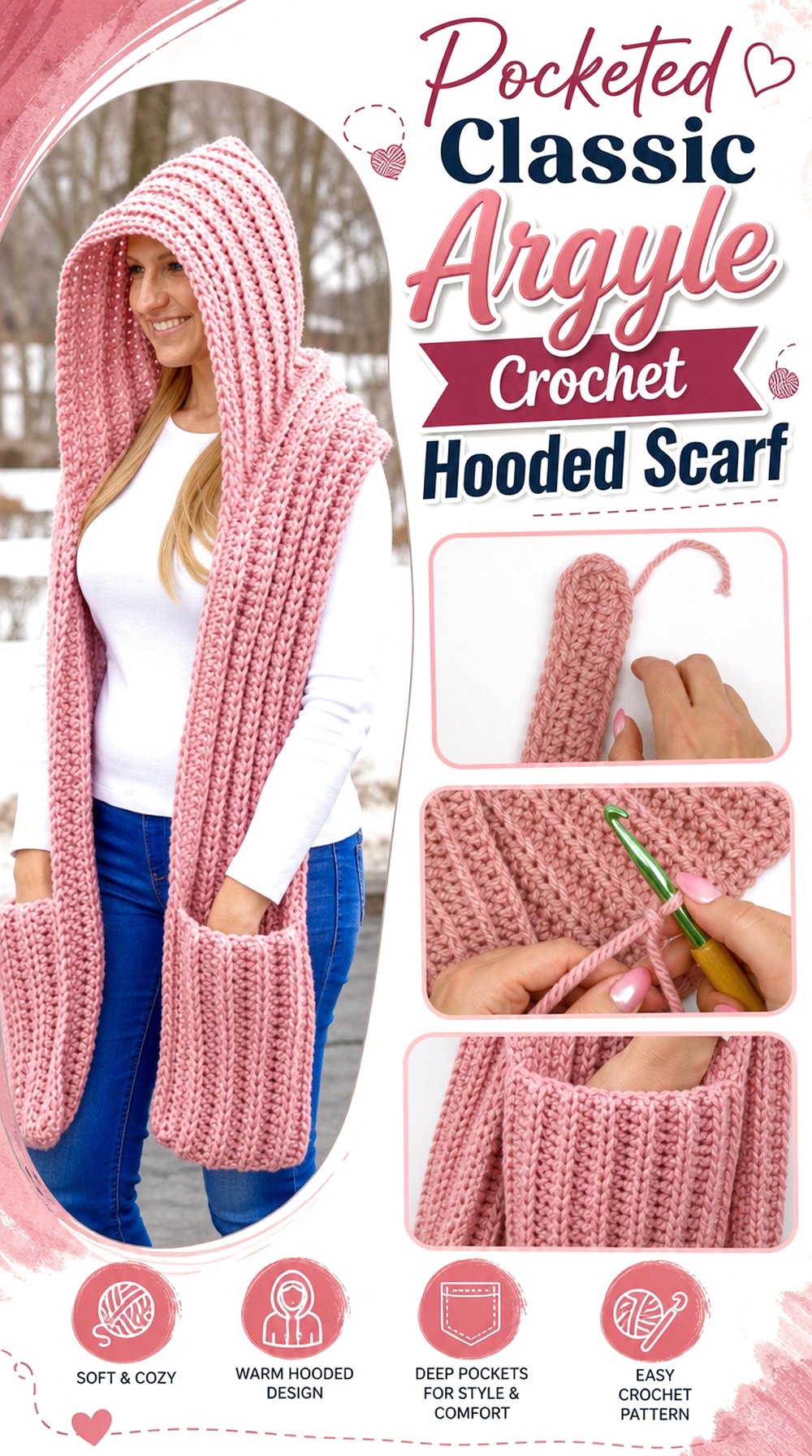
A pocketed hooded scarf gives argyle two extra focal areas: the scarf ends. Naztazia’s tutorial combines a hood, long scarf, and pockets, creating a practical base for a classic diamond arrangement without requiring the entire hood to carry complex colorwork. The source uses half double crochet and a super bulky yarn construction.
One effective design direction is to place matching argyle panels on both pocket ends while keeping the hood mostly solid. That creates visual symmetry when the scarf hangs down the front and avoids forcing large diamonds through the hood’s shaping.
Treat the Pockets as Matching Argyle Panels
Pocket areas naturally attract attention because they sit near the ends of the scarf. Centering a diamond on each pocket can make the whole accessory look intentional even if the middle remains plain. Check the pocket orientation before committing to the design so the diamond points face the same direction when the scarf is worn.
Bulky Fabric Needs a Simpler Color Plan
Large stitches already create strong scale. Adding many small diamonds to a bulky hooded scarf can make the surface look busy and may require frequent color changes. Fewer, larger diamonds usually make more sense visually. Swatch one full planned motif first so you can judge whether the edges remain crisp enough at the chosen gauge.
Keep Pocket Function Separate from Decoration
If diagonal surface lines cross a pocket opening or attachment area, they can become snag points or interfere with the way the pocket lies. Finish the structural pocket first, then assess where decorative lines can sit without pulling the opening. Argyle should enhance the surface rather than change the way a hand enters the pocket.
Creator: Naztazia
3. Ribbed-Stripe Argyle Crochet Hooded Pocket Scarf
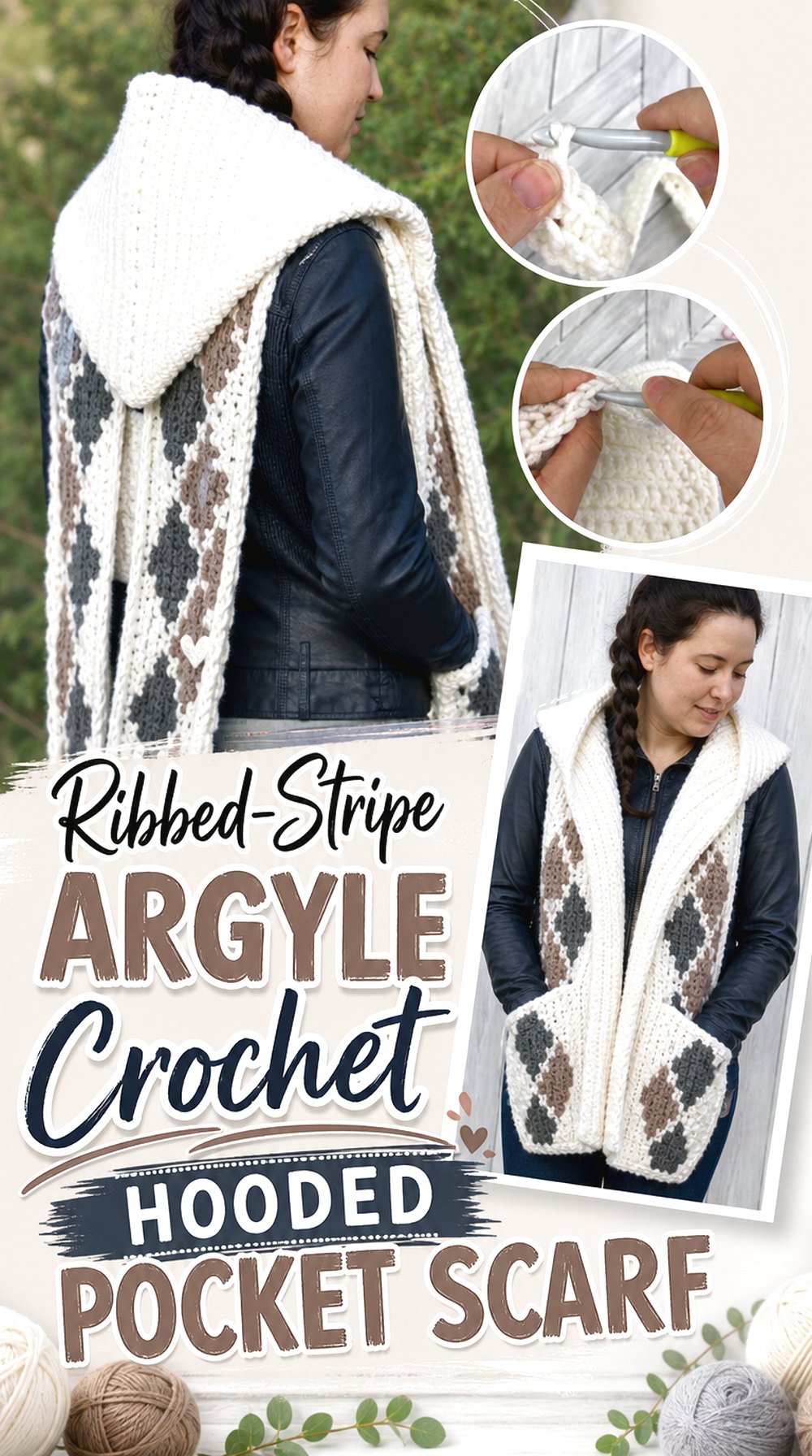
Winding Road Crochet’s hooded pocket scarf uses back-loop texture in a construction that produces clear horizontal ridges. That makes this base quite different from a smooth tapestry-style scarf: the argyle has to cooperate with texture rather than compete against it.
A restrained adaptation could use broad color sections to suggest the diamonds and reserve the fine crossing lines for the smoother scarf ends or pockets. The finished result can combine linear ribbing with geometric colorwork, giving the fabric visual depth without requiring every ridge to carry multiple colors.
Let the Ridges Become Part of the Design
Back-loop texture already establishes a strong directional line. Instead of hiding it, use the ridges as a background grid for the diamonds. Large color blocks will generally read more clearly than tiny motifs here. Place one sample diamond over several ridges and view it from a normal wearing distance before repeating it across the scarf.
Align Color Changes Before Folding the Pockets
When scarf ends are folded or formed into pockets, a centered motif can shift upward or disappear partly onto the reverse. Decide where the visible pocket face will be before placing the strongest diamond. A paper sketch or removable markers on the completed flat scarf can help visualize the final fold without altering the creator’s construction instructions.
Avoid Overworking a Stretchy Edge
Ribbed crochet can flex differently from a dense colorwork section. If you add tight surface lines or heavily carried yarn to only one area, that section may stop stretching like the surrounding fabric. Check the transition between decorated and undecorated portions and loosen added details if the pocket end begins to cup.
Creator: Winding Road Crochet
4. Wide-Wrap Argyle Crochet Hooded Scarf
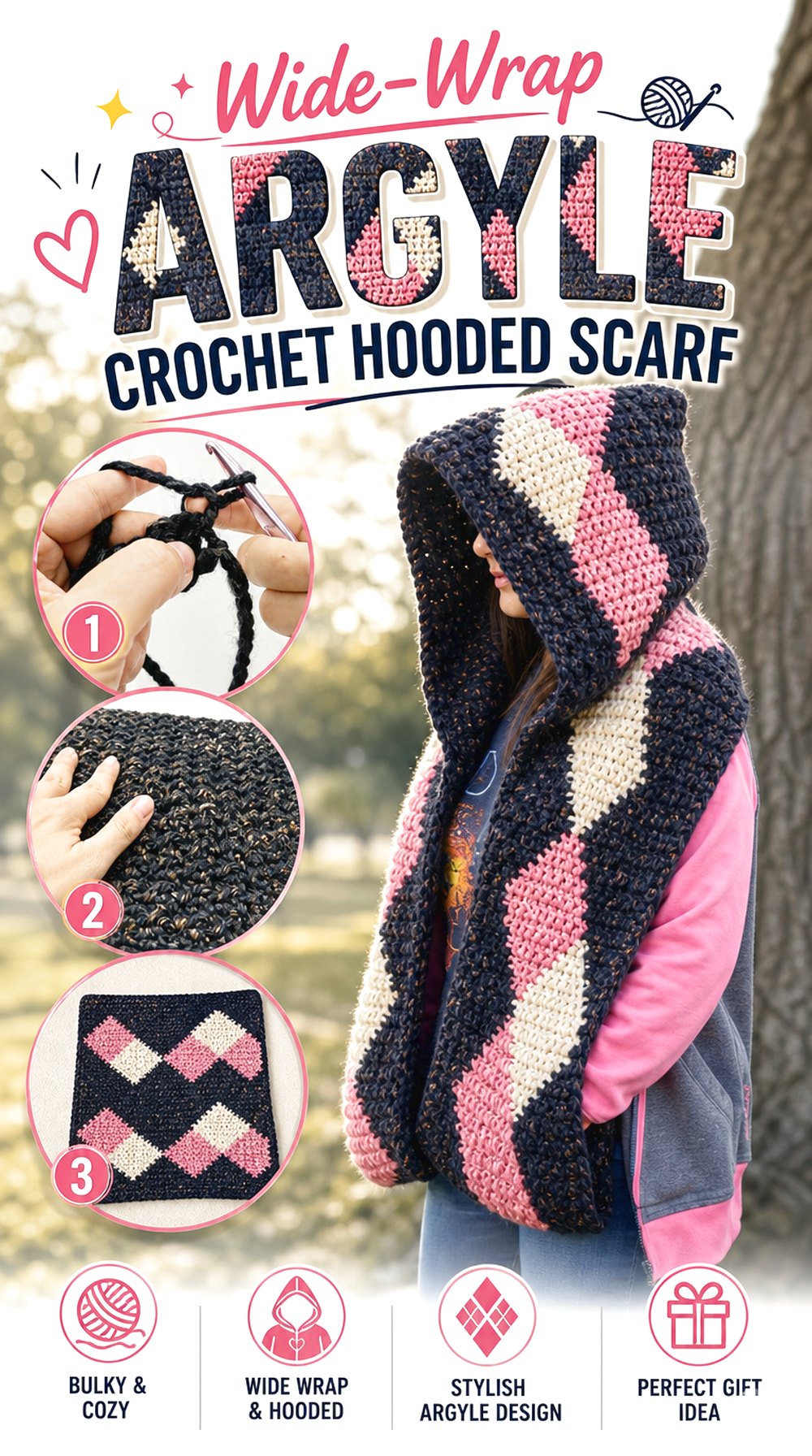
Bag-O-Day Crochet’s hooded scarf with pockets has the generous feel of a wrap as well as a scarf. That extra visual width gives an argyle design more room to breathe and makes this a good candidate for oversized diamonds rather than a tight traditional repeat.
Think of the colorwork as a statement panel: broad diamonds could run along the lower scarf sections while the hood remains a coordinating solid. The design difference here is scale. Instead of many small motifs, the wider fabric can support a few strong shapes that remain visible even when the scarf is loosely wrapped.
Oversized Diamonds Suit a Broader Surface
A wider scarf gives a large diamond enough space to look intentional rather than squeezed between edges. Before choosing the repeat, compare the width of one blocked diamond with the usable width of the scarf. Leaving some plain background around each motif can improve definition and reduce the number of color changes.
Use the Hood as Visual Rest
A wide wrap plus full-coverage argyle can become visually dense, especially once the scarf is doubled around the neck. Keeping the hood plain or limiting it to a single border color gives the eye a quieter area and also reduces the risk of colorwork changing the hood’s flexibility.
Creator: Bag-O-Day Crochet
5. Deep-Texture Argyle Crochet Scoodie Scarf
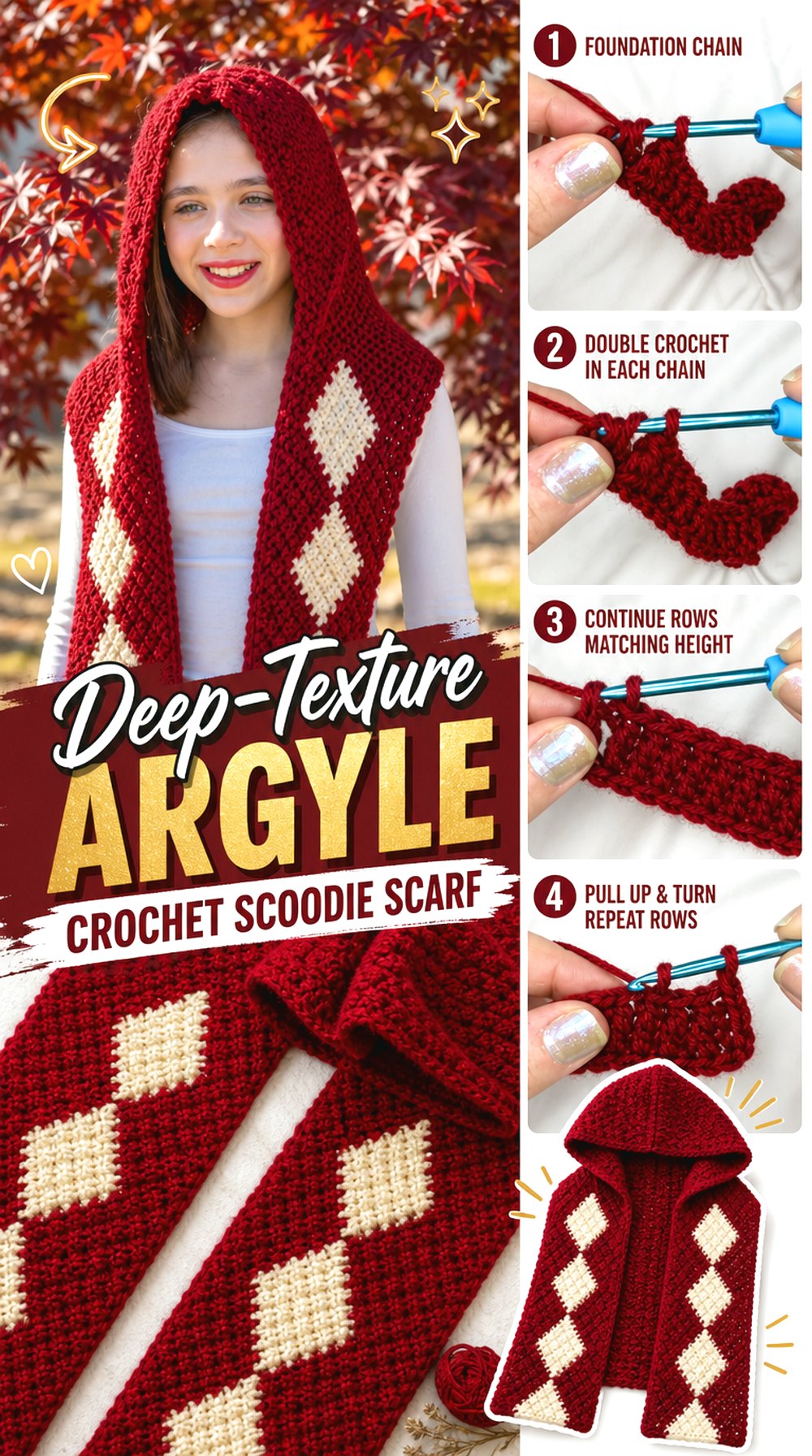
Faith.Wisest uses front- and back-post crochet to create a notably textured scoodie fabric. Because the stitch relief is already a major design feature, this version calls for a different kind of argyle: fewer color changes and more deliberate placement.
Instead of covering the entire surface with small diamonds, consider one strong argyle section on each scarf tail or a simplified two-color diamond band. This keeps the dimensional texture visible. It also makes the project distinct from flatter colorwork scarves, where the geometric motif carries most of the visual interest.
Texture Can Soften Sharp Diamond Edges
Raised post stitches create highlights and shadows that may interrupt the clean outline of a small color motif. A larger diamond has a better chance of reading clearly across that relief. Swatch at least one complete motif rather than judging from a few rows, because the final diamond shape is what reveals whether texture and color are cooperating.
Keep the Crown More Flexible Than the Tails
The hood must bend around the head, while the hanging scarf ends can tolerate more decorative density. If your argyle technique adds carried yarn or another layer of surface work, concentrating it on the tails can preserve more flexibility around the crown and sides of the face.
Use Contrast Selectively Around Heavy Texture
Very high contrast plus strong stitch relief can make every small irregularity more noticeable. If the diamonds feel visually fragmented, reduce the number of colors or keep the diagonal crossing lines closer in value to the background. The goal is to let the argyle remain legible without erasing the texture that distinguishes this scoodie.
Creator: Faith.Wisest
6. Two-Color Graphic Argyle Crochet Hooded Scarf
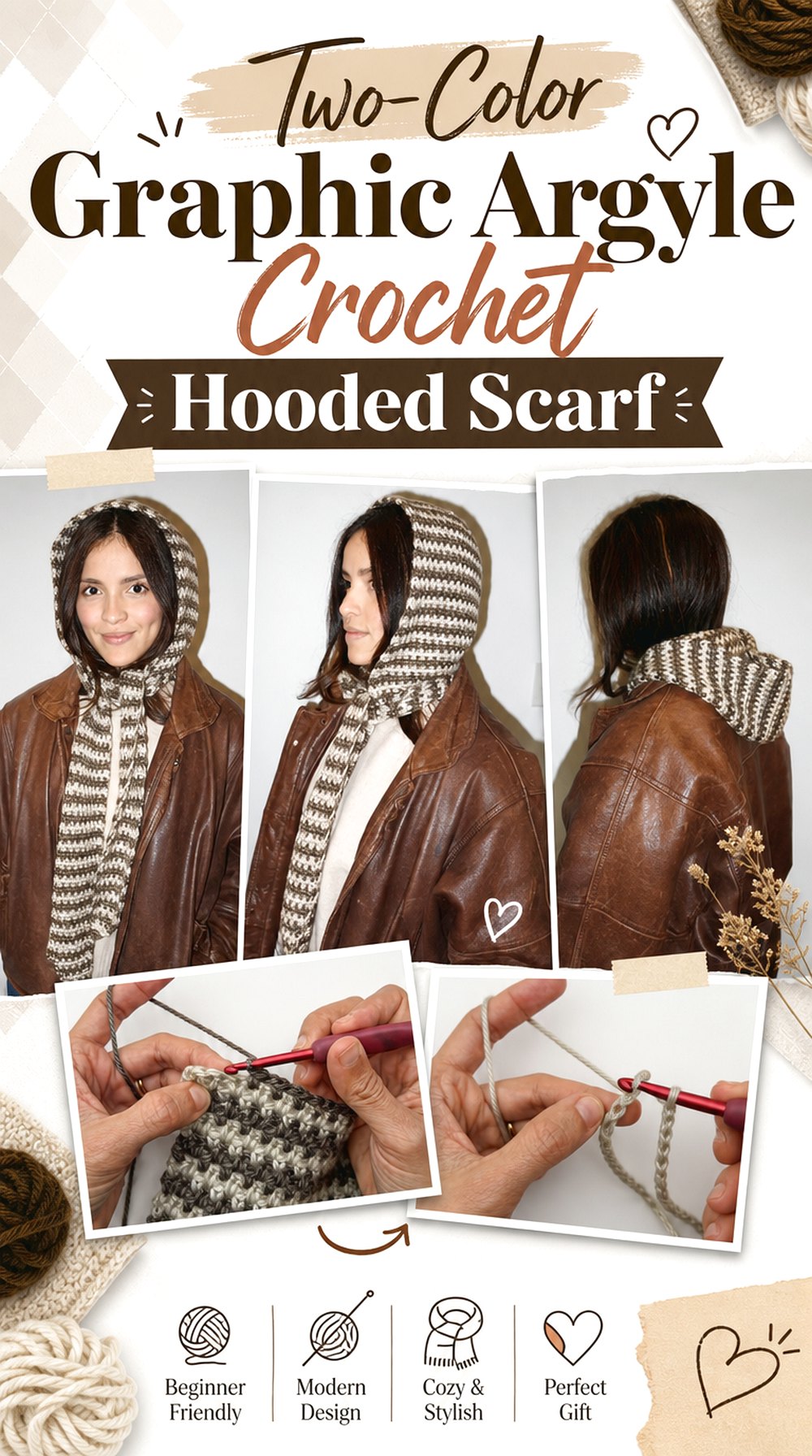
Andrea Quinteros demonstrates a shaped scoodie using color changes, shaping, and seaming. That existing two-color logic makes this a natural base for a bold, simplified argyle interpretation.
Rather than introducing a large palette, keep the main diamonds to two strong colors and use a third color only if you want thin crossing lines afterward. This approach suits readers who like modern graphic argyle more than a traditional multicolor preppy look. Because the scarf and hood are constructed with shaping, plan where complete diamonds can fit before letting the motif approach a decrease or seam.
Use the Existing Color Rhythm as a Starting Point
A tutorial that already changes colors gives you useful visual checkpoints for deciding where a new shade can enter without making the project feel random. You do not have to copy its stripe arrangement. Instead, treat the demonstrated color handling as a construction reference and design your diamond widths independently on a swatch.
Stop Full Diamonds Before Major Shaping
A diamond that begins on a straight section may narrow unpredictably if the underlying fabric is also decreasing. One cleaner option is to finish the last complete diamond before the shaping becomes prominent, then continue in the background color through the transition. The argyle can resume on another flatter section if the construction allows it.
Plan the Back Seam Like Part of the Motif
When a hood is seamed, the two edges become a visible meeting point. A diagonal line that ends abruptly at that seam can look accidental. Either keep the back largely solid or arrange the color placement so the two sides form a deliberate mirrored effect after joining.
Creator: Andrea Quinteros
7. Chunky Traditional Argyle Crochet Hooded Scarf
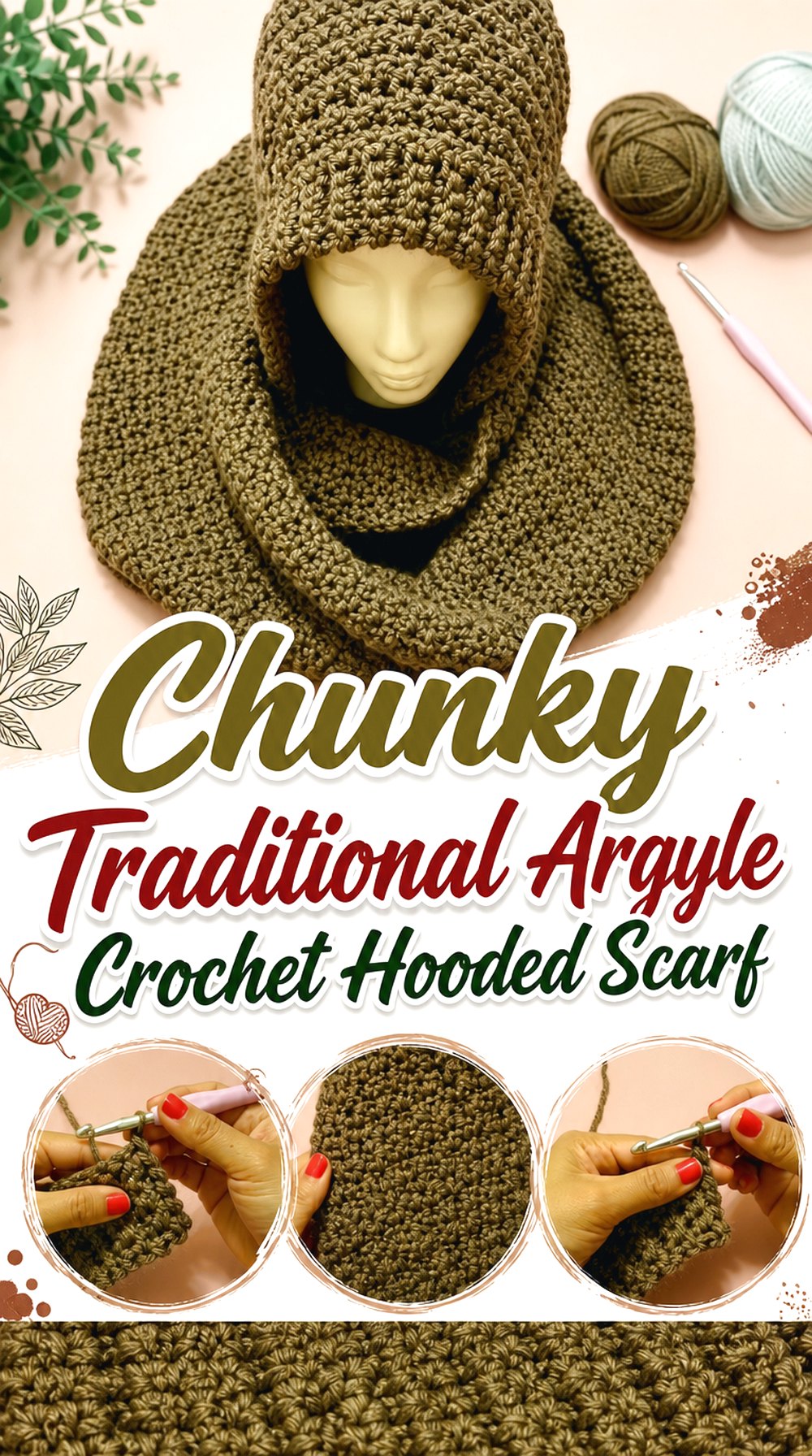
The hooded scarf from Las Maravillas del Crochet provides a straightforward wearable form in medium-weight yarn with a larger hook specified by the creator. That relatively open scale can suit a recognizable traditional argyle treatment with solid diamonds and thin crossing lines.
Here, the design focus is classic rather than experimental. Think restrained background color, one or two diamond colors, and diagonals added carefully enough that they do not tighten the fabric. The long scarf surfaces can hold the strongest repeat, while the hood can use a single diamond, a partial repeat, or simply the background shade.
A Classic Palette Benefits From Clear Spacing
Traditional-looking argyle depends as much on negative space as on the diamonds themselves. If the motifs touch too closely, the pattern can read as general color blocking rather than argyle. Test the visual spacing on a sample that is wide enough to contain at least one complete diamond and part of the surrounding background.
Keep Crossing Lines Light on an Open Fabric
Thin diagonal lines are what make a diamond grid read strongly as argyle, but they should not become structural cords. When adding them after the base is crocheted, avoid pulling across the surface. The scarf should still lie flat without the diagonal paths gathering the background stitches.
Decide Whether the Hood Needs a Full Repeat
A traditional all-over pattern is tempting, but the hood opening interrupts the rectangle. One complete centered motif near the back can sometimes look more intentional than forcing several diamonds around the face. Compare both ideas on a sketch before changing colors during the actual hood.
Creator: Las Maravillas del Crochet
8. Mini-Bean Accent Argyle Crochet Hooded Scarf
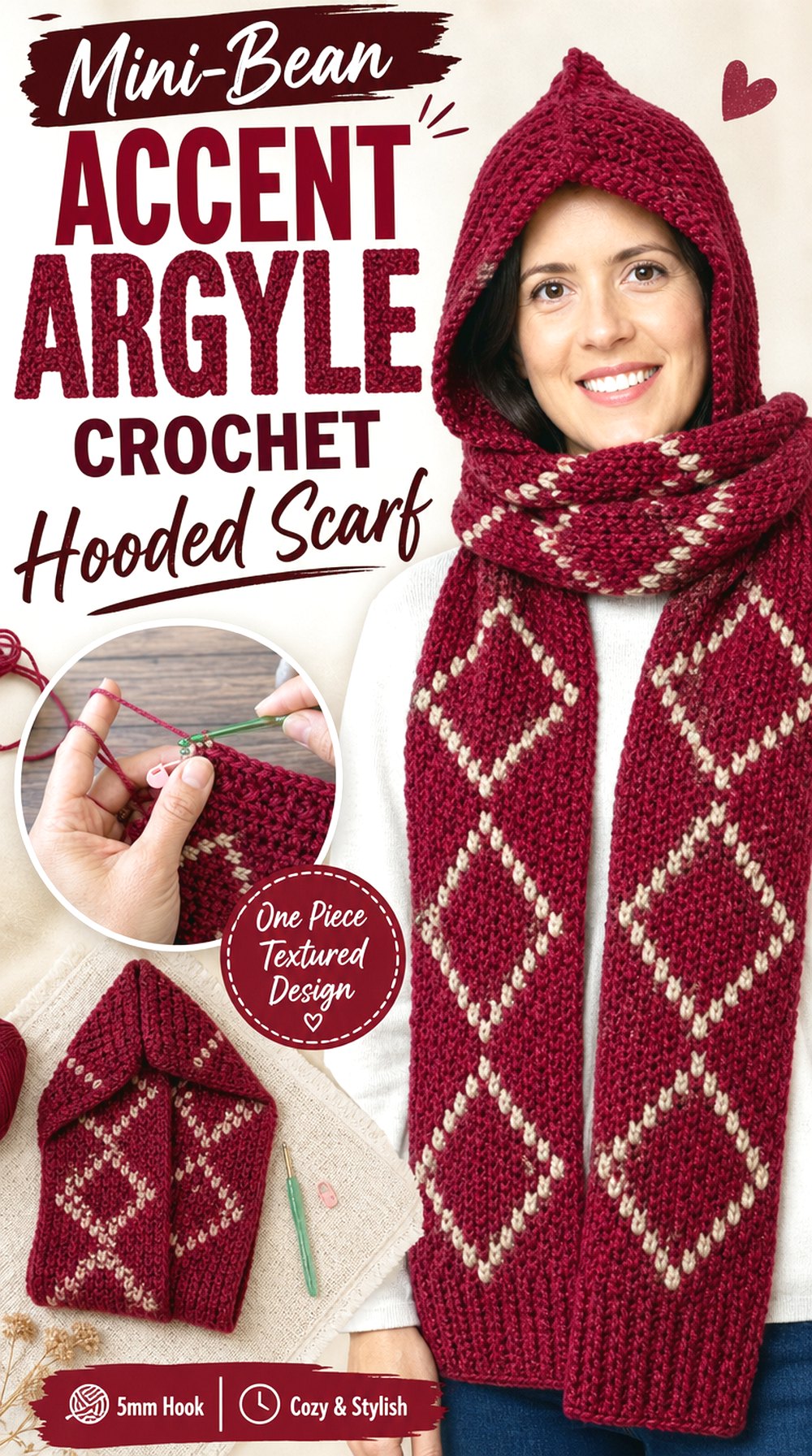
ChristaCoDesign’s Arco hooded scarf is worked in one piece and combines half double crochet with a mini-bean texture. The alternating texture makes it better suited to selective argyle accents than to an uninterrupted tapestry grid.
One possibility is to place color diamonds within calmer bands while allowing the bean-textured sections to remain solid. Another is to keep the original textured fabric monochrome and add only a few diagonal lines near the scarf ends. Either approach protects the stitch definition that gives this design its identity.
Give the Mini-Bean Texture Room to Show
If every textured section also changes color repeatedly, both design elements may compete for attention. A quieter background lets the raised stitches stay readable. Consider using argyle as a framed end panel rather than the dominant fabric across the entire scarf.
Check the Transition Between Dense and Smooth Areas
A decorative colorwork panel can have a different thickness from the surrounding mini-bean fabric. Block the test piece before judging it. If one area remains noticeably firmer, reduce the amount of carried yarn or shift the argyle to surface decoration instead of rebuilding the stitch pattern in multiple colors.
Creator: ChristaCoDesign
9. Bordered Chunky Argyle Crochet Scoodie Scarf
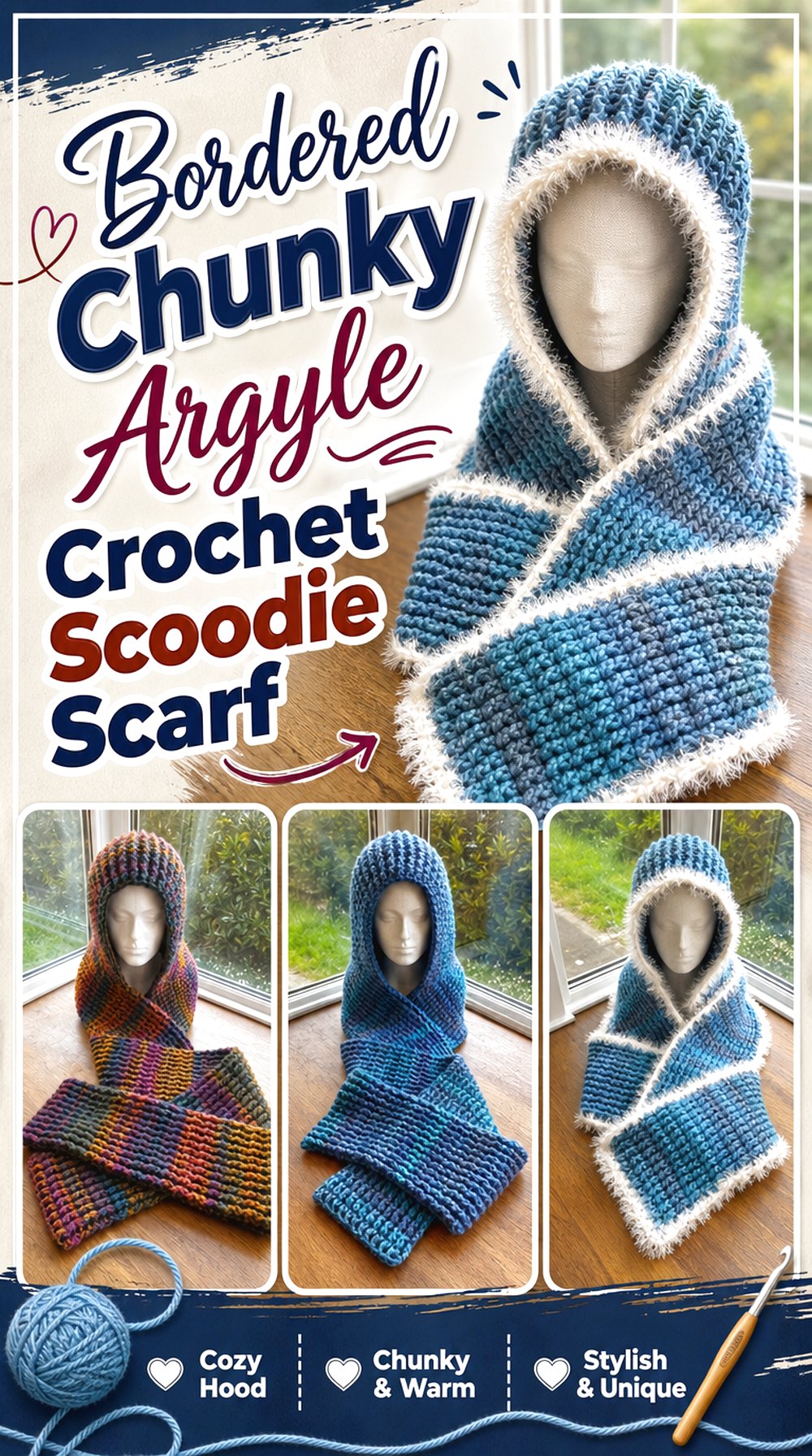
24 Carat Crochet’s chunky scoodie uses a rounded hood shape and is designed so a contrasting edge can be added around the finished accessory. That border creates a natural frame for an argyle adaptation.
Instead of taking the diamonds all the way to the outer edge, leave a plain margin and let the border surround the colorwork. This produces a more finished, graphic composition and gives you room to correct slight differences in motif placement before the edging is added.
A Border Can Contain a Busy Diamond Pattern
Argyle already has multiple directional elements. A solid edging helps separate that activity from coats or other clothing underneath. Choose the border color during swatching rather than at the end; it changes how large and bright the interior diamonds appear.
Rounded Hoods Need Different Motif Expectations
The rounded crown is one of the defining features of this source design. A rigid square grid may not stay visually square once it curves over the head. Consider letting the scarf tails carry the complete argyle repeat while the hood receives only coordinating color blocks or a smaller central accent.
Chunky Yarn Magnifies Every Color Change
With chunky stitches, each change occupies more visible space. Irregular tension at a color transition can therefore be easier to see. Practice the planned change on a sample and inspect both sides, particularly if the scarf will sometimes flip or twist while worn.
Creator: 24 Carat Crochet
10. Granny-Square Argyle Crochet Hooded Scarf
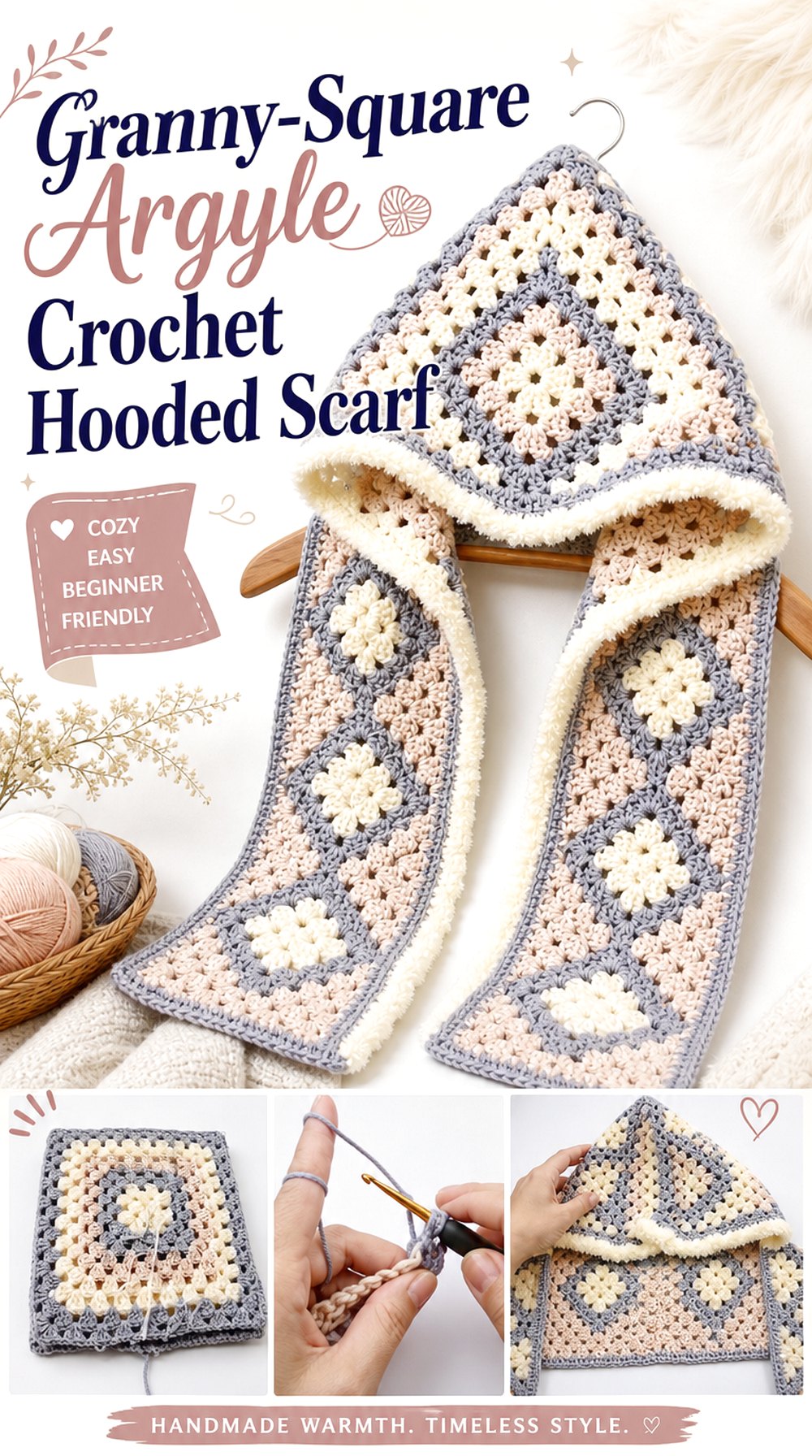
Crochet Musings demonstrates a hooded scarf assembled from large and smaller granny squares. This opens a completely different route to the theme: instead of crocheting traditional argyle directly into rows, arrange square motifs so their color placement suggests a repeating diamond grid.
This is best described as argyle-inspired rather than identical to classic woven argyle. Its strength is modular planning. Individual squares can be rearranged before joining, letting you check color balance and motif direction across the hood and scarf without committing to the full layout immediately.
Build the Argyle Effect Through the Square Layout
Lay the blocked motifs on a flat surface and step back before joining anything. Alternating dark-centered and light-centered squares can create larger diagonal movement across the finished scarf. Photographing a few arrangements can make differences easier to compare than repeatedly moving the same squares from memory.
Block Every Motif Before Measuring the Grid
Small differences multiply when several squares are joined. If one motif finishes narrower than another, the hood may pull toward that area or the scarf edge may wave. Compare blocked dimensions first and correct compatibility before the final assembly rather than relying on the joining process to hide size differences.
Treat Hood Orientation Separately From Scarf Orientation
A square that looks upright on a hanging scarf may rotate visually when it bends across the crown. Decide whether the hood should continue the exact diagonal rhythm or simply use the same colors. Maintaining the palette without forcing identical motif direction can produce a cleaner wearable result.
Creator: Crochet Musings
11. Rounded-Hood Argyle Crochet Scarf
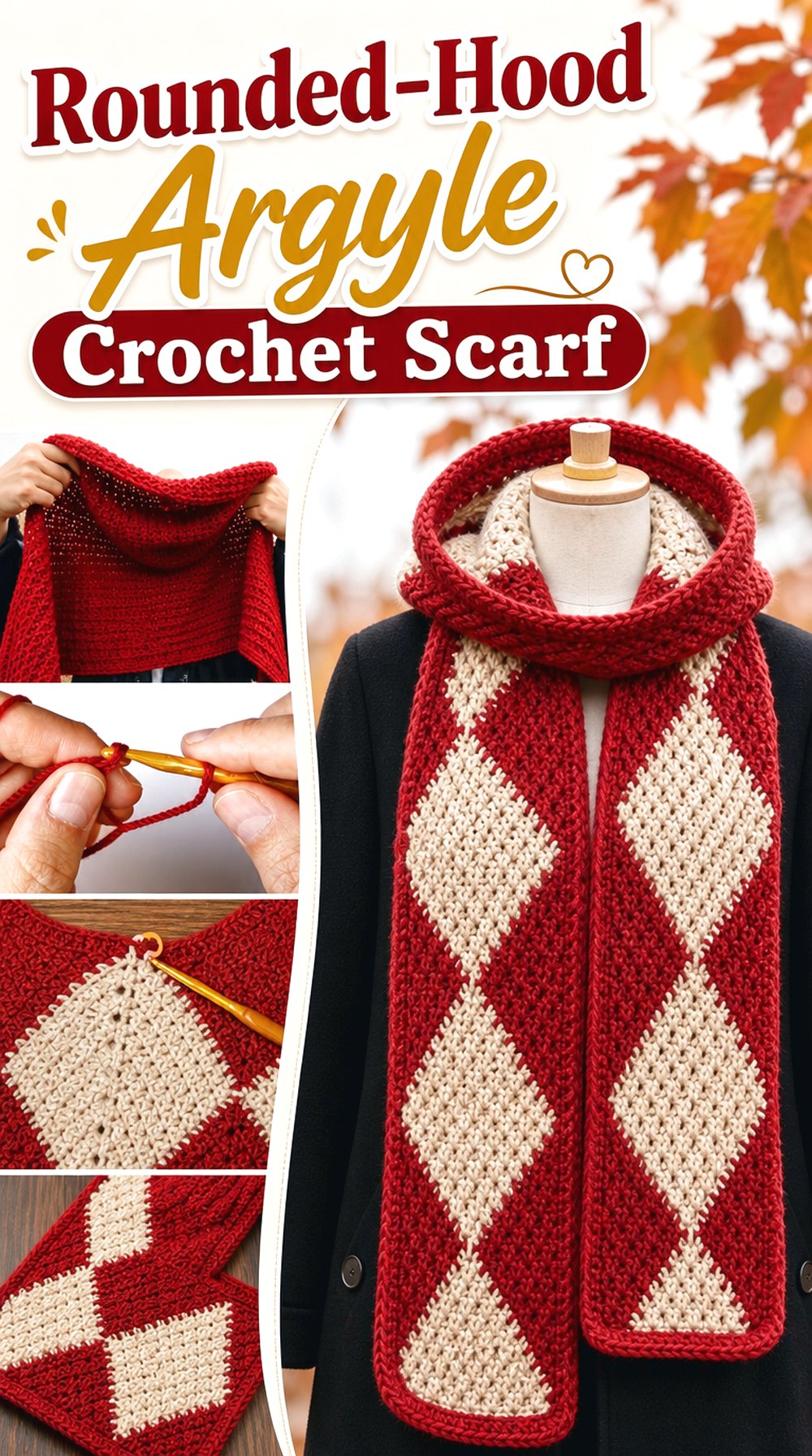
Totally Fierce Crochet Channel demonstrates a hooded scarf with rocking-stitch texture and shaping that produces a rounded hood. That rounded profile makes this design a good choice for argyle concentrated lower on the accessory rather than carried rigidly over the crown.
The result can feel more tailored if the scarf sections use crisp diamonds while the hood relies on the same background and accent colors in simpler bands. This creates continuity without asking a straight geometric repeat to conform perfectly to curved shaping.
Protect the Rounded Crown From Excess Density
Colorwork that carries multiple strands can make a soft rounded crown firmer. If the source fabric shapes cleanly on its own, preserve that behavior by keeping heavier argyle sections below the hood transition. Added diagonal lines can still connect the palette without covering the entire head section.
Rocking-Stitch Texture Changes the Visual Grid
The source’s stitch pattern creates its own surface rhythm, so check how a diamond edge crosses that texture. A larger motif may remain readable where a small one becomes jagged. View the swatch both flat and slightly curved to mimic how the scarf will look around the neck.
Creator: Totally Fierce Crochet Channel
12. Slim-Tie Argyle Crochet Hooded Scarf
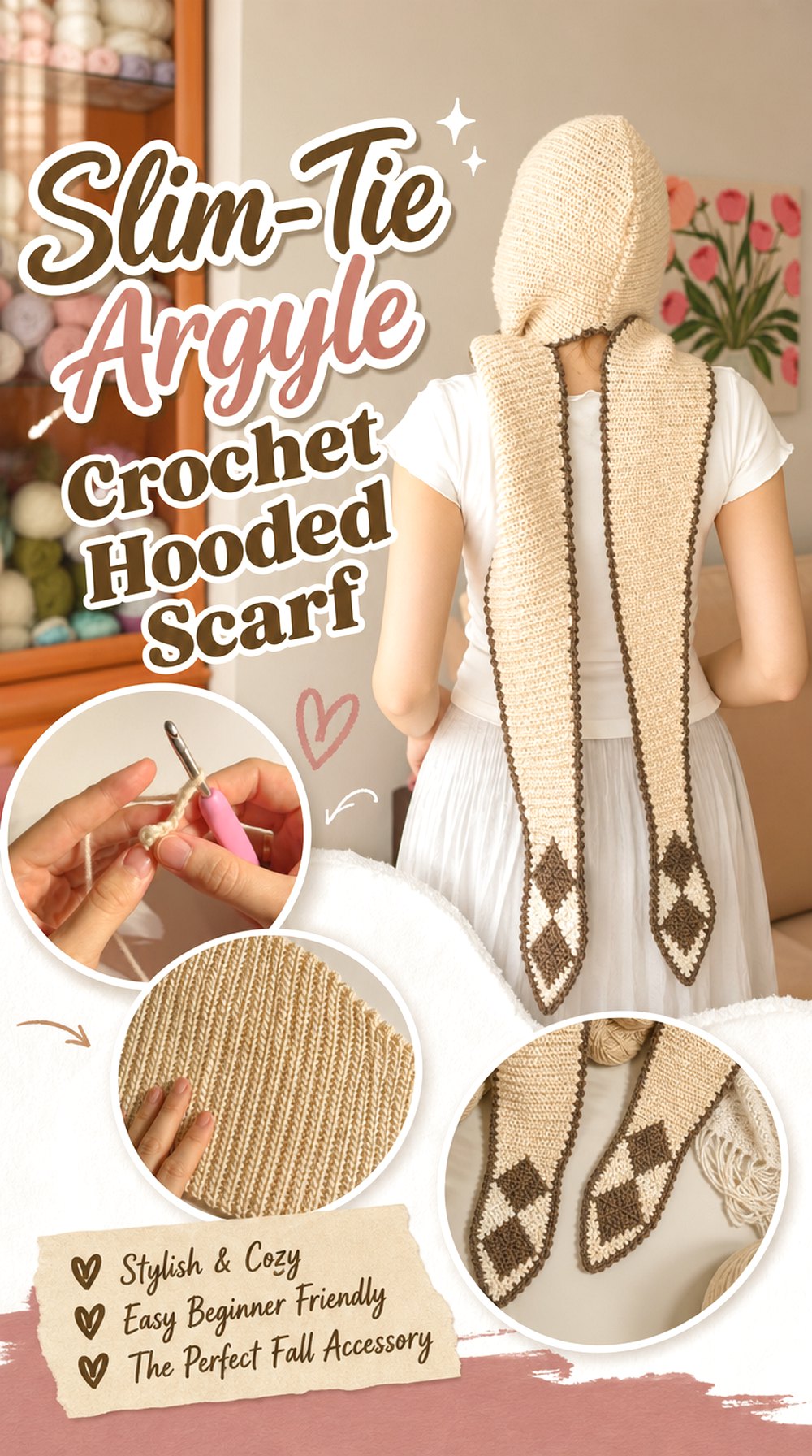
WONDER NETTING’s hooded scarf has a narrower, fashion-forward silhouette with the option of longer or shorter tie-like ends shown in the tutorial. This gives argyle a smaller canvas and calls for a scaled-down design rather than the broad diamonds used on pocket scarves.
A narrow central diamond sequence can run along each end, while the hood itself stays mostly solid. The result is less blanket-like and more accessory-focused, making it useful for readers who want the recognizable diamond look without a wide winter wrap.
Scale the Diamond to the Narrower Ends
A motif that nearly fills the scarf width can lose its outline at the edges. Leave a visible background margin on both sides so the diamond remains complete. If the sample cannot fit comfortably, reduce the motif rather than clipping the sides of every repeat.
Keep Long Ends From Becoming Too Heavy
Longer ties move more when worn, so dense carried yarn can make decorated sections swing differently from the plain hood. Compare the weight of an argyle swatch with an equally sized plain swatch. If the difference is obvious, use fewer colorwork repeats or add only surface details.
Let the Hood Opening Stay Clean
A narrow silhouette benefits from an uncluttered line around the face. Stopping the strongest argyle below the hood lets the colorwork function like a vertical accent instead of wrapping around the opening. A small coordinating edge can connect the two areas without adding another full motif.
Creator: WONDER NETTING
13. Tapered-End Argyle Crochet Hooded Scarf
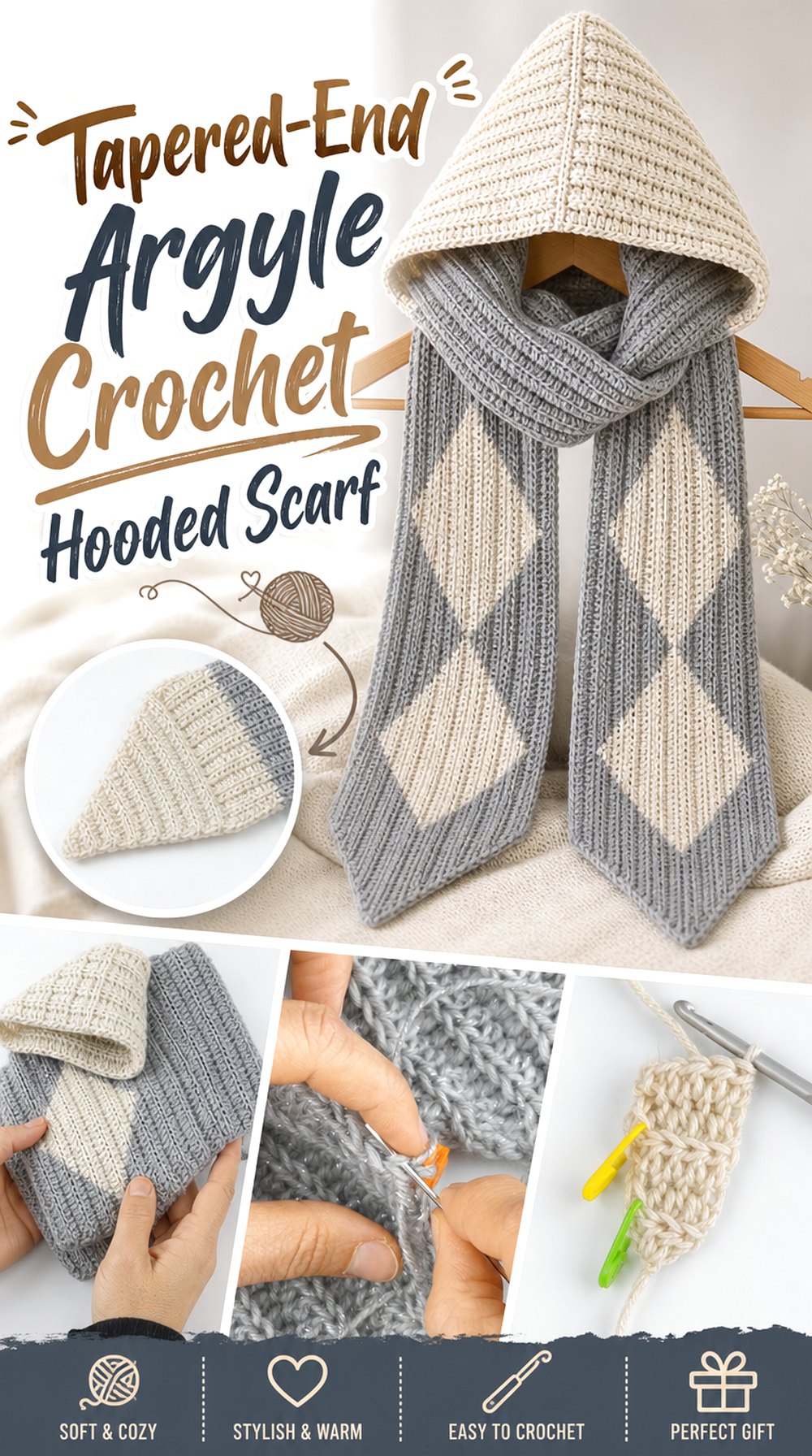
Francesca Uncinettando Crochet&Love demonstrates a Sophie-style scarf that can be developed into a hooded scarf, producing a different outline from the rectangular pocket and wrap designs elsewhere in this collection. The tapered scarf shape makes conventional repeating argyle impractical near the tips, but that limitation can become the design feature.
Place the largest diamond where the scarf has enough width, then allow the motif to simplify as the fabric narrows. A centered diagonal line or small color block can continue toward the tip without trying to squeeze a complete diamond into insufficient space.
Let the Pattern Fade Before the Narrowest Point
A tapered end naturally gives you less room with every section. Rather than cutting diamonds off at the edges, stop the complete repeat while the scarf is still wide enough and continue with one of the established colors. This creates a deliberate transition from geometric center to simple tip.
Use Mirrored Placement on Both Ends
Because the scarf ends frame the front of the body, mismatched diamond heights can be more obvious than they are on a wide wrap. Mark the planned location of the first full motif on both sides before beginning the decorative work so the two ends read as a pair.
Keep the Hood From Competing With the Taper
The unusual silhouette already adds interest. A solid hood with a narrow argyle-related trim can keep attention on the tapered scarf sections rather than making every surface equally busy. This is particularly effective if the diamond colors are high contrast.
Original Tutorial and Creator Credit
Creator: Francesca Uncinettando Crochet&Love
Comparing the 13 Argyle Directions
| Idea | Main Construction Difference | Argyle Direction | Most Important Check |
|---|---|---|---|
| Continuous-Diamond | No-sew continuous scarf and hood | Flowing diamonds or surface lines | Distortion at hood shaping |
| Pocketed Classic | Hood plus hand pockets | Matching pocket diamonds | Pocket-face alignment |
| Ribbed-Stripe | Back-loop ridged fabric | Large diamonds over texture | Stretch through decorated areas |
| Wide-Wrap | Broad hooded wrap with pockets | Oversized statement motifs | Overall visual and fabric weight |
| Deep-Texture | Raised post-stitch fabric | Selective diamond bands | Motif clarity over relief |
| Two-Color Graphic | Shaped and seamed scoodie | Simplified two-color diamonds | Repeat placement near decreases |
| Chunky Traditional | Straightforward hooded scarf | Classic diamonds plus diagonals | Surface-line tension |
| Mini-Bean Accent | One-piece textured scarf | Limited argyle panels | Thickness changes between textures |
| Bordered Chunky | Chunky rounded scoodie | Large motifs inside solid frame | Scale of color transitions |
| Granny-Square Argyle | Joined square motifs | Modular diamond-grid effect | Blocked square compatibility |
| Rounded-Hood | Shaped rounded crown | Argyle mainly on scarf tails | Hood flexibility |
| Slim-Tie | Narrow hood scarf | Small vertical diamond sequence | Motif width and end weight |
| Tapered-End | Narrowing scarf tips | Diamonds fading into solid ends | Symmetry between both sides |
Conclusion
The most convincing crochet argyle hooded scarf is not necessarily the one with the most diamonds. For a classic look, the straight or pocketed scarf constructions give the pattern plenty of flat space. Textured and rounded designs work better when argyle is used selectively, while the granny-square version offers a modular interpretation and the tapered design creates a lighter, more fashion-focused silhouette.
Choose the construction first, then decide how much extra density your colorwork can tolerate. A blocked sample can reveal whether carried yarn, surface lines, or joined motifs are changing the drape before that problem reaches the hood. Use the original tutorials near each idea for the creators’ exact construction details, then plan the argyle as a separate customization layer.
Frequently Asked Questions
Can I add argyle to any crochet hooded scarf tutorial?
You can adapt many hooded scarves, but some bases accept geometric colorwork more easily than others. Flat, moderately smooth scarf sections provide the simplest canvas. Highly textured stitches, narrow tapered ends, and strong hood shaping can distort small diamonds. Make a swatch using the base stitch and intended argyle method first, then compare its width, flexibility, and thickness with the plain fabric.
Is tapestry crochet the only way to make an argyle hooded scarf?
No. Tapestry-style colorwork can create the colored diamonds directly in the fabric, but it is only one option. Larger separate color sections can form the main diamonds, while surface crochet or embroidered yarn lines can create the crossing diagonals afterward. Granny-square layouts can also produce an argyle-inspired geometric effect. Each method affects drape, thickness, yarn management, and finishing differently.
Should the argyle pattern continue across the hood?
It can, but it does not have to. The scarf tails are flatter and usually make full diamonds easier to keep recognizable. Hood shaping, seams, and the curve around the head can change the apparent geometry. If the pattern starts looking distorted near the crown, keep the hood in a coordinating solid color or use only one carefully placed motif rather than forcing the full repeat.
How can I stop surface-crochet diagonal lines from puckering the scarf?
Work the decorative line with enough slack to follow the existing fabric rather than pulling the stitches together. Periodically lay the scarf flat while adding the line. If the fabric begins forming a ridge along the diagonal, remove that section and work it more loosely. Blocking may improve small irregularities, but it should not be relied on to correct a strongly tightened decorative line.
Are pockets a good place to put argyle motifs?
Yes, because pockets create visible rectangular areas near the scarf ends and can carry a strong motif without affecting the hood. Placement matters, though. Work out which part of the fabric will become the visible pocket face before positioning a central diamond. After folding or attaching the pocket, check that the two sides match in height and that surface embellishment does not restrict the opening.
How do I keep joined squares from making an argyle hooded scarf uneven?
Block and measure the motifs before joining them. Squares that look similar immediately off the hook can settle to different dimensions after blocking, especially when they use different color arrangements or stitch densities. Arrange the complete hood-and-scarf grid on a flat surface first. Correct incompatible motifs before joining so the final assembly is not forced to compensate for size differences.