A crochet shrug can add shoulder or arm coverage to a wedding guest dress without hiding the silhouette that made you choose the dress in the first place. The options here range from fine lace and open mesh to motif-based boleros, dramatic bell sleeves, roomy draped shapes, and a warmer shrug for cooler receptions.
The important differences are not just decorative. Sleeve volume affects how the layer sits beside a fitted dress, dense crochet adds more visual weight than lace, and an oversized shrug behaves very differently from a close-fitting bolero. This collection helps you compare those choices before committing to a tutorial, with practical checkpoints for drape, fit, dress compatibility, finishing, and event setting.
Quick List
- Crochet Tie-Front Lace Wedding Shrug
- Crochet Lightweight Panel Lace Bolero
- Crochet Scalloped Meadow Lace Shrug
- Crochet Bridal-Inspired Shoulder Bolero
- Crochet Lace Motif Granny Square Bolero
- Crochet Bell-Sleeve Evening Shrug
- Crochet Fine-Mesh Long-Sleeve Bolero
- Crochet Oversized Pixie Drape Bolero
- Crochet Cuffed Back-Panel Bolero Cardigan
- Crochet One-Piece Mesh Sleeve Shrug
- Crochet Made-to-Measure Ribbed-Cuff Shrug
- Crochet Faux-Fur-Edged Winter Reception Shrug
- Crochet Nostalgia-Style Classic Bolero
Match the Shrug Shape to the Dress, Not Just the Wedding Theme
Start with the dress neckline, waistline, and sleeve shape. A cropped open-front bolero generally keeps more of a fitted bodice visible, while a roomy draped shrug can become a larger part of the overall outfit. If the dress already has statement sleeves, adding another wide or flared sleeve can create competing volume. With a simple sleeveless column or slip-style dress, that same dramatic sleeve may work as the focal detail.
Also check where the shrug ends. An edge that stops directly over an important waist seam, bow, pleat, or embellishment can visually divide the outfit in an awkward place. Try the unfinished garment over the actual dress whenever possible rather than evaluating it over a T-shirt.
Drape and Yarn Weight Can Change the Level of Formality
Open lace does not automatically look delicate, and dense crochet does not automatically look casual. Fiber, yarn thickness, stitch definition, and finished weight all change how a shrug hangs. A light, fluid fabric tends to move with a dress, while a stiff substitution can make the shoulders stand away from the body or turn a graceful sleeve into a rigid shape.
For wearable projects, useful checkpoints include body measurements, intended ease, garment weight, shoulder stretch, drape, and edging tension. If you substitute yarn, swatch enough fabric to judge movement as well as stitch appearance. A wedding guest layer is often seen from the back during a ceremony, so examine the shoulder line and back drape, not only the front.
Check the Fit Before Finishing the Sleeves
Shrugs can feel forgiving because they are short, but a small sizing error around the upper back or armhole can still restrict movement. Before final seams or elaborate borders, try the garment over the dress and move your arms forward, outward, and into a natural seated position.
Pay particular attention to three areas: whether the back pulls between the shoulder blades, whether the underarm edge cuts in, and whether heavy sleeves drag the neckline backward. Open mesh may stretch considerably compared with a dense panel, while motif joins can behave differently again. When a tutorial is measurement-based, use the creator’s method rather than assuming a standard clothing size will produce the same finished fit.
1. Crochet Tie Front Lace Wedding Shrug
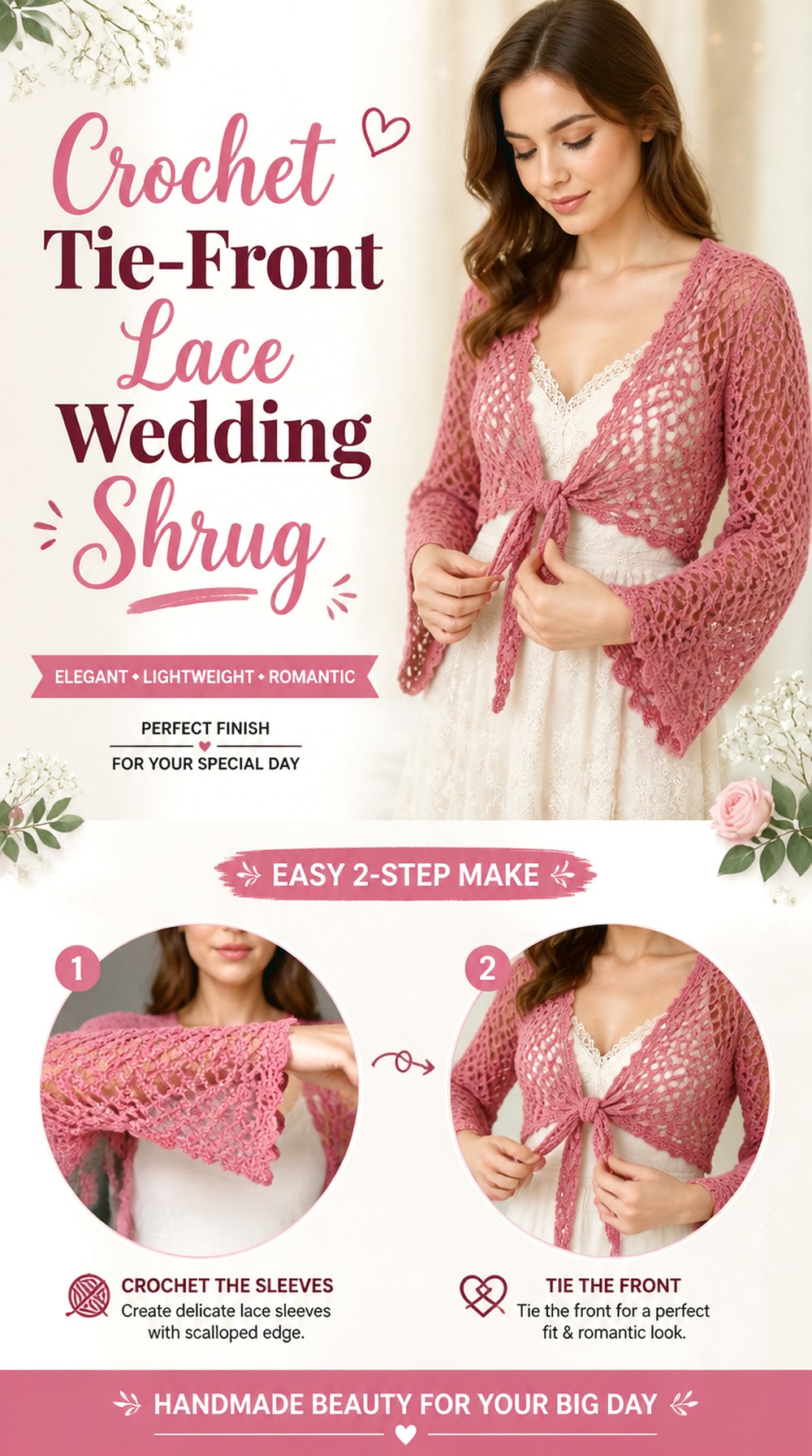
This version combines several details that naturally suit dressier layering: an open lace fabric, shaped front sections, flared sleeves, a decorative border, and a front tie. HookedOnViktoriya’s tutorial includes V-stitch front shaping, back shoulder shaping, lace sleeves, a flare, shell edging, and a tie string, making it one of the more deliberately styled options in this collection.
For a wedding guest outfit, it is especially useful when you want the shrug to read as an accessory rather than as a shortened everyday cardigan. The open front preserves the dress bodice, while the sleeve and edging details add visual interest of their own.
The Front Tie Becomes Part of the Dress Neckline
A tie-front shrug places a visible detail near the bust and neckline, so check it against jewelry, ruching, bows, or a statement dress neckline before deciding on placement. Over a simple dress, the tie can provide a useful focal point. Over an already detailed bodice, a quieter fastening or a tonal yarn may keep the outfit from becoming visually crowded.
Flared Sleeves Need Room Beside the Dress
The flare is attractive because it creates movement, but it also occupies more physical space than a narrow sleeve. Test how the cuffs behave while seated at a dinner table and when carrying a clutch or small handbag. If the dress has flutter sleeves or ruffles of its own, compare both silhouettes together before committing to maximum sleeve volume.
Protect the Lace Drape When Changing Yarn
Because this design relies on open stitches and shaped sleeves, a substantially heavier or stiffer yarn can alter both the front fall and the flare. Make a generous swatch and let it hang vertically before choosing a substitute. If the fabric feels board-like in the swatch, it is unlikely to become more fluid simply because it is worked into a garment.
Original Tutorial and Creator Credit
Creator: HookedOnViktoriya
2. Crochet Lightweight Panel Lace Bolero
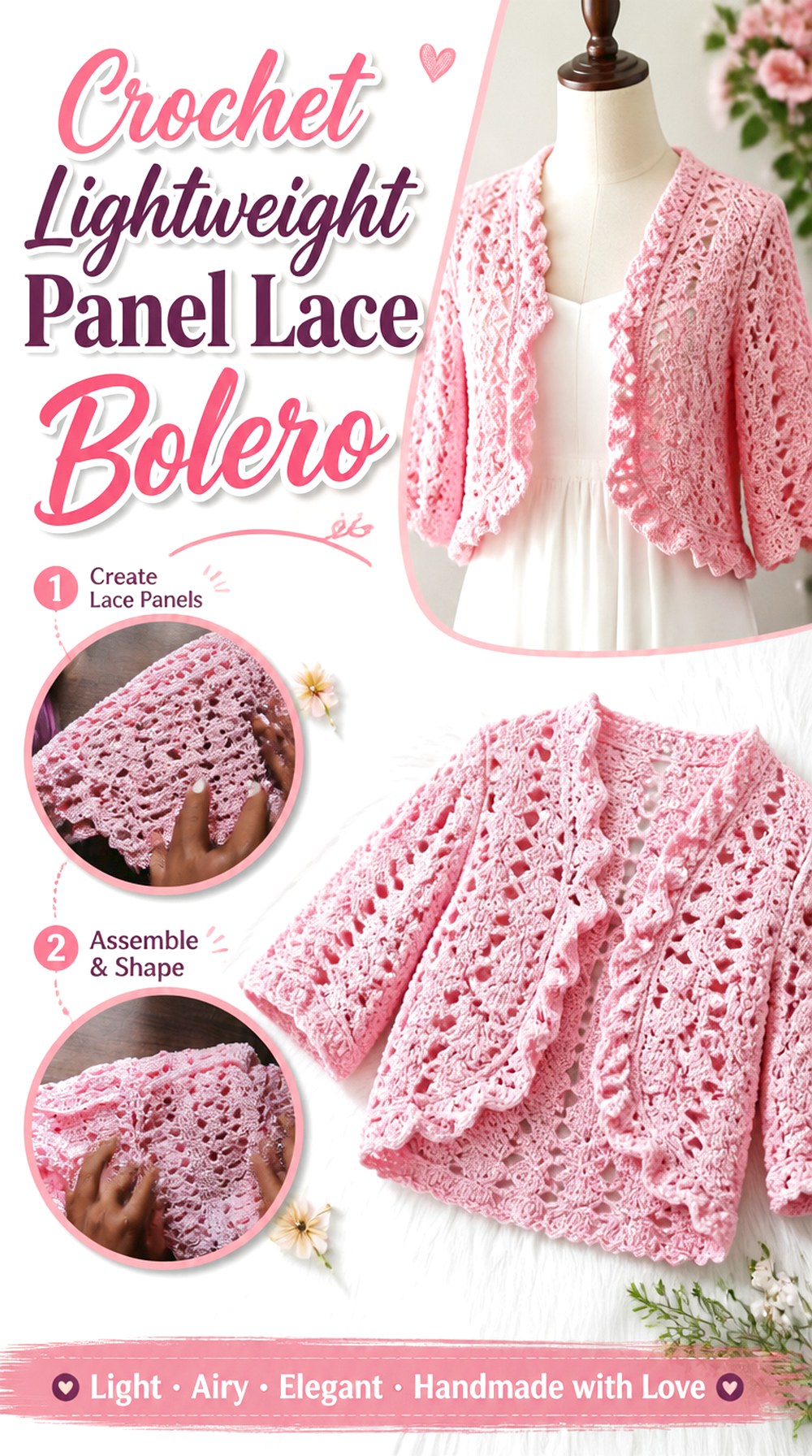
This lightweight lace bolero from Stitched_goddess uses panel construction and is presented as customizable across a range of sizes. The creator uses a lightweight Circulo cotton yarn and joins the garment panels during the tutorial.
The finished concept is a good candidate for a spring or summer wedding because the fabric remains visually open while still covering more of the upper body than a narrow sleeve-only shrug. Compared with the highly detailed tie-front idea above, this one is better suited to readers who want lace to be the main feature rather than an additional closure or dramatic trim.
Panel Seams Can Decide Whether the Bolero Looks Crisp
With separate panels, alignment matters almost as much as the lace itself. Before final joining, compare corresponding edges and make sure one panel has not grown longer through tension differences. Uneven panels can shift the shoulder line or cause one front edge to hang lower, which becomes particularly noticeable over a clean, fitted dress.
Let the Dress Decide How Open the Lace Should Feel
A very open crochet fabric provides texture but relatively little visual coverage. That can work well over a simple sleeveless dress, while a ceremony requiring more modest coverage may call for a denser stitch or another design from this list. Judge the effect while wearing the actual underlayer because skin, lining, and dress color all change how prominent the lace appears.
Original Tutorial and Creator Credit
Creator: Stitched_goddess
3. Crochet Scalloped Meadow Lace Shrug
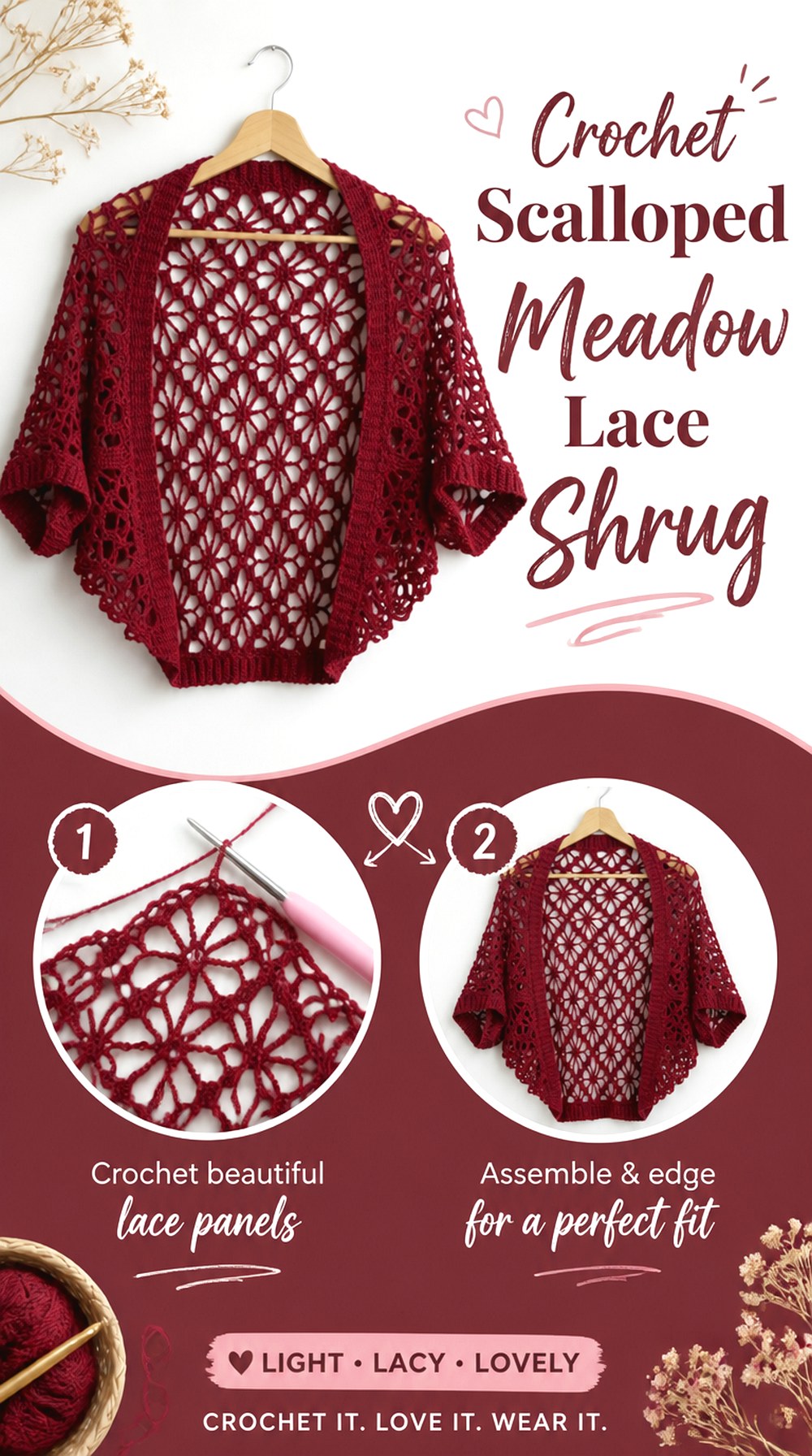
MyCrochetory’s Meadow Lace Shrug offers a different construction route: a lacy rectangle is transformed into a shrug, and the design can also be worn as a vest. The accompanying material emphasizes customization of size or length and includes a scalloped shell-style edge.
That convertible, rectangle-based character makes this an appealing wedding guest option when you prefer softer drape rather than close tailoring. It can frame a dress instead of hugging every contour. The scalloped finish gives the outer edge more definition, which is useful when the dress itself has a very plain surface and needs a little texture around the shoulders.
A Rectangle Shrug Creates a Softer Back Silhouette
Rectangle constructions often produce more relaxed fabric through the back than a fitted bolero with shaped shoulder seams. That is an advantage if you like movement, but check the rear view over your dress. Too much excess fabric can obscure a low back, keyhole detail, or decorative waist treatment that you intended to remain visible.
Scalloped Edging Should Sit Flat Before the Event
Decorative edges attract attention, so rippling becomes easier to notice than it would on a plain finish. Block the completed edge according to the yarn’s care requirements and inspect whether the scallops lie consistently. If the border pulls the body inward or flares outward, correcting tension before the event will give the entire shrug a cleaner outline.
Convertible Styling Gives You More Than One Coverage Option
Because the design can function as a shrug or vest, consider how you want it to behave during different parts of the day. A ceremony may call for more shoulder coverage, while a reception outfit may feel better with less fabric around the arms. Practice the alternative styling before leaving home so the transition does not require extensive pinning or adjustment.
Original Tutorial and Creator Credit
Creator: MyCrochetory
4. Crochet Bridal Inspired Shoulder Bolero
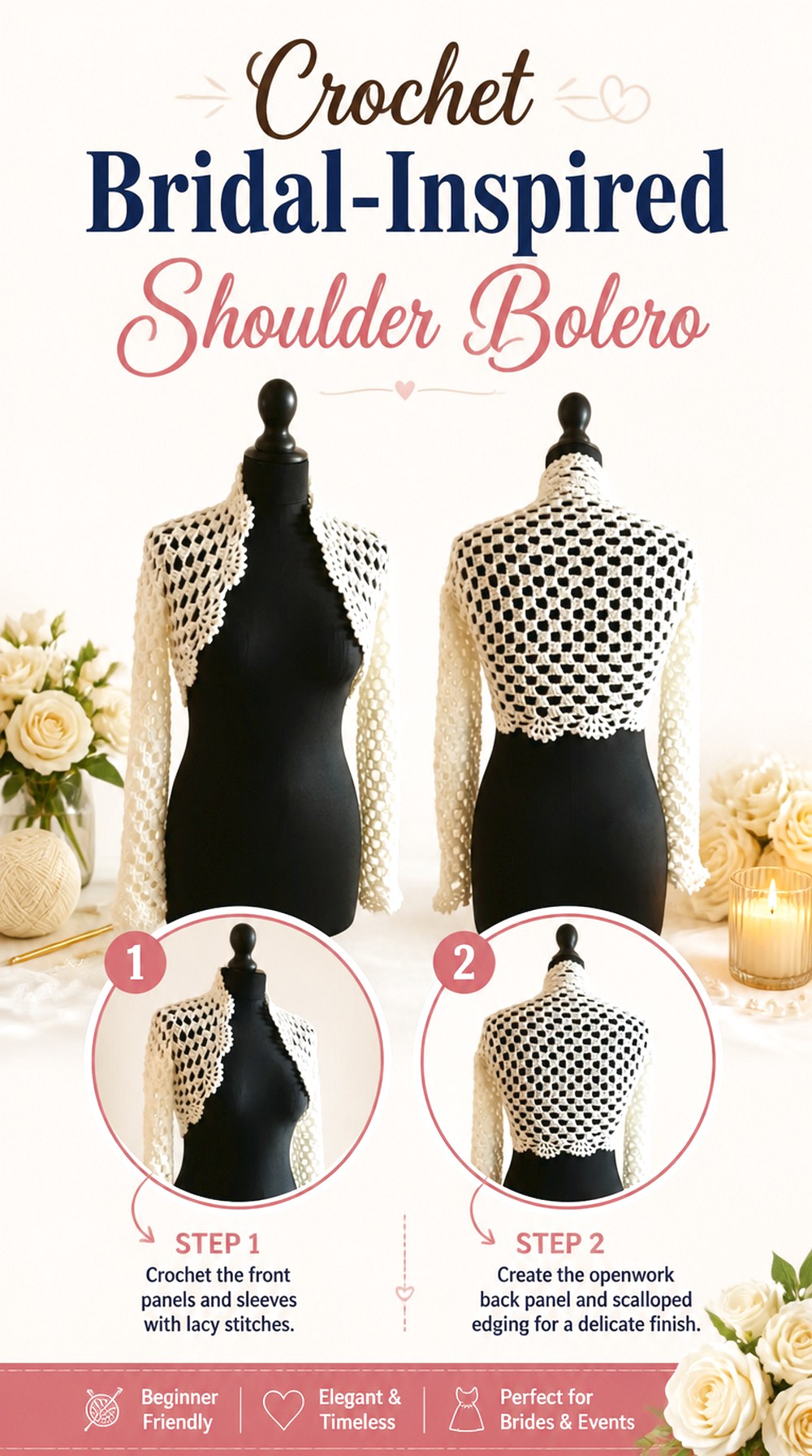
Marifu6a’s tutorial is explicitly presented as a bridal bolero and demonstrates a short crochet layer intended to cover the shoulders and arms without extending into full-cardigan territory. The creator also provides size adaptation information rather than presenting the garment as a single fixed size.
For a wedding guest, the main value is the silhouette rather than copying bridal styling. Worked in a guest-appropriate color, the compact bolero shape can complement strapless, sleeveless, or narrow-strapped dresses while preserving the waist and skirt. It is more traditional in character than the modern mesh sleeve shrugs later in this list, making it a useful direction for formal or classic dress shapes.
Keep Bridal Inspiration Separate From Bridal Color
A wedding guest can borrow the cropped, polished shape without making the layer look bridal. Color expectations differ by couple, culture, and dress code, so check the invitation or ask the hosts if you are uncertain. When ivory or white would feel too bridal for the event, a shade drawn from your dress, accessories, or seasonal palette is the simpler choice.
Short Boleros Emphasize the Point Where They End
Because this garment stops high on the torso, the hem creates a horizontal line across the outfit. Put the bolero over the actual dress before final finishing and check that the edge does not land awkwardly across a gathered bust seam, waistband, or decorative applique. A small change in finished depth can noticeably change the proportion of the complete outfit.
Confirm Sleeve Comfort Before Decorative Finishing
A formal-looking shrug is not useful if you cannot comfortably raise your arms for greetings, photos, or dancing. Before investing time in the final border, test the underarm and upper-arm area through normal movement. If the fabric pulls strongly across the back when the arms move forward, address the fit rather than expecting the edging to correct it.
Original Tutorial and Creator Credit
Creator: Marifu6a
5. Crochet Lace Motif Granny Square Bolero
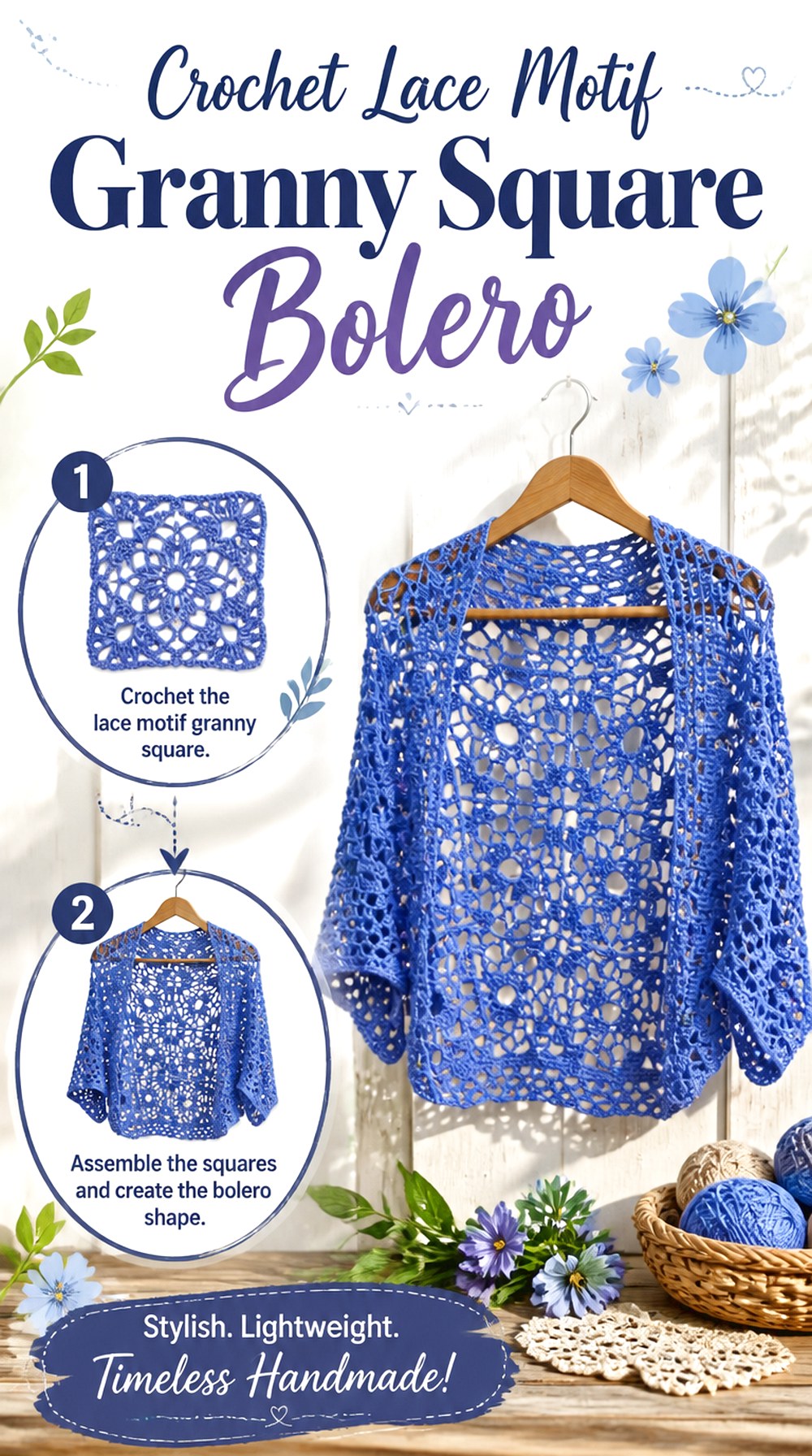
Fiber Fox Studios builds this bolero from individual lace granny-square motifs rather than a continuous body fabric. The tutorial includes multiple size groupings and bases the assembly on finished motif dimensions, which makes square consistency especially important.
This is the most visibly modular idea in the collection. For wedding guest styling, working the motifs in one restrained color can make the repeated lace geometry feel more cohesive with a formal dress, while contrasting motifs create a stronger statement. It is also a useful option if you enjoy portable motif crochet but want the final item to function as a real garment rather than a decorative accessory.
Block Every Motif Before Trusting the Layout
Small variations become cumulative when several squares meet across the back. Block the motifs consistently, then compare their dimensions before joining. If one group is noticeably larger, forcing the seams to match can create puckering or twist the shoulder line. Correcting size differences while the motifs are still separate is considerably easier than repairing a completed bolero.
Motif Seams Become Part of the Outfit
Unlike nearly invisible shaping in a continuous lace panel, every join contributes a visible line. Decide whether you want the joining yarn to blend into the motifs or emphasize the grid. Over a patterned dress, a quieter seam treatment may reduce competition; over a solid dress, the geometry can become the design feature that gives the outfit its texture.
Watch the Weight Across the Shoulders
Repeated motifs and joins can create a different weight distribution from open mesh. Hold the partially assembled panel from its future shoulder points and see how much it lengthens before finishing. If the garment is already stretching significantly under its own weight, additional edging may increase that effect, so assess the hang before adding optional decorative bulk.
Original Tutorial and Creator Credit
Creator: Fiber Fox Studios
6. Crochet Bell Sleeve Evening Shrug
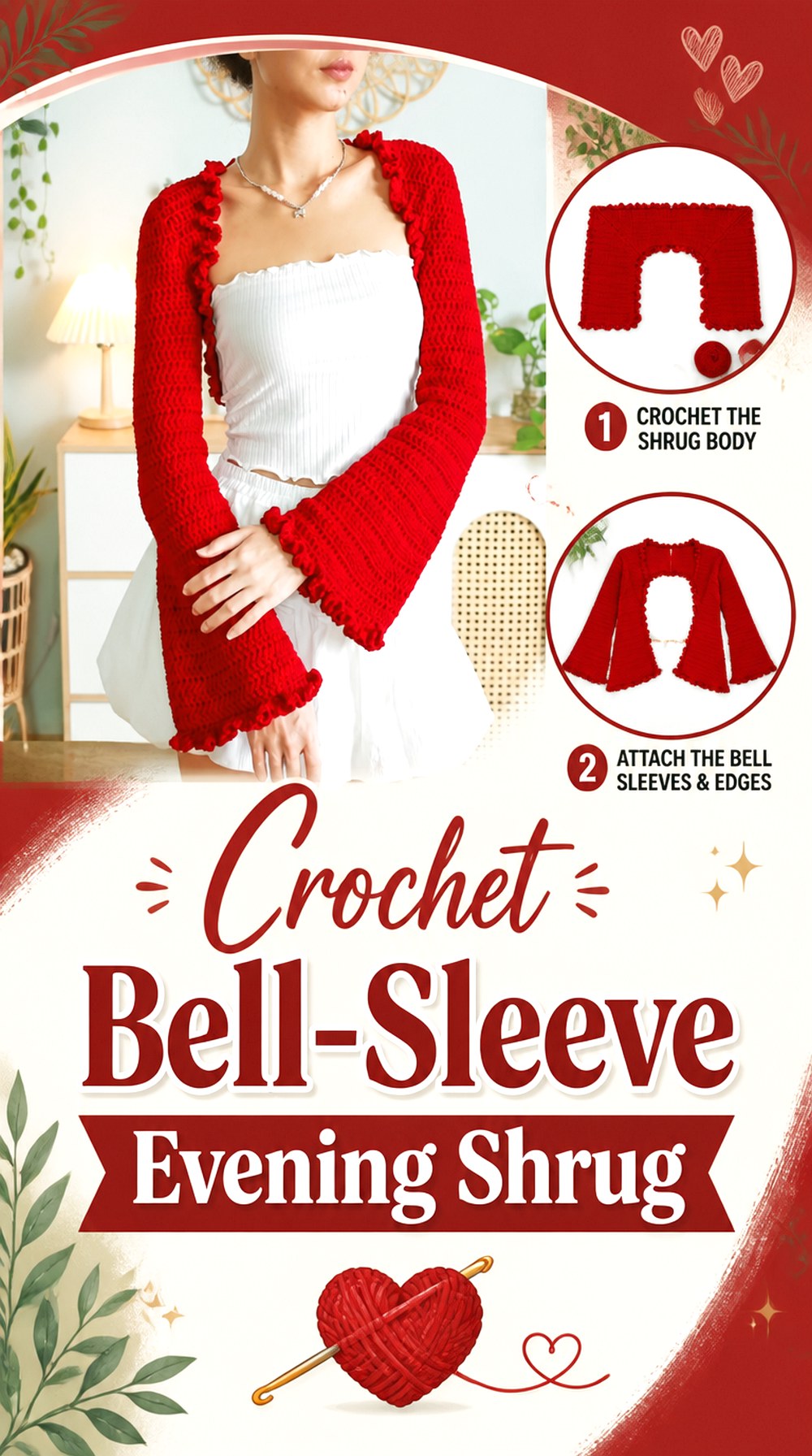
The defining feature of Chenda DIY’s shrug is the bell sleeve. The creator demonstrates the garment with DK/4-ply milk-cotton yarn and a measurement-focused wearable construction, giving this option more sleeve drama than most of the close-fitting boleros in the collection.
For a wedding reception or evening celebration, that extra movement can look striking over a simple fitted dress. It is less discreet than a narrow lace shrug, however, so this is a project to choose because you want the crochet to contribute clearly to the outfit. A monochrome yarn will keep attention on the silhouette, while a highly variegated yarn adds another visual layer.
Balance Bell Sleeves Against the Dress Skirt
A voluminous sleeve adds width to the upper body. If your dress already has a very full skirt, large bow, ruffles, or dramatic shoulders, view the complete silhouette from several feet away before deciding on the flare. With a streamlined dress, the bell sleeve has more room to act as the single statement element.
Check Cuff Length While Sitting, Not Only Standing
Long flared cuffs can behave perfectly in a mirror and become inconvenient at a table. Sit down, bend your elbows, and simulate eating or holding a glass before settling on the finished sleeve length. The goal is enough flare to preserve the design without having the lower sleeve repeatedly brush tableware or catch on a handbag.
Sleeve Weight Can Pull the Shrug Backward
Even a cropped garment can shift if its sleeves become substantially heavier than its central body. During construction, try the shrug on once both sleeves have enough length to show their real weight. If the neckline continually moves toward the back, examine fit and fabric weight before adding more decorative length.
Original Tutorial and Creator Credit
Creator: Chenda DIY
7. Crochet Fine Mesh Long Sleeve Bolero
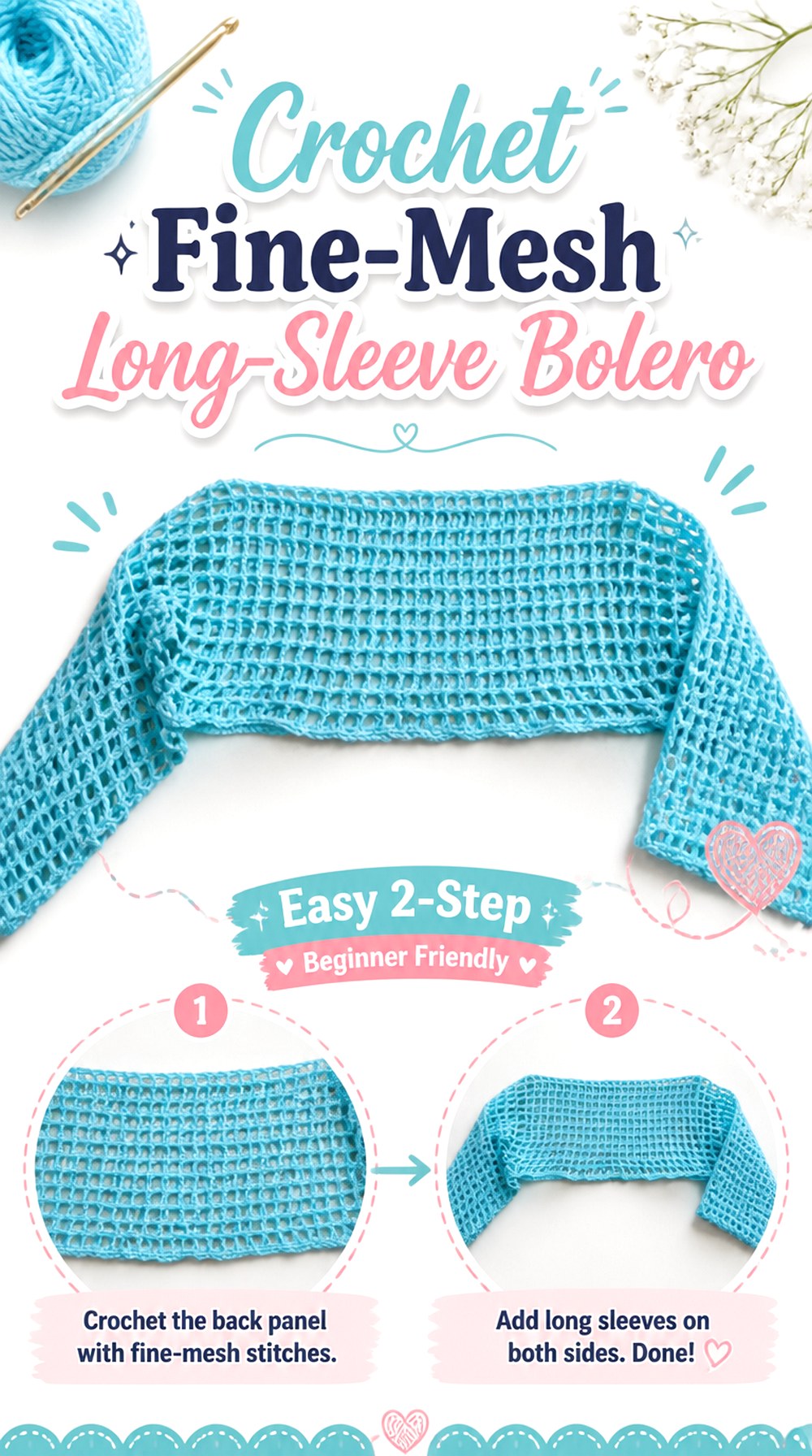
Alextitia Tuto Crochet’s bolero uses an airy mesh fabric and measurement-based sizing. The tutorial works through the main fabric, neckline opening, side assembly, sleeves, and finishing edge, and describes the design as adaptable to different sizes.
Among these wedding guest shrug ideas, this is one of the clearest choices when you mainly want arm coverage without introducing a dense layer over the dress. The open grid allows much of the dress color to remain visible through the crochet, so the two pieces visually interact rather than reading as completely separate garments.
Mesh Stretch Changes the Meaning of Your Measurements
A mesh panel can measure one width lying flat and behave differently once worn. When checking fit, support the garment as it will sit on your shoulders rather than pulling the fabric aggressively sideways. Excessive reliance on stretch can distort the openings and leave the sleeves feeling tighter than the relaxed measurements suggested.
Use Contrast Deliberately Because the Dress Shows Through
With large open spaces, the dress becomes part of the visible stitch pattern. A high-contrast combination makes every opening more obvious, while a closer tonal pairing produces a quieter surface. Test your yarn swatch directly over the dress fabric in natural and indoor lighting before assuming the color combination will read the same way at the venue.
Original Tutorial and Creator Credit
Creator: Alextitia Tuto Crochet
8. Crochet Oversized Pixie Drape Bolero
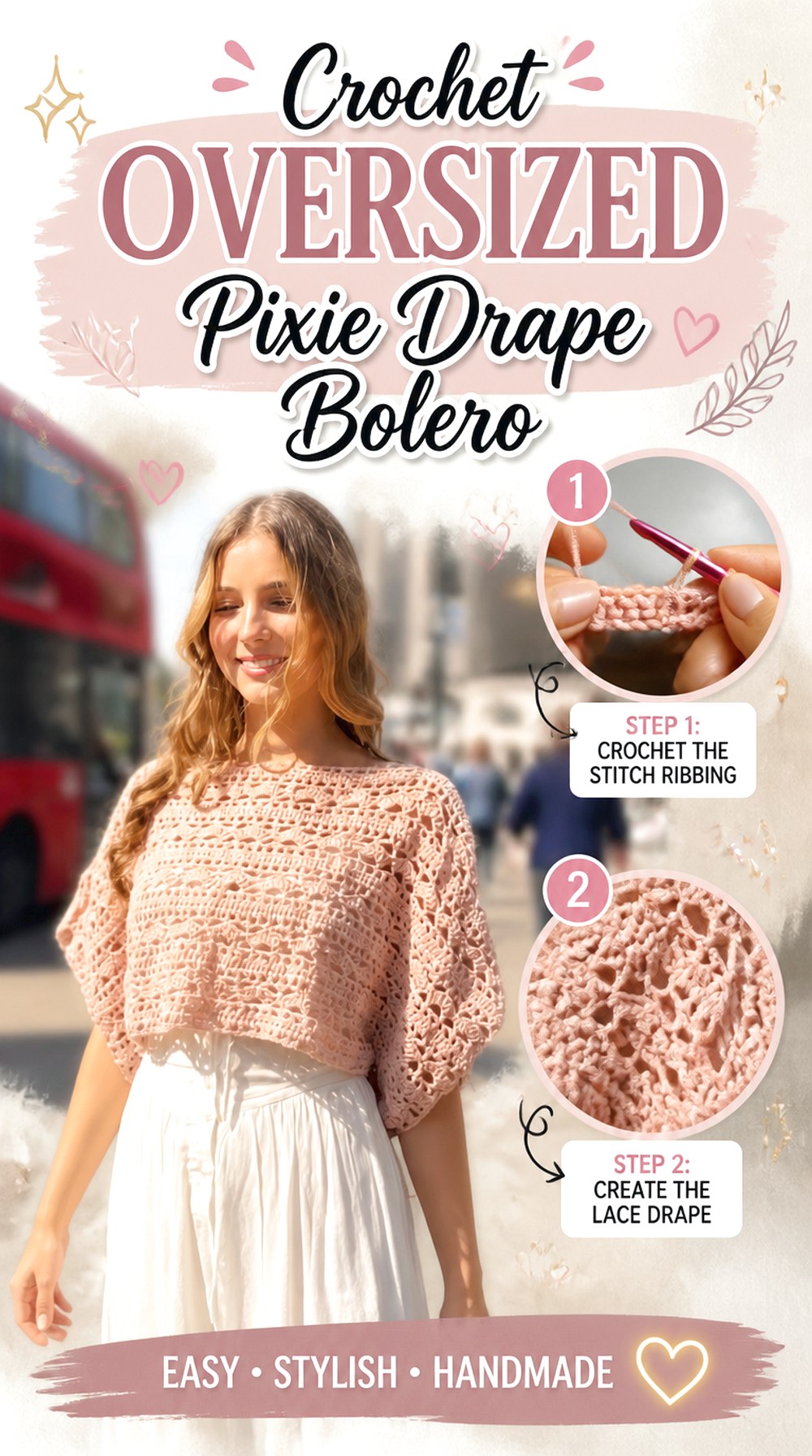
Ophelia Talks Crochet’s Pixie Bolero takes a roomier approach than the close-fitting lace designs. The associated pattern information describes it as oversized, convertible, and worked flat, while the video covers the repeat, assembly, and measurements using DK cotton yarn.
That looser shape can work beautifully over a narrow or column-style dress because it adds a soft layer around the upper body rather than following every contour. It is also a useful option when you dislike fitted armholes. The trade-off is that an oversized shrug occupies more visual space, so it should complement rather than obscure important features on the back of the dress.
Drape Is More Important Here Than Close Tailoring
The appeal of an oversized bolero depends on relaxed movement. A yarn that produces stiff fabric may technically reproduce the stitch repeat while completely changing the silhouette. Before beginning the full width, hang a swatch from one edge for several hours and see whether it falls softly or stays rigid.
Check How Much of the Dress Back Remains Visible
A fuller upper-body layer may conceal back straps, lace inserts, buttons, or a low neckline. Photograph the outfit from behind during a fitting because mirrors do not always show the full effect clearly. If the dress back is a major design feature, a narrower shrug from elsewhere in this collection may preserve it more successfully.
Original Tutorial and Creator Credit
Creator: Ophelia Talks Crochet
9. Crochet Cuffed Back Panel Bolero Cardigan
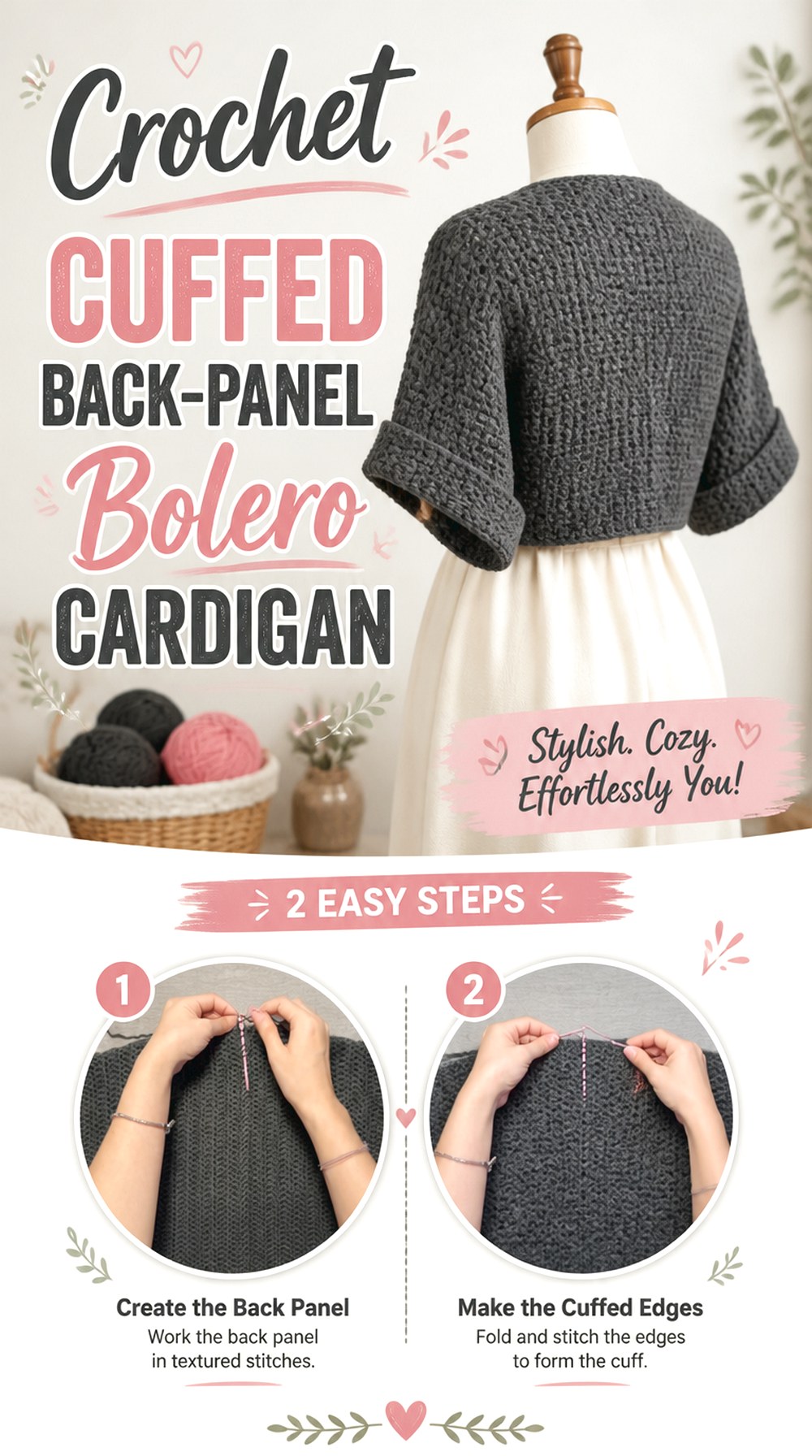
Stefanie Aurelia’s tutorial separates the garment into cuffs, sleeves, and a back-panel section and also discusses ways the design can be modified. The video includes both construction illustrations and a final finished reveal.
This makes it a useful modern alternative to the classic lace bolero. The defined cuffs create a more finished sleeve ending, while the short body keeps the garment in shrug territory rather than turning it into a conventional cardigan. For a wedding guest dress, it suits readers who want visible sleeve structure but do not necessarily want shell edging, motif joins, or a front fastening.
Defined Cuffs Give the Sleeve a Clear Stopping Point
A separate cuff creates a stronger boundary than an open lace sleeve that simply ends. That can look particularly clean beside a minimalist dress, but check whether the cuff feels too heavy next to delicate jewelry or a very fine fabric. The cuff should support the overall proportion rather than becoming an accidental focal point at the wrist.
Back-Panel Width Controls More Than Coverage
A back panel that is too narrow can pull the sleeves inward and restrict forward arm movement. One that is overly wide may sag or push the shoulder points outward. Measure the garment against your upper back while wearing the dress or a similarly thin layer instead of fitting it over a bulky sweatshirt.
Modification Works Best After the Core Fit Is Stable
Because the creator discusses modification, it can be tempting to change several dimensions at once. Establish a comfortable shoulder and sleeve relationship first, then adjust length or decorative details. Changing sleeve width, back width, and cuff size simultaneously makes it much harder to identify which alteration caused a poor fit.
Original Tutorial and Creator Credit
Creator: Stefanie Aurelia
10. Crochet One Piece Mesh Sleeve Shrug
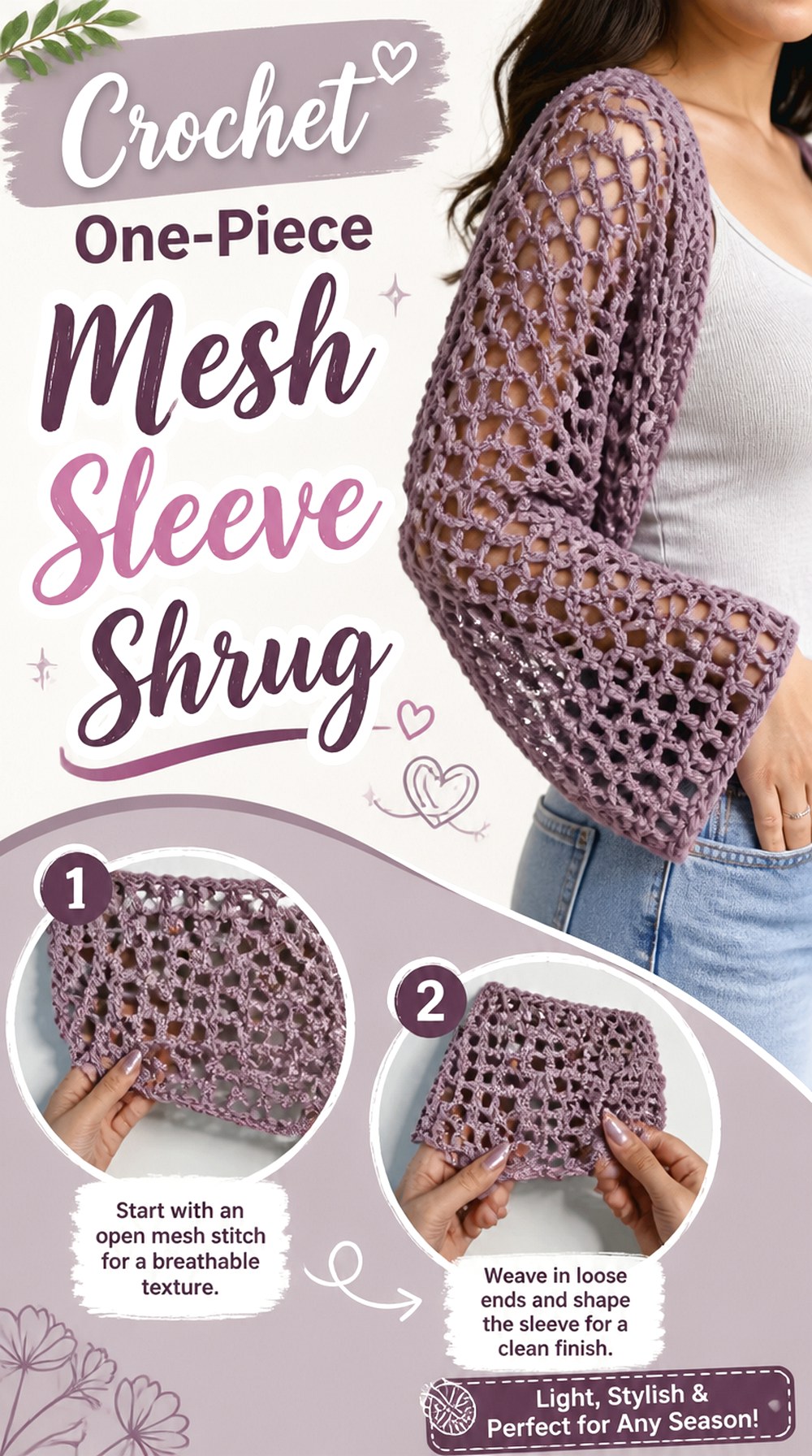
VivCrochets offers a one-piece mesh shrug with a defined neck opening and minimal sewing. The creator specifically notes that the different sections can be adjusted for size, and the tutorial shows the neck opening, sleeve marking, and final sewing sequence.
This is a streamlined choice for a wedding guest who wants sleeves more than a visible front garment. Because the body is visually minimal, a dress with an interesting neckline or fitted waist can remain the dominant piece. The open mesh also makes this better suited to light layering than to meaningful cold-weather warmth.
The Neck Opening Determines Where the Whole Shrug Sits
On a one-piece construction, a poorly positioned neck opening can shift both sleeves at once. Before sewing the sleeve areas permanently, center the opening across your shoulders and check the front and back balance. If one side consistently creeps upward, correct the alignment before blaming the sleeve length.
Minimal Body Coverage Makes Sleeve Fit More Noticeable
Because there is little front structure to distract the eye, twisting or uneven sleeves show quickly. Mark both underarms carefully and compare the two sides before sewing. It is worth measuring twice at this stage, particularly with stretchy mesh, where a small placement difference can expand when the garment is worn.
Original Tutorial and Creator Credit
Creator: VivCrochets
11. Crochet Made to Measure Ribbed Cuff Shrug
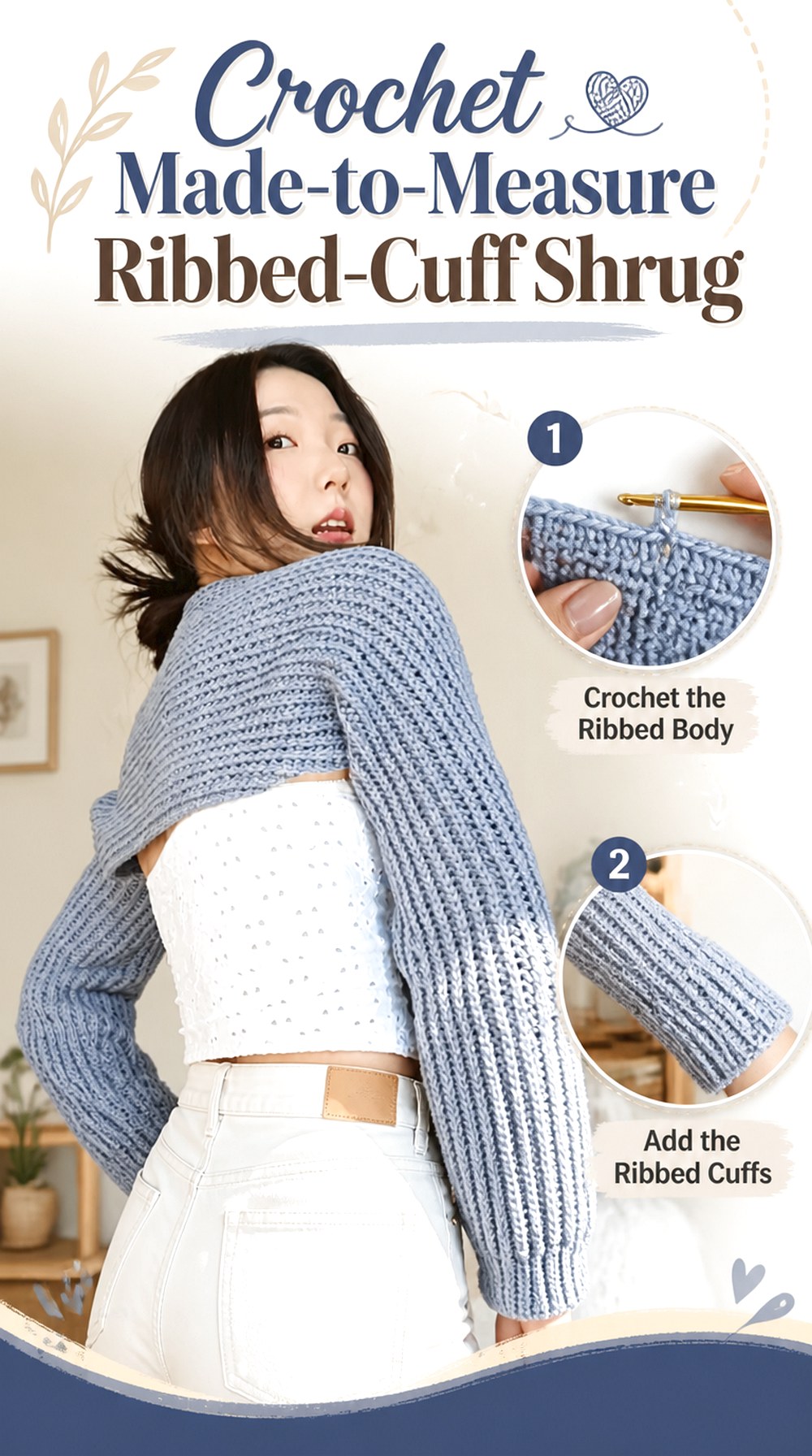
Yaejiyea’s shrug tutorial is measurement-driven and divides the project into the main shrug panel, sleeve assembly, and cuffs. The creator includes measurement and calculation sections at more than one stage of the video rather than relying solely on a fixed standard size.
That approach is valuable for a wedding guest project because a cropped shrug benefits from being fitted to the outfit underneath. The cuffed sleeve style feels more defined than loose mesh alone, while the simple short body keeps the dress visible. This is a good direction if your priority is adapting proportions to your own measurements rather than following a predetermined garment size.
Take Measurements Over the Intended Underlayer
Even a thin dress changes the way a shrug settles compared with bare skin. If possible, take key measurements while wearing the dress or a top with a similar neckline and thickness. This matters particularly around the upper back, where a snug dress bodice may slightly change posture and where you want the shrug to lie.
Ribbed Cuffs Can Stabilize a Very Open Sleeve
A firmer cuff can keep a light sleeve from sliding down the hand, but it should not compensate for an oversized sleeve that is loose everywhere else. Try the sleeve before finalizing the cuff circumference and check circulation and comfort with your arm relaxed as well as bent.
Do a Movement Test Before Closing the Second Sleeve
Once one sleeve has been assembled, use it as a live fitting checkpoint. Reach forward as though hugging someone, raise the arm to shoulder height, and sit naturally. If the panel pulls strongly, adjust before repeating the same problem on the second side. Symmetry matters, but duplicating a bad fit does not improve it.
Original Tutorial and Creator Credit
Creator: yaejiyea
12. Crochet Faux Fur Edged Winter Reception Shrug
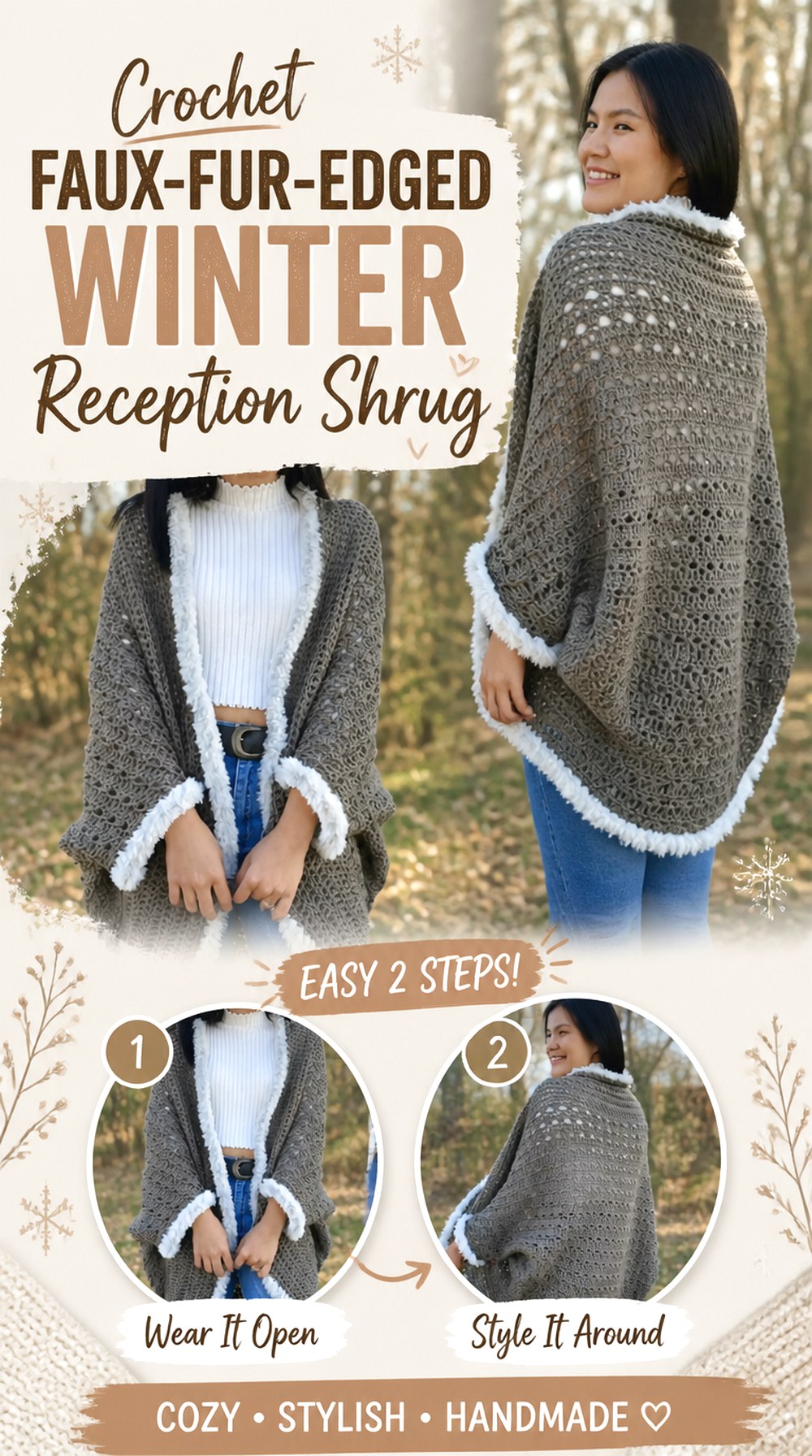
KnitcroAddict’s shrug is the warmest-looking option in this roundup. The tutorial uses a medium-weight main yarn and faux-fur-style edging, and the associated pattern is offered across multiple sizes.
For an autumn or winter wedding, this kind of texture can make more sense than very open lace, especially when part of the celebration takes place outdoors or in a cool venue. It is also deliberately different from the delicate bridal-inspired ideas: the border is plush and visible, so the shrug becomes part of the seasonal styling. Pair it with a relatively simple dress if you want the textured edging to look intentional rather than busy.
Plush Edging Adds Visual and Physical Weight
Fuzzy yarn can soften an edge beautifully, but it also changes the apparent scale of the garment. Before adding it everywhere, work a short sample along one section and view it beside your dress. A narrow amount may be enough; more is not automatically more formal.
This Is Better for Cool Conditions Than Delicate Coverage
If your wedding is outdoors in summer, an airy lace or mesh option will usually feel less substantial. This project earns its place for a different reason: cooler-weather layering. Choose it when warmth and seasonal texture matter, not merely because you like the border in isolation.
Original Tutorial and Creator Credit
Creator: KnitcroAddict
13. Crochet Nostalgia Style Classic Bolero
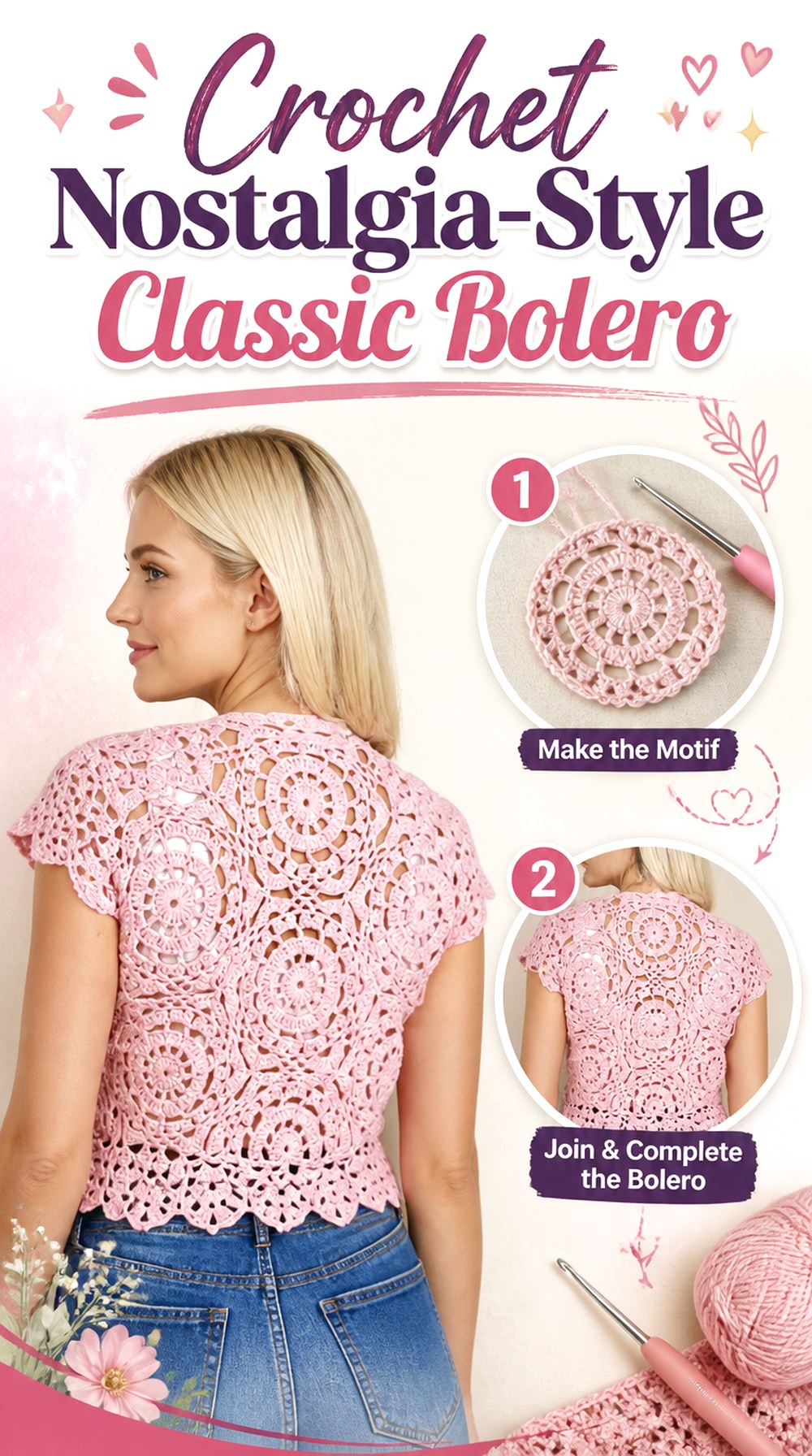
Crocheteando Ando’s “Nostalgia” tutorial provides a classic bolero option without the very open mesh, oversized proportions, or dramatic bell sleeves that define several other projects here. The creator demonstrates a complete bolero using a medium hook size and shows the project as a dedicated wearable rather than a sleeve-only accessory.
For wedding guest styling, this is the option to consider when you want the familiar cropped-jacket effect: shoulders and arms are visually connected by a defined body section, while the garment still ends well above a full cardigan. It can complement traditional dresses particularly well because the shape feels intentional and balanced rather than trend-driven.
A Classic Bolero Benefits From Clean Front Symmetry
When the front edges are visible, slight differences between the left and right sides can stand out in photographs. Before fastening off, compare the fronts while the garment is hanging naturally rather than stretched flat. Check that both sides begin at the same shoulder level and fall to a similar point on the torso.
Keep the Hem From Competing With the Waistline
A structured short bolero creates a strong boundary near the upper waist. If your dress has a belt, empire seam, corset-style waist, or large waist applique, evaluate the two lines together. Ideally, the crochet should frame the existing dress design rather than slice visually through it.
Blocking Should Refine the Shape, Not Rescue It
Blocking can improve stitch definition and help edges settle, but it should not be relied on to correct a severely uneven front or restrictive shoulder fit. Complete a fitting first, make structural corrections if needed, and then block according to the chosen yarn’s care instructions for the final presentation.
Original Tutorial and Creator Credit
Creator: Crocheteando Ando
Which Crochet Wedding Guest Shrug Fits Your Outfit Best?
For the least interruption to a statement dress, look first at the One-Piece Mesh Sleeve Shrug or Fine-Mesh Long-Sleeve Bolero. They provide visible arm coverage while allowing much of the dress to remain part of the finished look.
For a romantic or detail-focused outfit, the Tie-Front Lace Wedding Shrug, Scalloped Meadow Lace Shrug, and Lace Motif Granny Square Bolero bring more crochet texture. The Bell-Sleeve Evening Shrug is the strongest sleeve statement, while the Oversized Pixie Drape Bolero adds the most relaxed volume.
For traditional dress styling, the Bridal-Inspired Shoulder Bolero and Nostalgia-Style Classic Bolero keep a familiar cropped-jacket shape. For colder celebrations, the Faux-Fur-Edged Winter Reception Shrug provides a distinctly more substantial option.
Conclusion
The right crochet wedding guest shrug depends on how much of the dress you want to preserve and how much presence you want the crochet layer to have. Choose fine mesh for minimal visual coverage, fitted lace or a classic bolero for a more polished frame, bell sleeves when the shrug should become a statement, or a motif design when the crochet itself is the main decorative feature. Roomier shapes suit relaxed drape, while cuffed and measurement-led projects offer more control over sleeve proportions.
Once you have chosen the silhouette, fit it over the actual dress and check movement, back coverage, sleeve behavior, and edging before final finishing. Use the original tutorials above for the creators’ exact construction details.
Frequently Asked Questions
What crochet shrug shape works best over a sleeveless wedding guest dress?
A sleeveless dress gives you the widest range of options because there are no existing sleeves to compete with the crochet. A close-fitting lace bolero keeps the look polished, while a mesh sleeve shrug preserves more of the dress bodice. If the dress is very simple, bell sleeves or decorative motifs can add interest without competing with other sleeve details.
How can I keep a crochet shrug from making a formal dress look too casual?
Pay attention to fabric quality and finishing rather than assuming a particular stitch automatically looks formal. Consistent tension, neat seams, controlled edging, good drape, and carefully woven ends all matter. Choosing a yarn whose texture works with the dress also helps. Highly bulky, fuzzy, or strongly variegated yarns make a larger statement, while fine, cohesive fabric usually integrates more quietly with formal clothing.
Should a wedding guest crochet shrug match the dress exactly?
It does not have to. Tonal colors can create a coordinated look without requiring an exact dye match, while deliberate contrast can work when the rest of the accessories are restrained. Test the combination under natural and indoor light because yarn and dress fabric may reflect color differently. If the chosen shade could be interpreted as bridal in that particular event setting, check the dress code or choose another color.
How much shoulder coverage should a crochet wedding shrug provide?
That depends on the venue, dress, and reason you want the layer. A sleeve-only mesh shrug offers relatively little torso coverage, while a classic bolero covers more of the shoulders and upper back. If coverage is important for a ceremony or religious venue, judge the finished openness over the actual dress rather than relying only on the crochet piece lying on a table.
What yarn qualities are useful for a warm-weather wedding shrug?
Look for a fabric that feels comfortable against the skin, has enough drape for the chosen silhouette, and does not become excessively heavy once the full garment is made. Open construction can increase airflow, but fiber and yarn weight still matter. Swatch first, wash or block the sample according to its care instructions, and see how it behaves when hanging vertically.
How do I check a crochet shrug fit before finishing it?
Try it over the intended dress before final seams, borders, or elaborate cuffs. Move both arms forward, raise them to shoulder height, sit down, and check the back in a mirror or photograph. Look for pulling between the shoulder blades, tight underarms, sleeves twisting off-center, or a neckline being dragged backward. Correct those structural issues before adding finishing details.