A good fireside reading cardigan needs to do more than look cozy. Once you settle into a chair with a book, small design details become much more noticeable: sleeves that bunch around the wrists, a front edge that constantly falls open, bulky pockets in the wrong place, or a long hem that feels awkward when sitting.
The 15 crochet cardigan ideas below approach winter layering in different ways. Some give you long, enveloping coverage, while others use a cropped shape, structured collar, buttons, a hood, modular motifs, or a roomy drop shoulder. Each project is paired with a different YouTube creator so you can compare both finished shapes and construction styles before choosing one.
Quick List
- Crochet Long Pocket Reading Cardigan
- Crochet Grandpa-Style Button Cardigan
- Crochet Bulky Collared Fireside Cardigan
- Crochet Three-Piece Drop-Shoulder Cardigan
- Crochet Oversized Lounge Cardigan
- Crochet Chunky Cropped Button Cardigan
- Crochet Striped Made-to-Measure Cardigan
- Crochet Patchwork Book-Nook Cardigan
- Crochet Top-Down Raglan Winter Cardigan
- Crochet One-Piece Soft-Drape Cardigan
- Crochet Zip-Front Reading Cardigan
- Crochet Long Duster Cardigan with Pockets
- Crochet Granny Hexagon Reading Cardigan
- Crochet Structured-Collar Library Cardigan
- Crochet Sunflower Hooded Cardigan Coat
What Makes a Crochet Cardigan Comfortable for Reading?
A reading cardigan is usually worn for long stretches while sitting, so fit works differently than it does in a cardigan chosen mainly for walking outdoors. Extra ease can make layering comfortable, but an extremely oversized sleeve may drift across a book, keyboard, mug, or snack tray. A fitted cuff or a sleeve length that can be pushed back may be more practical.
Front coverage matters too. An open-front cardigan gives you easy movement, while buttons, a zipper, a broad collar, or overlapping fronts can keep more of the garment in place while you sit. Longer cardigans provide additional coverage through the hips and legs, although the extra fabric may need arranging in a smaller chair.
Pockets are especially useful for reading glasses, a phone, tissues, or a bookmark, but check their location rather than assuming any pocket arrangement will be comfortable. A low pocket on a very long cardigan may sit differently once you are curled into a chair.
Plan Warmth, Drape, and Garment Weight Together
A thick-looking cardigan is not automatically the warmest or most comfortable option. Fiber, stitch density, openings in the fabric, garment length, and what you plan to wear underneath all contribute to how the finished layer feels.
When substituting yarn, make a swatch and compare it with the tutorial’s stated gauge or sizing method. Moving to a much thicker yarn without recalculating can change the width, length, sleeve proportions, and overall garment weight. A dense, long cardigan can also become considerably heavier than a short openwork layer.
For motif cardigans, block and measure the individual components before committing to the full layout. Small differences multiply when several squares or hexagon sections determine the width of the body.
Think About the Cardigan in a Seated Position
Before finalizing sleeve and body length, place a cardigan you already own over the clothes you normally wear at home and sit in your preferred reading chair. Notice where the hem falls, how much room you need across the lap and hips, and where the cuffs land when your elbows are bent.
This simple comparison can help you interpret a tutorial more realistically. A dramatic duster may be ideal if you want blanket-like coverage, while a cropped button cardigan may suit someone who wants warmth around the torso without extra fabric around the seat.
1. Crochet Long Pocket Reading Cardigan
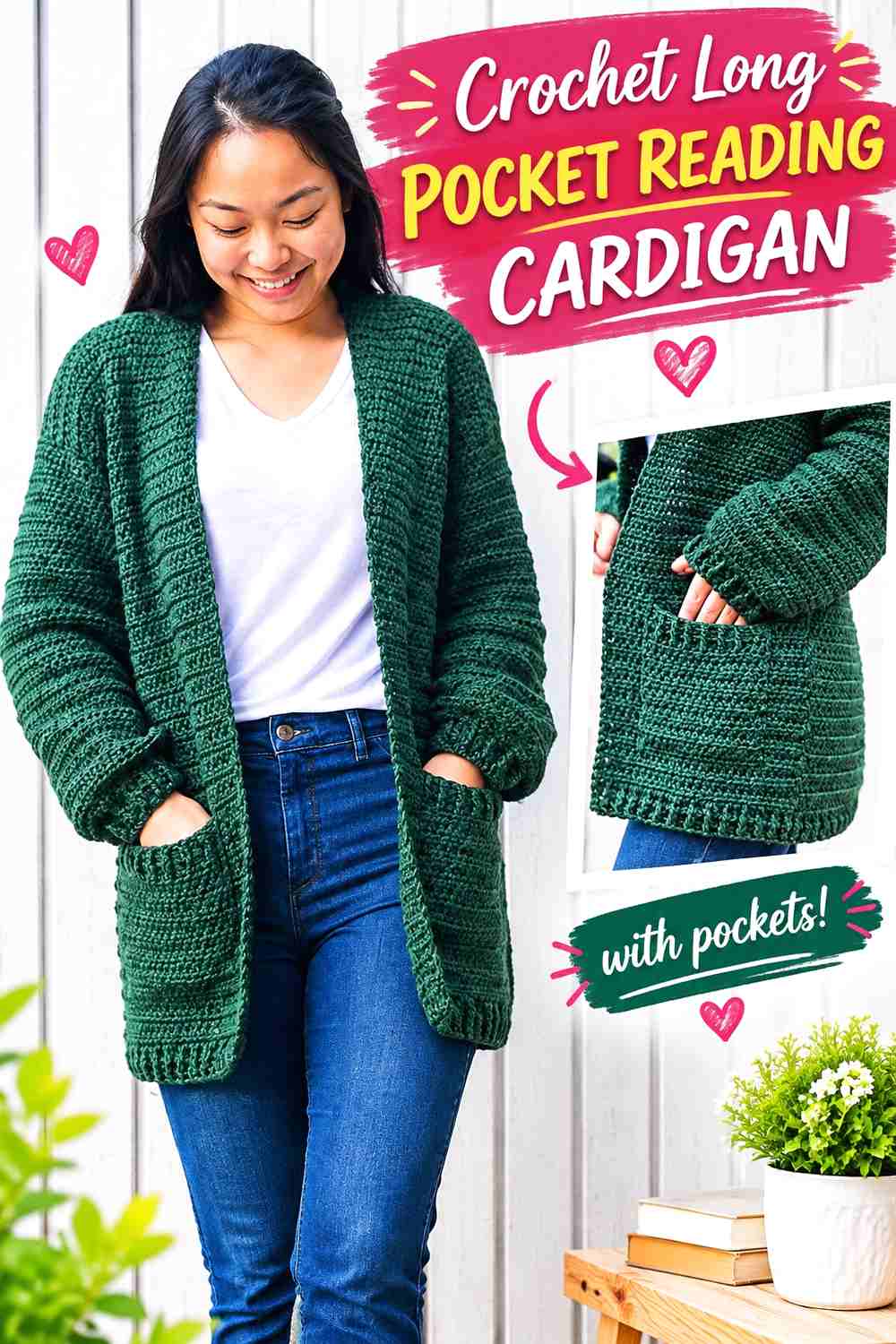
A long, slouchy cardigan with pockets is an obvious candidate for a dedicated reading layer. The Briar-style construction from For The Frills combines an oversized silhouette with relaxed sleeves, ribbed finishing, and pockets. The body is worked as one main piece before the remaining garment elements are added, giving this option a different construction experience from cardigans assembled entirely from separate front and back panels.
The longer open-front silhouette works particularly well when you want a cardigan that feels closer to a soft outer layer than a fitted sweater.
Longer Coverage Changes How the Cardigan Feels in a Chair
Extra body length can cover more of the hips and upper legs when you sit, which is useful for cold rooms. Before extending any cardigan further, however, consider whether the hem will pool under you or catch on the arms of your favorite chair.
If you are between two possible lengths, use an existing long cardigan or robe as a physical reference instead of relying only on standing measurements.
Pocket Placement Is Part of the Reading Experience
Large pockets can be one of the most useful features on a reading cardigan, but their position matters. Check where the tutorial places them relative to your natural seated hand position.
If you alter the cardigan length, reconsider pocket placement separately rather than automatically shifting everything by the same amount.
Creator Credit: For The Frills
2. Crochet Grandpa-Style Button Cardigan
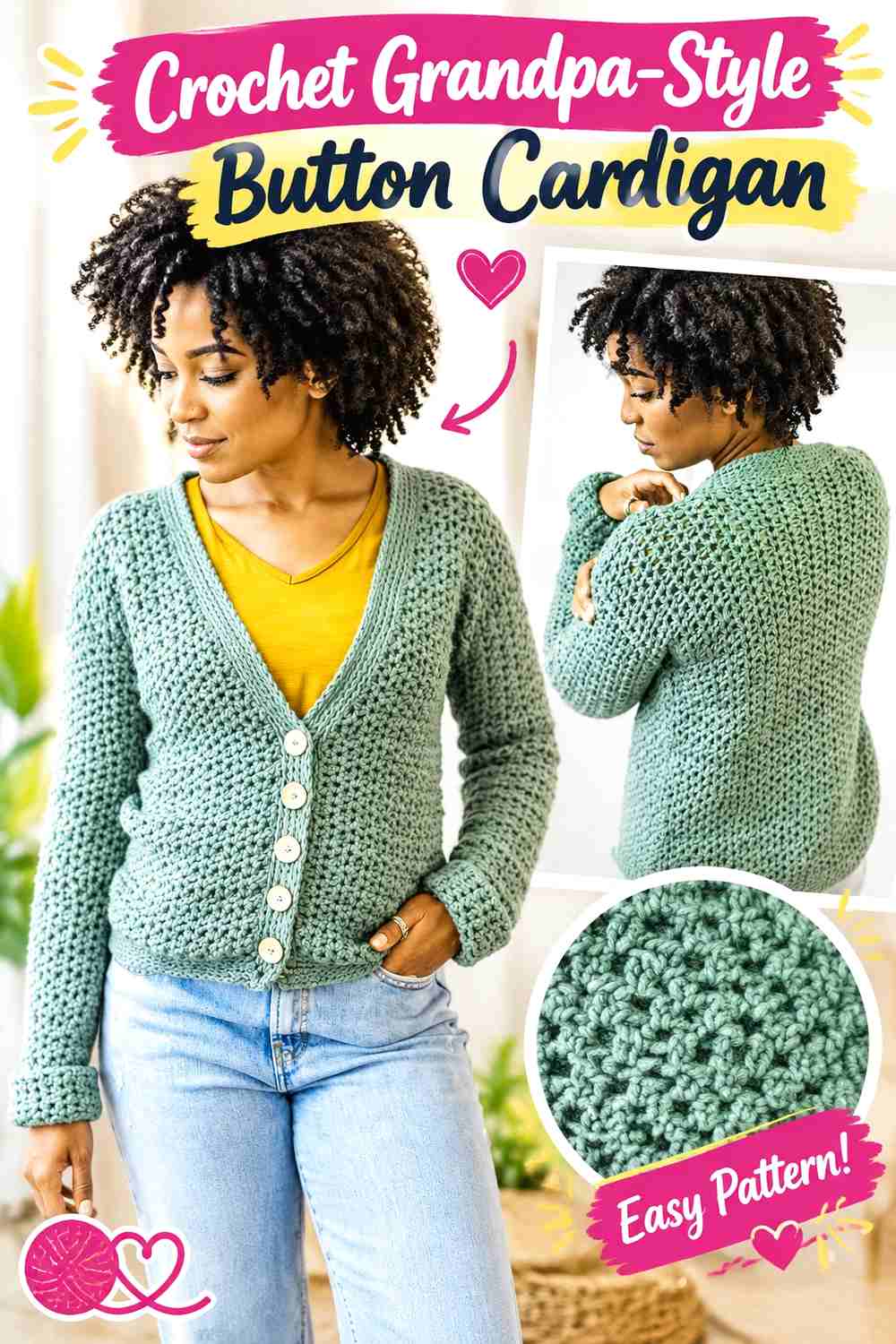
This option takes the cozy cardigan idea in a more structured direction. TL Yarn Crafts pairs a classic cardigan shape with a button band and elongated sleeves, creating a piece that can be worn open or fastened through the front.
For someone who dislikes repeatedly pulling an open cardigan back across the body while reading, a buttoned front can be a meaningful functional difference.
A Fastened Front Gives You Control Over Coverage
Buttons allow you to decide where you want the front secured rather than relying on the cardigan to stay in position by itself. That can be particularly useful when you are seated for a long time or layering the cardigan over a lighter top.
Before changing button size or placement, check how those choices relate to the finished band and buttonholes shown by the creator.
Watch Extra-Long Sleeves Around Books and Drinks
Long sleeves add to the relaxed appearance, but sleeve length deserves extra attention if you often read while holding a mug or turning pages.
Measure with your elbows bent rather than hanging straight at your sides. If you want to modify the sleeves, use the tutorial’s construction logic rather than shortening them only after all finishing is complete.
Creator Credit: TL Yarn Crafts
3. Crochet Bulky Collared Fireside Cardigan
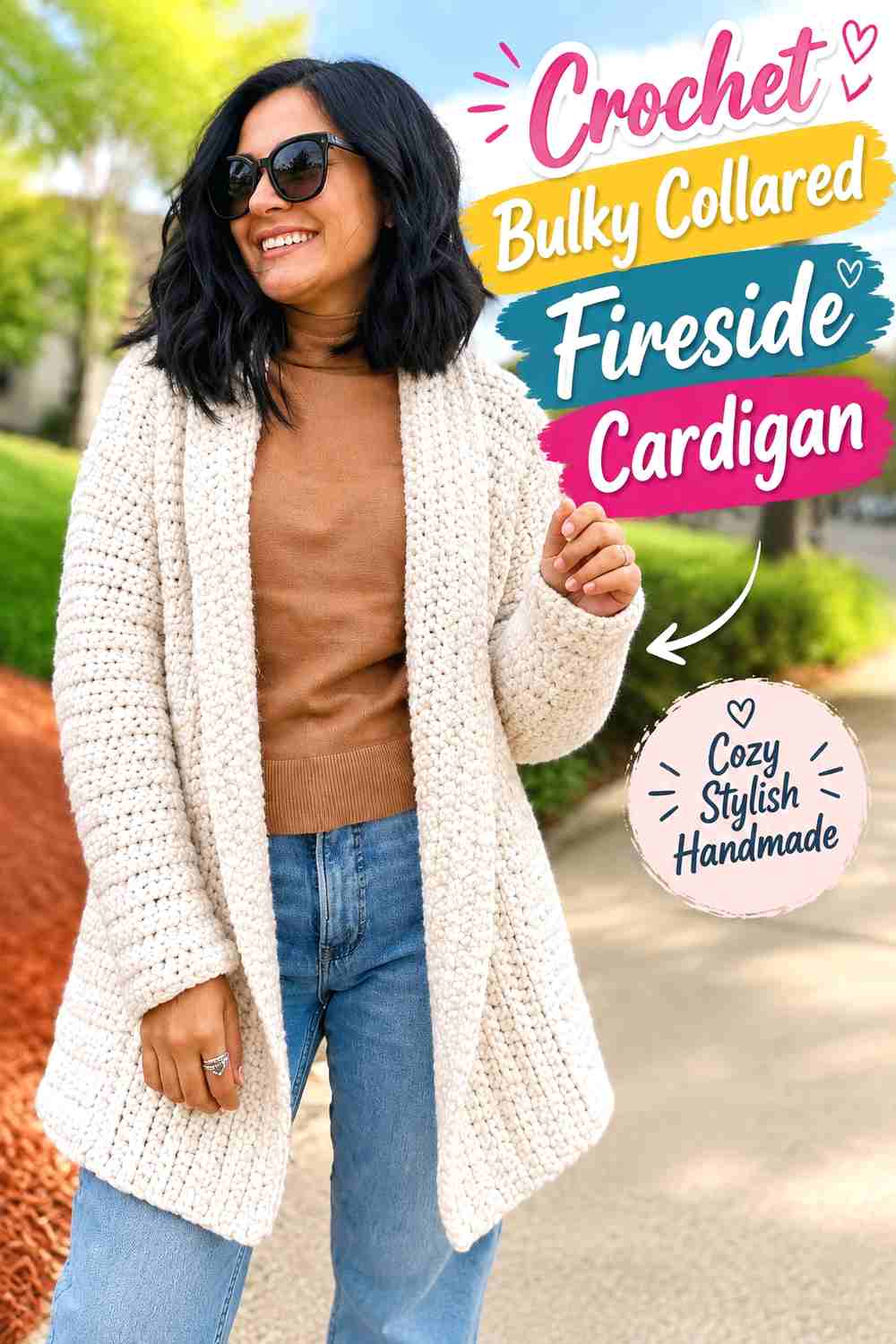
KnitcroAddict’s classic cardigan tutorial uses bulky-weight yarn and builds the garment from separate pieces before adding its collar. The tutorial covers sizes from XS through XXL through its accompanying pattern information, making this a useful source to examine if you prefer a substantial traditional cardigan rather than an airy layer.
A defined collar also gives the neckline more presence than a narrow open edge, which can suit a cardigan intended mainly for cold evenings.
Bulky Yarn Can Change More Than Warmth
A heavier yarn can produce a quicker-growing, more substantial fabric, but that same thickness affects drape and finished weight. Do not assume another bulky yarn will behave identically simply because the label places it in the same broad weight category.
Compare your swatch with the tutorial and pay particular attention to whether the fabric bends comfortably instead of becoming too stiff.
Separate Pieces Give You Several Fit Checkpoints
A multi-piece cardigan lets you compare panel dimensions before everything is permanently assembled. That is useful if you want to catch an unexpected width or length difference before finishing the full garment.
Keep the relationship between the fronts and back consistent. Altering one section independently can affect shoulder alignment, armholes, and how the collar eventually sits.
Creator Credit: KnitcroAddict
4. Crochet Three-Piece Drop-Shoulder Cardigan
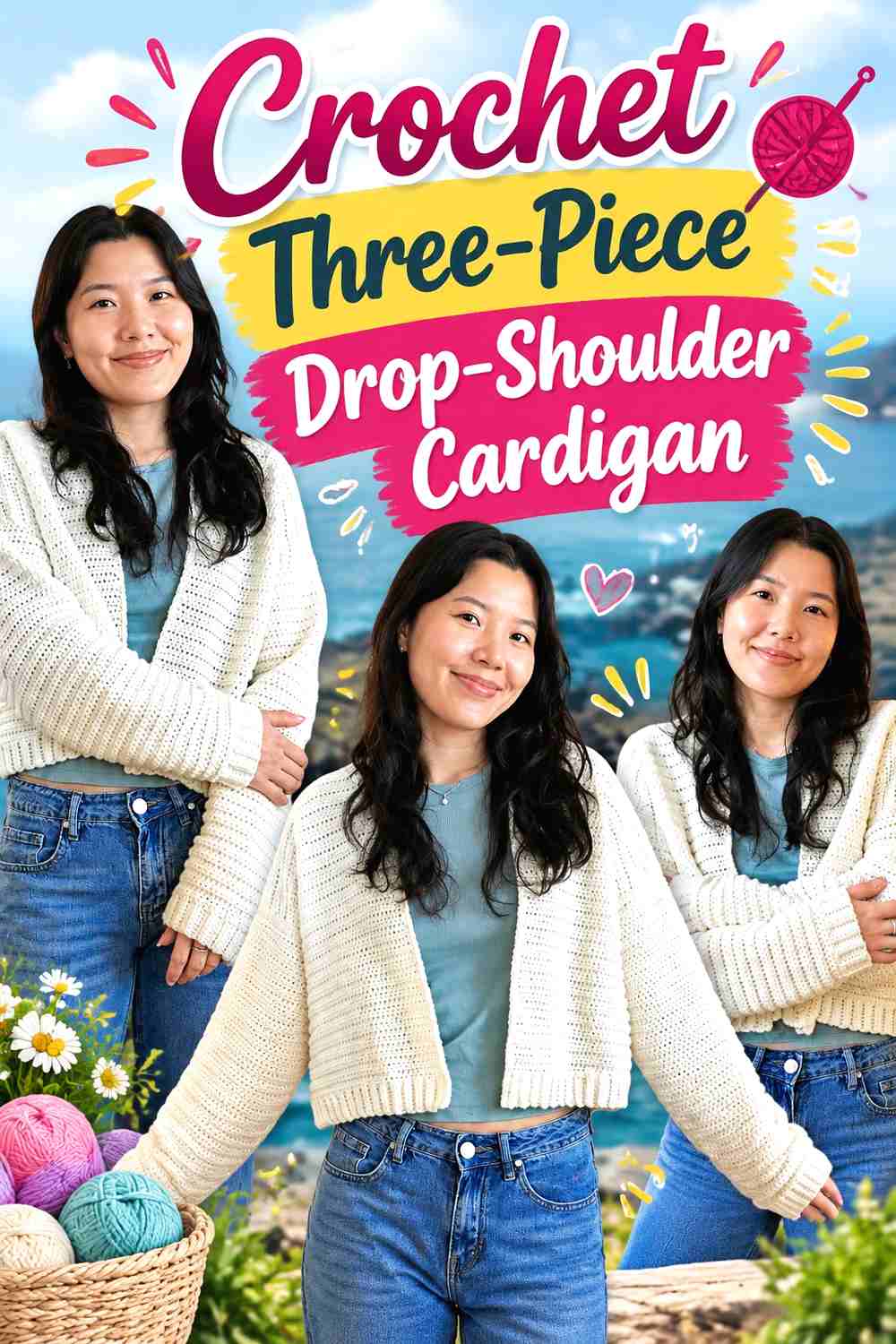
VivCrochets uses a streamlined drop-shoulder concept built around three principal pieces rather than the five-piece arrangement common in many seamed cardigans. Ribbed finishing gives the garment definition around its otherwise relaxed silhouette.
This is a useful middle ground if you like the straightforward geometry of panels but would rather reduce the number of individual garment pieces you need to manage.
The Shoulder Line Creates the Relaxed Shape
With a drop shoulder, part of the apparent sleeve room comes from the body extending beyond the natural shoulder. That can feel comfortable over winter layers, but increasing body width also changes where the sleeve begins.
Treat body width and sleeve position as connected decisions rather than adjusting them independently.
Three Main Pieces Can Simplify Assembly Planning
Fewer large sections mean fewer separate components to organize, but the dimensions of those pieces become especially important.
Lay the pieces flat and compare corresponding edges before seaming. Correcting a small discrepancy is generally easier before ribbing and other finishing details are added.
Creator Credit: VivCrochets
5. Crochet Oversized Lounge Cardigan
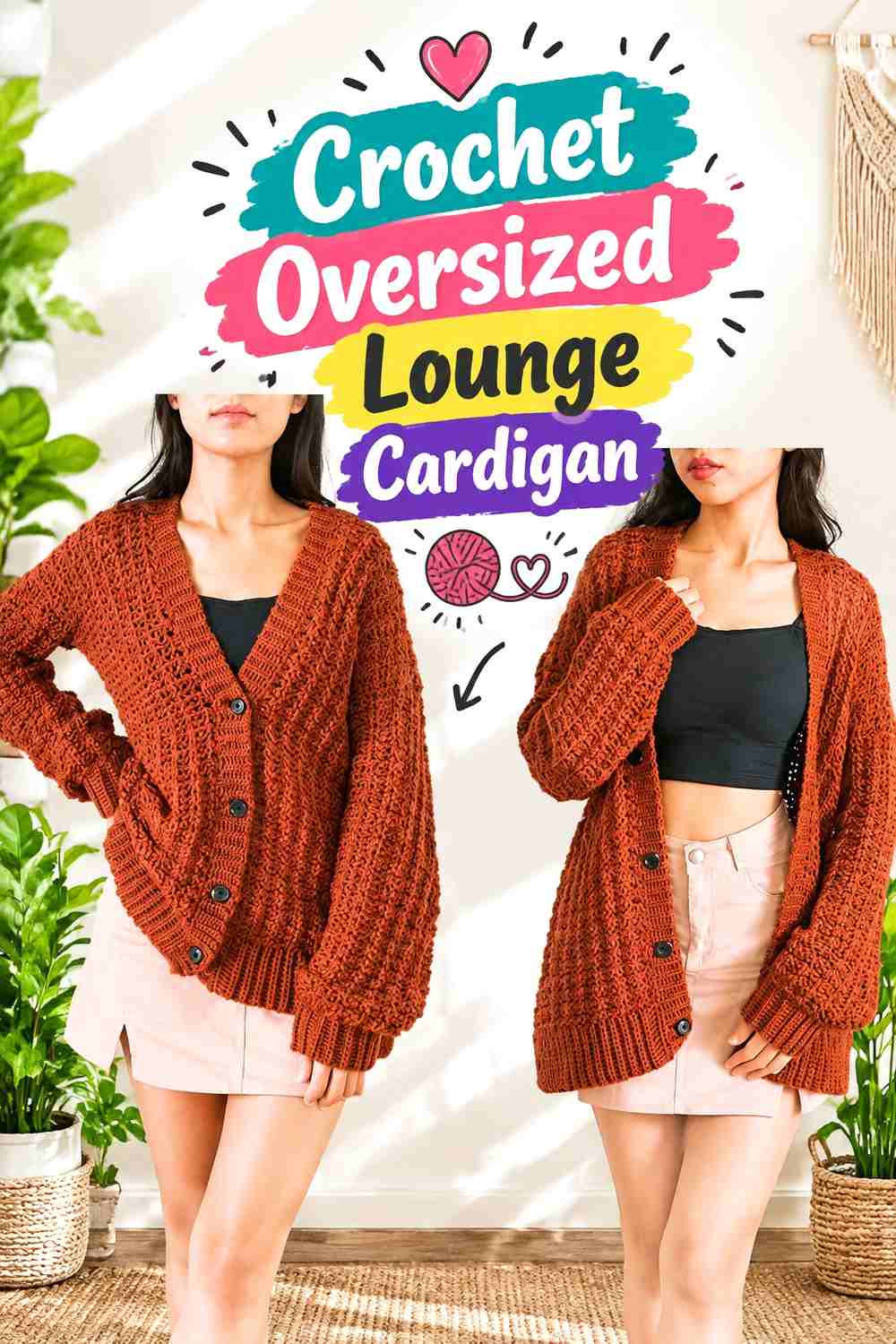
Chenda DIY’s cardigan tutorial centers on an oversized silhouette, making it a strong direction for readers who prefer room around the torso and arms rather than a close-fitting winter layer.
This shape makes sense over pajamas, a long-sleeve tee, or another lightweight layer, but oversized should still be intentional. Too much additional width can shift the shoulders and sleeves farther than you expect.
Decide How Much Oversizing You Actually Want
Instead of choosing an oversized cardigan simply by going up an arbitrary number of sizes, compare the intended finished measurements with a garment whose looseness you already like.
The useful question is not “How big can I make it?” but “How much room feels comfortable without making the sleeves and shoulders cumbersome?”
Roomy Sleeves Need a Practical Cuff
Generous sleeves add to the lounge-like character, especially when your arms are folded or tucked close to your body. Around books, food, and drinks, however, the wrist area can become the more important measurement.
If the tutorial allows customization, check the cuff against your hand and wrist before deciding that the entire sleeve should remain equally loose.
Creator Credit: Chenda DIY
6. Crochet Chunky Cropped Button Cardigan
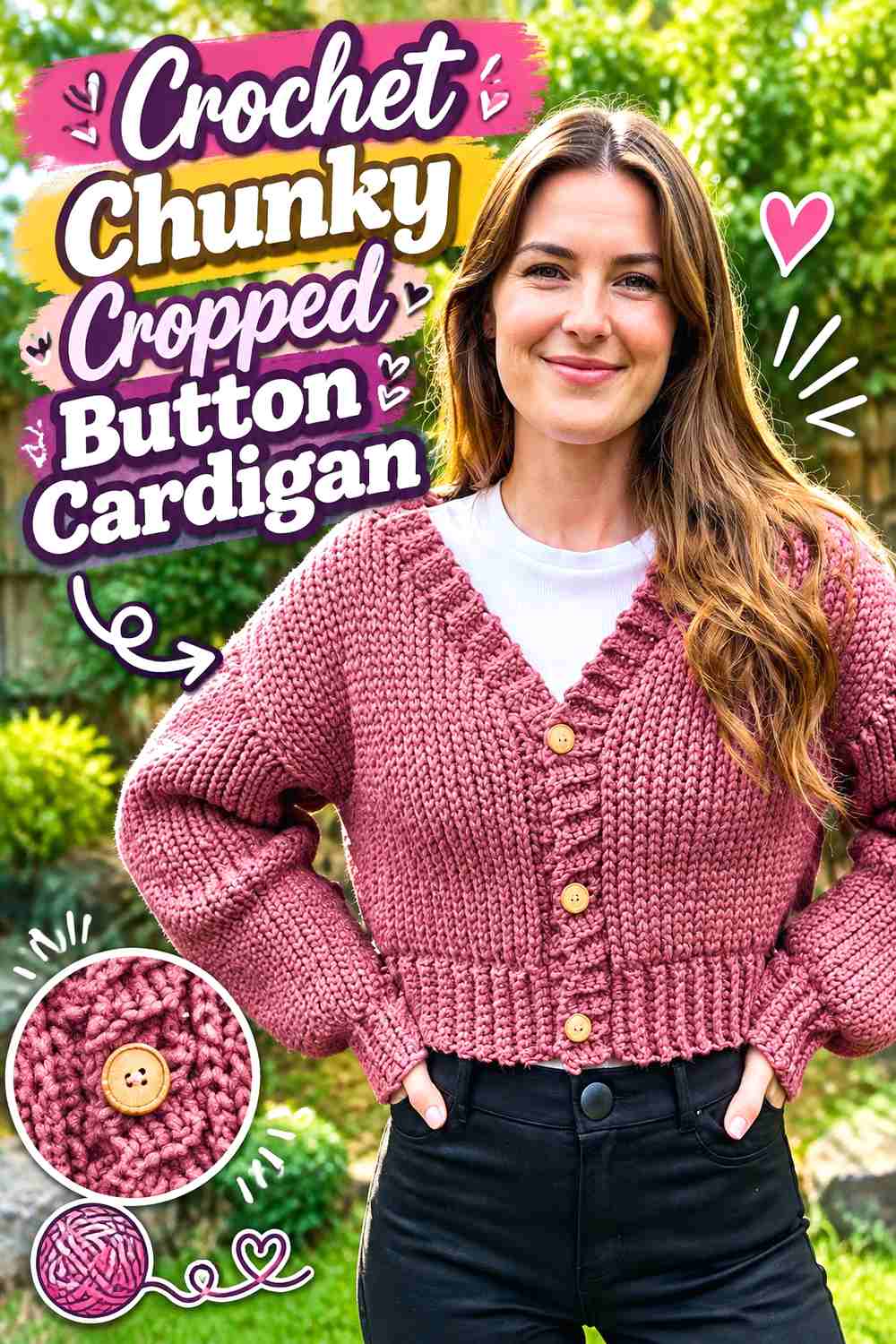
Stephanie Tashi’s tutorial offers a very different proportion: chunky fabric, a cropped body, ribbed finishing, and buttons. The video includes separate attention to the waist and neckline finishing, buttonholes, sleeves, and wrist ribbing.
For fireside reading, the shorter length can be an advantage if you want concentrated torso warmth without a long cardigan bunching underneath you.
A Cropped Hem Keeps Fabric Away From the Seat
A shorter cardigan is easier to arrange in a compact reading chair because there is less material below the waist. It can also work well with high-rise lounge pants or skirts.
Check the intended finished length against your own torso before starting. “Cropped” can land at very different points depending on body proportions.
Chunky Ribbing Gives the Edges Visual Weight
Wide ribbing around a chunky cardigan can make the borders feel more substantial than the same detail on a lightweight garment.
If substituting yarn, make sure your ribbing and main fabric still work together. A border that is much firmer than the body can pull inward more dramatically than intended.
Creator Credit: Stephanie Tashi
7. Crochet Striped Made-to-Measure Cardigan
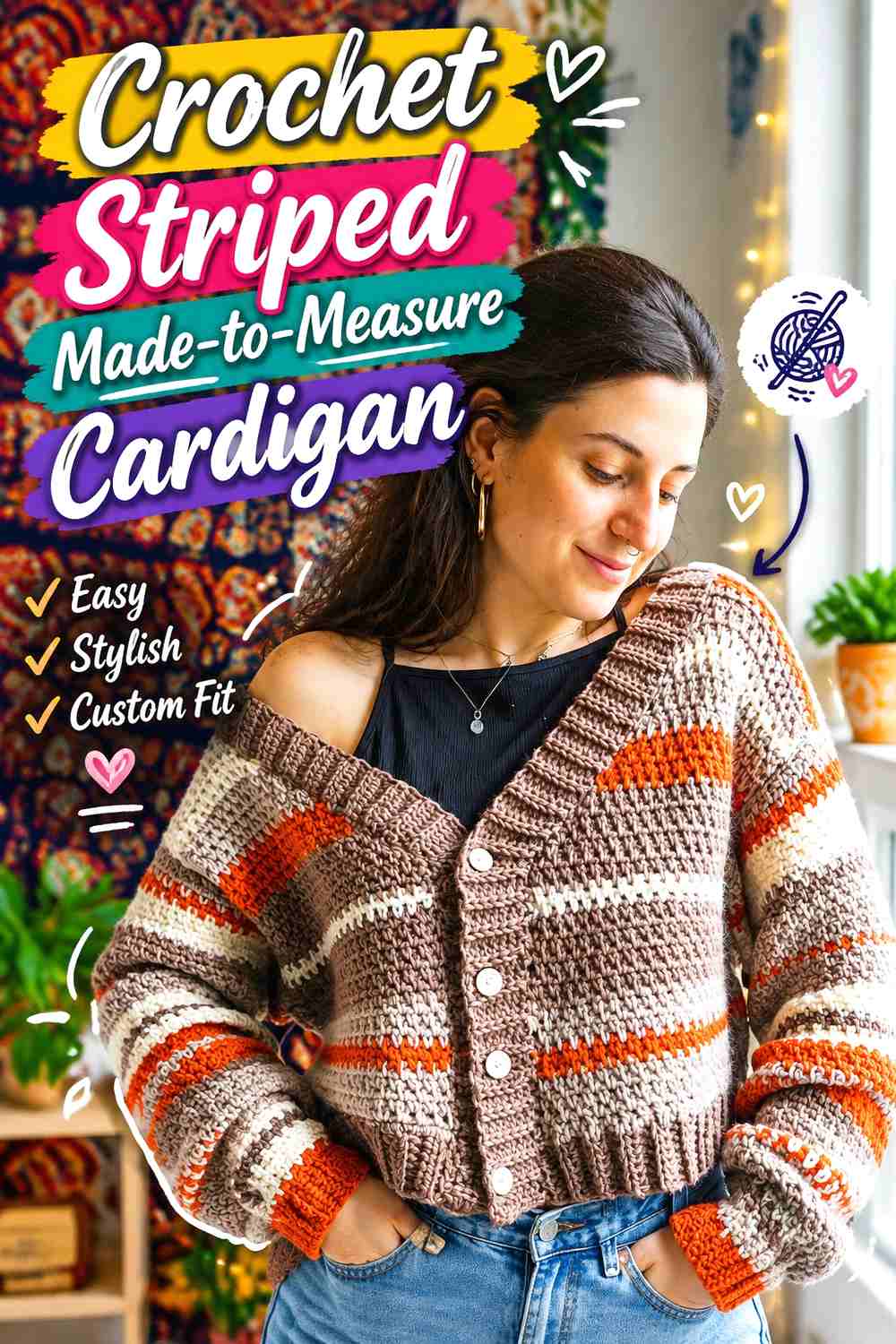
Bloodimaryart Crochet approaches the cardigan as an oversized striped project with measurement-based planning. The tutorial discusses measurements as part of building the garment rather than presenting color as the only defining feature.
This is a good direction when you want your winter cardigan to feel visually lively while still making fit decisions around your own body.
Stripe Placement Can Change the Visual Proportions
Broad stripes can emphasize garment width, while narrower repeats create more frequent visual breaks. Neither is inherently better, but it is worth sketching the approximate color sequence before committing to the whole cardigan.
If you change stripe depth, plan the transition points across related pieces so the finished garment looks intentional.
Made-to-Measure Still Requires Ease Decisions
Body measurements tell you where you are starting; they do not automatically determine how loose the cardigan should be.
Compare the tutorial’s intended silhouette with your preferred reading fit and decide how much space you want for winter layers. Remember that adding width can also affect the apparent shoulder placement.
Creator Credit: Bloodimaryart Crochet
8. Crochet Patchwork Book-Nook Cardigan
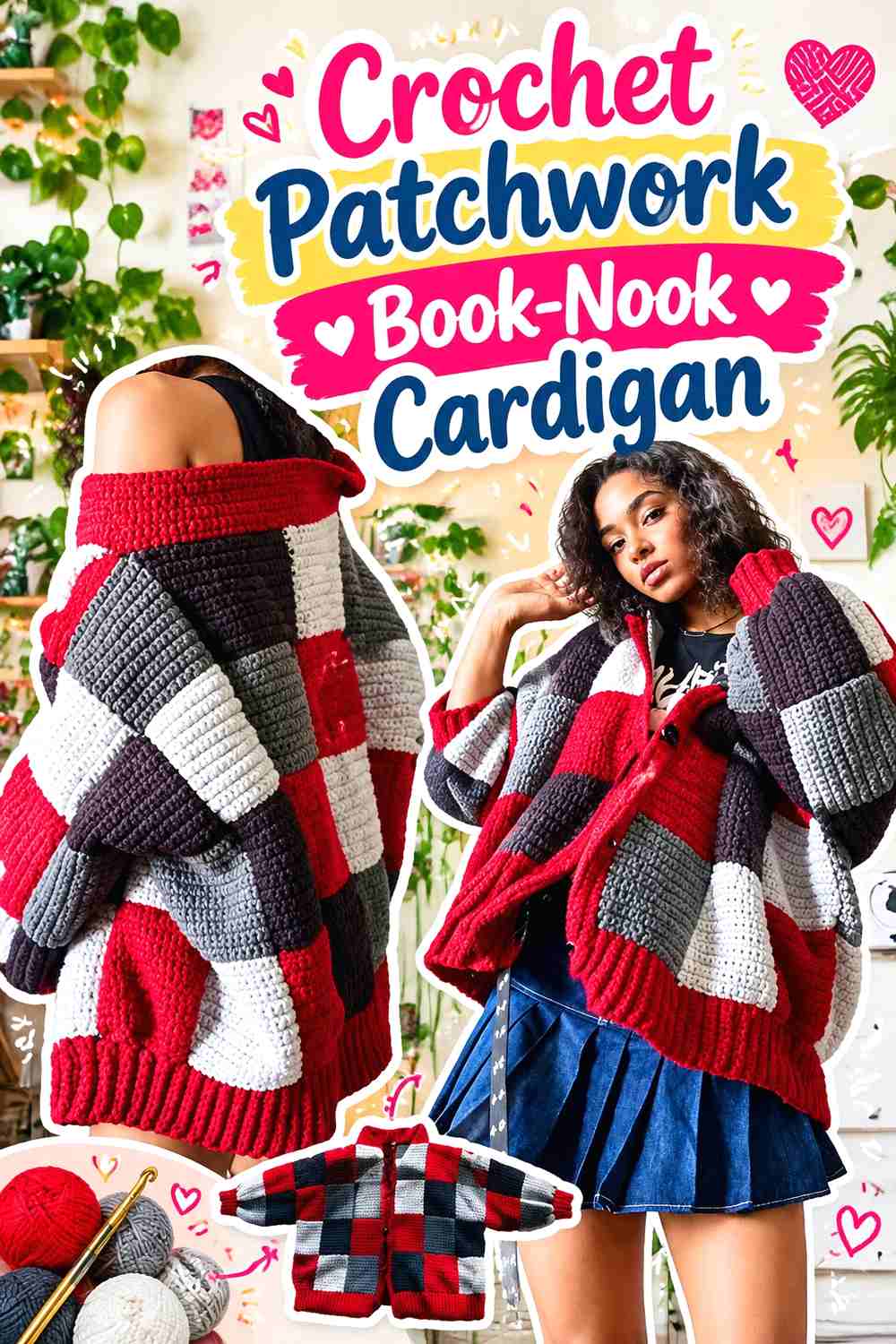
A patchwork cardigan turns the garment itself into a layout project. ikoxun’s tutorial covers measurement planning, square dimensions, color choices, the cardigan layout, ribbing, assembly, the button band, collar, and buttons.
For a reading cardigan, this style is especially appealing if you enjoy the slow process of making smaller components and arranging them before committing to the final look.
Square Dimensions Control the Garment More Than the Sketch Does
A paper layout is only useful if the finished squares actually match the dimensions assumed in that layout.
Block representative squares first and measure them consistently. Even a modest size difference can become significant once several motifs are placed across the body or sleeve.
Plan Color Distribution Before Permanent Joining
Patchwork gives you more control over where each color appears than a continuous striped fabric. Take advantage of that by arranging all finished components before joining.
Pay attention to the front edges, shoulders, elbows, and back rather than examining each square only in isolation. A balanced overall arrangement matters more than making every local color combination perfectly symmetrical.
Creator Credit: ikoxun
9. Crochet Top-Down Raglan Winter Cardigan
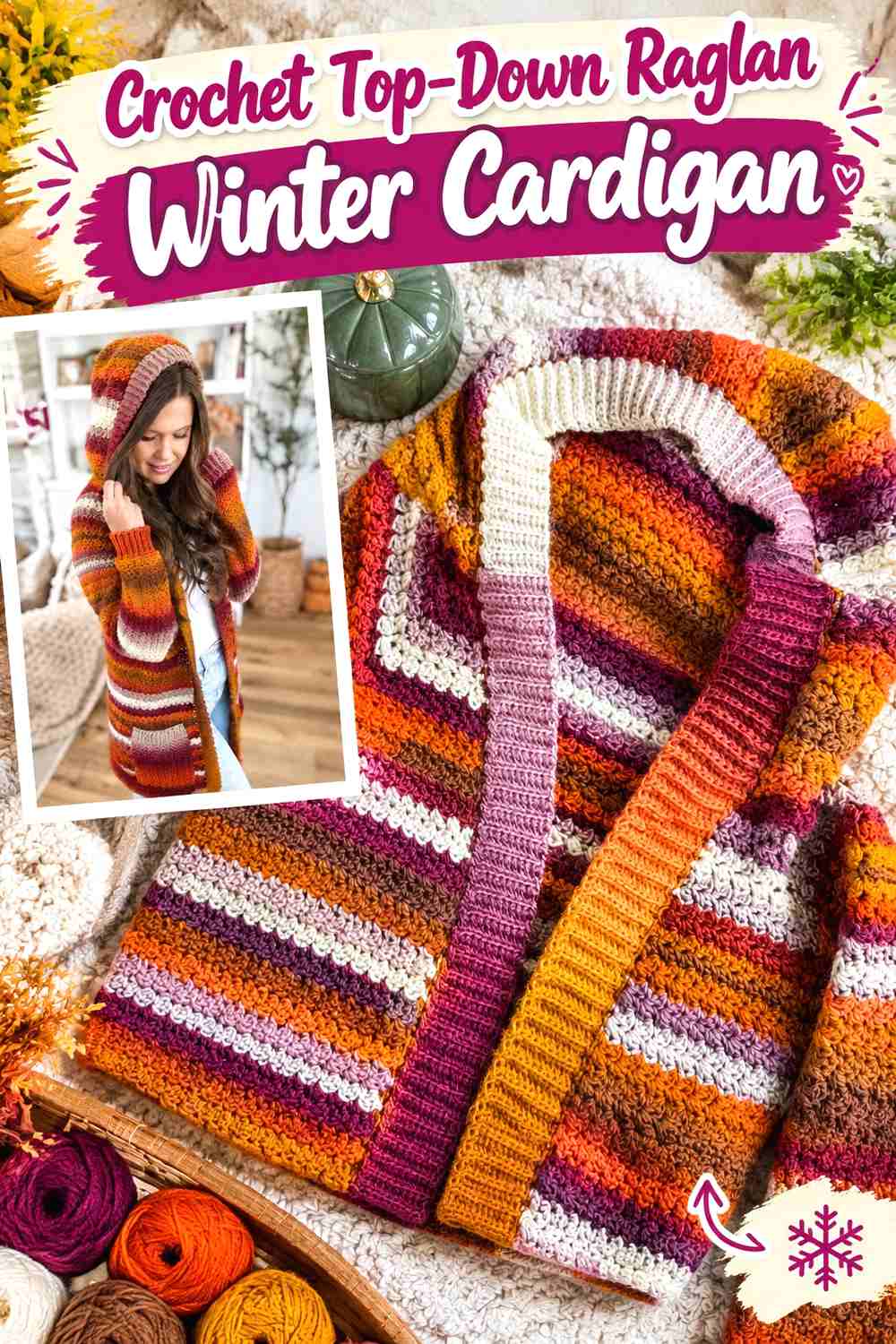
MJ’s Off The Hook Designs provides a raglan cardigan direction in which the garment develops from the upper body downward. The associated design offers options that include a longer hooded version with pockets and a shorter buttoned variation, giving useful examples of how finishing choices can substantially change one core cardigan concept.
A top-down cardigan is especially interesting when shoulder and upper-body fit are your main concern because those areas are established early in the project.
Raglan Shaping Changes the Shoulder Experience
Unlike a drop shoulder, a raglan distributes shaping diagonally from the neckline toward the underarm. This can produce a different feel around the shoulders and upper arms.
If you usually struggle with shoulder seams sitting too low, compare this construction with the more rectangular panel options elsewhere in the list.
Decide on Length Before the Cardigan Becomes Heavy
A top-down garment can make length customization intuitive, but a growing cardigan feels different once more fabric has been added.
As you evaluate length, account for the yarn’s behavior and the garment’s increasing weight rather than deciding entirely from an early, unfinished try-on.
Creator Credit: MJ’s Off The Hook Designs
10. Crochet One-Piece Soft-Drape Cardigan
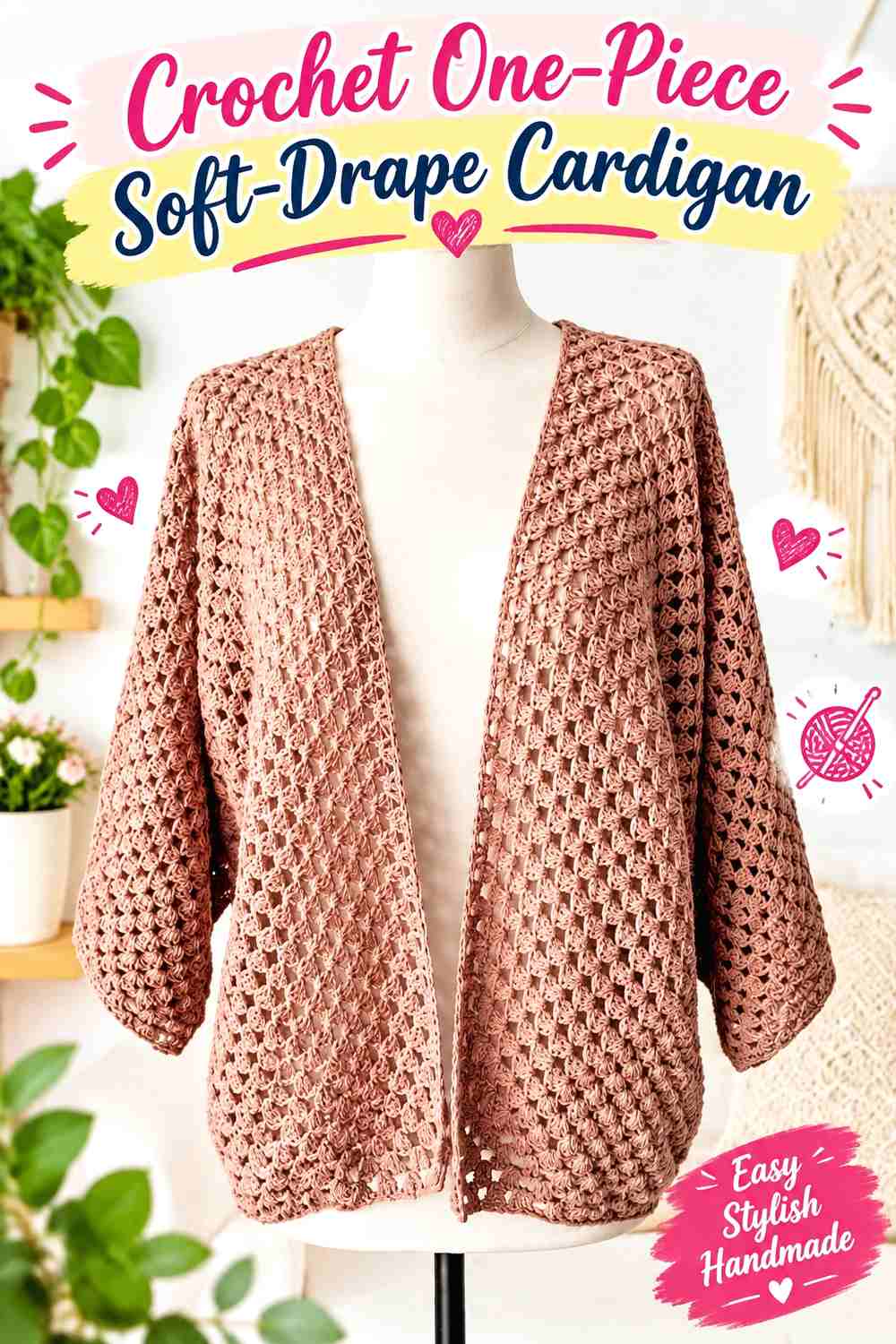
Crochet Capri’s tutorial focuses on a one-piece cardigan construction, providing a useful alternative to projects that require several separate body panels.
For someone who finds keeping track of many independent components distracting, a more continuous construction can make the project feel cohesive while still producing a complete wearable.
One-Piece Construction Reduces Some Joining Decisions
Fewer separate body pieces can mean fewer opportunities for matching independent panel lengths. It does not eliminate fit planning, though.
Mark important transition points carefully and keep checking width and length as the fabric develops, because correcting proportions after a large continuous section is complete may be less convenient.
Drape Determines Whether the Fabric Feels Relaxed or Rigid
A one-piece cardigan benefits from fabric that can bend comfortably around the body. If you substitute yarn or hook size, assess the swatch by feel as well as measurement.
A technically correct width is not enough if the resulting fabric is too stiff for the relaxed reading layer you intended.
Creator Credit: Crochet Capri
11. Crochet Zip-Front Reading Cardigan
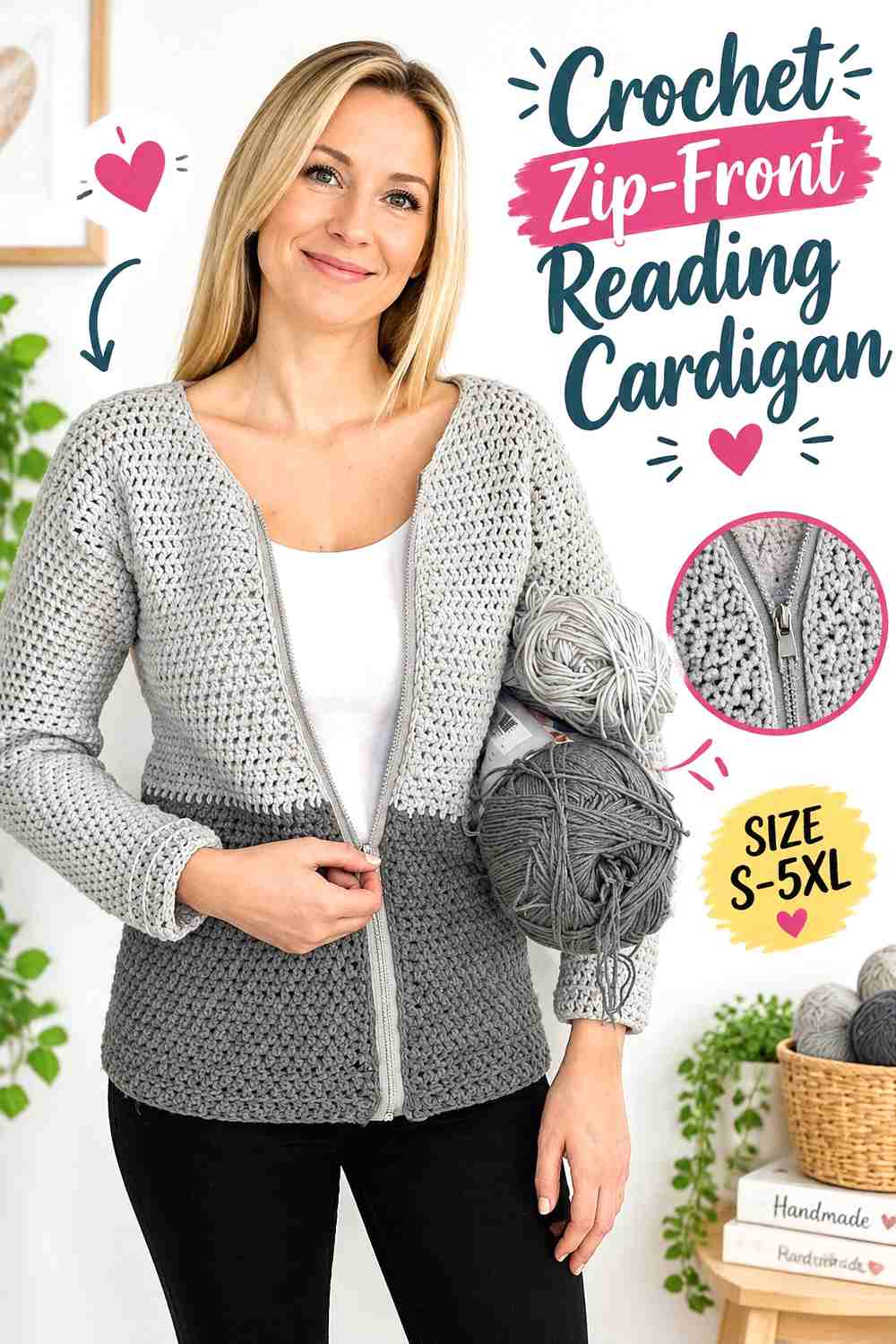
Wilma Westenberg’s First Cardigan design introduces a separating zipper, giving this collection a closure option that behaves very differently from an open front or individual buttons. The published pattern information includes multiple adult sizes and an accompanying video tutorial.
A zipper can be appealing when you want a reading cardigan to stay fully closed without working several buttons each time you put it on.
A Zipper Needs a Stable, Even Front Edge
A zipper introduces a relatively structured component beside stretchy crochet fabric. That makes the finished length and consistency of the cardigan edges especially important.
Before attaching any zipper, compare both front edges and follow the creator’s finishing guidance. Trying to force a zipper to fit an uneven or mismatched opening can distort the fabric.
Full Closure Makes Layering More Contained
Unlike a loose open front, a zippered cardigan can keep the two sides aligned from top to bottom. That can feel neat when you are moving between a reading chair and other activities around the house.
Consider what you normally wear underneath when choosing the final fit, because a closed cardigan may feel more restrictive than the same garment worn open.
Creator Credit: Wilma Westenberg
12. Crochet Long Duster Cardigan with Pockets
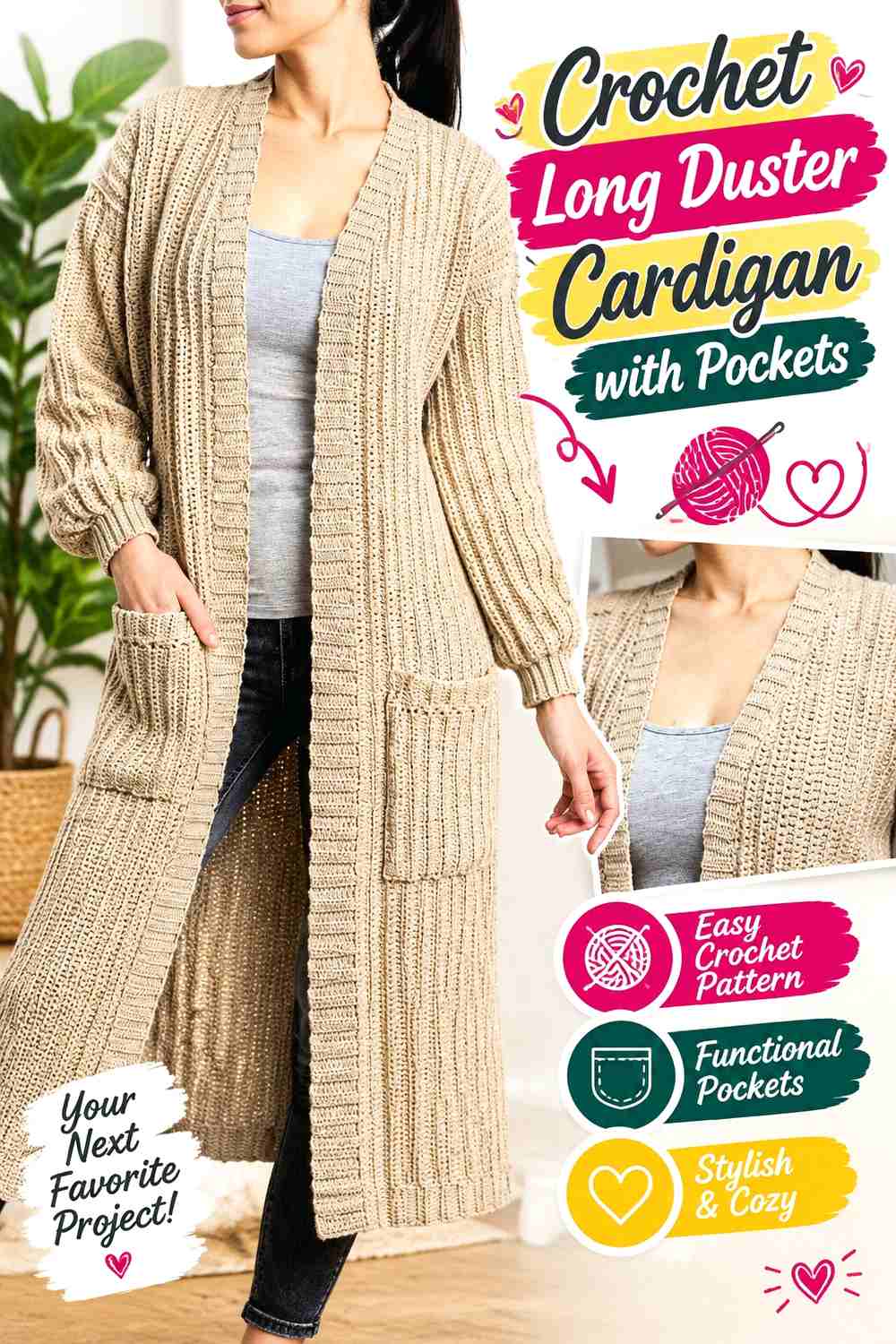
TCDDIY’s duster tutorial creates a long cardigan with pockets and measurement-based customization. The 2026 tutorial uses a lightweight yarn category for the demonstrated version, so the dramatic length does not automatically mean extremely bulky fabric.
This is the most robe-like direction in the group and suits readers who want generous vertical coverage without necessarily choosing the thickest possible yarn.
Duster Length Needs to Work With Your Chair
A cardigan that looks elegant while standing can behave very differently when the wearer sits. Before committing to extra length, measure against a robe, coat, or cardigan you already own.
Check whether you want the hem underneath you, beside your legs, or well clear of the seat. That preference can influence the most practical finished length.
Light Fabric and Long Length Can Balance Each Other
One way to keep a duster from feeling excessively heavy is to combine the long silhouette with a fabric that has reasonable drape.
If you substitute a denser or substantially heavier yarn, reassess the entire garment rather than assuming the same length will produce the same wearing experience.
Creator Credit: TCDDIY
13. Crochet Granny Hexagon Reading Cardigan
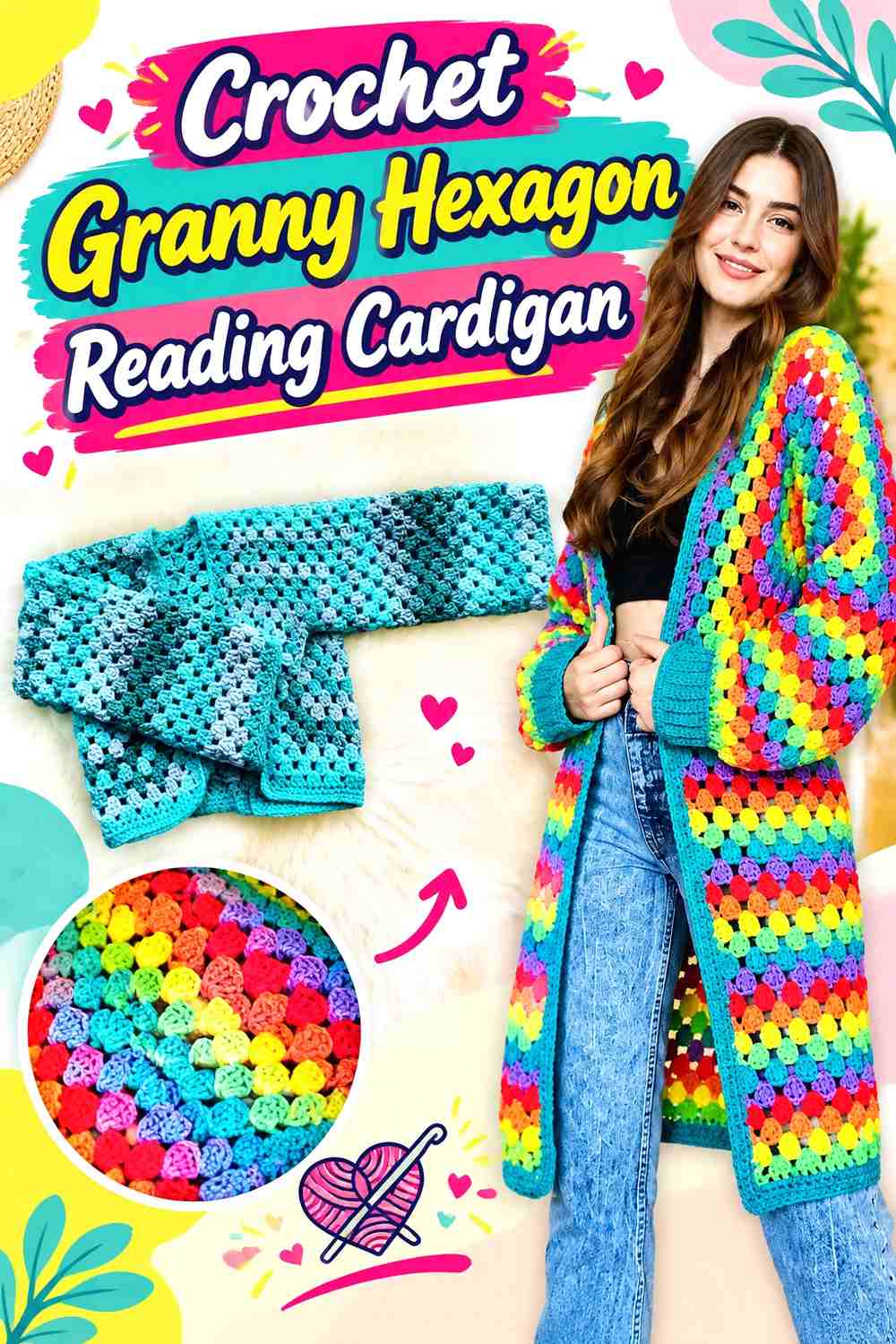
The granny hexagon cardigan uses two expanding hexagonal sections as the foundation of the garment. PassioKnit Kelsie’s version has a dedicated video tutorial and a graded written pattern associated with the design.
This construction stands apart from conventional front-and-back panel cardigans because the geometry itself creates much of the body and sleeve form.
Hexagon Size Controls Several Garment Areas at Once
When a construction relies on expanding geometric pieces, adding more to the hexagon can influence more than one finished dimension.
That interconnectedness is why frequent folding and fit checks matter. Do not focus only on body width while ignoring sleeve and overall proportions.
Color Changes Can Become Part of the Construction
Granny-style rounds make color transitions particularly visible, whether you use self-striping yarn or deliberate changes.
If you want a quiet fireside cardigan rather than a high-contrast statement piece, the same construction can be worked with a restrained palette. The geometry supplies enough visual interest on its own.
Creator Credit: PassioKnit Kelsie
14. Crochet Structured-Collar Library Cardigan
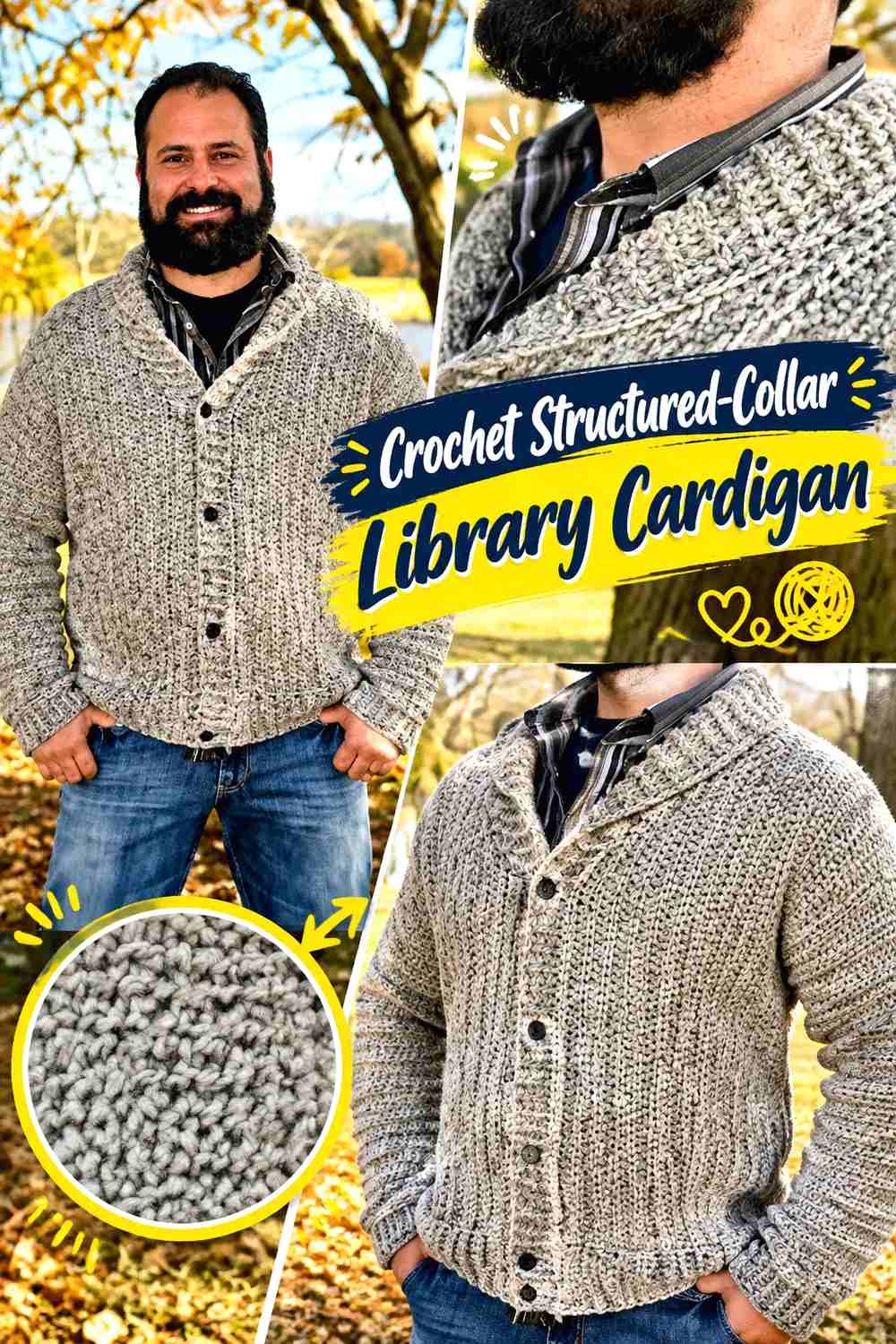
Heart Hook Home’s Cozy Coed Cardigan combines a substantial body with a pronounced front edging and collar treatment. The adult pattern is published in sizes from S through 4XL, with Tall variants, and the designer provides a companion video tutorial.
Its classic shape feels particularly appropriate for someone who likes a traditional “library cardigan” look rather than patchwork or dramatically oversized styling.
The Collar Adds Warmth Around an Often-Exposed Area
A deeper front edging can provide more fabric around the neck and upper chest than a narrow unfinished-looking opening.
When assessing collar depth, remember that more fabric is not always automatically more comfortable. Consider whether you want it to lie flat, fold back, or sit closer to the neck while you read.
Tall Sizing Highlights Why Length Deserves Separate Attention
Body width and body length are different fit questions. Having enough circumference does not guarantee that the cardigan reaches the point you want on your torso.
Use both horizontal and vertical measurements when comparing the available sizing information, especially if standard ready-to-wear cardigans often feel too short or too long on you.
Creator Credit: Heart Hook Home
15. Crochet Sunflower Hooded Cardigan Coat
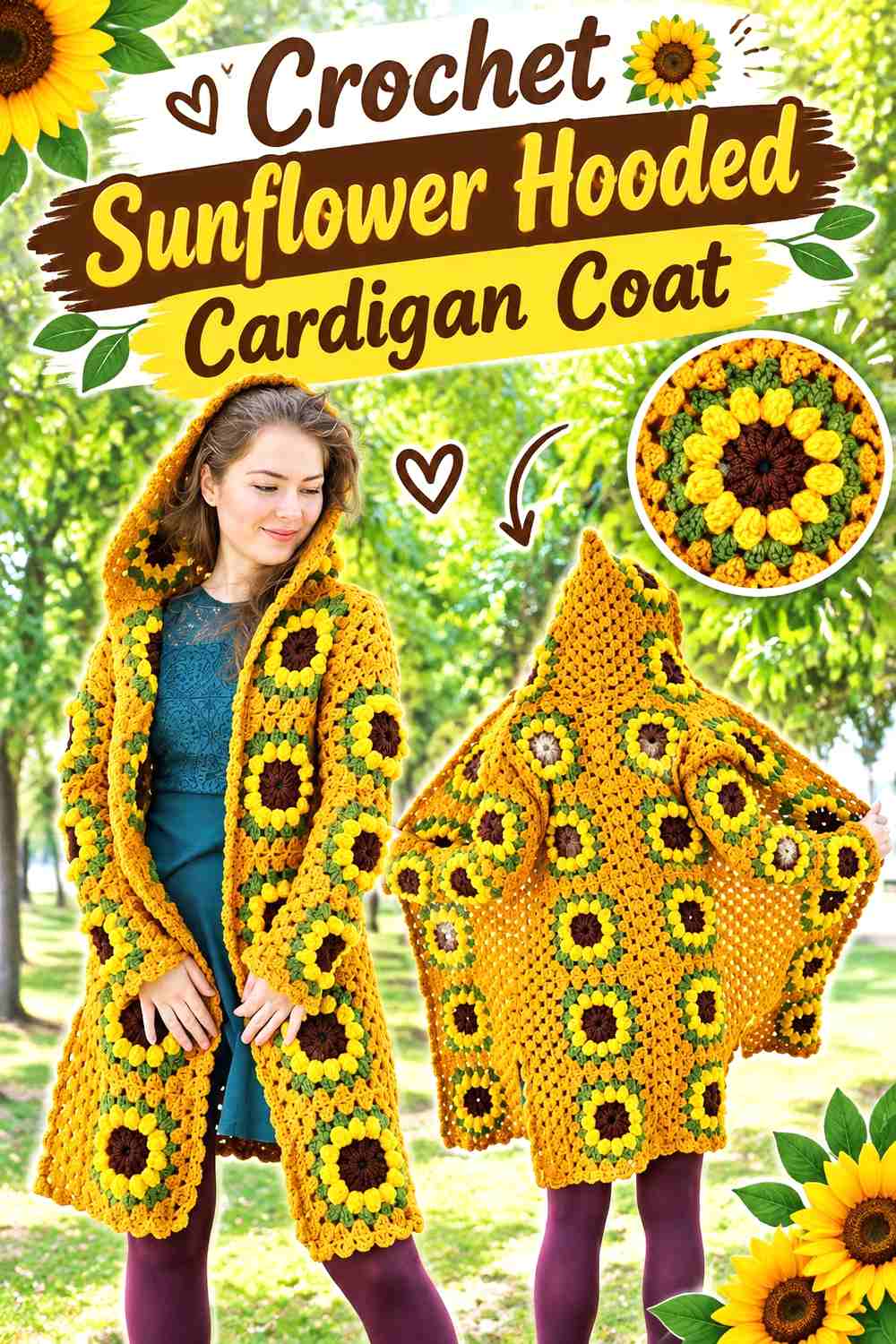
Colour Ceilidh Crochet’s sunflower granny-square cardigan takes the reading-cardigan idea into statement-wear territory. The published design is a long hooded cardigan coat with side slits, multiple sizes, and a supporting video tutorial.
It is the most decorative option here, combining repeated floral motifs with extra length and a hood rather than relying on texture alone for visual interest.
A Hood Adds Warmth Without Requiring a High Collar
For a cold reading corner, a hood gives you an optional extra layer around the back of the neck and head. When it is down, however, it also adds weight to the back neckline.
Make sure the shoulder and neck area feels balanced before assuming a larger hood will always be more comfortable.
Motif Placement Needs a Full-Garment View
A striking sunflower square draws attention individually, but a cardigan coat contains many visual zones at once. Arrange motifs with the whole garment in mind, including the front edges, back, sleeves, and hood.
Block and compare squares before assembly so small dimensional inconsistencies do not accumulate across a long coat.
Creator Credit: Colour Ceilidh Crochet
Which Crochet Reading Cardigan Fits Your Winter Routine?
| If you want… | Start with… |
|---|---|
| Long, relaxed coverage with practical pockets | #1 or #12 |
| A cardigan that stays closed | #2, #6, or #11 |
| Thick, substantial winter fabric | #3 or #6 |
| Fewer main body pieces to organize | #4 or #10 |
| Extra room for layering | #5 |
| Custom color placement | #7 or #8 |
| Top-down shaping | #9 |
| A classic, traditional cardigan appearance | #14 |
| Geometric construction rather than standard panels | #13 |
| A hood and decorative motifs | #15 |
The main distinction is not simply which cardigan looks warmest in a photograph. Think about what happens after you sit down. A long duster offers far more coverage than a cropped button cardigan, but the cropped design keeps excess fabric out of the chair. Patchwork and sunflower motifs make color planning a major part of the project, while a one-piece or three-piece cardigan puts more attention on overall fabric and proportions.
Closures also change the experience. Buttons and zippers give you control over the front, whereas open-front designs are easier to throw on and off. If you frequently read with your hands occupied by a book or tablet, that small functional difference may matter more than decorative details.
Conclusion
For maximum fireside coverage, the long pocket cardigan, classic duster, and sunflower hooded coat are the most enveloping directions in this collection. If you prefer less fabric around you while sitting, the chunky cropped button cardigan offers a much more compact alternative.
Readers who enjoy shaping and garment construction may prefer the raglan, three-piece drop shoulder, or one-piece design. If choosing colors and arranging components is half the fun, the striped, patchwork, granny hexagon, and sunflower projects give you more opportunity to make the finished cardigan visually personal.
Whichever route you choose, compare the tutorial’s intended proportions with your own measurements and the way you actually sit and layer clothes in winter. Use the original creator tutorial for exact construction, sizing, materials, and project-specific instructions rather than assuming that measurements from one cardigan can be transferred directly to another.
Frequently Asked Questions
What makes a crochet cardigan good for fireside reading?
Comfort while sitting is the biggest consideration. Look at sleeve volume, cuff position, front coverage, body length, pockets, collar or hood bulk, and how much ease you want over your usual indoor winter layers. The ideal choice depends more on your reading habits and chair than on one universal cardigan shape.
Is a long crochet cardigan always warmer than a cropped one?
Not necessarily. Length adds body coverage, but warmth also depends on yarn fiber, fabric density, openings in the stitch pattern, layering, and fit. A dense shorter cardigan over another warm layer may feel more insulating around the torso than a very open long cardigan.
Should a reading cardigan have buttons or a zipper?
A closure is useful if you want the front to remain in place without holding or rearranging it. Buttons offer flexible partial closure, while a zipper can close most or all of the front continuously. Open cardigans remain a good choice when easy on-and-off layering matters more than secure coverage.
How can I stop crochet cardigan sleeves from getting in the way while reading?
Check sleeve length with your elbows bent in a reading position rather than only measuring with straight arms. A fitted cuff, pushable ribbing, or slightly shorter sleeve may keep fabric farther from pages, keyboards, and drinks. Follow the individual tutorial when making length adjustments so you do not accidentally alter other shaping.
Can I use a thicker yarn to make one of these cardigans warmer?
A thicker yarn can substantially change gauge, dimensions, drape, sleeve size, and garment weight. Do not substitute it solely because you want more warmth. Make a swatch, compare it with the tutorial requirements, and determine whether the construction can accommodate the difference before buying yarn for the full garment.
Are granny-square and hexagon cardigans practical for winter?
They can be, but the amount of open space in the fabric matters. Traditional granny-style constructions may have more openings than dense crochet fabric. Fiber choice, layering, motif structure, and borders all influence how the finished cardigan feels in cold conditions.
Should I block cardigan pieces before joining them?
When a project uses separate motifs or panels, checking their finished dimensions before permanent assembly can help prevent mismatched joins and uneven garment proportions. Follow the creator’s instructions for the specific yarn and construction, particularly because different fibers respond differently to washing and blocking.