Checkerboard and gingham pillows are the easiest way to add pop and pattern to your sofa without spending much time or yarn. Below you’ll find a dozen tried-and-true tutorials—some classic two-tone checks, some buffalo plaid, and a couple of Tunisian entrelac options if you love that knit-like look. Most use beginner stitches (single crochet, half-double, or C2C blocks), work up in panels, and finish with a simple seam around a standard pillow insert. I analyzed each tutorial’s photos so your image prompts match the exact colors and vibe shown. Pick your favorite construction method—joined squares, tapestry rows, surface-crochet plaid, or Tunisian tiles—and you’ll have a crisp, cozy accent for any room by this weekend.
Related Posts:
Checkerboard Velvet Lumbar Pillow

Soft, squishy, and glam—this checkered lumbar pillow uses Bernat Velvet in two pinks for bold contrast and serious cuddle factor. You’ll crochet solid granny squares, then seam them into a tidy grid that fits a 14″ × 28″ insert snugly. Plan 72 squares (36 per color), block lightly so edges align, and mattress-stitch for nearly invisible joins. Tip: use smooth size-4 yarn in a matching shade just for seaming so it doesn’t snag on the velvet pile. Make it for a bed or bench where a long pillow shines; the method scales easily. Tutorial.
Supplies: bulky velvet (two shades), 6.5 mm hook, size-4 scrap yarn for seaming, yarn needle, 14″ × 28″ insert
Why it’s great: Luxe texture plus crisp checks in a fast, modular build.
Simple Gingham Pillow Cover
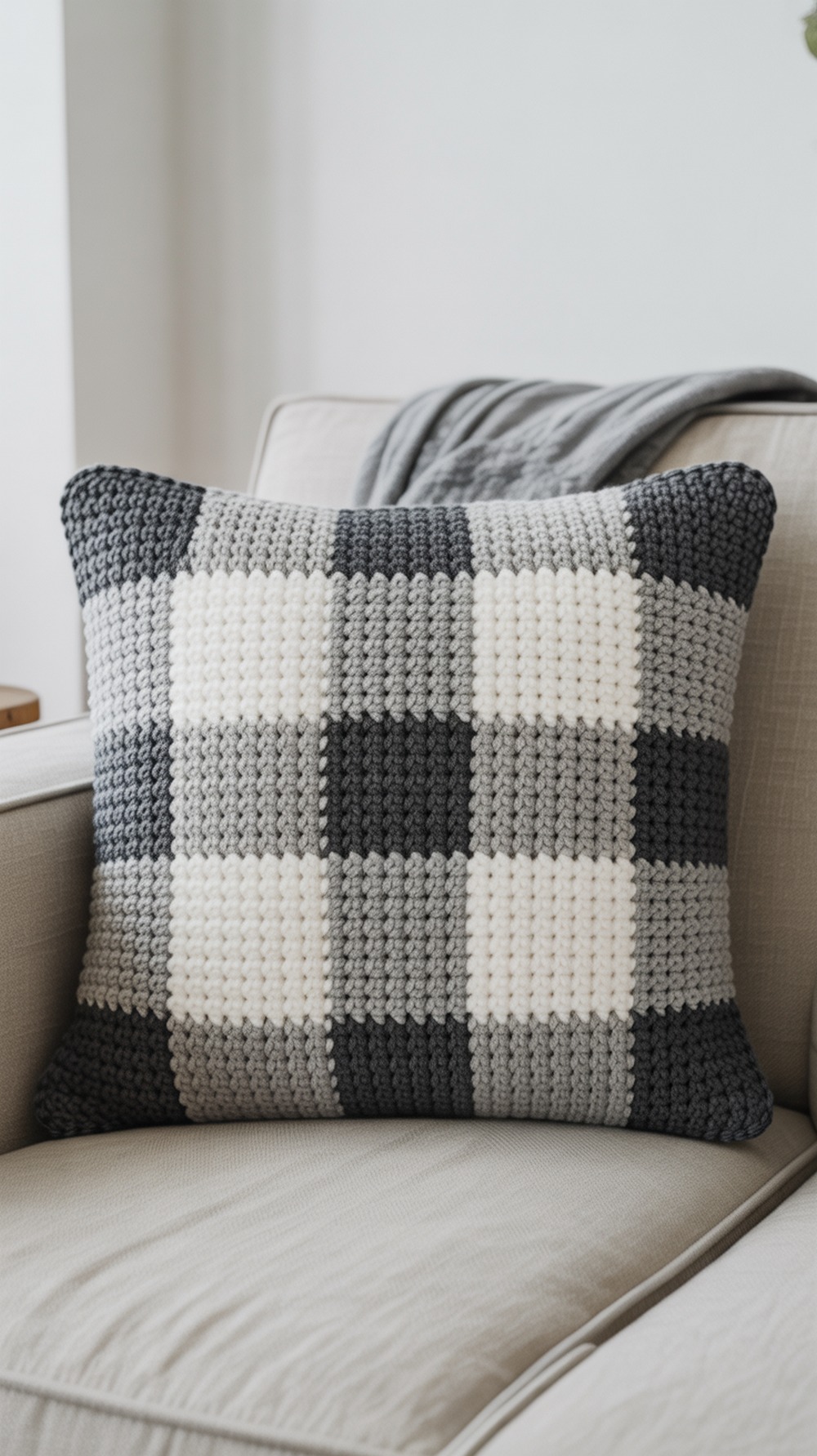
This beginner-friendly “cheater’s” gingham is built from seven narrow panels you seam into a grid—no fussy color carrying. The front is checkered; the back is a quick solid HDC panel sized for an 18″ × 18″ form. Swatch one strip to confirm panel width, then keep your row counts identical per strip for a square grid. Tip: steam-block the front before seaming to prevent ripples. It’s a great stash buster if you’ve got neutrals on hand. Tutorial.
Supplies: bulky #5 yarn in black, gray, white; 6.5 mm hook; markers; tapestry needle; 18″ insert
Why it’s great: True gingham look with simple seamed strips—no floats to manage.
C2C Gingham Pillow
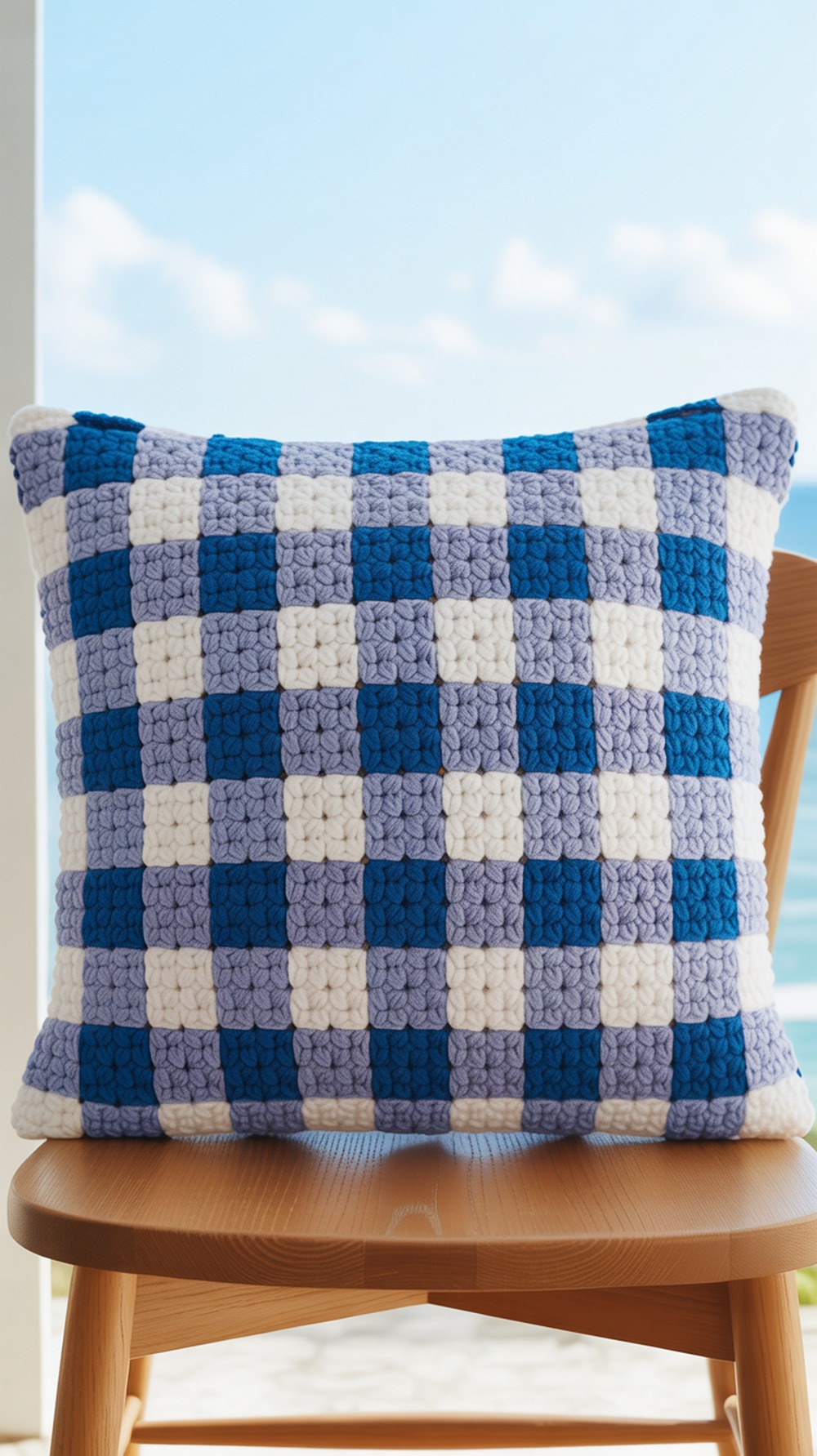
Love corner-to-corner? This pattern works two C2C squares—front and back—in royal blue, periwinkle, and white for a classic gingham. You’ll follow a color chart, then seam the panels around an 18″ insert. Swatch to match block size; keeping both panels identical prevents twisting at the seam. Tip: weave as you go to reduce ends. The color trio reads fresh and coastal, but you can swap in any dark/medium/light combo for instant gingham. Tutorial.
Supplies: worsted cotton in 3 colors (≈720 yds total), 3.75 mm hook, scissors, 18″ insert
Why it’s great: Bold checks with easy diagonal construction and clear charts.
Chunky Buffalo Plaid Pillow
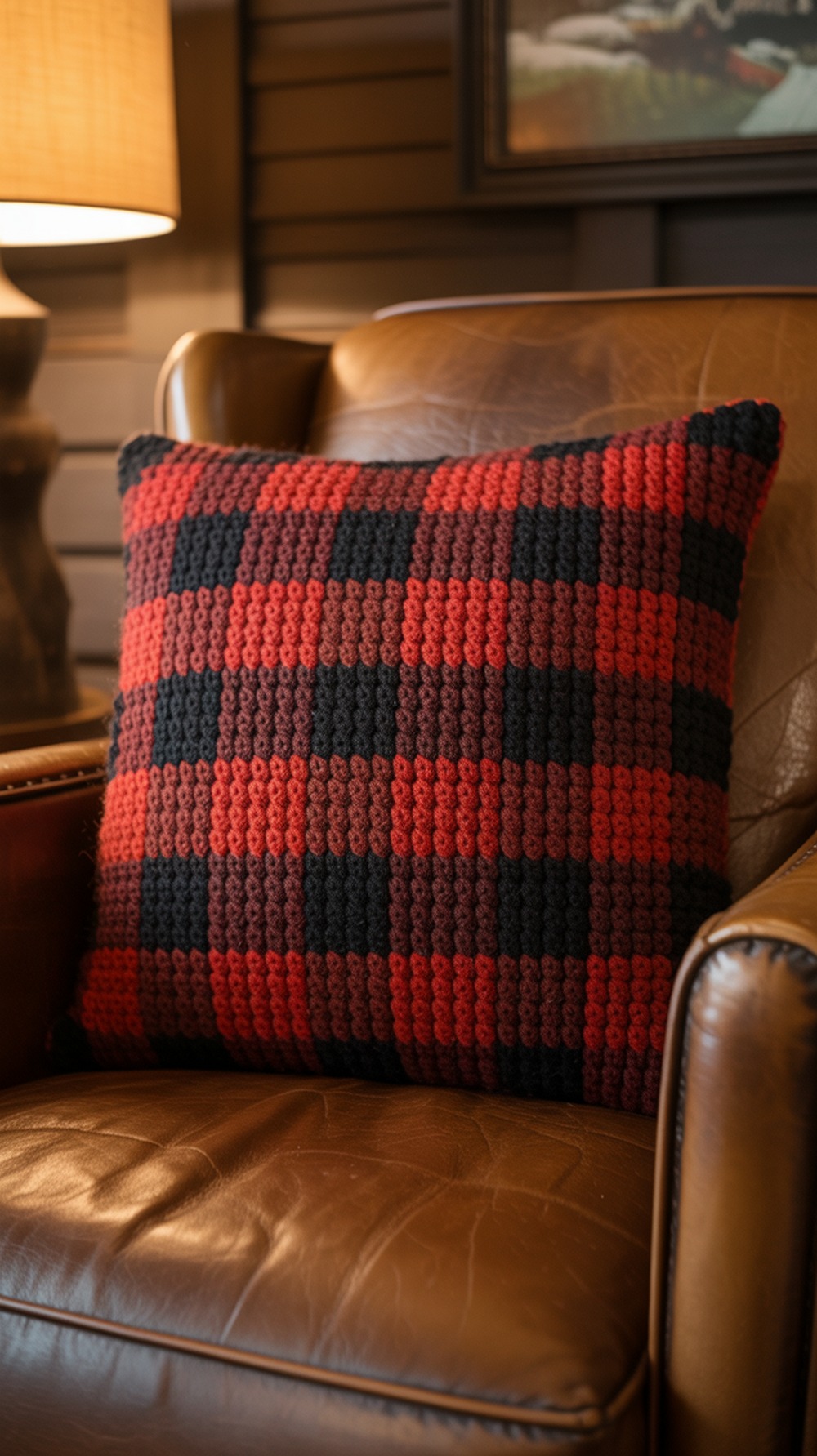
This cozy classic uses tapestry single crochet with Wool-Ease Thick & Quick for speed and structure. Make two 18″ panels, carry the contrast color cleanly on the wrong side, and watch the red-and-black buffalo check emerge. Gauge matters—work a test swatch before committing so your cover fits snugly. Tip: edge both panels with a round of SC in black for a polished seam and crisp corners. Perfect for cabins, holiday decor, or anytime rustic vibes. Tutorial.
Supplies: super-bulky yarn in red, burgundy, black; 9 mm hook; needle; 18″ insert
Why it’s great: Fast, chunky fabric with iconic plaid checks.
Cozy Holiday Plaid Pillow with Faux Fur Tree
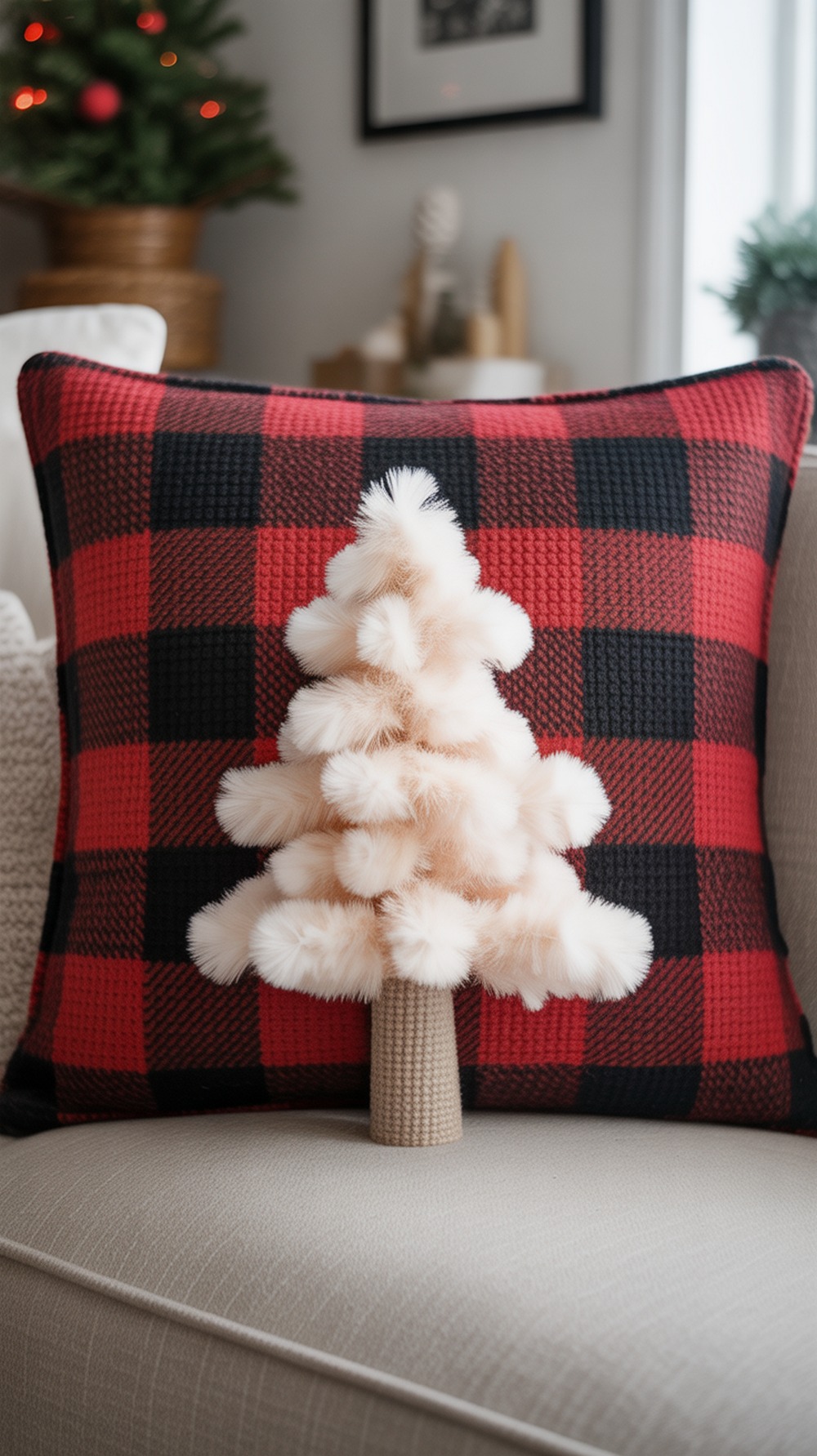
A playful twist on checks: crochet a red-and-black plaid background, then add a snowy faux-fur tree motif. It’s intarsia single crochet with bulky yarns, so it moves quickly and the texture pops. Use bobbins for tidy color-changes and keep floats minimal behind the tree. Tip: if you skip faux fur, sub white bulky and brush lightly for fluff. This pillow is a festive accent that still reads modern after the holidays. Tutorial.
Supplies: bulky yarn (red, burgundy, black), faux-fur white, 8–9 mm hook, bobbins, 18″ insert
Why it’s great: Intarsia checks plus 3D snowy motif = instant showpiece.
Buffalo Check Stag Pillow Cover
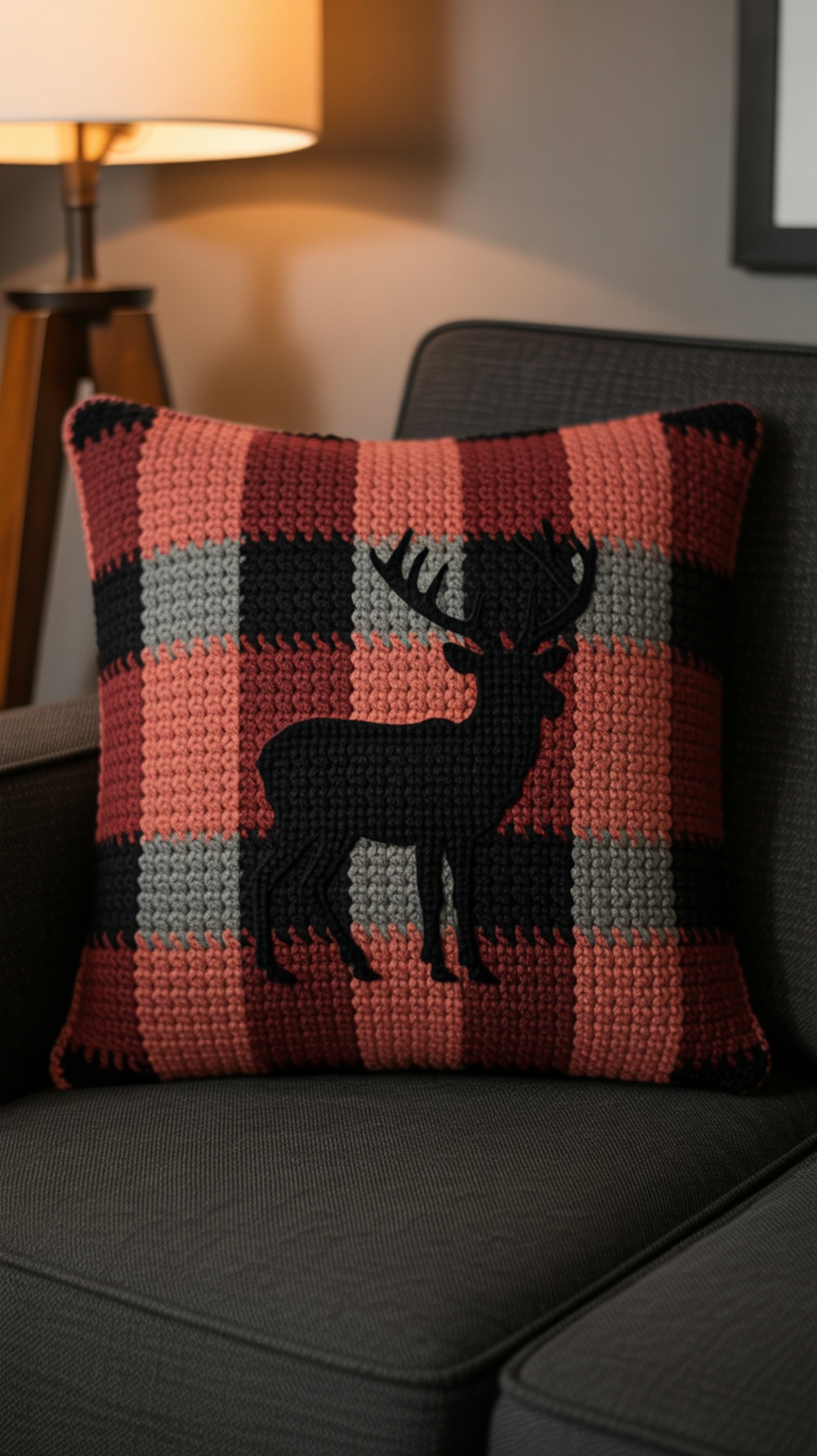
This tapestry crochet cover layers a stag silhouette over a buffalo check grid—surprisingly approachable with a graph and two hook sizes for clean tension. Work flat, carry colors along the wrong side, then seam around a 20″ form. Follow the yarn list exactly for the moody red palette (Cherry + Burgundy squares shaded with Charcoal and Black). Tip: block the panel before adding the silhouette details for crisp antlers. Tutorial.
Supplies: Red Heart Super Saver (Cherry, Burgundy, Charcoal, Black), 5.5 & 6.0 mm hooks, 20″ insert, needle
Why it’s great: Statement motif meets timeless plaid for high impact.
Classic Cotton Gingham Pillows
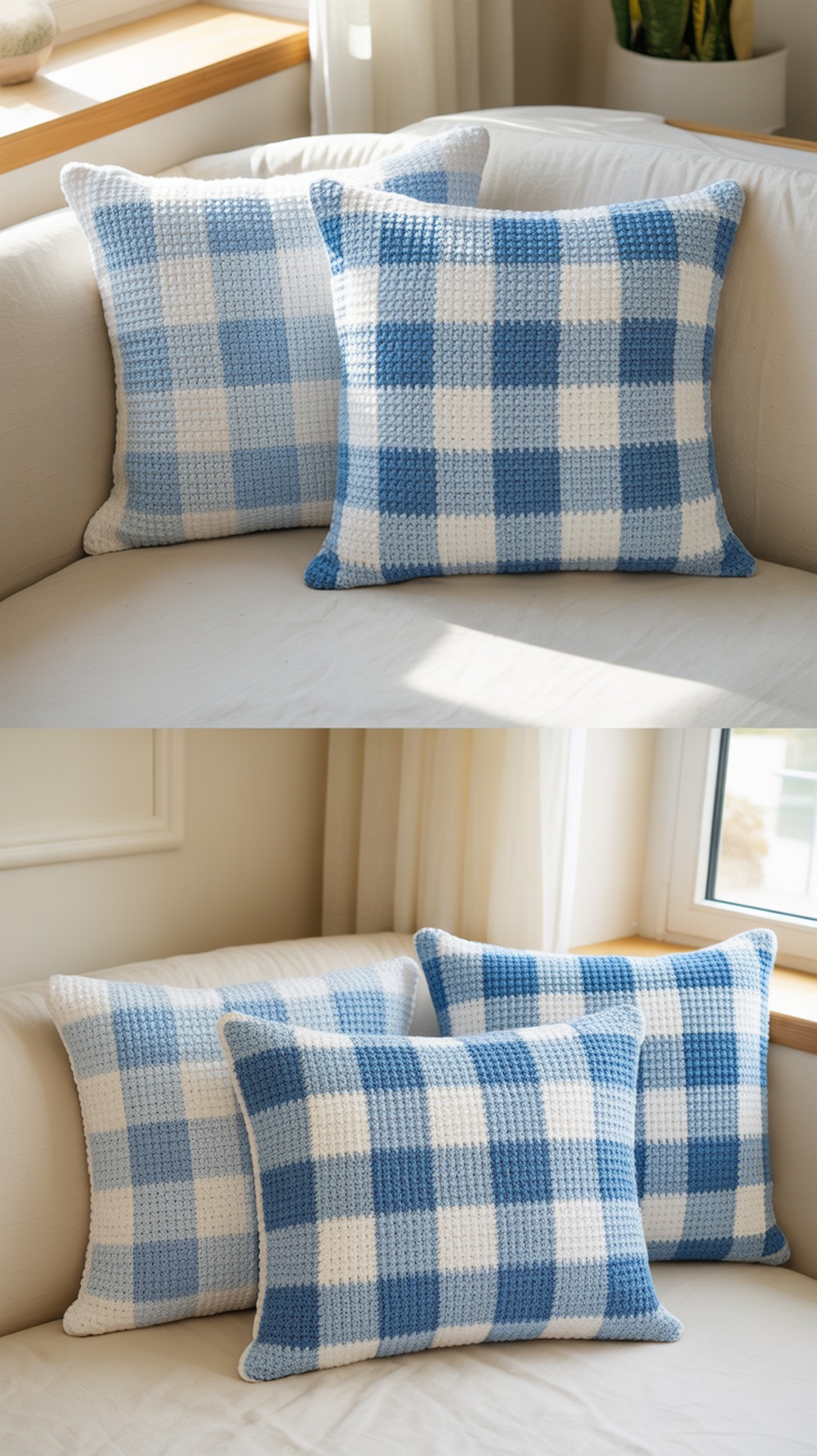
Prefer plant-based yarns? This Yarnspirations pattern uses Lily Sugar’n Cream to create either a square or lumbar gingham pillow. The instructions include both sizes and clear finishing notes. Choose the blue version to mirror the sample or switch to red for a picnic vibe. Tip: cotton benefits from a gentle machine wash to relax stitches; dry flat to keep edges square. Great for everyday use in sunny rooms and kids’ spaces. Tutorial.
Supplies: cotton worsted in two blues + white, 5 mm hook, pillow form per size, needle
Why it’s great: Washable, durable gingham in classic cottage colors.
Vintage Checkerboard Pillow

Go retro with a mid-century checkerboard worked in strips you whipstitch together, then add a gusset for a tailored cushion. The sample uses a gold-flecked white paired with black—glam and graphic. Follow the strip counts precisely so the front and back align. Tip: pin strips to blocking mats before seaming to keep the grid perfectly square. Finish with a zipper along the gusset if you like removable covers. Tutorial.
Supplies: worsted acrylic/craft rug yarn (white-gold & black), 4.0 mm hook, zipper (optional), insert, needle
Why it’s great: Timeless squares with couture finishing options.
Classic Two Color Checkerboard
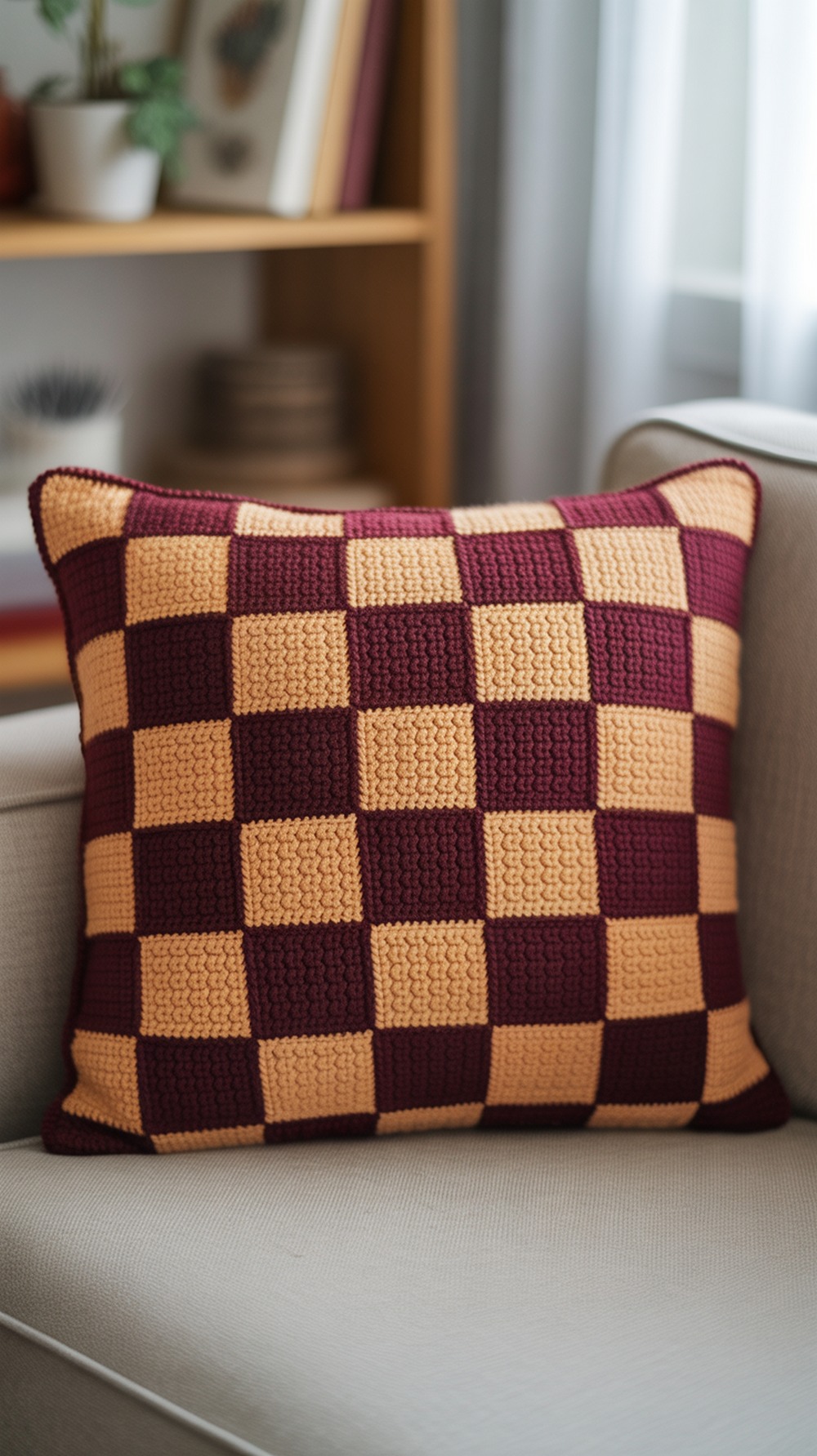
This straightforward pattern builds two checkered panels from alternating color strips and then whipstitches them together. Burgundy and cream echo the sample’s warm palette, but any high-contrast pair will pop. Work consistent stitch counts per strip so the squares align perfectly; the schematic shows the layout. Tip: add a single-crochet border around each panel before seaming for cleaner edges. Tutorial.
Supplies: worsted yarn in two colors, 4.5–5.0 mm hook, needle, pillow form
Why it’s great: Beginner construction with a crisp, classic result.
Tunisian Entrelac Check Pillow

If you like a knit-like texture, Tunisian entrelac creates neat little tiles without cutting yarn. This pillow works 19″ × 19″ panels in beige (MC) and gray (CC), with simple forward/return passes in TSS. Keep your edges relaxed to avoid biasing, and block lightly before seaming. Tip: a Tunisian corded bind-off makes a tidy final round. The check motif reads modern and calm—great for minimal spaces. Tutorial.
Supplies: worsted yarn in two neutrals, Tunisian hook, stitch markers, 19″ insert, needle
Why it’s great: Seamless tiled checks with sleek Tunisian texture.
Easy Plaid Pillow
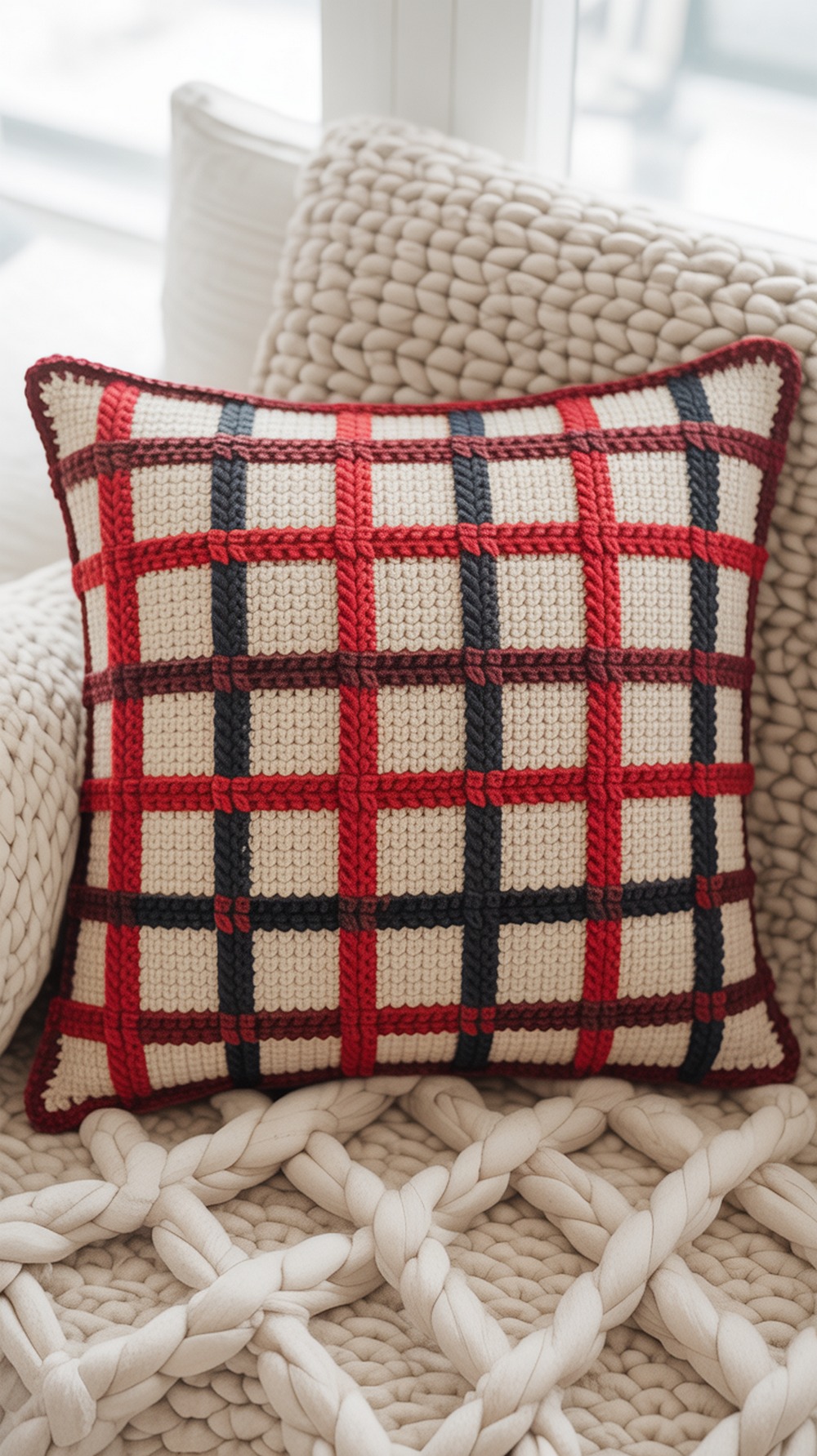
Skip color carries: crochet a solid base panel, then add the plaid grid with surface slip-stitch lines in two coordinating reds plus a dark. This clever method from MJ’s Off The Hook gives you perfect plaid with fewer tangles and fast finishes. Make two panels, seam, and pop in your form. Tip: keep your surface-stitch tension slightly relaxed so the fabric doesn’t pucker. Tutorial.
Supplies: #4 yarn in 3–4 colors (e.g., two reds + charcoal), 5.5 mm hook, needle, pillow form
Why it’s great: Plaid without intarsia—clean lines and beginner-friendly.
Buffalo Plaid Tree Skirt & Pillow Cover
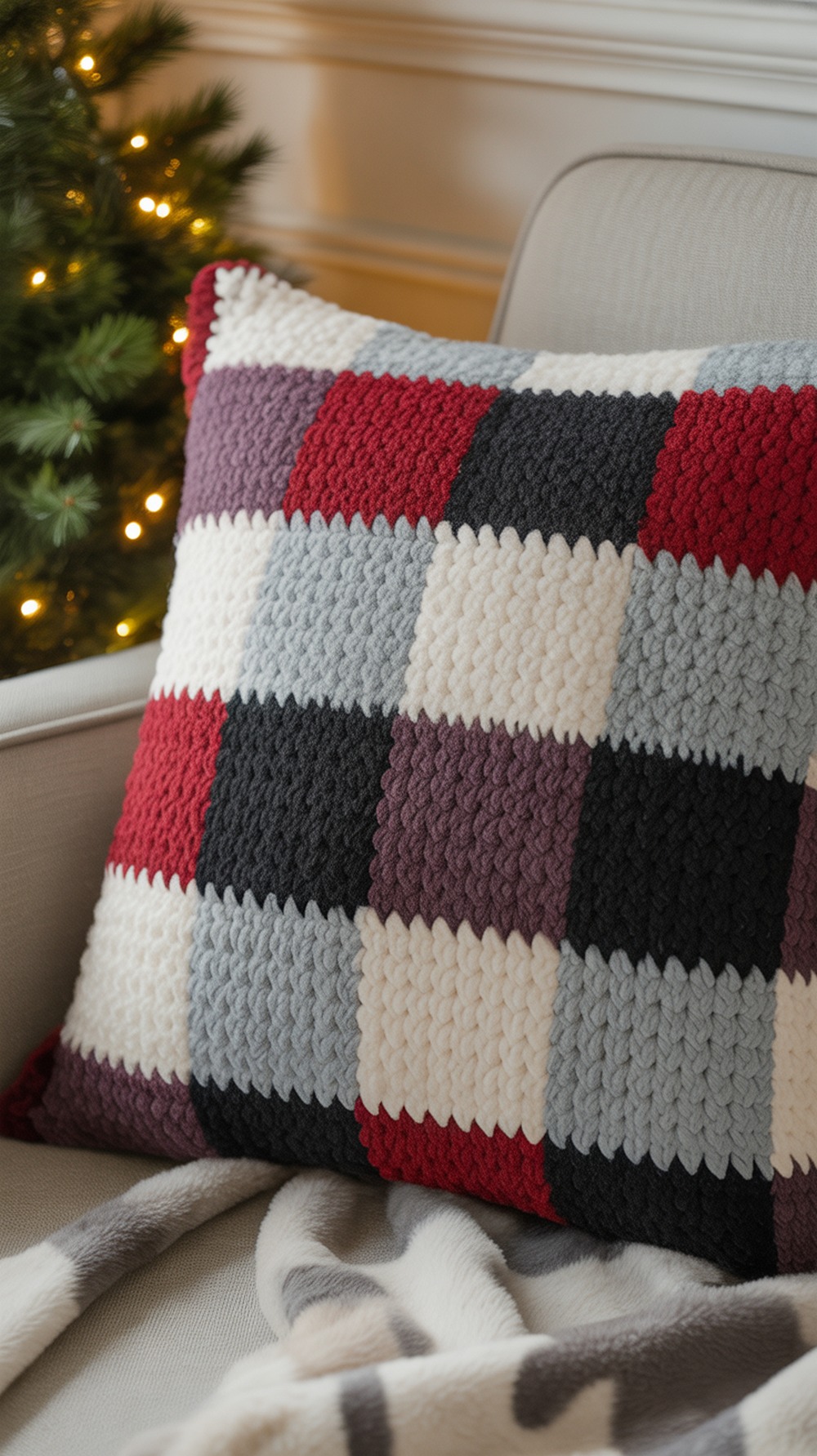
Big, squishy checks worked in Bernat Blanket yarn make this pillow ultra-plush and fast. The pattern pairs with a tree skirt, but the pillow instructions stand alone—great for seasonal decor or a soft reading nook. Use four shades (MC Pale Grey with Purple Plum, Coal, and Red) to mimic the sample’s bold plaid. Tip: because blanket yarn is weighty, seam with small, even stitches to keep corners square. Tutorial.
Supplies: super-bulky blanket yarn (4 colors), 10 mm hook, large buttons (optional), 19″ insert, needle
Why it’s great: Super-speedy, ultra-cozy checks with dramatic scale.
Conclusion
Pick one technique you’re curious about—panels, C2C, surface-crochet, or Tunisian—and try a single pillow first. Checkerboards pack visual punch, use small amounts of yarn, and teach color control you’ll reuse in blankets and bags. Save this list so you can return for a new style or palette each season. When your pillow’s done, give it a quick block and snap a photo—you’ll be amazed how much character a simple grid adds to your space.
FAQs
What yarns work best for home pillows?
Worsted cotton and acrylic are durable and easy-care; super-bulky acrylic or polyester (blanket yarn) makes quick, plush checks. Velvet adds luxury but benefits from firm seaming.
Machine wash or hand wash? Any drying tips?
Most acrylic/cotton covers can be machine-washed on gentle in a mesh bag; lay flat or tumble low. Faux-fur or velvet accents: hand wash, then air dry.
How do I scale a checkerboard pattern to another pillow size?
Measure your insert, swatch to get stitches per inch, then adjust the number of squares or strip widths to match the finished dimensions with 0–1″ negative ease.
Which fibers are safe for kitchen or bath pillows/heat exposure?
Use cotton for areas with moisture or warmth. Avoid acrylic near sustained heat sources; it can deform.
What joins/edgings improve durability?
Mattress stitch seams, a single-crochet border before seaming, and reinforced corners (3 SC in corners) help pillows keep their shape.
Typical time and yardage for baskets, pillows, and mats?
Pillows: 2–6 hours (bulky) or a weekend (worsted); 350–800 yds depending on size and technique. (Baskets/mats vary widely; sturdier stitches use more yarn and time.)
How do I photograph my projects nicely?
Shoot near a window with indirect light, neutral background, and a few props. Frame straight to show square grids; a slight angle highlights texture.
How do I fix curling, stretching, or wavy edges?
Block panels flat before seaming. If edges wave, go down a hook size on borders; if panels stretch, add a fabric lining or use a slightly smaller insert.