Some of the best crochet projects do not begin with a new skein of yarn and a completely blank plan. They begin with something you already own.
A denim jacket with worn sleeves, a T-shirt that no longer fits quite right, an old pair of jeans, leftover fabric, empty jars, shopping bags and even small bottle caps can all become useful again when crochet is added with a clear purpose.
The key is not simply adding yarn to an old object. A successful crochet upcycle should repair something, replace a worn section, improve the fit, add useful structure or give an unwanted material a genuinely new purpose.
This collection brings together 21 very different crochet upcycling ideas, from wearable repairs and statement jackets to recycled bags, storage and home decor. Each project also includes a tutorial source from the original creator so you can explore the technique behind the idea.
How These Crochet Upcycling Ideas Were Chosen
For this roundup, the projects were selected because crochet plays a meaningful role in the transformation.
Some replace damaged garment sections. Others turn discarded material into yarn, combine crochet with fabric, or use crochet to make an old object more useful.
The linked tutorials belong to their original creators. This article does not reproduce their full instructions or patterns; instead, it highlights practical considerations, design choices and ways each idea can be adapted.
Quick Guide: Find the Right Upcycle for What You Already Have
| If you have… | Try… | What crochet adds |
|---|---|---|
| Denim jacket | Crochet flower jacket | Decorative repair and personality |
| Jacket with bad sleeves | Granny square sleeves | Full sleeve replacement |
| Plain sweatshirt | Crochet sleeves | Texture and color |
| Oversized T-shirt | Crochet side panels | More room and better shape |
| T-shirt with bad neckline | Crochet motif yoke | New upper section |
| Plain button-down | Crochet collar | Small statement detail |
| Short or plain clothing | Crochet lace edging | Length and finishing |
| Ripped jeans | Crochet doily patches | Decorative repair |
| Old crochet blanket | Granny square shacket | New wearable garment |
| Old skirt or dress | Crochet-fabric dress | New garment construction |
| Basic flip-flops | Crochet sandals | Handmade detail |
| Worn T-shirts | Crochet rag rug | Recycled fabric yarn |
| More old T-shirts | Storage basket | Thick structured crochet |
| Plastic shopping bags | Plarn bag | Lightweight recycled storage |
| Old jeans | Denim-yarn clutch | Strong recycled accessory |
| Plain bag | Crochet circle upcycle | Focal decoration |
| Scrap fabric | Fabric-crochet tote | Strength plus stretch |
| Empty jars | Animal storage jars | Decorative storage |
| Glass jar | Crochet lantern | Soft decorative light |
| Bottle caps | Crochet mat | Recycled table decor |
| Soda tabs | Crochet purse | Unusual structural texture |
Wearable Crochet Upcycling Ideas
1. Crochet Flower Denim Jacket
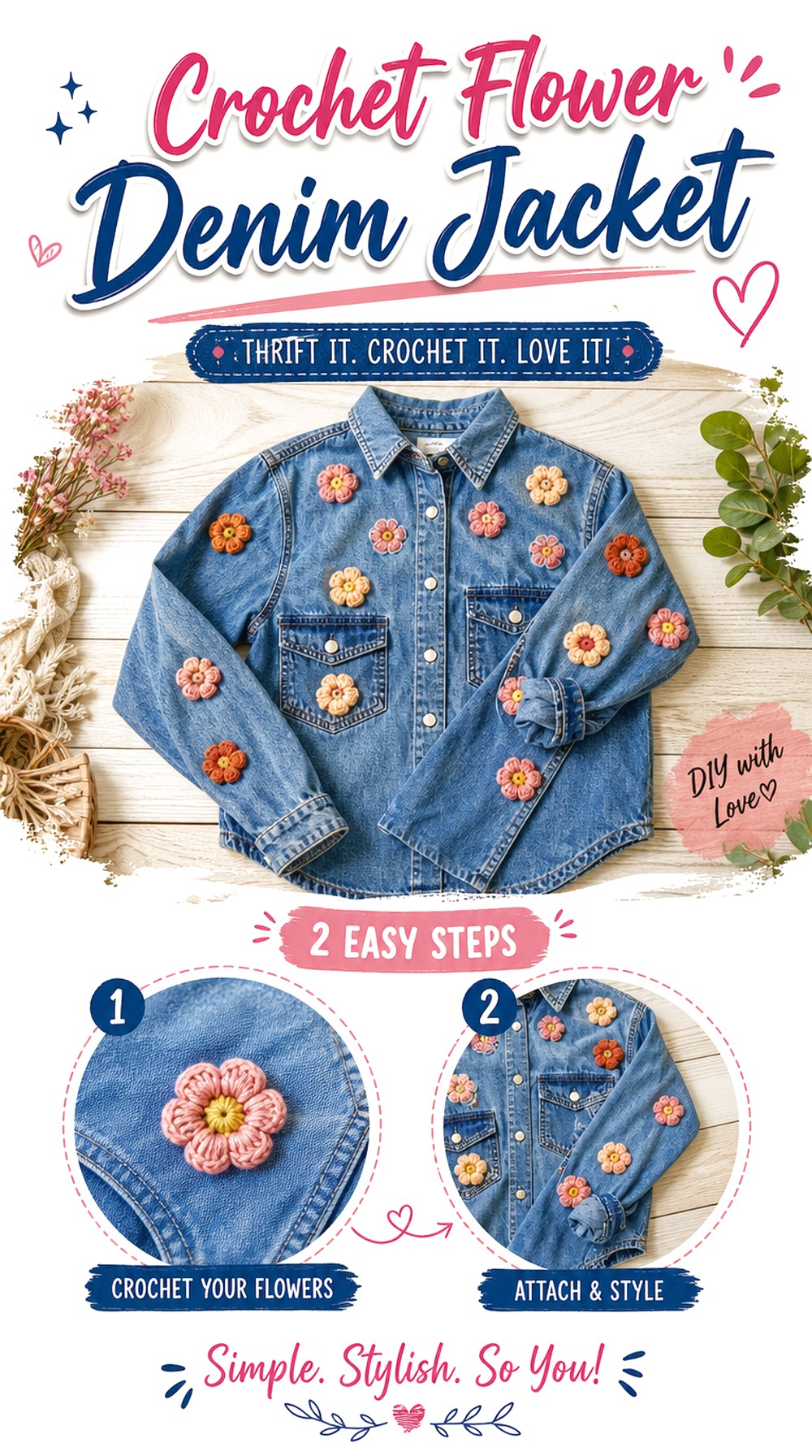
A plain or thrifted denim jacket is one of the easiest pieces to personalize because denim is strong enough to support small crochet motifs without losing its shape.
Instead of covering the entire jacket, try concentrating crochet flowers around one or two areas such as the upper back, shoulders or pockets. Leaving visible denim between the motifs keeps the design from becoming too crowded.
A warm palette of rust, cream, muted orange, mustard and dusty pink works especially well when you want a vintage fall look. Brighter colors can make the jacket feel more playful.
A useful design trick:
Arrange every flower on the jacket before sewing anything down. Take a photo of the layout, move a few motifs around, and compare the two versions. It is much easier to fix spacing before attachment.
This project also works well for leftover yarn because each motif needs only a small amount.
2. Crochet Granny Square Sleeve Denim Jacket
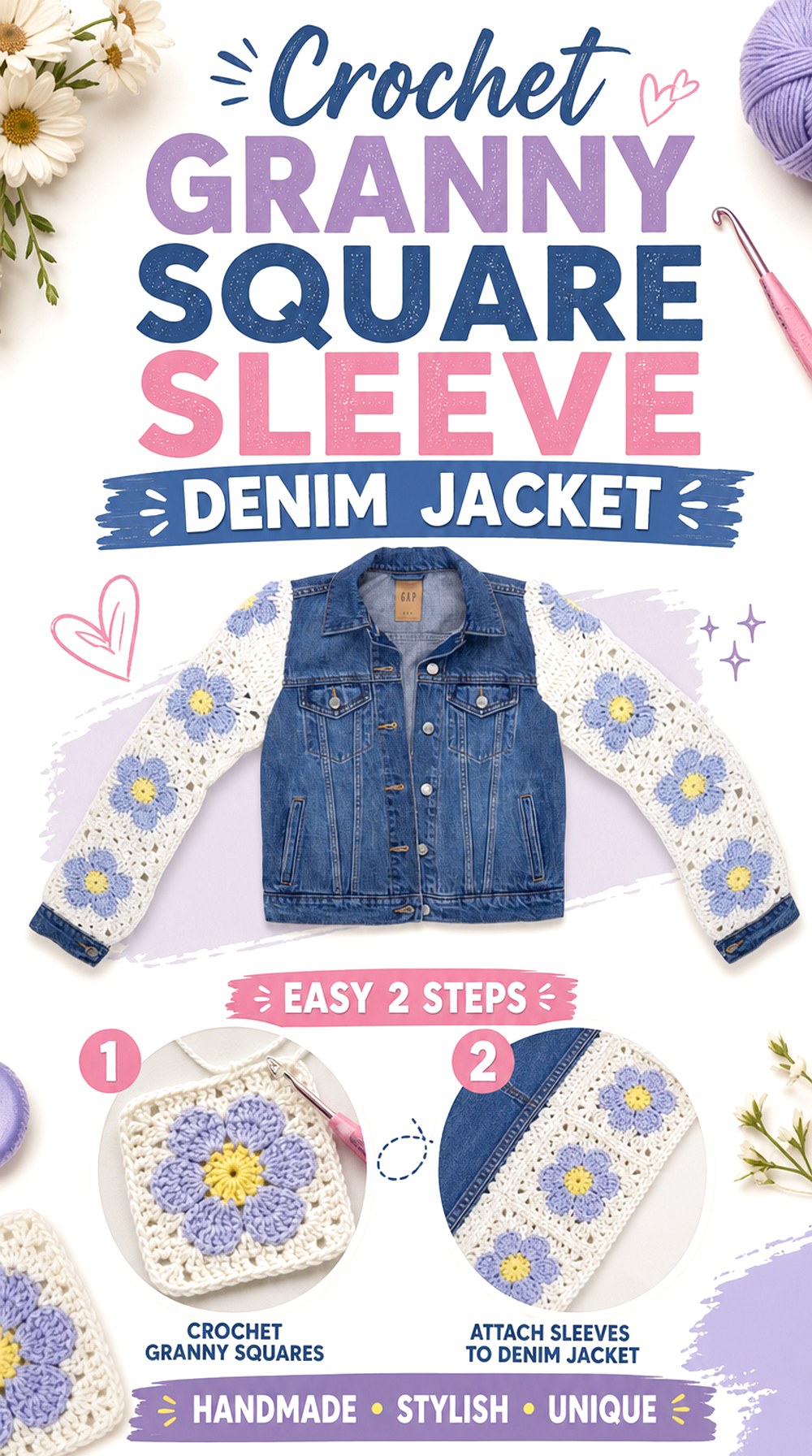
Replacing damaged denim sleeves with granny squares creates a much bigger transformation than simply adding decoration.
The denim body gives the jacket structure while the crochet sleeves introduce softness, movement and color. It is especially useful when the main body of a jacket is still in good condition but the sleeves are stained, torn or simply feel dated.
For a more wearable everyday result, limit the yarn palette to three or four connected colors. Cream, chocolate, olive and rust can create a cozy fall finish without making every square compete for attention.
The removed denim sleeve can also become a useful size guide when planning the crochet replacement.
What to watch:
Crochet stretches differently from denim. Check the sleeve width around the upper arm and elbow before permanently joining it to the jacket.
Tutorial: Red Heart Crochet Upcycled Denim Jacket
If you enjoy statement layers, you may also like 25 Crochet Cardigan Ideas That Look Expensive for Fall 2026.
3. Crochet Sleeve Sweatshirt Upcycle
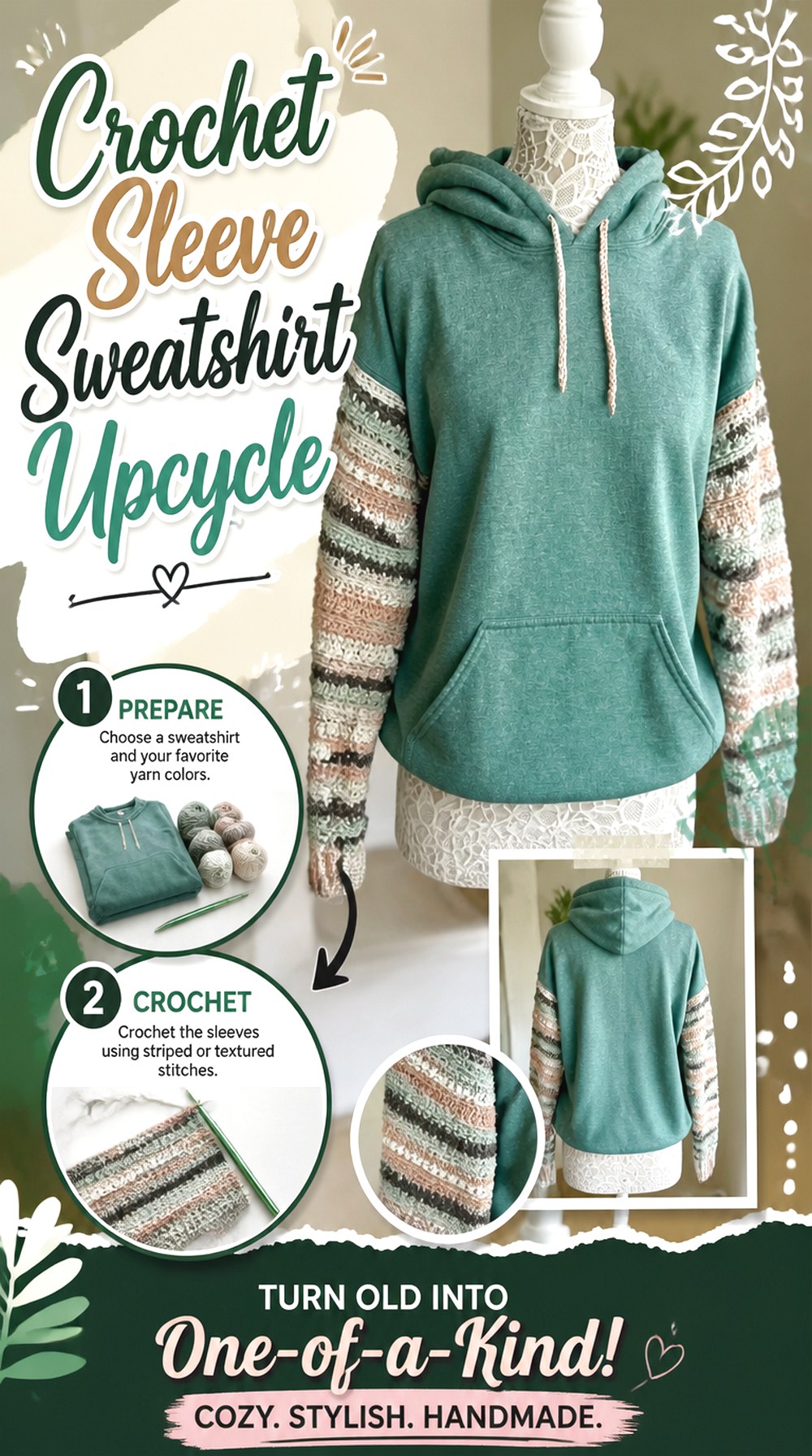
An oversized crewneck can be incredibly comfortable but visually plain. Replacing its basic sleeves with crochet turns it into a much more personal layer without losing the soft sweatshirt body.
Granny stitch, wide stripes and simple textured rows all work here.
One detail that can make the finished garment look more intentional is keeping the original ribbed cuffs if they are still usable. Attaching them beneath the crochet sleeves visually connects the new handmade section to the old sweatshirt.
A neutral body with colorful sleeves creates the strongest contrast, while tonal yarn makes the transformation more subtle.
Best for:
Sweatshirts with damaged sleeves, oversized thrifted crewnecks and pieces you like wearing but rarely reach for because they feel too basic.
Tutorial: Crochet Sweatshirt Sleeves
4. Crochet Side Panel T Shirt Upcycle
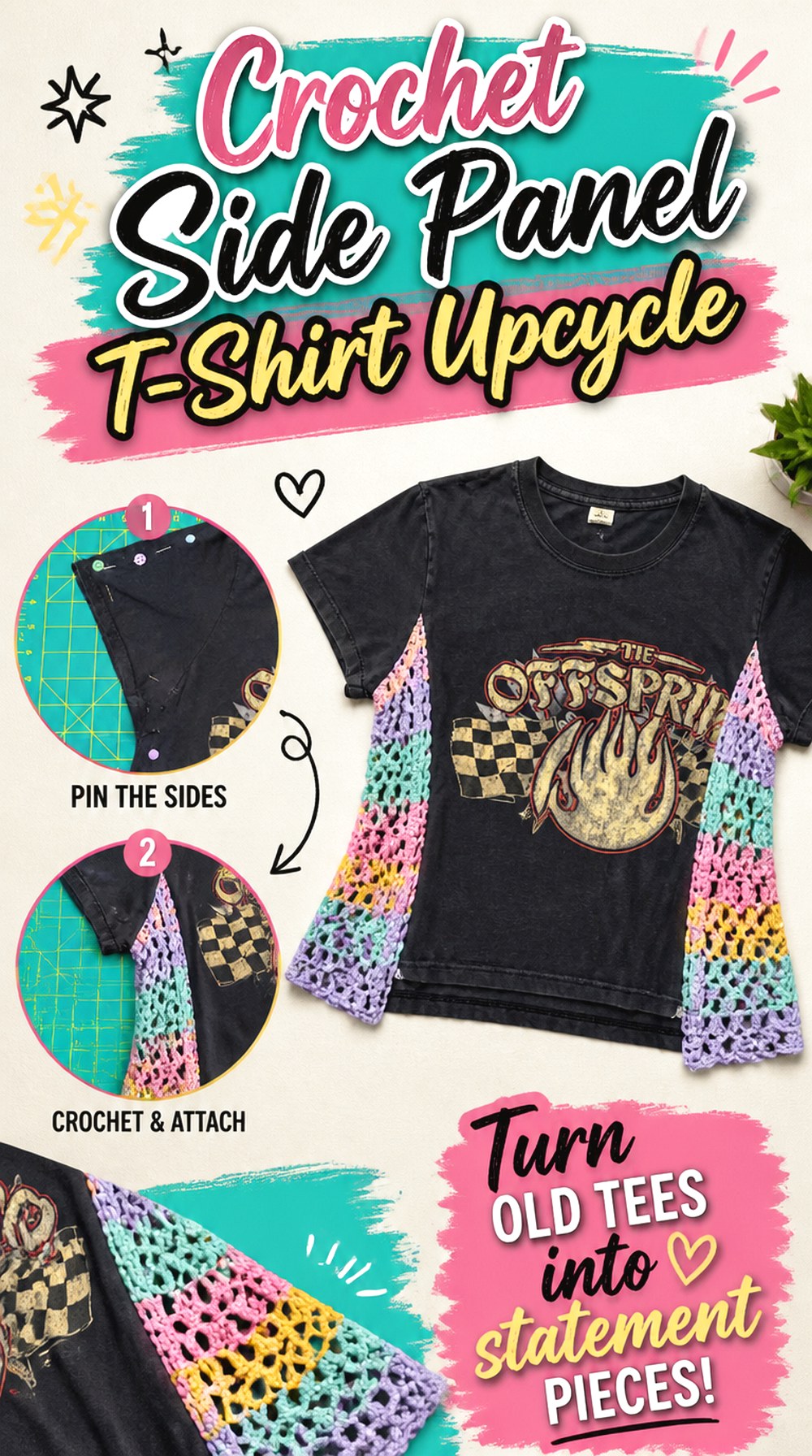
A T-shirt that feels slightly too narrow does not always need to leave your wardrobe.
Crochet panels added along the side seams can create extra room while turning the alteration into a visible design feature.
Open granny-style crochet works nicely because it has movement and does not create an overly stiff section beside soft jersey fabric. Matching yarn keeps the change subtle, while contrast yarn makes the side panels part of the design.
The detail that matters most
Watch the tension.
If the crochet panel is significantly tighter than the T-shirt fabric, the shirt can pull inward and bunch around the seam. Let the garment hang naturally while checking the fit rather than judging the panel only while it is lying flat.
This is one of the few upcycles that can improve fit and appearance at the same time.
Tutorial: Upcycling Old Clothes With Crochet
5. Crochet Motif Yoke T Shirt Upcycle
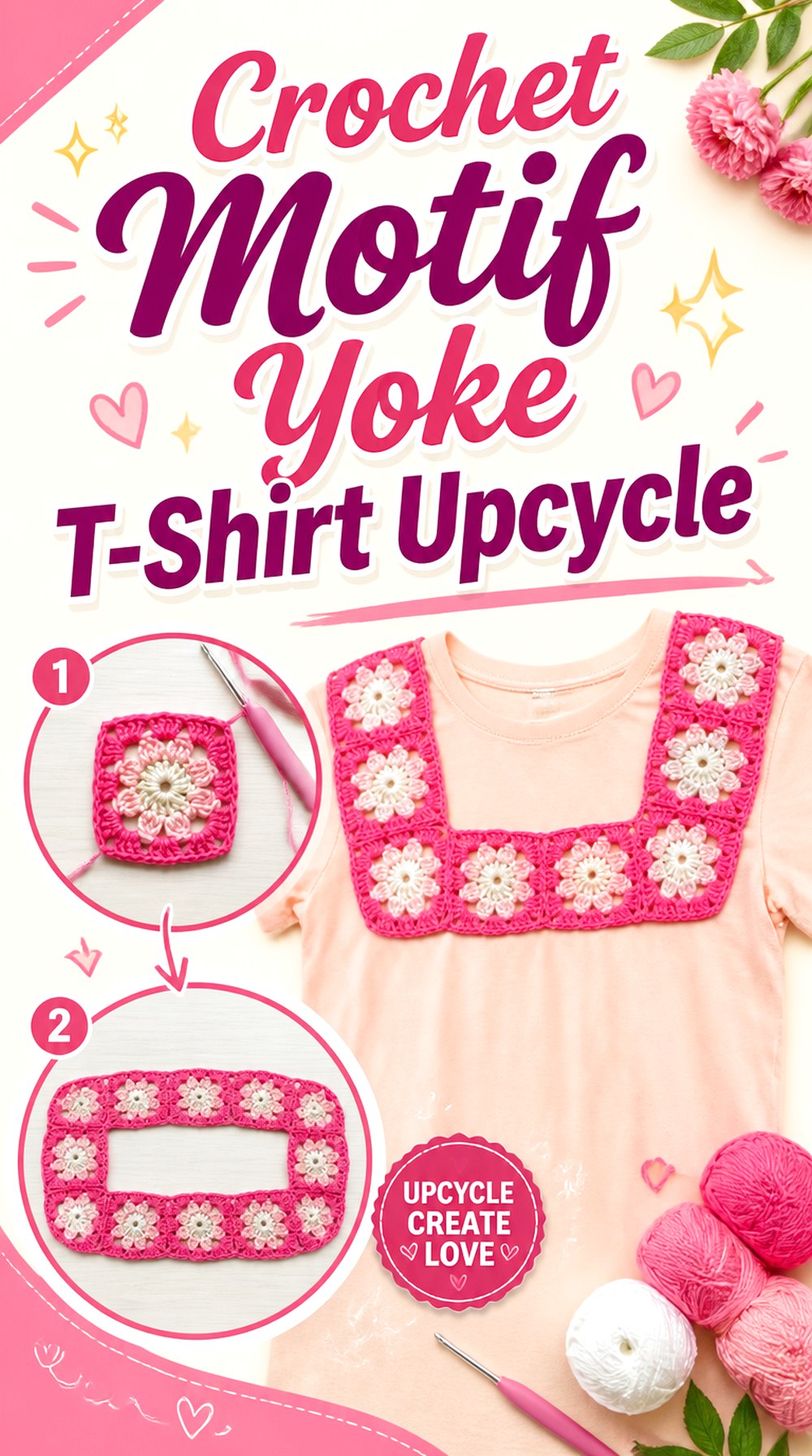
A stretched or damaged neckline can become the starting point for a much more ambitious makeover.
Instead of trying to disguise the damage with a tiny border, replace part of the upper section with joined crochet motifs.
Squares or triangular motifs can frame the neckline and shoulders while the original T-shirt fabric remains below. The result looks less like a repair and more like a deliberately mixed-media garment.
For lightweight shirts, lighter yarn usually sits more naturally than chunky yarn. The difference in weight becomes especially noticeable around the shoulders.
Why this idea is useful:
It saves the largest usable part of the shirt instead of discarding the entire garment because one area has worn out.
Tutorial: Crochet Motif Yoke on a Fabric T-Shirt
6. Crochet Upcycled Shirt Collar
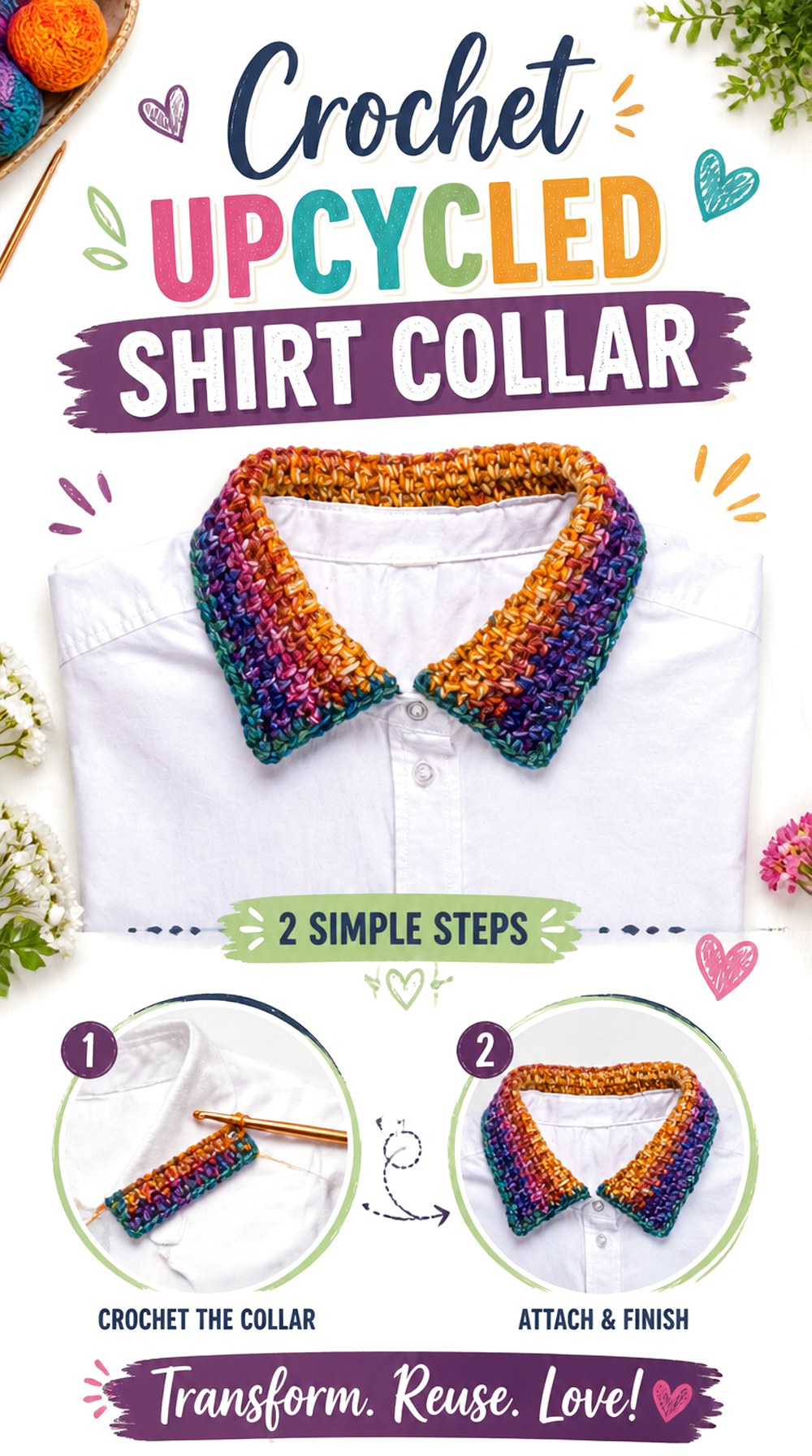
Not every upcycle needs to change half the garment.
Replacing an ordinary collar with crochet can completely shift the personality of a plain cotton, denim or chambray shirt.
A tighter textured stitch creates a cleaner modern result, while open lace gives the shirt a softer vintage feel.
The strongest versions usually keep the rest of the shirt simple. If the collar is already the main crochet feature, additional large motifs can weaken the effect rather than improve it.
A good color approach
Try choosing yarn that either:
- closely matches the shirt for a subtle finish, or
- creates one clear contrast.
A faded denim shirt with cream crochet is a simple combination that lets the stitches remain visible without looking overly busy.
Tutorial: Red Heart Crochet Upcycled Collar
7. Crochet Lace Edging Clothing Upcycle
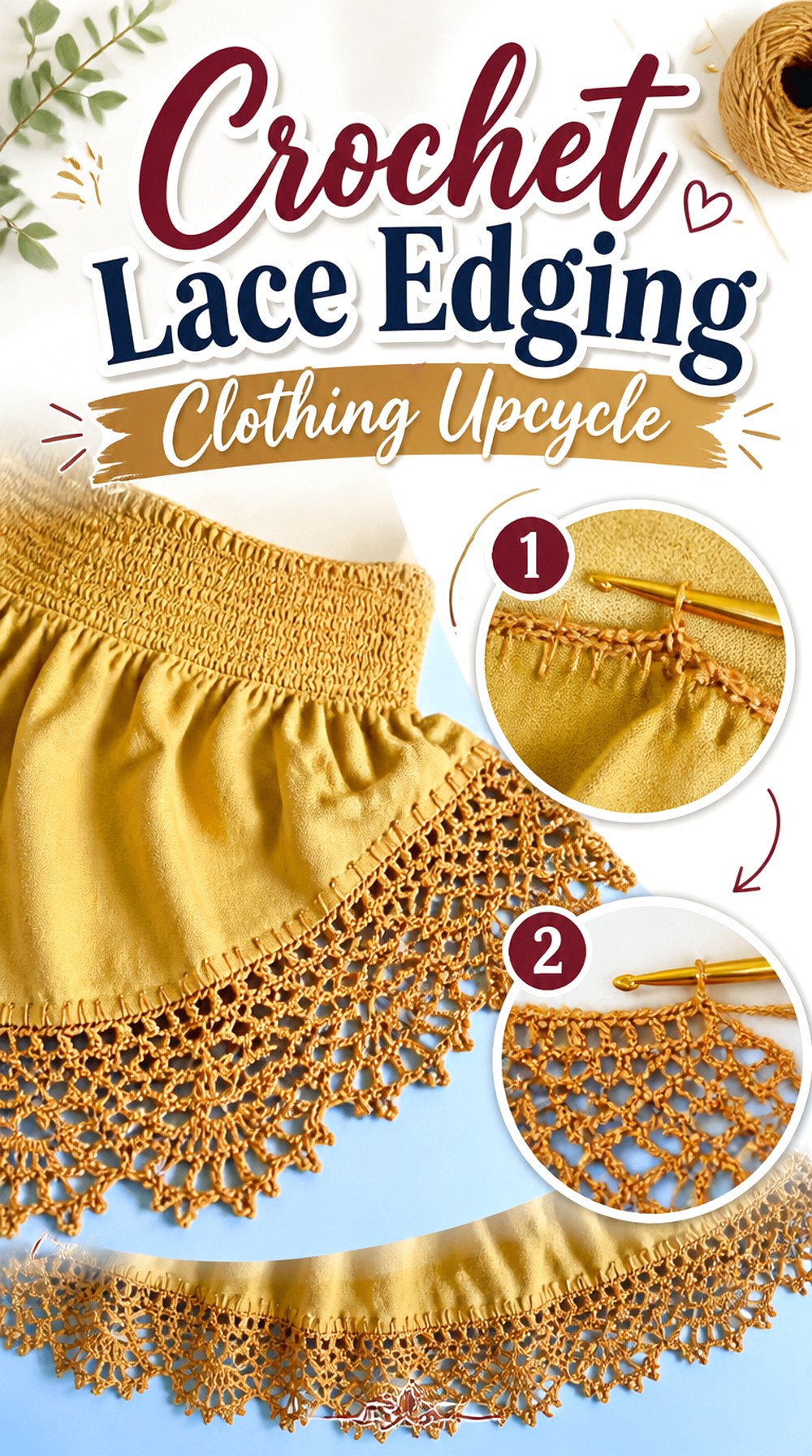
Crochet edging is one of the most flexible ways to upgrade existing clothing because it can work around necklines, cuffs, shirt hems, skirts and even denim.
It is particularly useful for clothing that feels slightly too short.
A crochet border can add a small amount of extra length while making the change look intentional rather than like a repair.
Fine lace suits lightweight fabric. A stronger scalloped border makes more sense on denim or heavier cotton.
Before you start:
Check that the fabric edge is still strong. Crochet should be attached to stable material rather than fabric that is already tearing away.
Tutorial: Upcycle Clothes by Adding Crochet Lace Edging
For more wearable crochet inspiration, browse the Wearables & Fashion collection.
8. Crochet Doily Patch Jeans
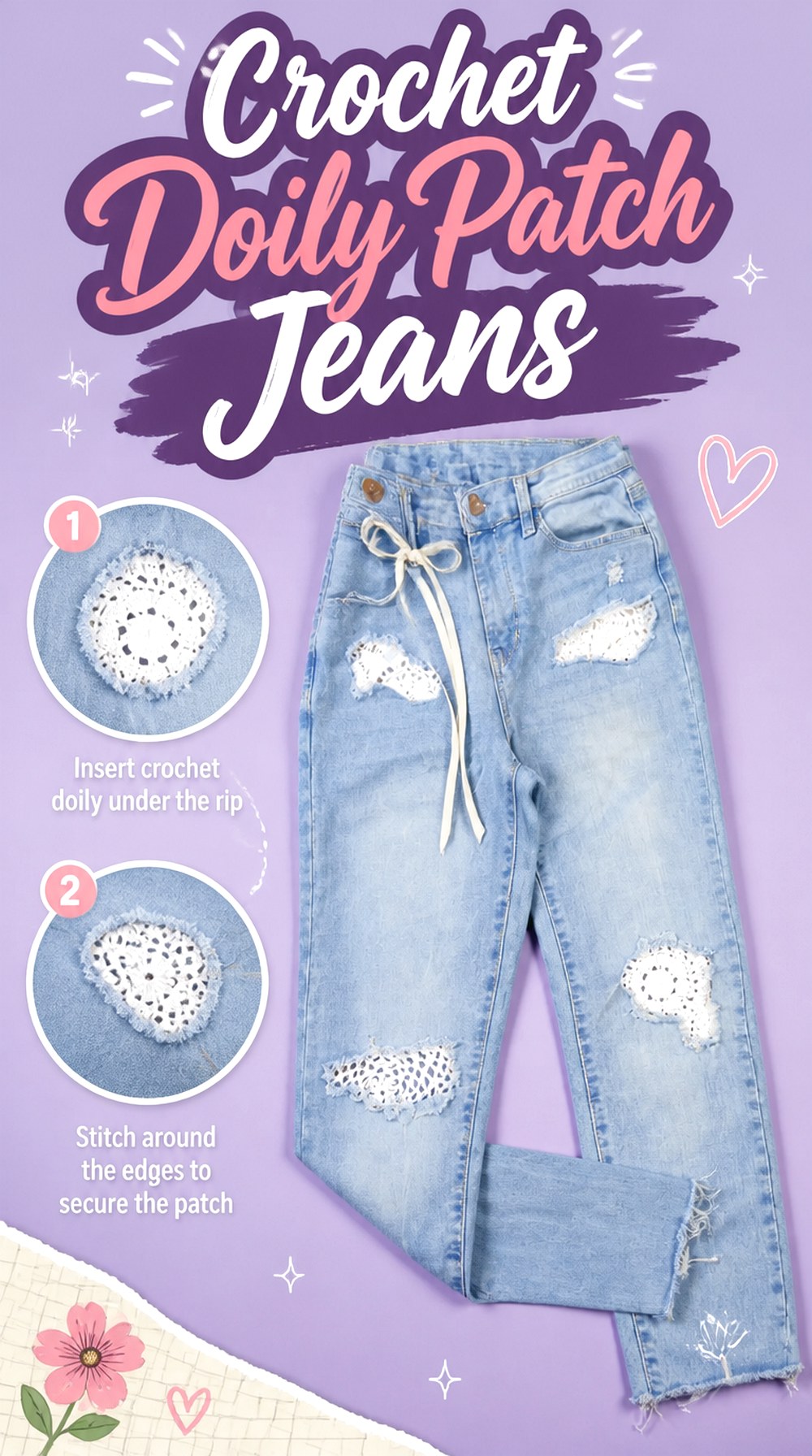
Ripped jeans are a good example of damage that can become part of the finished design.
Crochet doilies placed behind distressed areas allow the lace to show through the denim. Instead of hiding the worn section completely, the contrast makes it more interesting.
Cream creates a soft vintage finish. Burgundy, black or rust can make the repair much more visible.
The most important structural point is attachment.
The crochet should extend beyond the weak or frayed section so it can connect to stronger denim. Attaching only to loose threads around the hole gives the repair very little support.
Best result:
Use a doily or motif that is clearly larger than the opening.
Tutorial: Upcycled Jeans With Crochet Doilies
9. Crochet Granny Square Afghan Shacket
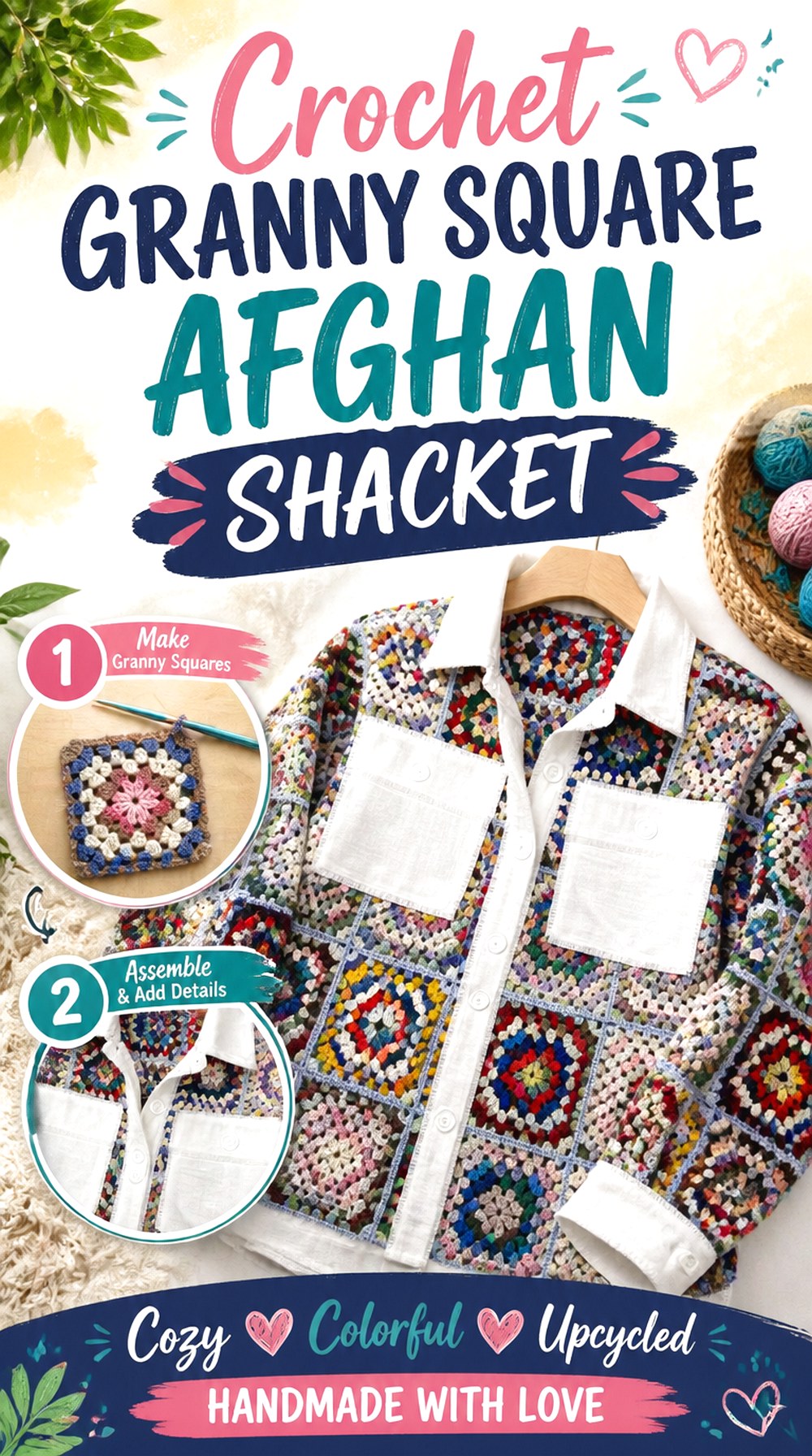
An older granny-square blanket may contain hours of handmade work even if nobody is using it as a blanket anymore.
Turning a strong section into a shacket can preserve that crochet while changing its purpose completely.
This project needs more planning than a decorative upcycle because older crochet joins can weaken over time.
Inspect the blanket carefully before cutting or reshaping anything. Reinforce loose joins first and look for existing blanket edges that could become cuffs, a hem or another finished garment edge.
That can reduce unnecessary cutting and help preserve more of the original work.
Why it stands out:
The crochet is not being added to an old object—the crochet itself is the material being rescued.
Tutorial: Upcycle a Granny Square Afghan Into a Shacket
10. Crochet Fabric Dress Upcycle
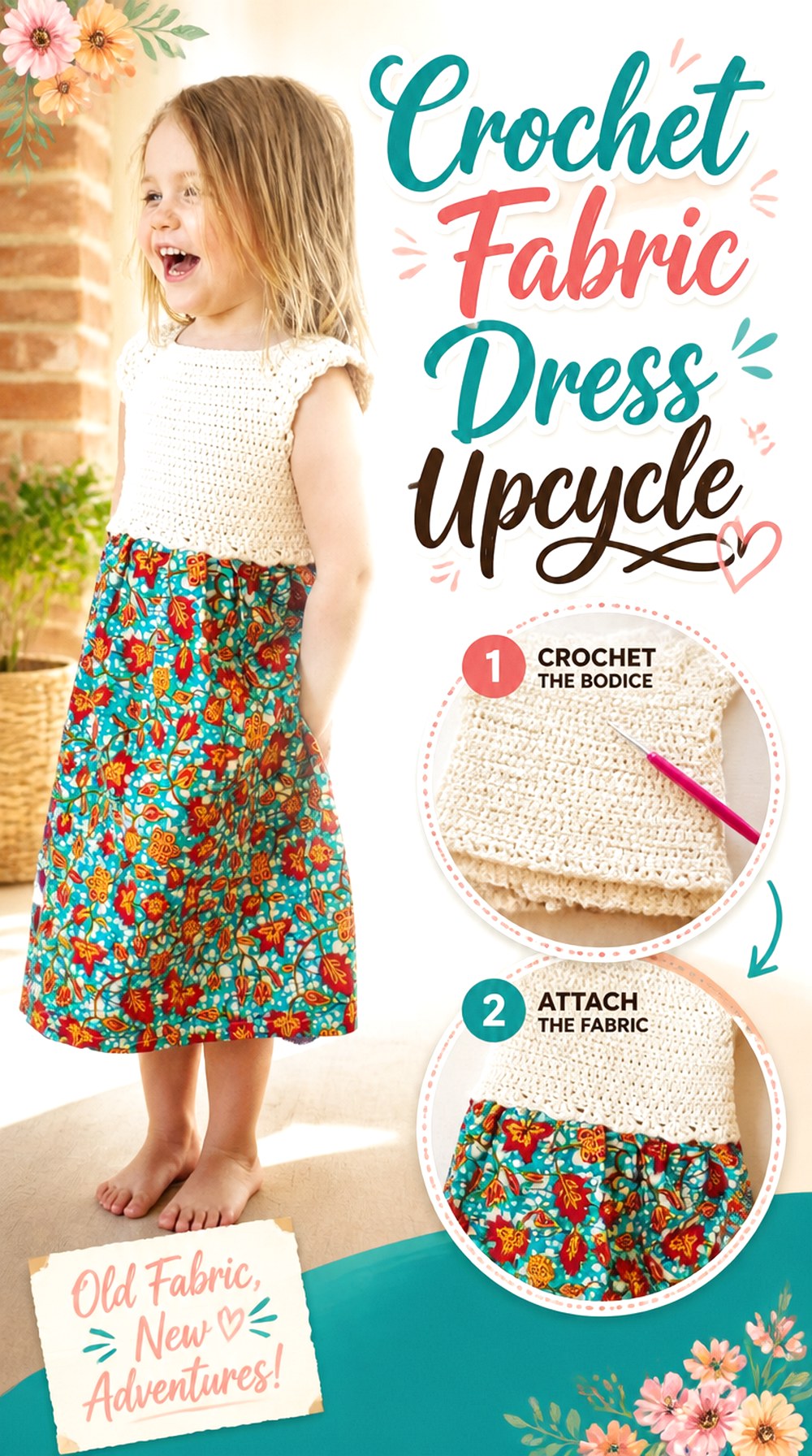
An outdated dress or skirt may still contain fabric worth keeping.
Instead of throwing away the whole garment, a strong fabric section can be combined with a crochet bodice, panel or upper section.
Printed fabric is particularly interesting because the print can guide the yarn choice. Pick one shade already present in the fabric and repeat it in the crochet to visually connect both materials.
Weight should also influence the design.
Very light fabric beside thick, heavy crochet can hang awkwardly. Keeping the yarn weight reasonably compatible with the fabric usually gives the garment better balance.
Tutorial: Upcycle a Skirt Into Dresses
Crochet Accessories Made From Old Materials
11. Crochet Flip Flop Sandals Upcycle
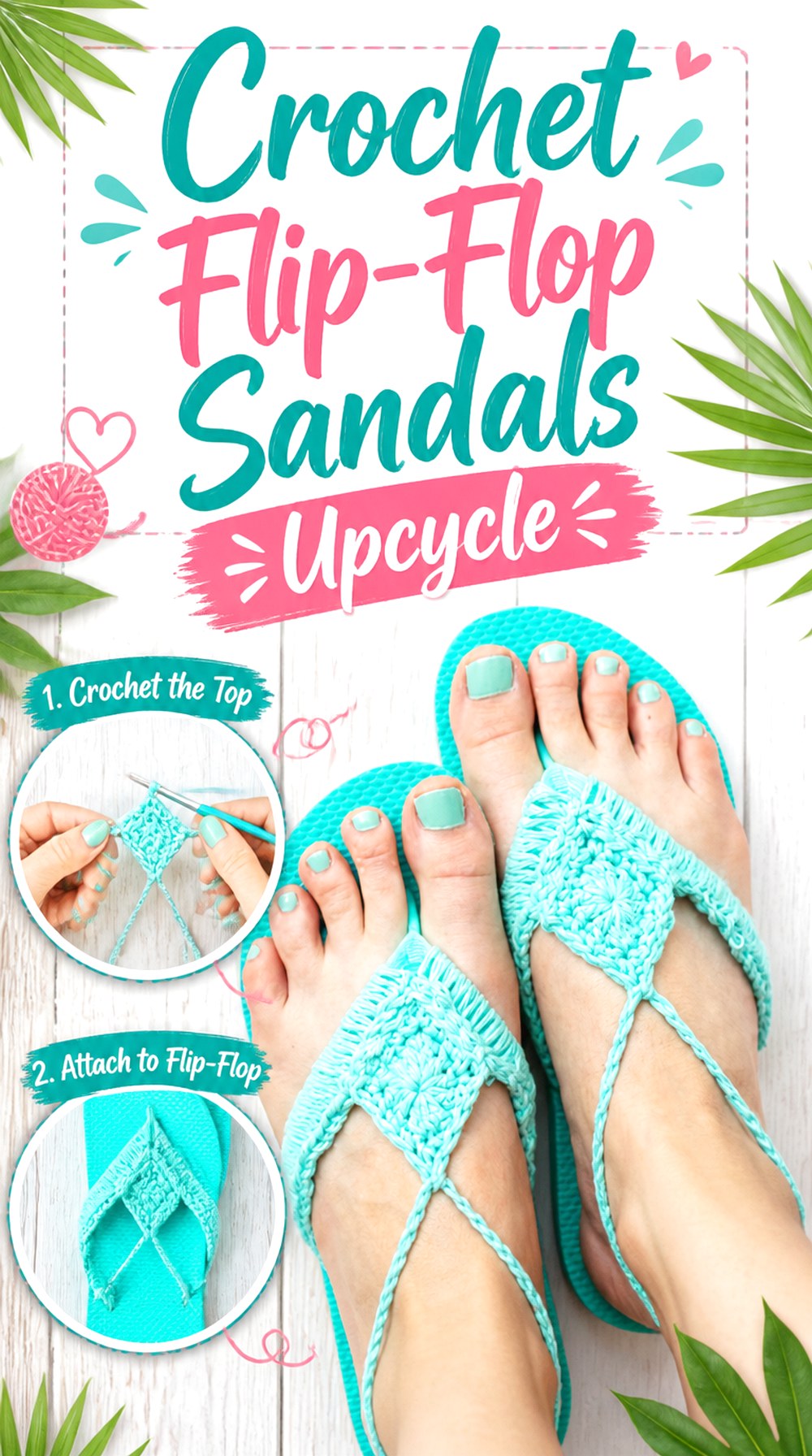
Basic foam flip-flops can become much more interesting with crochet around the straps or upper section.
Cotton yarn is a practical option for warm-weather accessories because it generally feels comfortable against the skin and handles everyday summer use better than very fuzzy fibers.
This project does not need a huge amount of crochet to have an impact. A small motif at the center can be enough.
For a cleaner finish, keep the crochet away from parts of the sandal that constantly rub against the ground.
Good choice when: you want a fast upcycle without rebuilding an entire pair of shoes.
Tutorial: Crochet Flip-Flops Upcycle
12. Crochet T-Shirt Rag Rug
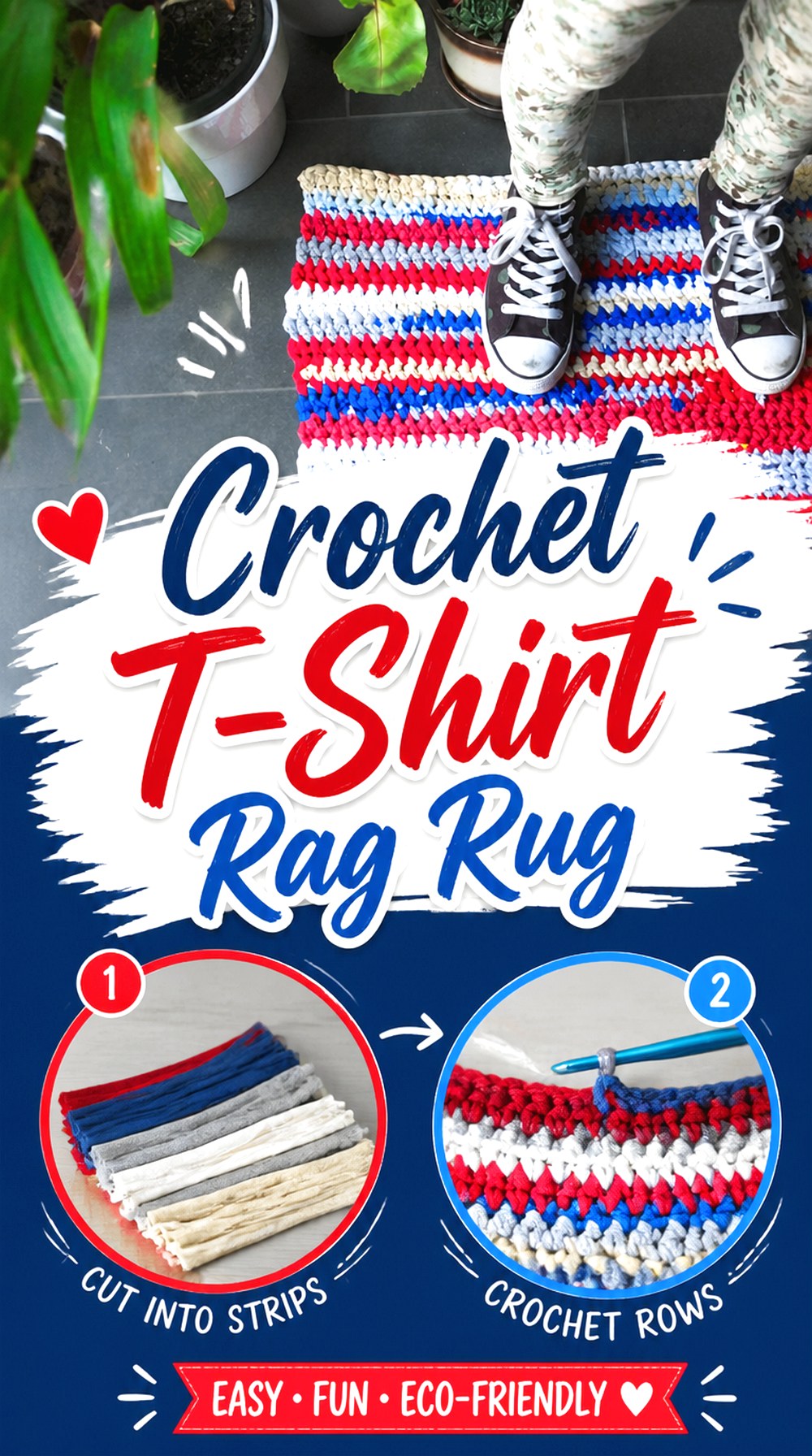
Some T-shirts become too stained, stretched or worn to pass on, but the fabric can still become useful material.
Cutting old shirts into continuous strips creates thick fabric yarn that can be crocheted into a substantial rug.
Different shirt colors naturally create stripes and changes in tone, so the material does not need to match perfectly.
This is one of the strongest upcycling ideas in the collection because both the material and final purpose are completely changed.
Practical consideration
Fabric yarn becomes heavy surprisingly quickly.
Keep checking the size of the rug as it grows so the finished piece remains easy to wash, move and dry.
Tutorial: Crochet T-Shirt Rag Rug
13. Crochet T Shirt Yarn Basket
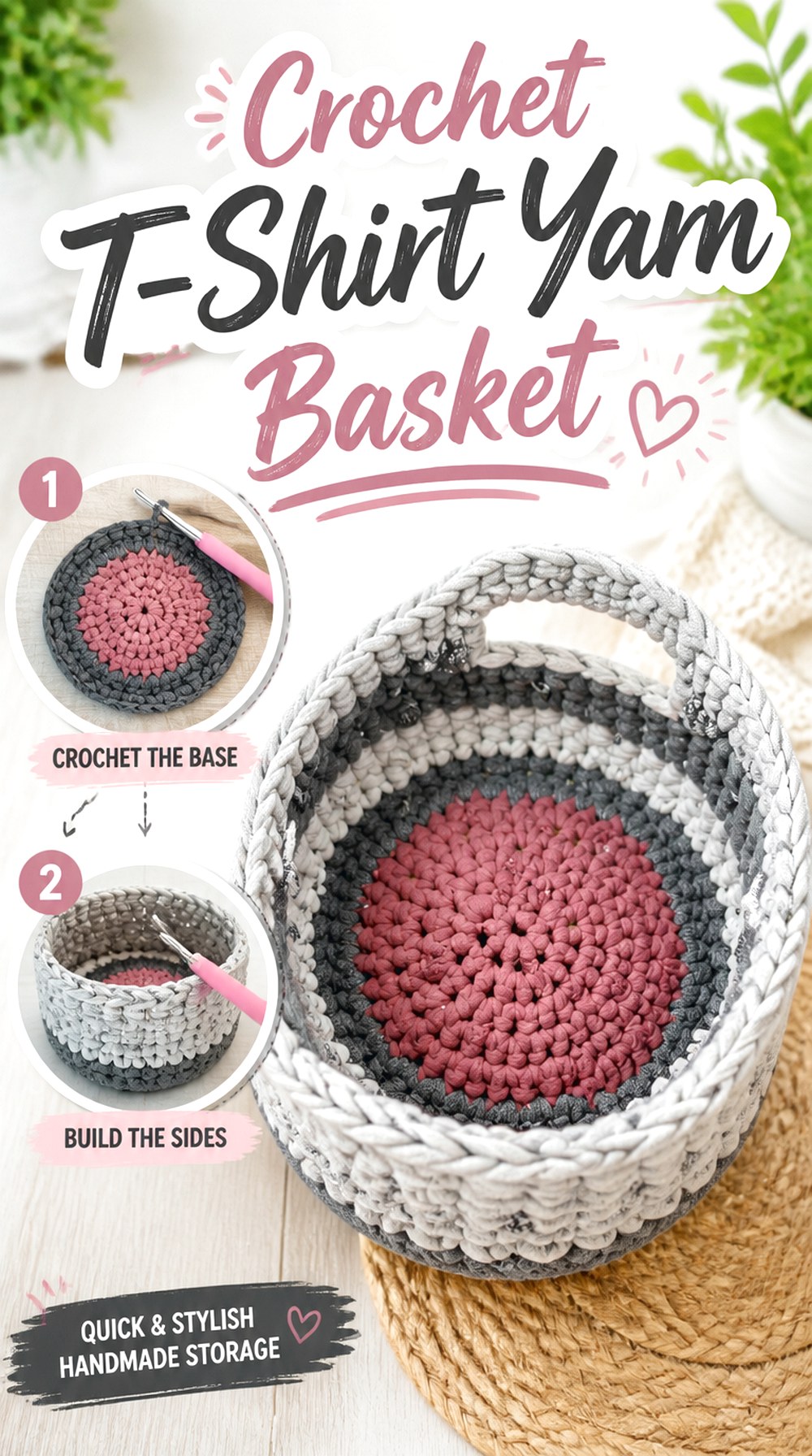
The same T-shirt yarn can become structured storage instead of a rug.
Thick strips of jersey have enough body to create a basket for yarn, toys, magazines or small household items.
Working the stitches fairly firmly helps the walls stand more upright. For a softer basket, loosen the tension slightly and use it for lightweight contents.
Using several shirts can produce natural blocks of color without buying additional yarn.
Best thing about this project:
It turns fabric that may be unsuitable for wearing or donating into something you can use every day.
Tutorial: T-Shirt Yarn Basket
14. Crochet Plarn Hanging Bag
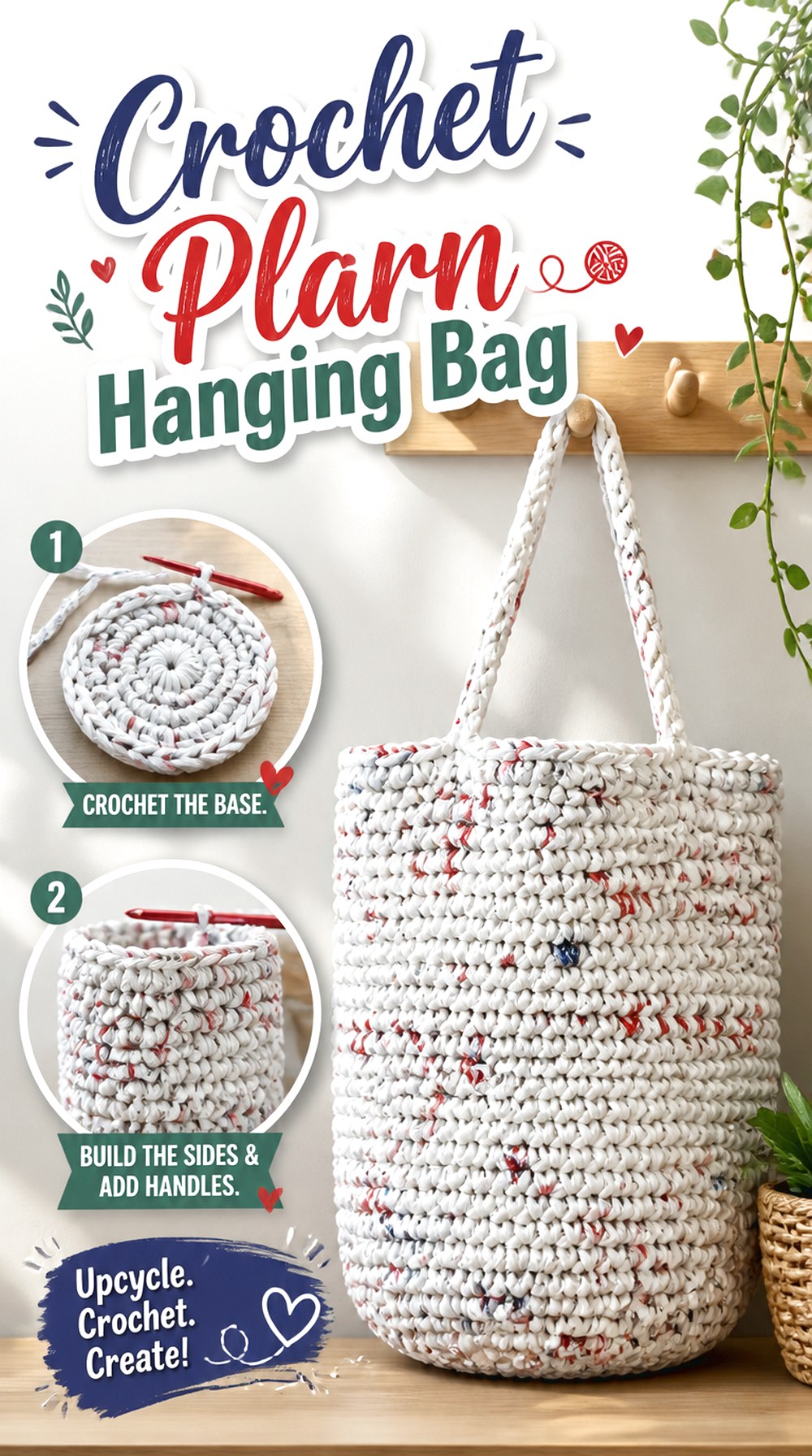
Plastic shopping bags can be cut and joined into “plarn,” creating an unconventional crochet material.
A hanging storage bag makes sense for plarn because the material is lightweight, fairly durable and easy to wipe down.
Use it to hold spare reusable bags, lightweight laundry or recycling rather than very heavy items.
Plastic varies considerably in strength, so inspect old bags before turning them into yarn. Thin sections that tear easily can weaken the finished crochet.
Why this project is interesting:
It demonstrates that crochet does not always require conventional yarn.
Tutorial: Plarn Hanging Bag
15. Crochet Recycled Jeans Clutch Bag
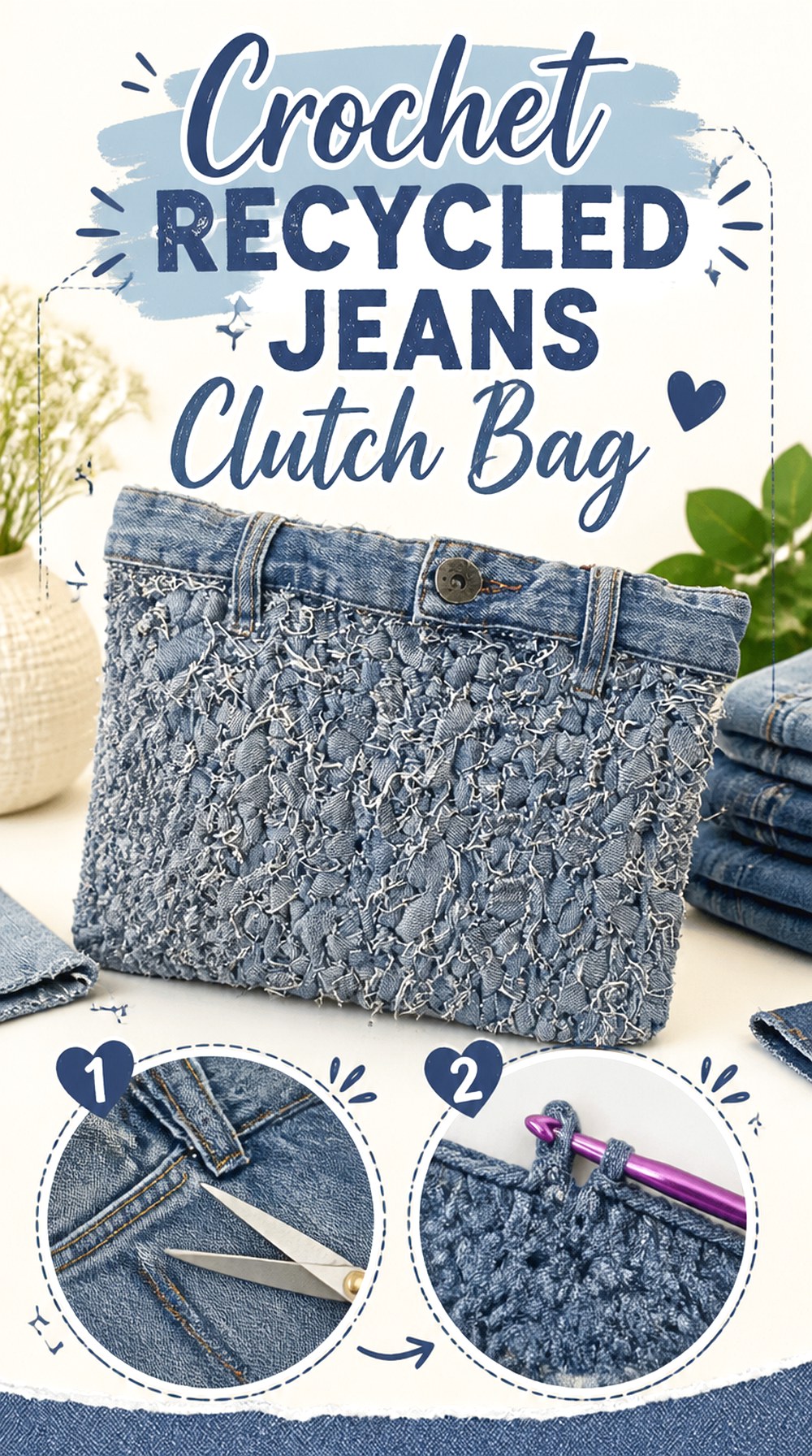
Old jeans can go one step beyond patching.
Cutting denim into strips creates a thick recycled material that can be crocheted into a sturdy clutch or small bag.
Worn denim already contains natural variation in color, which makes the finished stitches visually interesting even when only one pair of jeans is used.
Because denim fabric is substantially heavier than regular yarn, smaller accessories are often easier to manage than oversized bags.
Consider before starting:
seams, pockets and very thick areas can be difficult to turn into even strips, so use the strongest flat fabric sections first.
Tutorial: Recycled Jeans Bag
If bags are your favorite crochet projects, see these 19 Crochet Oversized Slouchy Bag Ideas.
16. Crochet Circle Bag Upcycle
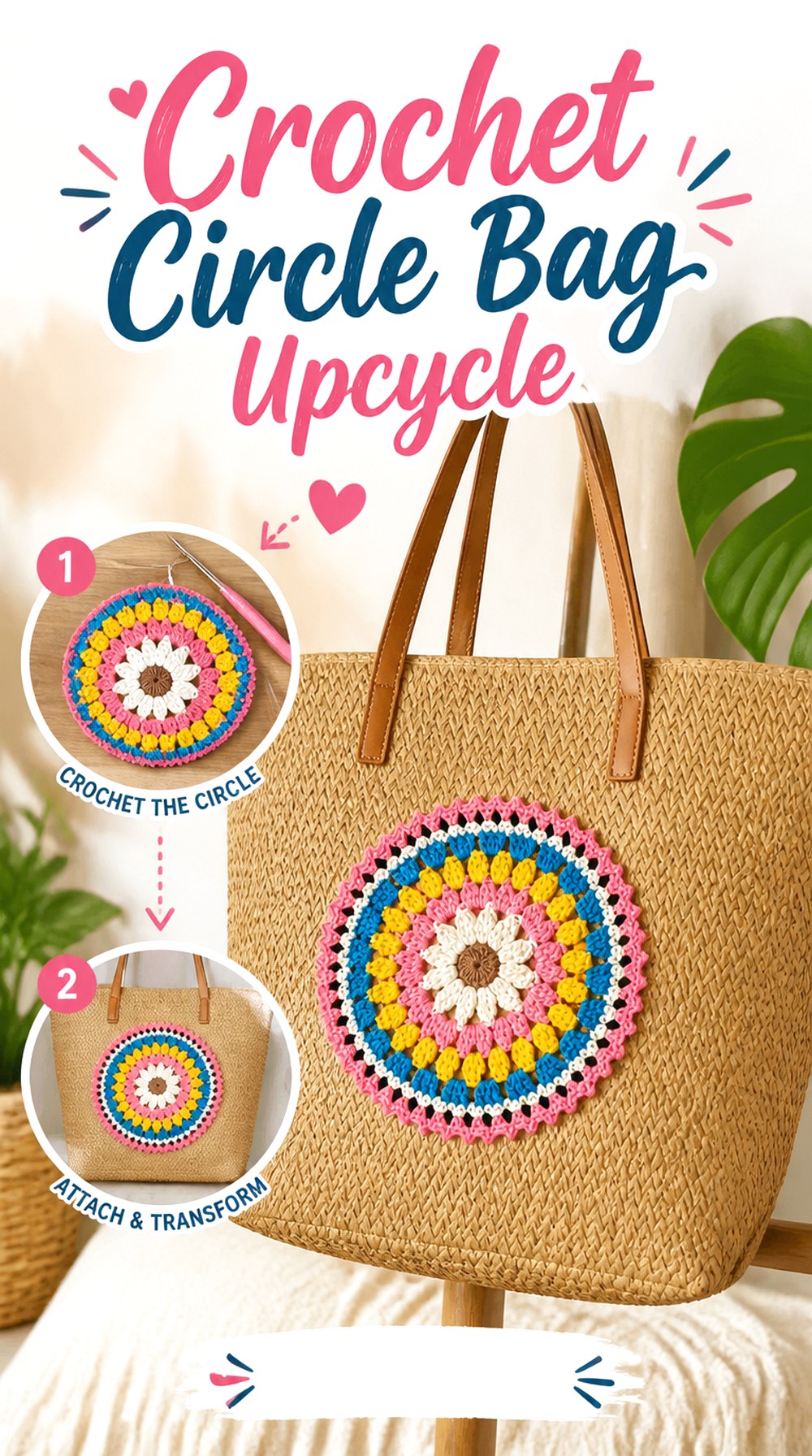
Sometimes the bag itself is still perfectly usable—it just feels boring.
A large crochet circle attached to the front can create a new focal point without changing the structure of the bag.
Straw, canvas and plain fabric bags are especially good candidates because the crochet can stand out clearly against a simple background.
This is also a smart scrap-yarn project. Changing yarn shades between rounds makes the circle more noticeable without requiring much of any one color.
Design rule:
if the crochet circle is bold, keep the rest of the bag quiet.
Tutorial: Upcycle a Bag With a Crochet Circle
17. Crochet Fabric Market Tote Upcycle
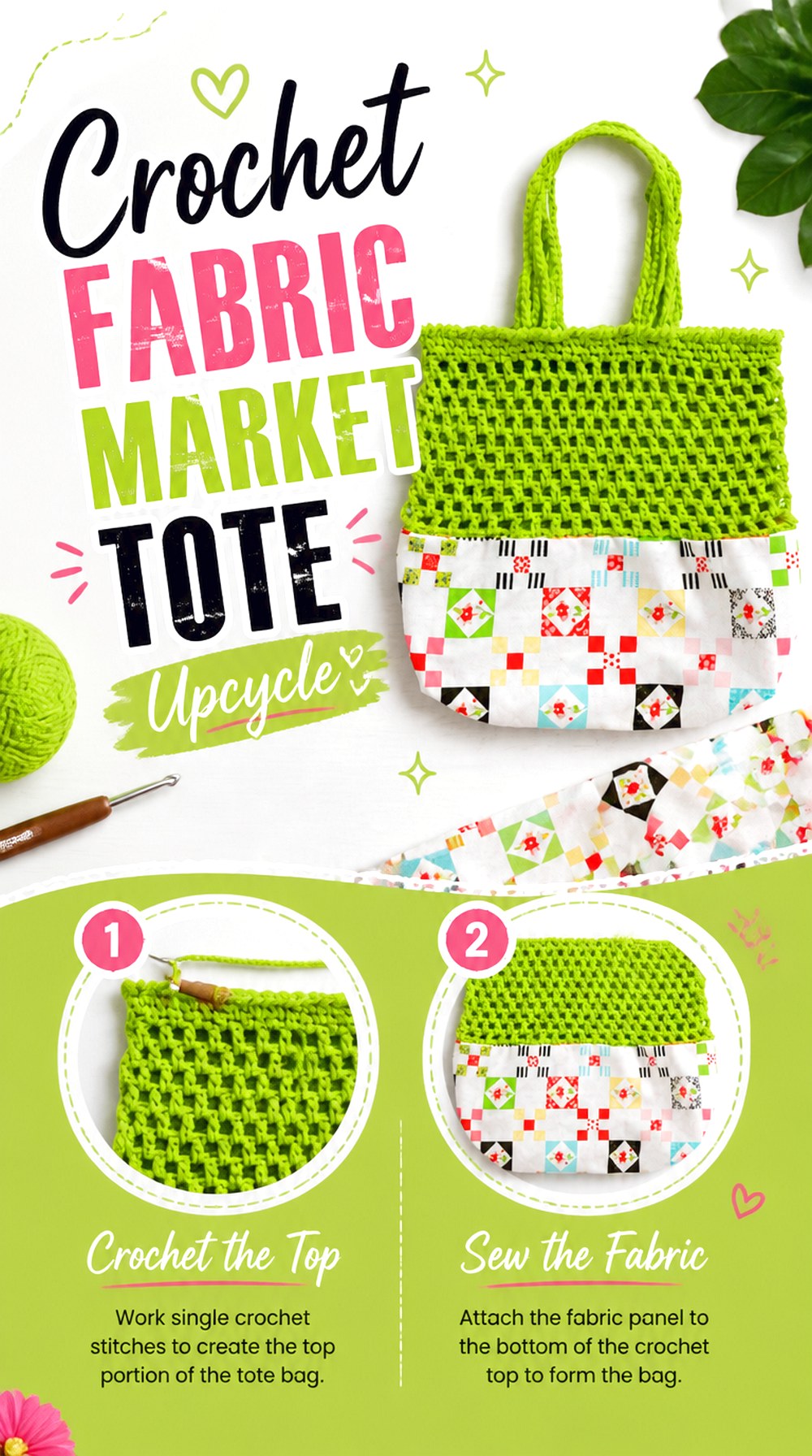
Scrap fabric and crochet can solve different parts of the same bag.
A strong woven fabric works well at the base, where groceries or everyday items create the most pressure. Crochet can then form the upper section and handles, adding stretch and handmade texture.
Printed scraps can make the bag even more distinctive.
Choose one color from the fabric print and repeat it in the crochet. That small connection helps two very different materials look like they were always meant to be together.
This is especially useful for fabric pieces that are too small for a full sewing project but too good to throw away.
Tutorial: Upcycle Crochet and Sew Market Tote
Crochet Upcycling Ideas for the Home
18. Crochet Animal Storage Jar Upcycle
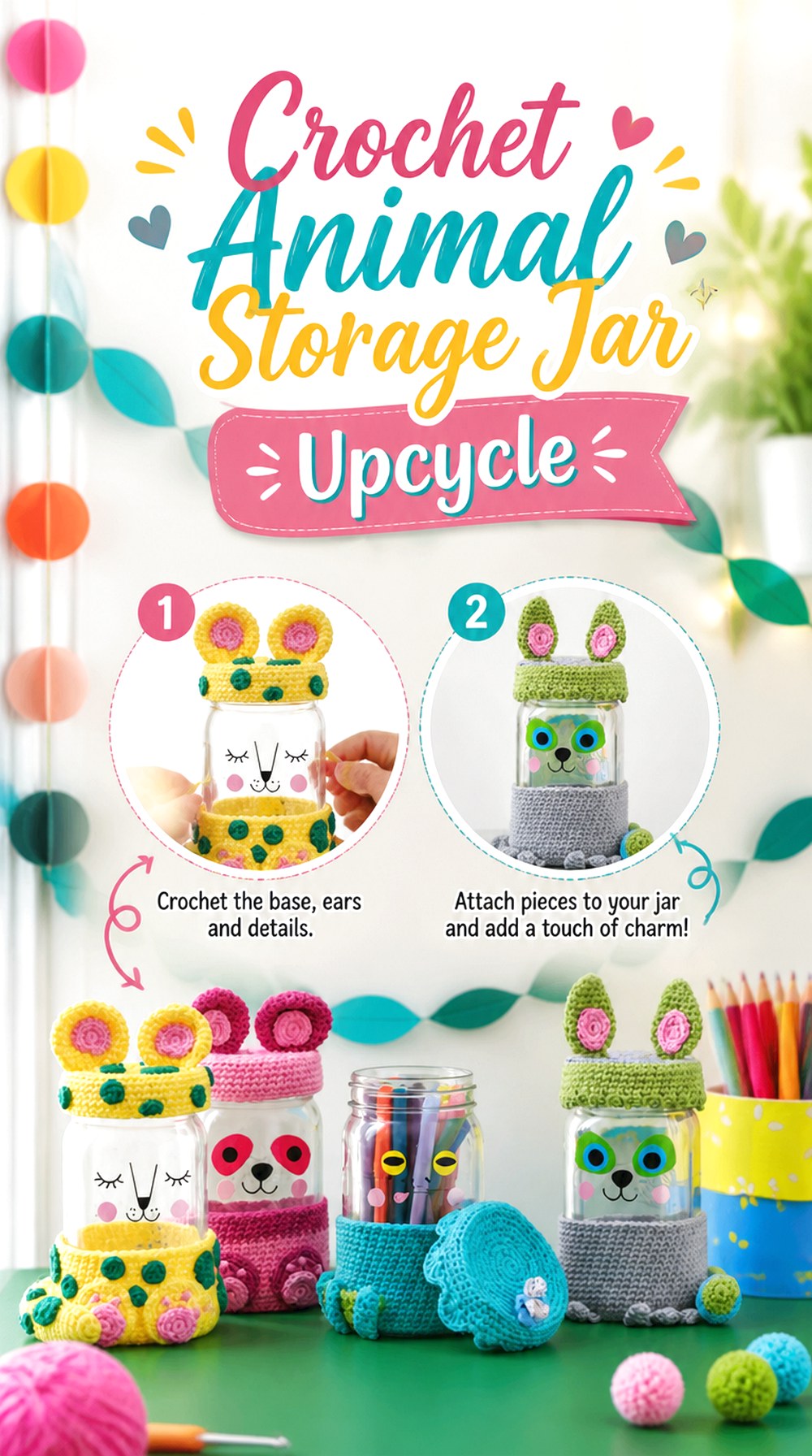
Empty glass jars already provide strong storage, so crochet can focus on making them more enjoyable to display.
Instead of a simple plain sleeve, turn each jar into a frog, panda or another playful character.
They can hold pencils, hooks, craft tools or other small items.
Because the jar provides the structure, the crochet cover does not need to be stiff.
Where this works especially well
Craft rooms, children’s desks and open shelves are good places for these jars because the storage becomes part of the decor rather than something that needs to be hidden.
Tutorial: Upcycle Jars With Crochet
19. Crochet Jar Lantern Upcycle
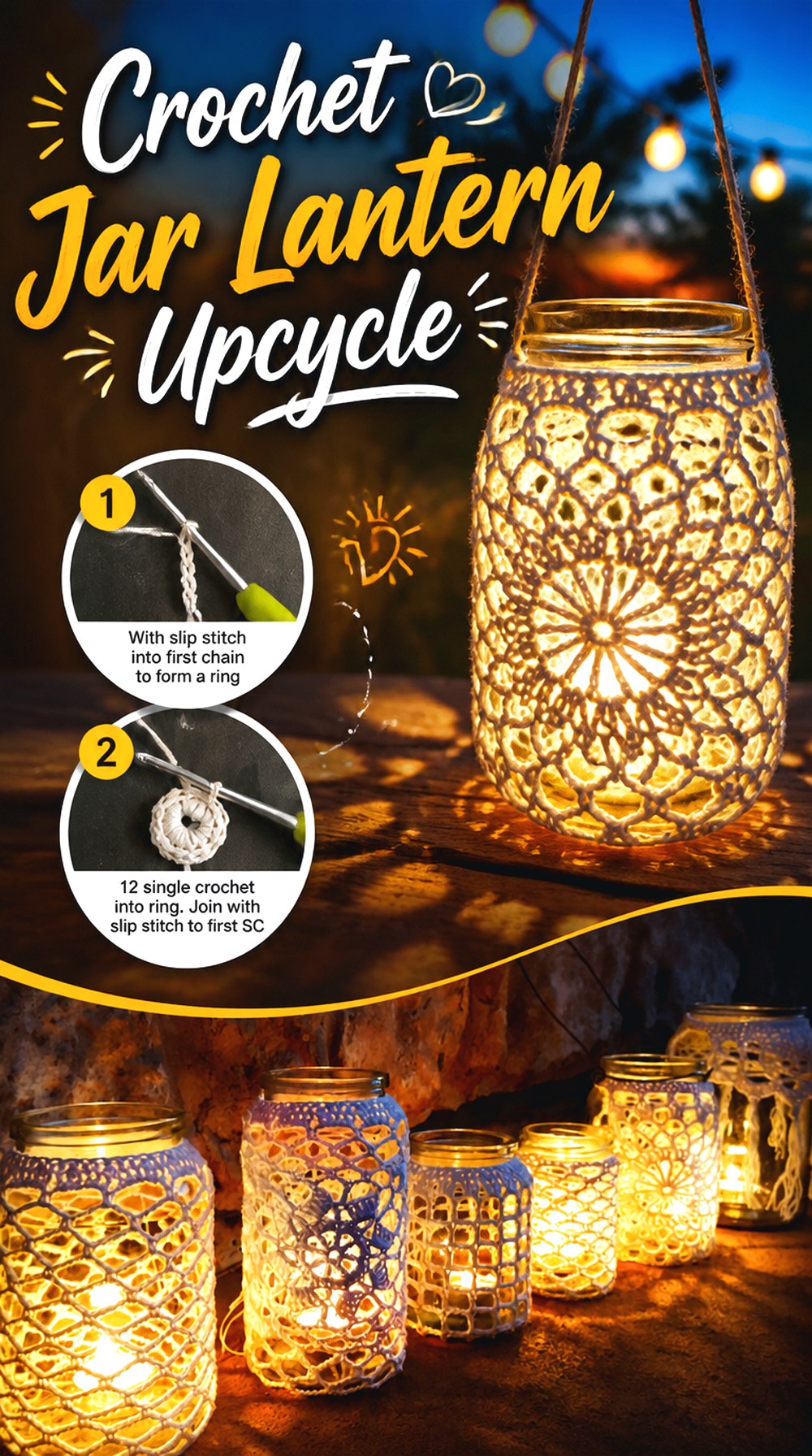
A clean glass jar surrounded by open crochet creates an interesting combination of light, shadow and stitch texture.
Cotton yarn gives openwork stitches clear definition, and jars in several different sizes can create an attractive grouped display.
Important safety note
Use a flameless LED tealight inside a crochet-covered jar rather than placing an exposed flame close to yarn.
That keeps the decorative effect without introducing unnecessary heat around the crochet.
Tutorial: Crochet Tealight Lantern Cover
20. Crochet Bottle Cap Hot Pad
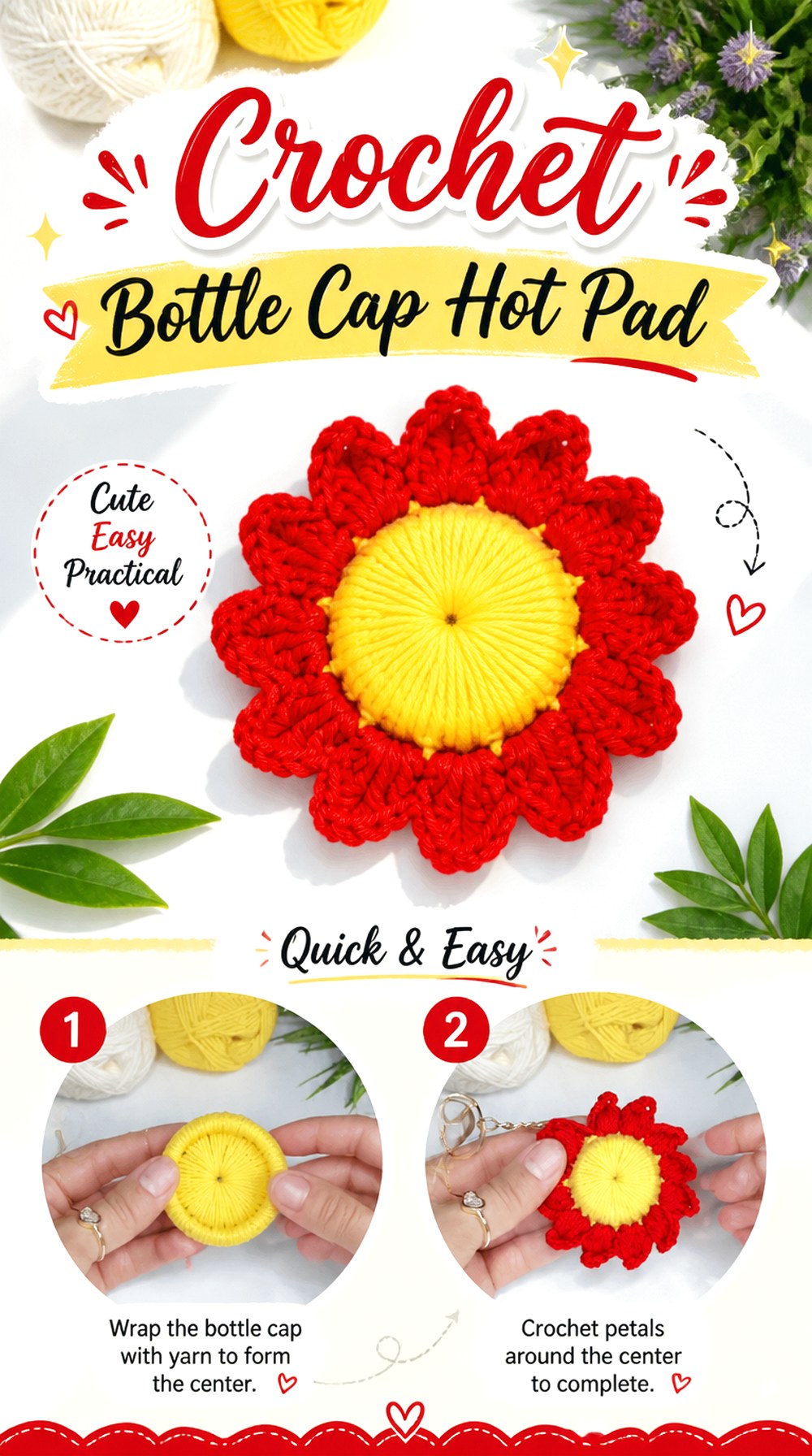
Small bottle caps can also become part of a recycled crochet project.
Caps can be surrounded with crochet and joined into a flat decorative piece for a table, shelf or other surface.
Multiple yarn shades create a playful patchwork effect, while a single palette makes the repeated circles feel more graphic and organized.
Use it safely.
If the caps are plastic, treat the finished piece primarily as a decorative mat or coaster for cool and moderately warm items, not automatically as protection beneath very hot cookware.
Heat resistance depends on the materials used.
Tutorial: Crochet Bottle Cap Ideas
21. Crochet Pop Tab Purse
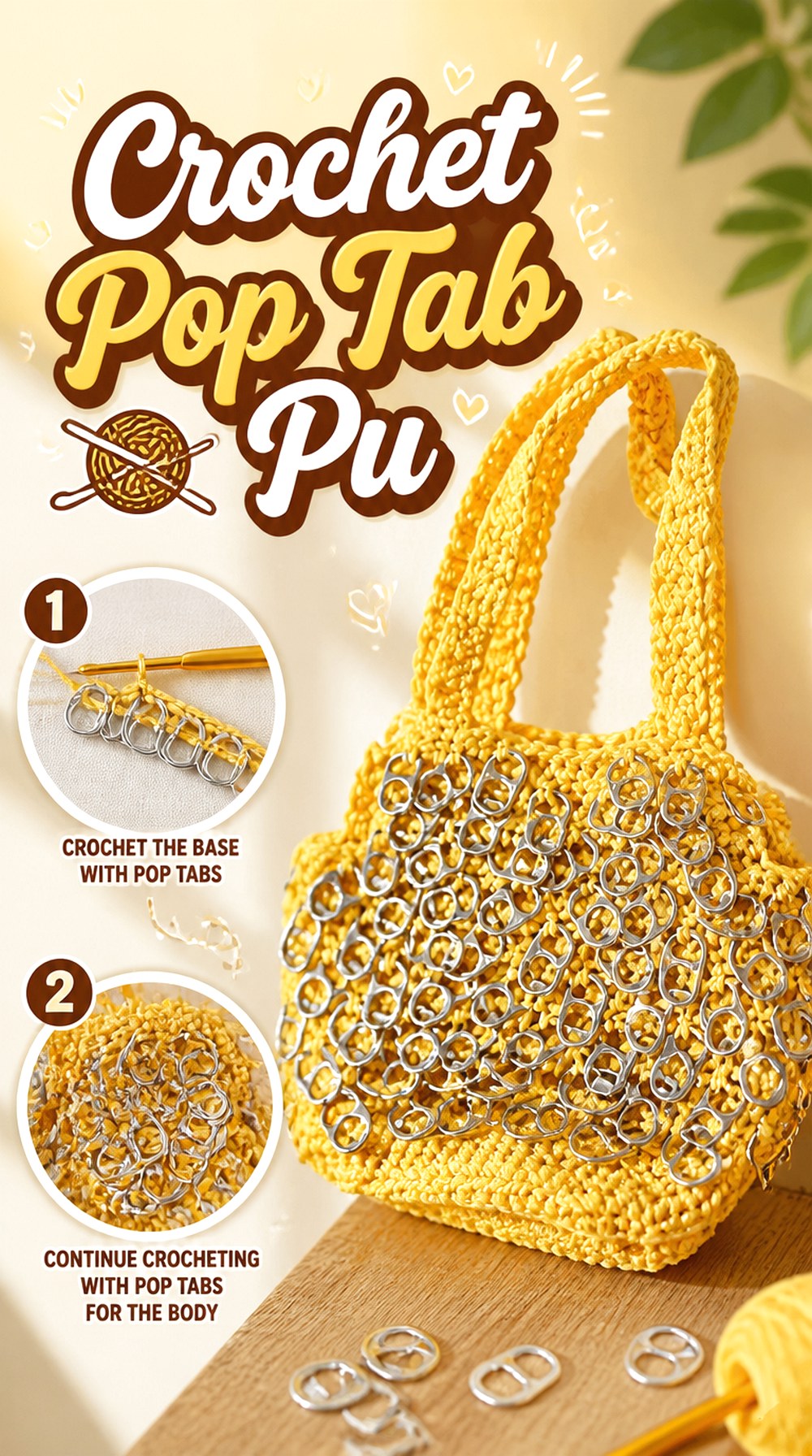
Soda-can pull tabs create one of the most unusual textures in this collection.
Instead of being hidden inside the project, the metal tabs become visible structural elements while crochet joins them together.
Yarn close to the metal color produces a more unified finish. Strong contrast makes the crochet construction easier to see.
The biggest challenge is consistency. A purse requires many tabs, so collecting similar sizes helps the finished surface look more even.
Why this one feels different:
Most upcycles disguise the original waste material. This project makes it a major part of the finished design.
Tutorial: Crochet Pop Tab Purse
For more accessory inspiration, you may also like 20 Crochet Skinny Scarf Ideas and 15 Crochet Draped Poncho Ideas.
Which Crochet Upcycle Should You Try First?
If you are new to combining crochet with existing objects, start with a project where the original item keeps most of its structure.
A crochet bag circle, shirt edging, jar cover or flower-decorated jacket gives you plenty of room to experiment without rebuilding an entire garment.
Once you feel comfortable attaching crochet to fabric, projects such as T-shirt side panels and replacement collars offer more freedom.
Full crochet sleeves, reconstructed dresses and an afghan shacket need more careful measuring because fit and movement become part of the project.
The best first project is not necessarily the smallest one. It is the one where you already understand the material you are working with.
What Makes a Crochet Upcycle Worth Doing?
A good upcycle begins with something that still has useful life left in it.
Before investing time in crochet, check three things.
1. Strength
Is the original material strong enough to support new crochet?
A denim jacket with one damaged sleeve may be ideal. Fabric that is already tearing in several different areas probably is not.
2. Weight
Will the new crochet be too heavy for the original material?
Light jersey and delicate fabric usually need lighter crochet. Denim, canvas and sturdy bags can handle more weight.
3. Purpose
Ask what the crochet is actually doing.
Is it repairing something?
Replacing a worn section?
Improving fit?
Adding useful storage?
Turning waste into a new material?
When the answer is clear, the finished project usually looks more intentional.
How to Make Crochet Upcycles Look More Polished
Let One Feature Lead
If a jacket already has full granny-square sleeves, it usually does not need several additional large motifs.
One strong crochet feature often has more impact than five competing ones.
Follow the Existing Garment Lines
Seams, cuffs, hems, necklines and pockets create natural places for crochet to begin or end.
Using those existing lines helps the new section look connected to the original piece.
Keep the Color Story Controlled
Scrap yarn does not mean every available color needs to appear in one project.
Useful combinations include:
- cream, rust and chocolate
- olive, tan and burnt orange
- burgundy, dusty pink and brown
- black, oatmeal and muted gold
- denim blue, cream and deep red
Match the Material Weight
Soft cotton clothing generally looks and moves better with lighter yarn.
Thick sweatshirts, jackets and sturdy bags can support more substantial crochet.
Test Placement Before Attachment
Lay flowers, motifs and panels in position first.
Photograph the arrangement if necessary.
Small changes in spacing can make the difference between a project looking deliberately designed and randomly decorated.
Common Crochet Upcycling Mistakes
Attaching Crochet to Weak Fabric
New crochet cannot strengthen fabric that is disintegrating everywhere around it.
Whenever possible, anchor the crochet into a healthy section of the original material.
Working Too Tightly
Tight crochet can pull soft fabric into puckers.
Check the project while it is hanging or being worn, not only while it is flat on a table.
Forgetting Body Movement
Elbows, shoulders, knees and waistlines bend constantly.
A crochet section that looks beautiful when flat can become uncomfortable if it is too rigid in a high-movement area.
Ignoring Care Requirements
The original object and the yarn may react differently to washing, heat and drying.
Choose materials that can reasonably be cared for together.
Adding Crochet Without a Reason
Random decoration can sometimes make an old piece feel busier without making it better.
Decide what the crochet should repair, replace, improve or highlight before starting.
Why Crochet Upcycling Is Especially Useful for a Fall Wardrobe Refresh
The transition from late summer into fall is a natural time to look through clothing that has been sitting unused.
Jackets return to rotation. Layering becomes useful again. Deeper colors, textured accessories and handmade pieces fit naturally into cooler-weather wardrobes.
That makes projects such as crochet-sleeve jackets, collars, patched denim, shackets and recycled bags particularly useful seasonal projects.
Instead of replacing an entire wardrobe, a few thoughtful alterations can make existing pieces feel new again.
For more seasonal color inspiration, explore 22 Chocolate Brown Crochet Ideas for Fall or 13 Crochet Black Lace Shrug Ideas.
Final Thoughts
- Crochet upcycling works best when the old material and the new crochet each have a reason to be there.
- A jacket can keep its strong denim body and gain new sleeves.
- A worn T-shirt can become yarn.
- A damaged neckline can become a crochet yoke.
- A jar can become storage.
- A piece of unused fabric can become the strongest part of a market bag.
- That is what makes upcycling more interesting than simply decorating something old.
- Before buying materials for your next project, look through your wardrobe, craft cupboard and recycling first.
- The starting point for a genuinely original crochet project may already be sitting there.